
Conceptualization of a Critical Infrastructure Network Model for
- Slides: 19
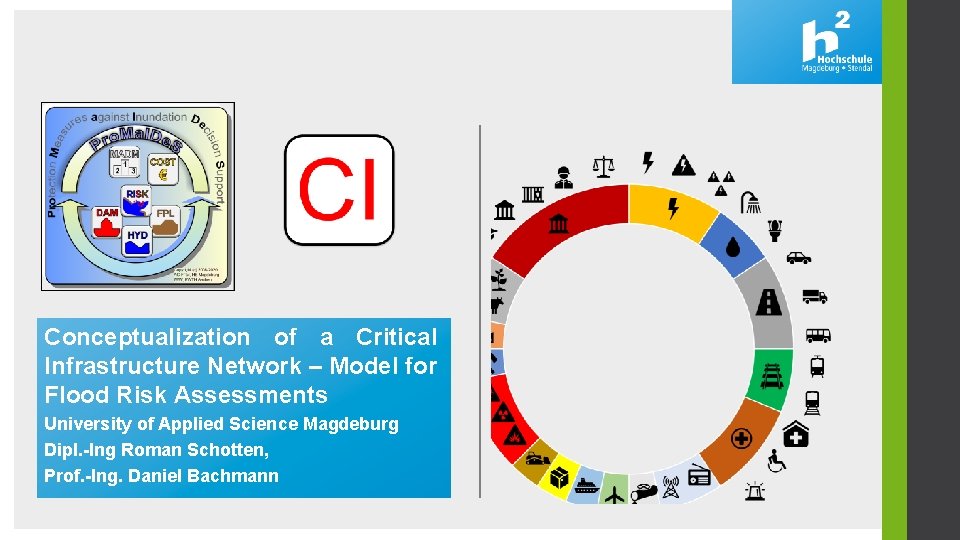
Conceptualization of a Critical Infrastructure Network – Model for Flood Risk Assessments University of Applied Science Magdeburg Dipl. -Ing Roman Schotten, Prof. -Ing. Daniel Bachmann
Content of this presentation I. Motivation & Objective II. Modelling Framework - Pro. Ma. IDe. S III. Conceptualization of a CI Modelling Software IV. Sandbox Model V. Data Inputs & Challenges VI. Outlook v. EGU 30. 04. 2021– Session NH 9. 8 Natural hazard impacts on technological systems and infrastructures Conceptualization of a Critical Infrastructure Network Model for Flood Risk Assessments 2
Motivation & Objective This research is executed in the framework of the PARADe. S project funded by the Federal Ministry of Education and Research (BMBF) The consortium consists of a combination from German and Ghanaian Partners: v. EGU 30. 04. 2021– Session NH 9. 8 Natural hazard impacts on technological systems and infrastructures Project & Consortium 3
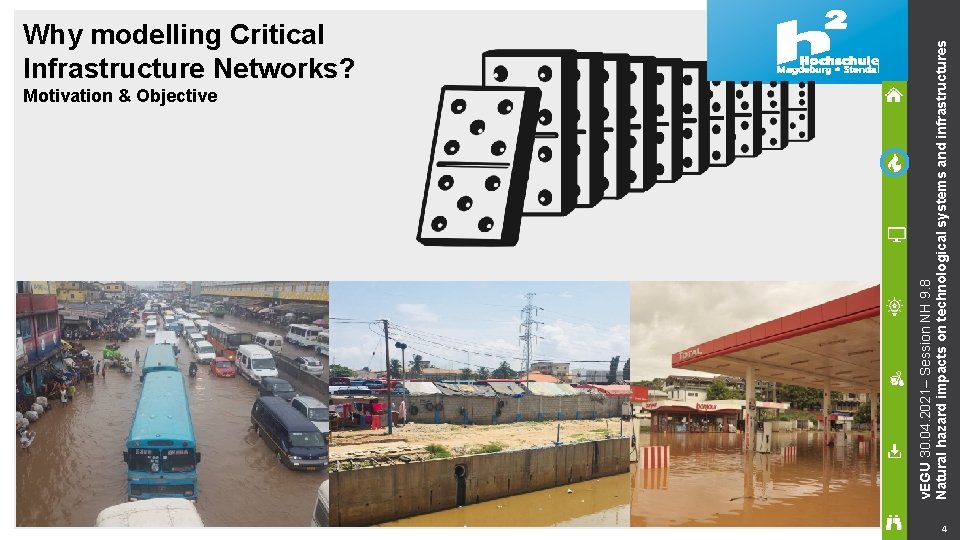
Motivation & Objective v. EGU 30. 04. 2021– Session NH 9. 8 Natural hazard impacts on technological systems and infrastructures Why modelling Critical Infrastructure Networks? 4
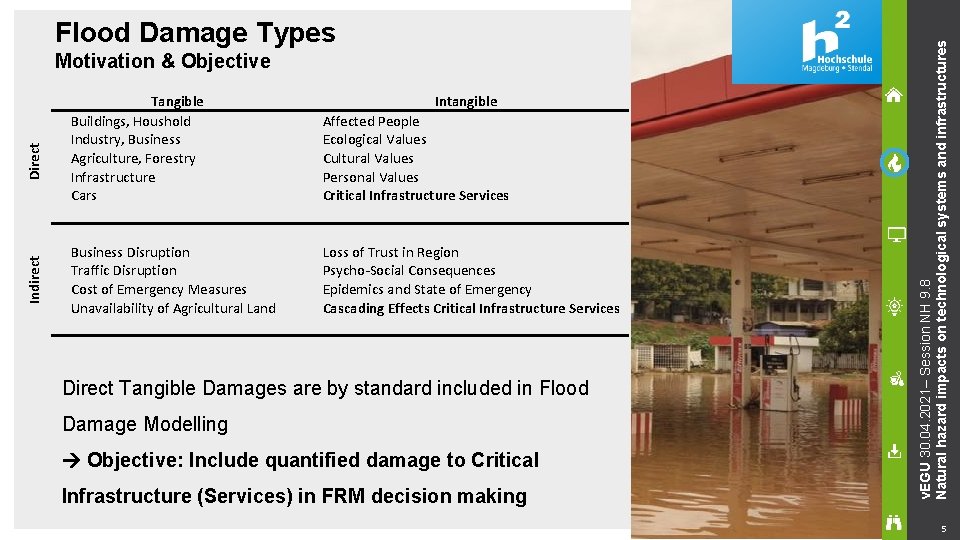
Indirect Direct Motivation & Objective Tangible Buildings, Houshold Industry, Business Agriculture, Forestry Infrastructure Cars Intangible Affected People Ecological Values Cultural Values Personal Values Critical Infrastructure Services Business Disruption Traffic Disruption Cost of Emergency Measures Unavailability of Agricultural Land Loss of Trust in Region Psycho-Social Consequences Epidemics and State of Emergency Cascading Effects Critical Infrastructure Services Direct Tangible Damages are by standard included in Flood Damage Modelling Objective: Include quantified damage to Critical Infrastructure (Services) in FRM decision making v. EGU 30. 04. 2021– Session NH 9. 8 Natural hazard impacts on technological systems and infrastructures Flood Damage Types 5
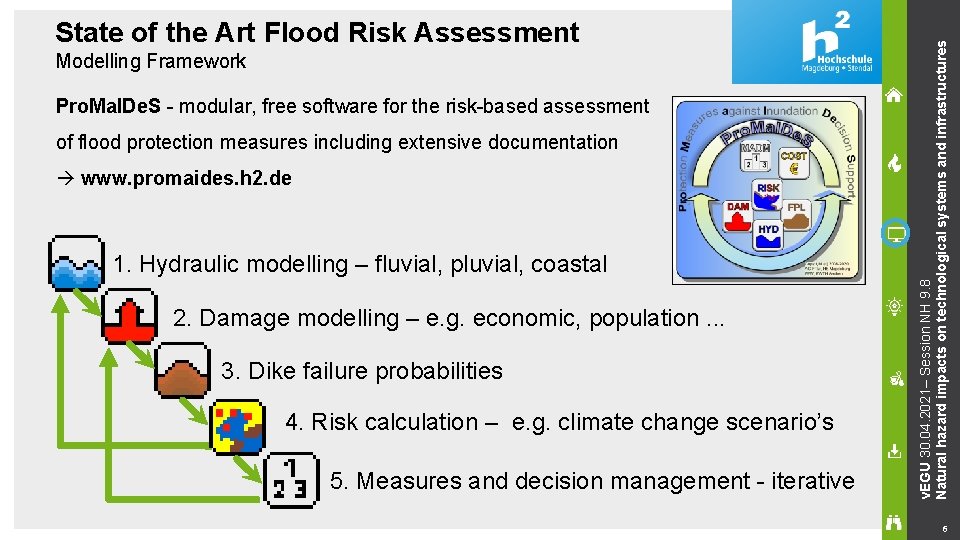
Modelling Framework Pro. Ma. IDe. S - modular, free software for the risk-based assessment of flood protection measures including extensive documentation www. promaides. h 2. de 1. Hydraulic modelling – fluvial, pluvial, coastal 2. Damage modelling – e. g. economic, population. . . 3. Dike failure probabilities 4. Risk calculation – e. g. climate change scenario’s 5. Measures and decision management - iterative v. EGU 30. 04. 2021– Session NH 9. 8 Natural hazard impacts on technological systems and infrastructures State of the Art Flood Risk Assessment 6
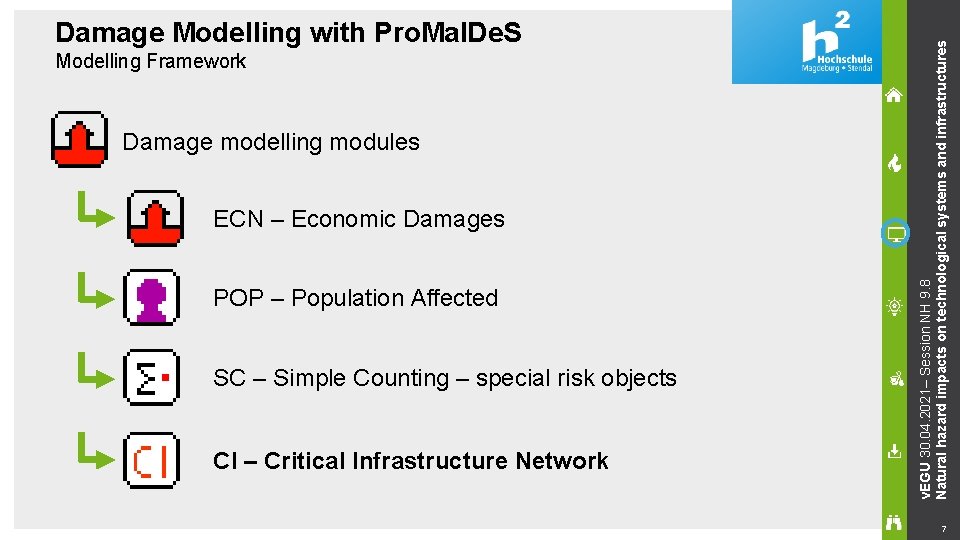
Modelling Framework Damage modelling modules ECN – Economic Damages POP – Population Affected SC – Simple Counting – special risk objects CI – Critical Infrastructure Network v. EGU 30. 04. 2021– Session NH 9. 8 Natural hazard impacts on technological systems and infrastructures Damage Modelling with Pro. Ma. IDe. S 7
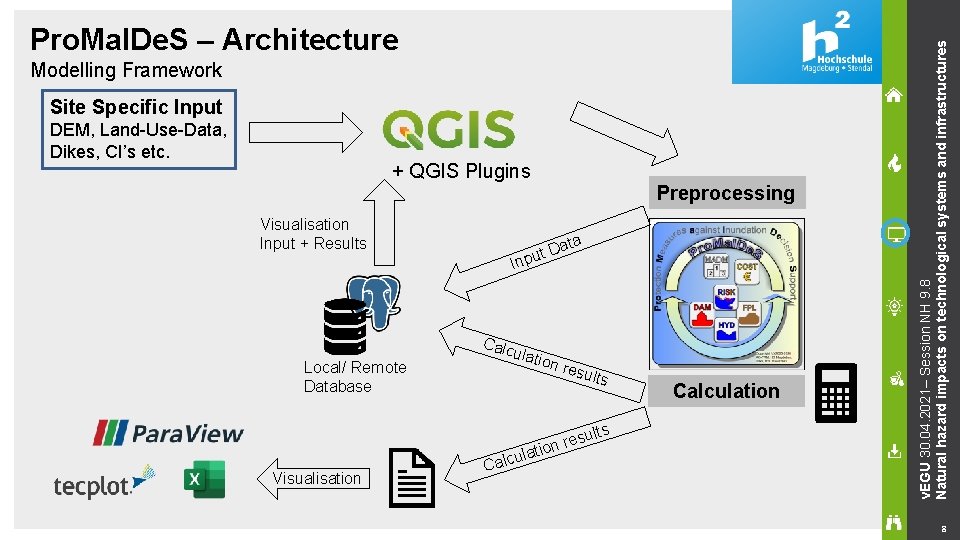
Modelling Framework Site Specific Input DEM, Land-Use-Data, Dikes, CI’s etc. + QGIS Plugins Preprocessing Visualisation Input + Results In Local/ Remote Database Visualisation Da t u p Calc ulat i on r ta esul n re o i t a ul Calc ts sults Calculation v. EGU 30. 04. 2021– Session NH 9. 8 Natural hazard impacts on technological systems and infrastructures Pro. Ma. IDe. S – Architecture 8
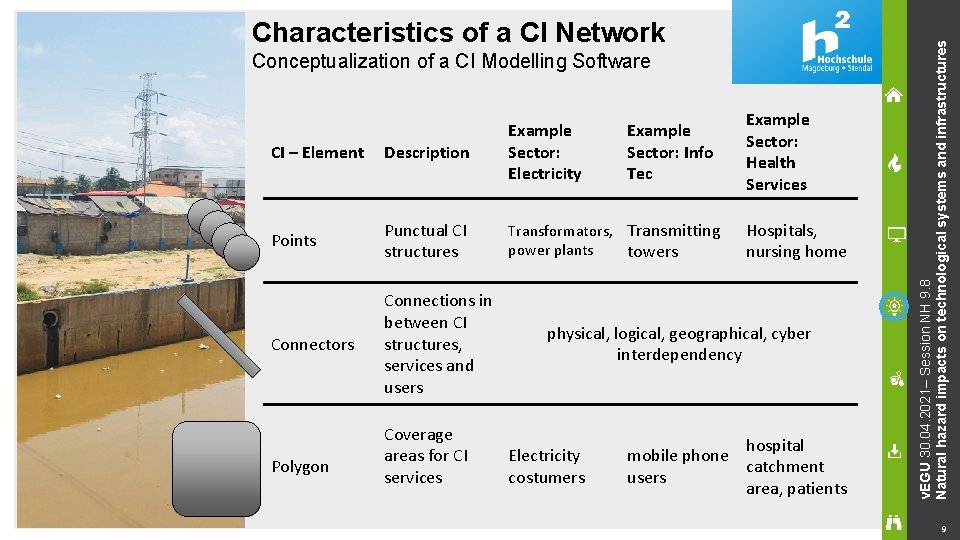
Conceptualization of a CI Modelling Software CI – Element Description Example Sector: Electricity Points Punctual CI structures Transformators, Transmitting power plants towers Connectors Connections in between CI structures, services and users Polygon Coverage areas for CI services Example Sector: Info Tec Example Sector: Health Services Hospitals, nursing home physical, logical, geographical, cyber interdependency Electricity costumers hospital mobile phone catchment users area, patients v. EGU 30. 04. 2021– Session NH 9. 8 Natural hazard impacts on technological systems and infrastructures Characteristics of a CI Network 9
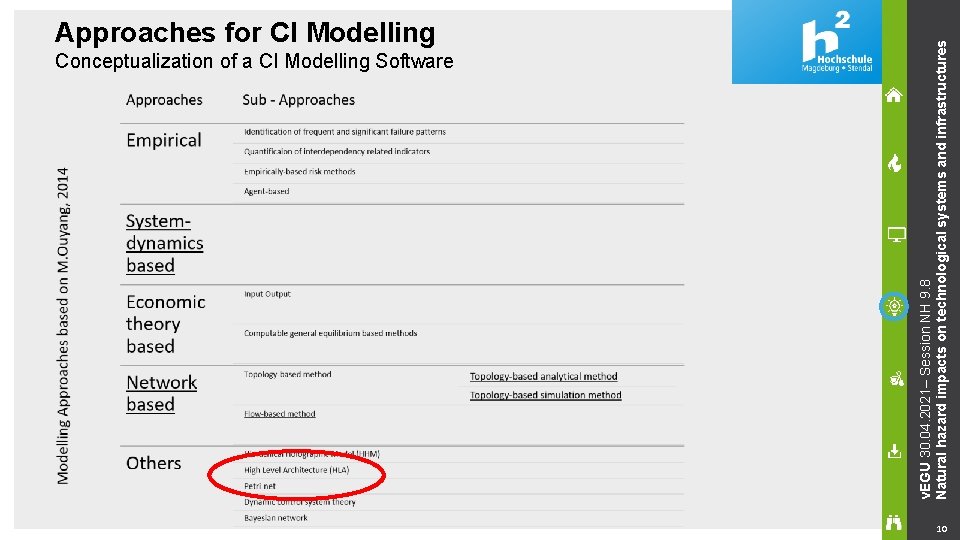
Conceptualization of a CI Modelling Software v. EGU 30. 04. 2021– Session NH 9. 8 Natural hazard impacts on technological systems and infrastructures Approaches for CI Modelling 10
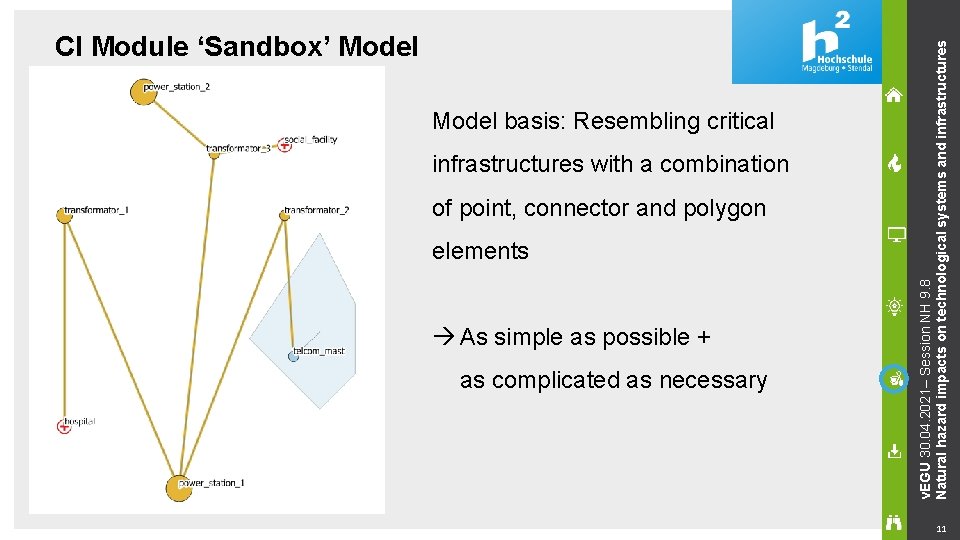
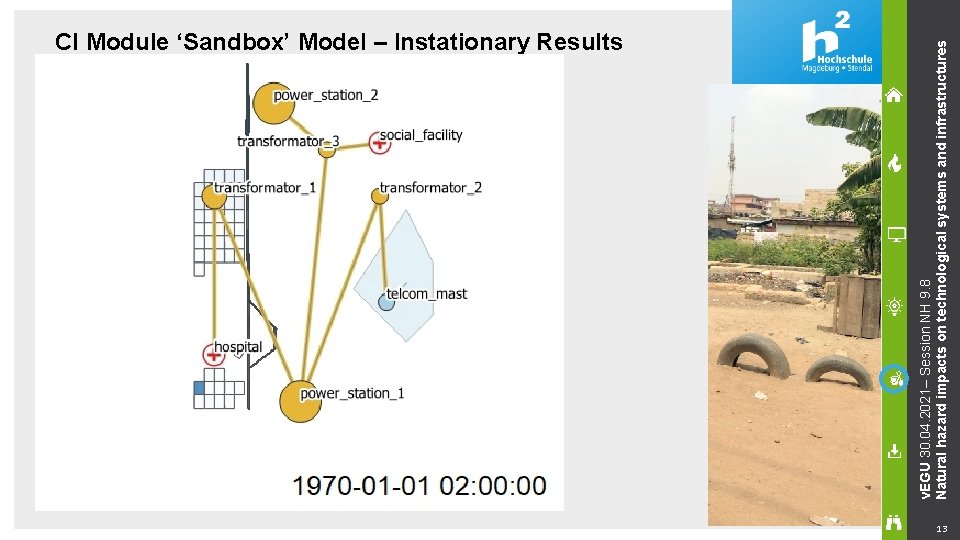
Model basis: Resembling critical infrastructures with a combination of point, connector and polygon elements As simple as possible + as complicated as necessary v. EGU 30. 04. 2021– Session NH 9. 8 Natural hazard impacts on technological systems and infrastructures CI Module ‘Sandbox’ Model 11
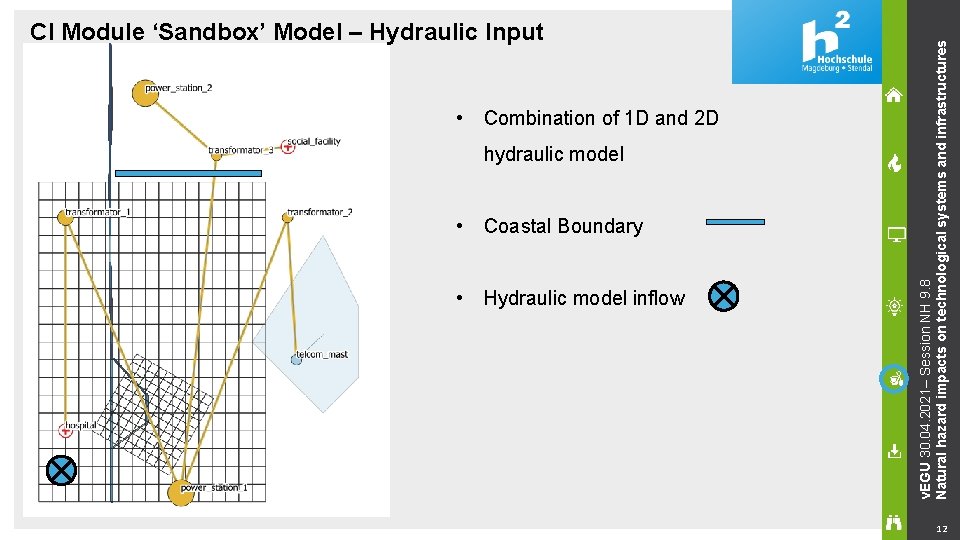
• Combination of 1 D and 2 D hydraulic model • Coastal Boundary • Hydraulic model inflow v. EGU 30. 04. 2021– Session NH 9. 8 Natural hazard impacts on technological systems and infrastructures CI Module ‘Sandbox’ Model – Hydraulic Input 12
v. EGU 30. 04. 2021– Session NH 9. 8 Natural hazard impacts on technological systems and infrastructures CI Module ‘Sandbox’ Model – Instationary Results 13
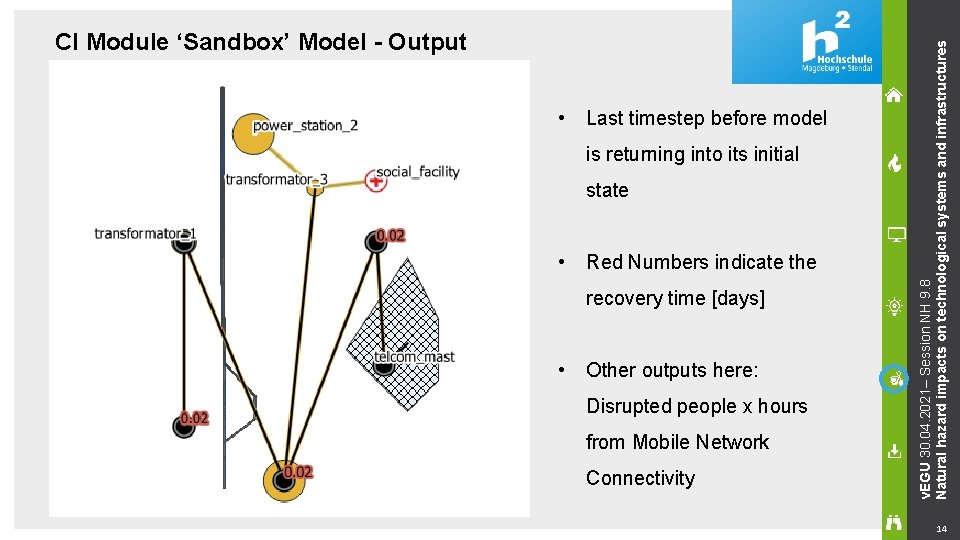
• Last timestep before model is returning into its initial state • Red Numbers indicate the recovery time [days] • Other outputs here: Disrupted people x hours from Mobile Network Connectivity v. EGU 30. 04. 2021– Session NH 9. 8 Natural hazard impacts on technological systems and infrastructures CI Module ‘Sandbox’ Model - Output 14
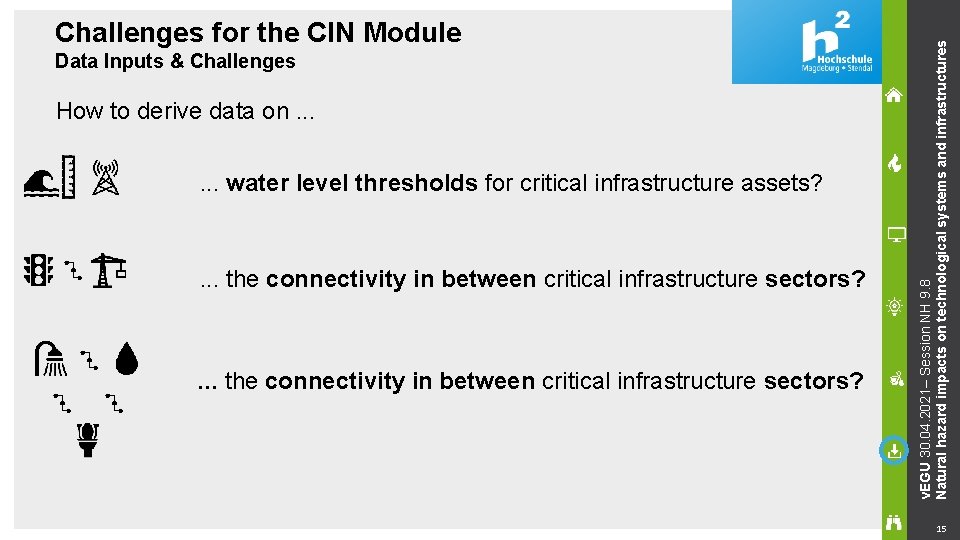
Data Inputs & Challenges How to derive data on. . . water level thresholds for critical infrastructure assets? . . . the connectivity in between critical infrastructure sectors? v. EGU 30. 04. 2021– Session NH 9. 8 Natural hazard impacts on technological systems and infrastructures Challenges for the CIN Module 15
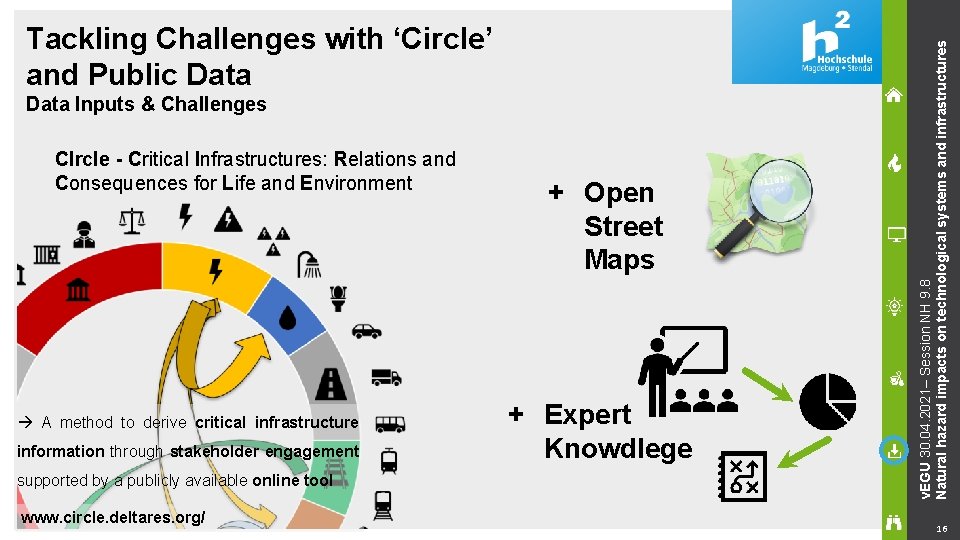
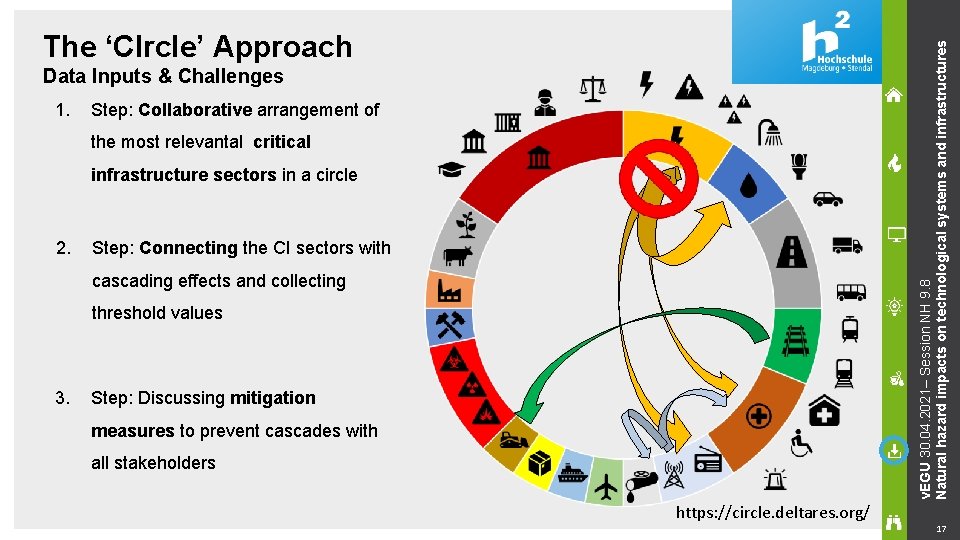
Data Inputs & Challenges CIrcle - Critical Infrastructures: Relations and Consequences for Life and Environment A method to derive critical infrastructure information through stakeholder engagement supported by a publicly available online tool www. circle. deltares. org/ + Open Street Maps + Expert Knowdlege v. EGU 30. 04. 2021– Session NH 9. 8 Natural hazard impacts on technological systems and infrastructures Tackling Challenges with ‘Circle’ and Public Data 16
v. EGU 30. 04. 2021– Session NH 9. 8 Natural hazard impacts on technological systems and infrastructures The ‘CIrcle’ Approach Data Inputs & Challenges 1. Step: Collaborative arrangement of the most relevantal critical infrastructure sectors in a circle 2. Step: Connecting the CI sectors with cascading effects and collecting threshold values 3. Step: Discussing mitigation measures to prevent cascades with all stakeholders https: //circle. deltares. org/ 17
1. Building a more complex model: 1. A higher number of nodes, connectors and polygons 2. More transsectoral connectors 3. Sectoral information staggered in multiple layors (power plant, high voltage transformator, low voltage transformator) 2. The validation of a critical infrastructure disruption model including cascading effects. How to quantify the accuracy of a CI model? 3. Damage calculations of critical infrastructures in flood risk management procedures. How to embed critical infrastructures in directives? v. EGU 30. 04. 2021– Session NH 9. 8 Natural hazard impacts on technological systems and infrastructures Outlook for the CI Module 18
Further questions. . . ? Thank you for your attention. I welcome your suggestions or critique. Dipl. -Ing Roman Schotten Flood Risk - Critical Infrastructure Network - Emergency Management Mobile: +49 391 886 4969 Mail: roman. schotten@h 2. de Social: www. promaides. h 2. de