
Conceptual Modeling of Topic Maps with ORM Versus

- Slides: 32
Conceptual Modeling of Topic Maps with ORM Versus UML Are D. Gulbrandsen The XML group, Center for Information Technology Services, University of Oslo, Norway 1
Overview • • Introduction Topic Maps notation in UML and ORM Case Study - The Houston Ontology Model language evaluation criteria 2
Introduction • There’s a need for a graphical notation for ontology modeling • There a few people using UML Class diagrams for this • Is ORM (Object Role Modeling) a good tool for Topic Maps ontology modeling? – Triggered by a discussion with Lars Marius Garshol at the first Norwegian Topic Map Conference in 2002 3
Goals • To model and document a Topic Maps Knowledge Base for systems administration – The Houston topic map case • Community building – To meet other people with common interests • We have tools today that can generate a relational database from UML or ORM – My vision is a tool that can generate a TMCL schema from a conceptual model 4
Ontology • The product of an attempt to formulate an exhaustive and rigorous conceptual schema about a domain • Typically a hierarchical data structure containing all the relevant entities and their relationships and rules within that domain (e. g. , a domain ontology). • The computer science usage of the term ontology is derived from the much older usage of the term ontology in philosophy » wikipedia. org 5
A little about meta models • The TMDM standard defines a metamodel for Topic Maps • The Tau model defines a TM metamodel – The foundation of the query language TMQL and the constraint language TMCL • Work within OMG: – The Ontology Definition Metamodel RFP • Includes the metamodels for UML 2, RDF Schema, OWL, SCL, ER and Topic Maps – The Business Semantics of Business Rules RFP • Includes ORM, UML 2, and OWL 6
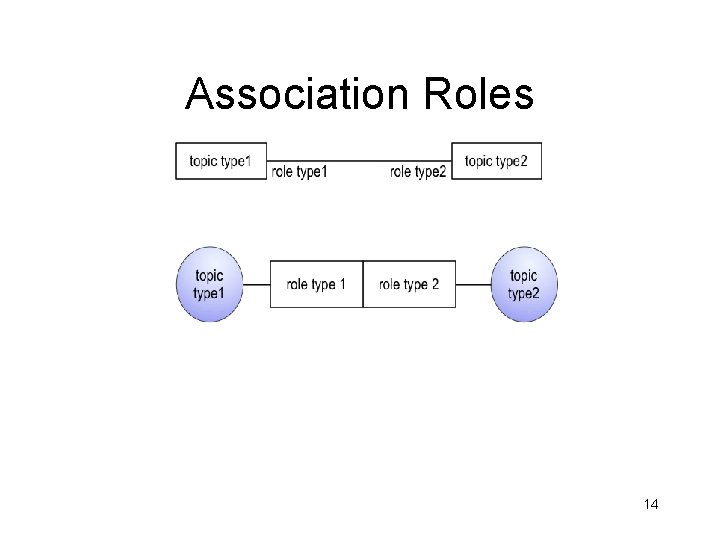
Topic Maps notation • The three main constructs: – Topics – Associations – Occurrences. • Other important constructs: – – Association Roles Topic Names (Base Names and Variant Names) Types Scope (Theme) 7
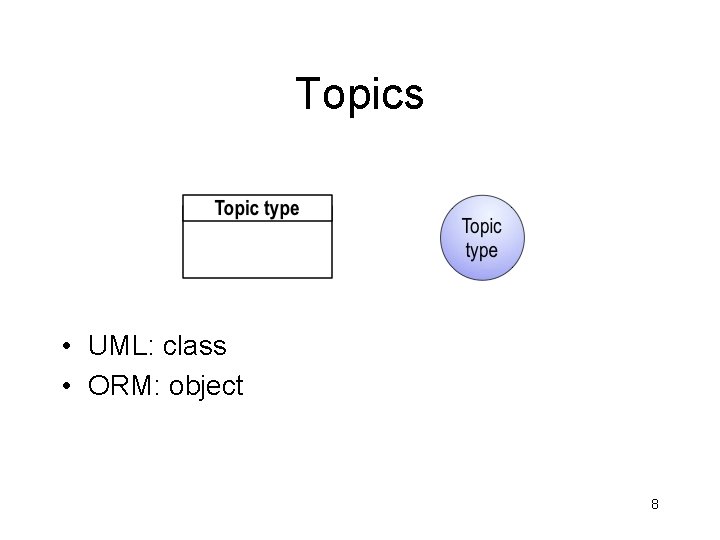
Topics • UML: class • ORM: object 8
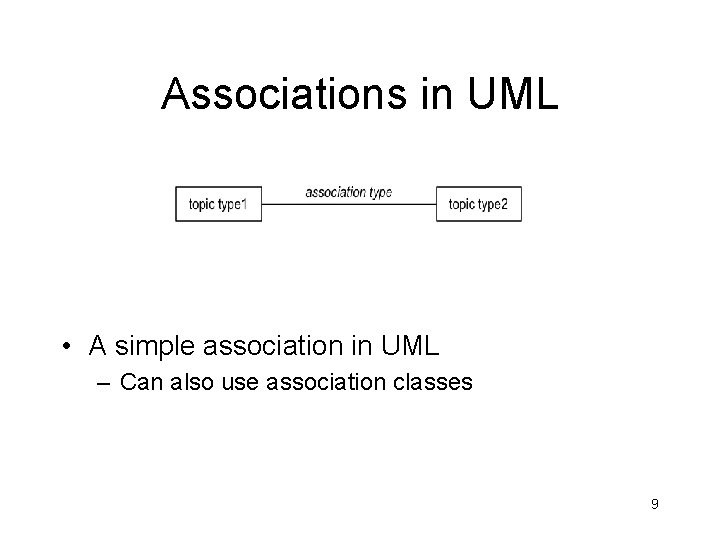
Associations in UML • A simple association in UML – Can also use association classes 9
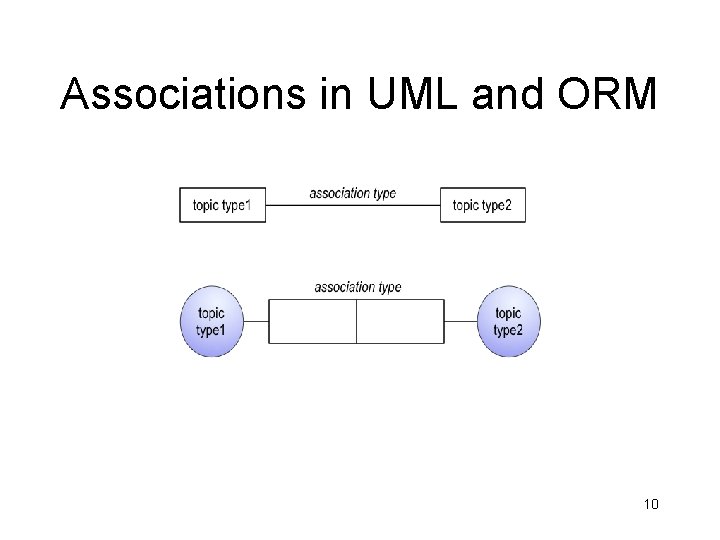
Associations in UML and ORM 10
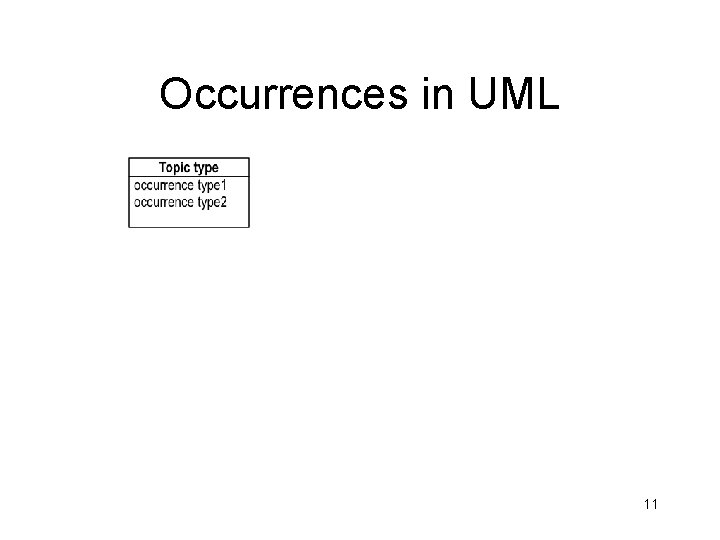
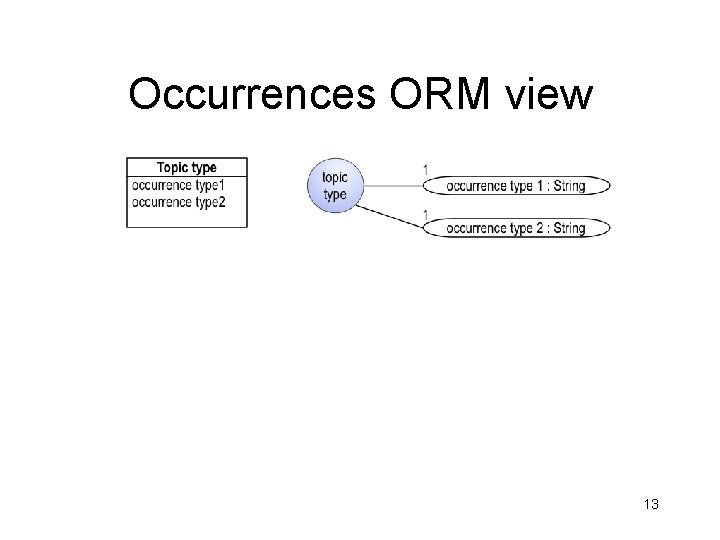
Occurrences in UML 11
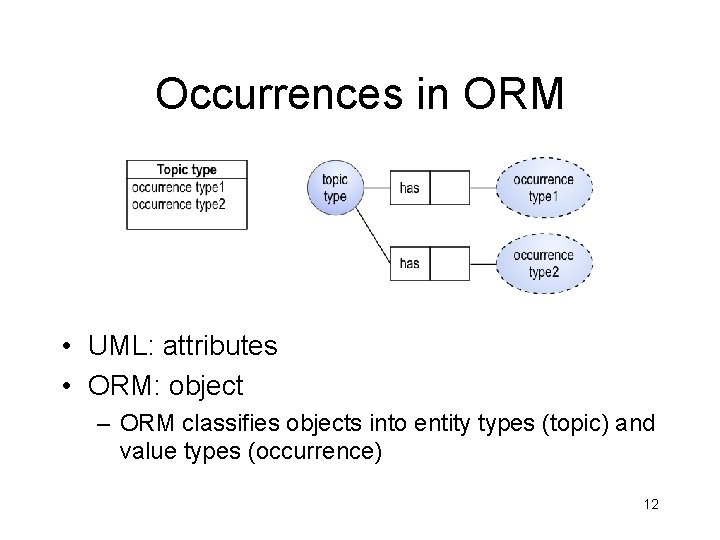
Occurrences in ORM • UML: attributes • ORM: object – ORM classifies objects into entity types (topic) and value types (occurrence) 12
Occurrences ORM view 13
Association Roles 14
Type, scope and names • In a conceptual model everything is types • Scope (set of themes) – I have not found any standard way of modeling this with UML – Have suggested modeling this in ORM as a textual notation, inspired by LTM • Names – Will not go into details. Modeled with a rectangular shape 15
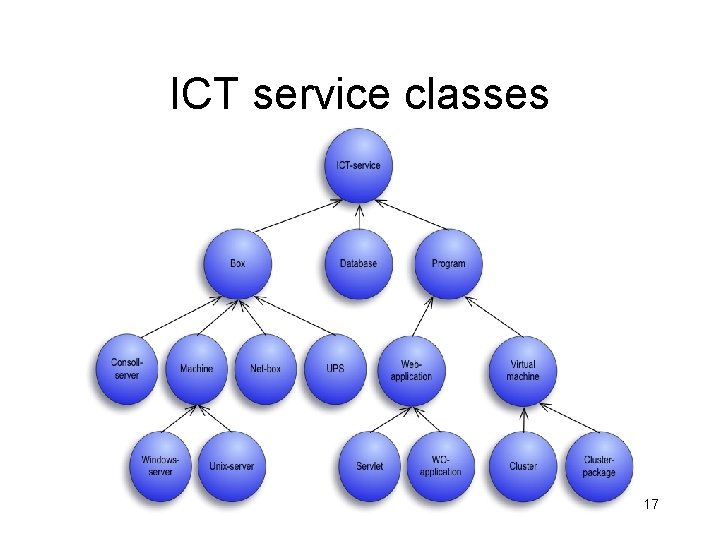
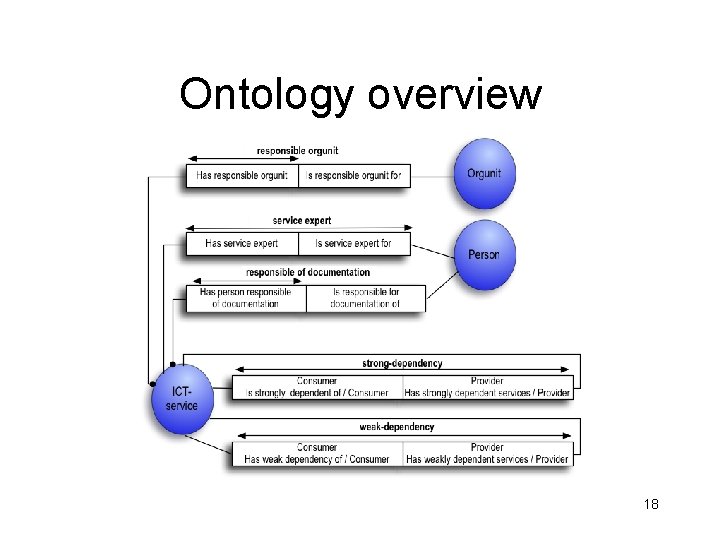
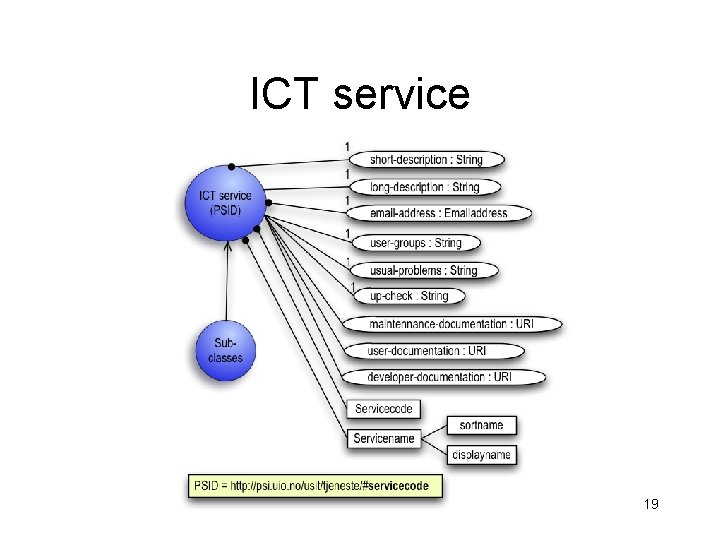
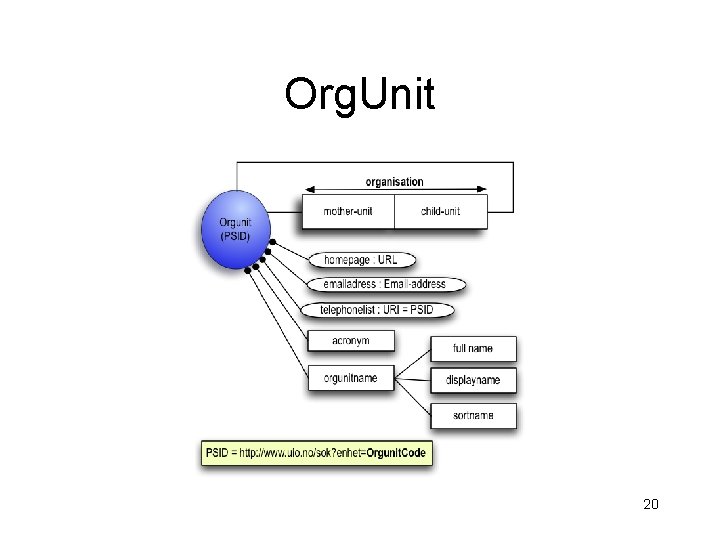
The Houston Ontology • The University of Oslo is one of the largest universities in northern Europe, with approximately 30000 students and 4600 employees • ICT control centre called Houston • A Topic Maps Knowledge Base for systems operation, administration and maintenance documentation • An online version of parts of the ontology: http: //folk. uio. no/areg/topicmaps/Houdini. Ontology/ 16
ICT service classes 17
Ontology overview 18
ICT service 19
Org. Unit 20
Evaluation criteria • This short presentation will focus on – Expressibility – Clarity – Semantic stability – Abstraction mechanisms 21
Expressibility • ORM has a richer set of restrictions, but both notations opens up for extensions – For example the Object Constraint Language - an OMG standard for specifying invariants, preconditions, postconditions and other kinds of constraints on UML models • It is planned that TMCL can use TMQL queries as restrictions • With graphical notations we will have to use the 80/20 principle 22
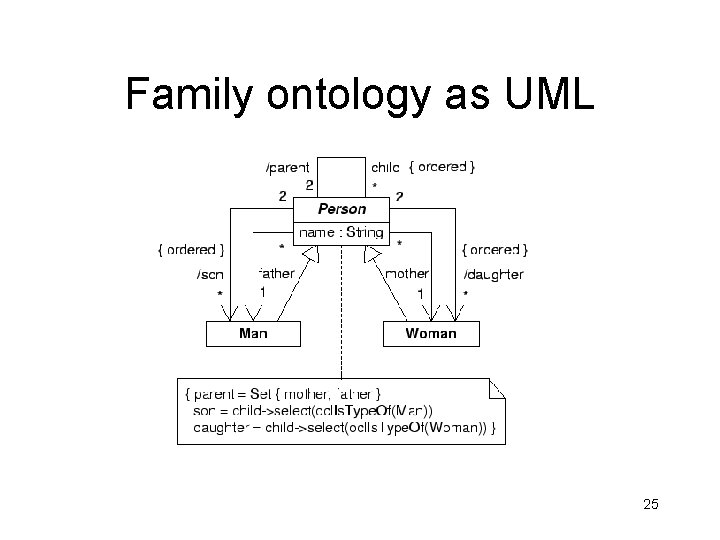
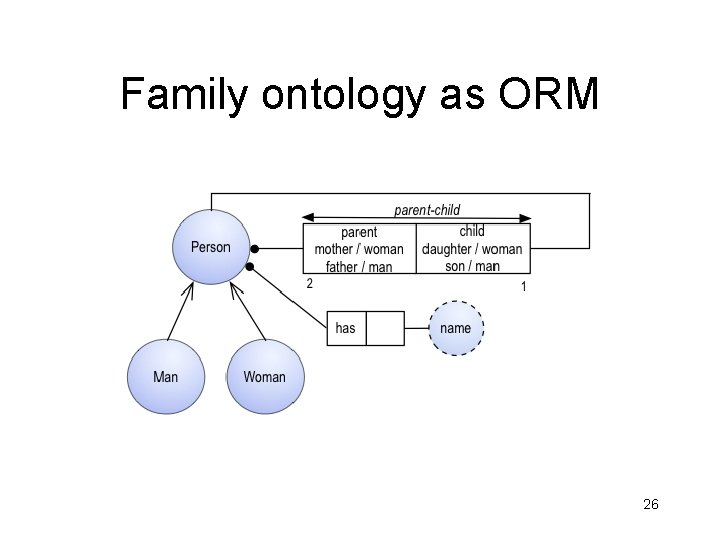
Clarity • Clarity is quite subjective, and depending on what people are used to • There a few things I think help to make ORM clearer than UML – The focus on relationship roles • I suggests an extension to ORM that allow contextual role names according to scope – Mandatory role constraint – Uniqueness constraints 23
Clarity 2 • There’s a few things I think help to make UML clearer – The compact notation • In ORM it’s possible to generate a more compact view of the model, even an UML-like table view – More people know the notation 24
Family ontology as UML 25
Family ontology as ORM 26
Semantic stability • When modeling with UML It’s not unusual to have to change an attribute into a class – Can be a quite big change with some side effects • ORM is an attribute free model – A ORM model is essentially a connected network of object types and relationship types – We only have to change the object from a value type to an entity type – It is more semantically stable 27
Abstraction mechanisms • Allows unwanted details to be removed from presentation • UML models tend to more compact than ORM models • ORM use abstraction mechanisms – Split model in several parts – Hide unnecessary details – Show information in different views • Abstraction mechanisms improve clarity – Makes the model easier to understand 28
Conclusion • It seems like ORM is usable for Topic Maps modeling – – ORM is more semantically stable if changes occur The notation has more standard constraints You have to make up your own mind about clarity UML is more compact • But It’s possible to generate the same view in ORM – UML has more widespread use and tool support – The suggested syntax for scope on association roles can give ORM good expressibility and clarity • It remains to see if it corresponds well with the ORM metamodel, and can be made into an extension 29
Questions? 30
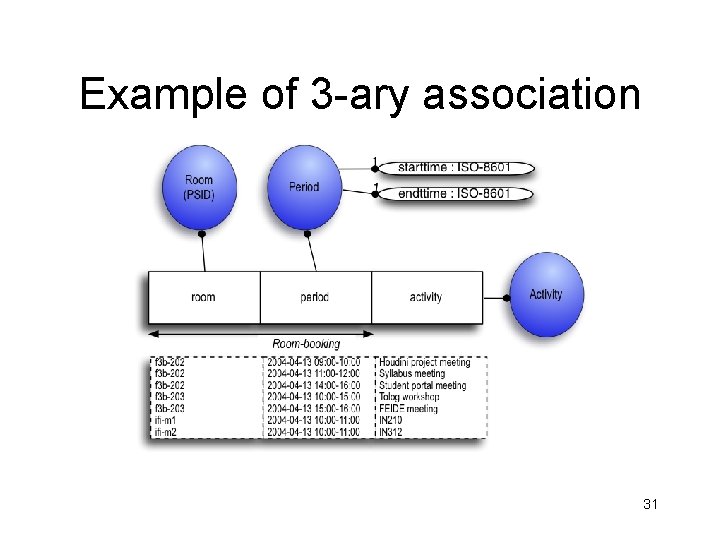
Example of 3 -ary association 31
The application • Harvests information from authoritative sources, and use Topic Maps to merge it all together. • A topic map browser/editor – Standard forms based web editing – Based on the Ontopia Knowledge Suite (www. ontopia. net) – Spring J 2 EE application framework (www. springframework. org) – Freemarker template engine (freemarker. sourceforge. net) 32