
Conceptual Framework for Evaluation Assessment of the National
- Slides: 13
Conceptual Framework for Evaluation & Assessment of the National Science Foundation (NSF) Alliance for Graduate Education & the Professoriate (AGEP) Program Developed by Yolanda S. George, AAAS Education & Human Resources Programs and Patricia Campbell, Campbell-Kibler Associates, Inc. With input from the AGEP Community
Goal of AGEP l The goal of the AGEP program is to increase the number of underrepresented minority students pursuing advanced study, obtaining doctoral degrees, and entering the professorate in STEM disciplines (including social sciences). l Alliances participating in this program are expected to engage in comprehensive institutional cultural changes that will lead to sustained increases in the conferral of STEM doctoral degrees, significantly exceeding historic levels of performance. 2
Specific objectives of AGEP are: (1) to develop and implement innovative models for recruiting, mentoring, and advancing minority students in STEM doctoral programs, and (2) to develop effective strategies for identifying and supporting underrepresented minorities who want to pursue academic 3
The primary goal of the AGEP Program evaluation capacity building project is to: Help AGEP awardees to build a comprehensive evaluation and assessment infrastructure to examine their graduate education enterprise in terms of broadening participation in the STEM Ph. D workforce
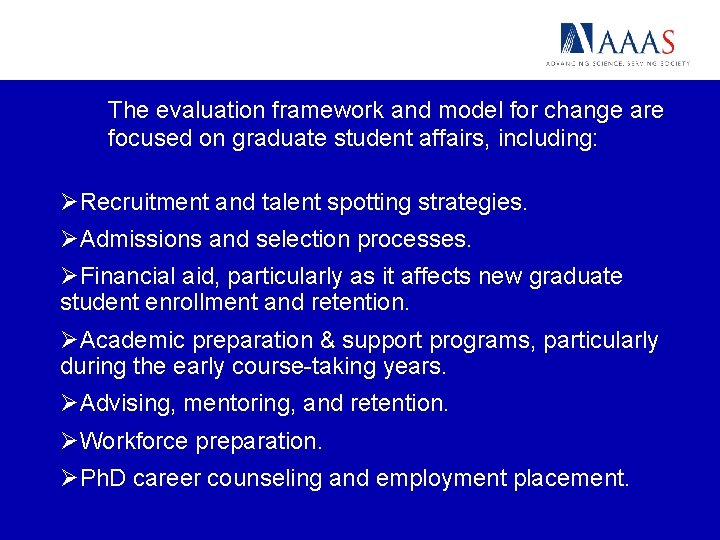
The evaluation framework and model for change are focused on graduate student affairs, including: ØRecruitment and talent spotting strategies. ØAdmissions and selection processes. ØFinancial aid, particularly as it affects new graduate student enrollment and retention. ØAcademic preparation & support programs, particularly during the early course-taking years. ØAdvising, mentoring, and retention. ØWorkforce preparation. ØPh. D career counseling and employment placement.
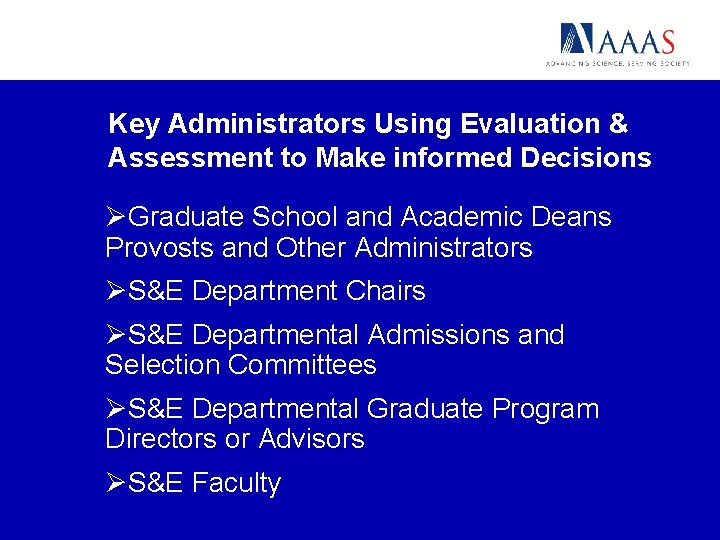
Key Administrators Using Evaluation & Assessment to Make informed Decisions ØGraduate School and Academic Deans Provosts and Other Administrators ØS&E Department Chairs ØS&E Departmental Admissions and Selection Committees ØS&E Departmental Graduate Program Directors or Advisors ØS&E Faculty
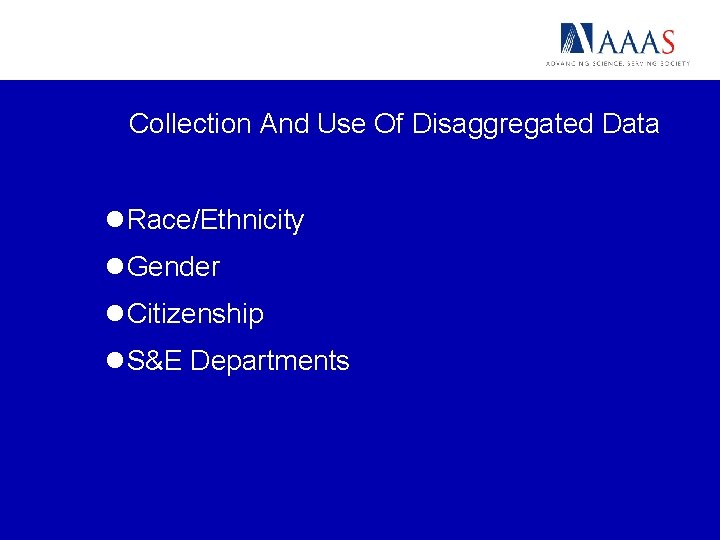
Collection And Use Of Disaggregated Data l. Race/Ethnicity l. Gender l. Citizenship l. S&E Departments
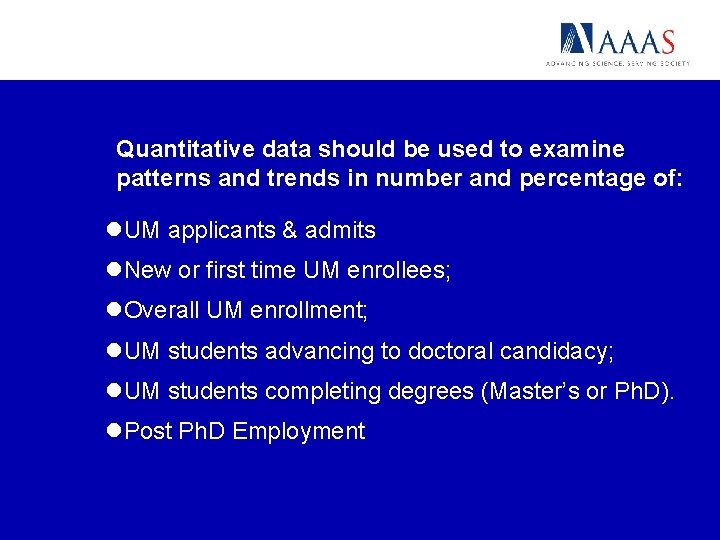
Quantitative data should be used to examine patterns and trends in number and percentage of: l. UM applicants & admits l. New or first time UM enrollees; l. Overall UM enrollment; l. UM students advancing to doctoral candidacy; l. UM students completing degrees (Master’s or Ph. D). l. Post Ph. D Employment
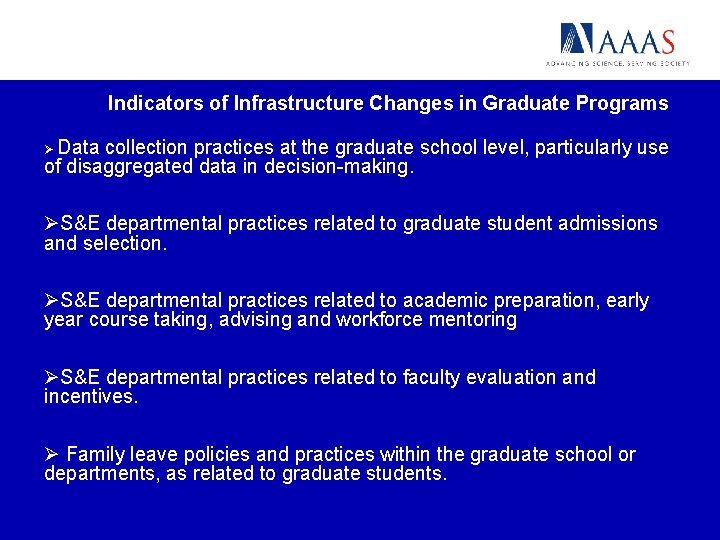
Indicators of Infrastructure Changes in Graduate Programs Data collection practices at the graduate school level, particularly use of disaggregated data in decision-making. Ø ØS&E departmental practices related to graduate student admissions and selection. ØS&E departmental practices related to academic preparation, early year course taking, advising and workforce mentoring ØS&E departmental practices related to faculty evaluation and incentives. Ø Family leave policies and practices within the graduate school or departments, as related to graduate students.
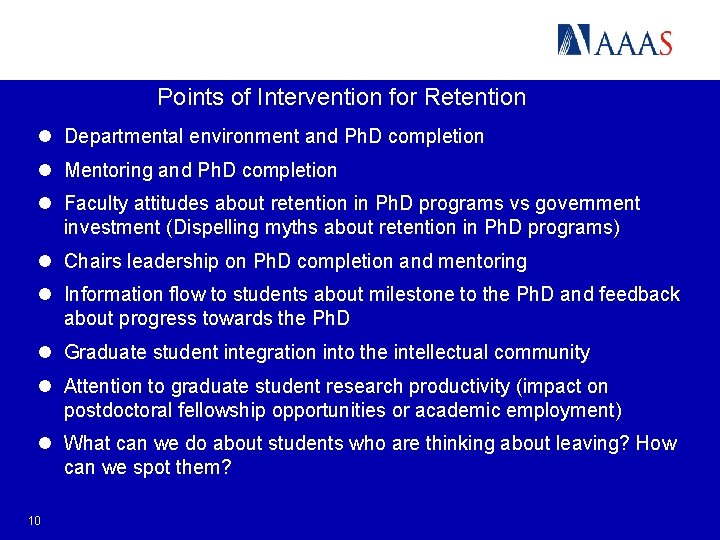
Points of Intervention for Retention l Departmental environment and Ph. D completion l Mentoring and Ph. D completion l Faculty attitudes about retention in Ph. D programs vs government investment (Dispelling myths about retention in Ph. D programs) l Chairs leadership on Ph. D completion and mentoring l Information flow to students about milestone to the Ph. D and feedback about progress towards the Ph. D l Graduate student integration into the intellectual community l Attention to graduate student research productivity (impact on postdoctoral fellowship opportunities or academic employment) l What can we do about students who are thinking about leaving? How can we spot them? 10
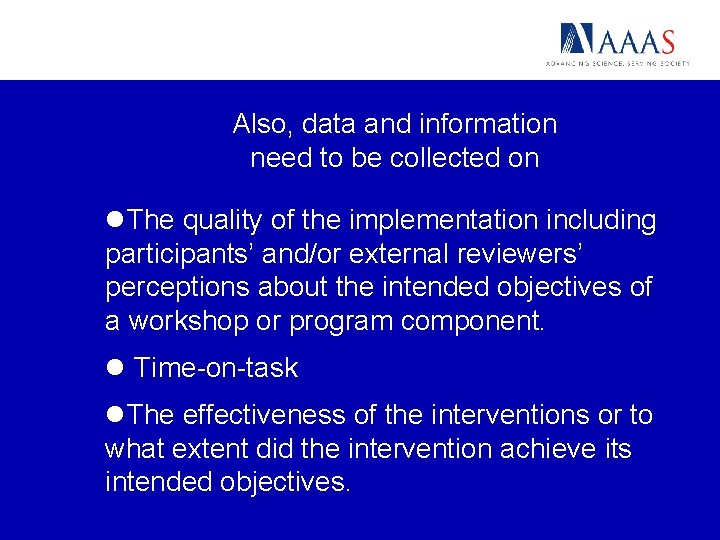
Also, data and information need to be collected on l. The quality of the implementation including participants’ and/or external reviewers’ perceptions about the intended objectives of a workshop or program component. l Time-on-task l. The effectiveness of the interventions or to what extent did the intervention achieve its intended objectives.
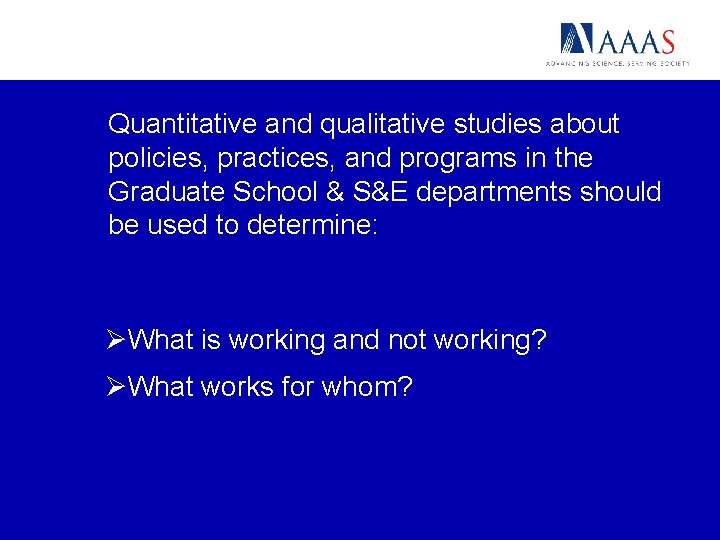
Quantitative and qualitative studies about policies, practices, and programs in the Graduate School & S&E departments should be used to determine: ØWhat is working and not working? ØWhat works for whom?
In Summary l. This is a community effort. l. The framework is evolving l. This is not an easy journey, neither is it one that can be completed quickly