
Conceptual Elaboration Conceptual Elaboration Relating to mental concepts
Conceptual Elaboration

Conceptual Elaboration Relating to mental concepts Thorough development with care and detail

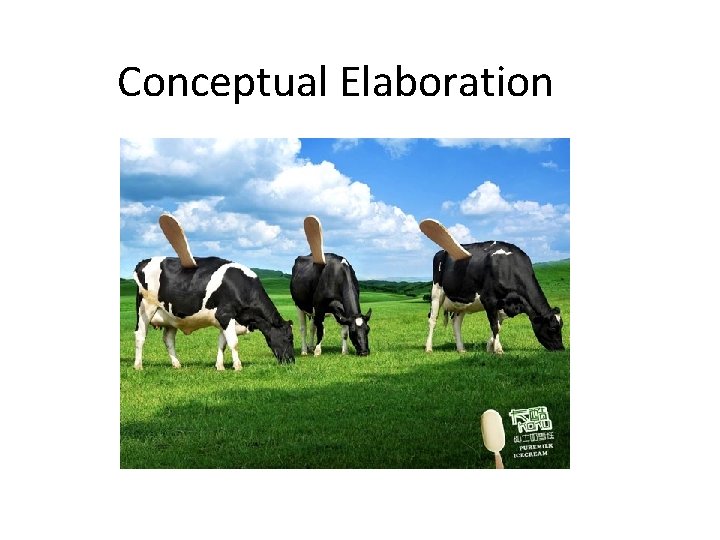
How does it work? Some ads and magazine covers require the brain to work a little bit to make abstract associations in order to figure out the message. This brain work is called “conceptual elaboration. ”
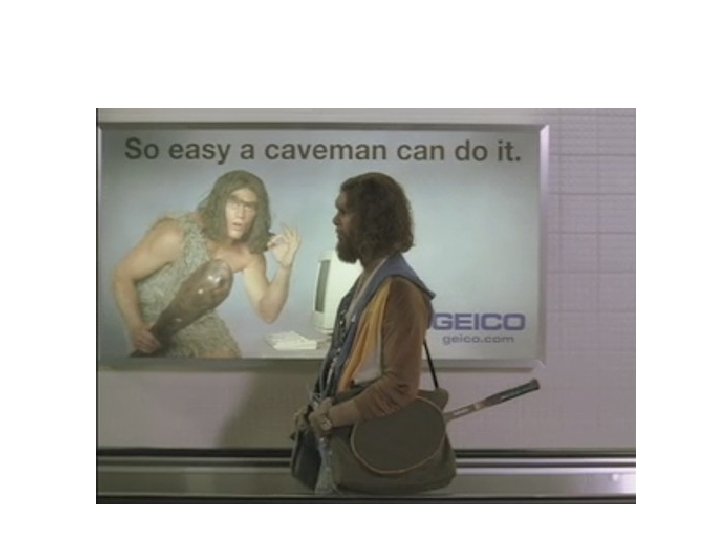
Ads requiring conceptual elaboration: • Are not effective for every product/service/audience • Can be “risky” because they require an audience to stop and think. • Can be effective for the same reason: mysterious images can grab attention and encourage the viewer to continue thinking about the brand or idea. • Typically target college-educated audiences, though audiences of all education levels are becoming more media savvy and are being targeted with this technique (e. g. , GEICO ads).

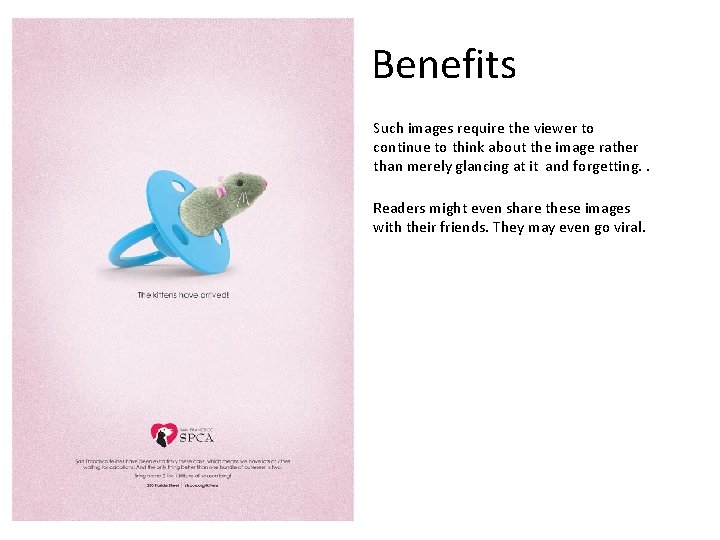
Benefits Such images require the viewer to continue to think about the image rather than merely glancing at it and forgetting. . Readers might even share these images with their friends. They may even go viral.
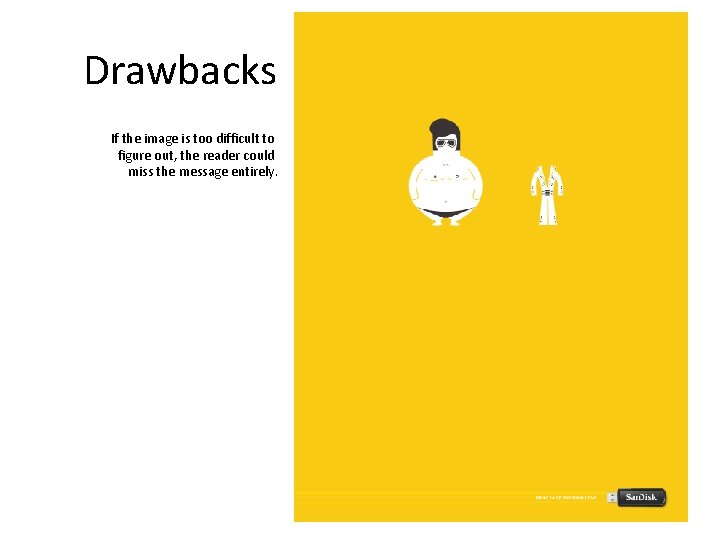
Drawbacks If the image is too difficult to figure out, the reader could miss the message entirely.
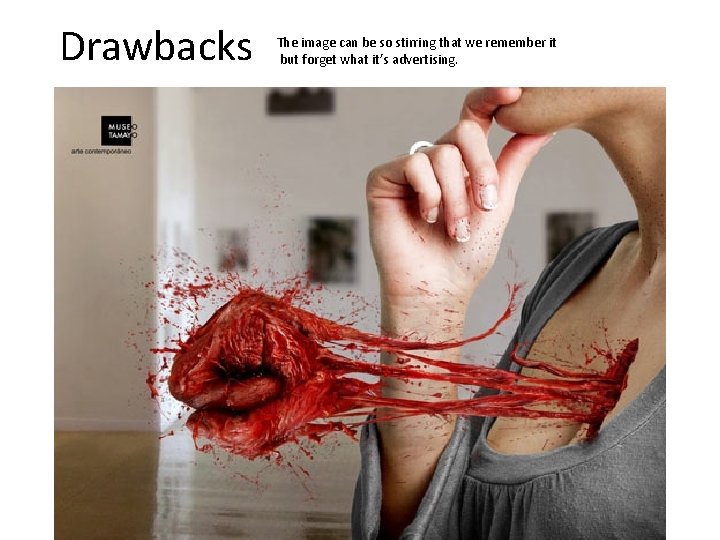
Drawbacks The image can be so stirring that we remember it but forget what it’s advertising.
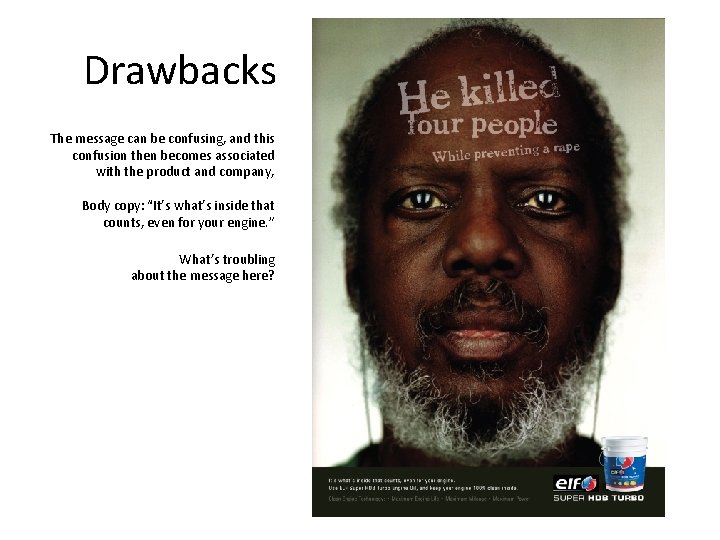
Drawbacks The message can be confusing, and this confusion then becomes associated with the product and company, Body copy: “It’s what’s inside that counts, even for your engine. ” What’s troubling about the message here?
Types of Compositions Eliciting Conceptual Elaboration
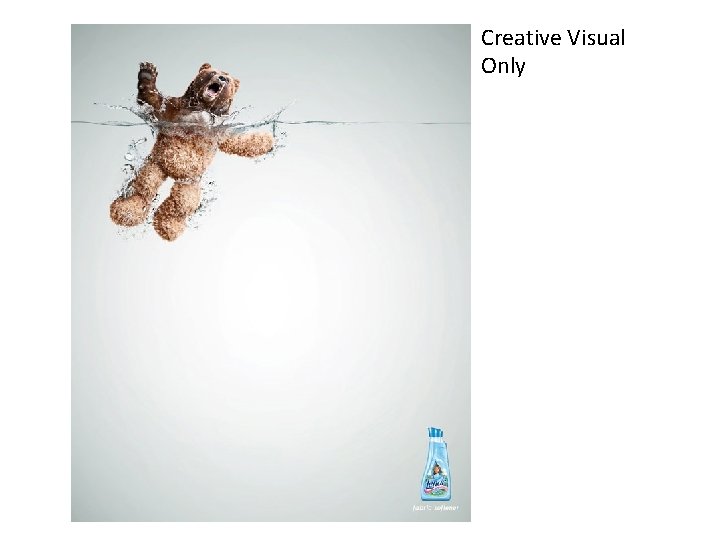
Creative Visual Only
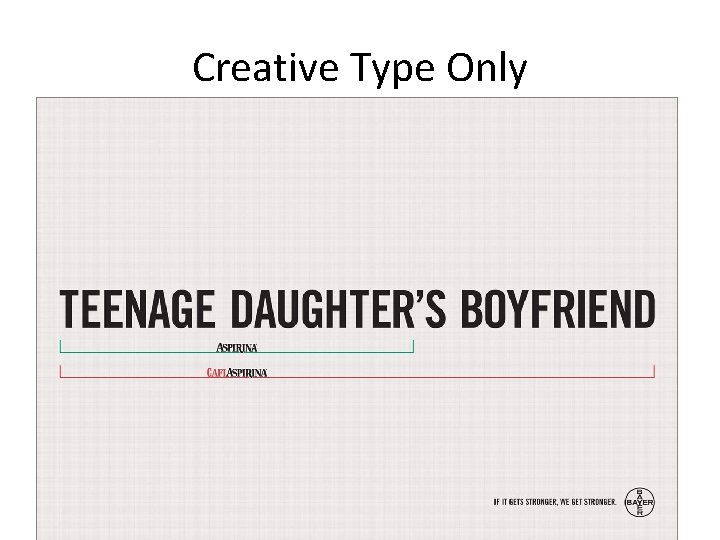
Creative Type Only
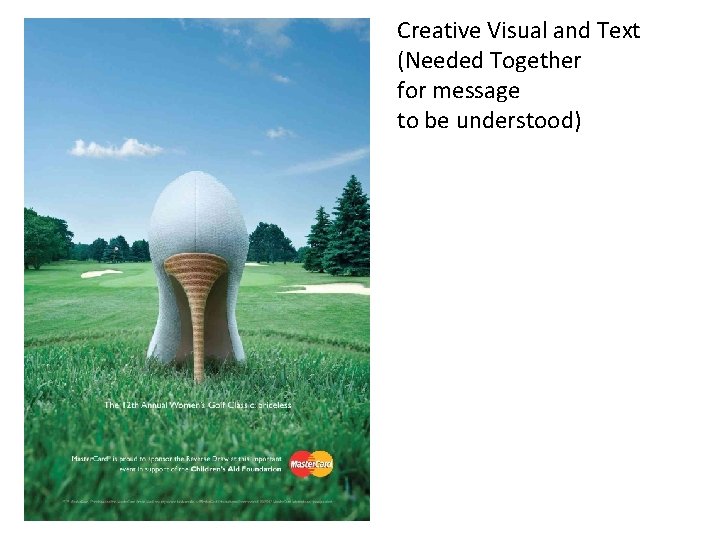
Creative Visual and Text (Needed Together for message to be understood)
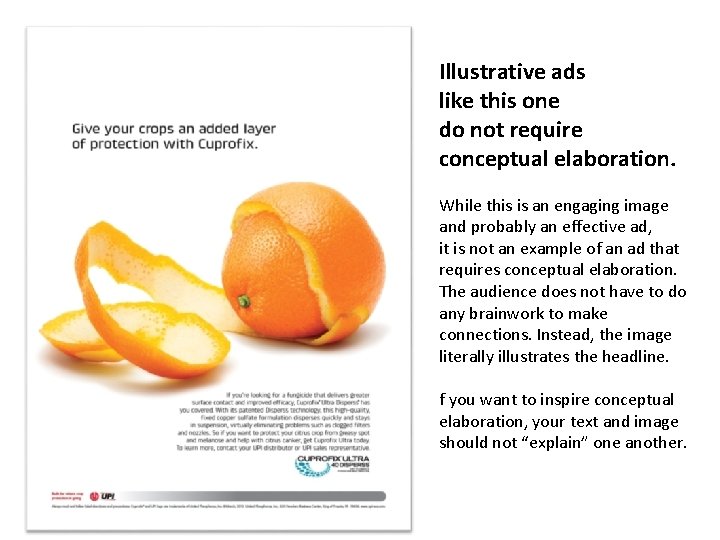
Illustrative ads like this one do not require conceptual elaboration. While this is an engaging image and probably an effective ad, it is not an example of an ad that requires conceptual elaboration. The audience does not have to do any brainwork to make connections. Instead, the image literally illustrates the headline. f you want to inspire conceptual elaboration, your text and image should not “explain” one another.
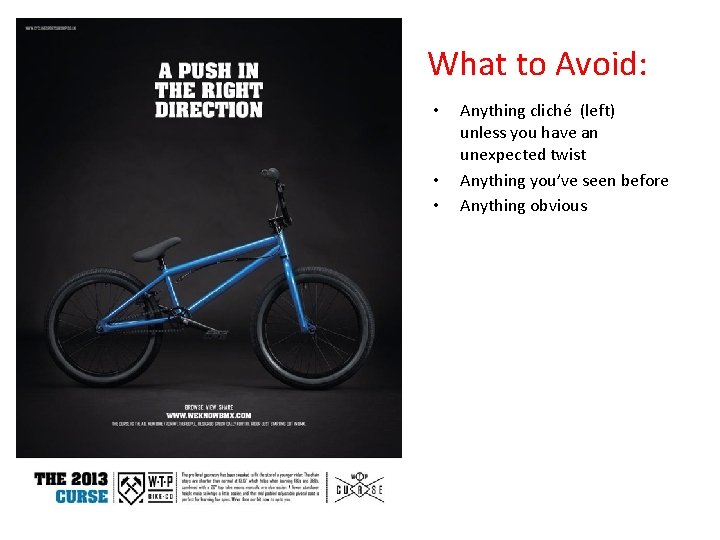
What to Avoid: • • • Anything cliché (left) unless you have an unexpected twist Anything you’ve seen before Anything obvious
Techniques for Eliciting Conceptual Elaboration (You can also combine techniques. )
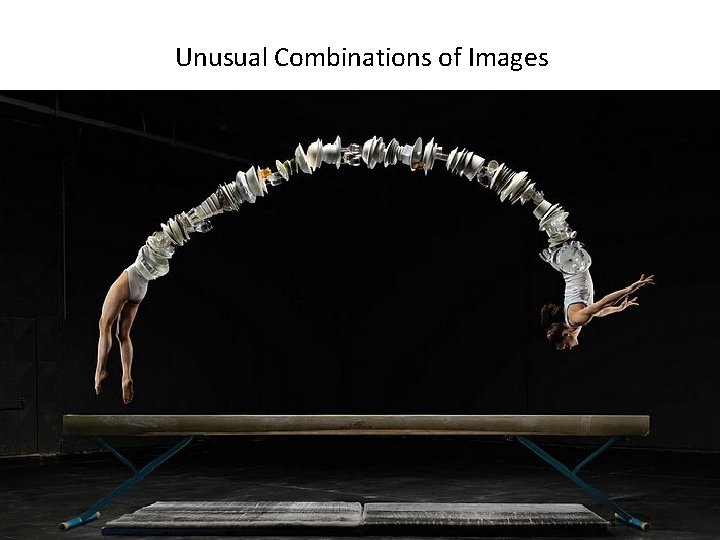
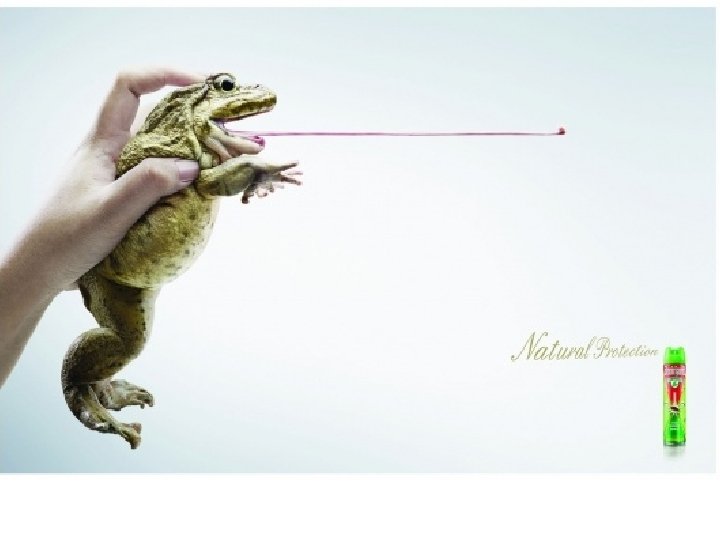
Unusual Combinations of Images
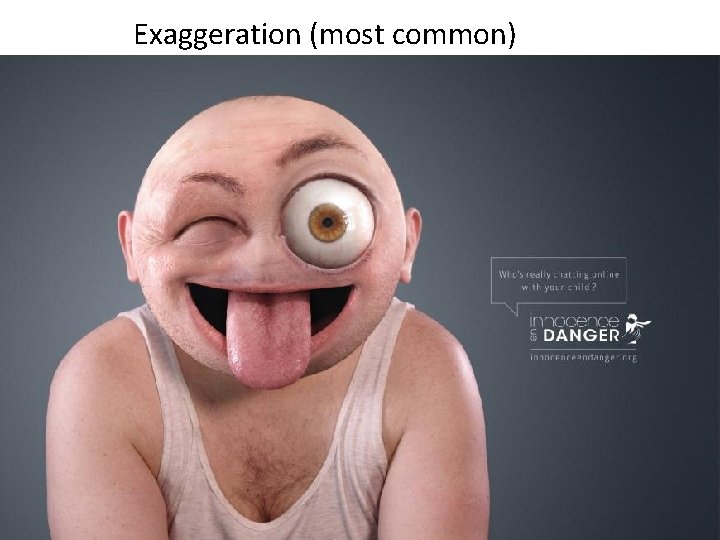
Exaggeration (most common)
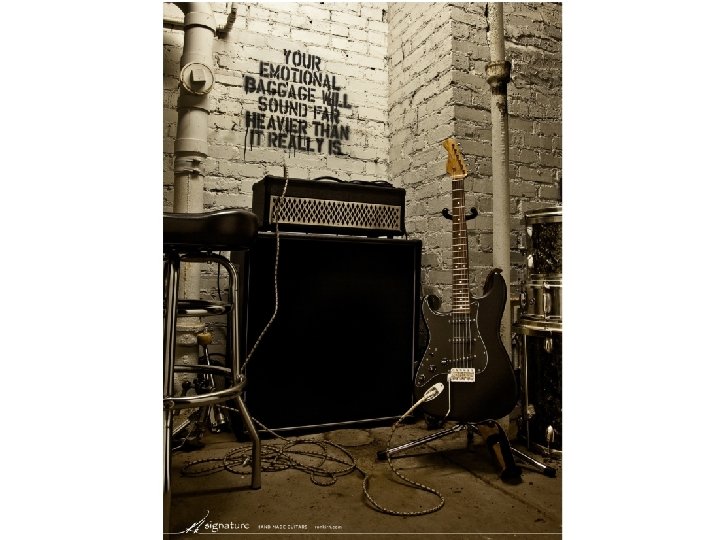

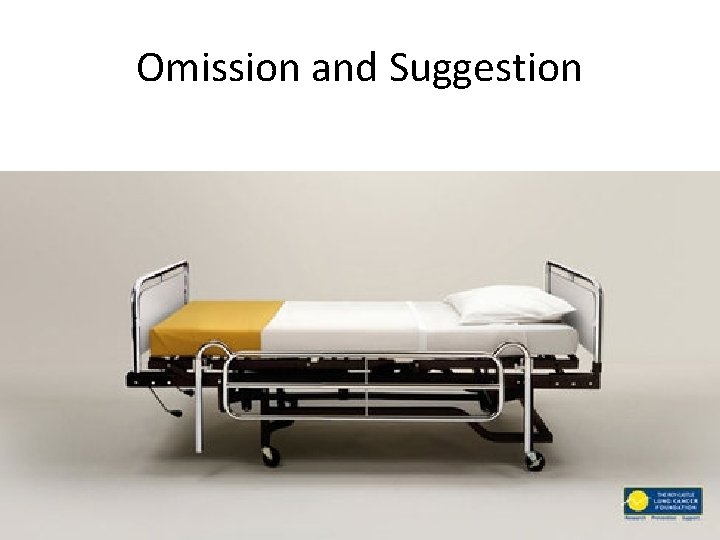
Omission and Suggestion
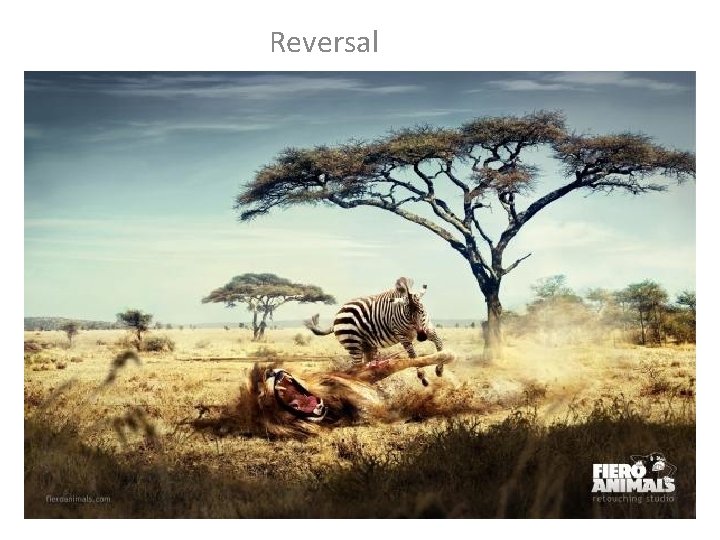
Reversal


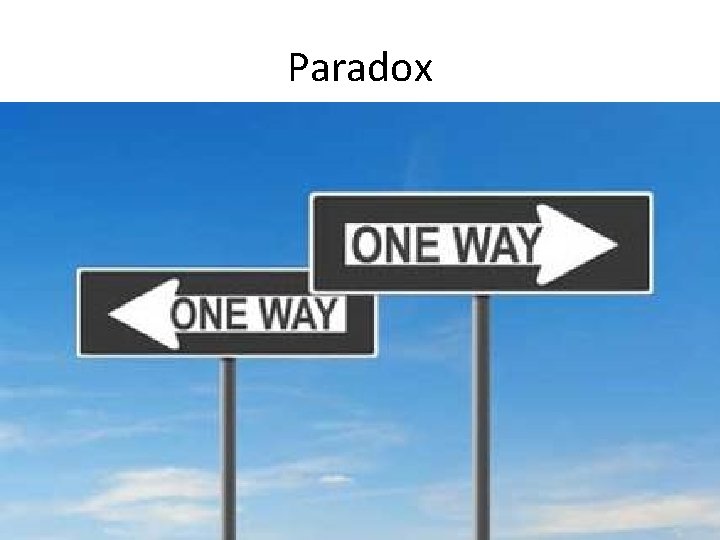
Paradox

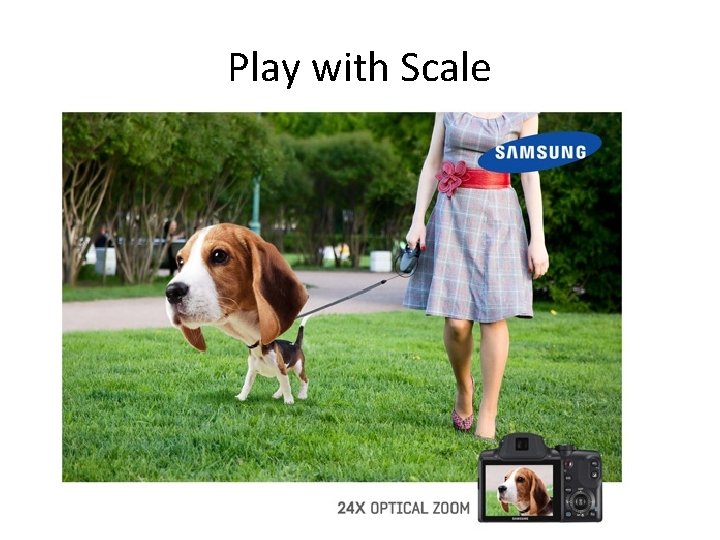
Play with Scale
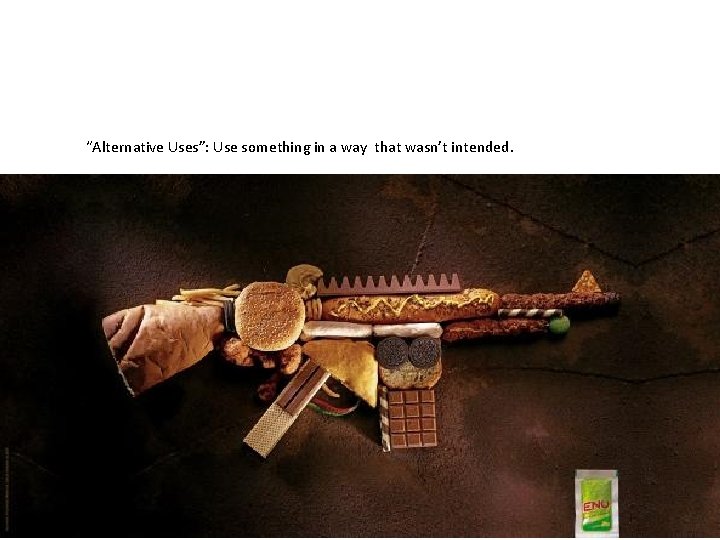
“Alternative Uses”: Use something in a way that wasn’t intended.
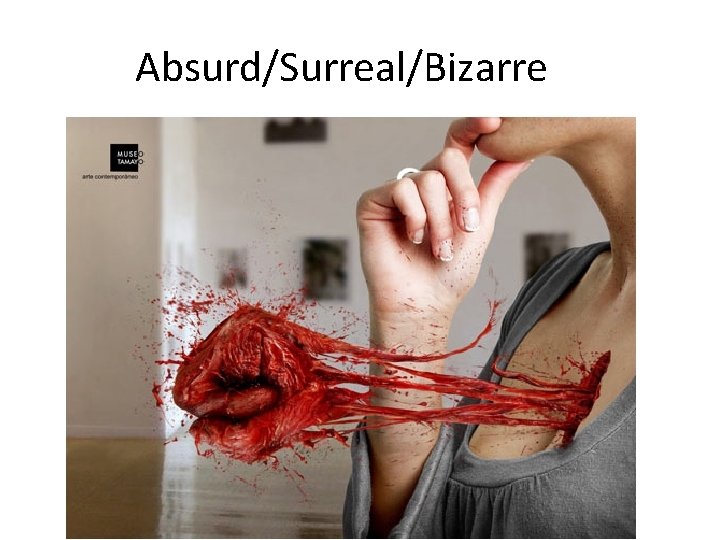
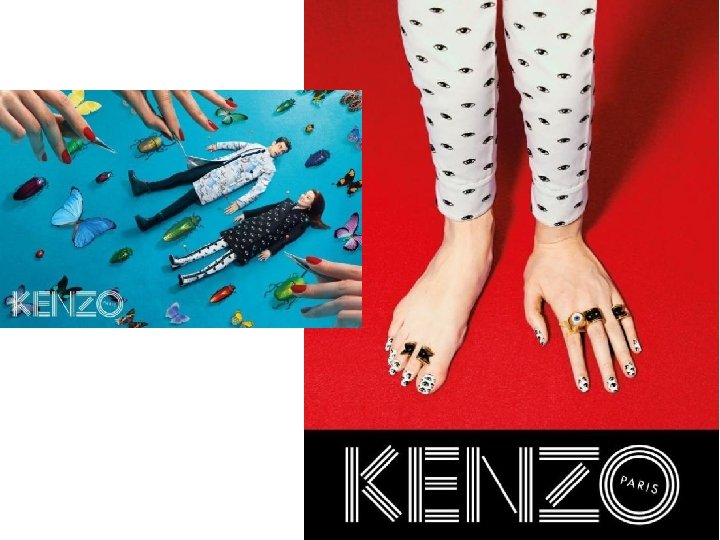
Absurd/Surreal/Bizarre

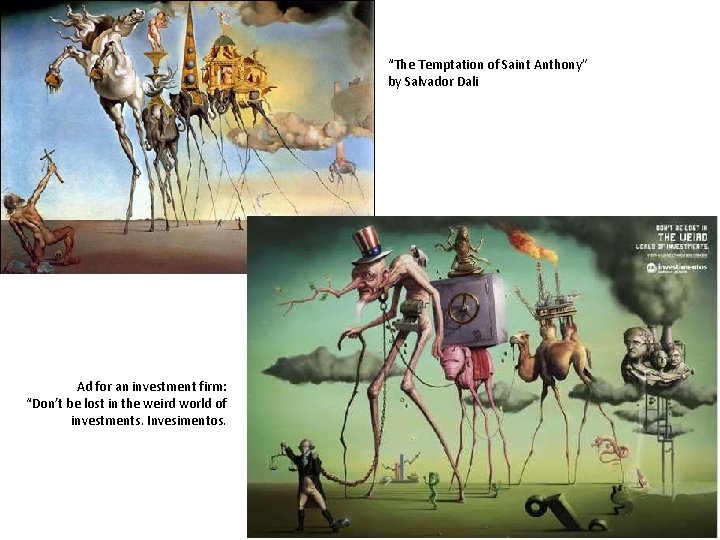
• Ad for an investment firm: “Don’t be lost in the weird world of investments. Invesimentos. “The Temptation of Saint Anthony” by Salvador Dali
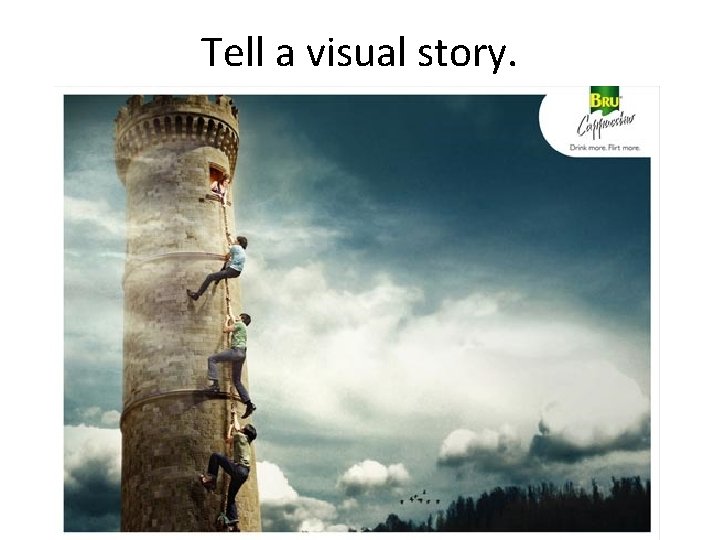
Tell a visual story.

NIVEA SUN self tan spray Twist on a cultural icon, story, or meme
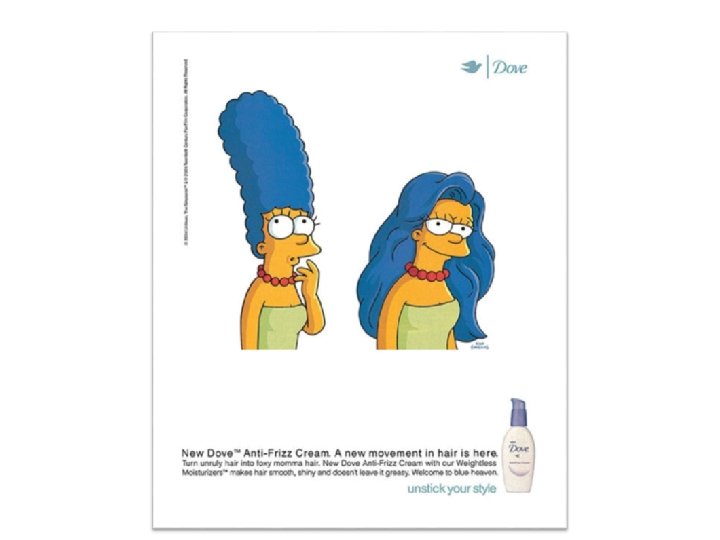

Play with synechdoce.
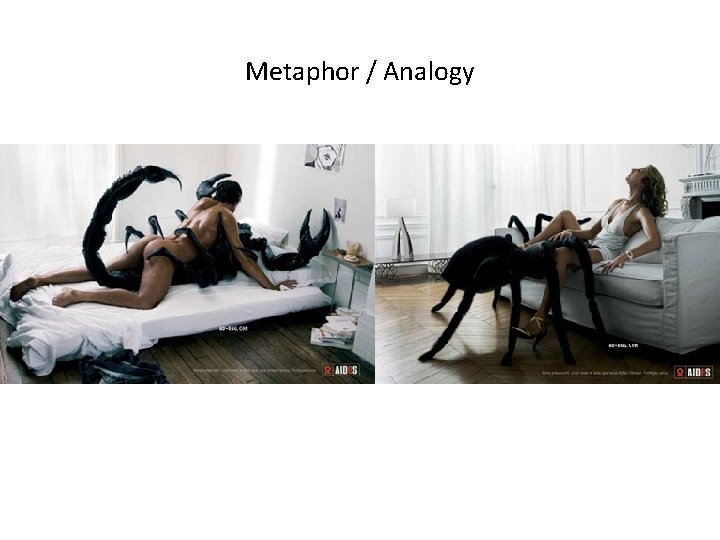
Metaphor / Analogy
Play with “synechdoce. ” • “The pen is mightier than the sword” is synechdoce (pen represents writing; sword represents force). • Definition: the substitution of the name of an attribute or adjunct for that of the thing meant, for example suit for business executive, or the track for horse racing. • A synechdoce is similar to a metaphor, but synechdoce is related to what it represents instead of literally unrelated.
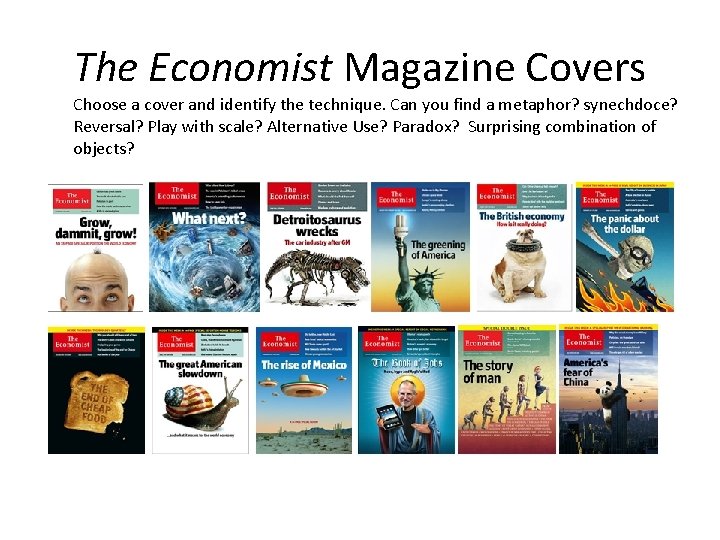
The Economist Magazine Covers Choose a cover and identify the technique. Can you find a metaphor? synechdoce? Reversal? Play with scale? Alternative Use? Paradox? Surprising combination of objects?
Questions? • Introduce Exercise/Assignment
- Slides: 42