
CONCEPTUAL DESIGN PRESENTATION TEAM EMINENCE Presented By Ahmed
CONCEPTUAL DESIGN PRESENTATION TEAM EMINENCE Presented By: Ahmed Shawgi Mohammed Abu Geyab STEPS 251 Wednesday, April-20 th, 2011 Instructor: Dr. Lisa Lamont Mr. Eurof Thomas
� Revised Client statement � Objectives Tree � Pair wise comparison � Functions & Requirements � Morphological chart � 3 Conceptual design alternatives � Evaluation metrics � Recommended design � Conclusion
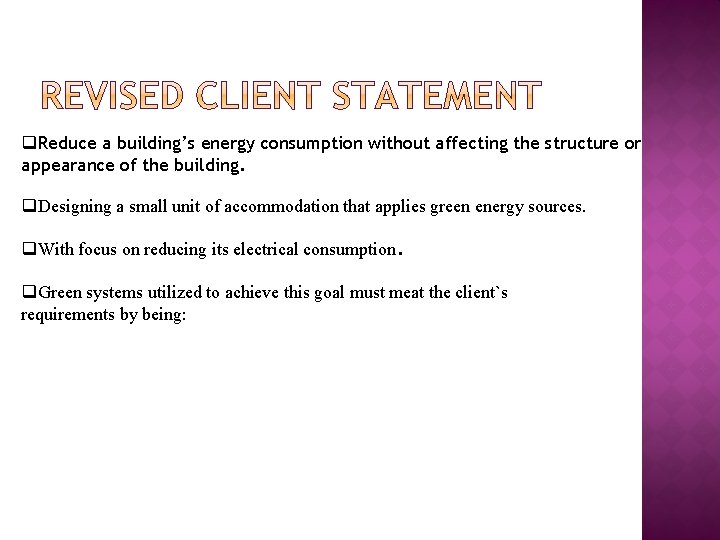
q. Reduce a building’s energy consumption without affecting the structure or appearance of the building. q. Designing a small unit of accommodation that applies green energy sources. q. With focus on reducing its electrical consumption. q. Green systems utilized to achieve this goal must meat the client`s requirements by being:
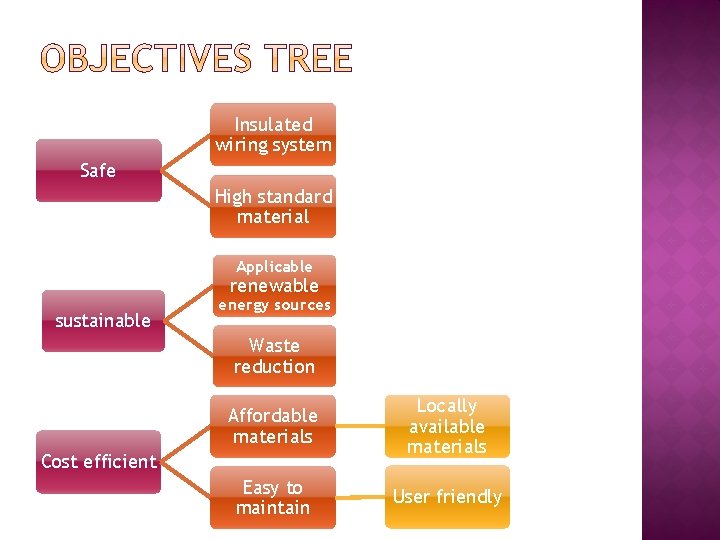
Insulated wiring system Safe High standard material Applicable renewable sustainable energy sources Waste reduction Affordable materials Locally available materials Easy to maintain User friendly Cost efficient
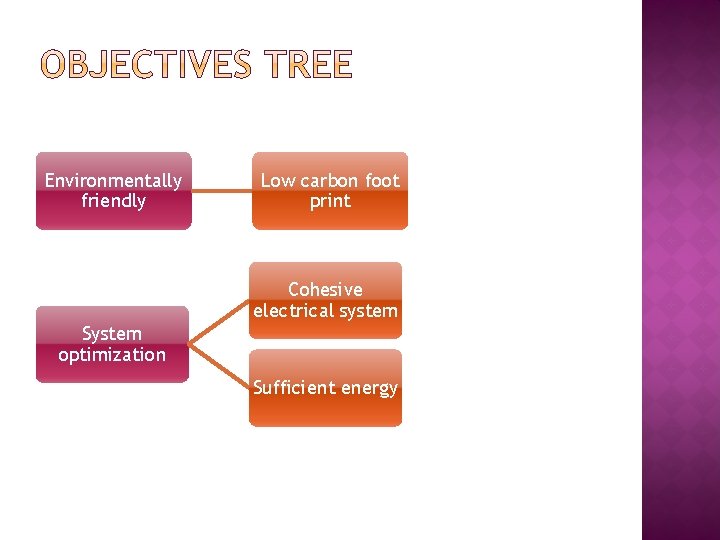
Environmentally friendly Low carbon foot print Cohesive electrical system System optimization Sufficient energy
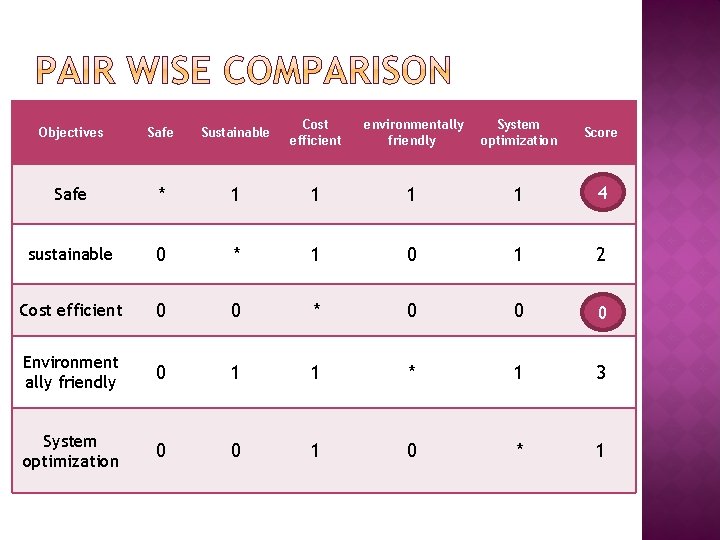
Objectives Safe Sustainable Cost efficient environmentally friendly System optimization Score Safe * 1 1 4 sustainable 0 * 1 0 1 2 Cost efficient 0 0 * 0 0 0 Environment ally friendly 0 1 1 * 1 3 System optimization 0 0 1 0 * 1
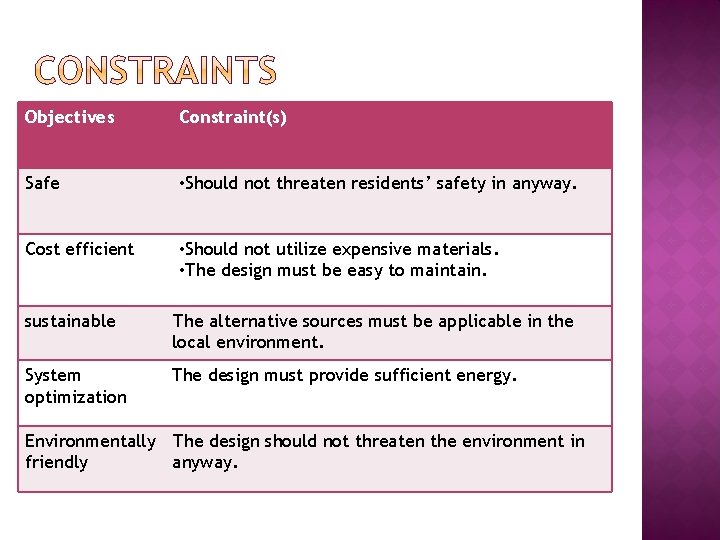
Objectives Constraint(s) Safe • Should not threaten residents’ safety in anyway. Cost efficient • Should not utilize expensive materials. • The design must be easy to maintain. sustainable The alternative sources must be applicable in the local environment. System optimization The design must provide sufficient energy. Environmentally The design should not threaten the environment in friendly anyway.
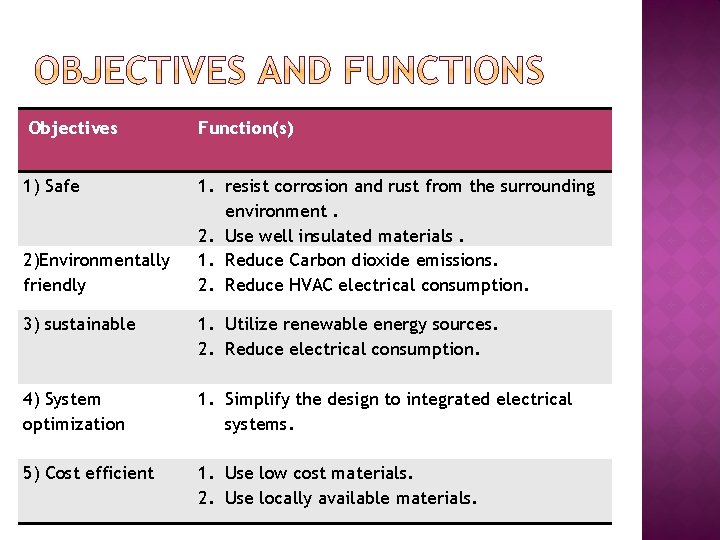
Objectives 1) Safe 2)Environmentally friendly Function(s) 1. resist corrosion and rust from the surrounding environment. 2. Use well insulated materials. 1. Reduce Carbon dioxide emissions. 2. Reduce HVAC electrical consumption. 3) sustainable 1. Utilize renewable energy sources. 2. Reduce electrical consumption. 4) System optimization 1. Simplify the design to integrated electrical systems. 5) Cost efficient 1. Use low cost materials. 2. Use locally available materials.
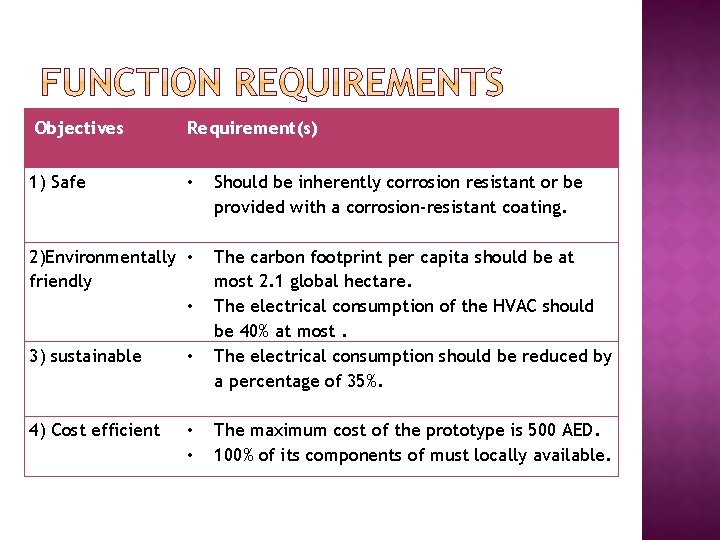
Objectives 1) Safe Requirement(s) • 2)Environmentally • friendly • 3) sustainable • 4) Cost efficient • • Should be inherently corrosion resistant or be provided with a corrosion-resistant coating. The carbon footprint per capita should be at most 2. 1 global hectare. The electrical consumption of the HVAC should be 40% at most. The electrical consumption should be reduced by a percentage of 35%. The maximum cost of the prototype is 500 AED. 100% of its components of must locally available.
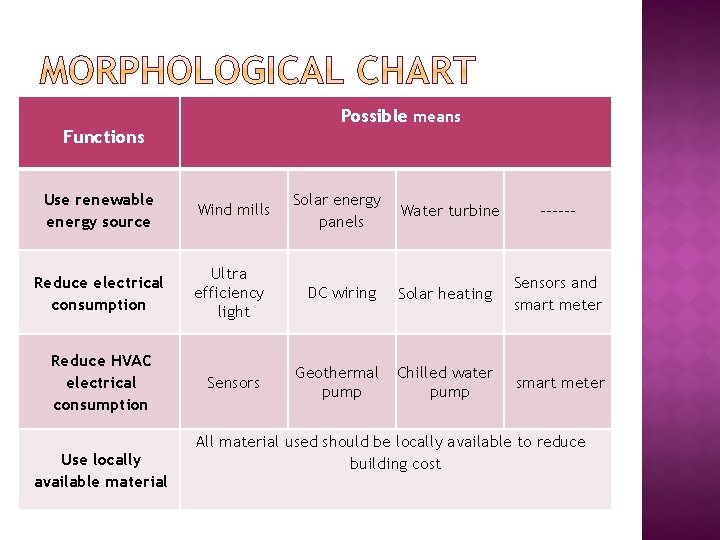
Possible means Functions Use renewable energy source Reduce electrical consumption Reduce HVAC electrical consumption Use locally available material Wind mills Solar energy panels Water turbine ------ Ultra efficiency light DC wiring Solar heating Sensors and smart meter Sensors Geothermal pump Chilled water pump smart meter All material used should be locally available to reduce building cost
Design 1
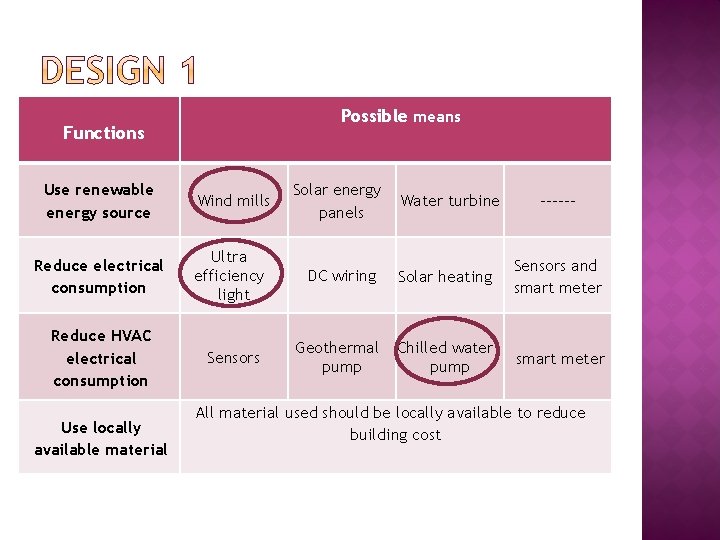
Possible means Functions Use renewable energy source Reduce electrical consumption Reduce HVAC electrical consumption Use locally available material Wind mills Solar energy panels Water turbine ------ Ultra efficiency light DC wiring Solar heating Sensors and smart meter Sensors Geothermal pump Chilled water pump smart meter All material used should be locally available to reduce building cost
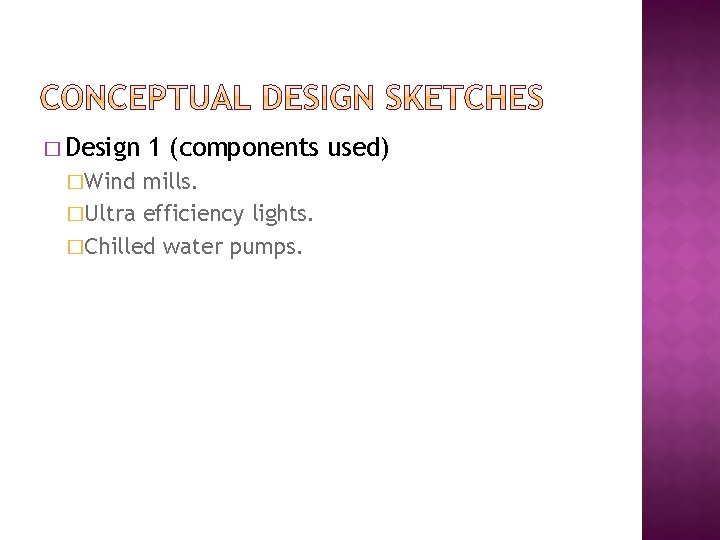
� Design �Wind 1 (components used) mills. �Ultra efficiency lights. �Chilled water pumps.

Wind Mill
Design 2
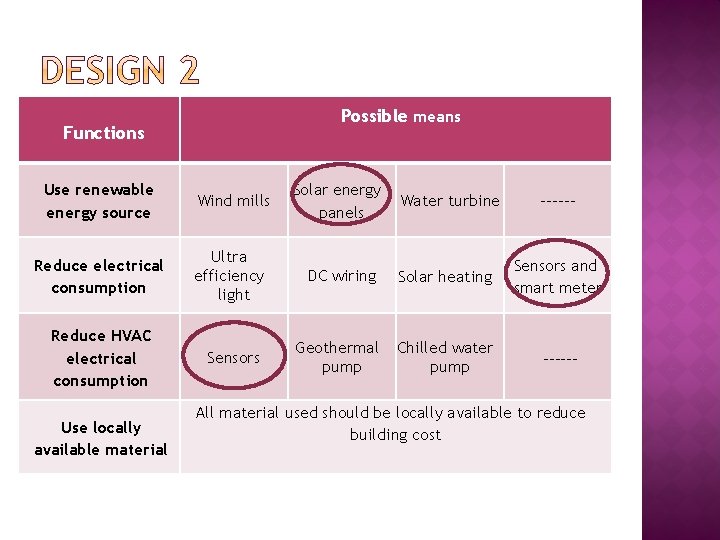
Possible means Functions Use renewable energy source Reduce electrical consumption Reduce HVAC electrical consumption Use locally available material Wind mills Solar energy panels Water turbine ------ Ultra efficiency light DC wiring Solar heating Sensors and smart meter Sensors Geothermal pump Chilled water pump ------ All material used should be locally available to reduce building cost
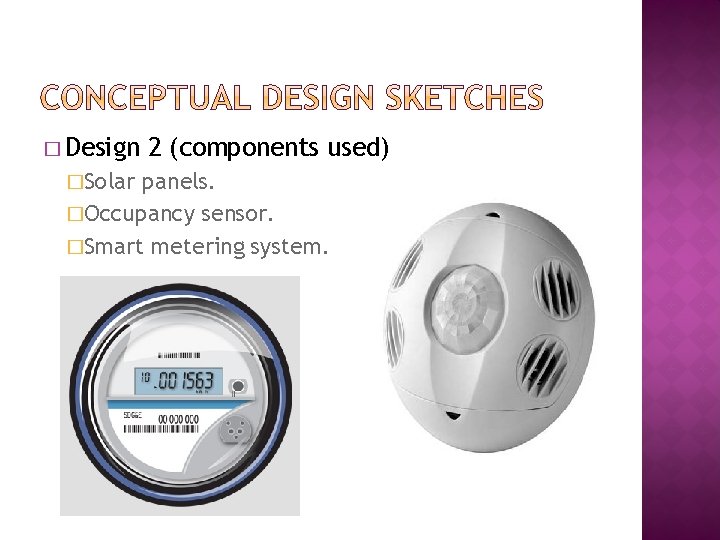
� Design �Solar 2 (components used) panels. �Occupancy sensor. �Smart metering system.
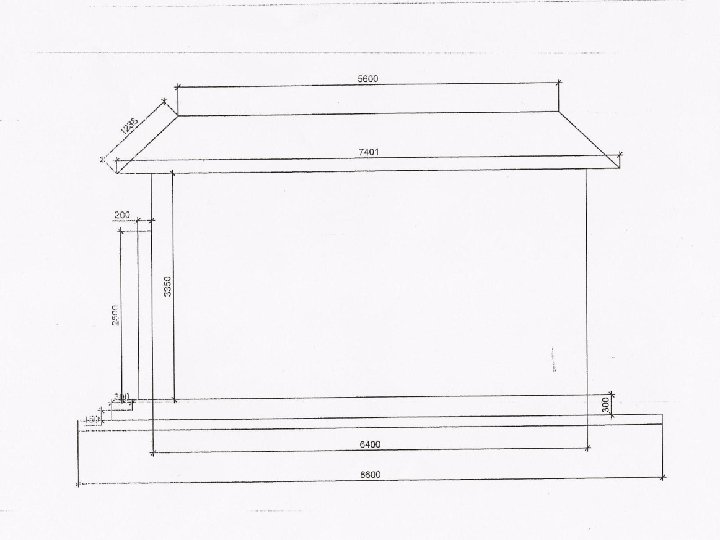
� Design 1
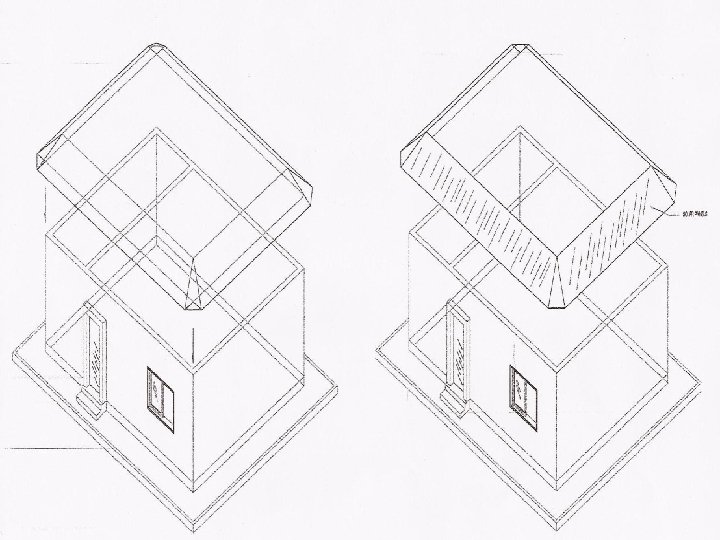
� Design 1
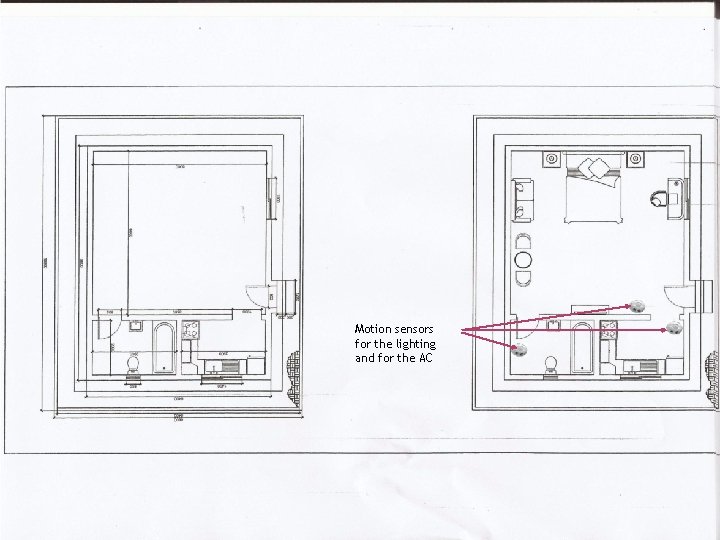
� Design 1 Motion sensors for the lighting and for the AC
Design 3
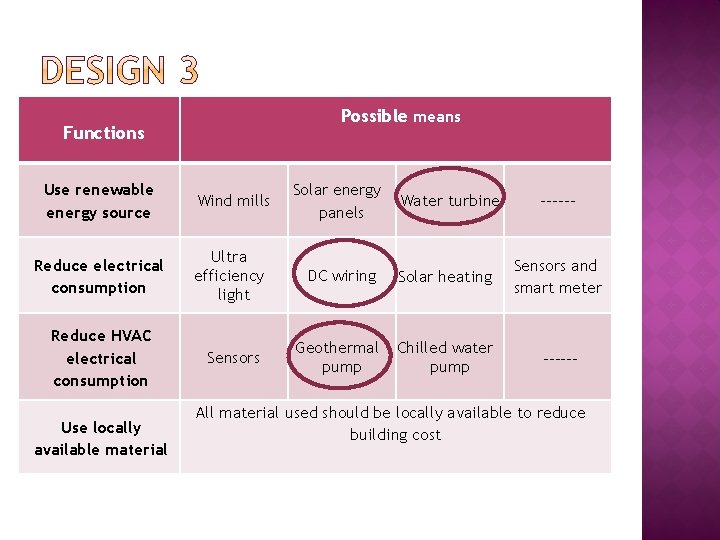
Possible means Functions Use renewable energy source Reduce electrical consumption Reduce HVAC electrical consumption Use locally available material Wind mills Solar energy panels Water turbine ------ Ultra efficiency light DC wiring Solar heating Sensors and smart meter Sensors Geothermal pump Chilled water pump ------ All material used should be locally available to reduce building cost
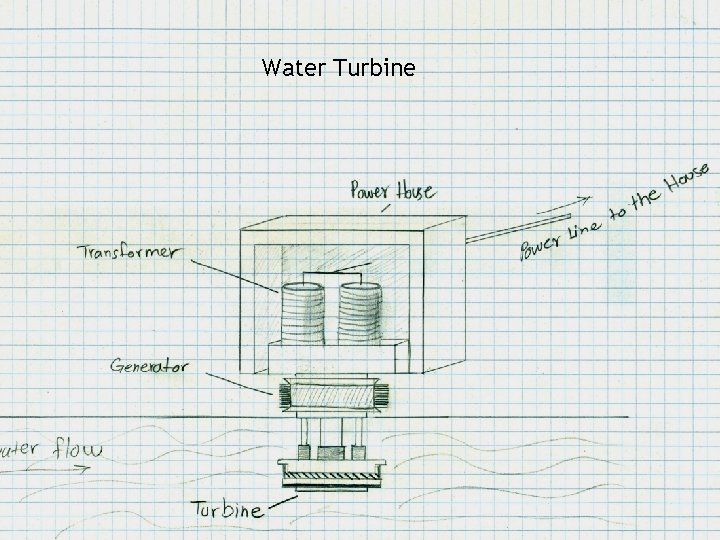
Water Turbine � Design �Water 3 (components used) Turbine. �DC wiring systems. �Geothermal pumps.
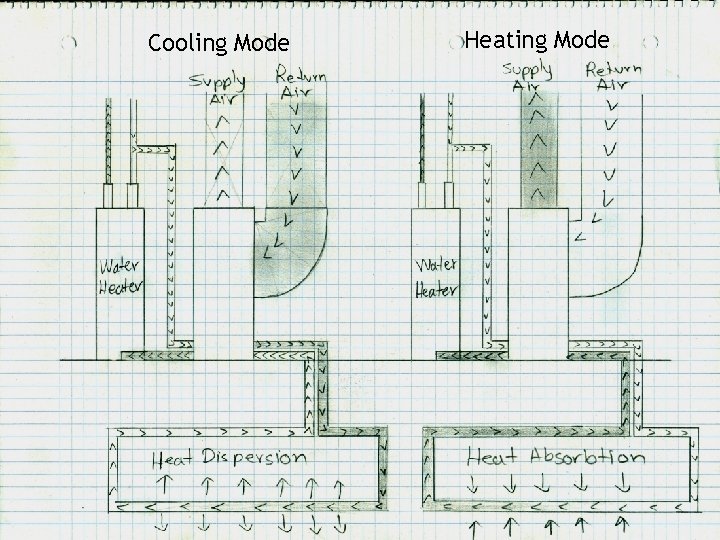
Cooling Mode Heating Mode
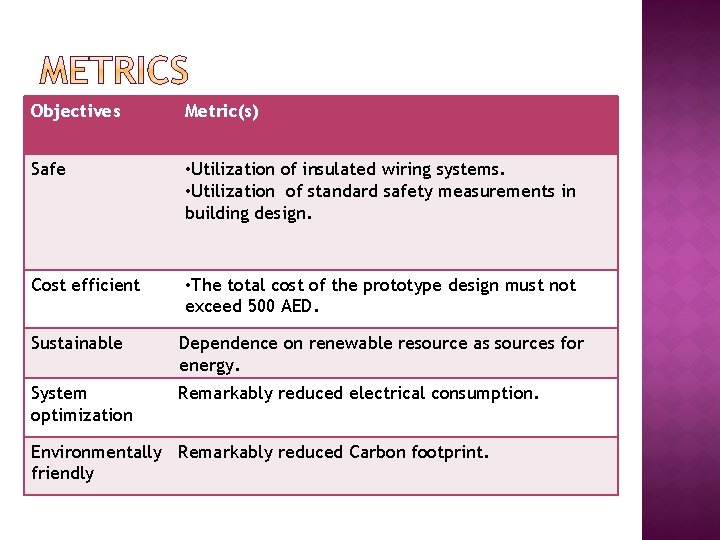
Objectives Metric(s) Safe • Utilization of insulated wiring systems. • Utilization of standard safety measurements in building design. Cost efficient • The total cost of the prototype design must not exceed 500 AED. Sustainable Dependence on renewable resource as sources for energy. System optimization Remarkably reduced electrical consumption. Environmentally Remarkably reduced Carbon footprint. friendly
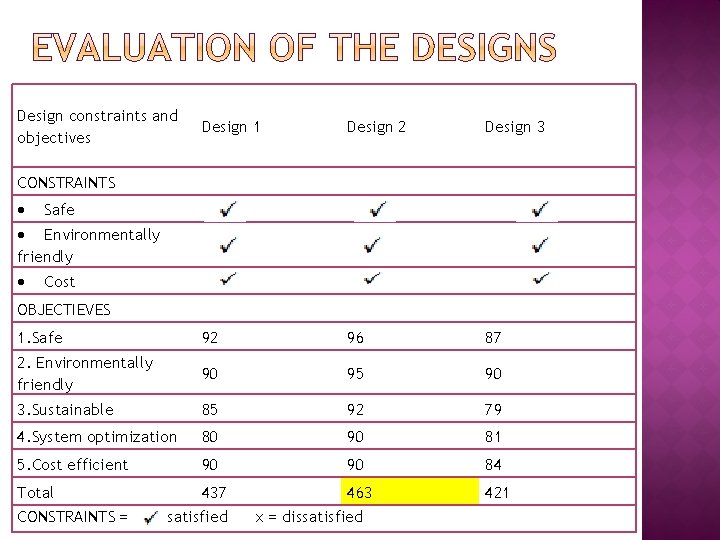
Design constraints and objectives Design 1 Design 2 Design 3 1. Safe 92 96 87 2. Environmentally friendly 90 95 90 3. Sustainable 85 92 79 4. System optimization 80 90 81 5. Cost efficient 90 90 84 Total 437 463 421 CONSTRAINTS Safe Environmentally friendly Cost OBJECTIEVES CONSTRAINTS = satisfied x = dissatisfied
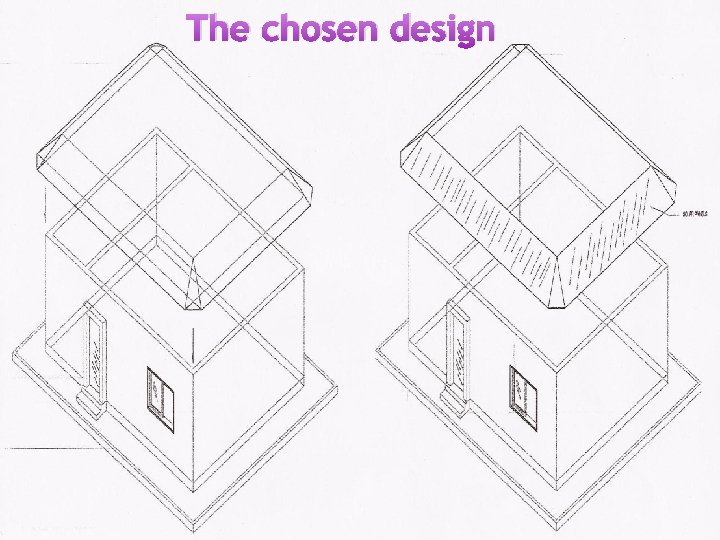
The chosen design � Design 1
� Further information needs to be collected on the following areas: Safety and durability of the chosen designs Technical analysis of the designs. Materials to be used in each component Easiness of maintenance.
� Features of the project � Our goals from the achievement of the project

� Thank you for listening Q&A

� http: //www. madawaart. com/wp- content/uploads/2010/12/6 -Types-of. Occupancy-Sensors-Explained. jpg
- Slides: 34