
CONCEPTS TO BE INCLUDED Observation as data collection
CONCEPTS TO BE INCLUDED § Observation (as data collection method) § Naturalistic & contrived observation § Participant & non-participant observation § Observation or rating § observation schedules § Event sampling § Time sampling
DATA-COLLECTION METHODS: OBSERVATION
AIM Introducing various types of observation, including § Naturalistic & contrived observation § Participant & non-participant observation Types of ‘sampling’ in systematic observation Construction observation schedules
OBSERVATION OF BEHAVIOR A data collection method in which observations schedules are used to observe the behavior of a sample of units of observation to say something about a population of units of analysis
WHEN TO USE OBSERVATION? When you are interested … Because they cannot answer all ‘questions’ in characteristics of (very) young children or animals or in specific (potentially visible) behaviors of adults … you are advised to use observation Not ‘thoughts’ or ‘opinions’ Non-verbal and sometimes unobtrusive
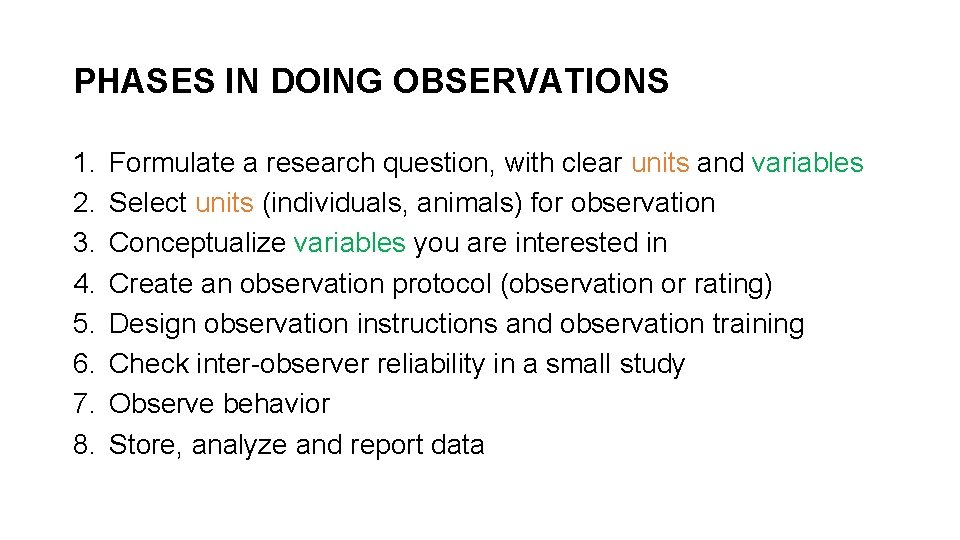
PHASES IN DOING OBSERVATIONS 1. 2. 3. 4. 5. 6. 7. 8. Formulate a research question, with clear units and variables Select units (individuals, animals) for observation Conceptualize variables you are interested in Create an observation protocol (observation or rating) Design observation instructions and observation training Check inter-observer reliability in a small study Observe behavior Store, analyze and report data
UNITS AND VARIABLES: WHAT TO OBSERVE? Be clear about the units (individuals, animals or events) you want to study, the variables used to describe these units For example: § Which children are able to concentrate? § In which classes (schools) are children better able to concentrate?
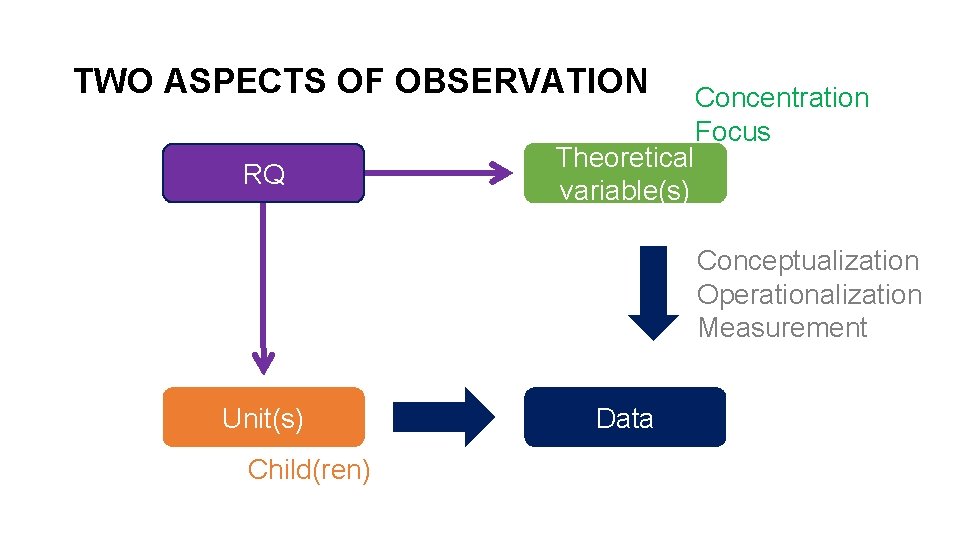
TWO ASPECTS OF OBSERVATION RQ Theoretical variable(s) Concentration Focus Conceptualization Operationalization Measurement Unit(s) Child(ren) Data
TYPES OF OBSERVATION § (Systematic and non-systematic observation) § Naturalistic versus contrived (structured) observation § Unobtrusive versus obtrusive observation § Participant versus non-participant observation
‘SAMPLING’ IN OBSERVATIONAL STUDIES A: Study a sample of children (or one child on a specific day) B: Study part of the behaviors: § Event ‘sampling’ (record types of behaviors) § Time sampling (describe behaviors at specific time intervals) Better seen as part of the operationalization
‘SAMPLING’ IN OBSERVATIONAL STUDIES Event ‘sampling’ (Example: record number of times a child gets distracted) § Limited number of units § Limited number of behaviors § All instances of these behaviors
‘SAMPLING’ IN OBSERVATIONAL STUDIES Time sampling =describe behavior at specific time intervals. example: first minute, fifth minute, ninth minute etc. § Larger number of units § Larger number of behaviors § Not all instances of these behaviors (sampling)
(NOT) INTERPRETING BEHAVIOR Example: a child is looking out the window Observer bias: personal characteristics determine observations Observer drift: interpretations change over time Observation schedule: “a description of how to write down behaviors in such a way that everyone at every moment in time would write down the same thing”
DESCRIPTIONS & RATINGS BY OBSERVERS Observing behaviors (reducing interpretation – decreasing comparability) Rating behaviors (increasing interpretation – increasing comparability) In both case: make clear how the measurement relate to the concepts you want to observe (validity).
OBSERVATION SCHEDULE A: Categories to be used when recording observations Ratings or observational categories B: Instructions describing how to use the schedule
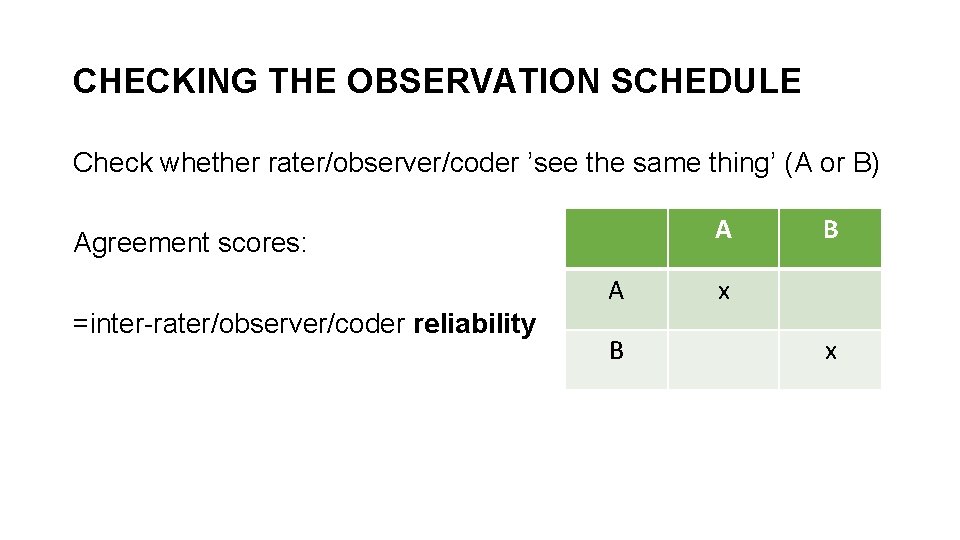
CHECKING THE OBSERVATION SCHEDULE Check whether rater/observer/coder ’see the same thing’ (A or B) A Agreement scores: A =inter-rater/observer/coder reliability B B x x
THIS MICROLECTURE § Introducing various types of observation, including § Naturalistic & contrived observation § Participant & non-participant observation § Time sampling and event sampling § Observation and rating schedules

IMAGES USED § No reference needed
- Slides: 19