
Concepts of prevention Contents Introduction Levels of prevention


- Slides: 19
Concepts of prevention
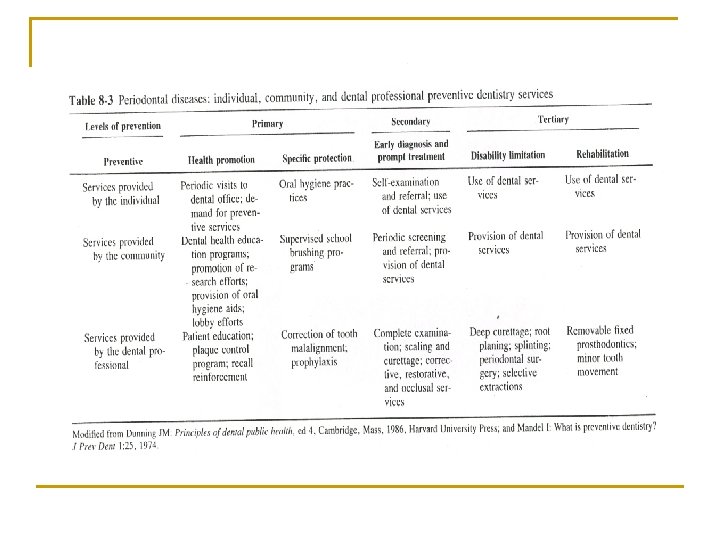
Contents: Ø Ø Introduction Levels of prevention q q Ø Primordial prevention Primary prevention Secondary prevention Tertiary prevention Modes of intervention q q q Health promotion Specific protection Early diagnosis and prompt treatment Disability limitation Rehabilitation
Introduction
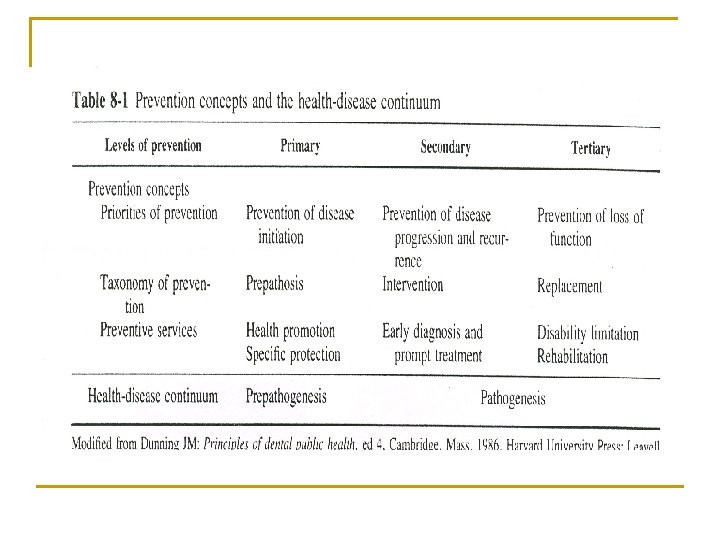
Levels of prevention: n n Primordial prevention Primary prevention Secondary prevention Tertiary prevention
Primordial prevention: n n n New concept Primary prevention in its purest sense Prevention of emergence or development of risk factors in which they have not appeared E. g. . , efforts directed towards discouraging children from adopting unhealthy lifestyles like smoking, eating patterns Main intervention is through individual and mass education
Primary prevention: n n n Defined as “action taken prior to the onset of disease, which removes the possibility that a disease will ever occur” It signifies intervention in pre-pathogenesis phase Accomplished by measures designed to promote general health and well-being and quality of life of people or by specific protective measures
n n WHO has recommended the following approaches for prevention of chronic diseases: Population (mass) strategy High-risk strategy Primary prevention is an holistic approach
Secondary prevention: n n Ø n n Defined as “an action which halts the progress of a disease at its incipient stage and prevents complications” Specific interventions-early diagnosis and prompt treatment By early diagnosis: Arrest the disease process Restore health by seeking out unrecognized disease Protects other community from acquiring infection Drawbacks: -more expensive and less effective than primary prevention
Tertiary prevention: n n Signifies intervention in late pathogenesis phase Defined as “all measures available to reduce or limit impairments and disabilities, minimize suffering caused by existing departures from good health and to promote the patient’s adjustment to irremediable conditions”
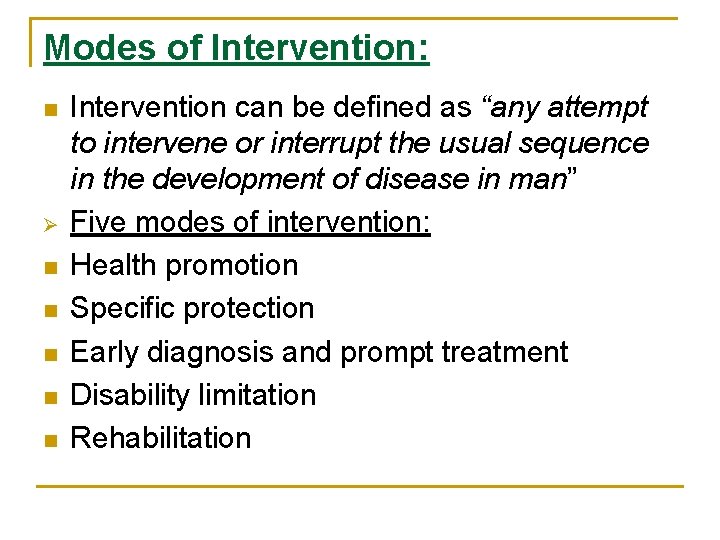
Modes of Intervention: n Ø n n n Intervention can be defined as “any attempt to intervene or interrupt the usual sequence in the development of disease in man” Five modes of intervention: Health promotion Specific protection Early diagnosis and prompt treatment Disability limitation Rehabilitation
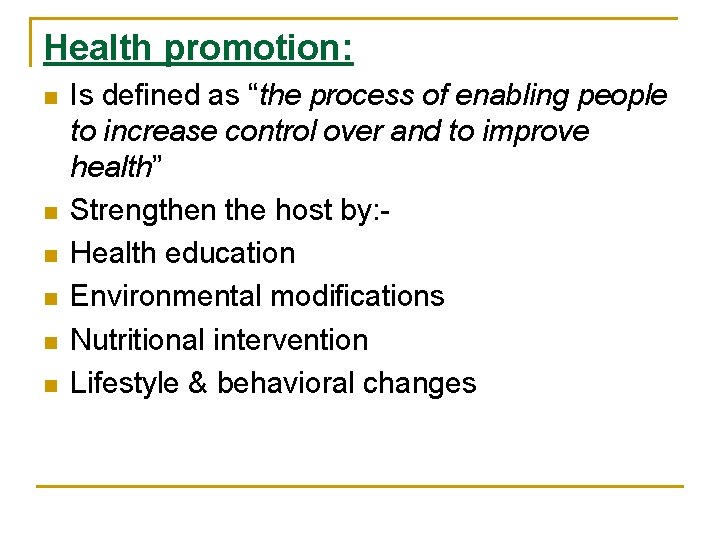
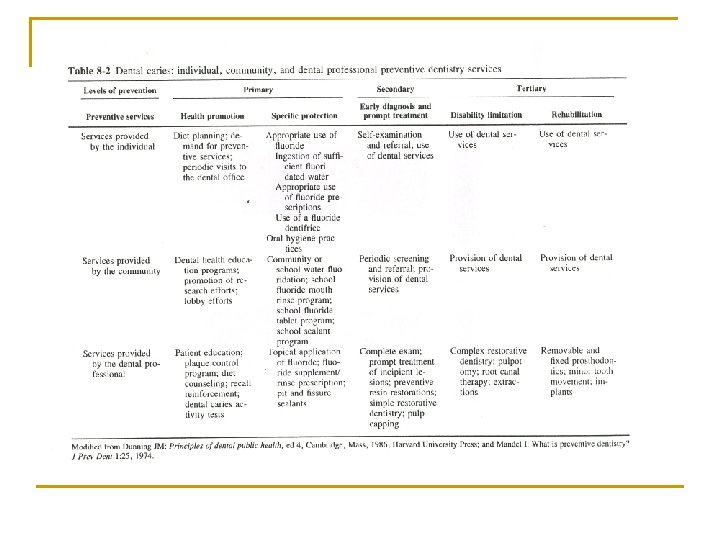
Health promotion: n n n Is defined as “the process of enabling people to increase control over and to improve health” Strengthen the host by: Health education Environmental modifications Nutritional intervention Lifestyle & behavioral changes
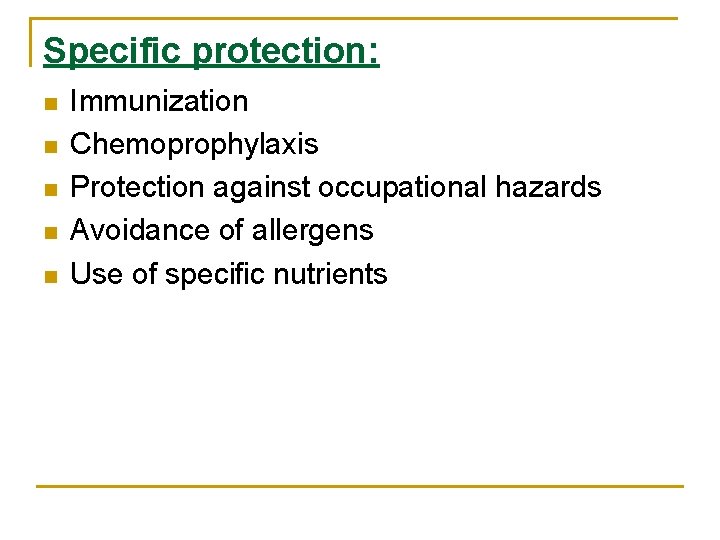
Specific protection: n n n Immunization Chemoprophylaxis Protection against occupational hazards Avoidance of allergens Use of specific nutrients
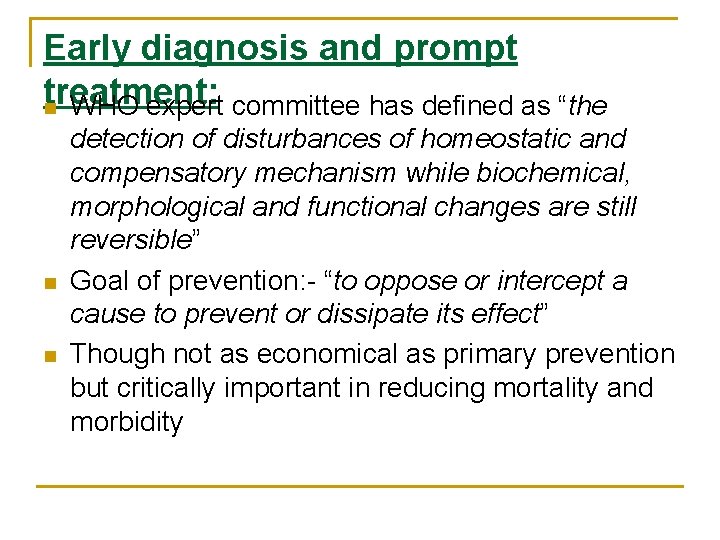
Early diagnosis and prompt treatment: n WHO expert committee has defined as “the n n detection of disturbances of homeostatic and compensatory mechanism while biochemical, morphological and functional changes are still reversible” Goal of prevention: - “to oppose or intercept a cause to prevent or dissipate its effect” Though not as economical as primary prevention but critically important in reducing mortality and morbidity
Disability limitation: n n Late pathogenesis phase. Objective : to prevent or halt the transition of the disease process from impairment to handicap
Rehabilitation: n Defined as “the combined and coordinated use of medical, social, educational and vocational measures for training and retraining the individual to the highest possible level of functional ability”
Thank you