
Concepts and Introduction to RNA Bioinformatics Annalisa Marsico
Concepts and Introduction to RNA Bioinformatics Annalisa Marsico Wintersemester 2014/15

Goals of this course - I • Soft skills – Learn how to evaluate a research paper – Learn what makes a paper good – Learn how to get your paper published – Learn how to give a scientific talk – Learn to be critical / evaluate
Goals of this course - II • Hard skills – Get an overview of the RNA bioinformatics field – Learn how basic concepts / algorithms/ statistical methods are applied and extended in this field – Learn how to ask the right biological question and choose the right computational methods ‚to solve it‘
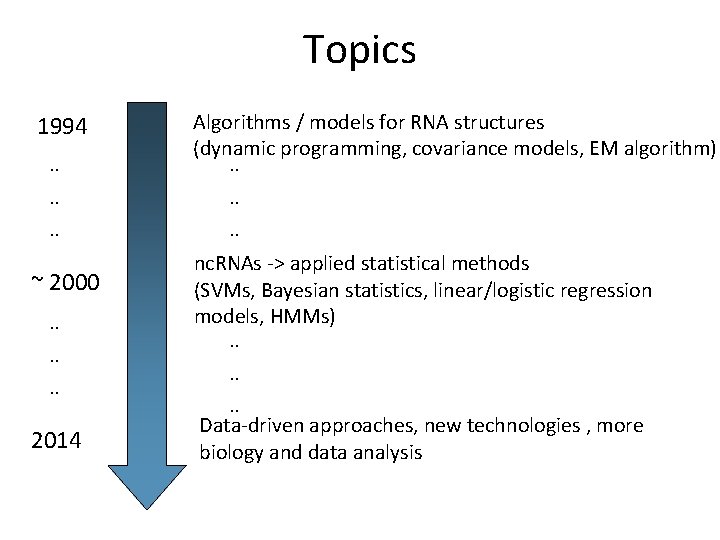
Topics 1994. . Algorithms / models for RNA structures (dynamic programming, covariance models, EM algorithm). . ~ 2000. . . 2014 nc. RNAs -> applied statistical methods (SVMs, Bayesian statistics, linear/logistic regression models, HMMs). . . Data-driven approaches, new technologies , more biology and data analysis

Course design • Today -> overview on the topics, assignment of papers • Student presentations – Each student will choose a paper and will give a presentation – Two presentations per term (30 -40 minutes + 15 minutes questions) – Discussion: questions, critical assessmnet
Presentation guidelines Compression with minimal loss of information 1. 2. 3. 4. Understand the context & data used Identify the important question/motivation Focus on the method Summarize shortly the main findings – Forget about unimportant details 5. Evaluate and think about possible future directions
Advices / Help • Read your paper twice before saying ‚I don‘t understand it‘ • Read the supplementary material • Do not try to understand every detail but the general idea has to be clear • Main objective: lively interesting talk that promotes discussion • Come anytime to me with questions (write me 3 -4 days before) marsico@molgen. mpg. de Tel: +49 30 8413 1843 where: MPI for Molecular Genetics, Ihnestrasse 63 -73, Room 1. 3. 07 • send me your presentation one week before your talk • Get feedback and give feedback (also to me )
Practical information Day First talk Second talk October 15 Introduction October 22 questions October 29 Rome backup November 05 November 12 November 19 November 26 December 03 December 10 December 17 January 07 (‘ 15)
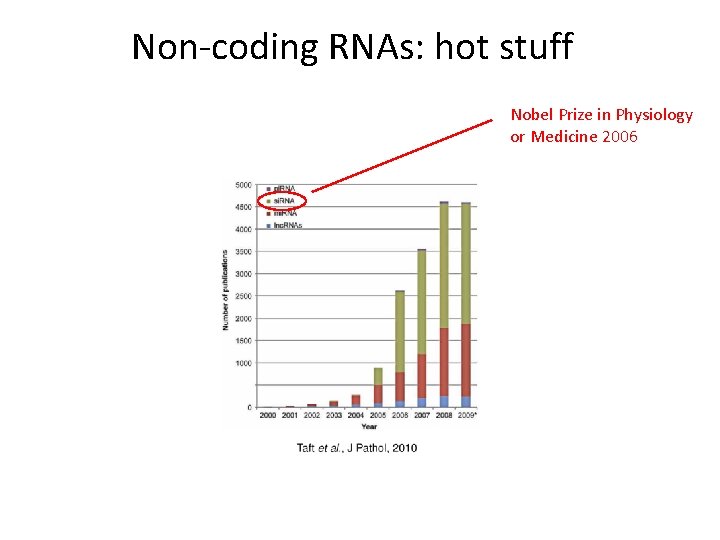
The „RNA revolution“ • • • Not only intermediates between DNA and proteins, but informational molecules (enzymes) The first primitive form of life? (Woese CR 1967) Ability to function as molecular machines (e. g. t. RNA, RNAs in splicesosome complex) Ability to to function as regulators of gene expression (mi. RNA, s. RNAs, pi. RNAs, linc. RNA, e. RNAs, ce. RNAs. . ) Different sizes and functions (e. g. mi. RNAs 22 nt, linc. RNAs > 200 nt) 1. 5 % of the human genome codes for protein, the rest is ‚junk‘ Since ten years junk has become really important -> transcribed in nc. RNAs More than 80% of human disease loci are within non-coding regions A lot of tools developed to identify nc. RNA genes E. g. Rfam – database which collect RNA families and their potential functions

The Eukaryotic Genome as an RNA machine The ‘RNA world’ linc. RNAs Promoter-associated RNAs E(enhancer-like)RNAs mi. RNAs Amaral et al. Science 2008; 319: 1787 -1789

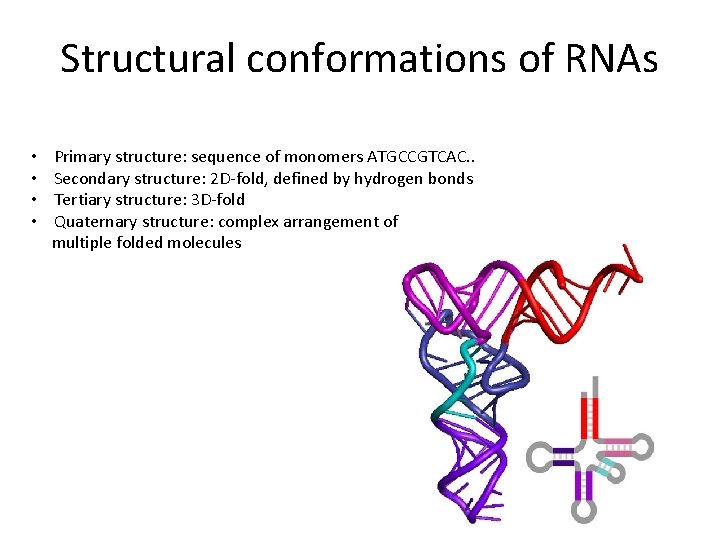
RNA backbone Secondary structure: set of base pairs which can be mapped into a plane
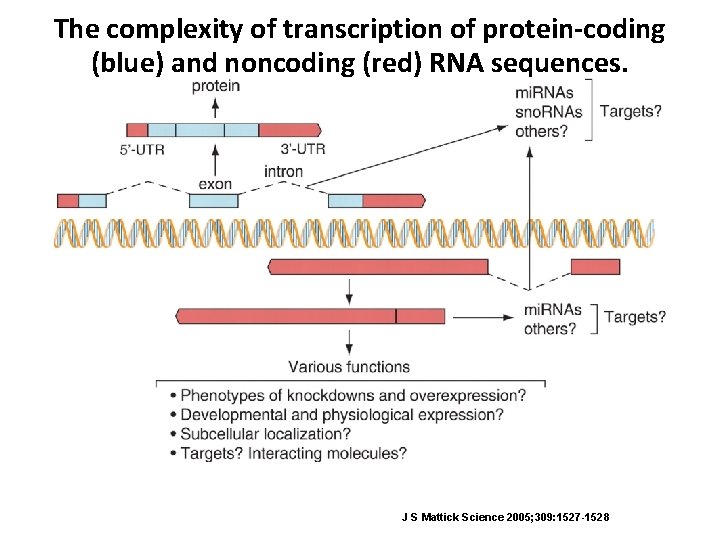
The complexity of transcription of protein-coding (blue) and noncoding (red) RNA sequences. J S Mattick Science 2005; 309: 1527 -1528
Non-coding RNAs: hot stuff Nobel Prize in Physiology or Medicine 2006
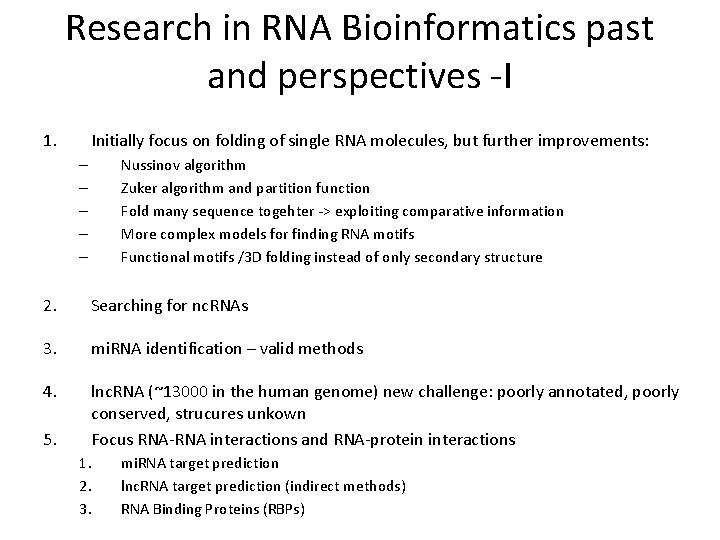
Research in RNA Bioinformatics past and perspectives -I 1. Initially focus on folding of single RNA molecules, but further improvements: Nussinov algorithm Zuker algorithm and partition function Fold many sequence togehter -> exploiting comparative information More complex models for finding RNA motifs Functional motifs /3 D folding instead of only secondary structure – – – 2. Searching for nc. RNAs 3. mi. RNA identification 4. lnc. RNA (~13000 in the human genome) new challenge: poorly annotated, poorly conserved, strucures unkown Focus RNA-RNA interactions and RNA-protein interactions 5. 1. 2. 3. mi. RNA target prediction lnc. RNA target prediction (indirect methods) RNA Binding Proteins (RBPs)

Slide from Dominic Rose University of Freiburg
Structural conformations of RNAs • • Primary structure: sequence of monomers ATGCCGTCAC. . Secondary structure: 2 D-fold, defined by hydrogen bonds Tertiary structure: 3 D-fold Quaternary structure: complex arrangement of multiple folded molecules

RNA folding prediction algorithms • Approximation: prediction of RNA secondary structure RNAfold < trna. fa >AF 041468 GGGGGUAUAGCUCAGUUGGUAGAGCGCUGCCUUUGCACGGCAGAUGUCAGGGGUUCGAGUCCCCUUACCUCCA (((((((. . )))). (((((. . . . ))))). . . (((((. . . . )))))). -31. 10 kcal/mol
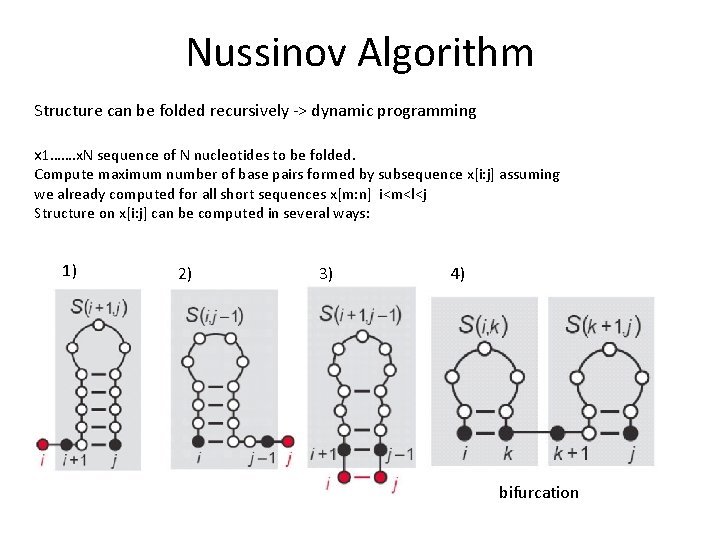
Nussinov Algorithm Structure can be folded recursively -> dynamic programming x 1……. x. N sequence of N nucleotides to be folded. Compute maximum number of base pairs formed by subsequence x[i: j] assuming we already computed for all short sequences x[m: n] i<m<l<j Structure on x[i: j] can be computed in several ways: 1) 2) 3) 4) bifurcation
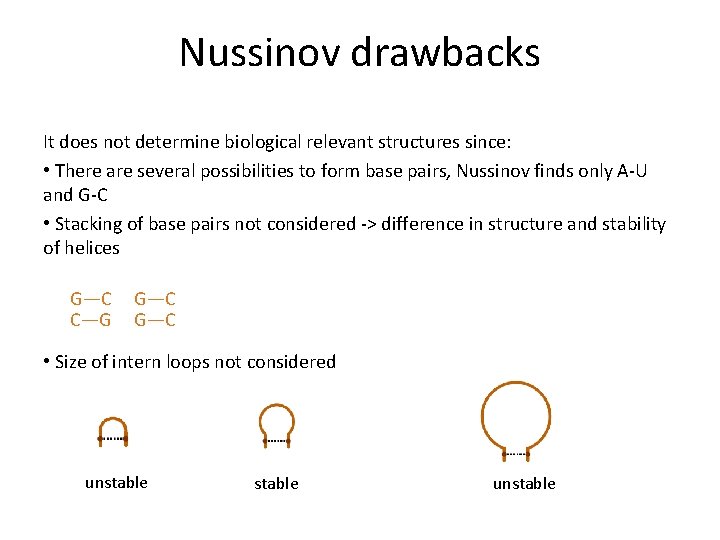
Nussinov drawbacks It does not determine biological relevant structures since: • There are several possibilities to form base pairs, Nussinov finds only A-U and G-C • Stacking of base pairs not considered -> difference in structure and stability of helices G—C C—G G—C • Size of intern loops not considered unstable instable unstable
RNA structure prediction: MFE-folding • More realisistic is to consider thermodynamics and statistical mechanis • Stability of an RNA structure coincides with thermodynamics stability • Quantified as the amount of free energyreleased/used by forming base pairs ∆G. The more negative ∆G the more stable is the structure • Can be measured for loops, stacks, and other motifs - > depends on the local surrounding • Complete free energy is the summation • Find the structure with lowest total free energy
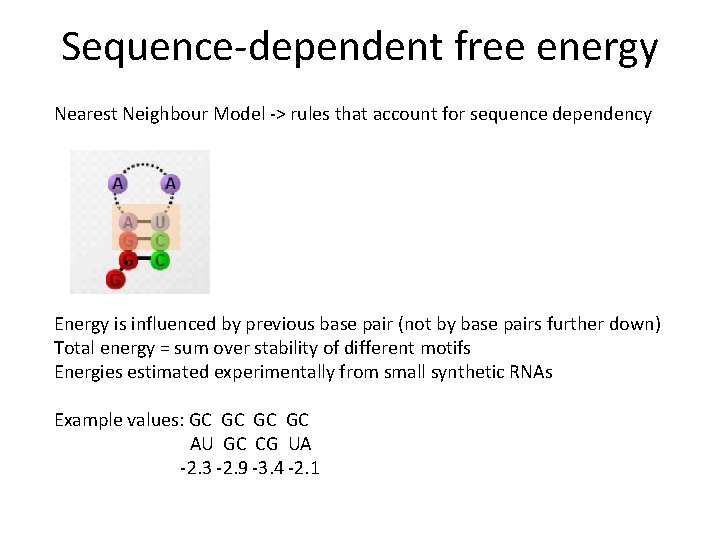
Sequence-dependent free energy Nearest Neighbour Model -> rules that account for sequence dependency Energy is influenced by previous base pair (not by base pairs further down) Total energy = sum over stability of different motifs Energies estimated experimentally from small synthetic RNAs Example values: GC GC AU GC CG UA -2. 3 -2. 9 -3. 4 -2. 1
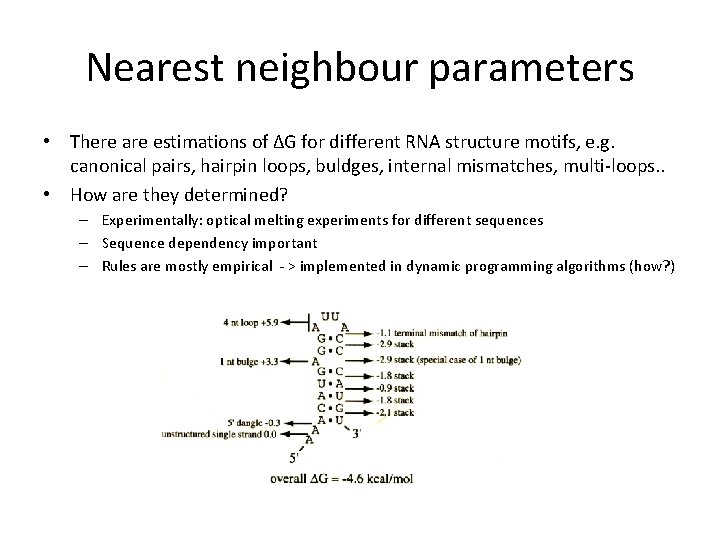
Nearest neighbour parameters • There are estimations of ∆G for different RNA structure motifs, e. g. canonical pairs, hairpin loops, buldges, internal mismatches, multi-loops. . • How are they determined? – Experimentally: optical melting experiments for different sequences – Sequence dependency important – Rules are mostly empirical - > implemented in dynamic programming algorithms (how? )
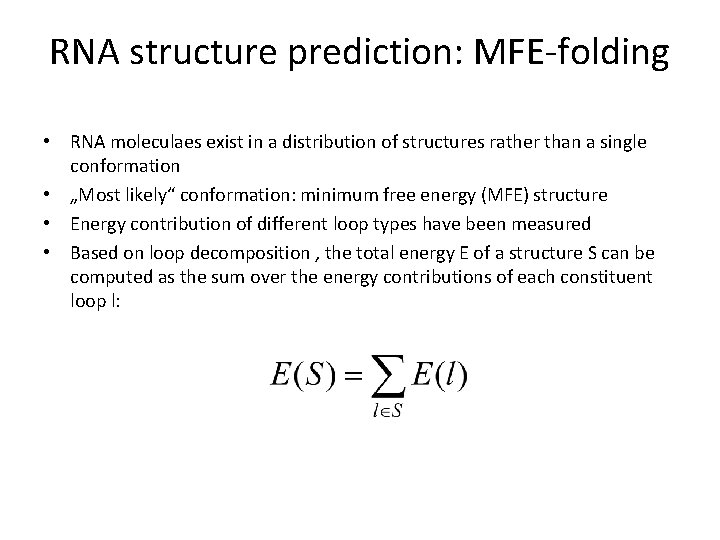
RNA structure prediction: MFE-folding • RNA moleculaes exist in a distribution of structures rather than a single conformation • „Most likely“ conformation: minimum free energy (MFE) structure • Energy contribution of different loop types have been measured • Based on loop decomposition , the total energy E of a structure S can be computed as the sum over the energy contributions of each constituent loop l:
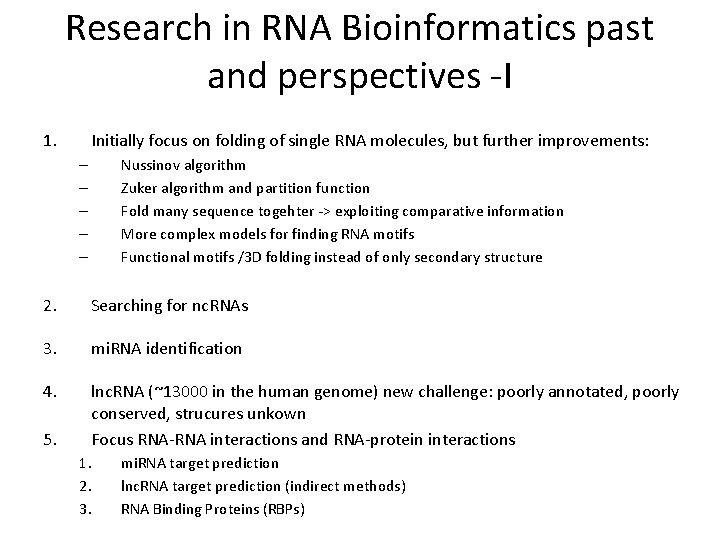
Research in RNA Bioinformatics past and perspectives -I 1. Initially focus on folding of single RNA molecules, but further improvements: Nussinov algorithm Zuker algorithm and partition function Fold many sequence togehter -> exploiting comparative information More complex models for finding RNA motifs Functional motifs /3 D folding instead of only secondary structure – – – 2. Searching for nc. RNAs 3. mi. RNA identification 4. lnc. RNA (~13000 in the human genome) new challenge: poorly annotated, poorly conserved, strucures unkown Focus RNA-RNA interactions and RNA-protein interactions 5. 1. 2. 3. mi. RNA target prediction lnc. RNA target prediction (indirect methods) RNA Binding Proteins (RBPs)
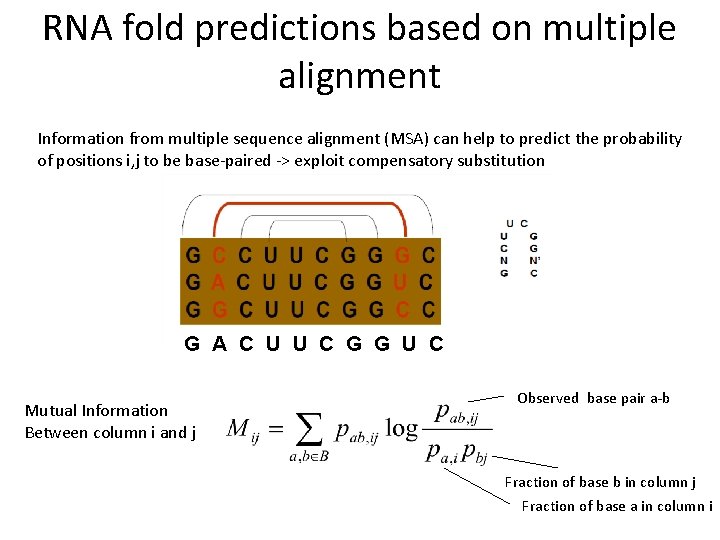
RNA fold predictions based on multiple alignment Information from multiple sequence alignment (MSA) can help to predict the probability of positions i, j to be base-paired -> exploit compensatory substitution G A C U U C G G U C Mutual Information Between column i and j Observed base pair a-b Fraction of base b in column j Fraction of base a in column i
RNA fold predictions based on multiple alignment Important: mutual information does not capture conserved base pairs q Conservation – no additional information q non-compensatory mutations (GC - GU) – do not support stem q Compensatory mutations – support stem. Information from multiple sequence alignment (MSA) can help to predict the probability of positions i, j to be base-paired -> modification of dynamic programming algorithm by adding Mij term to the energy model
PMID: 19014431
Research in RNA Bioinformatics past and perspectives -I 1. Initially focus on folding of single RNA molecules, but further improvements: Nussinov algorithm Zuker algorithm and partition function Fold many sequence togehter -> exploiting comparative information More complex models for finding RNA motifs Functional motifs /3 D folding instead of only secondary structure – – – 2. Searching for nc. RNAs 3. mi. RNA identification 4. lnc. RNA (~13000 in the human genome) new challenge: poorly annotated, poorly conserved, strucures unkown Focus RNA-RNA interactions and RNA-protein interactions 5. 1. 2. 3. mi. RNA target prediction lnc. RNA target prediction (indirect methods) RNA Binding Proteins (RBPs)
PMID: 8029015 PMID: 16357030
Research in RNA Bioinformatics past and perspectives -I 1. Initially focus on folding of single RNA molecules, but further improvements: Nussinov algorithm Zuker algorithm and partition function Fold many sequence togehter -> exploiting comparative information More complex models for finding RNA motifs Functional motifs /3 D folding instead of only secondary structure – – – 2. mi. RNA identification – valid methods 3. lnc. RNA (~13000 in the human genome) new challenge: poorly annotated, poorly conserved, strucures unkown Focus RNA-RNA interactions and RNA-protein interactions 4. 1. 2. 3. mi. RNA target prediction lnc. RNA target prediction (indirect methods) RNA Binding Proteins (RBPs)
PMID: 22495308 PMID: 21552257
Next-generation sequencing enables measuring RNA secondary structure genome -wide PMID: 24476892
Research in RNA Bioinformatics past and perspectives -I 1. Initially focus on folding of single RNA molecules, but further improvements: Nussinov algorithm Zuker algorithm and partition function Fold many sequence togehter -> exploiting comparative information More complex models for finding RNA motifs Functional motifs /3 D folding instead of only secondary structure – – – 2. Searching for nc. RNAs 3. mi. RNA identification – valid methods 4. lnc. RNA (~13000 in the human genome) new challenge: poorly annotated, poorly conserved, strucures unkown Focus RNA-RNA interactions and RNA-protein interactions 5. 1. 2. 3. mi. RNA target prediction lnc. RNA target prediction (indirect methods) RNA Binding Proteins (RBPs)
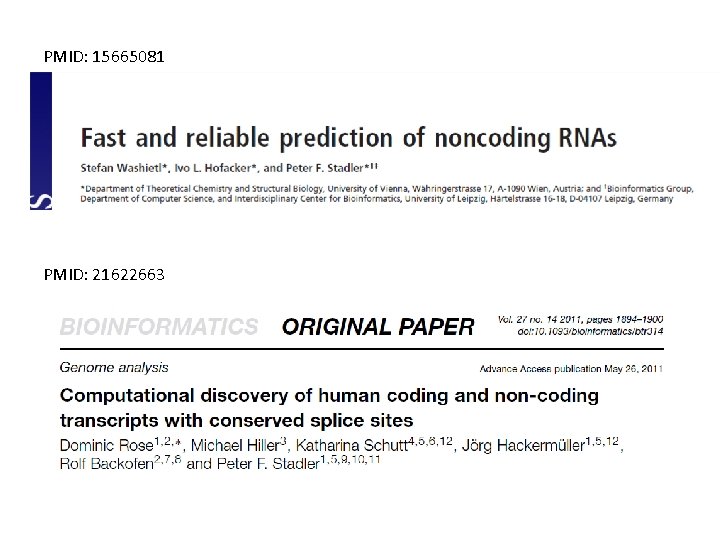
From structure prediction to nc. RNA identification and function Methods evolved from single sequence folding to genomic screen for RNA structures! Focus not anymore prediction of RNA structure, but structure prediction as hallmark of nc. RNAs or regulatory motifs in m. RNAs. Searching for nc. RNAs employs usually two strategies: • Homology search: – Start from alignment (use secondary structure information) and exploit it to find matches in the genome – Good to search for RNAs in a certain family – Depends on the depth of phylogeny • De novo search: – Search for folding of a certain RNA whose structure features (e. g. energy) differ from background / random sequences
Research in RNA Bioinformatics past and perspectives -I 1. Initially focus on folding of single RNA molecules, but further improvements: Nussinov algorithm Zuker algorithm and partition function Fold many sequence togehter -> exploiting comparative information More complex models for finding RNA motifs Functional motifs /3 D folding instead of only secondary structure – – – 2. Searching for nc. RNAs 3. mi. RNA identification – valid methods 4. lnc. RNA (~13000 in the human genome) new challenge: poorly annotated, poorly conserved, strucures unkown Focus RNA-RNA interactions and RNA-protein interactions 5. 1. 2. 3. mi. RNA target prediction lnc. RNA target prediction (indirect methods) RNA Binding Proteins (RBPs)
PMID: 15665081 PMID: 21622663
Research in RNA Bioinformatics past and perspectives -I 1. Initially focus on folding of single RNA molecules, but further improvements: Nussinov algorithm Zuker algorithm and partition function Fold many sequence togehter -> exploiting comparative information More complex models for finding RNA motifs Functional motifs /3 D folding instead of only secondary structure – – – 2. Searching for nc. RNAs 3. mi. RNA identification – valid methods 4. lnc. RNA (~13000 in the human genome) new challenge: poorly annotated, poorly conserved, strucures unkown Focus RNA-RNA interactions and RNA-protein interactions 5. 1. 2. 3. mi. RNA target prediction lnc. RNA target prediction (indirect methods) RNA Binding Proteins (RBPs)
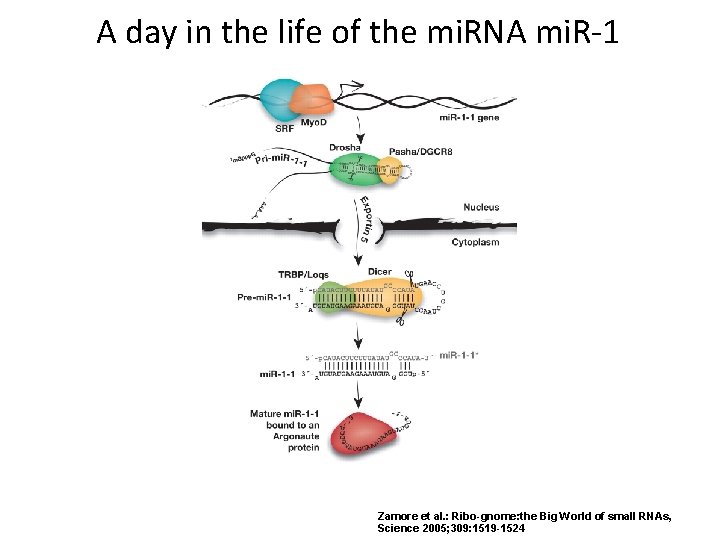
A day in the life of the mi. RNA mi. R-1 Zamore et al. : Ribo-gnome: the Big World of small RNAs, Science 2005; 309: 1519 -1524
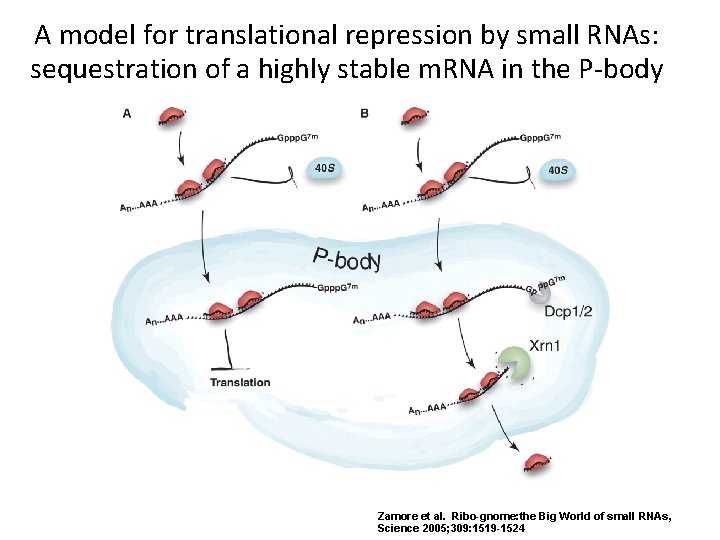
A model for translational repression by small RNAs: sequestration of a highly stable m. RNA in the P-body Zamore et al. Ribo-gnome: the Big World of small RNAs, Science 2005; 309: 1519 -1524
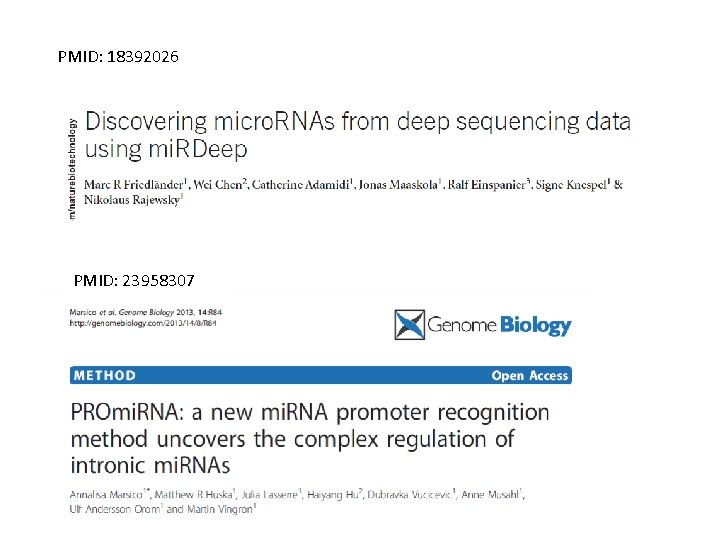
PMID: 18392026 PMID: 23958307
Research in RNA Bioinformatics past and perspectives -I 1. Initially focus on folding of single RNA molecules, but further improvements: Nussinov algorithm Zuker algorithm and partition function Fold many sequence togehter -> exploiting comparative information More complex models for finding RNA motifs Functional motifs /3 D folding instead of only secondary structure – – – 2. Searching for nc. RNAs 3. mi. RNA identification – valid methods 4. lnc. RNA (~13000 in the human genome) new challenge: poorly annotated, poorly conserved, strucures unkown Focus RNA-RNA interactions and RNA-protein interactions 5. 1. 2. 3. mi. RNA target prediction lnc. RNA target prediction (indirect methods) RNA Binding Proteins (RBPs)
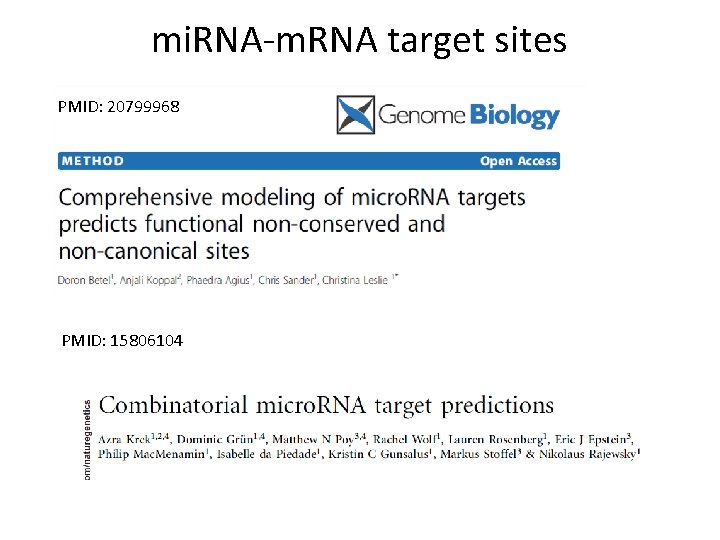
mi. RNA-m. RNA target sites PMID: 20799968 PMID: 15806104
RNA-protein binding sites PMID: 20617199 PMID: 24398258
Conclusion & Future • RNA bioinformatics in rapid growth • RNA-seq data are changing the scenario towards data-driven approaches as preferrable to pure algorithmic approaches -> different linc. RNA isoforms, primi. RNA transcripts, nc. RNA detection • Area in development: Using genomic variants (SNPs) to: – Model nc. RNA regulation at transcriptional level – Find associations lnc. RNA-genes – Impact of SNPs on secondary structure • Promising: chromatin conformation data (Hi. C, CHIA-PET) – Network-based methods (clustering) to discover ‚ehnancer‘ linc. RNA • The RNA Bioinformatics group www. molgen. mpg. de/2733742/RNA-Bioinformatics
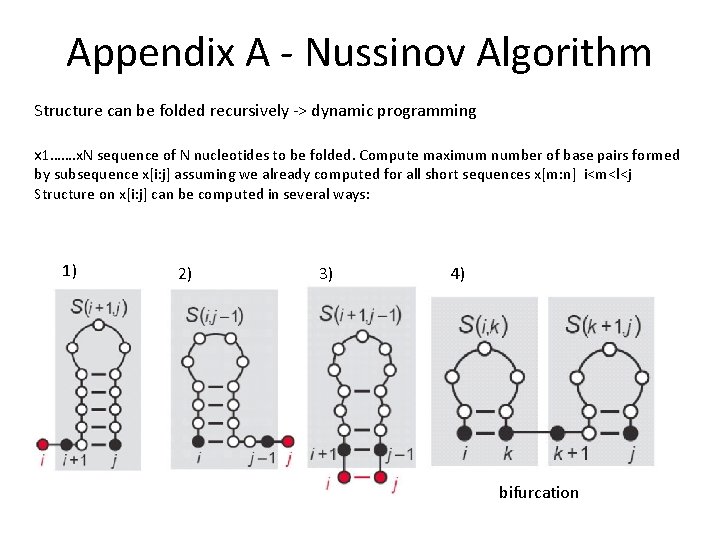
Appendix A - Nussinov Algorithm Structure can be folded recursively -> dynamic programming x 1……. x. N sequence of N nucleotides to be folded. Compute maximum number of base pairs formed by subsequence x[i: j] assuming we already computed for all short sequences x[m: n] i<m<l<j Structure on x[i: j] can be computed in several ways: 1) 2) 3) 4) bifurcation
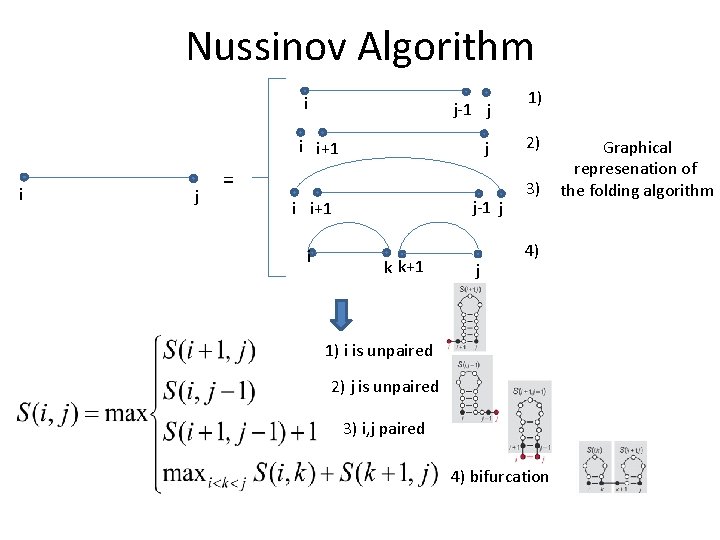
Nussinov Algorithm i j-1 j i i+1 i j j = j-1 j i i+1 i k k+1 j 1) 2) 3) 4) 1) i is unpaired 2) j is unpaired 3) i, j paired 4) bifurcation Graphical represenation of the folding algorithm
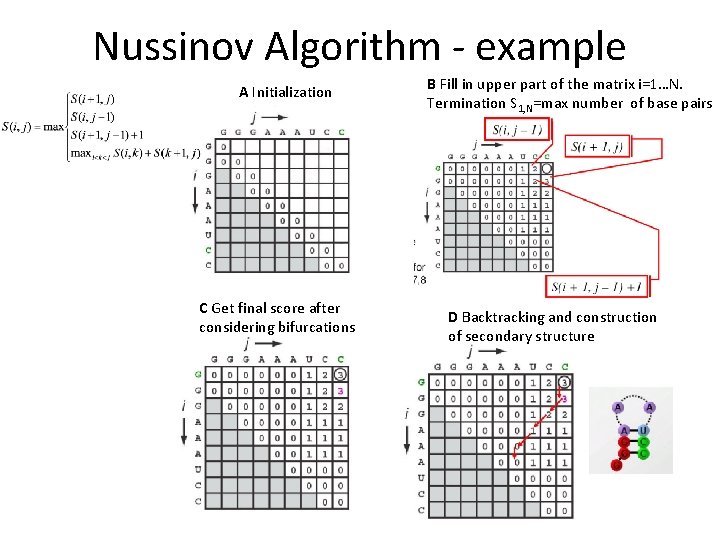
Nussinov Algorithm - example A Initialization C Get final score after considering bifurcations B Fill in upper part of the matrix i=1…N. Termination S 1, N=max number of base pairs D Backtracking and construction of secondary structure
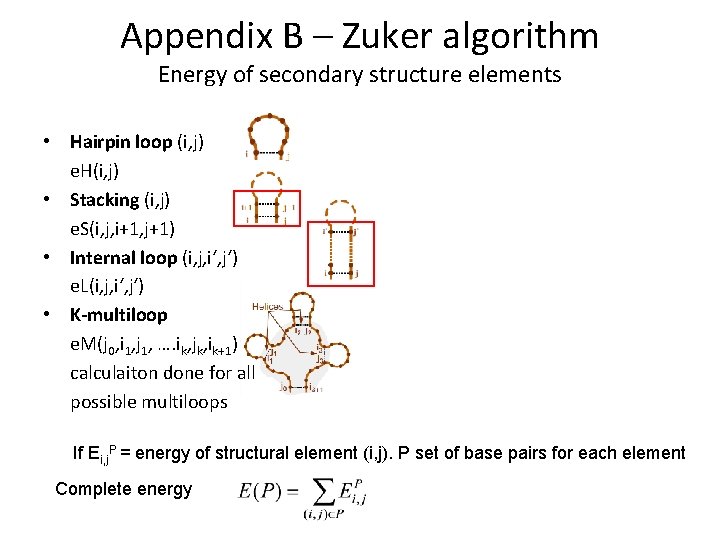
Appendix B – Zuker algorithm Energy of secondary structure elements • Hairpin loop (i, j) e. H(i, j) • Stacking (i, j) e. S(i, j, i+1, j+1) • Internal loop (i, j, i‘, j‘) e. L(i, j, i‘, j‘) • K-multiloop e. M(j 0, i 1, j 1, …. ik, jk, ik+1) calculaiton done for all possible multiloops If Ei, j. P = energy of structural element (i, j). P set of base pairs for each element Complete energy
Zuker algorithm-predicting RNA structure using thermodynamics • S RNA molecule of length N; i and j two nucleotides from S with 1≤ i ≤j≤N • For all pairs of i, j 1≤ i ≤ j ≤ N let W(i, j) be the minimum free energy for all structures formed by susequence Si, j • V(i, j)minimum free energy of all possible structures formed by Si, j in which i and j are paired with each other • WM(i, j)minimum free energy of all possible structures formed by Si, j which are part of a multi loop
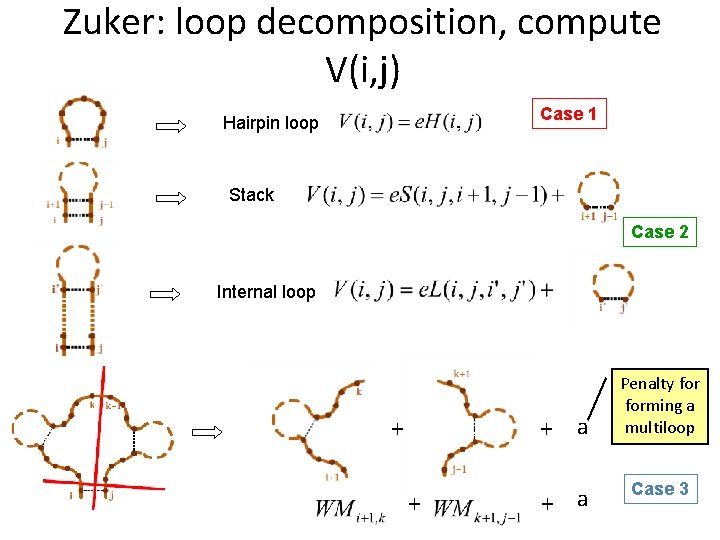
Zuker: loop decomposition, compute V(i, j) Case 1 Hairpin loop Stack Case 2 Internal loop + + a Penalty forming a multiloop Case 3
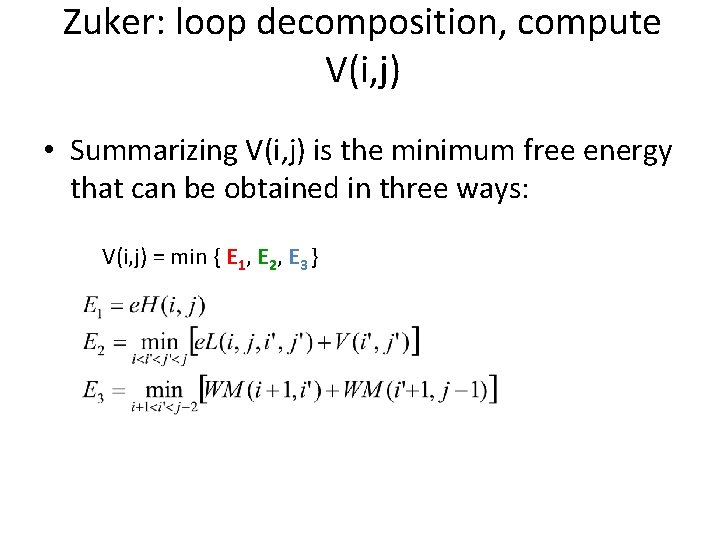
Zuker: loop decomposition, compute V(i, j) • Summarizing V(i, j) is the minimum free energy that can be obtained in three ways: V(i, j) = min { E 1, E 2, E 3 }
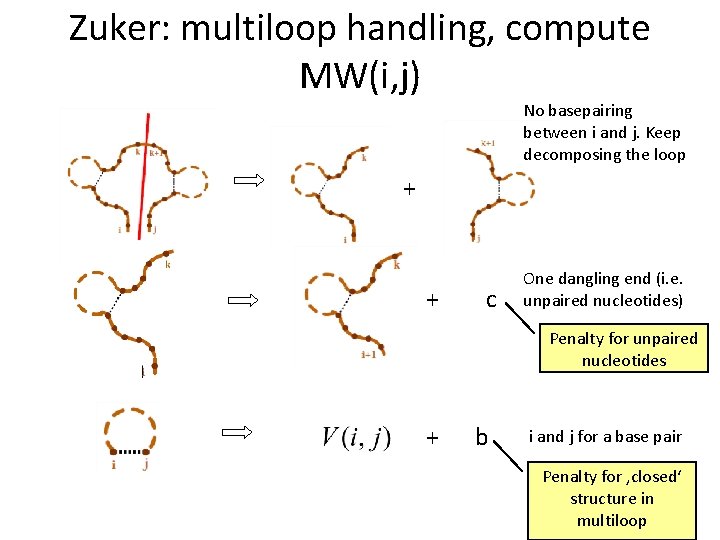
Zuker: multiloop handling, compute MW(i, j) No basepairing between i and j. Keep decomposing the loop + + c One dangling end (i. e. unpaired nucleotides) Penalty for unpaired nucleotides + b i and j for a base pair Penalty for ‚closed‘ structure in multiloop
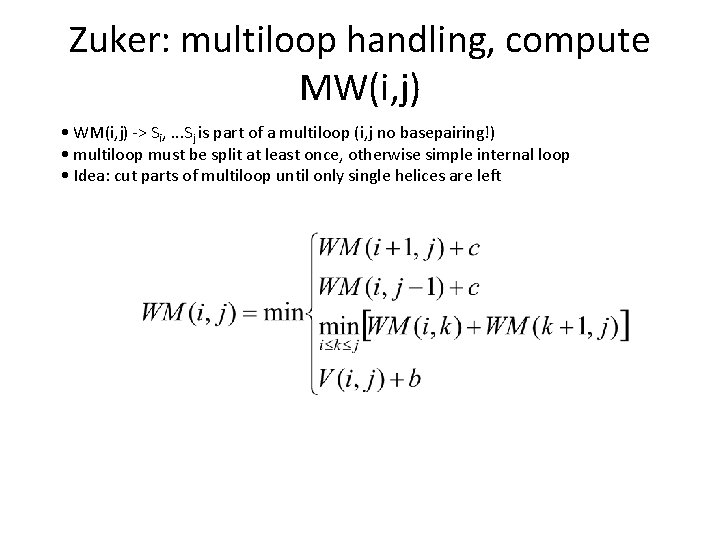
Zuker: multiloop handling, compute MW(i, j) • WM(i, j) -> Si, . . . Sj is part of a multiloop (i, j no basepairing!) • multiloop must be split at least once, otherwise simple internal loop • Idea: cut parts of multiloop until only single helices are left
MFE-loop decomposition • First proposed by Zuker (previous slides) • Slightly different implementation in RNAfold (Vienna package) • DP apporach, 4 matrices used to score • the whole structure (F) • substructure with closing loop (C) • multi-loops (M), (M‘) • M and M‘ used to decompose multi-loop „form the right“
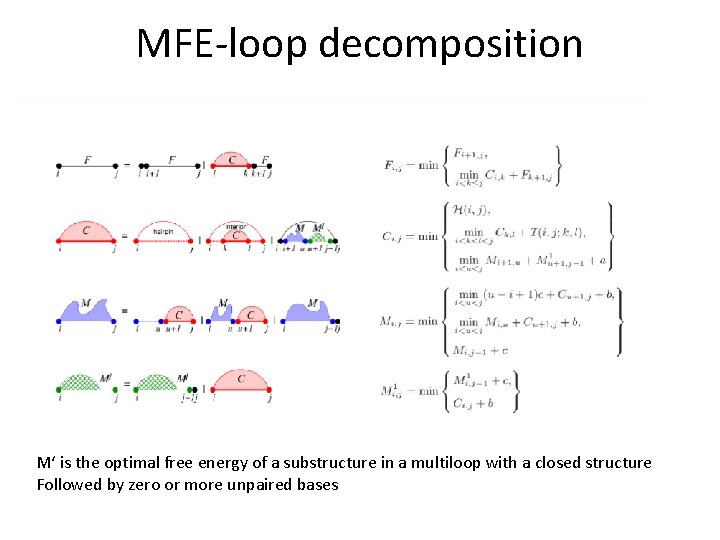
MFE-loop decomposition M‘ is the optimal free energy of a substructure in a multiloop with a closed structure Followed by zero or more unpaired bases
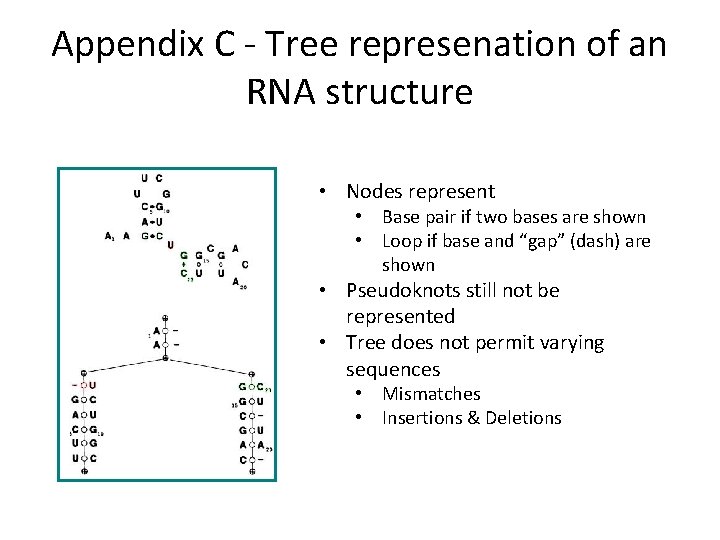
Appendix C - Tree represenation of an RNA structure • Nodes represent • Base pair if two bases are shown • Loop if base and “gap” (dash) are shown • Pseudoknots still not be represented • Tree does not permit varying sequences • Mismatches • Insertions & Deletions
- Slides: 56