
CONCEPT OF SYNERGY UNIT V YOU WILL STUDY
- Slides: 11
CONCEPT OF SYNERGY UNIT V
YOU WILL STUDY ABOUT Introduction: Types and ways to achieve synergy, evaluation of synergy. Synergy as a component of strategy. Capability profiles: Factors, preparing Capability profile. Prerequisite and
INTRODUCTION The word “Synergy” is derived from Greek word “Synergos” which implies “Working together”. Synergy means the ability of two or more units to generate greater value by working together than they do by working individually. According to Mr. H. Ignor Ansoff, “ Synergy is a measure of the firm’s ability to make good on a new product-market entry” Synergy is an important goal in strategy implementation. It involves synergy within and strong among various functional and strategic business unit.
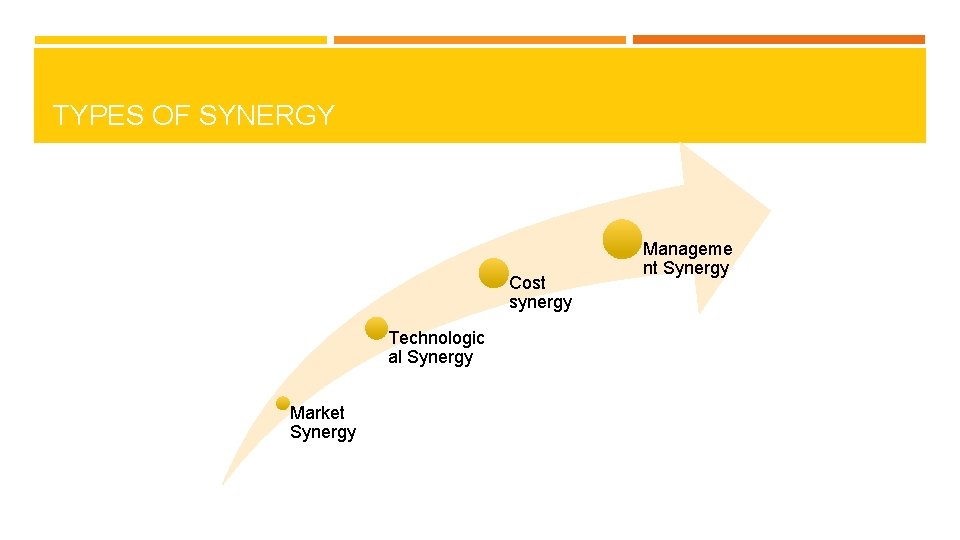
TYPES OF SYNERGY Cost synergy Technologic al Synergy Market Synergy Manageme nt Synergy
TYPES OF SYNERGY Market synergy: When one product or service fortifies the sale of one or more other products or services, market synergy has been achieved. Cost Synergy: This second type of synergy can occur in almost every dimension of organised activity. When two or more products can de designed by the same engineers, produced in the same facilities, distributed through the same channels, or sold by the same salespeople, overall cost will be lower than they would be if each product received separate treatment. Technological Synergy: The third variety of synergy involves transferring technology from one application to another, thus opening up new markets. Management Synergy: This fourth type of synergy occurs when a management team is more productive because its members have complementary rather than identical skills.
EVALUATION OF SYNERGY For evaluating synergy a firm can analyse its effect on inside and outside the business, synergy can be evaluated by the following approaches. Across business measures of synergy: it can provide illustrative operational ways of measuring synergy as well as some empirical results on whether synergy ha any effect on business and corporate performance. Abell and Hammond gave six synergy-related questions: Sales synergy, operating synergy, investment synergy, management synergy Within firm measures of synergy Market-response Based measures of synergy Management subjective judgements- based measures of synergy
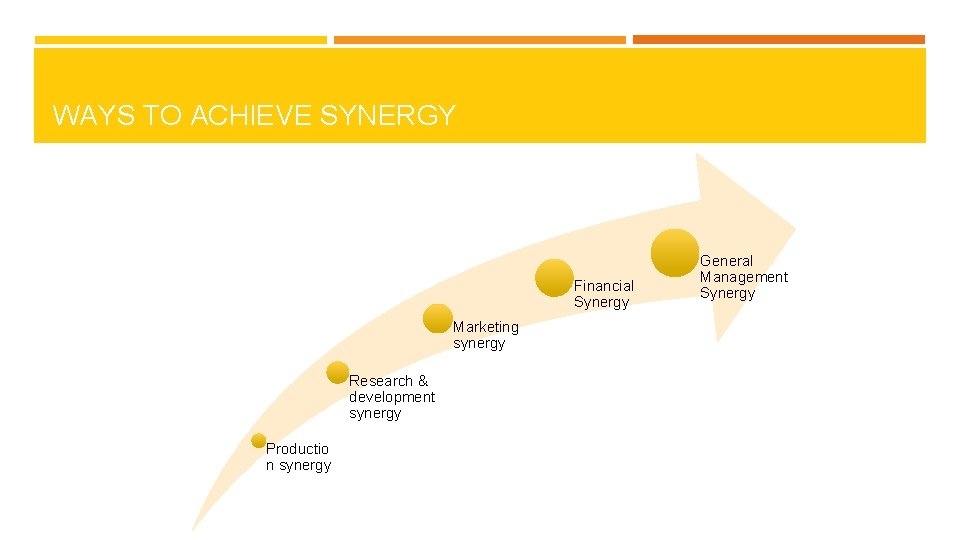
WAYS TO ACHIEVE SYNERGY Financial Synergy Marketing synergy Research & development synergy Productio n synergy General Management Synergy
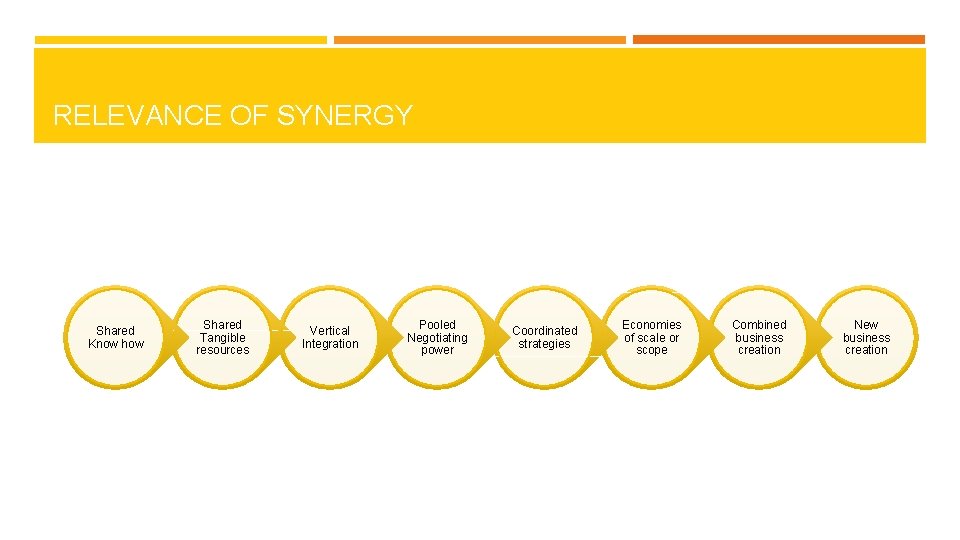
RELEVANCE OF SYNERGY Shared Know how Shared Tangible resources Vertical Integration Pooled Negotiating power Coordinated strategies Economies of scale or scope Combined business creation New business creation
CAPABILITY PROFILE Capability is the inherent capacity or potential for an organisation to use its strengths and overcome its weakness in order to exploit the opportunities and face threats in its external environment. Capabilities are less measurable, tradable and imitable than resources, and thus they have more value in deterring competition and sustaining a competitive position An organisation can have many capabilities such as technological skills, managerial talent, production knowledge, experience with govt contracts.
FACTORS OF CAPABILITY PROFILE Marketing capability profile: These factors related to the pricing, promotion and distribution of products or services, and all the allied aspects that have a bearing on an organisation’s capability and ability to implement its strategies. Financial Capability: these are the factors related to sources of funds, factors related to usage of funds and factors related to management of funds. These factors related to the availability, usage and management of funds and allied aspects that have a bearing on an organisations capability to implement its strategies. Operations Capability: These factors related to the production of products or services, use of material resources and allied aspects that have a bearing on an organisations capacity and ability to implement its strategies. Human resource capability: These factors relate to the existence and use of human resources and skills and allied aspect. Information management capability: These factors related to the design and management of the flow of information from outside into, and within an organisation for the purpose of decision- making and allied aspects.
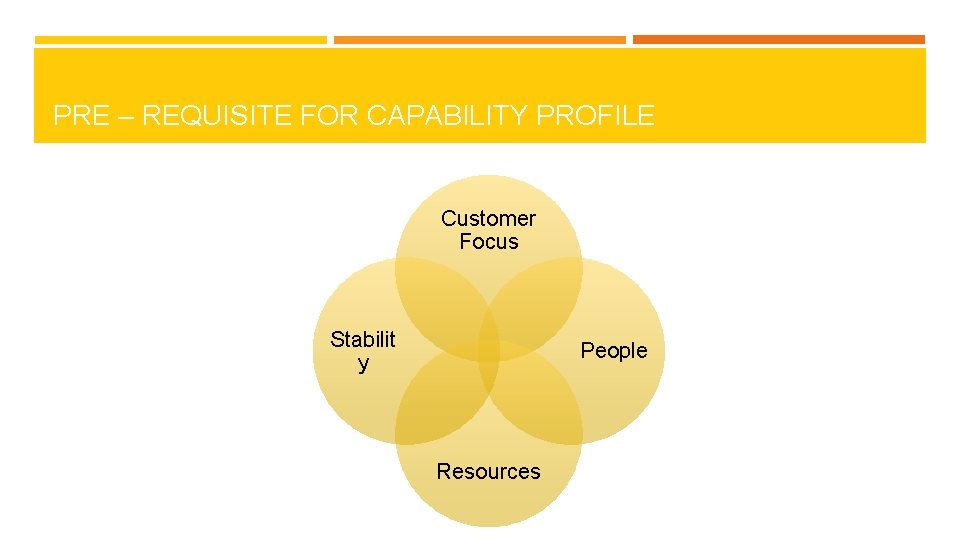
PRE – REQUISITE FOR CAPABILITY PROFILE Customer Focus Stabilit y People Resources