
Concept Generation Teaching materials to accompany Product Design

- Slides: 55
Concept Generation Teaching materials to accompany: Product Design and Development Chapter 7 Karl T. Ulrich and Steven D. Eppinger 5 th Edition, Irwin Mc. Graw-Hill, 2012.
Product Design and Development Karl T. Ulrich and Steven D. Eppinger 5 th edition, Irwin Mc. Graw-Hill, 2012. Chapter Table of Contents: 1. Introduction 2. Development Processes and Organizations 3. Opportunity Identification 4. Product Planning 5. Identifying Customer Needs 6. Product Specifications 7. Concept Generation 8. Concept Selection 9. Concept Testing 10. Product Architecture 11. Industrial Design 12. Design for Environment 13. 14. 15. 16. 17. 18. Design for Manufacturing Prototyping Robust Design Patents and Intellectual Property Product Development Economics Managing Projects
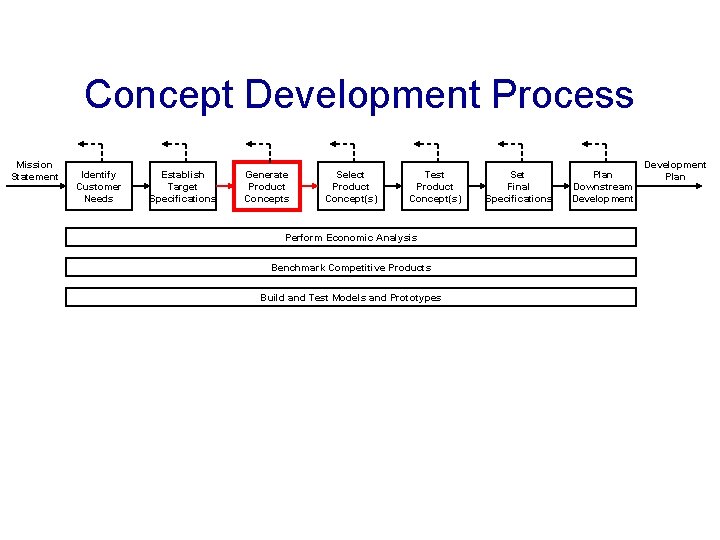
Concept Development Process Mission Statement Identify Customer Needs Establish Target Specifications Generate Product Concepts Select Product Concept(s) Test Product Concept(s) Perform Economic Analysis Benchmark Competitive Products Build and Test Models and Prototypes Set Final Specifications Plan Downstream Development Plan
Outline 1. Product concept, definition 2. Commonly dysfunctions in product development 3. Five steps in the product concept generation process 11/27/2020 4
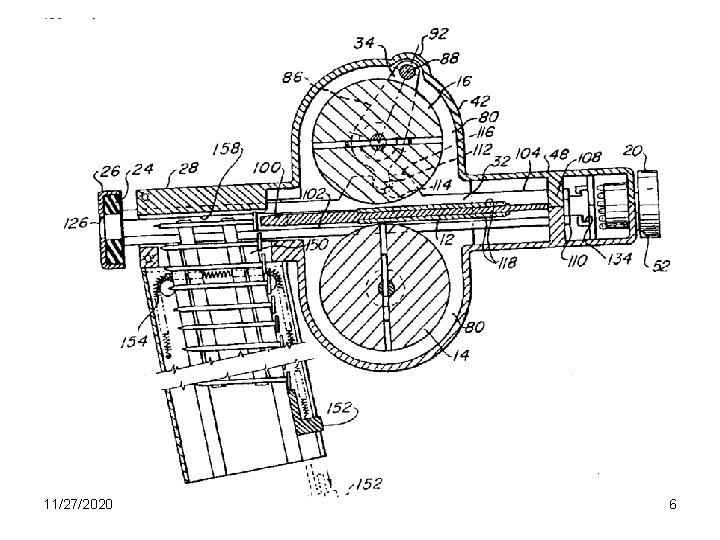
Product concept • A technical description of how the product will satisfy the customer’s needs • An approximate description of – the technology, – working principles, and – form of the product • Often expressed with a sketch or 3 D model, accompanied with a brief textual description. 11/27/2020 5
11/27/2020 6
Common dysfunctions during concept generation • • • Consider only one or two alternatives Fail to consider the usefulness of the concepts Involve only one or two people in the process Ineffectively integrate promising partial solutions Fail to consider entire categories of solutions 11/27/2020 7
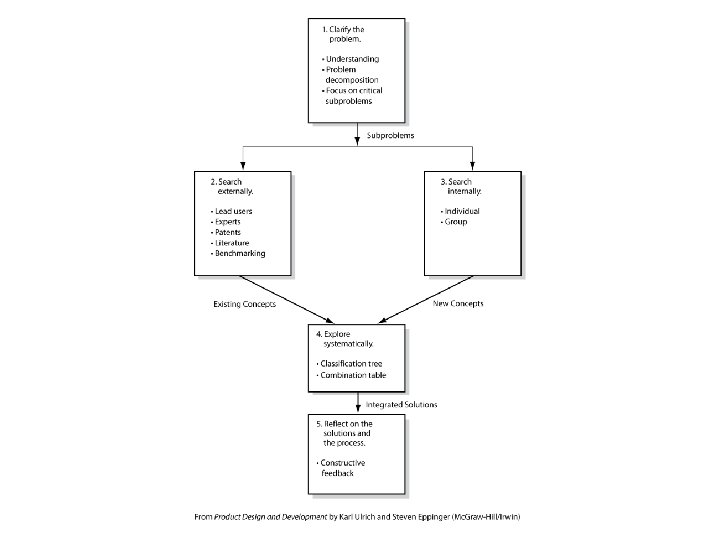
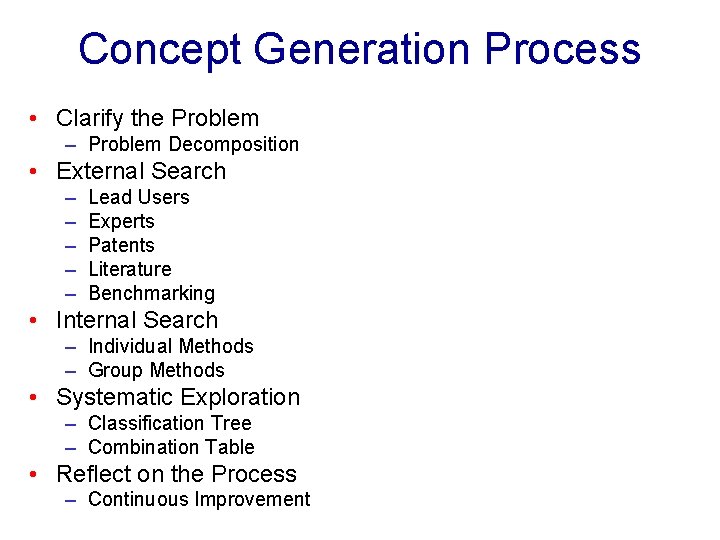
Product Concept Generation Process (5 steps) 1. 2. 3. 4. 5. Clarify the problem Search externally Search internally Explore systematically Reflect on the solutions and the process. 11/27/2020 8
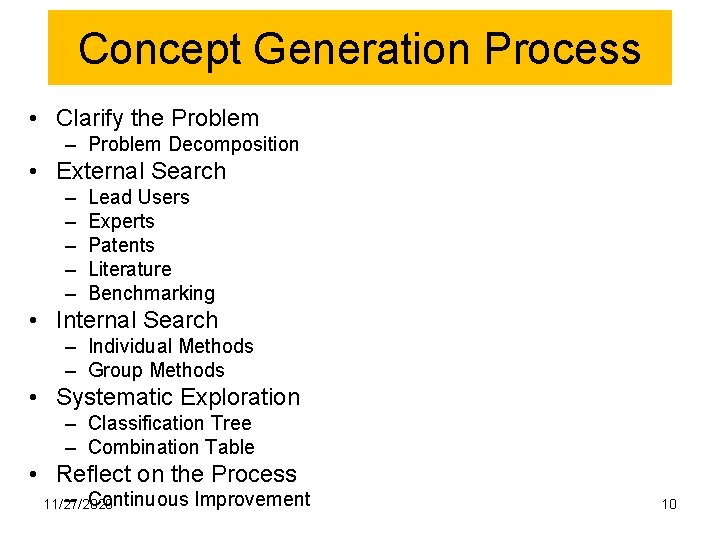
Concept Generation Process • Clarify the Problem – Problem Decomposition • External Search – – – Lead Users Experts Patents Literature Benchmarking • Internal Search – Individual Methods – Group Methods • Systematic Exploration – Classification Tree – Combination Table • Reflect on the Process – Continuous 11/27/2020 Improvement 10
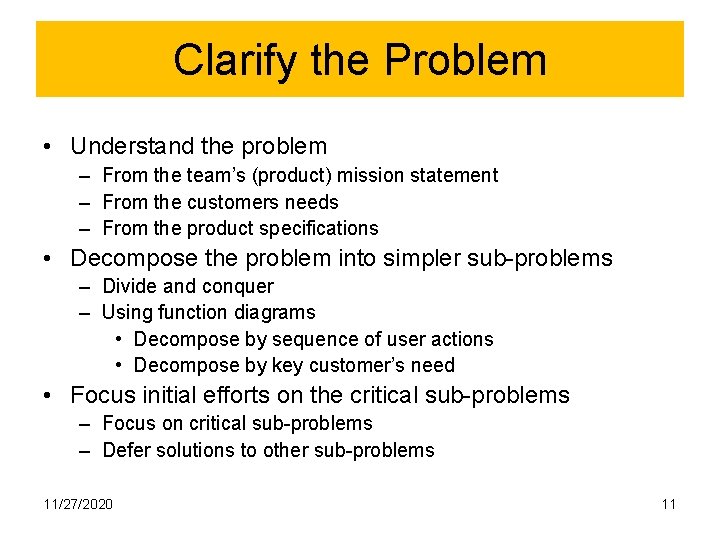
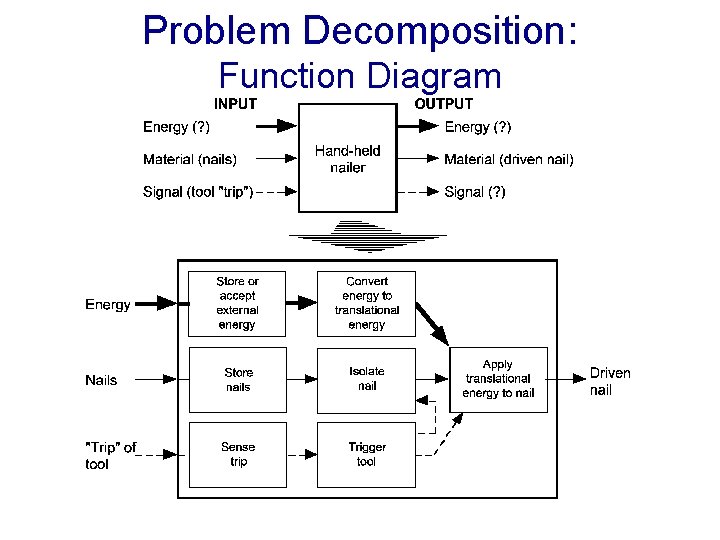
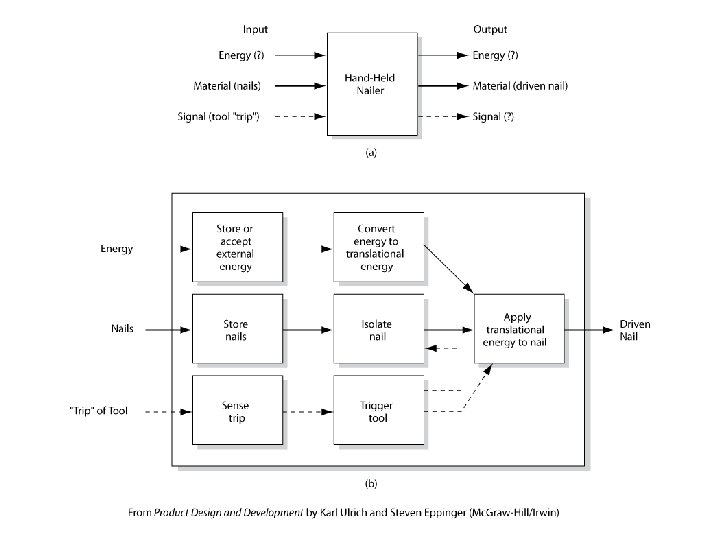
Clarify the Problem • Understand the problem – From the team’s (product) mission statement – From the customers needs – From the product specifications • Decompose the problem into simpler sub-problems – Divide and conquer – Using function diagrams • Decompose by sequence of user actions • Decompose by key customer’s need • Focus initial efforts on the critical sub-problems – Focus on critical sub-problems – Defer solutions to other sub-problems 11/27/2020 11
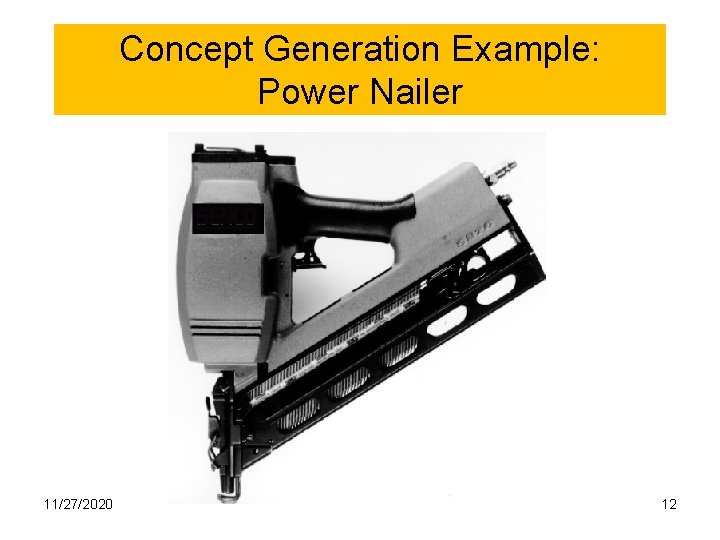
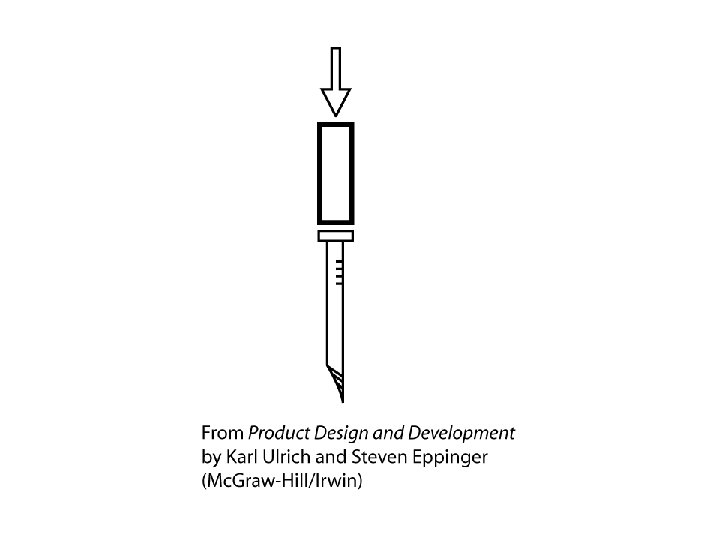
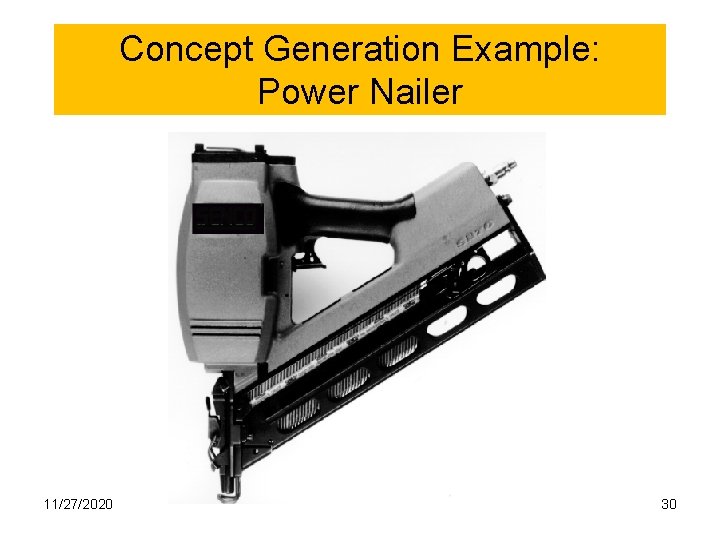
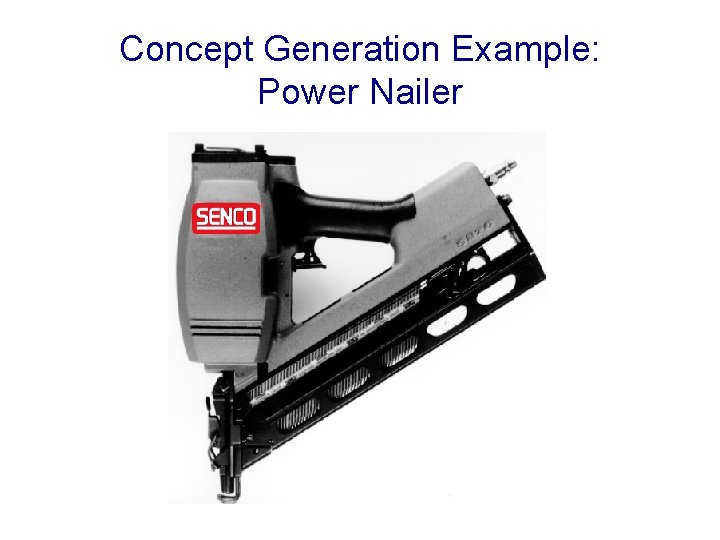
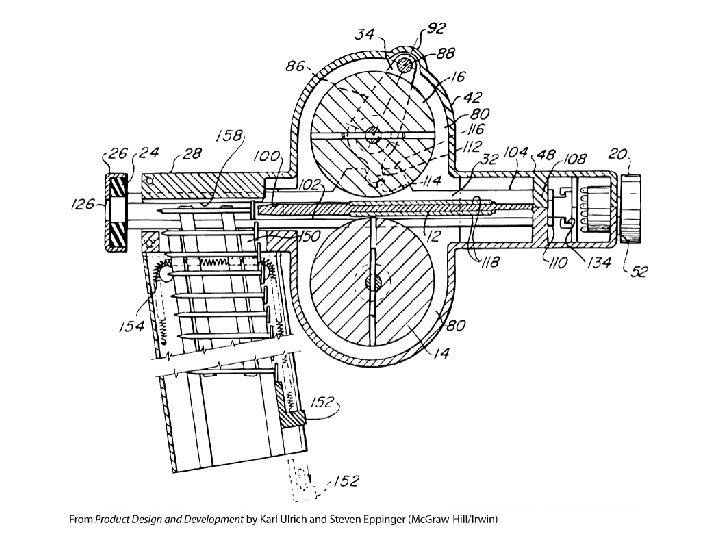
Concept Generation Example: Power Nailer 11/27/2020 12
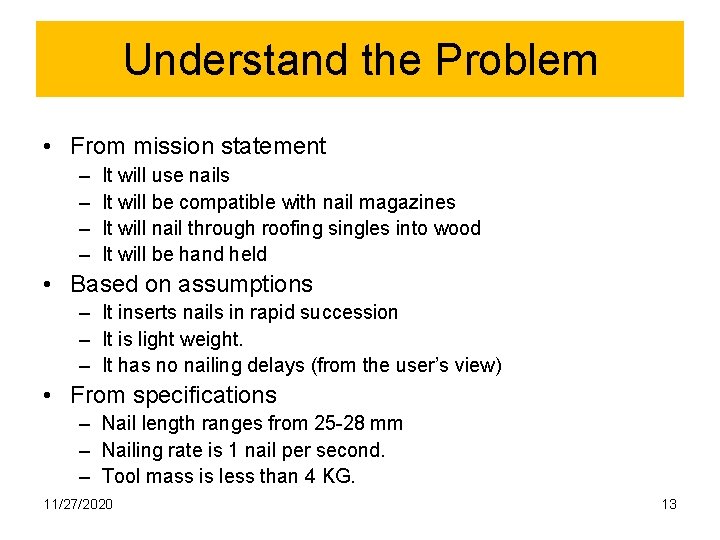
Understand the Problem • From mission statement – – It will use nails It will be compatible with nail magazines It will nail through roofing singles into wood It will be hand held • Based on assumptions – It inserts nails in rapid succession – It is light weight. – It has no nailing delays (from the user’s view) • From specifications – Nail length ranges from 25 -28 mm – Nailing rate is 1 nail per second. – Tool mass is less than 4 KG. 11/27/2020 13
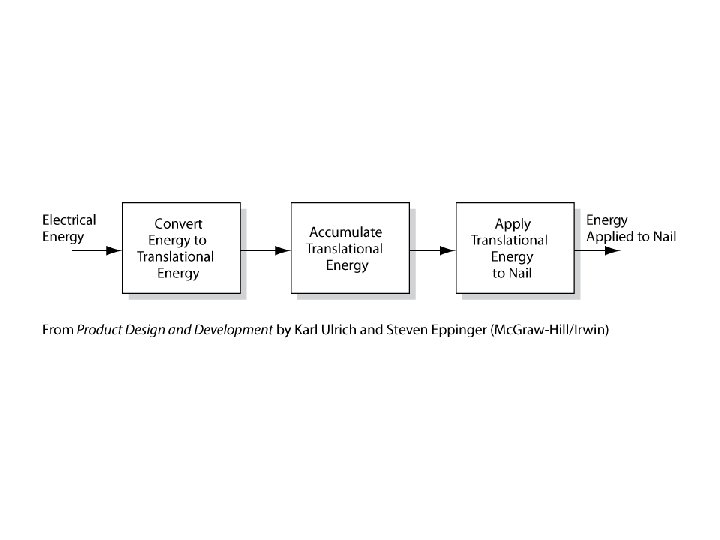
Problem Decomposition: Function Diagram 11/27/2020 14
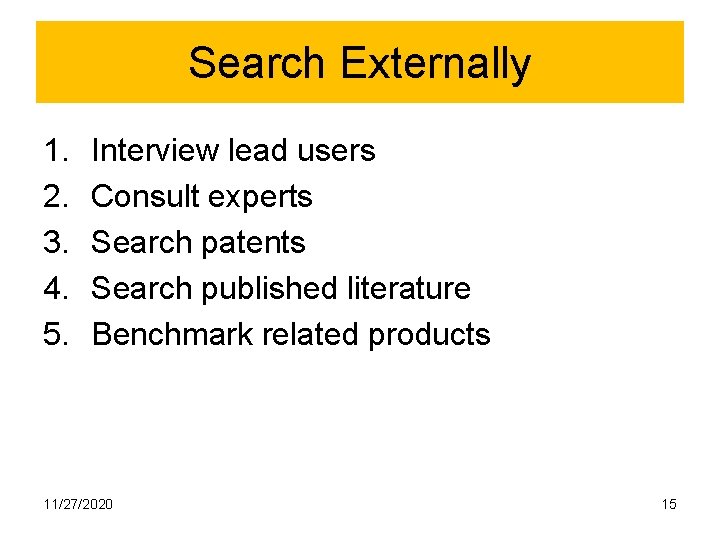
Search Externally 1. 2. 3. 4. 5. Interview lead users Consult experts Search patents Search published literature Benchmark related products 11/27/2020 15
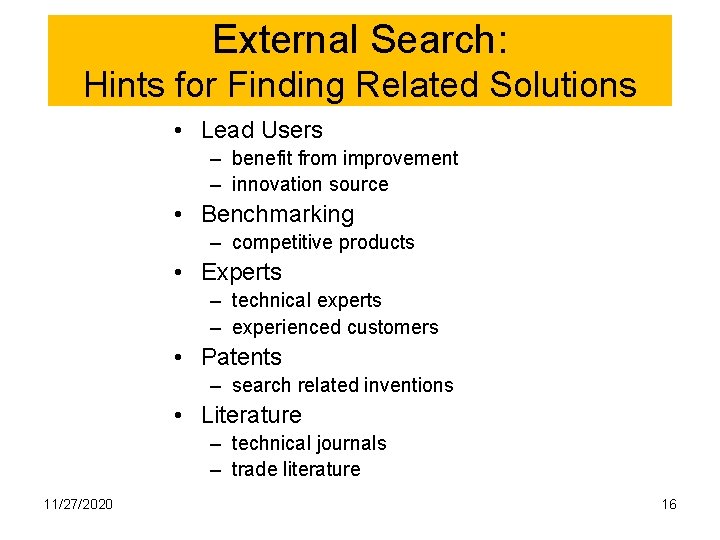
External Search: Hints for Finding Related Solutions • Lead Users – benefit from improvement – innovation source • Benchmarking – competitive products • Experts – technical experts – experienced customers • Patents – search related inventions • Literature – technical journals – trade literature 11/27/2020 16
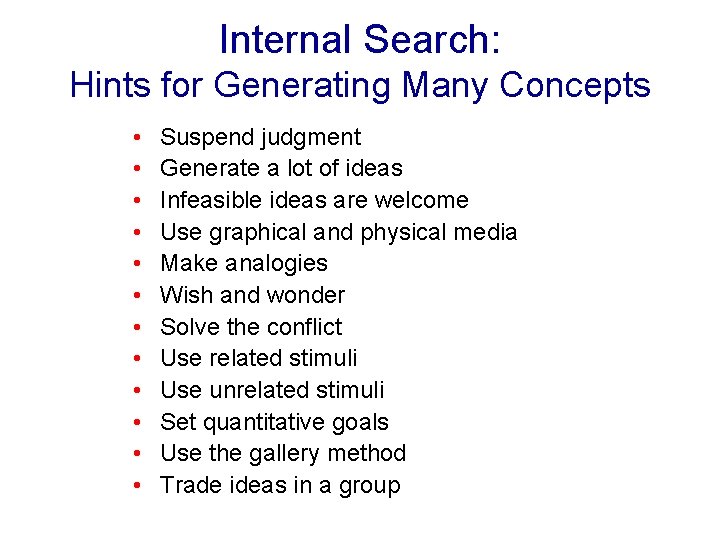
Search Internally (both group and individually) • Guide for the search – – Suspend judgment Generate a lot of ideas Welcome ideas that seem infeasible Use graphic and physical media • Hints for generating concepts – – – Make analogies Wish and wonder User related stimuli Set quantitative goals Post ideas on the wall 11/27/2020 17
Internal Search: Hints for Generating Many Concepts 11/27/2020 • • • Suspend judgment Generate a lot of ideas Infeasible ideas are welcome Use graphical and physical media Make analogies Wish and wonder Solve the conflict Use related stimuli Use unrelated stimuli Set quantitative goals Use the gallery method Trade ideas in a group 18
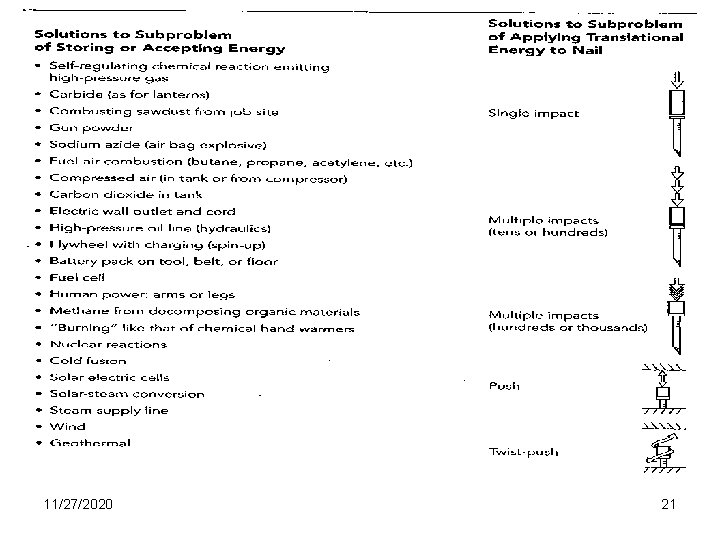
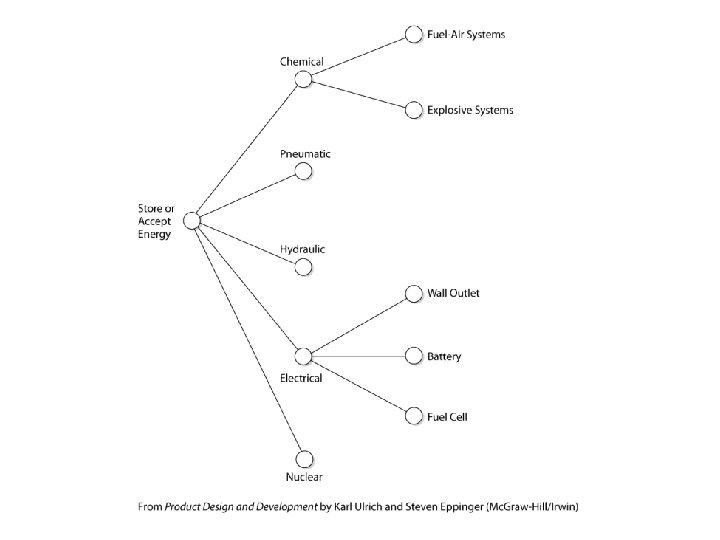
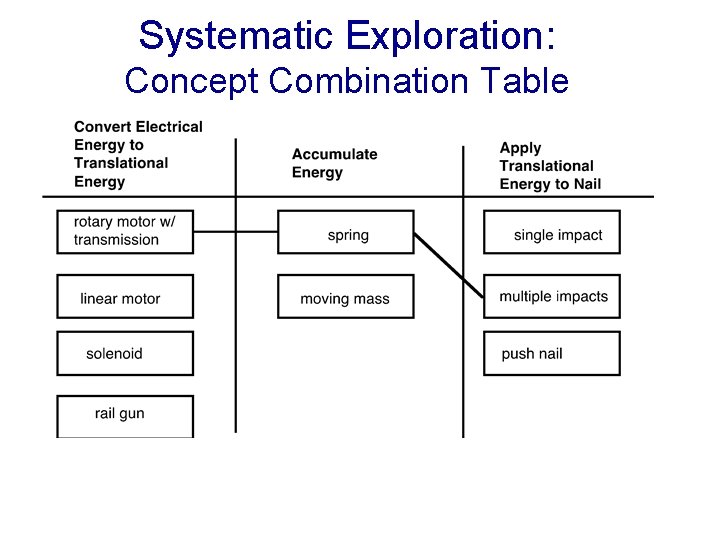
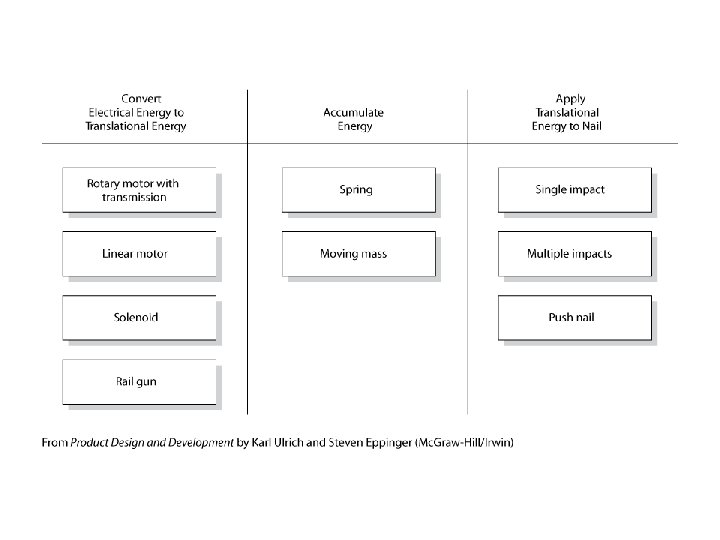
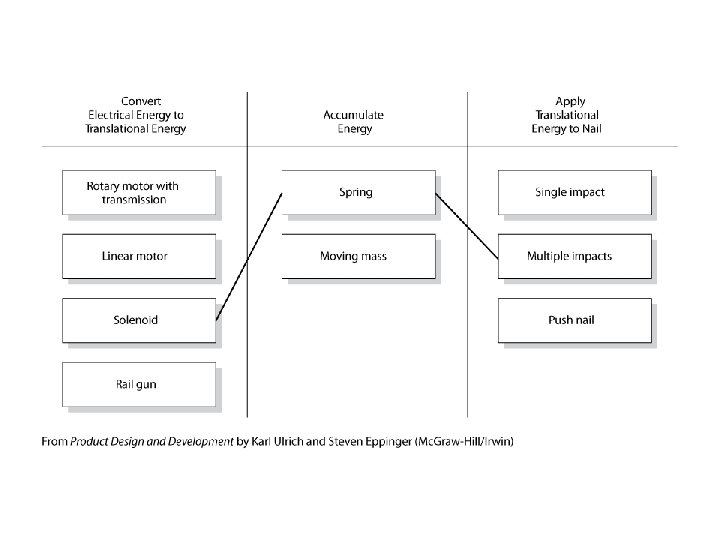
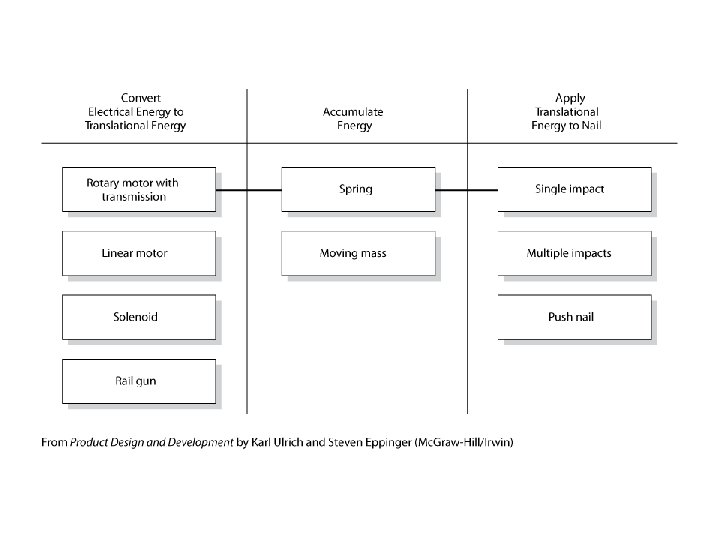
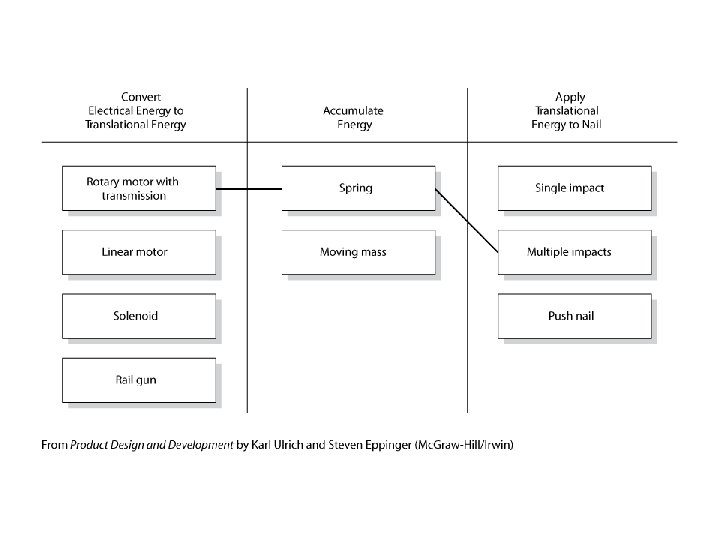
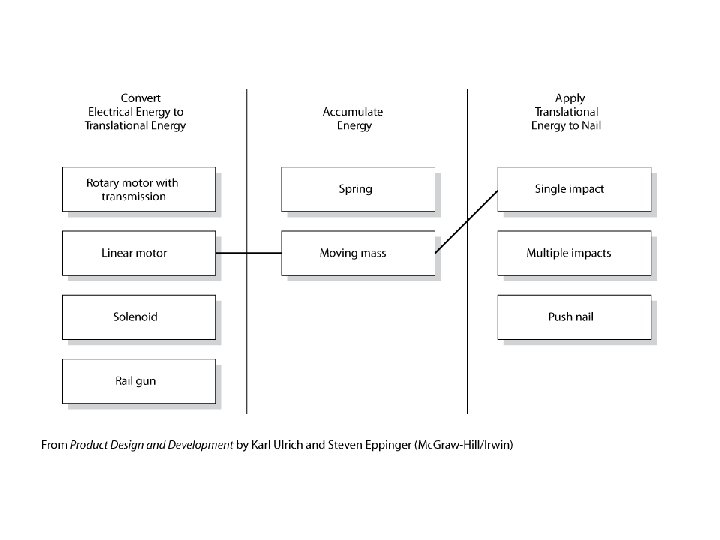
Explore Systematically • Concept combination tree – – – Page 132 Prune less promising branches Identify independent approaches to the problem Expose inappropriate emphasis on certain branches Refine the problem decomposition for a particular branch. • Concept combination table – Page 113 11/27/2020 19
11/27/2020 21
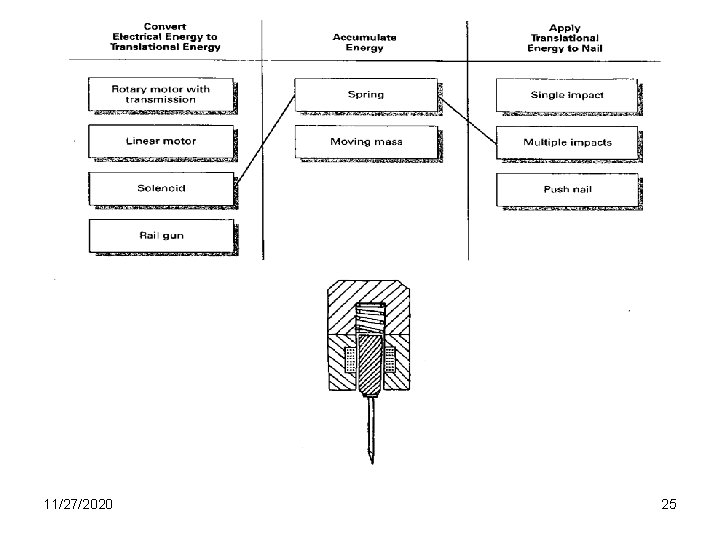
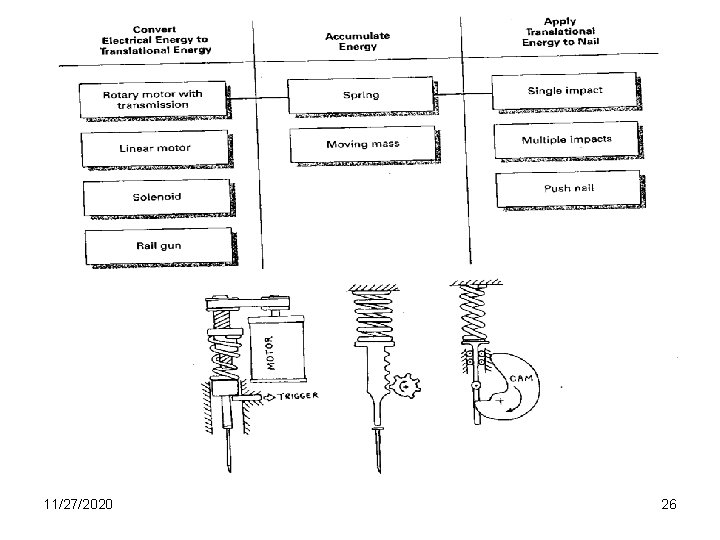
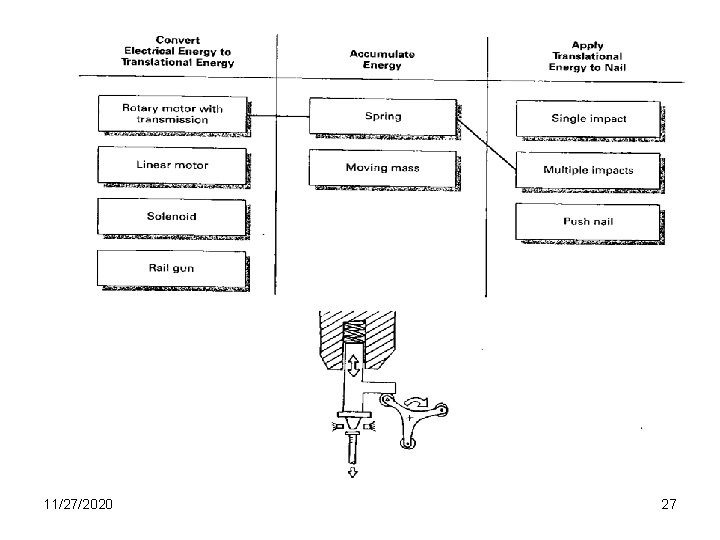
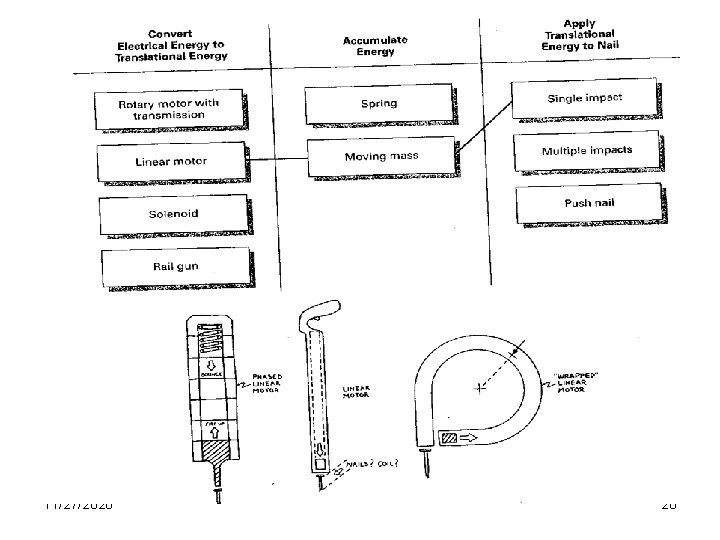
Systematic Exploration: Concept Combination Table 11/27/2020 24
11/27/2020 25
11/27/2020 26
11/27/2020 27
11/27/2020 28
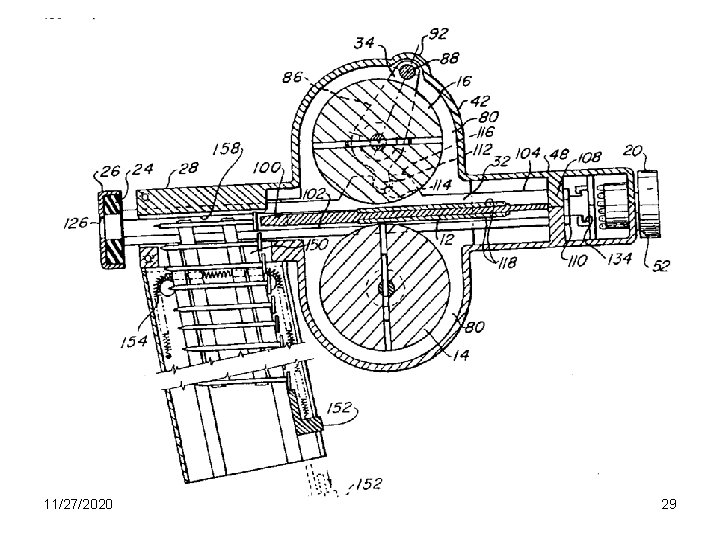
11/27/2020 29
Concept Generation Example: Power Nailer 11/27/2020 30
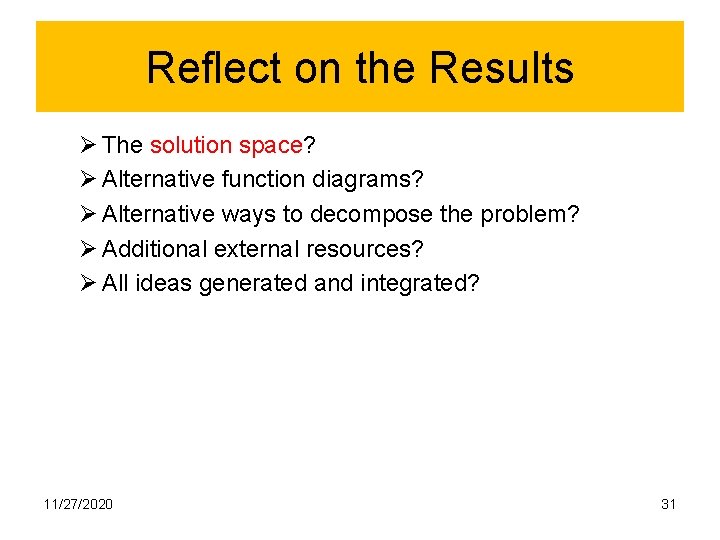
Reflect on the Results Ø The solution space? Ø Alternative function diagrams? Ø Alternative ways to decompose the problem? Ø Additional external resources? Ø All ideas generated and integrated? 11/27/2020 31
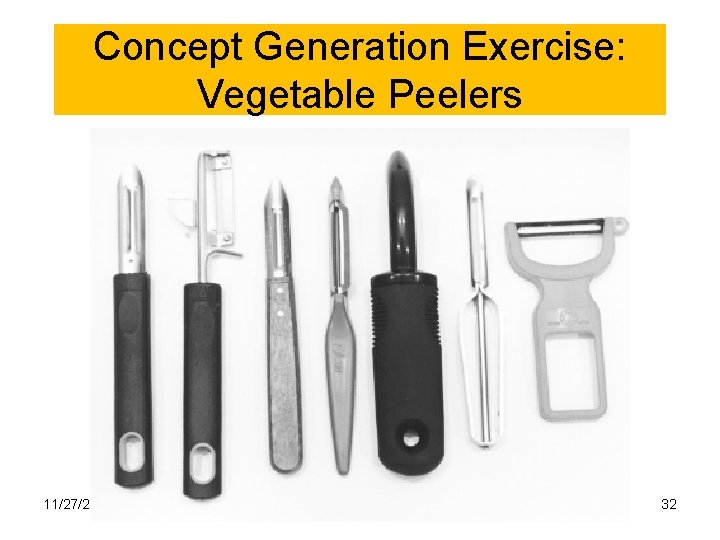
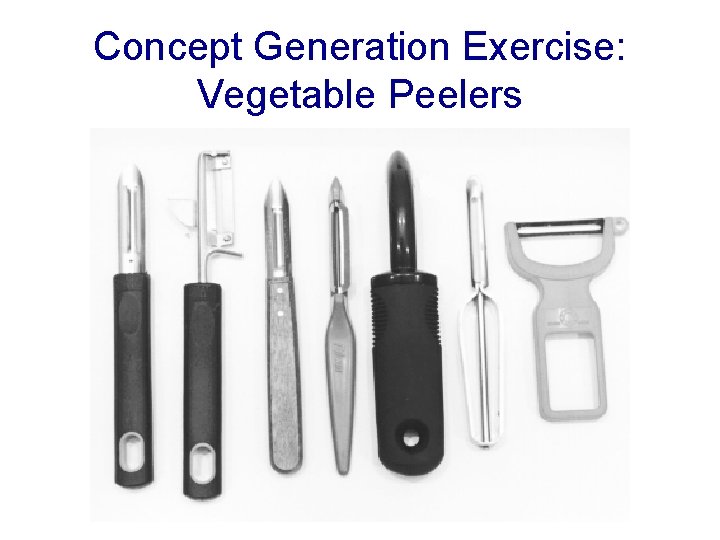
Concept Generation Exercise: Vegetable Peelers 11/27/2020 32
Vegetable Peeler Exercise: Voice of the Customer • • "Carrots and potatoes are very different. " "I cut myself with this one. " "I just leave the skin on. " "I'm left-handed. I use a knife. " "This one is fast, but it takes a lot off. " "How do you peel a squash? " "Here's a rusty one. " "This looked OK in the store. " 11/27/2020 33
Vegetable Peeler Exercise: Key Customer Needs 1. The peeler peels a variety of produce. 2. The peeler can be used ambidextrously. 3. The peeler creates minimal waste. 4. The peeler saves time. 5. The peeler is durable. 6. The peeler is easy to clean. 7. The peeler is safe to use and store. 8. The peeler is comfortable to use. 9. The peeler stays sharp or can be easily sharpened. 11/27/2020 34
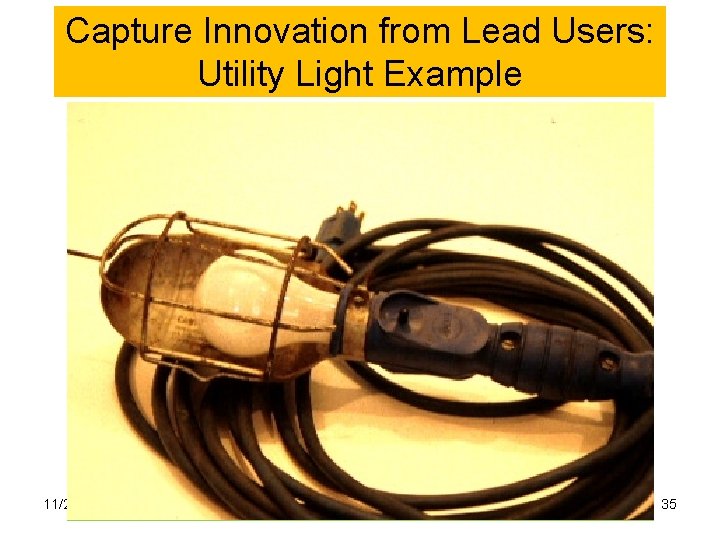
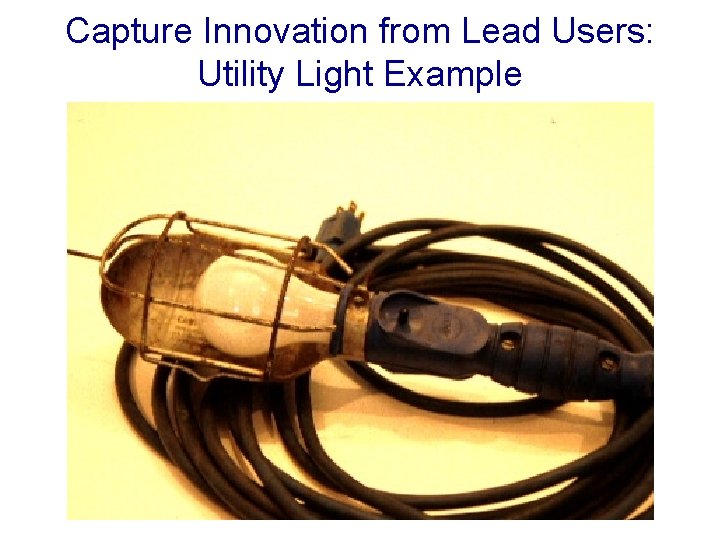
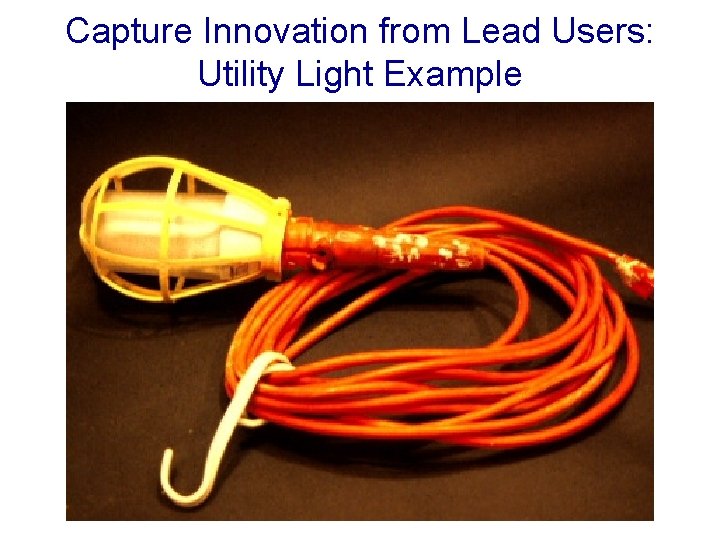
Capture Innovation from Lead Users: Utility Light Example 11/27/2020 35
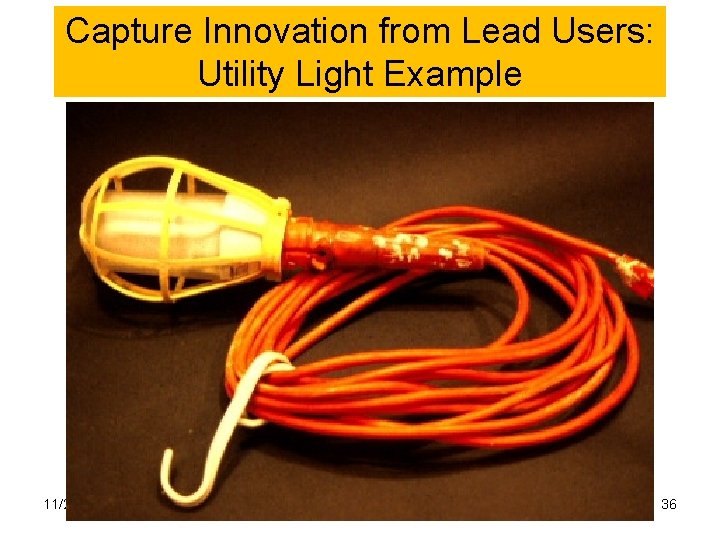
Capture Innovation from Lead Users: Utility Light Example 11/27/2020 36
Other Images
Concept Generation Example: Power Nailer
Concept Generation Process • Clarify the Problem – Problem Decomposition • External Search – – – Lead Users Experts Patents Literature Benchmarking • Internal Search – Individual Methods – Group Methods • Systematic Exploration – Classification Tree – Combination Table • Reflect on the Process – Continuous Improvement
Concept Generation Exercise: Vegetable Peelers
Vegetable Peeler Exercise: Voice of the Customer • • "Carrots and potatoes are very different. " "I cut myself with this one. " "I just leave the skin on. " "I'm left-handed. I use a knife. " "This one is fast, but it takes a lot off. " "How do you peel a squash? " "Here's a rusty one. " "This looked OK in the store. "
Vegetable Peeler Exercise: Key Customer Needs 1. The peeler peels a variety of produce. 2. The peeler can be used ambidextrously. 3. The peeler creates minimal waste. 4. The peeler saves time. 5. The peeler is durable. 6. The peeler is easy to clean. 7. The peeler is safe to use and store. 8. The peeler is comfortable to use. 9. The peeler stays sharp or can be easily sharpened.
Problem Decomposition: Function Diagram
External Search: Hints for Finding Related Solutions • Lead Users – benefit from improvement – innovation source • Benchmarking – competitive products • Experts – technical experts – experienced customers • Patents – search related inventions • Literature – technical journals – trade literature
Capture Innovation from Lead Users: Utility Light Example
Capture Innovation from Lead Users: Utility Light Example
Internal Search: Hints for Generating Many Concepts • • • Suspend judgment Generate a lot of ideas Infeasible ideas are welcome Use graphical and physical media Make analogies Wish and wonder Solve the conflict Use related stimuli Use unrelated stimuli Set quantitative goals Use the gallery method Trade ideas in a group
Systematic Exploration: Concept Combination Table