
Concept 1 Analyzing the diversity of animals Ch
- Slides: 25
Concept 1: Analyzing the diversity of animals (Ch 26, 32, 33, 34) Holtz: pg. 186 -197 A glimpse into… Developmental Biology
What DEFINES an animal?
What DEFINES an animal? n Animals (Metazoa): ¨ Multicellular ¨ Heterotrophic (consumers) ¨ Eukaryotes (…not prokaryotes) ¨ Tissues develop from embryonic layers
Cell Structure and Specialization n Unique to Animals: ¨ No n cells walls Instead: separate structures (desmosomes, gap junctions, and/or tight junctions) hold cells together ¨ Muscle and nervous tissue
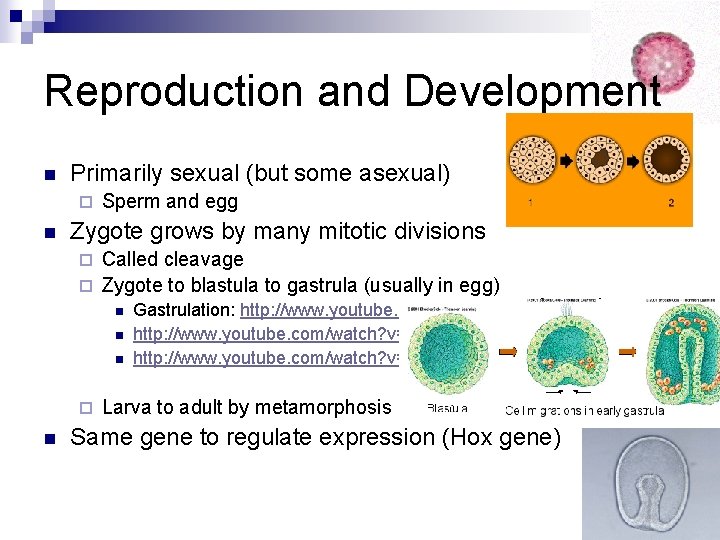
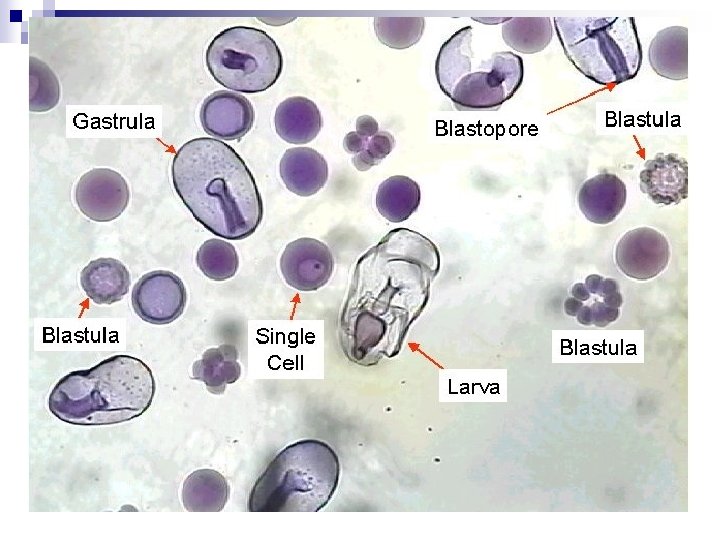
Reproduction and Development n Primarily sexual (but some asexual) ¨ n Sperm and egg Zygote grows by many mitotic divisions Called cleavage ¨ Zygote to blastula to gastrula (usually in egg) ¨ n n n ¨ n Gastrulation: http: //www. youtube. com/watch? v=1 Mnw. HRURKns http: //www. youtube. com/watch? v=j 87 y 7 EAj 8 q. E http: //www. youtube. com/watch? v=8 v 6 c. Xkzl. EQA Larva to adult by metamorphosis Same gene to regulate expression (Hox gene)
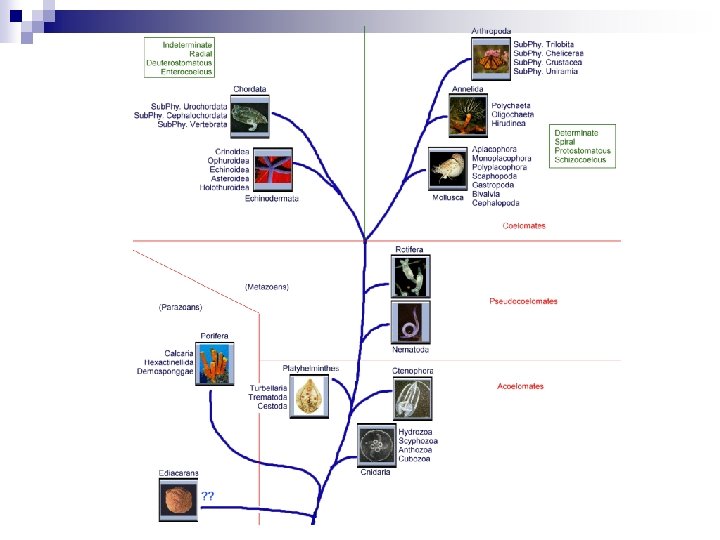
Body Plans n Useful for categorization ¨ Symmetry ¨ Tissues ¨ Body Cavities ¨ Protosome vs Deuterosome development
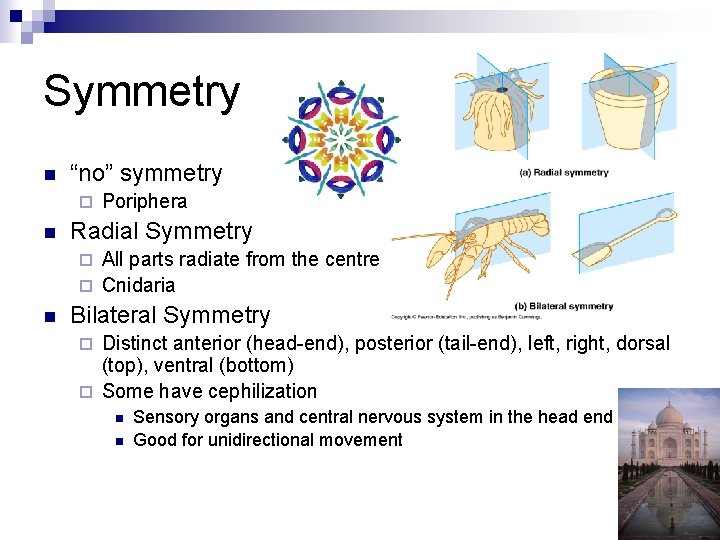
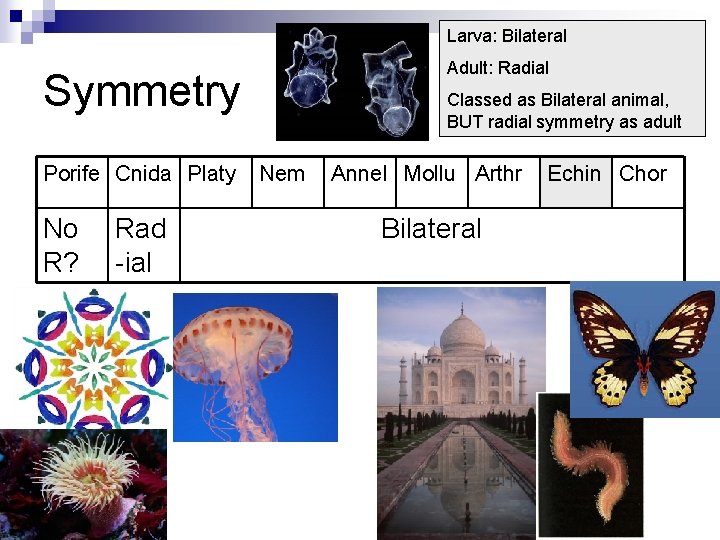
Symmetry n “no” symmetry ¨ n Poriphera Radial Symmetry All parts radiate from the centre ¨ Cnidaria ¨ n Bilateral Symmetry Distinct anterior (head-end), posterior (tail-end), left, right, dorsal (top), ventral (bottom) ¨ Some have cephilization ¨ n n Sensory organs and central nervous system in the head end Good for unidirectional movement
Larva: Bilateral Adult: Radial Symmetry Porife Cnida Platy No R? Rad -ial Classed as Bilateral animal, BUT radial symmetry as adult Nem Annel Mollu Arthr Bilateral Echin Chor
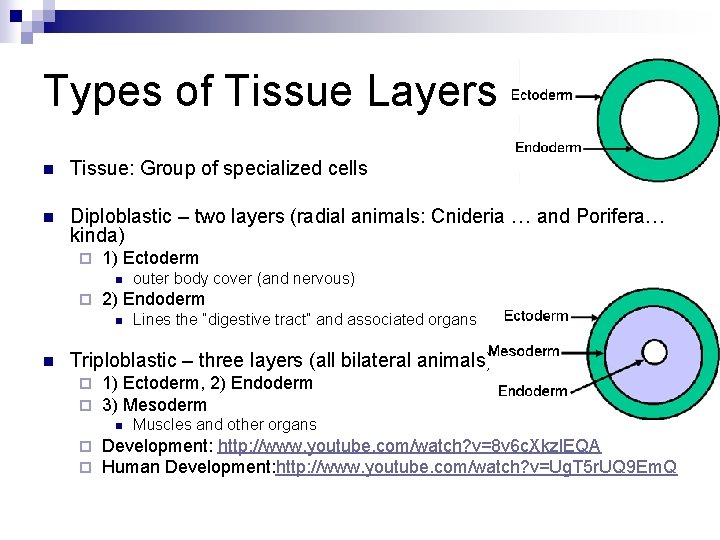
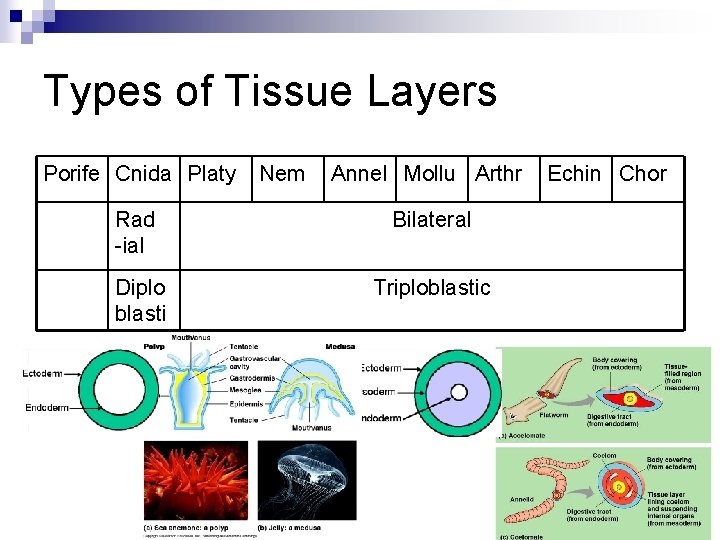
Types of Tissue Layers n Tissue: Group of specialized cells n Diploblastic – two layers (radial animals: Cnideria … and Porifera… kinda) ¨ 1) Ectoderm n ¨ 2) Endoderm n n outer body cover (and nervous) Lines the “digestive tract” and associated organs Triploblastic – three layers (all bilateral animals) ¨ ¨ 1) Ectoderm, 2) Endoderm 3) Mesoderm n ¨ ¨ Muscles and other organs Development: http: //www. youtube. com/watch? v=8 v 6 c. Xkzl. EQA Human Development: http: //www. youtube. com/watch? v=Ug. T 5 r. UQ 9 Em. Q
Types of Tissue Layers Porife Cnida Platy Nem Annel Mollu Arthr Rad -ial Bilateral Diplo blasti Triploblastic Echin Chor
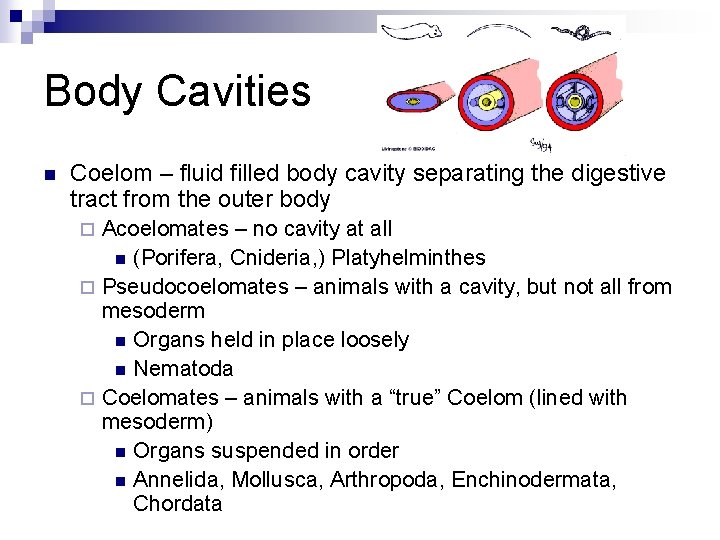
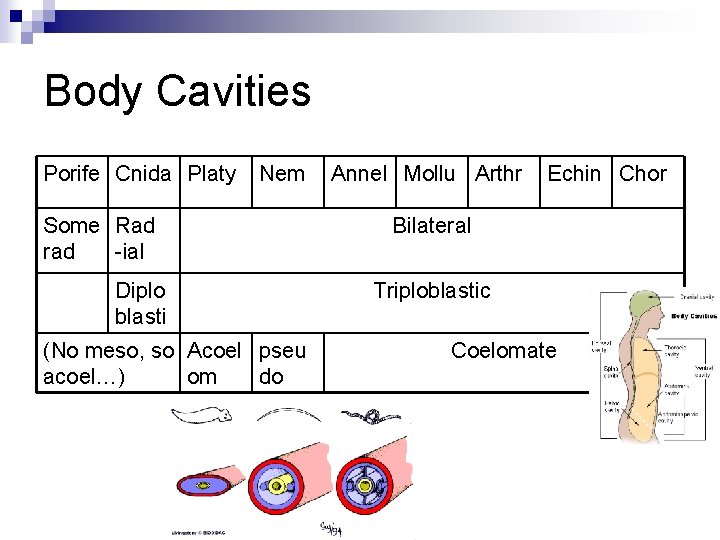
Body Cavities n Coelom – fluid filled body cavity separating the digestive tract from the outer body Acoelomates – no cavity at all n (Porifera, Cnideria, ) Platyhelminthes ¨ Pseudocoelomates – animals with a cavity, but not all from mesoderm n Organs held in place loosely n Nematoda ¨ Coelomates – animals with a “true” Coelom (lined with mesoderm) n Organs suspended in order n Annelida, Mollusca, Arthropoda, Enchinodermata, Chordata ¨
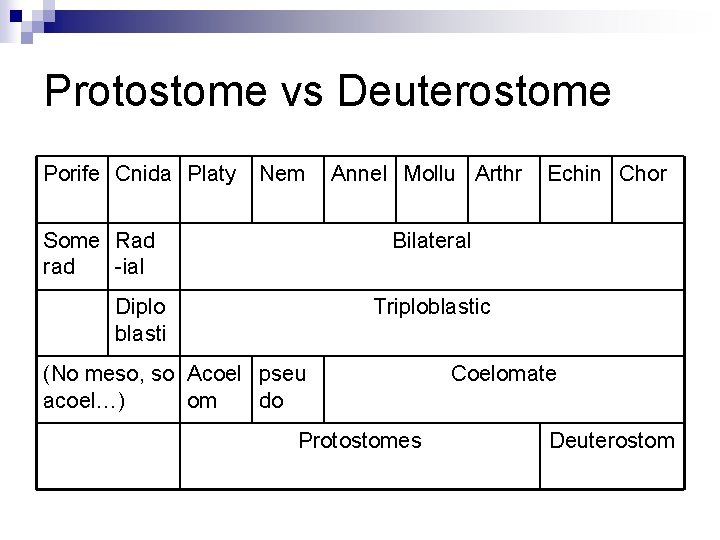
Body Cavities Porife Cnida Platy Nem Some Rad rad -ial Diplo blasti (No meso, so Acoel pseu acoel…) om do Annel Mollu Arthr Echin Chor Bilateral Triploblastic Coelomate
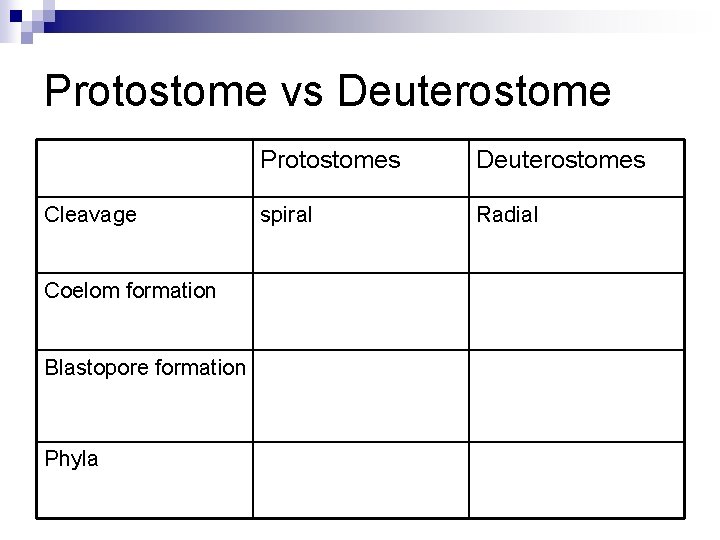
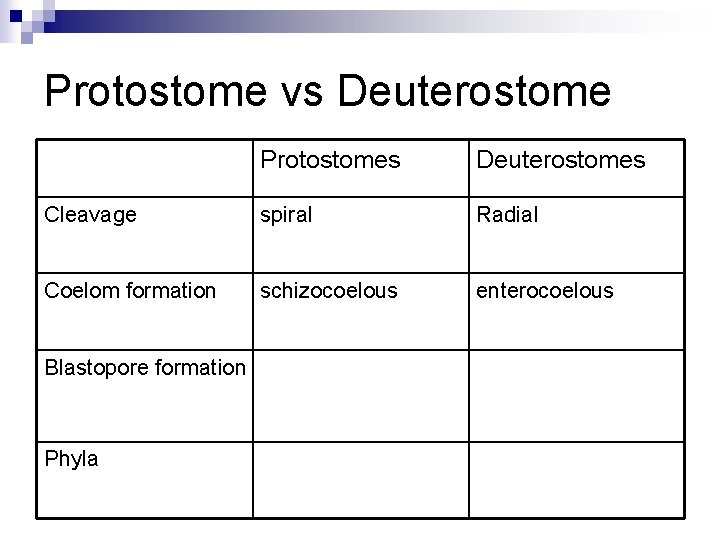
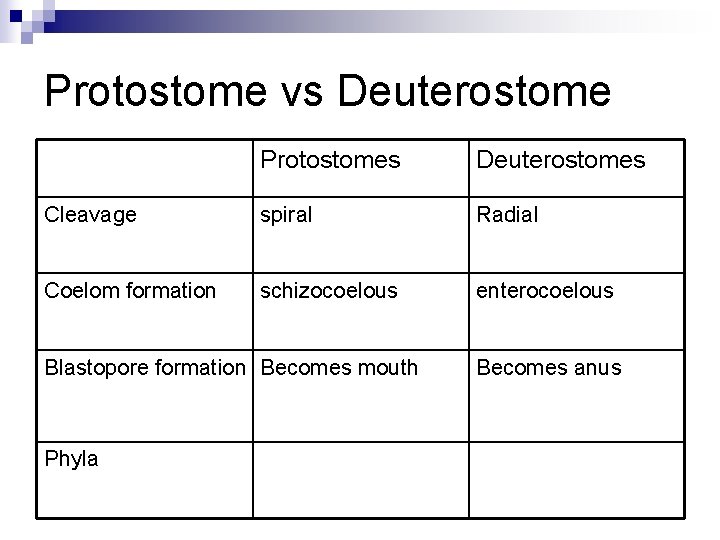
Protostome vs Deuterostome
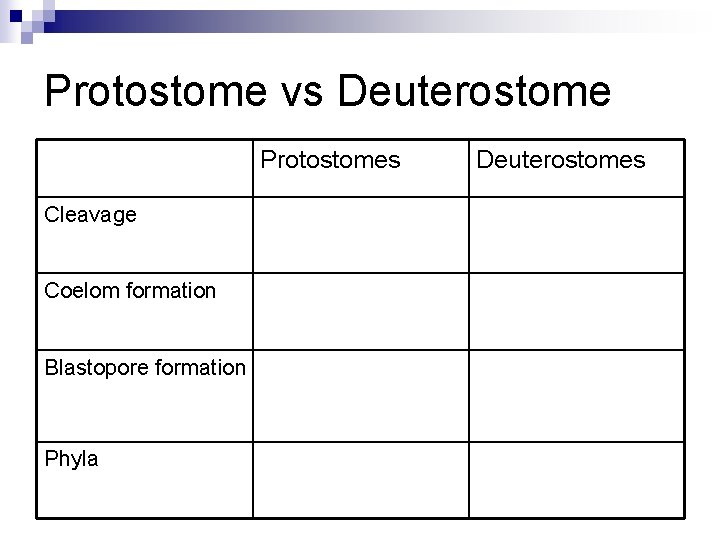
Protostome vs Deuterostome Protostomes Cleavage Coelom formation Blastopore formation Phyla Deuterostomes
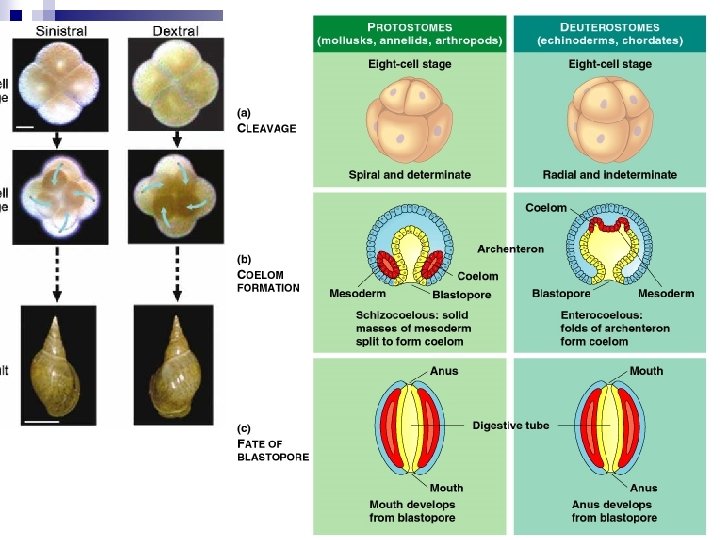
Protostome vs Deuterostome Cleavage Coelom formation Blastopore formation Phyla Protostomes Deuterostomes spiral Radial
Protostome vs Deuterostome Protostomes Deuterostomes Cleavage spiral Radial Coelom formation schizocoelous enterocoelous Blastopore formation Phyla
Protostome vs Deuterostome Protostomes Deuterostomes Cleavage spiral Radial Coelom formation schizocoelous enterocoelous Blastopore formation Becomes mouth Phyla Becomes anus
Protostome vs Deuterostome Porife Cnida Platy Nem Some Rad rad -ial Annel Mollu Arthr Echin Chor Bilateral Diplo blasti Triploblastic (No meso, so Acoel pseu acoel…) om do Protostomes Coelomate Deuterostom
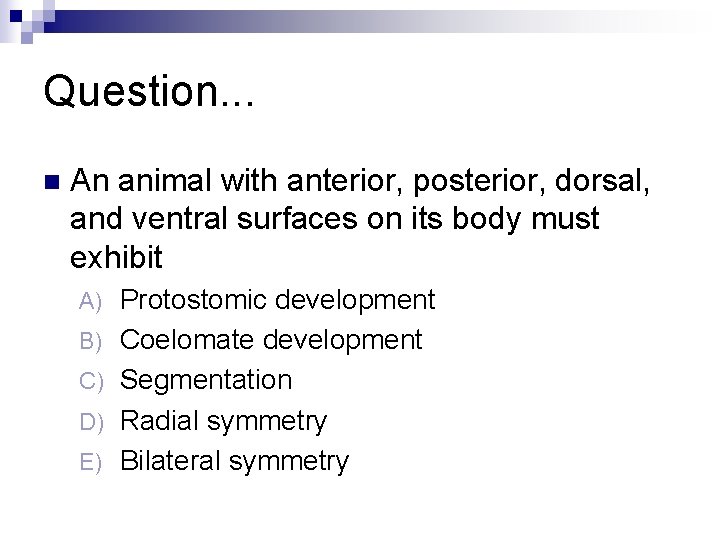
Question. . . n An animal with anterior, posterior, dorsal, and ventral surfaces on its body must exhibit A) B) C) D) E) Protostomic development Coelomate development Segmentation Radial symmetry Bilateral symmetry
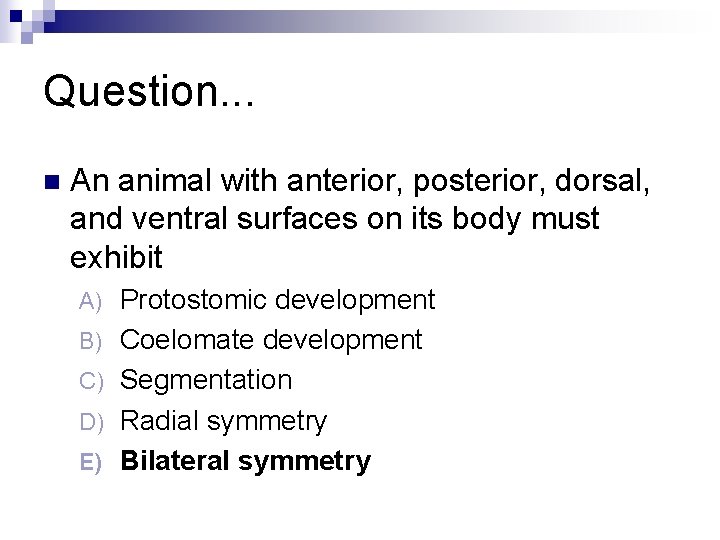
Question. . . n An animal with anterior, posterior, dorsal, and ventral surfaces on its body must exhibit A) B) C) D) E) Protostomic development Coelomate development Segmentation Radial symmetry Bilateral symmetry
Reminder… n Field/Lab Notebook Project starts on FRIDAY with ¨ Walk Through the Animal Phyla
Now… n Try #2 -10, 14, 34 – 40 in Holtzclaw