
Computing Surfaces a platform for scalable interactive displays
Computing Surfaces a platform for scalable interactive displays Alban Rrustemi Microsoft Research Cambridge 30 -June-2009
Overview l l l Information displays Emerging display technologies Display resolution Technology limitations Computing surfaces l l l A distributed architecture Implications Conclusions
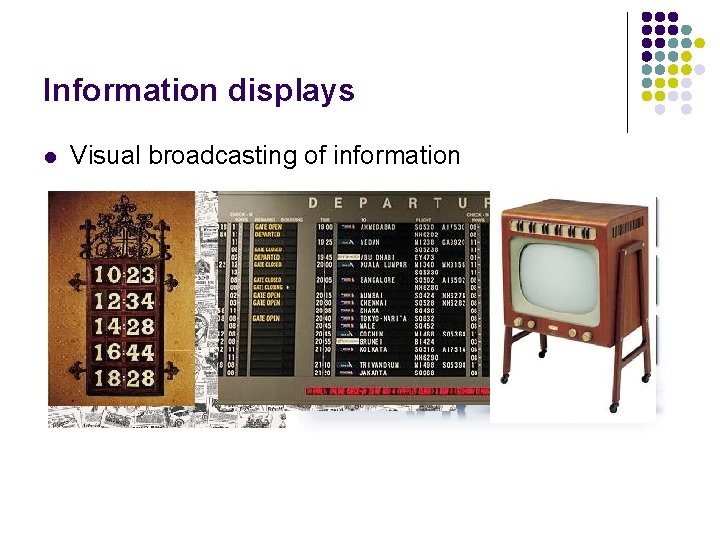
Information displays l Visual broadcasting of information
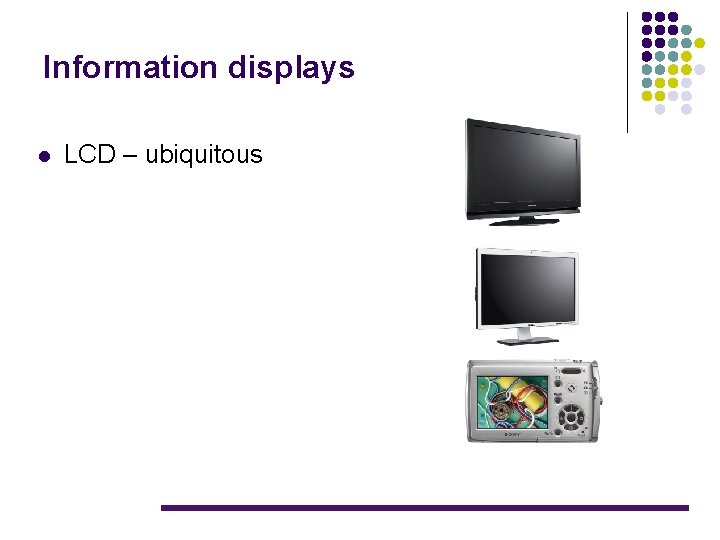
Information displays l LCD – ubiquitous

Information displays l l LCD – ubiquitous Sensing l New applications

Emerging display technologies l OLED (Organic LED) l l l l Higher refresh rate (due to faster response times) Higher contrast (e. g. 1, 000: 1) Improved colour reproduction Really thin – (e. g. Sony XEL-1 is just 3 mm thick) Much wider viewing angle (almost 180 degrees) Lower power consumption Can be made flexible and/or transparent Some OLED technologies are soluble
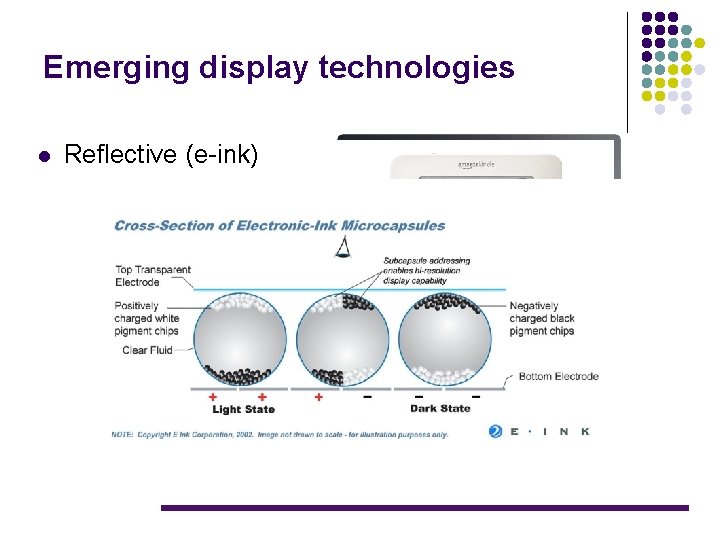
Emerging display technologies l Reflective (e-ink) l l E-readers Other devices
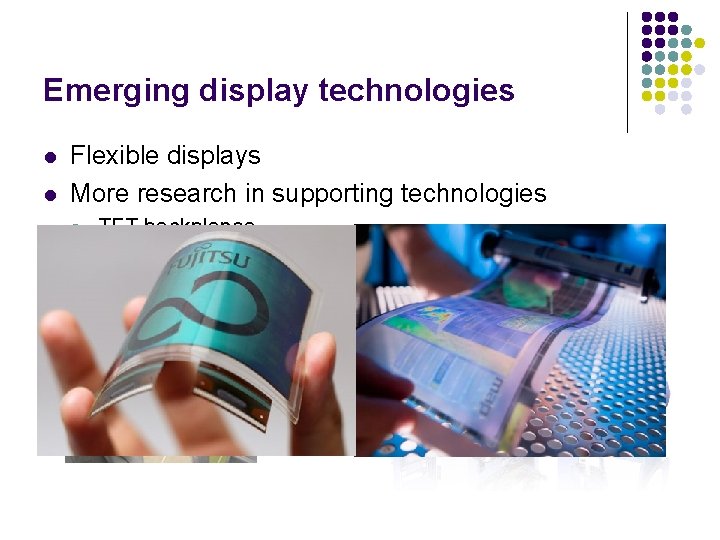
Emerging display technologies l l Flexible displays More research in supporting technologies l l l TFT backplanes Encapsulation materials Superior manufacturing efficiency
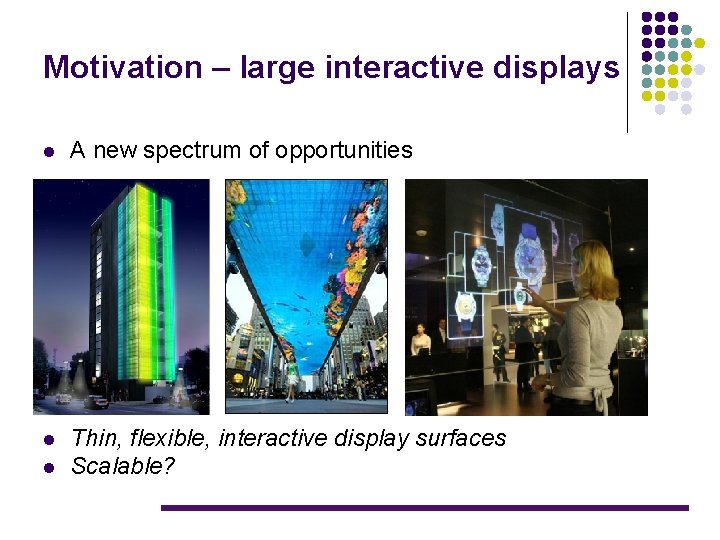
Motivation – large interactive displays l A new spectrum of opportunities l Thin, flexible, interactive display surfaces Scalable? l
Display resolution l Pixel density l l l TVs ~60 PPI Monitor screens ~100 PPI Smartphones, currently up to 300 PPI l Assuming 100 PPI => 4 k× 4 k / m 2 l Current max monitor resolution: 3840 X 2400 l l WQUXGA Resolution standards l Are becoming absurd
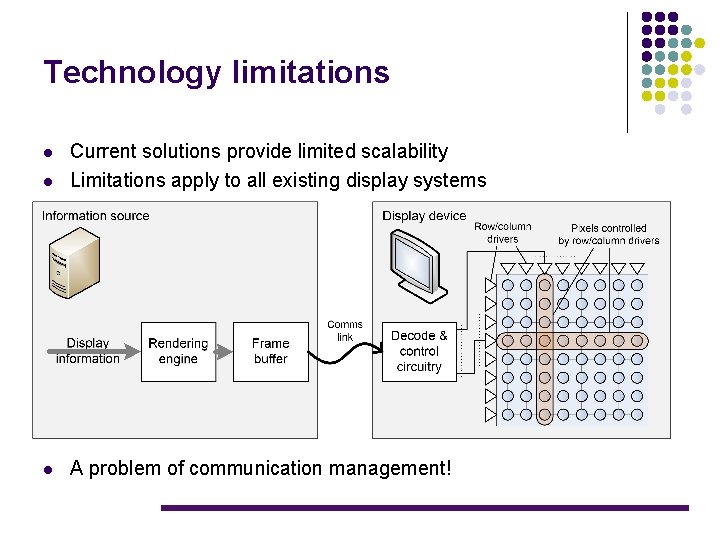
Technology limitations l Current solutions provide limited scalability Limitations apply to all existing display systems l A problem of communication management! l
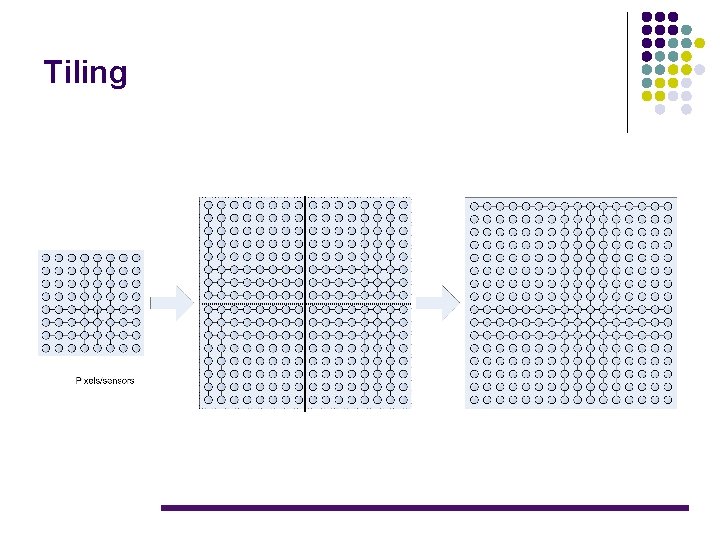
Tiling
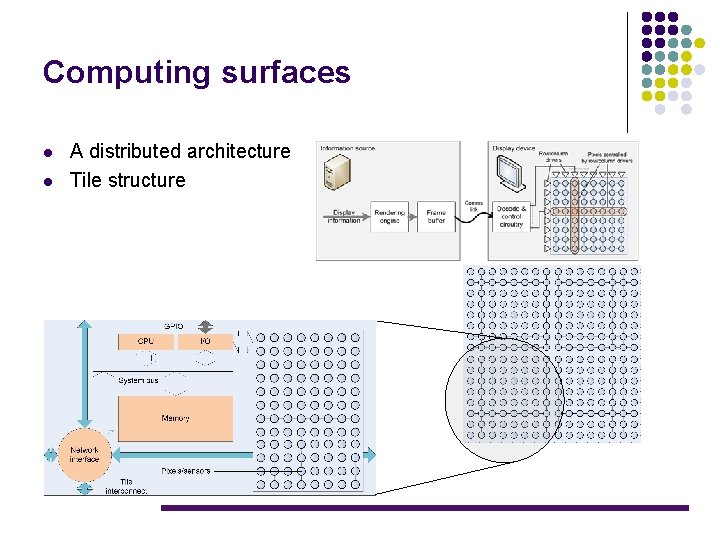
Computing surfaces l l A distributed architecture Tile structure
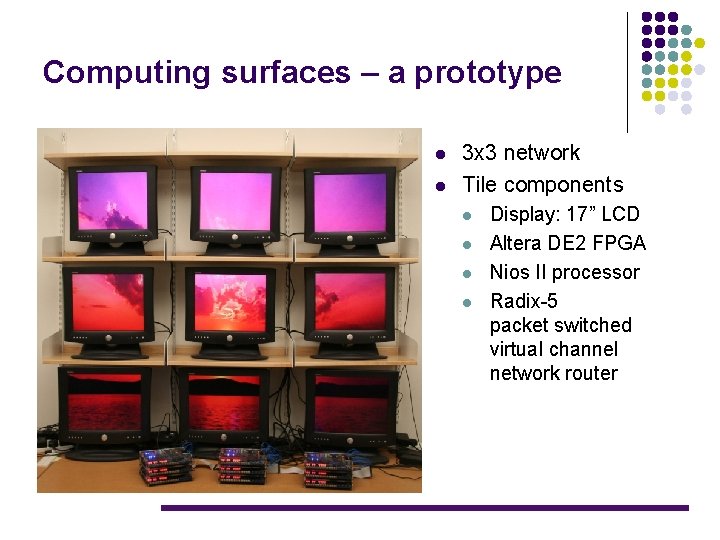
Computing surfaces – a prototype l l 3 x 3 network Tile components l l Display: 17” LCD Altera DE 2 FPGA Nios II processor Radix-5 packet switched virtual channel network router
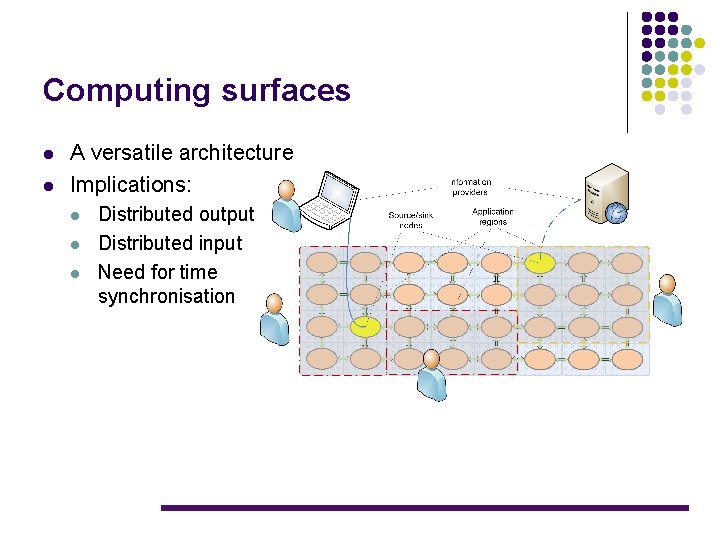
Computing surfaces l l A versatile architecture Implications: l l l Distributed output Distributed input Need for time synchronisation
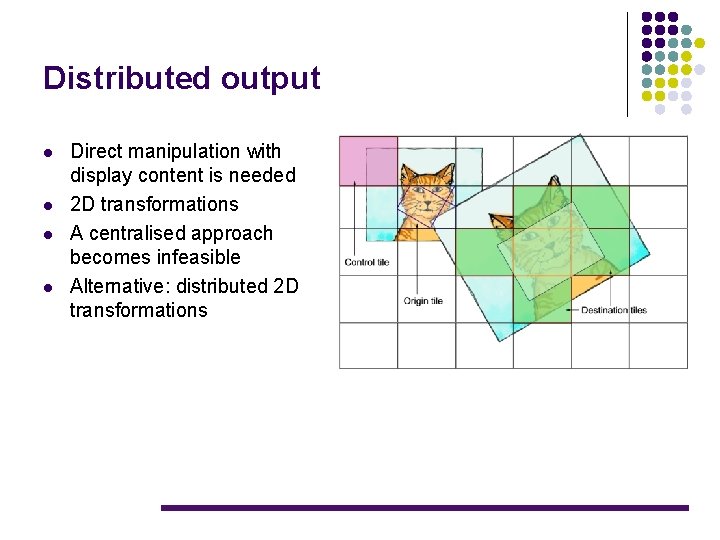
Distributed output l l Direct manipulation with display content is needed 2 D transformations A centralised approach becomes infeasible Alternative: distributed 2 D transformations
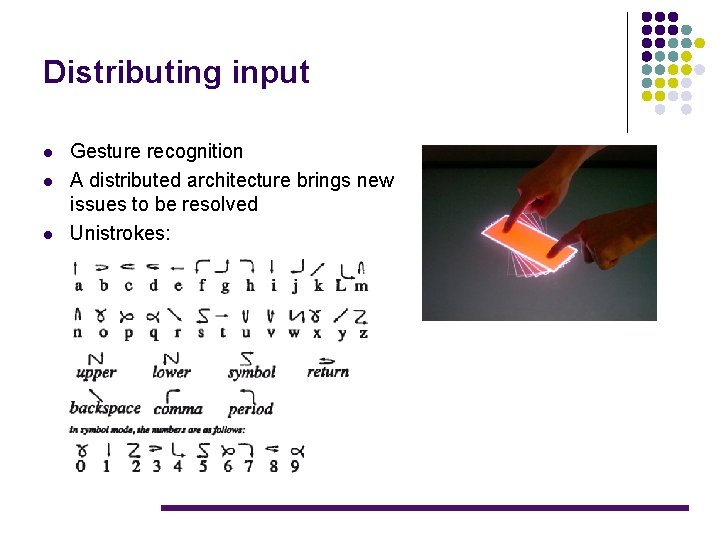
Distributing input l l l Gesture recognition A distributed architecture brings new issues to be resolved Unistrokes:
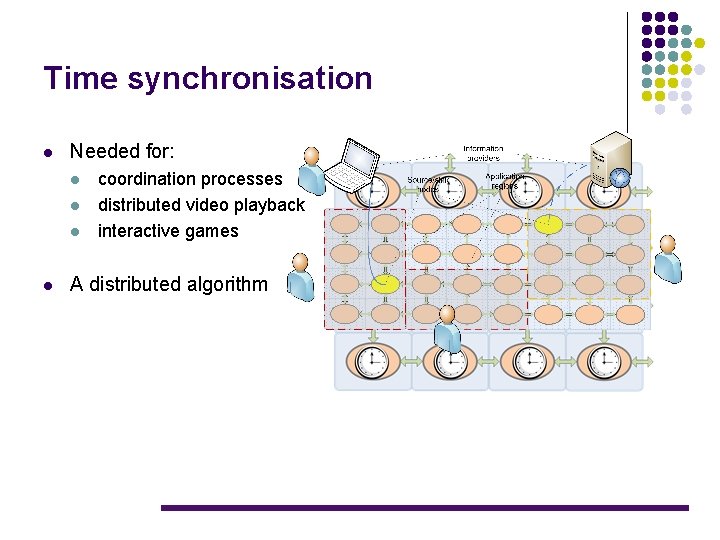
Time synchronisation l Needed for: l l coordination processes distributed video playback interactive games A distributed algorithm
Conclusions and summary l l l Emerging display technologies will enable FP displays ubiquity Resolution scalability problems will escalate Distributed architectures become necessary l Computing surfaces l l Distributed 2 D transformation of images Distributed gesture recognition Time synchronisation Questions?
- Slides: 19