
Computing in carbon Basic elements of neuroelectronics membranes
Computing in carbon Basic elements of neuroelectronics -- membranes -- ion channels -- wiring Elementary neuron models -- conductance based -- modelers’ alternatives Wiring neurons together -- synapses -- short term plasticity
Closeup of a patch on the surface of a neuron
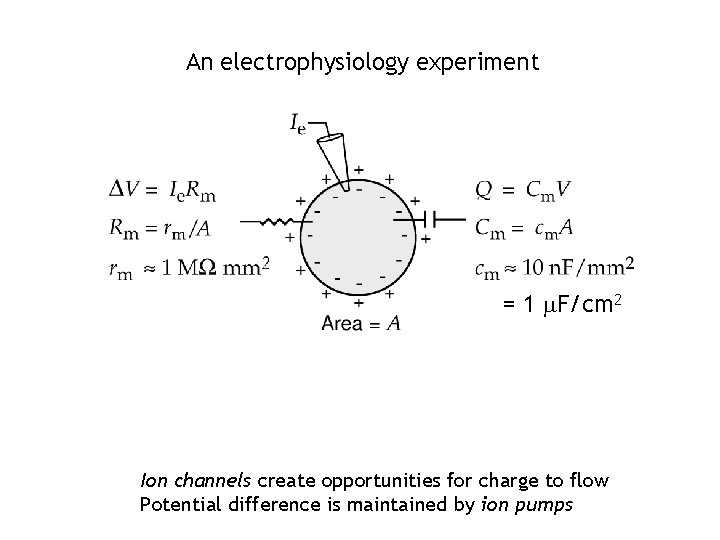
An electrophysiology experiment = 1 m. F/cm 2 Ion channels create opportunities for charge to flow Potential difference is maintained by ion pumps
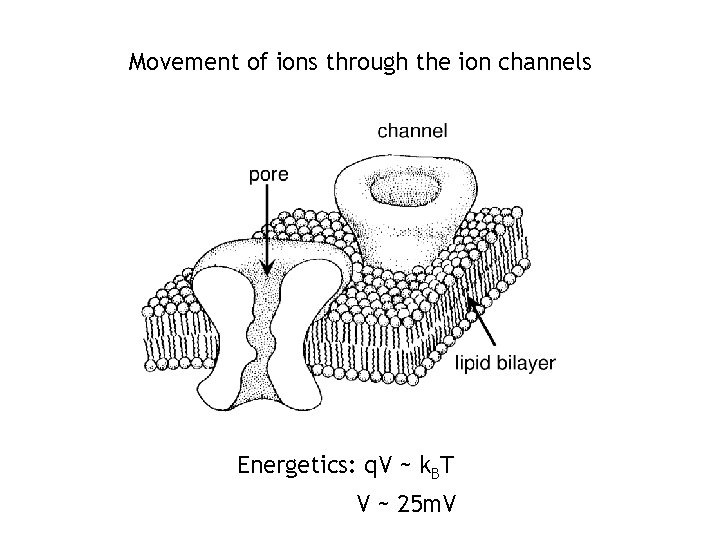
Movement of ions through the ion channels Energetics: q. V ~ k. BT V ~ 25 m. V

The equilibrium potential K+ Ions move down their concentration gradient Nernst: until opposed by electrostatic forces Na+, Ca 2+

Different ion channels have associated conductances. A given conductance tends to move the membrane potential toward the equilibrium potential for that ion ENa ECa EK ECl ENa V ~ ~ 50 m. V 150 m. V -80 m. V -60 m. V depolarizing hyperpolarizing shunting V > E positive current will flow outward V < E positive current will flow inward 0 more polarized Vrest EK
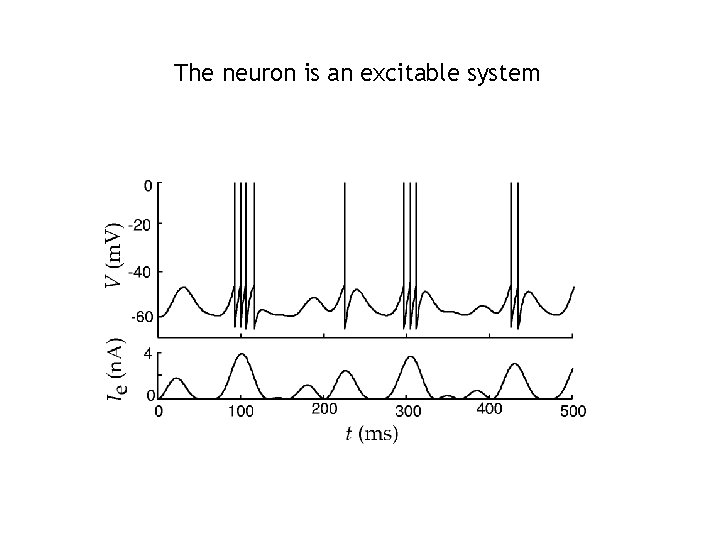
The neuron is an excitable system
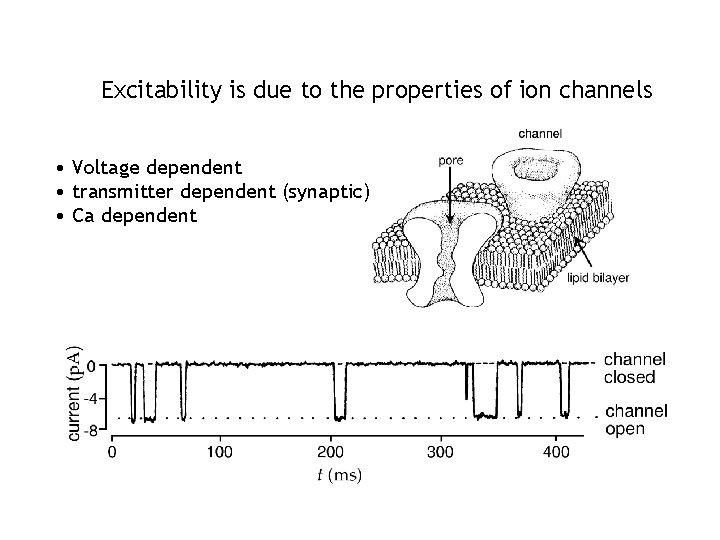
Excitability is due to the properties of ion channels • Voltage dependent • transmitter dependent (synaptic) • Ca dependent
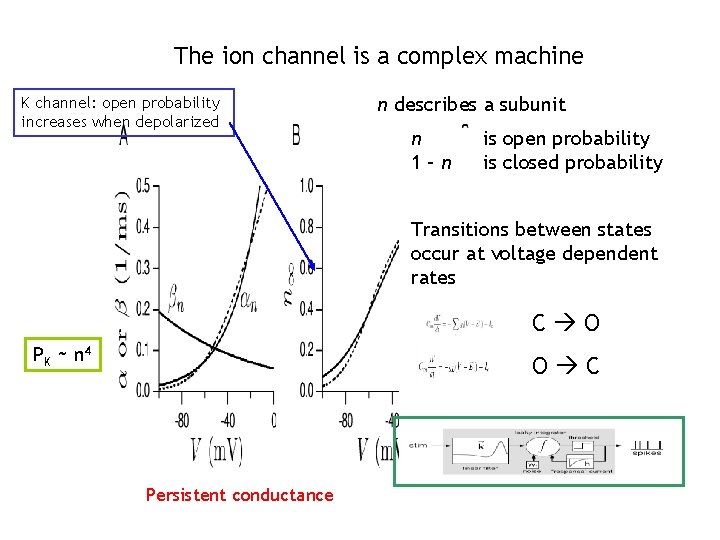
The ion channel is a complex machine K channel: open probability increases when depolarized n describes a subunit n 1–n is open probability is closed probability Transitions between states occur at voltage dependent rates C O PK ~ n 4 O C Persistent conductance
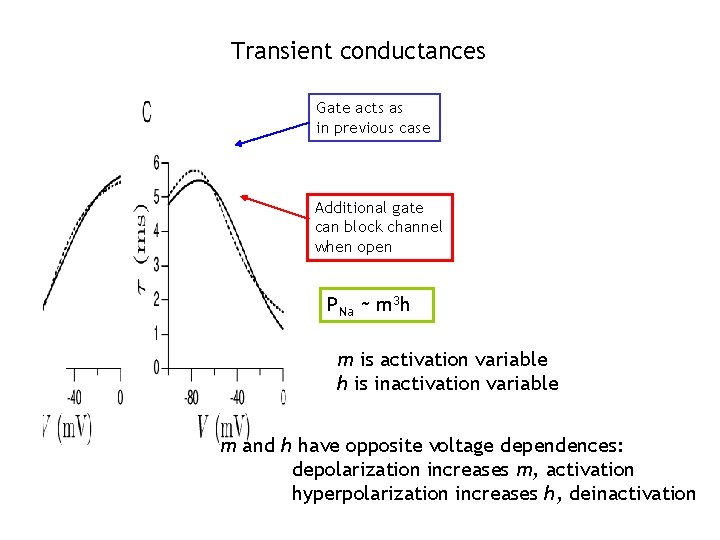
Transient conductances Gate acts as in previous case Additional gate can block channel when open PNa ~ m 3 h m is activation variable h is inactivation variable m and h have opposite voltage dependences: depolarization increases m, activation hyperpolarization increases h, deinactivation
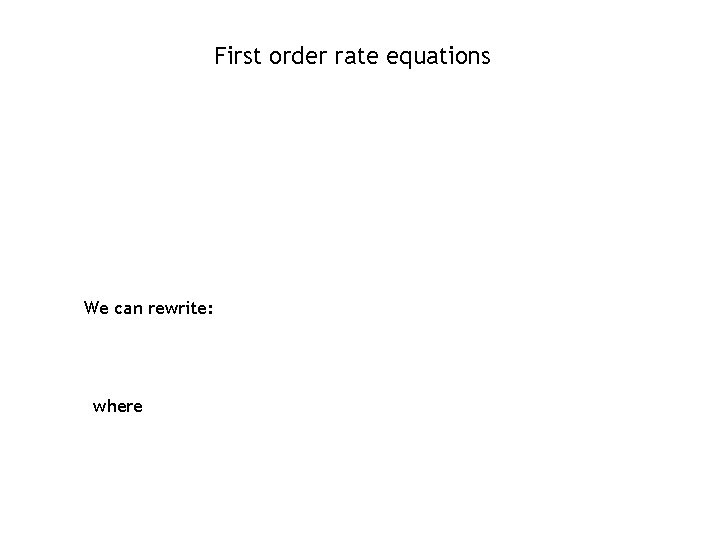
First order rate equations We can rewrite: where
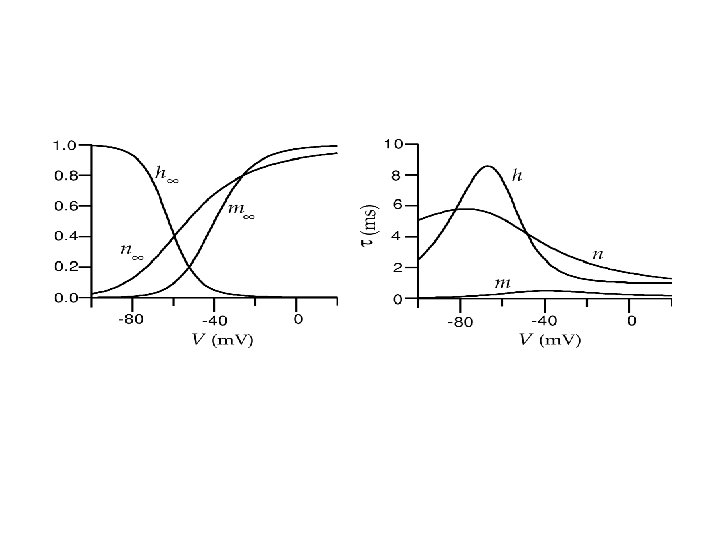
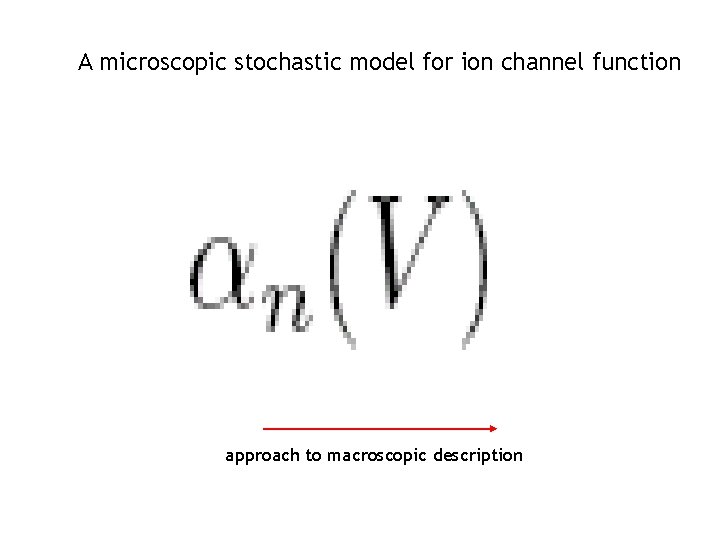
A microscopic stochastic model for ion channel function approach to macroscopic description
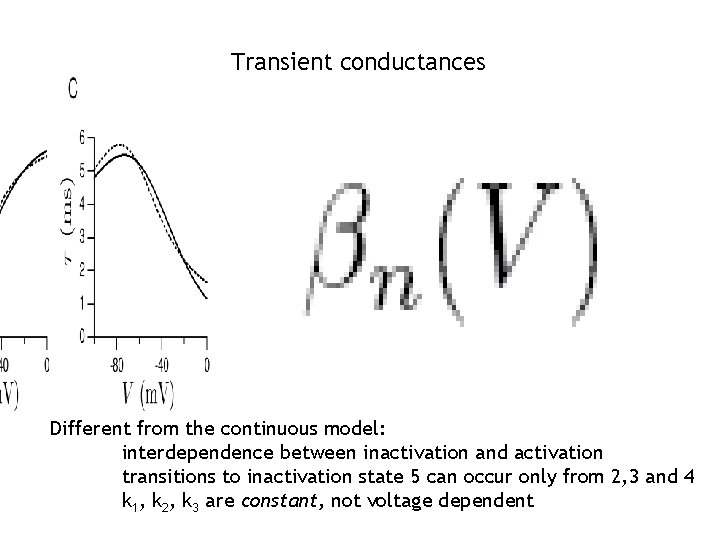
Transient conductances Different from the continuous model: interdependence between inactivation and activation transitions to inactivation state 5 can occur only from 2, 3 and 4 k 1, k 2, k 3 are constant, not voltage dependent
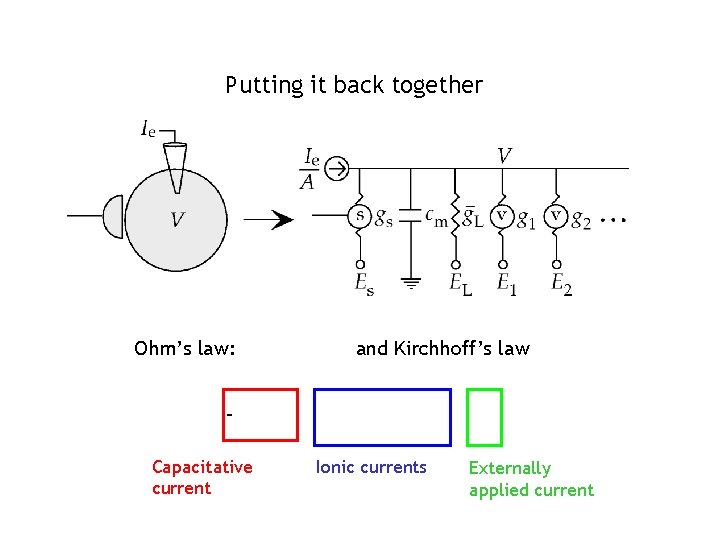
Putting it back together Ohm’s law: and Kirchhoff’s law Capacitative current Ionic currents Externally applied current
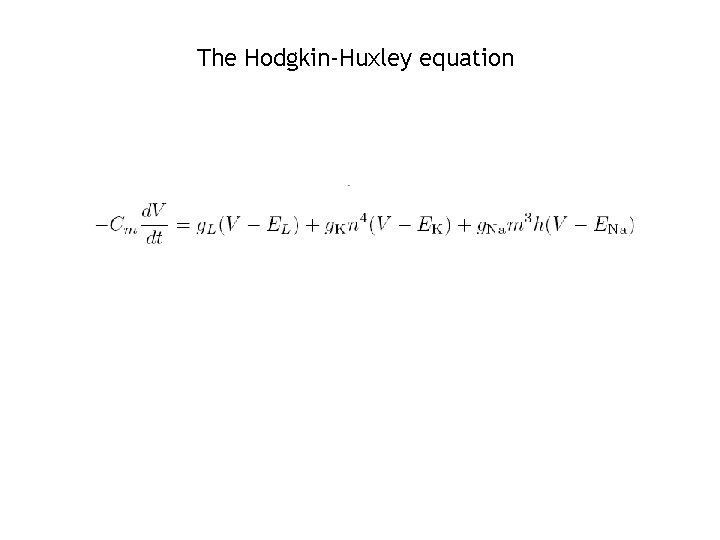
The Hodgkin-Huxley equation
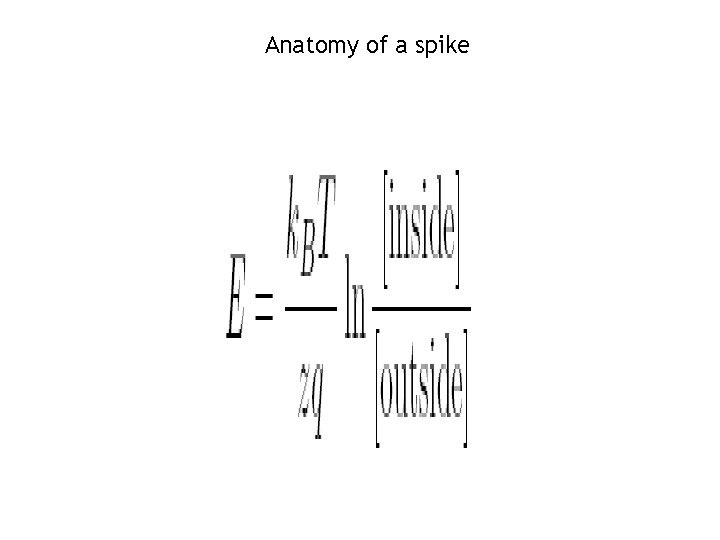
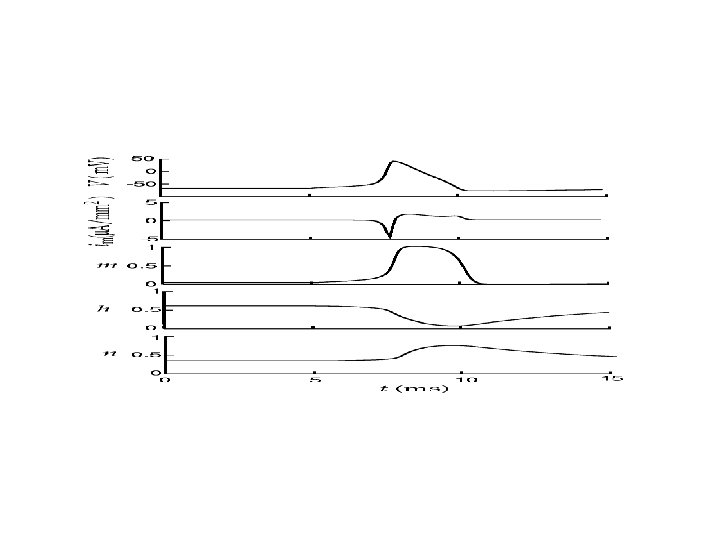
Anatomy of a spike
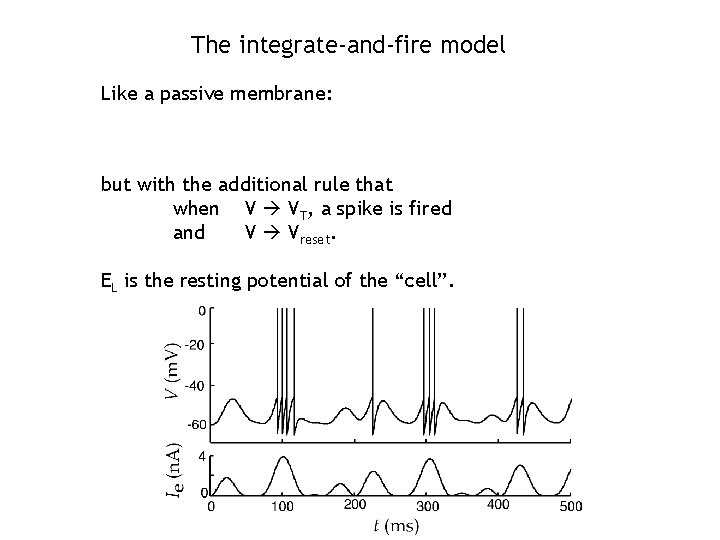
The integrate-and-fire model Like a passive membrane: but with the additional rule that when V VT, a spike is fired and V Vreset. EL is the resting potential of the “cell”.
The spike response model Gerstner and Kistler Kernel f for subthreshold response replaces leaky integrator Kernel for spikes replaces “line” • determine f from the linearized HH equations • fit a threshold • paste in the spike shape and AHP
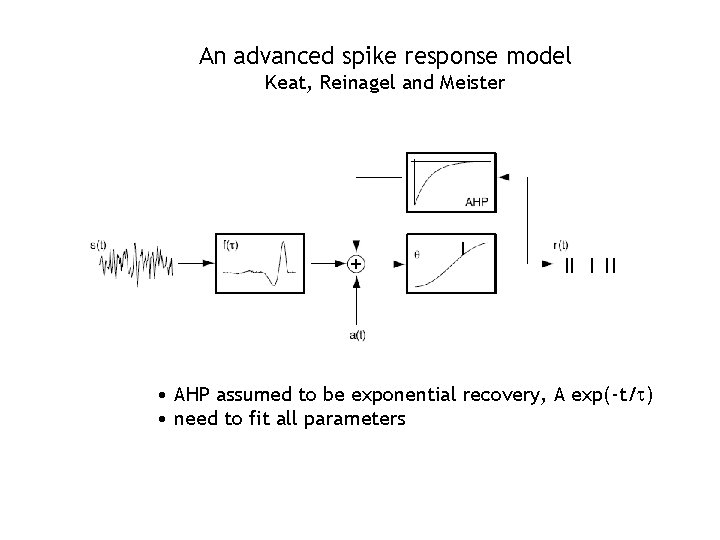
An advanced spike response model Keat, Reinagel and Meister • AHP assumed to be exponential recovery, A exp(-t/t) • need to fit all parameters
The generalized linear model Paninski, Pillow, Simoncelli • general definitions for k and h • robust maximum likelihood fitting procedure
- Slides: 22