
Computers Tools for an Information Age Chapter 2
- Slides: 9
Computers: Tools for an Information Age Chapter 2 Applications Software: Getting the Work Done BSM 025 Computers Copyright (c) 2003 by Prentice Hall
Course website http: //staff. psu. edu. eg/rehabfarouk /classes/bsm 025 -computers Copyright (c) 2003 by Prentice Hall 2
Objectives Distinguish between operating systems and applications software List the various methods by which individuals and businesses acquire software List and briefly describe various types of taskoriented software Identify the kinds of software that are available for both large and small businesses Discuss ethical issues associated with software Describe the functions of various computer professionals Copyright (c) 2003 by Prentice Hall 3
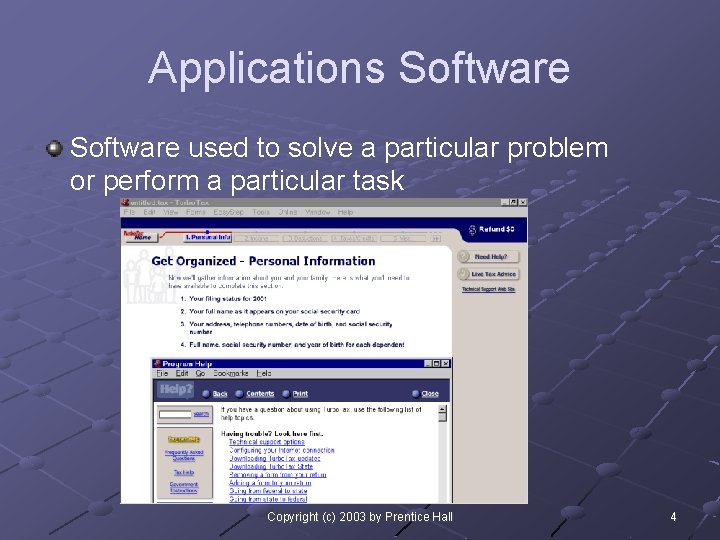
Applications Software used to solve a particular problem or perform a particular task Copyright (c) 2003 by Prentice Hall 4
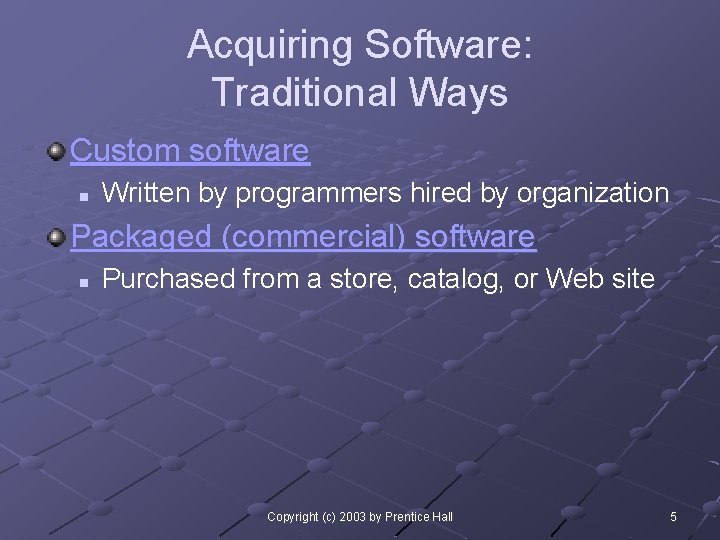
Acquiring Software: Traditional Ways Custom software n Written by programmers hired by organization Packaged (commercial) software n Purchased from a store, catalog, or Web site Copyright (c) 2003 by Prentice Hall 5
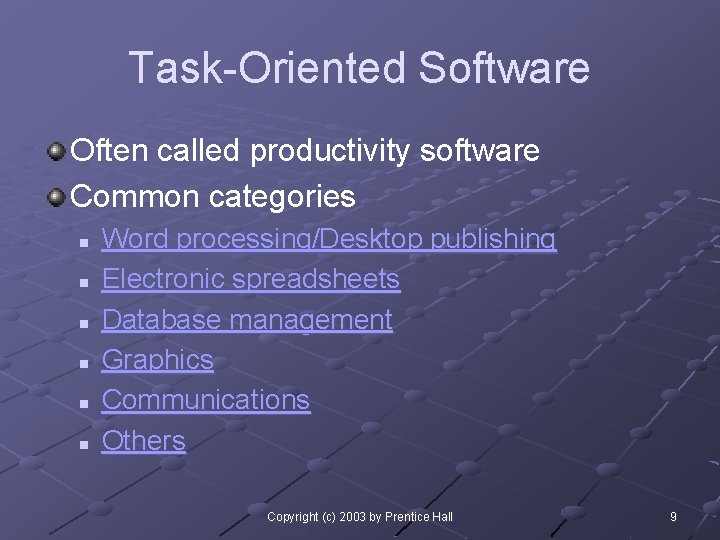
Task-Oriented Software Often called productivity software Common categories n n n Word processing/Desktop publishing Electronic spreadsheets Database management Graphics Communications Others Copyright (c) 2003 by Prentice Hall 9
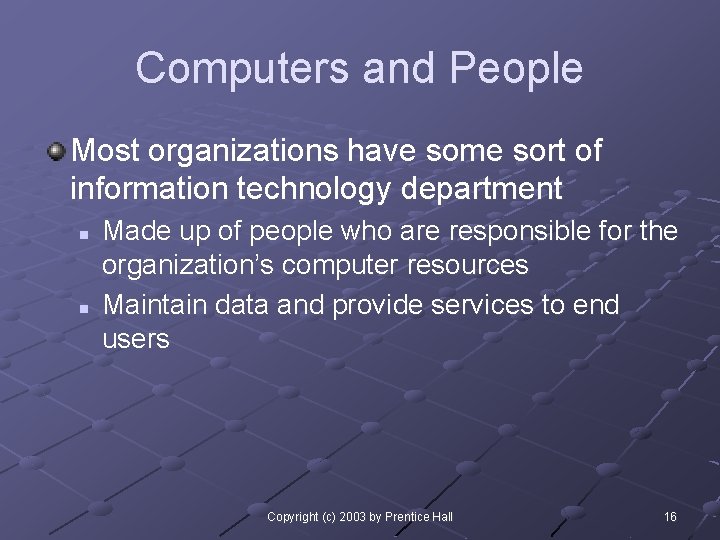
Computers and People Most organizations have some sort of information technology department n n Made up of people who are responsible for the organization’s computer resources Maintain data and provide services to end users Copyright (c) 2003 by Prentice Hall 16
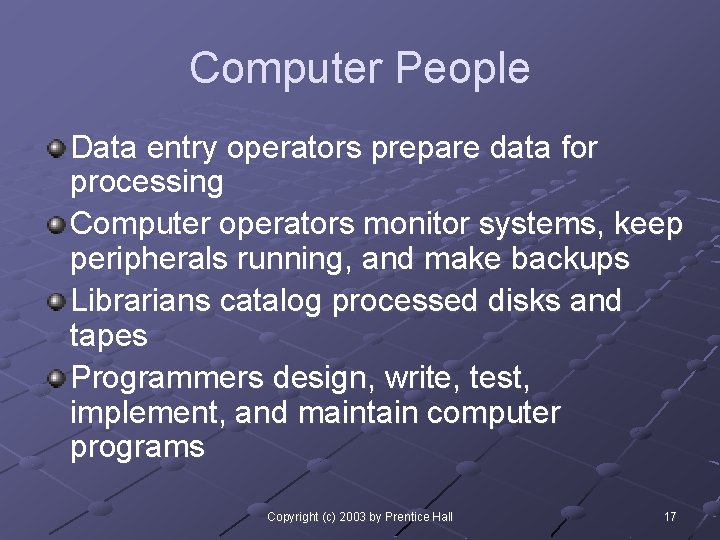
Computer People Data entry operators prepare data for processing Computer operators monitor systems, keep peripherals running, and make backups Librarians catalog processed disks and tapes Programmers design, write, test, implement, and maintain computer programs Copyright (c) 2003 by Prentice Hall 17
Computer People Systems analysts plan and design entire systems n Must have knowledge in programming, as well as knowledge of the business Network managers implement and maintain organization’s network(s) Chief Information Officer (CIO) makes key technology decisions n A key member of the organization’s strategic decisionmaking team Copyright (c) 2003 by Prentice Hall 18