
Computer Vision Spring 2006 15 385 685 Instructor

- Slides: 41
Computer Vision Spring 2006 15 -385, -685 Instructor: S. Narasimhan Wean 5403 T-R 3: 00 pm – 4: 20 pm Lecture #16
Announcements • Homework 4 due today. • Homework 5 will be out tonight, due in two weeks. • Use bboard frequently and visit us during OH.
Optical Flow and Motion Lecture #16
Optical Flow and Motion • We are interested in finding the movement of scene objects from time-varying images (videos). • Lots of uses – – – Track object behavior Correct for camera jitter (stabilization) Align images (mosaics) 3 D shape reconstruction Special effects
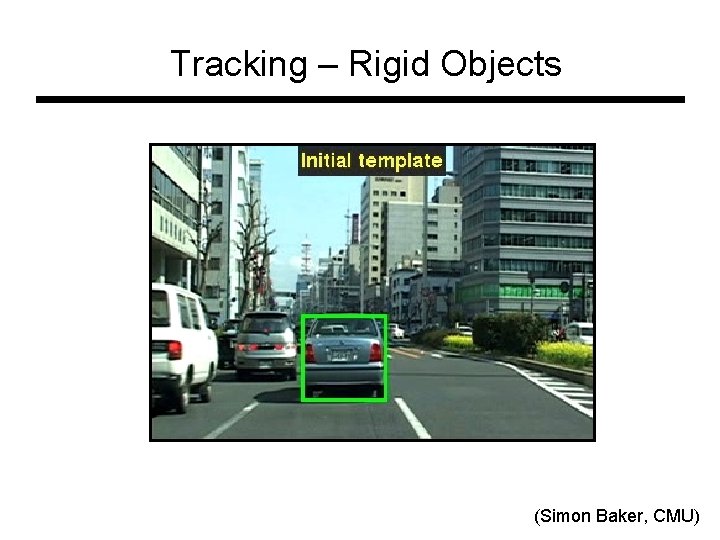
Tracking – Rigid Objects (Simon Baker, CMU)
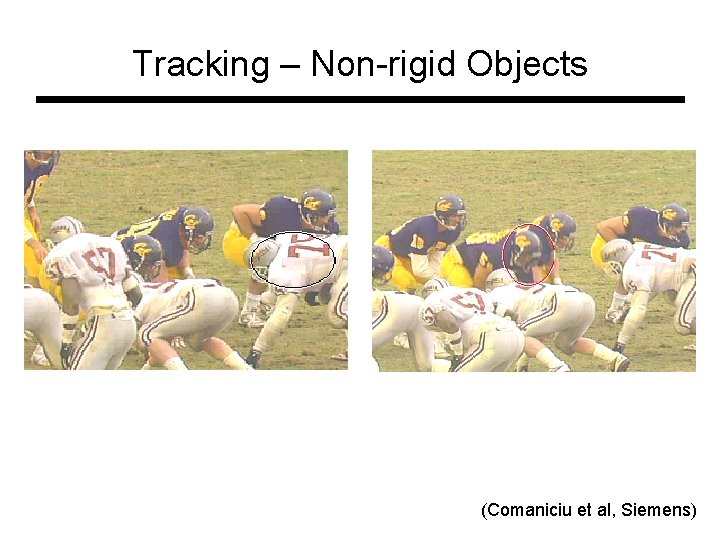
Tracking – Non-rigid Objects (Comaniciu et al, Siemens)
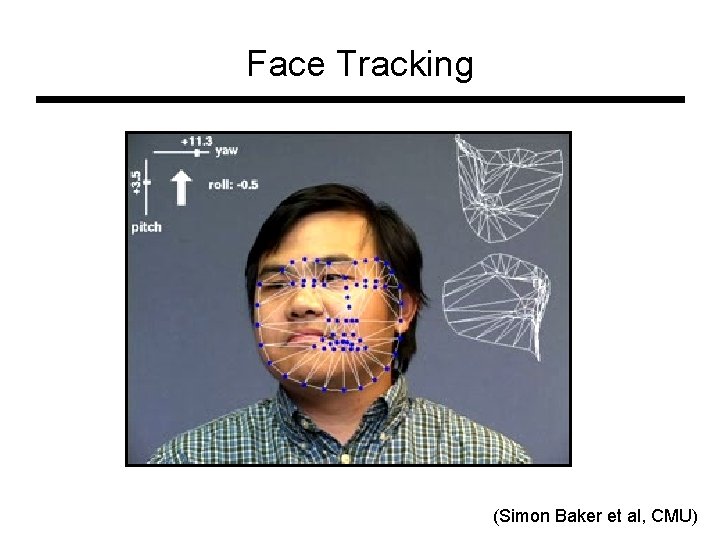
Face Tracking (Simon Baker et al, CMU)
Applications of Face Tracking • User Interfaces: – Mouse Replacement: Head Pose and Gaze Estimation – Automotive: Windshield Displays, Smart Airbags, Driver Monitoring • Face Recognition: – Pose Normalization – Model-Based Face Recognition • Lipreading/Audio-Visual Speech Recognition • Expression Recognition and Deception Detection • Rendering and Animation: – Expression Animations and Transfer – Low-Bandwidth Video Conferencing – Audio-Visual Speech Synthesis (Simon Baker, CMU)
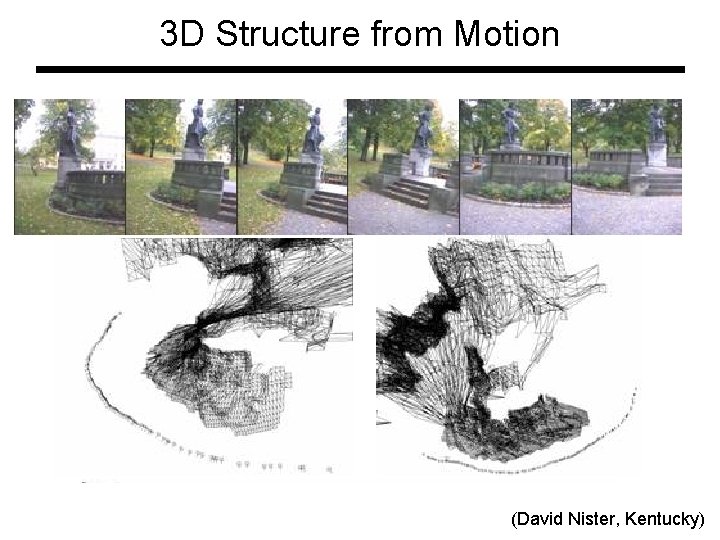
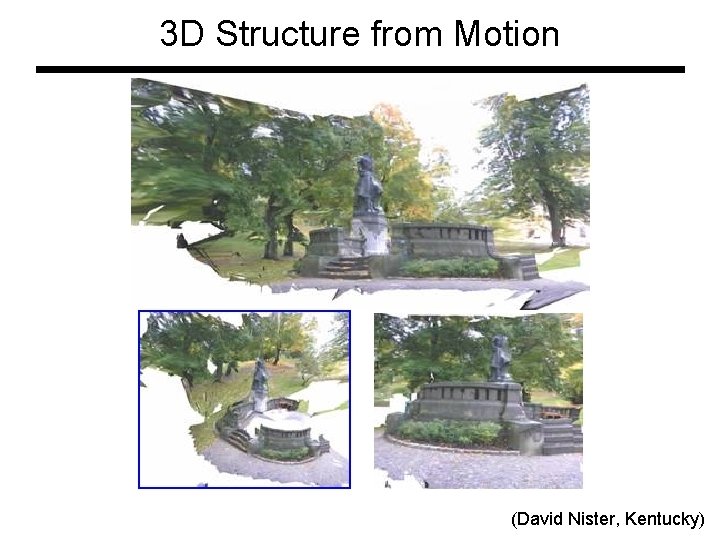
3 D Structure from Motion (David Nister, Kentucky)
3 D Structure from Motion (David Nister, Kentucky)
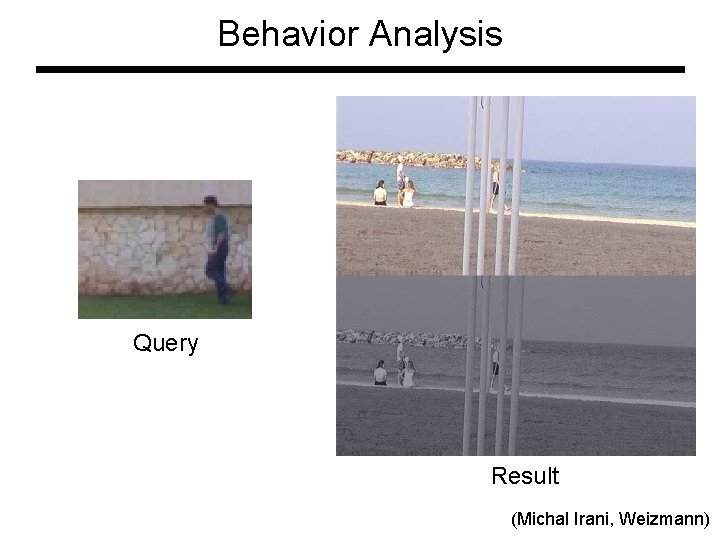
Behavior Analysis Query Result (Michal Irani, Weizmann)
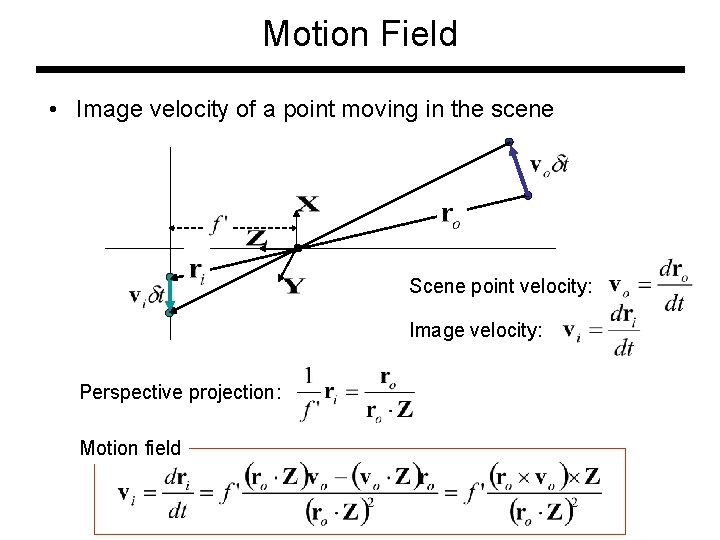
Motion Field • Image velocity of a point moving in the scene Scene point velocity: Image velocity: Perspective projection: Motion field
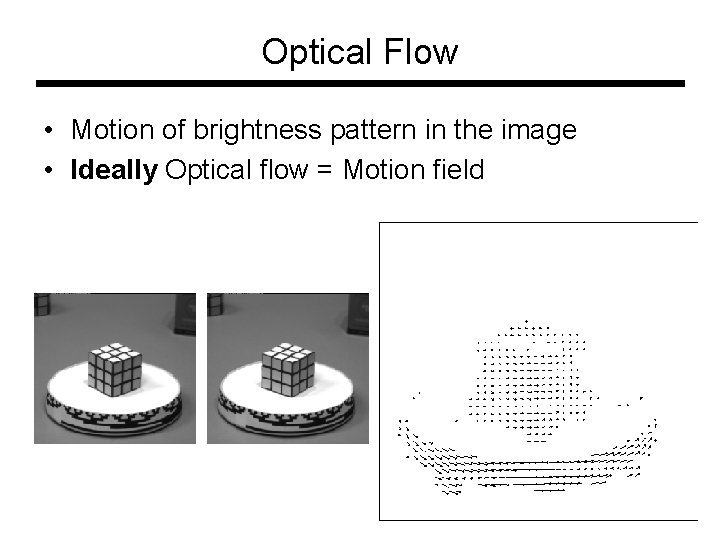
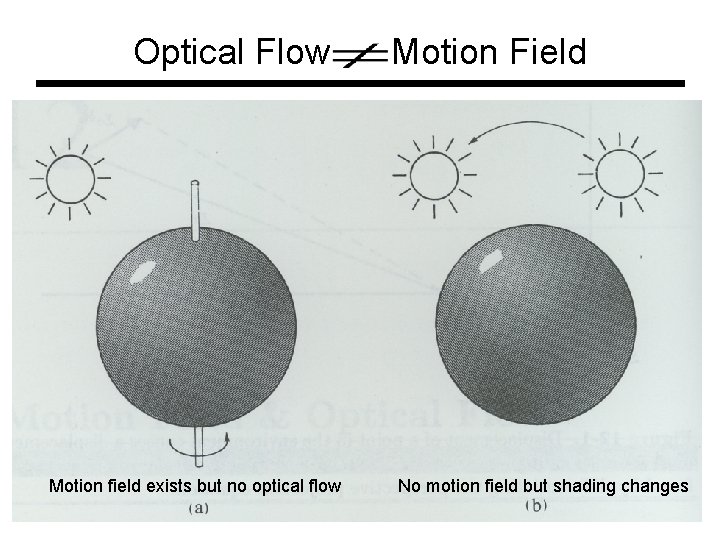
Optical Flow • Motion of brightness pattern in the image • Ideally Optical flow = Motion field
Optical Flow Motion field exists but no optical flow Motion Field No motion field but shading changes
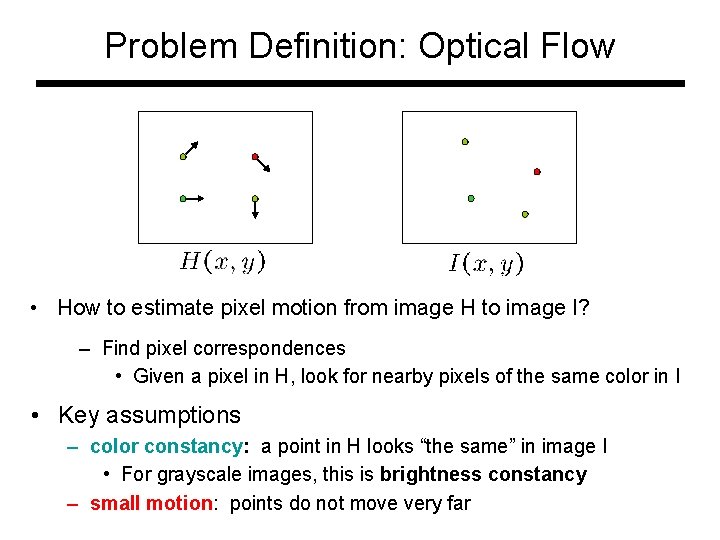
Problem Definition: Optical Flow • How to estimate pixel motion from image H to image I? – Find pixel correspondences • Given a pixel in H, look for nearby pixels of the same color in I • Key assumptions – color constancy: a point in H looks “the same” in image I • For grayscale images, this is brightness constancy – small motion: points do not move very far
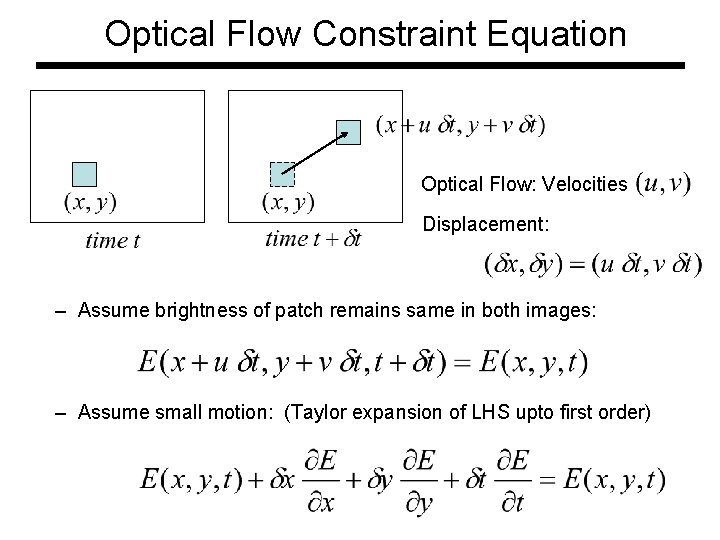
Optical Flow Constraint Equation Optical Flow: Velocities Displacement: – Assume brightness of patch remains same in both images: – Assume small motion: (Taylor expansion of LHS upto first order)
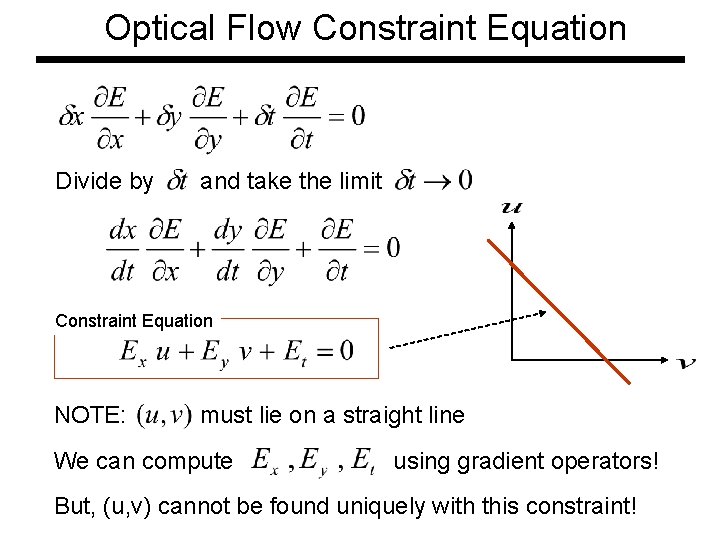
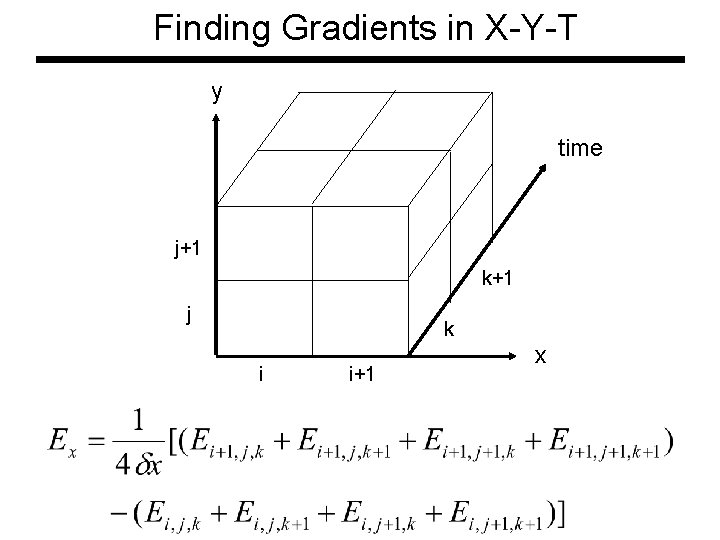
Optical Flow Constraint Equation Divide by and take the limit Constraint Equation NOTE: must lie on a straight line We can compute using gradient operators! But, (u, v) cannot be found uniquely with this constraint!
Finding Gradients in X-Y-T y time j+1 k+1 j k i i+1 x
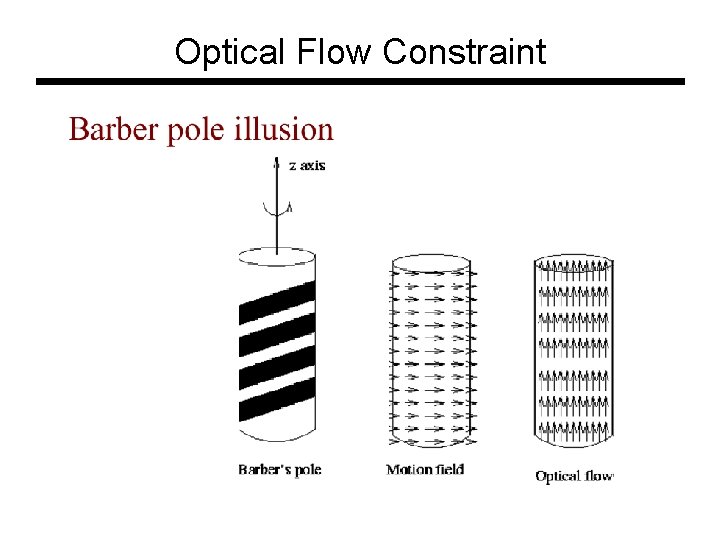
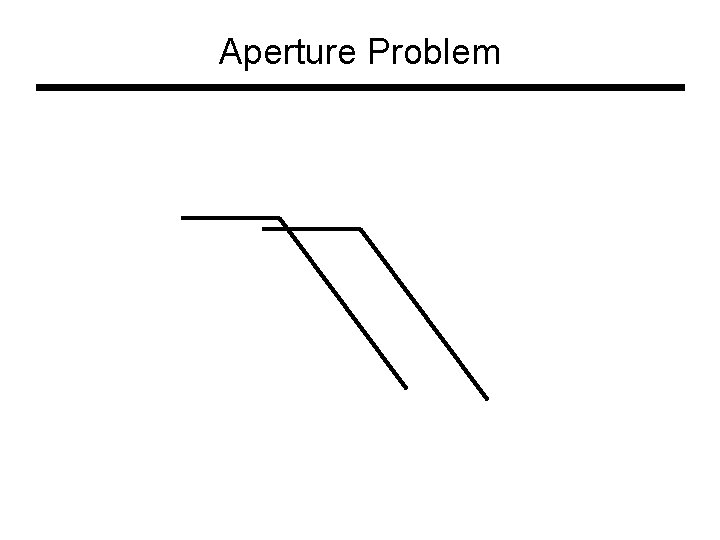
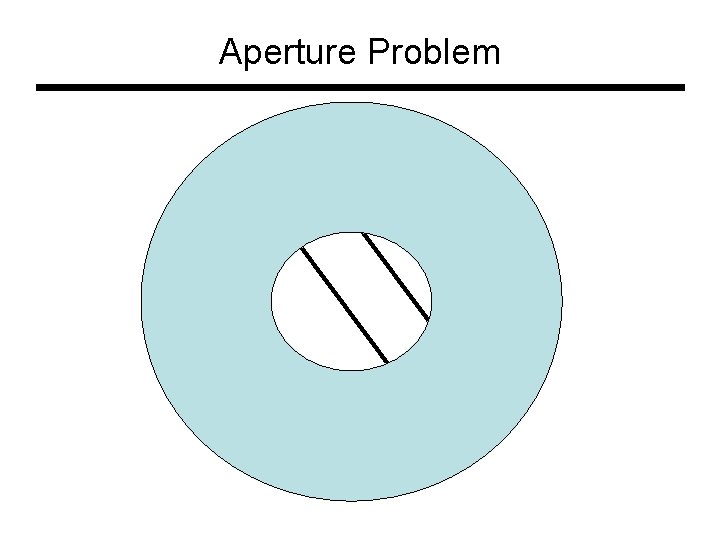
Optical Flow Constraint • Intuitively, what does this constraint mean? – The component of the flow in the gradient direction is determined – The component of the flow parallel to an edge is unknown
Optical Flow Constraint
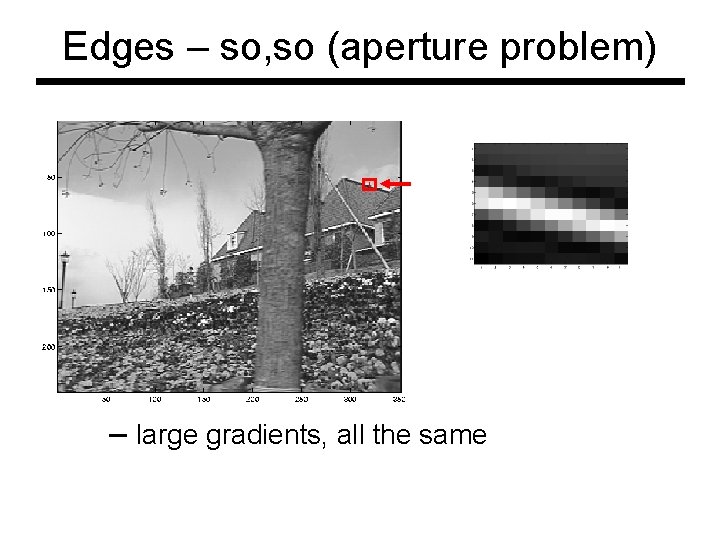
Aperture Problem
Aperture Problem
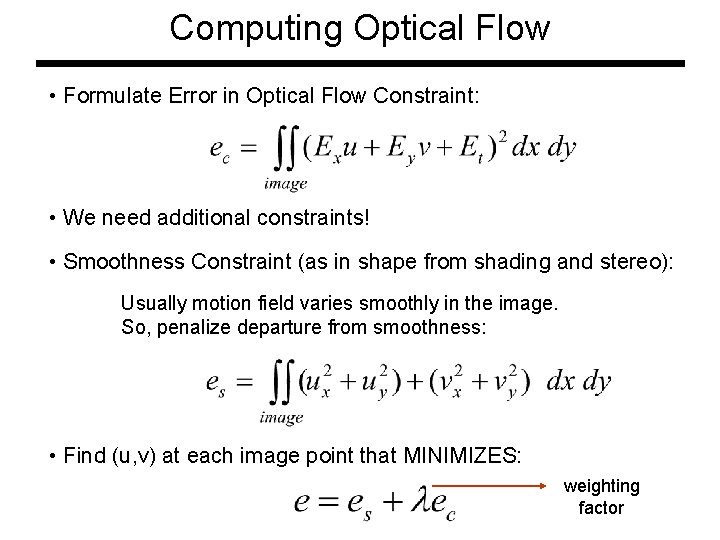
Computing Optical Flow • Formulate Error in Optical Flow Constraint: • We need additional constraints! • Smoothness Constraint (as in shape from shading and stereo): Usually motion field varies smoothly in the image. So, penalize departure from smoothness: • Find (u, v) at each image point that MINIMIZES: weighting factor
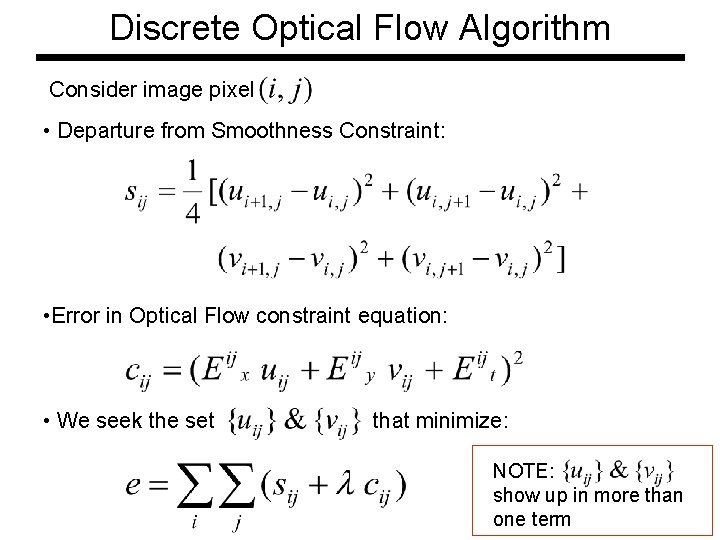
Discrete Optical Flow Algorithm Consider image pixel • Departure from Smoothness Constraint: • Error in Optical Flow constraint equation: • We seek the set that minimize: NOTE: show up in more than one term
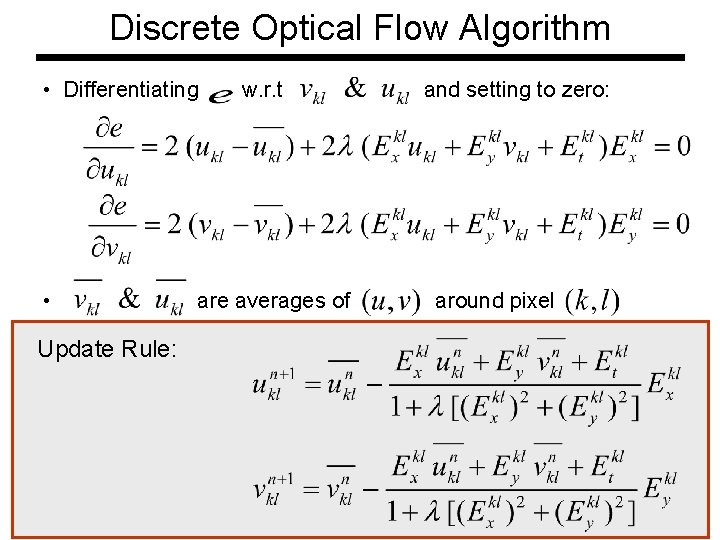
Discrete Optical Flow Algorithm • Differentiating • Update Rule: w. r. t are averages of and setting to zero: around pixel
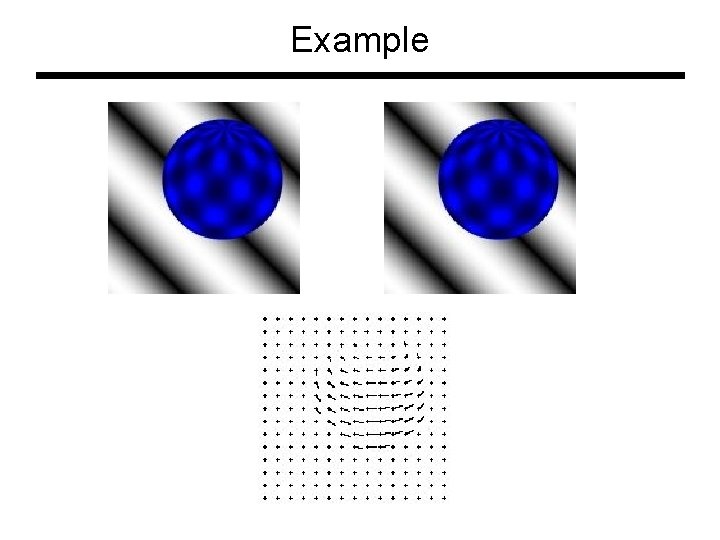
Example
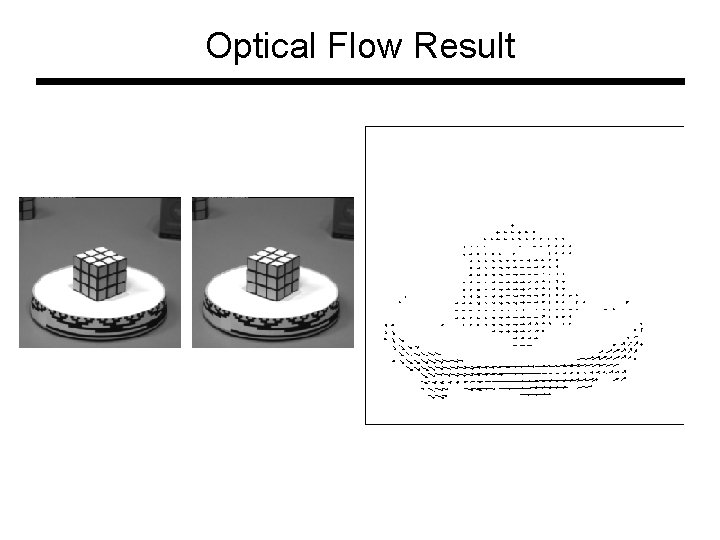
Optical Flow Result
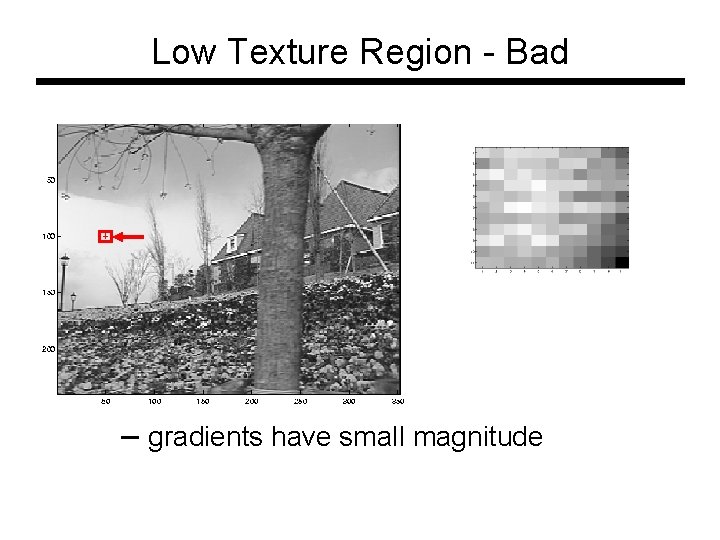
Low Texture Region - Bad – gradients have small magnitude
Edges – so, so (aperture problem) – large gradients, all the same
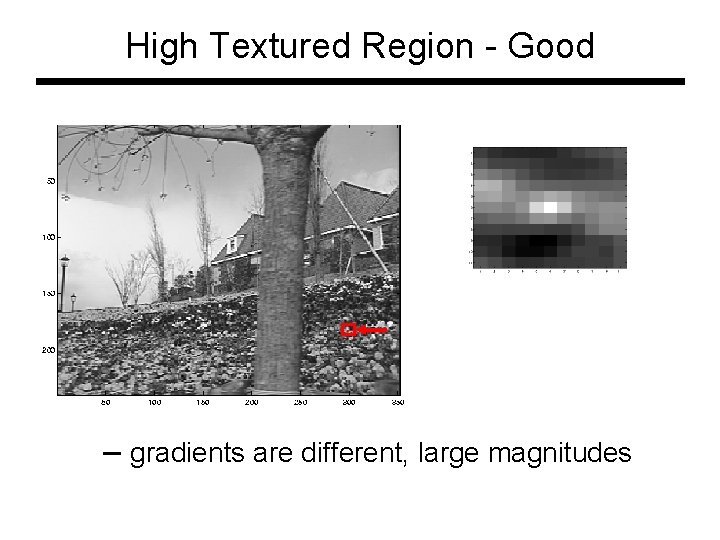
High Textured Region - Good – gradients are different, large magnitudes
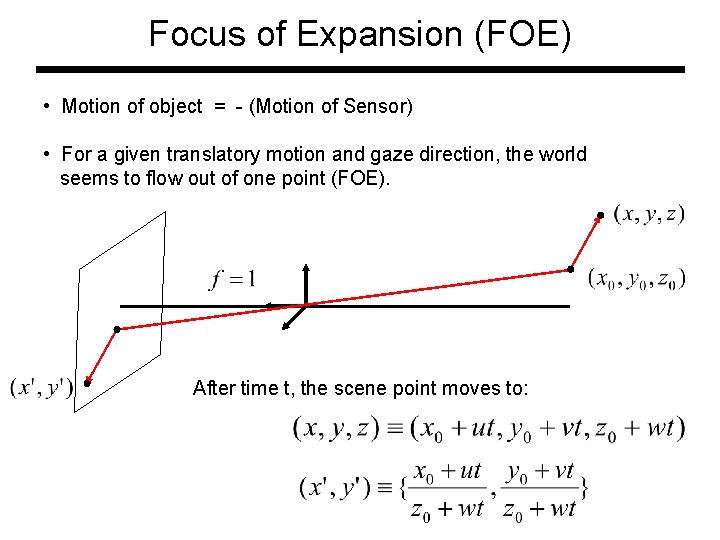
Focus of Expansion (FOE) • Motion of object = - (Motion of Sensor) • For a given translatory motion and gaze direction, the world seems to flow out of one point (FOE). After time t, the scene point moves to:
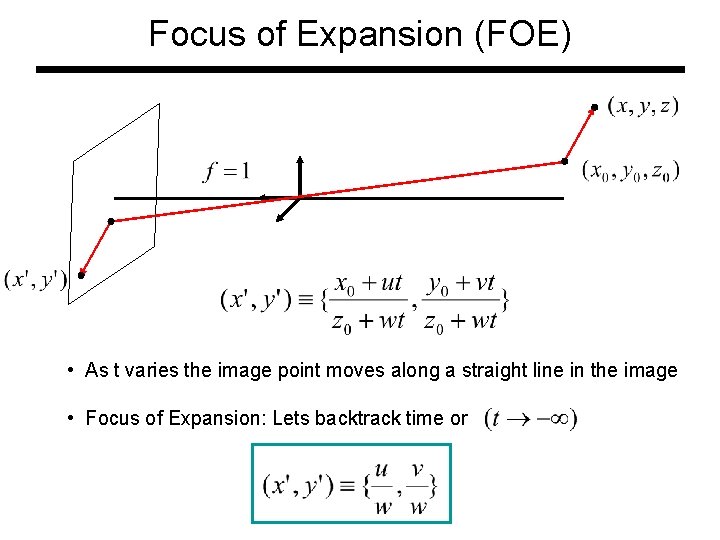
Focus of Expansion (FOE) • As t varies the image point moves along a straight line in the image • Focus of Expansion: Lets backtrack time or
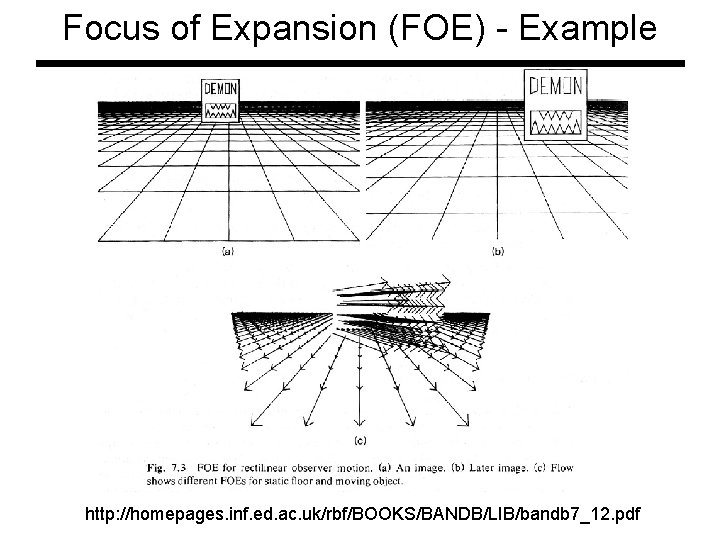
Focus of Expansion (FOE) - Example http: //homepages. inf. ed. ac. uk/rbf/BOOKS/BANDB/LIB/bandb 7_12. pdf
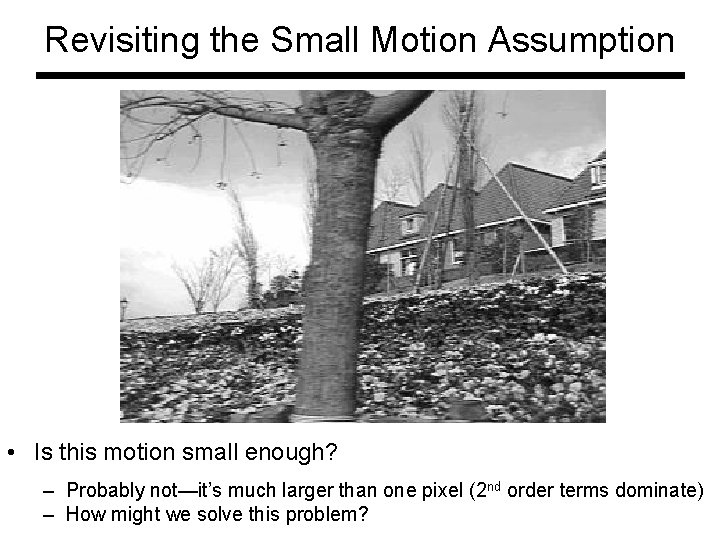
Revisiting the Small Motion Assumption • Is this motion small enough? – Probably not—it’s much larger than one pixel (2 nd order terms dominate) – How might we solve this problem?
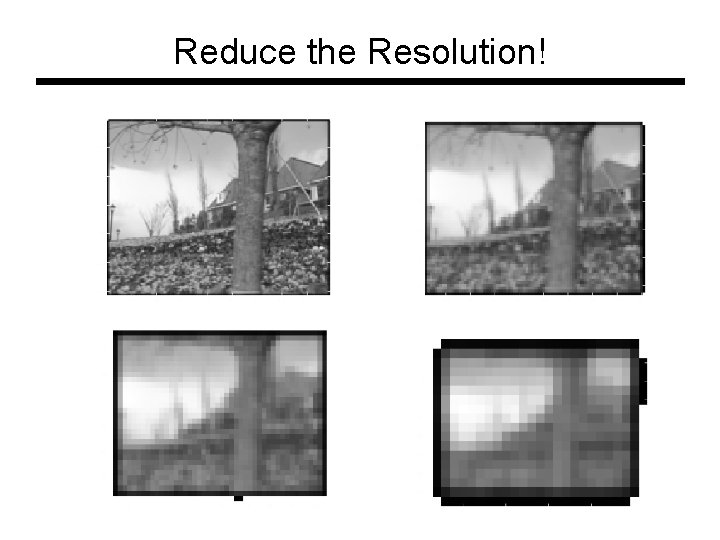
Reduce the Resolution!
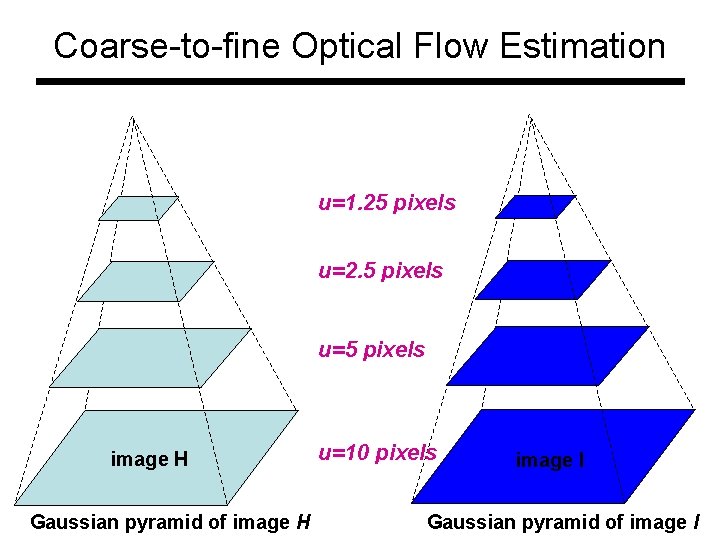
Coarse-to-fine Optical Flow Estimation u=1. 25 pixels u=2. 5 pixels u=5 pixels image. HH Gaussian pyramid of image H u=10 pixels image II image Gaussian pyramid of image I
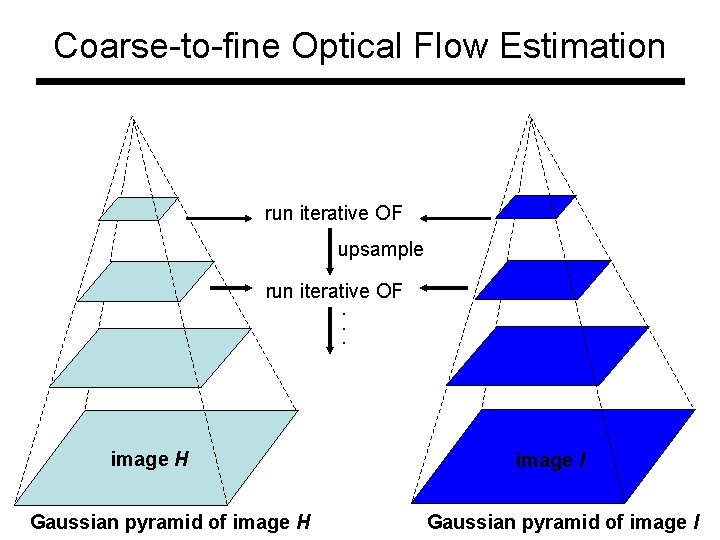
Coarse-to-fine Optical Flow Estimation run iterative OF upsample run iterative OF. . . image HJ image Gaussian pyramid of image H image II image Gaussian pyramid of image I
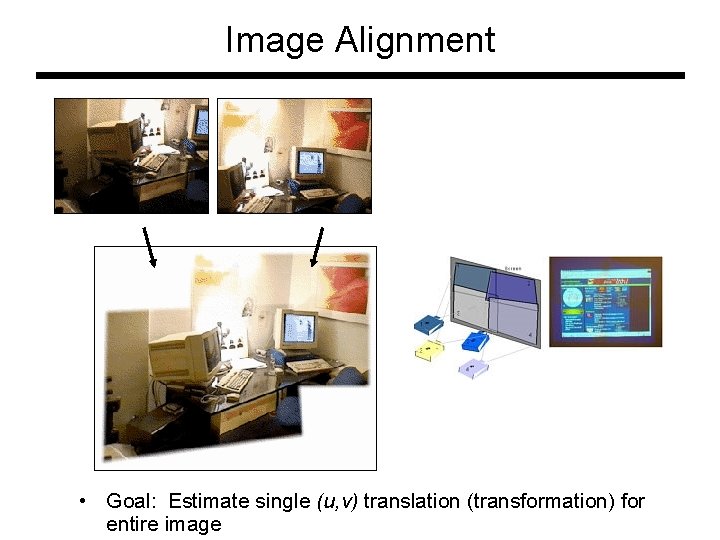
Image Alignment • Goal: Estimate single (u, v) translation (transformation) for entire image
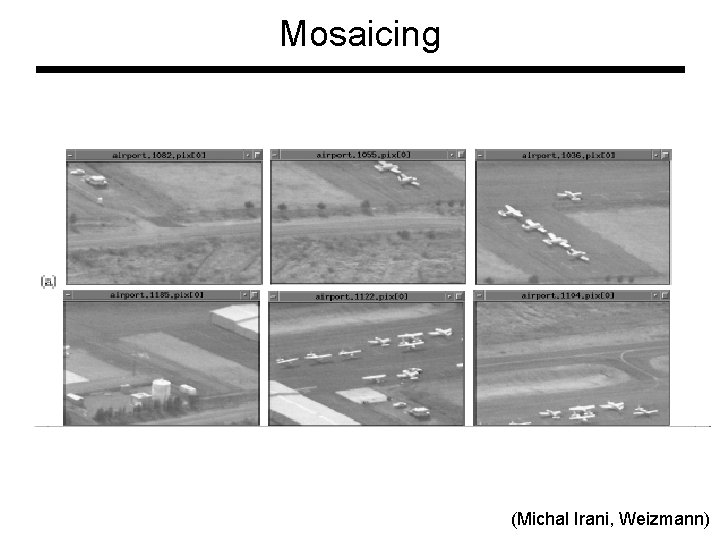
Mosaicing (Michal Irani, Weizmann)
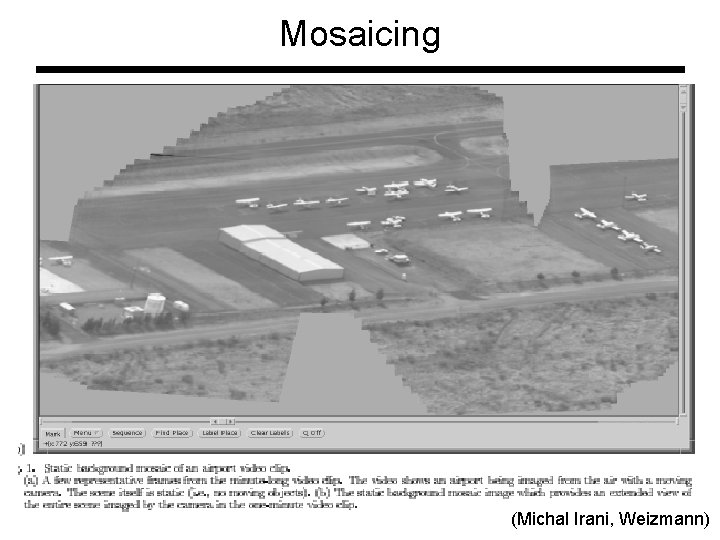
Mosaicing (Michal Irani, Weizmann)
Next Class • Structured Light and Range Imaging • Reading Notes