
Computer Security Principles and Practice Fourth Edition By
Computer Security: Principles and Practice Fourth Edition By: William Stallings and Lawrie Brown
Chapter 16 Physical and Infrastructure Security
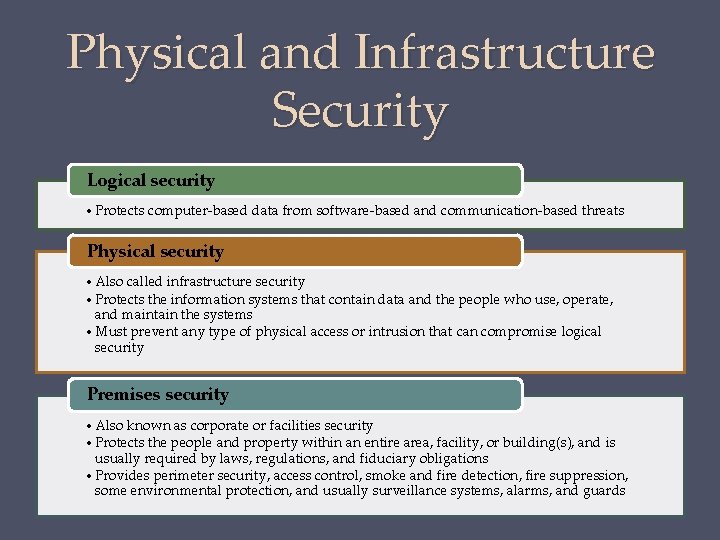
Physical and Infrastructure Security Logical security • Protects computer-based data from software-based and communication-based threats Physical security • Also called infrastructure security • Protects the information systems that contain data and the people who use, operate, and maintain the systems • Must prevent any type of physical access or intrusion that can compromise logical security Premises security • Also known as corporate or facilities security • Protects the people and property within an entire area, facility, or building(s), and is usually required by laws, regulations, and fiduciary obligations • Provides perimeter security, access control, smoke and fire detection, fire suppression, some environmental protection, and usually surveillance systems, alarms, and guards
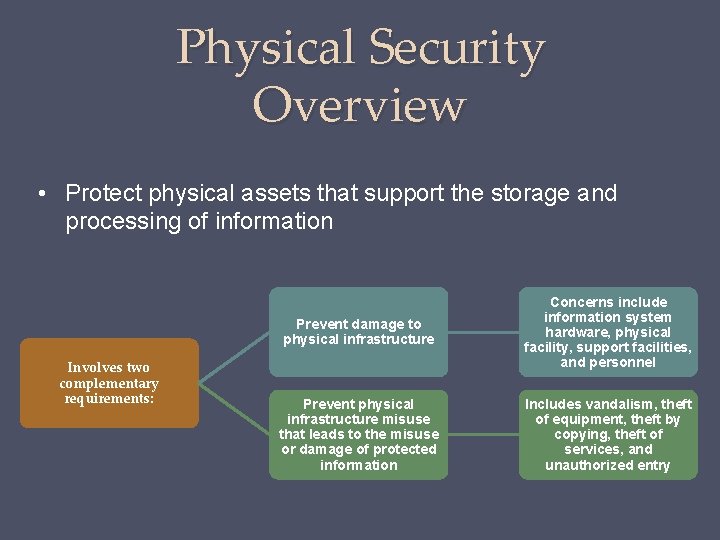
Physical Security Overview • Protect physical assets that support the storage and processing of information Involves two complementary requirements: Prevent damage to physical infrastructure Concerns include information system hardware, physical facility, support facilities, and personnel Prevent physical infrastructure misuse that leads to the misuse or damage of protected information Includes vandalism, theft of equipment, theft by copying, theft of services, and unauthorized entry
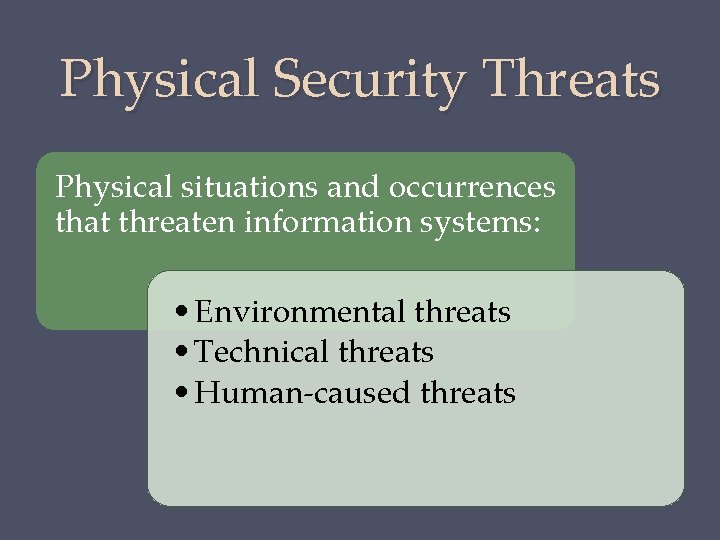
Physical Security Threats Physical situations and occurrences that threaten information systems: • Environmental threats • Technical threats • Human-caused threats
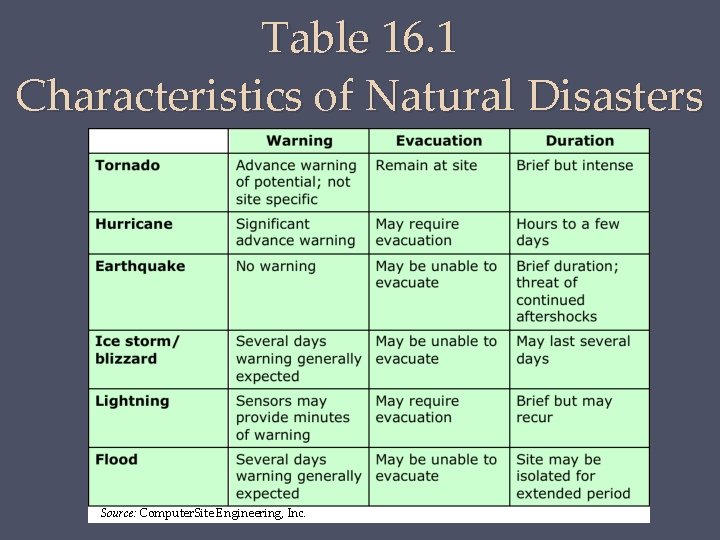
Table 16. 1 Characteristics of Natural Disasters Source: Computer. Site Engineering, Inc.
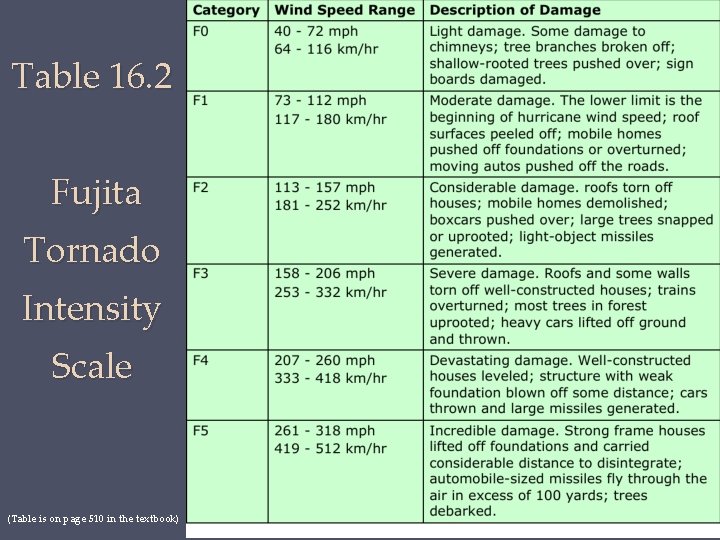
Table 16. 2 Fujita Tornado Intensity Scale (Table is on page 510 in the textbook)
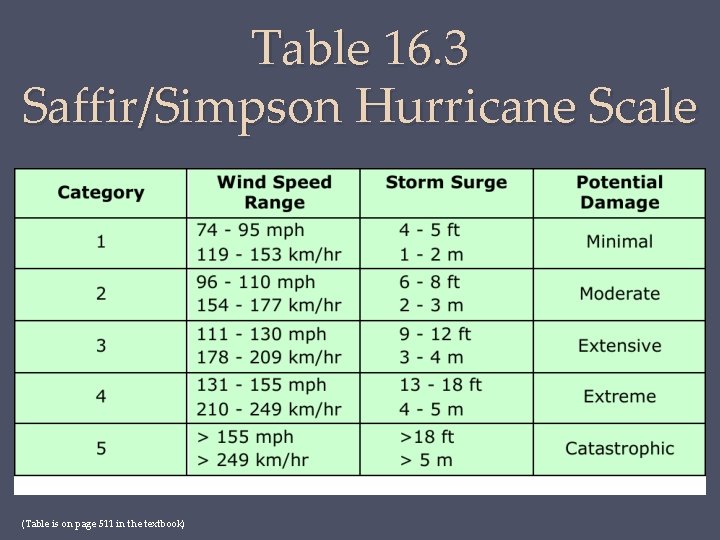
Table 16. 3 Saffir/Simpson Hurricane Scale (Table is on page 511 in the textbook)
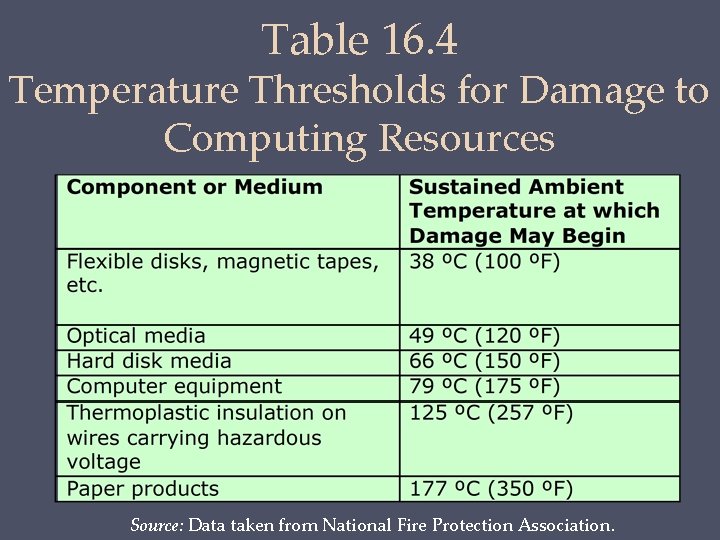
Table 16. 4 Temperature Thresholds for Damage to Computing Resources Source: Data taken from National Fire Protection Association.

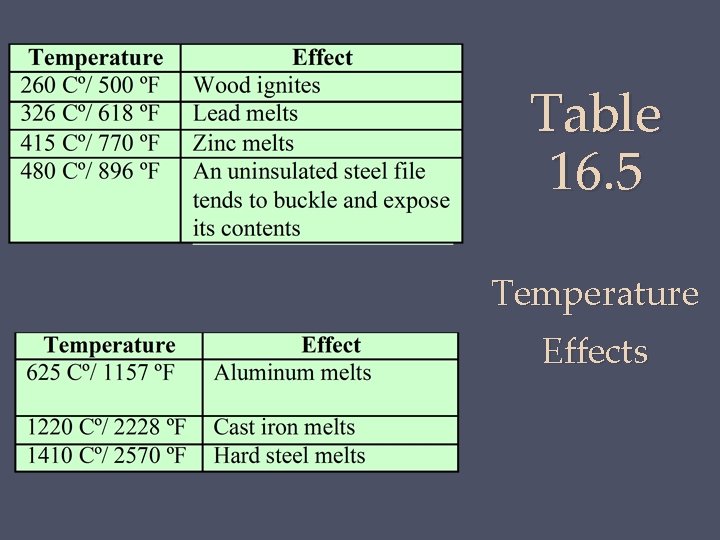
Table 16. 5 Temperature Effects
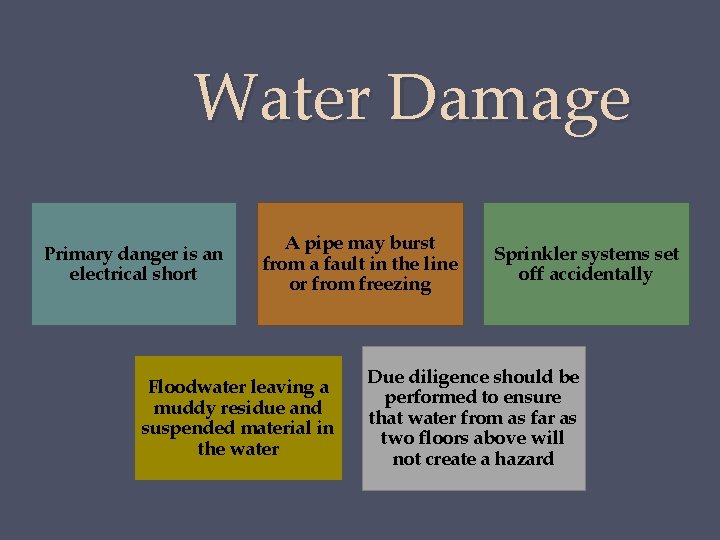
Water Damage Primary danger is an electrical short A pipe may burst from a fault in the line or from freezing Floodwater leaving a muddy residue and suspended material in the water Sprinkler systems set off accidentally Due diligence should be performed to ensure that water from as far as two floors above will not create a hazard
Chemical, Radiological, and Biological Hazards • Pose a threat from intentional attack and from accidental discharge • Discharges can be introduced through the ventilation system or open windows, and in the case of radiation, through perimeter walls • Flooding can also introduce biological or chemical contaminants
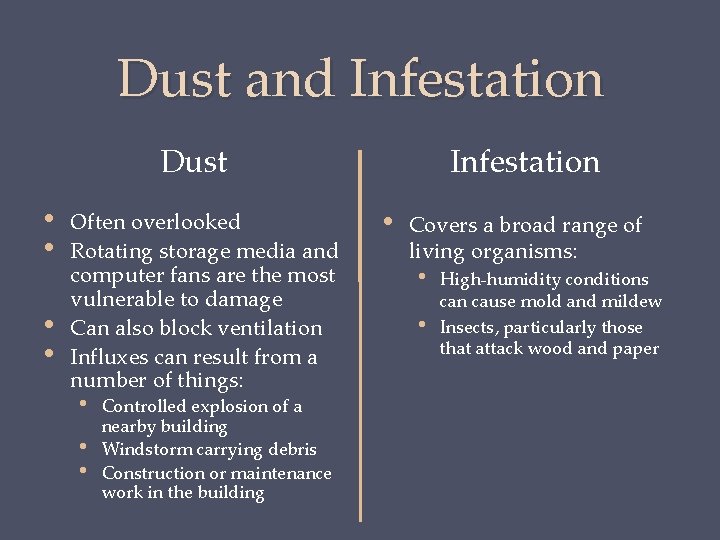
Dust and Infestation Dust • • Often overlooked Rotating storage media and computer fans are the most vulnerable to damage Can also block ventilation Influxes can result from a number of things: • • • Controlled explosion of a nearby building Windstorm carrying debris Construction or maintenance work in the building • Covers a broad range of living organisms: • • High-humidity conditions can cause mold and mildew Insects, particularly those that attack wood and paper
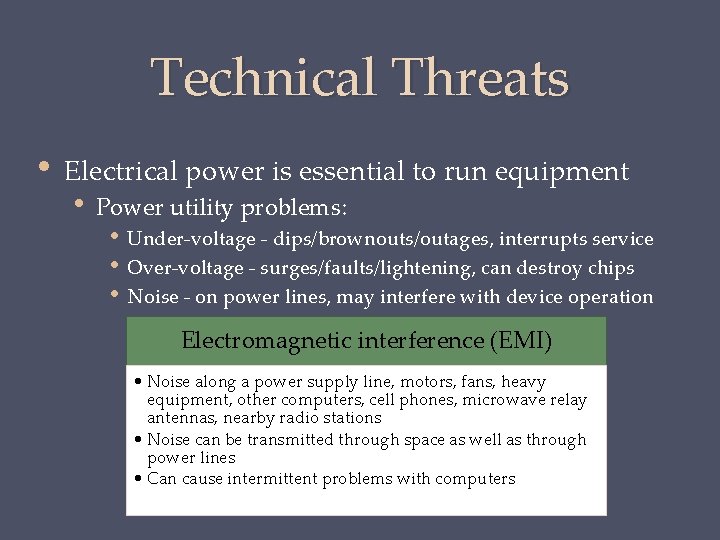
Technical Threats • Electrical power is essential to run equipment • Power utility problems: • Under-voltage - dips/brownouts/outages, interrupts service • Over-voltage - surges/faults/lightening, can destroy chips • Noise - on power lines, may interfere with device operation Electromagnetic interference (EMI) • Noise along a power supply line, motors, fans, heavy equipment, other computers, cell phones, microwave relay antennas, nearby radio stations • Noise can be transmitted through space as well as through power lines • Can cause intermittent problems with computers
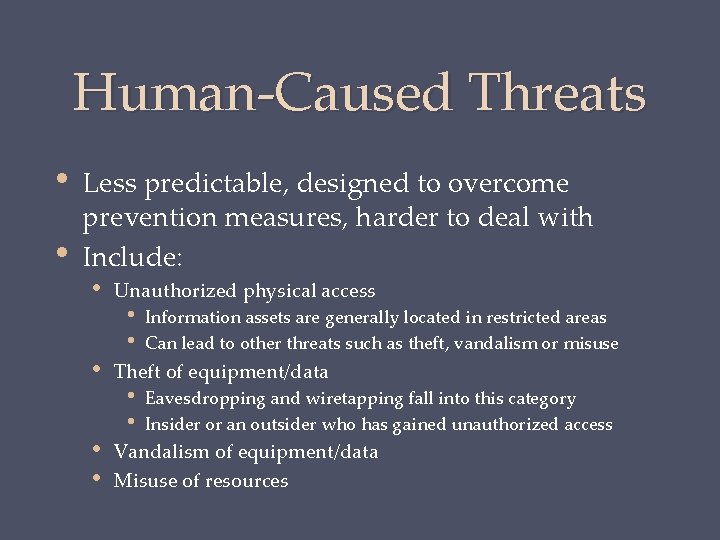
Human-Caused Threats • • Less predictable, designed to overcome prevention measures, harder to deal with Include: • Unauthorized physical access • • • Information assets are generally located in restricted areas Can lead to other threats such as theft, vandalism or misuse Theft of equipment/data • • Eavesdropping and wiretapping fall into this category Insider or an outsider who has gained unauthorized access Vandalism of equipment/data Misuse of resources
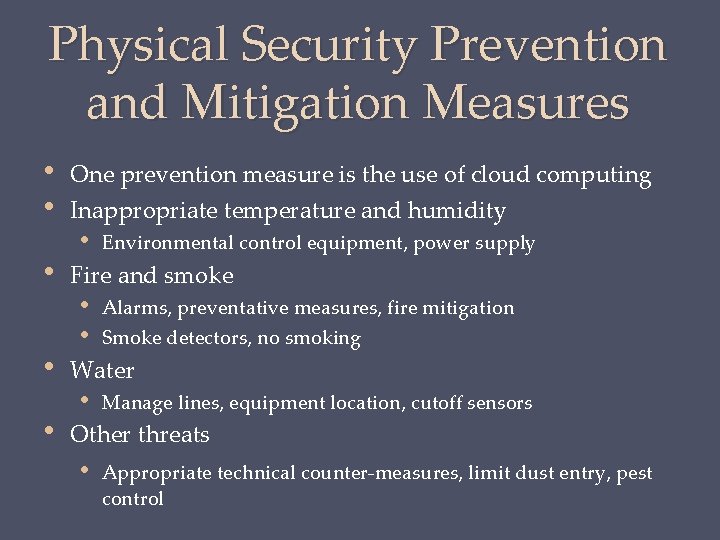
Physical Security Prevention and Mitigation Measures • • • One prevention measure is the use of cloud computing Inappropriate temperature and humidity • Environmental control equipment, power supply Fire and smoke • • Alarms, preventative measures, fire mitigation Smoke detectors, no smoking Water • Manage lines, equipment location, cutoff sensors Other threats • Appropriate technical counter-measures, limit dust entry, pest control
Uninterruptible power supply (UPS) for each piece of critical equipment Critical equipment should be connected to an emergency power source (like a generator) To deal with electromagnetic interference (EMI) a combination of filters and shielding can be used Mitigation Measures Technical Threats
Mitigation Measures Human-Caused Physical Threats Physical access control • Restrict building access • Controlled areas patrolled or guarded • Locks or screening measures at entry points • Equip movable resources with a tracking device • Power switch controlled by a security device • Intruder sensors and alarms • Surveillance systems that provide recording and real-time remote viewing
Recovery from Physical Security Breaches Physical equipment damage recovery Most essential element of recovery is redundancy • Provides for recovery from loss of data • Ideally all important data should be available off-site and updated as often as feasible • Can use batch encrypted remote backup • For critical situations a remote hotsite that is ready to take over operation instantly can be created • Depends on nature of damage and cleanup • May need disaster recovery specialists
Physical and Logical Security Integration • • Numerous detection and prevention devices More effective if there is a central control Integrate automated physical and logical security functions • • Use a single ID card Single-step card enrollment and termination Central ID-management system Unified event monitoring and correlation Need standards in this area • FIPS 201 -1 “Personal Identity Verification (PIV) of Federal Employees and Contractors”


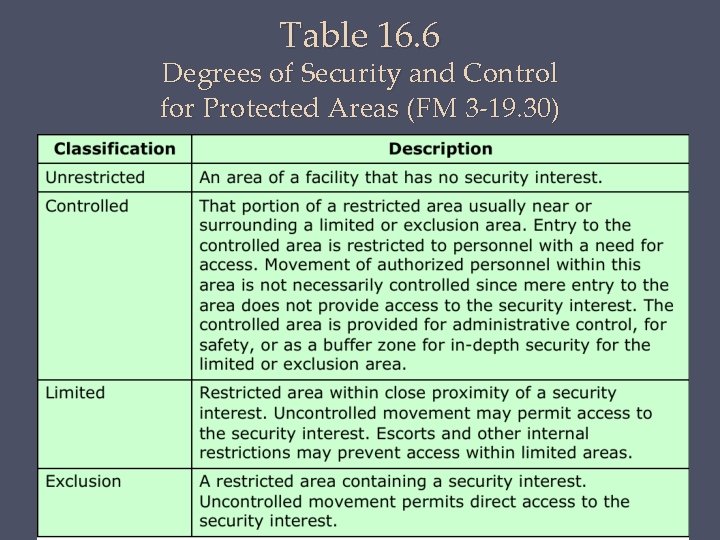
Table 16. 6 Degrees of Security and Control for Protected Areas (FM 3 -19. 30)

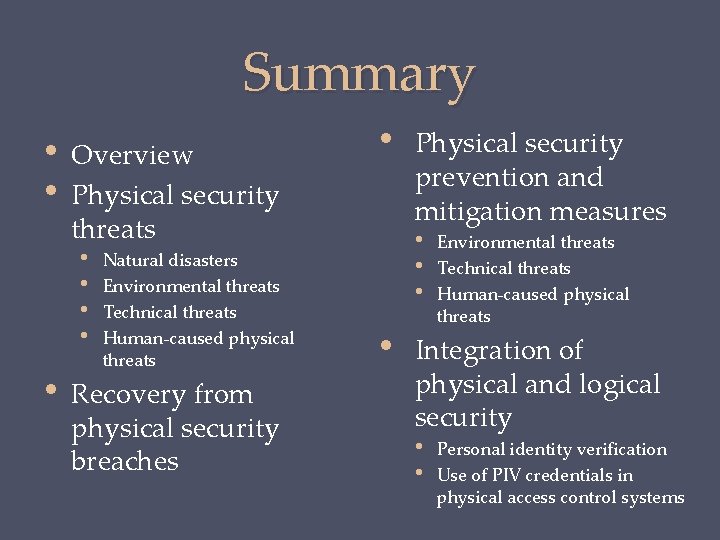
Summary • • Overview Physical security threats • • • Natural disasters Environmental threats Technical threats Human-caused physical threats Recovery from physical security breaches • Physical security prevention and mitigation measures • • Environmental threats Technical threats Human-caused physical threats Integration of physical and logical security • • Personal identity verification Use of PIV credentials in physical access control systems
- Slides: 26