
Computer Security Principles and Practice Chapter 23 Internet
- Slides: 25
Computer Security: Principles and Practice Chapter 23: Internet Authentication Applications EECS 710: Information Security Professor Hossein Saiedian Fall 2014
Internet Authentication Applications Internet authentication functions: Developed to support application-level authentication & digital signatures • Will consider • – – – RADIUS Kerberos private-key authentication service X. 509 public-key directory authentication Public-key infrastructure (PKI) Federated identity management 2
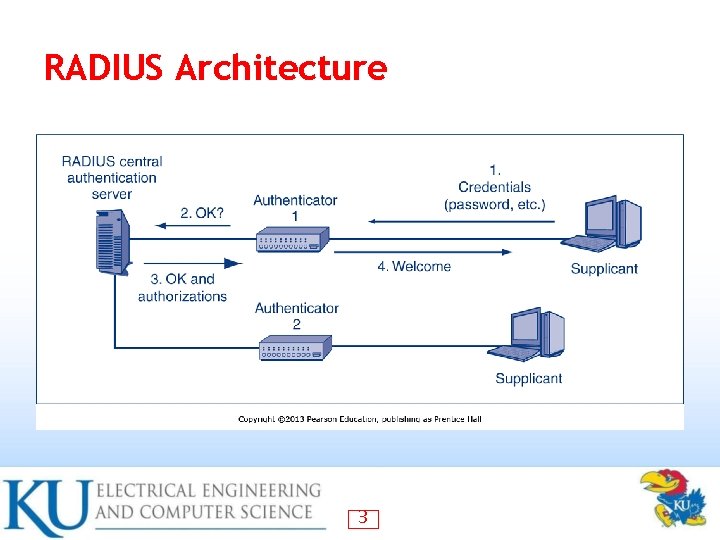
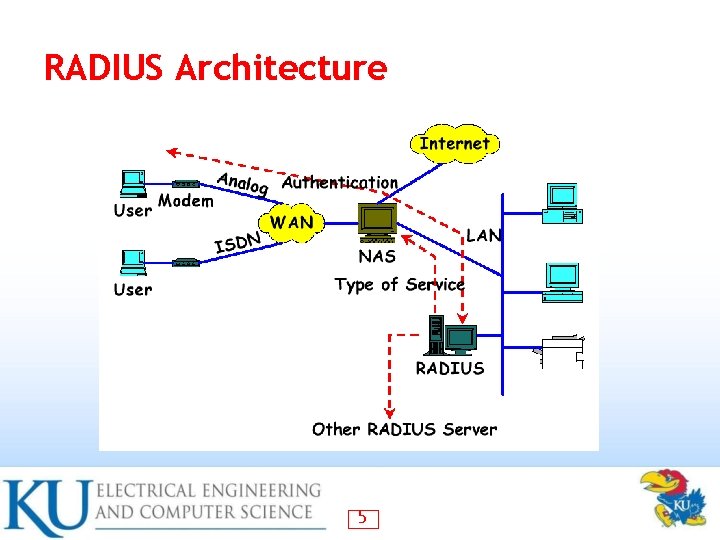
RADIUS Architecture 3
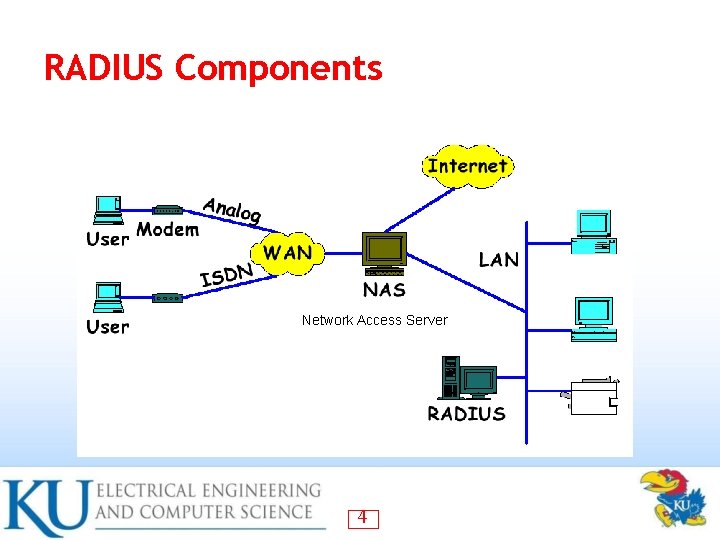
RADIUS Components Network Access Server 4
RADIUS Architecture 5
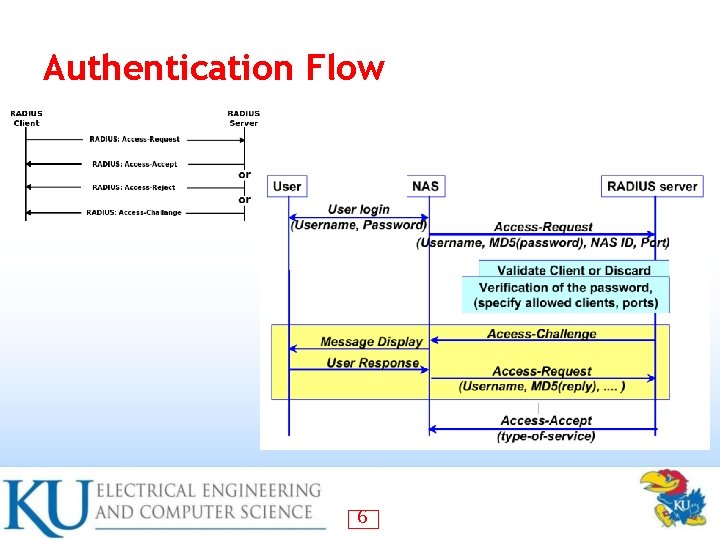
Authentication Flow 6
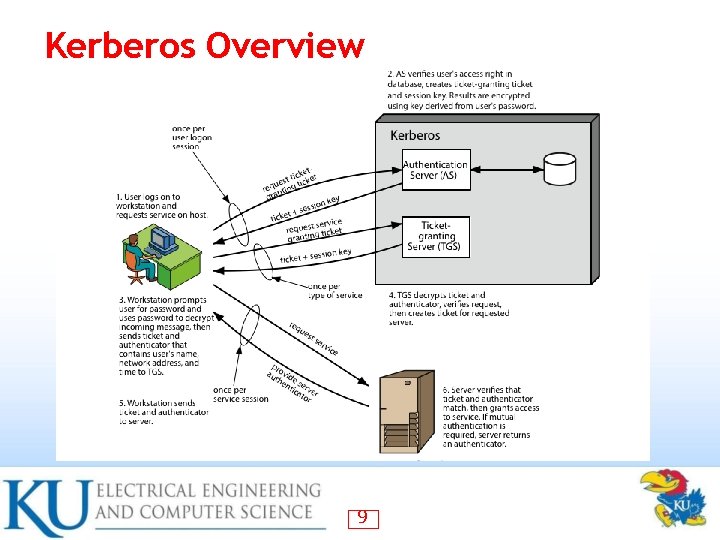
Kerberos Trusted key server system from MIT • Provides centralised private-key third-party authentication in a distributed network • Allows users access to services distributed through network – Without needing to trust all workstations – Rather all trust a central authentication server – • Two versions in use: 4 & 5 7
Kerberos Overview A basic third-party authentication scheme • Have an Authentication Server (AS) • Users initially negotiate with AS to identify self – AS provides a non-corruptible authentication credential (ticket granting ticket TGT) – • Have a Ticket Granting server (TGS) – Users subsequently request access to other services from TGS on basis of users TGT 8
Kerberos Overview 9
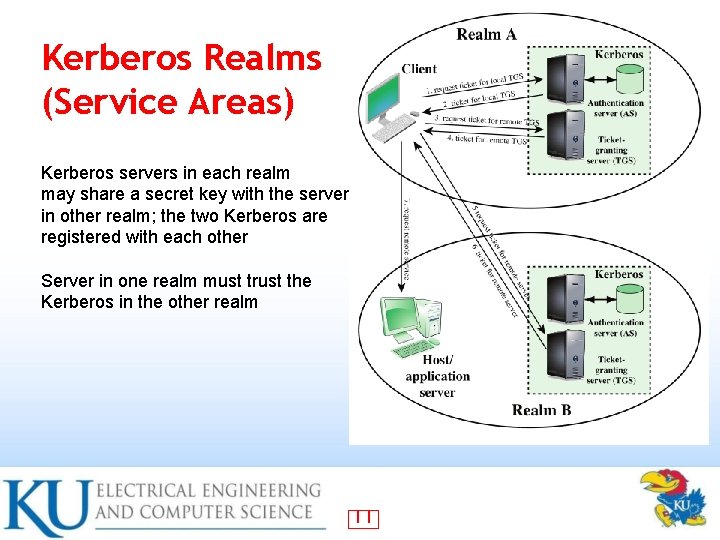
Kerberos Realms • A Kerberos environment consists of: A Kerberos server – A number of clients, all registered with server – Application servers, sharing keys with server – • This is termed a realm – • Typically a single administrative domain If multiple realms, their Kerberos servers must share keys and trust 10
Kerberos Realms (Service Areas) Kerberos servers in each realm may share a secret key with the server in other realm; the two Kerberos are registered with each other Server in one realm must trust the Kerberos in the other realm 11
Kerberos Version 5 Kerberos v 4 is most widely used version • Also have v 5, developed in mid 1990’s • – • Specified as Internet standard RFC 1510 Provides improvements over v 4 – Addresses environmental shortcomings • – Encryption alg, network protocol, byte order, ticket lifetime, authentication forwarding, inter-realm auth And technical deficiencies • Double encryption, non-std mode of use, session keys, password attacks 12
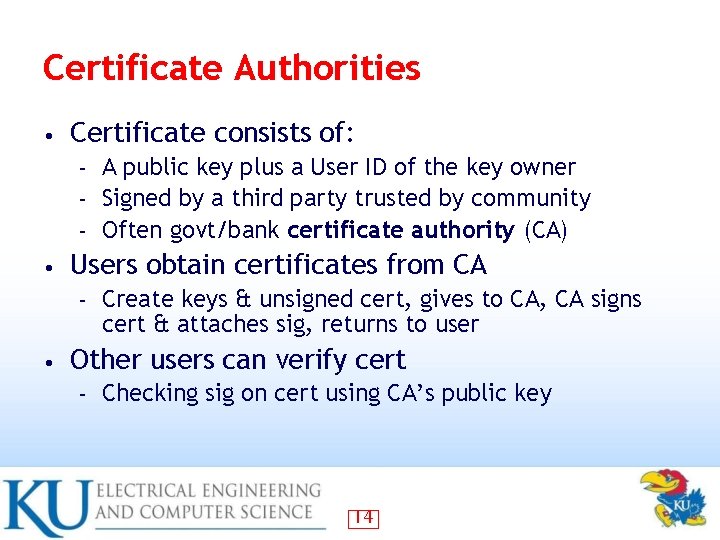
Certificate Authorities • Certificate consists of: A public key plus a User ID of the key owner – Signed by a third party trusted by community – Often govt/bank certificate authority (CA) – • Users obtain certificates from CA – • Create keys & unsigned cert, gives to CA, CA signs cert & attaches sig, returns to user Other users can verify cert – Checking sig on cert using CA’s public key 14
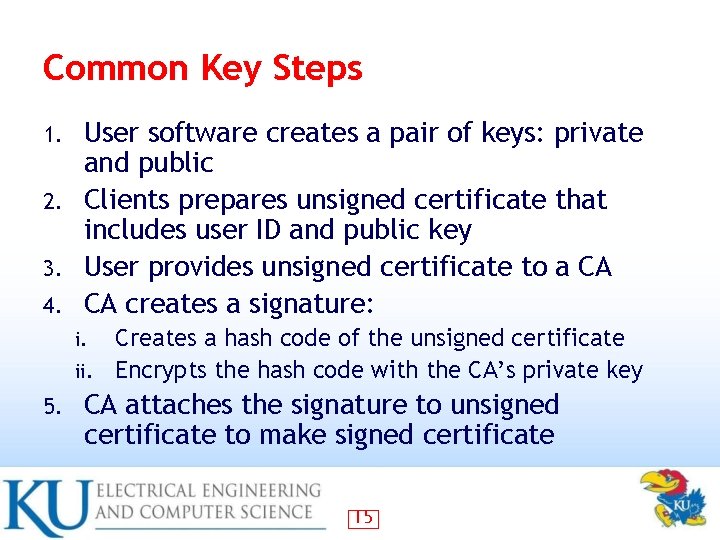
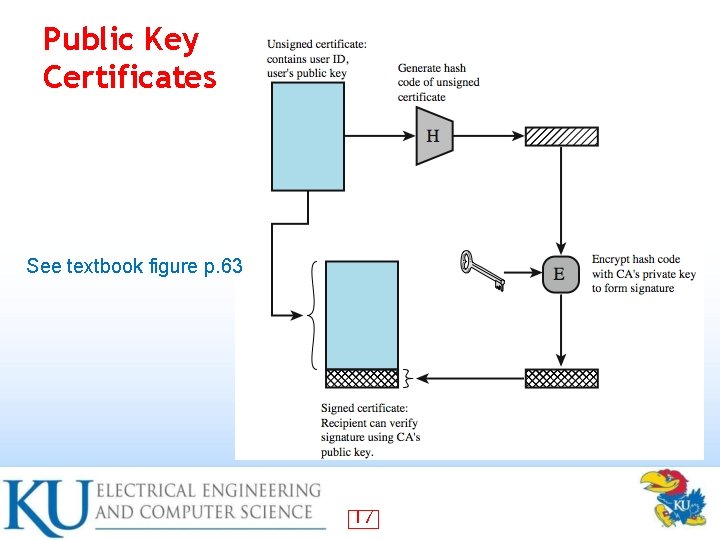
Common Key Steps User software creates a pair of keys: private and public 2. Clients prepares unsigned certificate that includes user ID and public key 3. User provides unsigned certificate to a CA 4. CA creates a signature: 1. Creates a hash code of the unsigned certificate ii. Encrypts the hash code with the CA’s private key i. 5. CA attaches the signature to unsigned certificate to make signed certificate 15
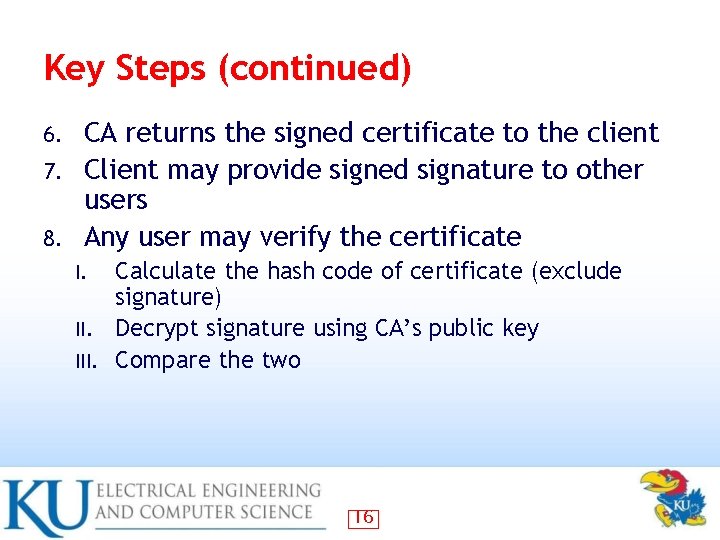
Key Steps (continued) CA returns the signed certificate to the client 7. Client may provide signed signature to other users 8. Any user may verify the certificate 6. Calculate the hash code of certificate (exclude signature) II. Decrypt signature using CA’s public key III. Compare the two I. 16
Public Key Certificates See textbook figure p. 63 17
X. 509 Authentication Service • Universally accepted standard formatting public-key certificates – Widely used in network security applications, including IPSec, SSL, and S/MIME Part of CCITT X. 500 directory service standards • Uses public-key crypto & digital signatures • – Algorithms not standardised, but RSA recommended 18
Certificate Variations • Conventional – – • (long-lived) certificates CA and “end user” certificates Typically issued for validity periods of months to years Short-lived certificates Used to provide authentication for applications such as grid computing, while avoiding some of the overheads and limitations of conventional certificates – They have validity periods of hours to days, which limits the period of misuse if compromised – • Proxy certificates Also used in applications such as grid computing – Allow a user to easily create a credential to access resources in some environment, without needing to provide their full certificate and right – 19
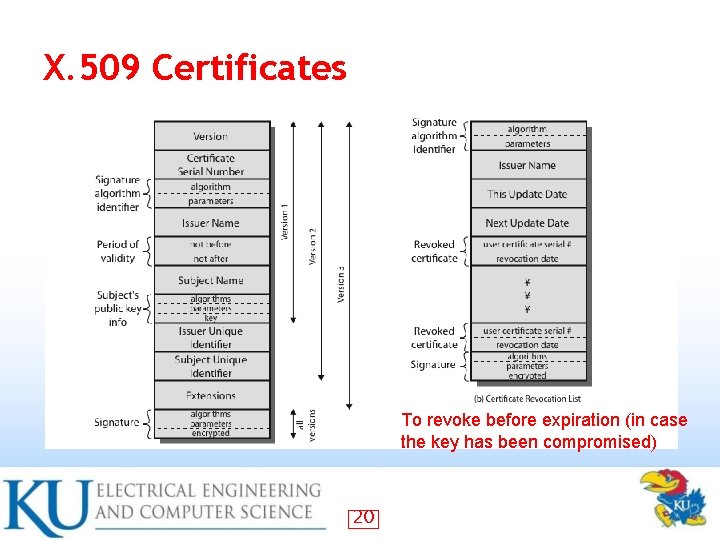
X. 509 Certificates To revoke before expiration (in case the key has been compromised) 20
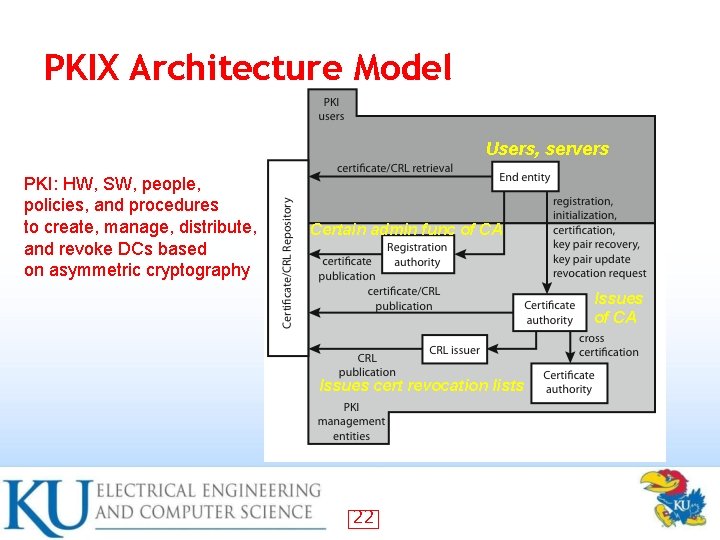
PKI X. 509 (PKIX) Management • Functions: – – – Registration Certification: process to issue CA Key pair recovery: forgotten passwords, corrupted HDs; restore key pairs from authorized backup Key pair update: update with new keys Revocation request: a users CA advises to revoke Cross certification: two CAs exchange info 21
PKIX Architecture Model Users, servers PKI: HW, SW, people, policies, and procedures to create, manage, distribute, and revoke DCs based on asymmetric cryptography Certain admin func of CA Issues cert revocation lists 22
Federated Identity Management • use of common identity management scheme across multiple enterprises & numerous applications – supporting many thousands, even millions of users – • principal elements are: – • authentication, authorization, accounting, provisioning, workflow automation, delegated administration, password synchronization, selfservice password reset, federation Kerberos contains many of these elements 23
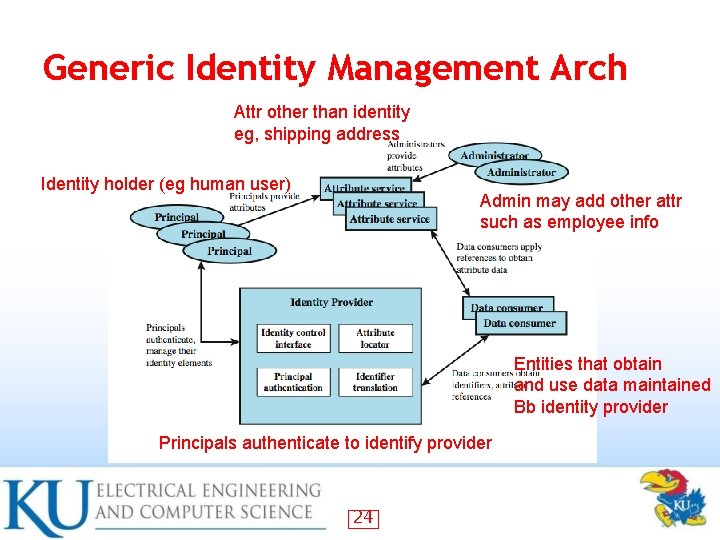
Generic Identity Management Arch Attr other than identity eg, shipping address Identity holder (eg human user) Admin may add other attr such as employee info Entities that obtain and use data maintained Bb identity provider Principals authenticate to identify provider 24
Standards Used • Extensible Markup Language (XML) – • Simple Object Access Protocol (SOAP) – • for invoking code using XML over HTTP WS-Security – • characterizes text elements in a document on appearance, function, meaning, or context set of SOAP extensions for implementing message integrity and confidentiality in Web services Security Assertion Markup Language (SAML) – XML-based language for the exchange of security information between online business partners 26
Summary • reviewed network authentication using: Kerberos private-key authentication service – X. 509 public-key directory authentication – public-key infrastructure (PKI) – federated identity management – 27