
Computer Science WiFi App using J 2 ME
- Slides: 18
Computer Science Wi-Fi App using J 2 ME and MVC Architecture Advisor : Dr. Chung-E Wang Department of Computer Science Sacramento State University Date: 04/25/05 Praveen Chirumamilla
Agenda o o o o Motivation Purpose J 2 ME MVC Pattern Project design overview Improvements Summary
Motivation o o o Semester begins – check course schedule - Labs has long waiting lines out of town – grade check – no computer Why not use cell phone to do these. . ?
Purpose o o o Provide Students facility to schedule appointment, check their grades and class schedule using their cell phones Explore J 2 ME, Net. Beans Mobile IDE Understand & implement MVC architecture
Net. Beans o o o o Full-featured Java Open Source IDE Syntax highlighting code editor Offers unmatched support for J 2 ME MIDP 2. 0 and CLDC 1. 1 mobile environment J 2 EE development Performance Profiler Visual design tool Sun Public License
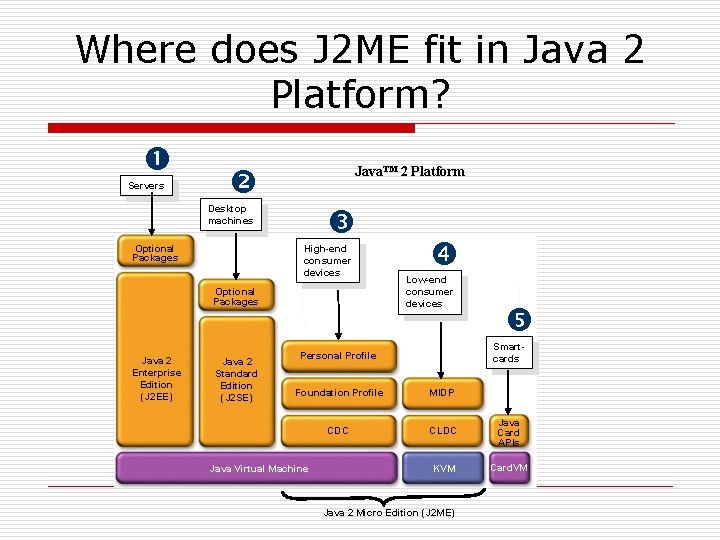
Where does J 2 ME fit in Java 2 Platform? Servers Java™ 2 Platform Desktop machines Optional Packages High-end consumer devices Optional Packages Java 2 Enterprise Edition (J 2 EE) Java 2 Standard Edition (J 2 SE) Low-end consumer devices Smartcards Personal Profile Foundation Profile MIDP CDC CLDC Java Card APIs KVM Card. VM Java Virtual Machine Java 2 Micro Edition (J 2 ME)
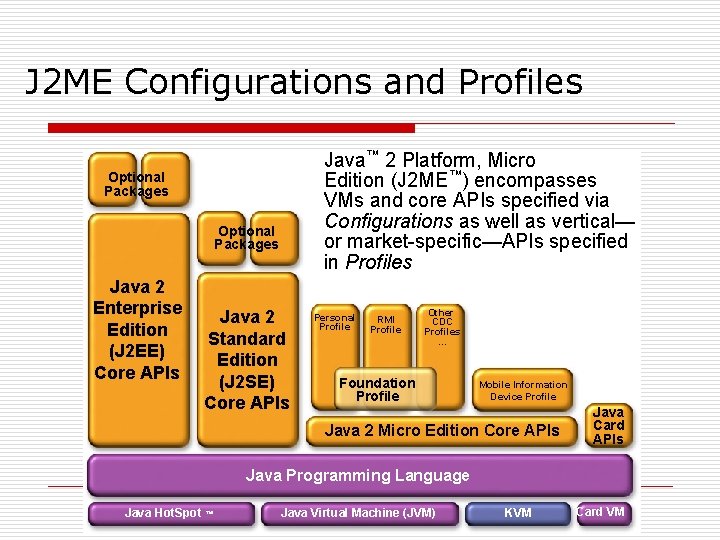
J 2 ME Configurations and Profiles Java™ 2 Platform, Micro Edition (J 2 ME™) encompasses VMs and core APIs specified via Configurations as well as vertical— or market-specific—APIs specified in Profiles Optional Packages Java 2 Enterprise Edition (J 2 EE) Core APIs Java 2 Standard Edition (J 2 SE) Core APIs Personal Profile RMI Profile Other CDC Profiles. . . Foundation Profile Mobile Information Device Profile Java 2 Micro Edition Core APIs Java Card APIs Java Programming Language Java Hot. Spot ™ Java Virtual Machine (JVM) KVM Card VM
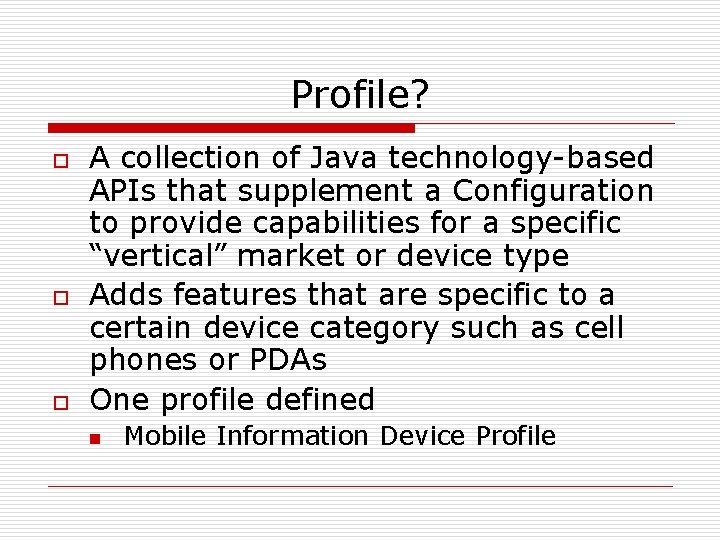
Profile? o o o A collection of Java technology-based APIs that supplement a Configuration to provide capabilities for a specific “vertical” market or device type Adds features that are specific to a certain device category such as cell phones or PDAs One profile defined n Mobile Information Device Profile
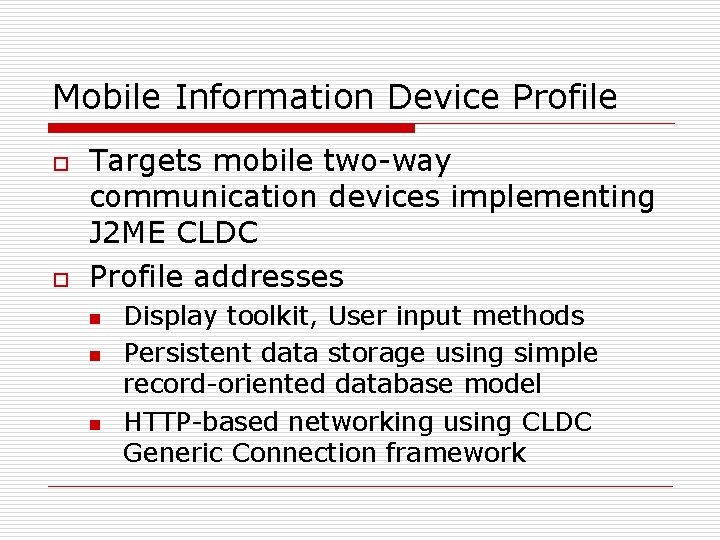
Mobile Information Device Profile o o Targets mobile two-way communication devices implementing J 2 ME CLDC Profile addresses n n n Display toolkit, User input methods Persistent data storage using simple record-oriented database model HTTP-based networking using CLDC Generic Connection framework
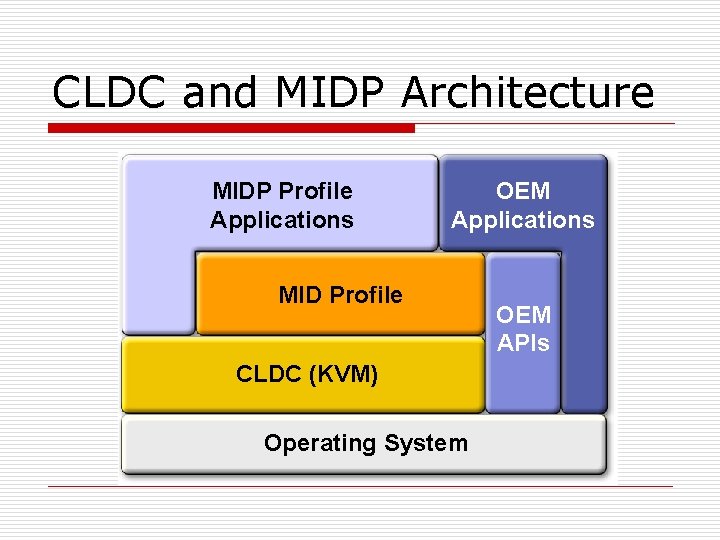
CLDC and MIDP Architecture MIDP Profile Applications OEM Applications MID Profile CLDC (KVM) Operating System OEM APIs
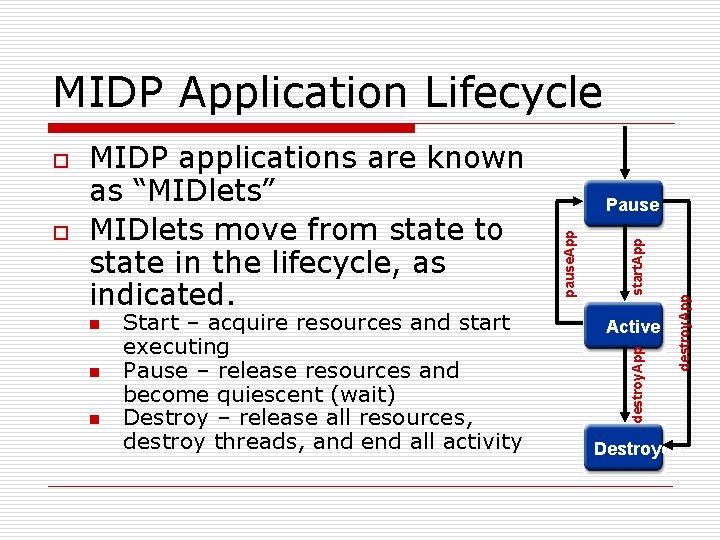
MIDP Application Lifecycle n n Start – acquire resources and start executing Pause – release resources and become quiescent (wait) Destroy – release all resources, destroy threads, and end all activity start. App Active destroy. App n Pause destroy. App o MIDP applications are known as “MIDlets” MIDlets move from state to state in the lifecycle, as indicated. pause. App o Destroyed
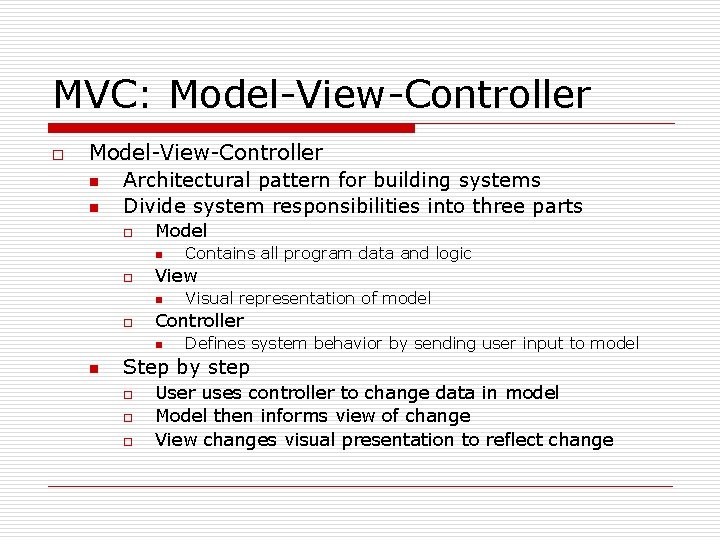
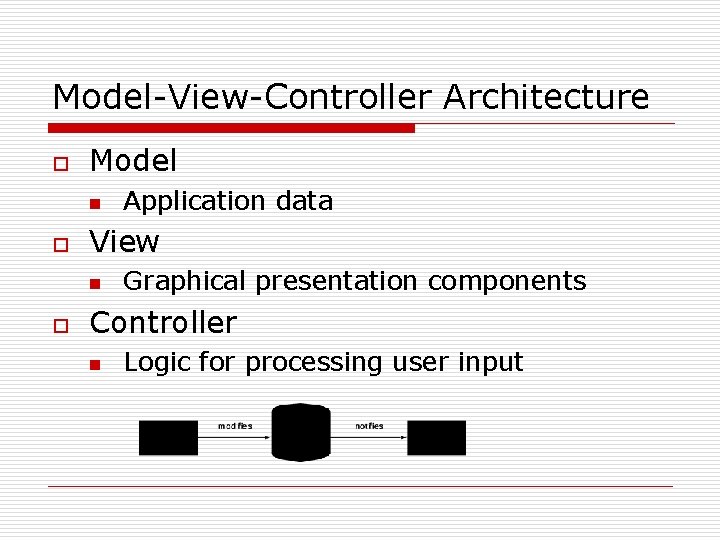
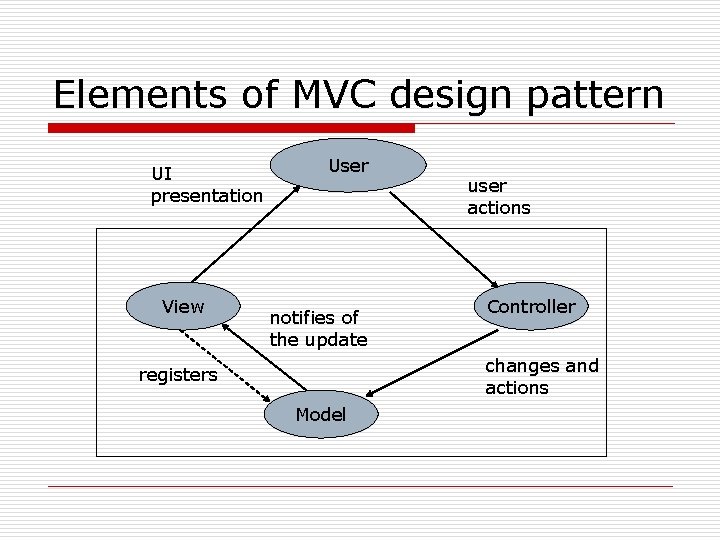
MVC: Model-View-Controller o Model-View-Controller n Architectural pattern for building systems n Divide system responsibilities into three parts o Model n o View n o Visual representation of model Controller n n Contains all program data and logic Defines system behavior by sending user input to model Step by step o o o User uses controller to change data in model Model then informs view of change View changes visual presentation to reflect change
Model-View-Controller Architecture o Model n o View n o Application data Graphical presentation components Controller n Logic for processing user input
Elements of MVC design pattern UI presentation View User notifies of the update user actions Controller changes and actions registers Model
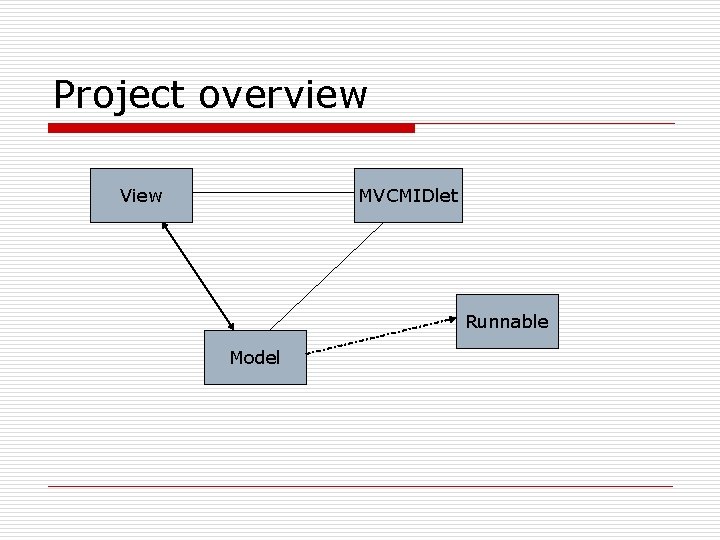
Project overview View MVCMIDlet Runnable Model
Improvements o o Synchronize the data between SMCD and admissions department Send as SMS to students of the class when grades are posted
Summary o o J 2 ME, MIDP, MVC Concepts Project design