
Computer Science An Overview Brookshear 2000 Addison Wesley
Computer Science, An Overview Brookshear © 2000 Addison Wesley Chapter Eight, Figures 1 -10 File Structures Computer Science — An Overview J. Glenn Brookshear
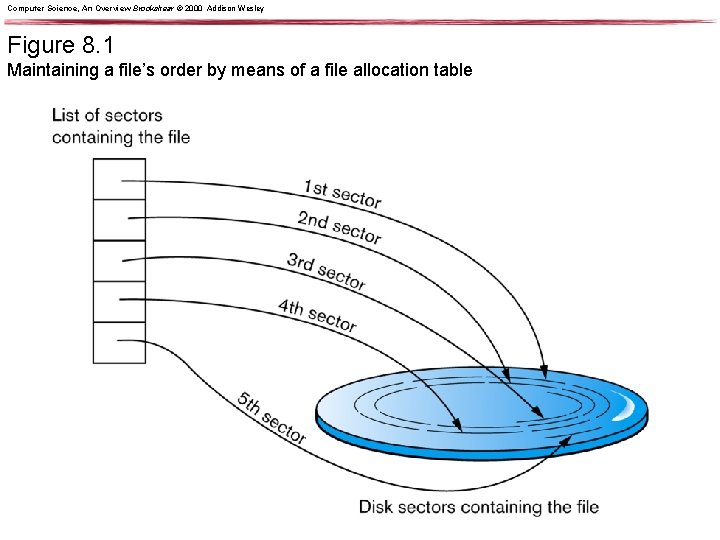
Computer Science, An Overview Brookshear © 2000 Addison Wesley Figure 8. 1 Maintaining a file’s order by means of a file allocation table
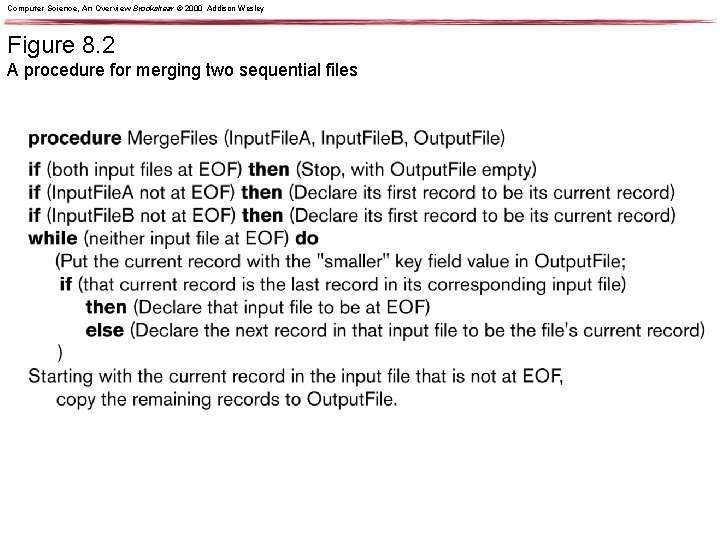
Computer Science, An Overview Brookshear © 2000 Addison Wesley Figure 8. 2 A procedure for merging two sequential files
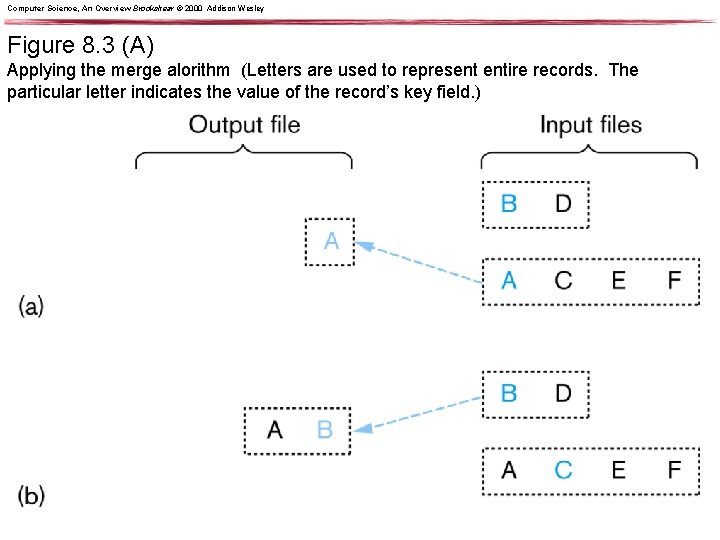
Computer Science, An Overview Brookshear © 2000 Addison Wesley Figure 8. 3 (A) Applying the merge alorithm (Letters are used to represent entire records. The particular letter indicates the value of the record’s key field. )
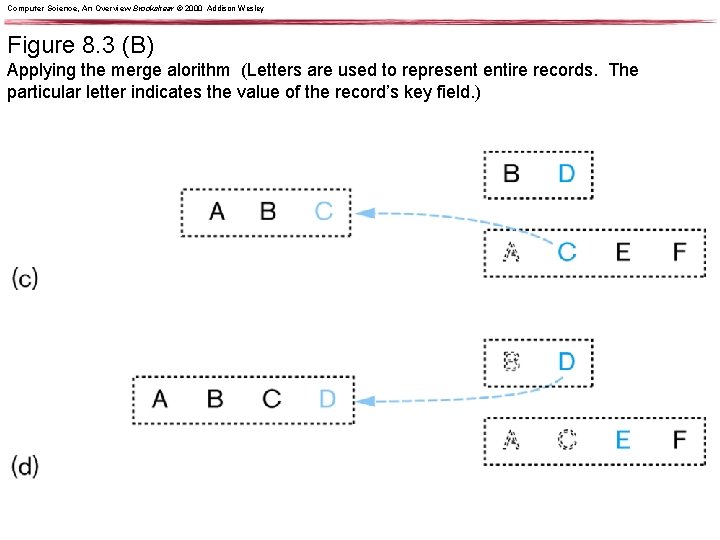
Computer Science, An Overview Brookshear © 2000 Addison Wesley Figure 8. 3 (B) Applying the merge alorithm (Letters are used to represent entire records. The particular letter indicates the value of the record’s key field. )
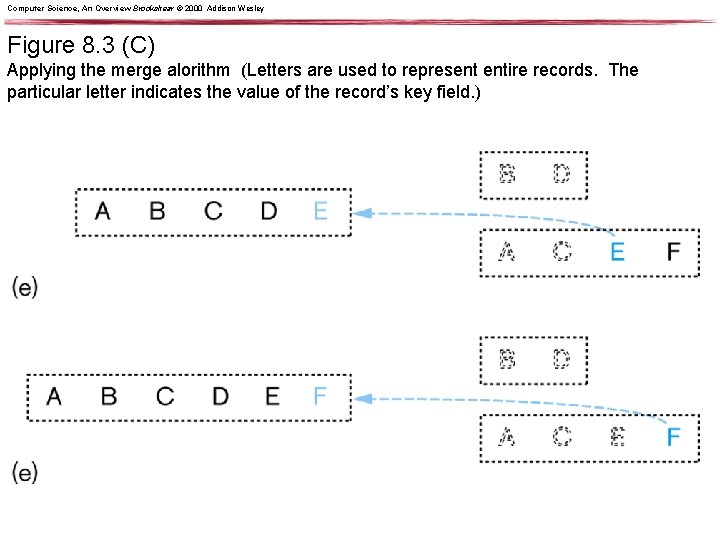
Computer Science, An Overview Brookshear © 2000 Addison Wesley Figure 8. 3 (C) Applying the merge alorithm (Letters are used to represent entire records. The particular letter indicates the value of the record’s key field. )
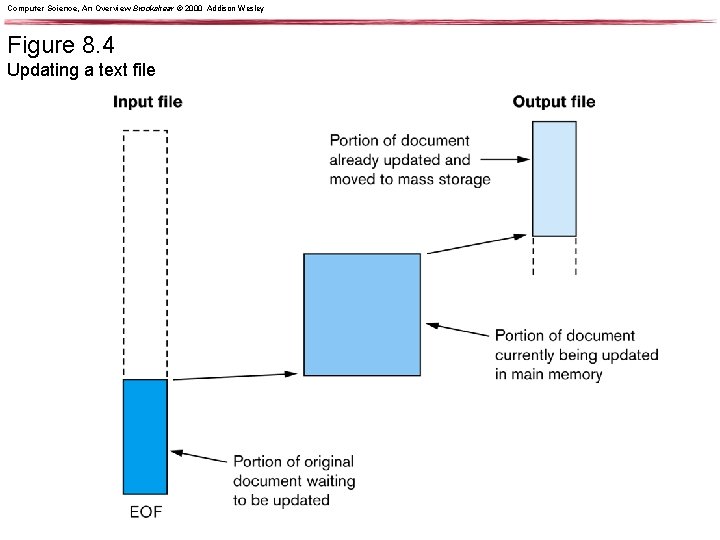
Computer Science, An Overview Brookshear © 2000 Addison Wesley Figure 8. 4 Updating a text file
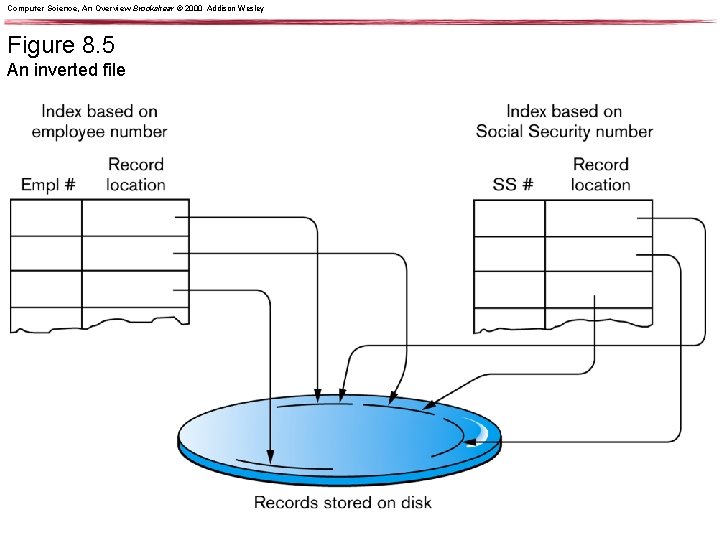
Computer Science, An Overview Brookshear © 2000 Addison Wesley Figure 8. 5 An inverted file
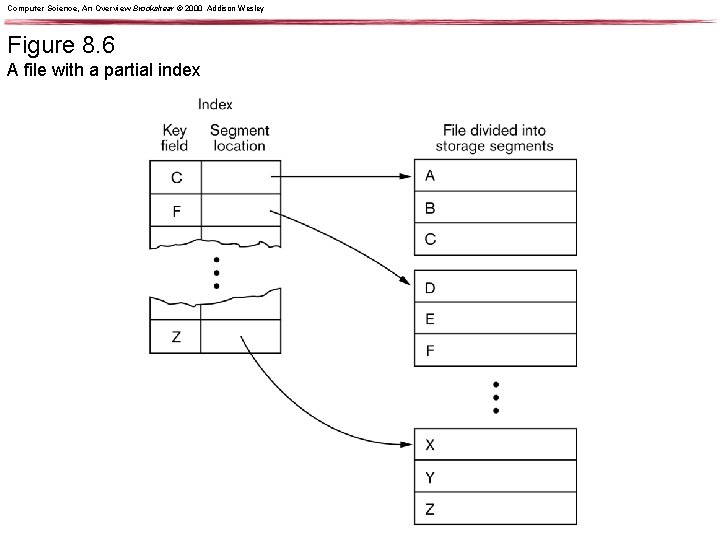
Computer Science, An Overview Brookshear © 2000 Addison Wesley Figure 8. 6 A file with a partial index
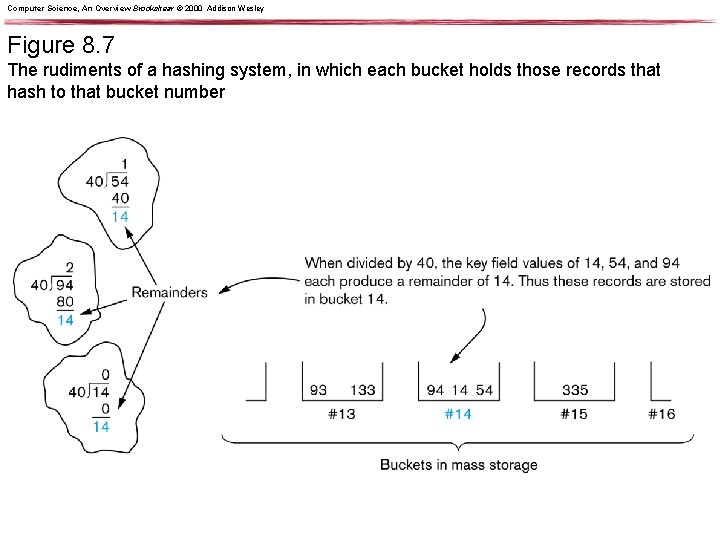
Computer Science, An Overview Brookshear © 2000 Addison Wesley Figure 8. 7 The rudiments of a hashing system, in which each bucket holds those records that hash to that bucket number
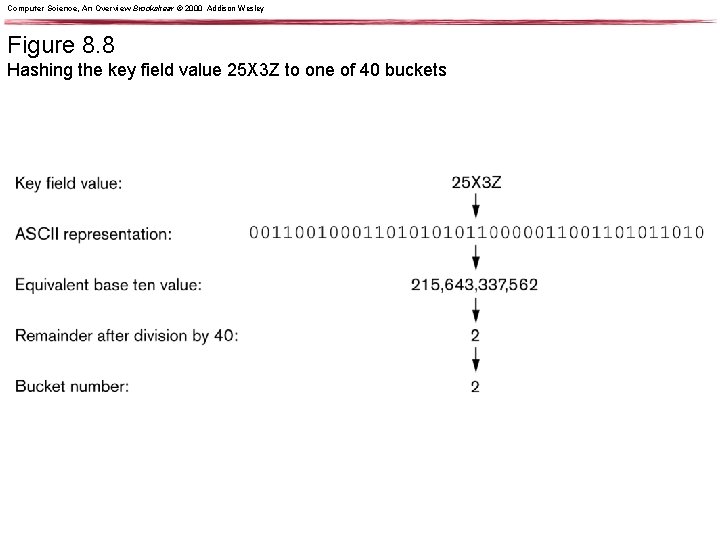
Computer Science, An Overview Brookshear © 2000 Addison Wesley Figure 8. 8 Hashing the key field value 25 X 3 Z to one of 40 buckets
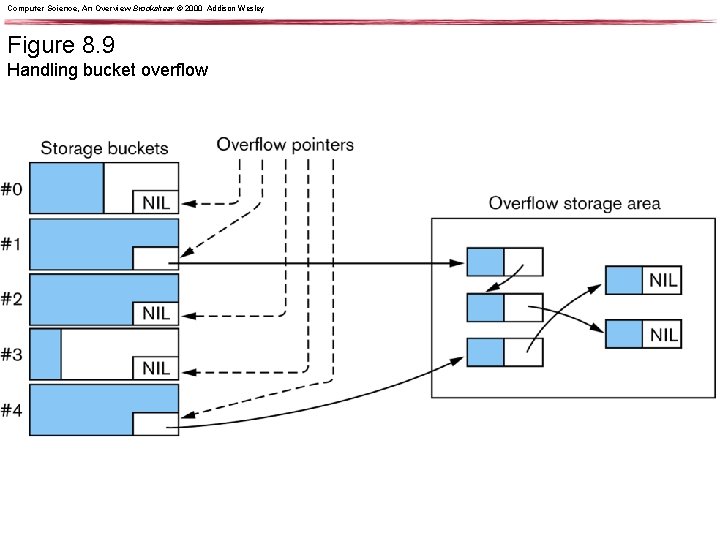
Computer Science, An Overview Brookshear © 2000 Addison Wesley Figure 8. 9 Handling bucket overflow
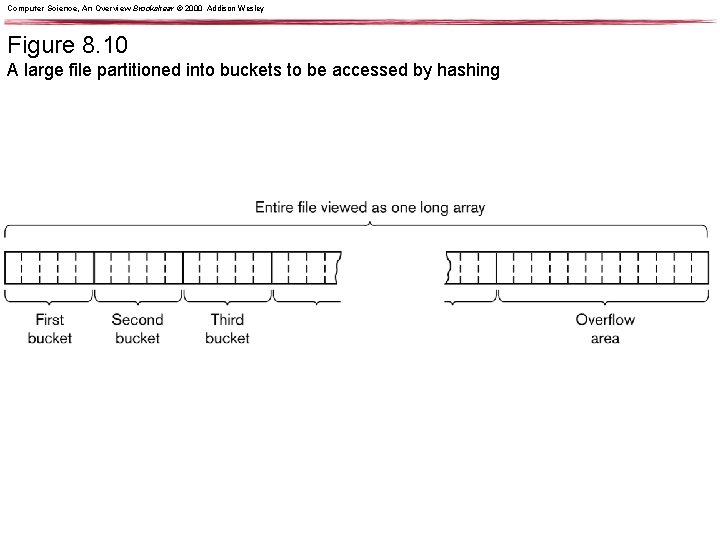
Computer Science, An Overview Brookshear © 2000 Addison Wesley Figure 8. 10 A large file partitioned into buckets to be accessed by hashing
- Slides: 13