
Computer Networks Lecture 2 Lecture Summary Network Topics
- Slides: 19
Computer Networks Lecture 2
Lecture Summary Network Topics discussed in this section: • • • Distributed Processing Network Criteria Physical Structures Network Models Categories of Networks Interconnection of Networks: Internetwork
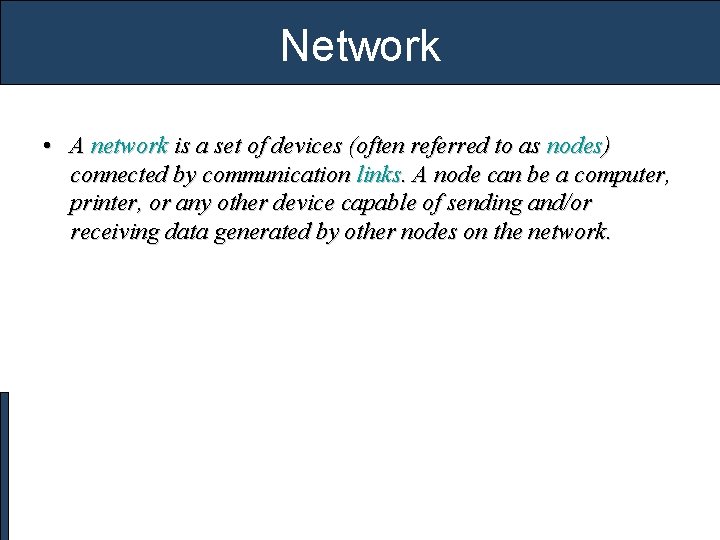
Network • A network is a set of devices (often referred to as nodes) connected by communication links. A node can be a computer, printer, or any other device capable of sending and/or receiving data generated by other nodes on the network.
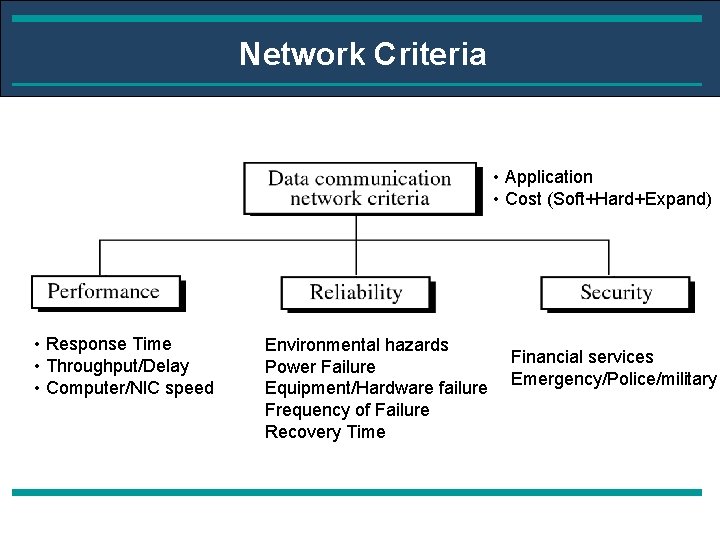
Network Criteria • Application • Cost (Soft+Hard+Expand) • Response Time • Throughput/Delay • Computer/NIC speed Environmental hazards Power Failure Equipment/Hardware failure Frequency of Failure Recovery Time Financial services Emergency/Police/military
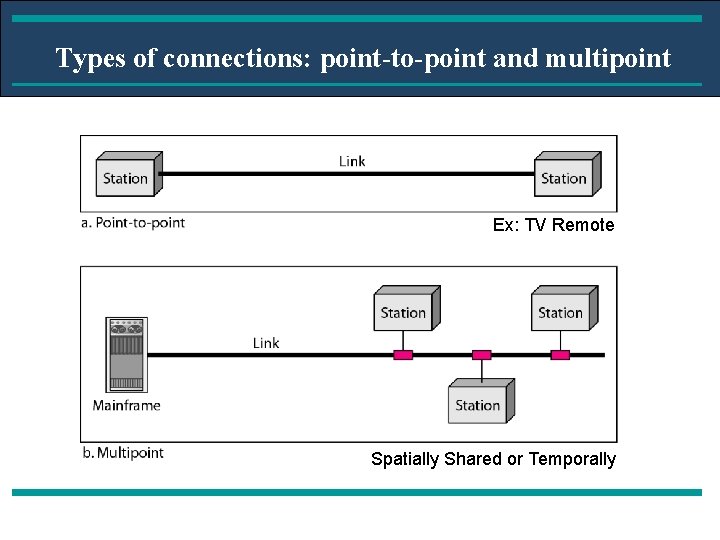
Types of connections: point-to-point and multipoint Ex: TV Remote Spatially Shared or Temporally
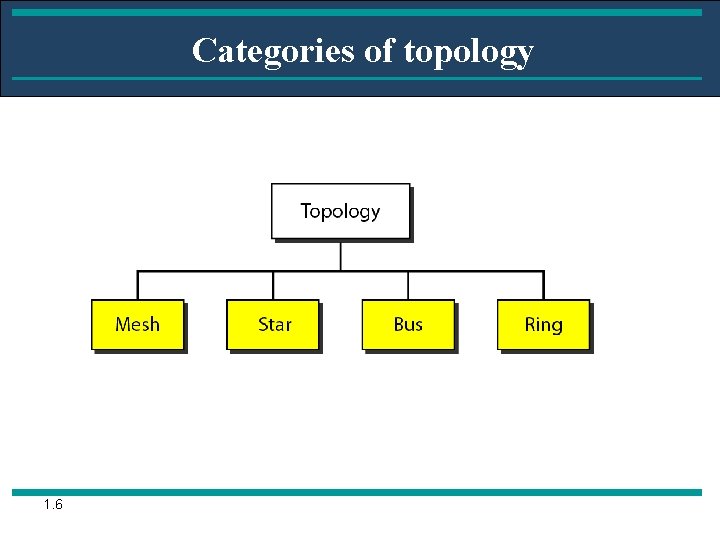
Categories of topology 1. 6
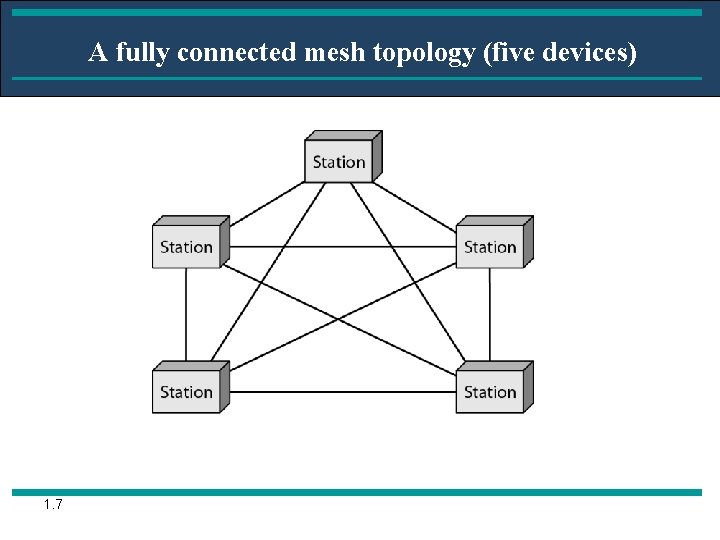
A fully connected mesh topology (five devices) 1. 7
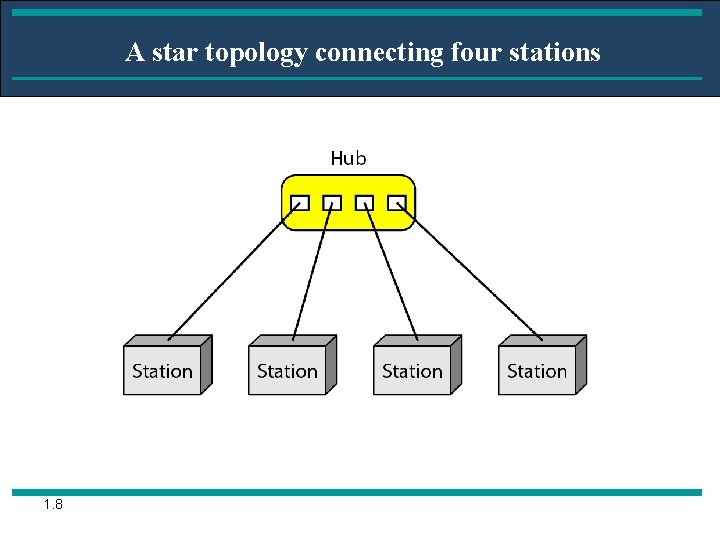
A star topology connecting four stations 1. 8
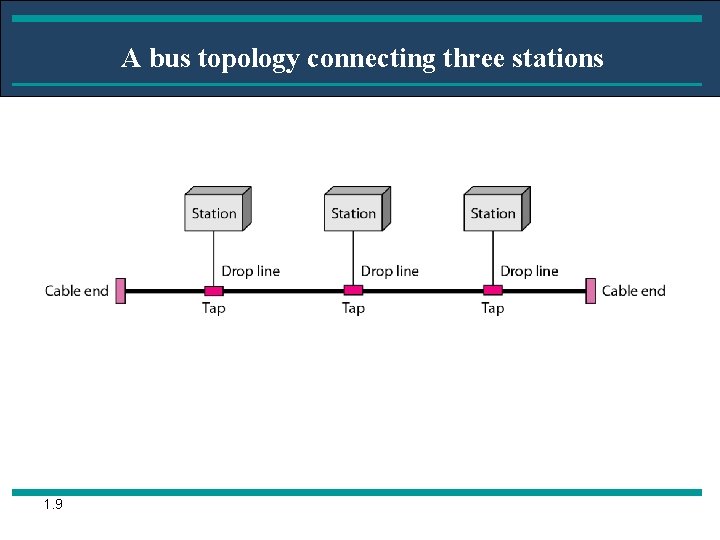
A bus topology connecting three stations 1. 9
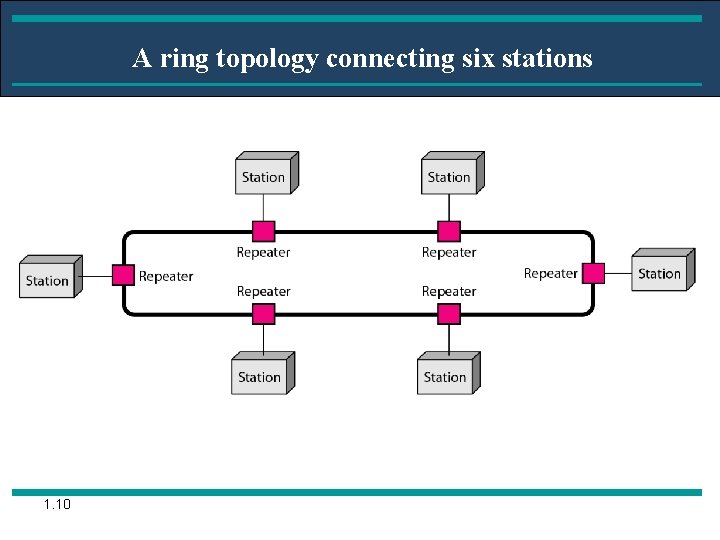
A ring topology connecting six stations 1. 10
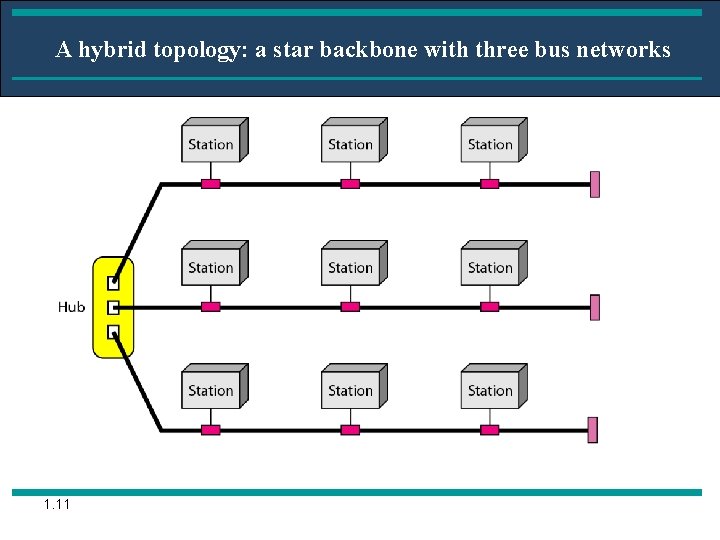
A hybrid topology: a star backbone with three bus networks 1. 11
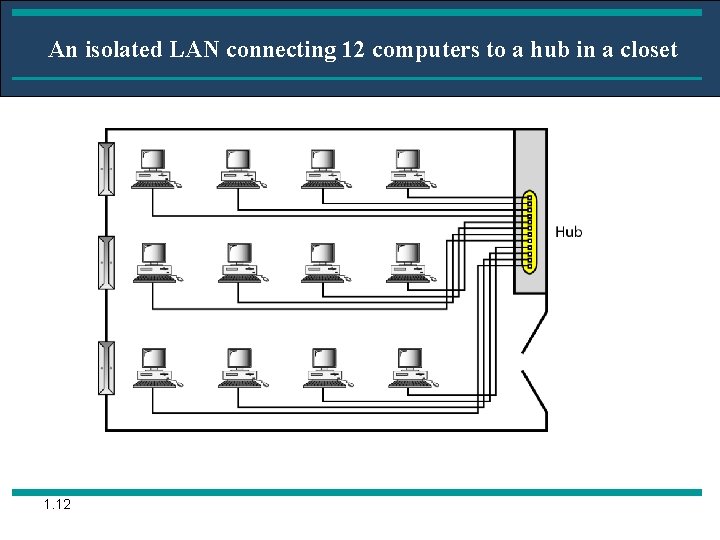
An isolated LAN connecting 12 computers to a hub in a closet 1. 12
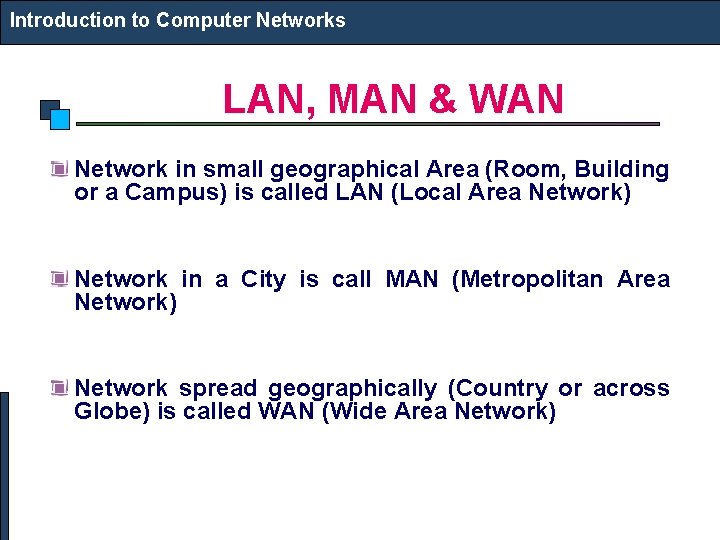
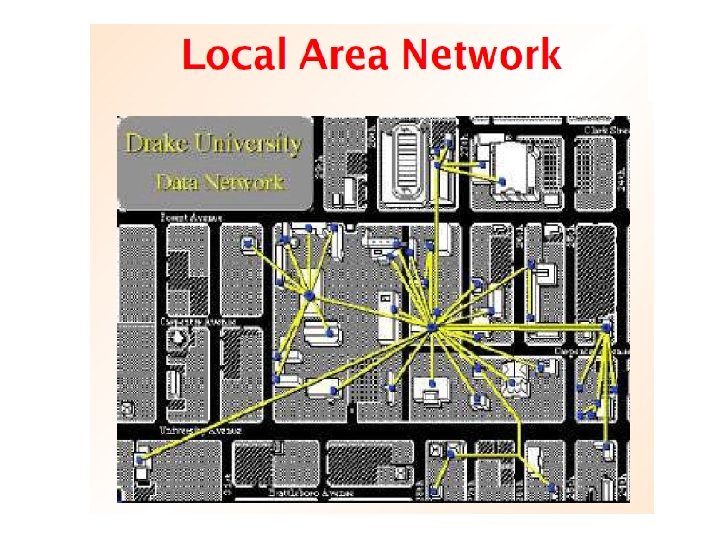
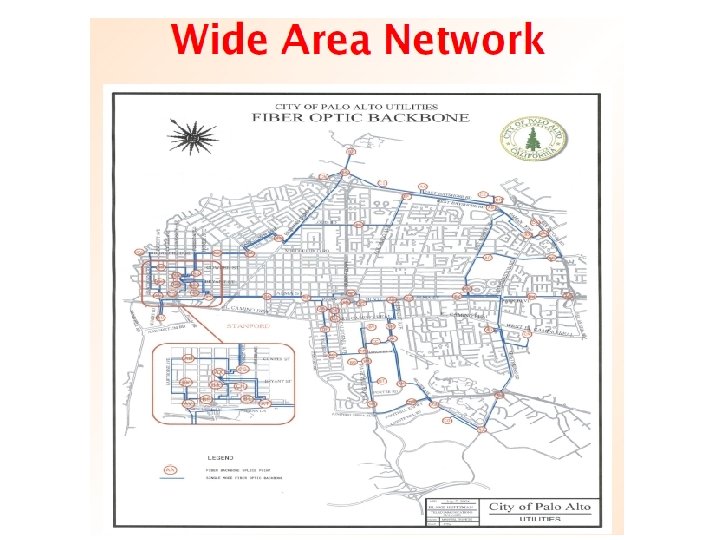
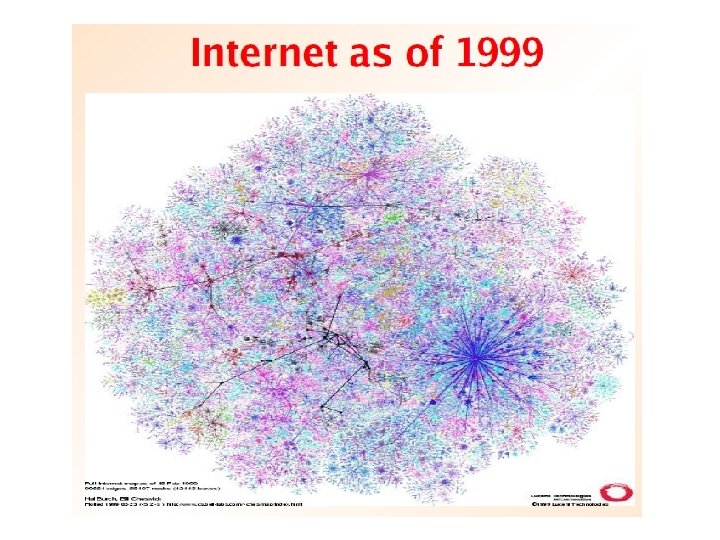
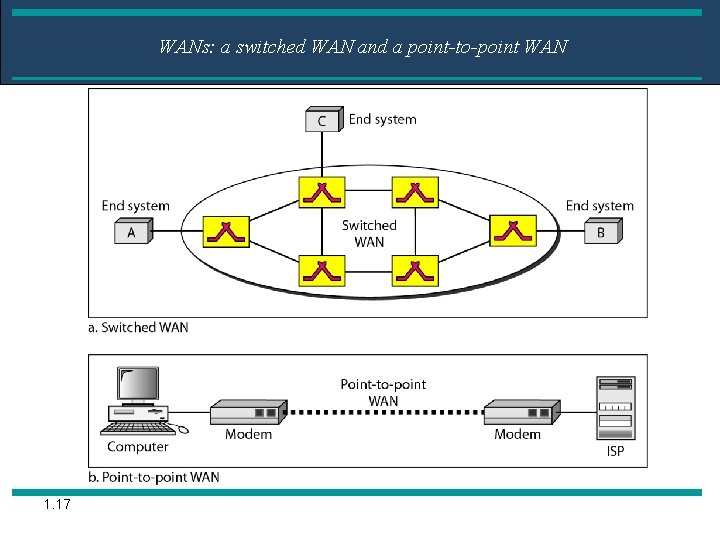
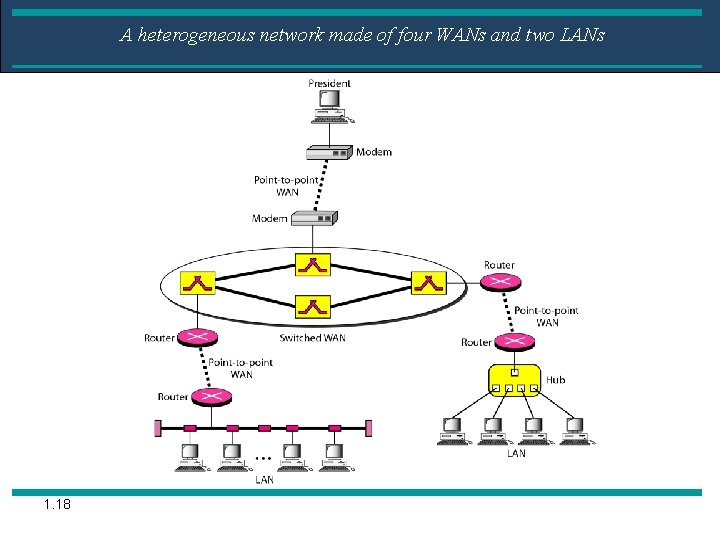
Introduction to Computer Networks LAN, MAN & WAN Network in small geographical Area (Room, Building or a Campus) is called LAN (Local Area Network) Network in a City is call MAN (Metropolitan Area Network) Network spread geographically (Country or across Globe) is called WAN (Wide Area Network)
WANs: a switched WAN and a point-to-point WAN 1. 17
A heterogeneous network made of four WANs and two LANs 1. 18
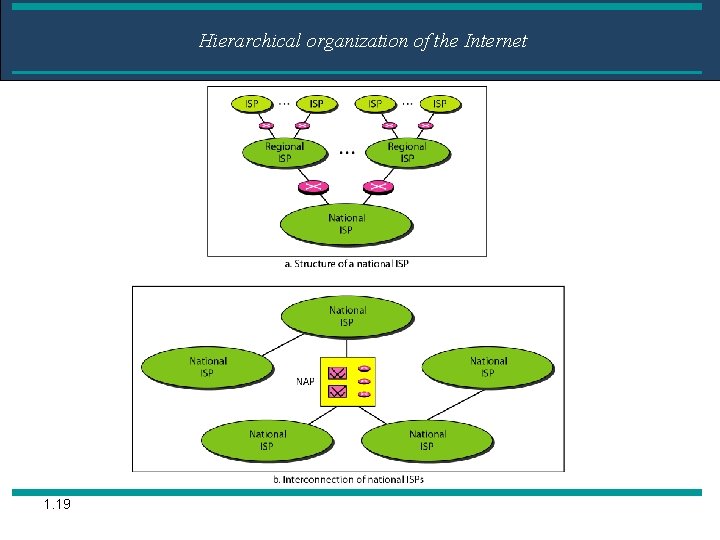
Hierarchical organization of the Internet 1. 19