
Computer modelling using cellular automata of the survival

- Slides: 21
Computer modelling using cellular automata of the survival fraction of cell populations under irradiation Morgiane Richard Examples of glioma cells T 98 g and U 373 and hamster fibroblast cells V 79 27 -01 -2005 Krakow
Table of contents n n People and places involved. Organisation and justification of the project. Biological background of the project. Relevance of the chosen model, cellular automata.
Actors of the project Miss Morgiane Richard Supervisors: n n n Dr. N. F. Kirkby, University of Surrey Prof. R. P. Webb, University of Surrey Dr. K. J. Kirkby, University of Surrey
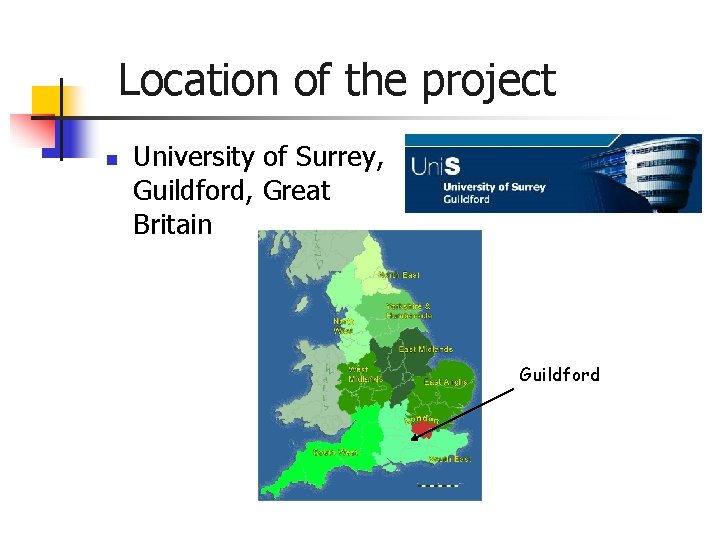
Location of the project n University of Surrey, Guildford, Great Britain Guildford
How will the project unfold n n Computer modelling of cell behaviour under irradiation Experimental validation of models at the Gray Cancer Institute, Cambridge or at the University of Surrey, Ion Beam Center.
A big issue behind n n n Radiotherapy has been widely used for curing cancer. Aim of radiation: to kill cancer cells, and destroy the tumour, without affecting healthy tissues. Results in radiotherapy can still be optimised.
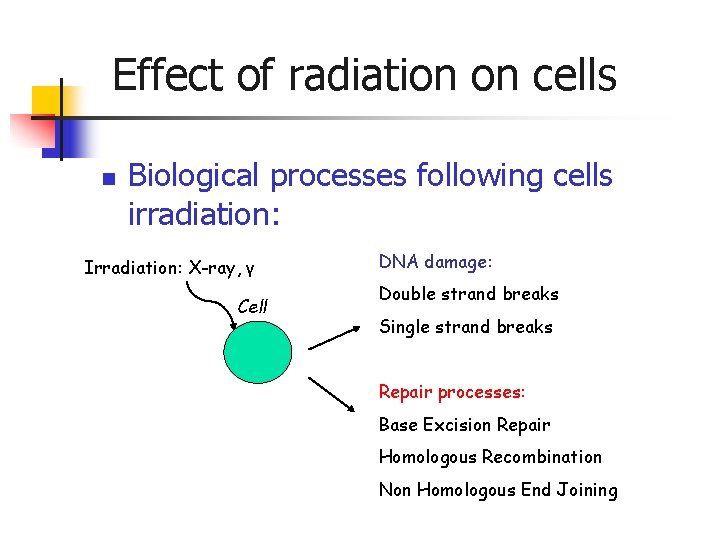
Effect of radiation on cells n Biological processes following cells irradiation: Irradiation: X-ray, γ Cell DNA damage: Double strand breaks Single strand breaks Repair processes: Base Excision Repair Homologous Recombination Non Homologous End Joining
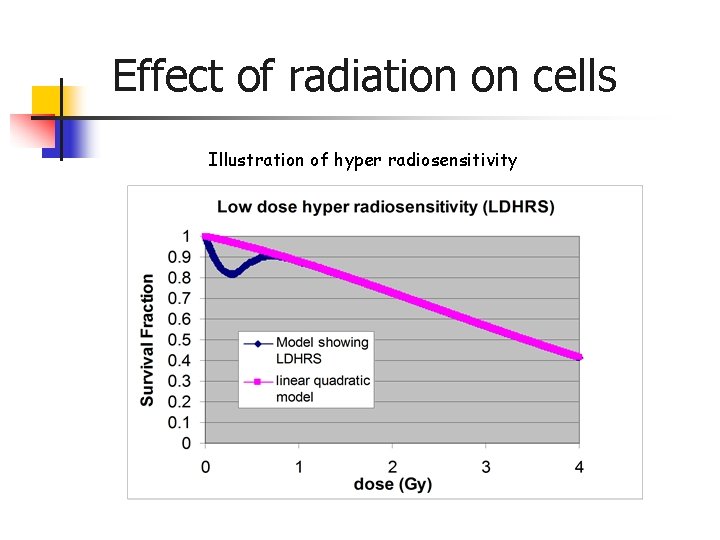
Effect of radiation on cells n Two effects have been discovered n n Low-Dose Hyper Radiosensitivity (LDHRS), coupled with Increased Radioresistance (IRR). The bystander effect.
Effect of radiation on cells Illustration of hyper radiosensitivity
Effect of radiation on cells n n LDHRS/IRR not fully understood yet Irradiation effects: n n Depend on intrinsic characteristic of cells. Trigger intra-cellular signals.
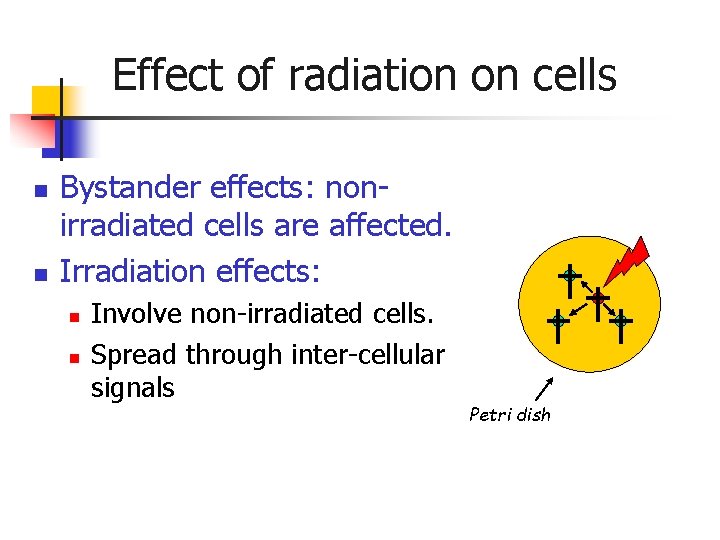
Effect of radiation on cells n n Bystander effects: nonirradiated cells are affected. Irradiation effects: n n Involve non-irradiated cells. Spread through inter-cellular signals Petri dish
Cellular automata (CA) n Definition: n n n Network of cells at an initial state, Finite set of rules, A neighbourhood: a concentration field (signals…). NB: a CA cell is NOT always a biological cell!
Cellular automata n Time evolution: n n State(t+1) depends on state(t). Changes according to the rules and the neighbourhood.
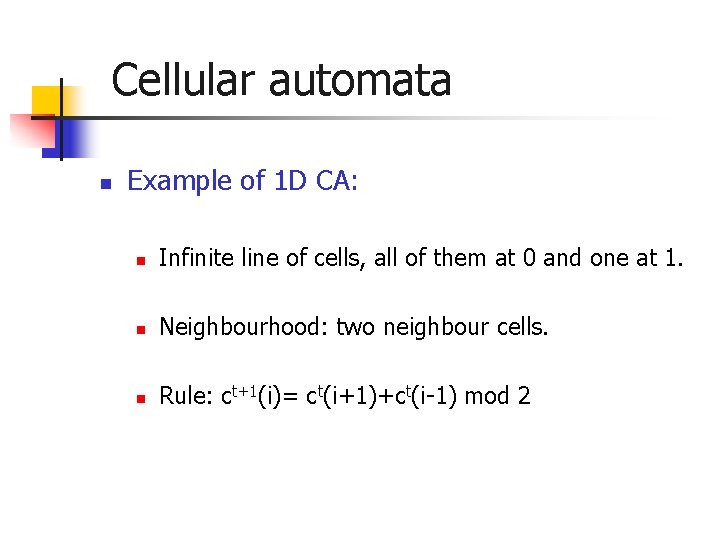
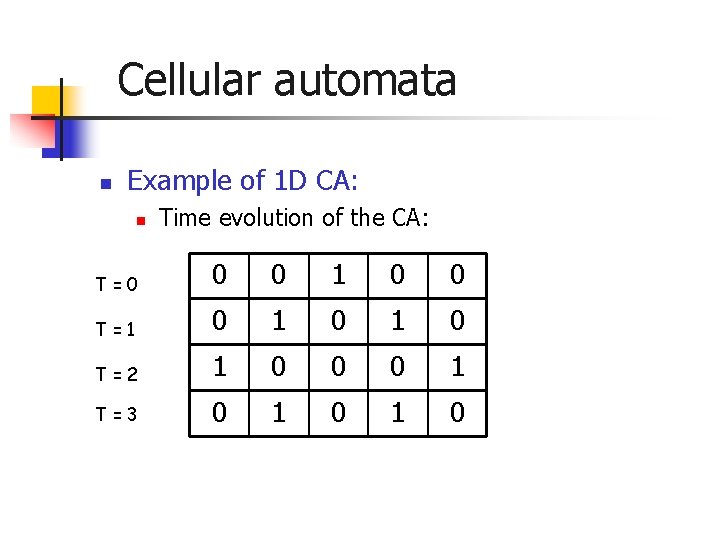
Cellular automata n Example of 1 D CA: n Infinite line of cells, all of them at 0 and one at 1. n Neighbourhood: two neighbour cells. n Rule: ct+1(i)= ct(i+1)+ct(i-1) mod 2
Cellular automata n Example of 1 D CA: n Time evolution of the CA: T=0 0 0 1 0 0 T=1 0 1 0 T=2 1 0 0 0 1 T=3 0 1 0
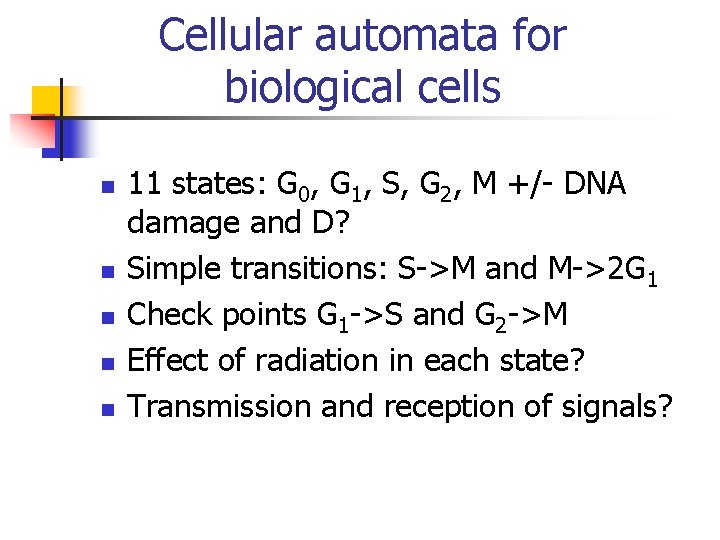
Cellular automata for biological cells n n n 11 states: G 0, G 1, S, G 2, M +/- DNA damage and D? Simple transitions: S->M and M->2 G 1 Check points G 1 ->S and G 2 ->M Effect of radiation in each state? Transmission and reception of signals?
Cellular automata n Conclusion: possibility of modelling n Intrinsic effects of radiation n Bystander effects of radiation
Questions?
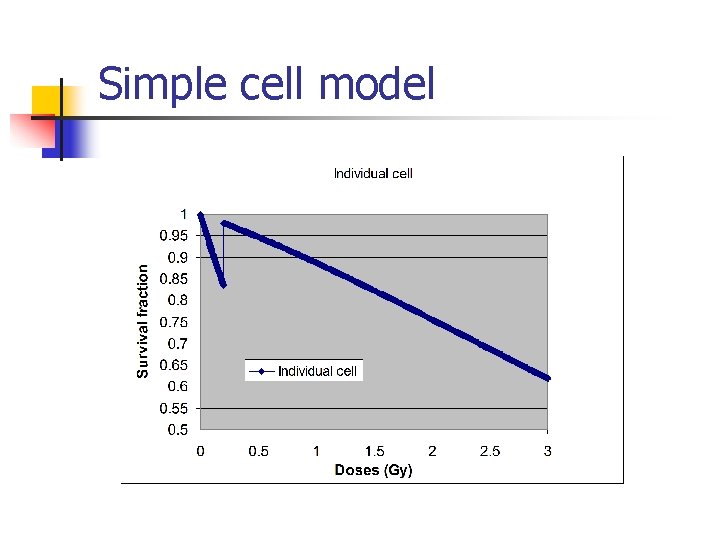
Simple cell model
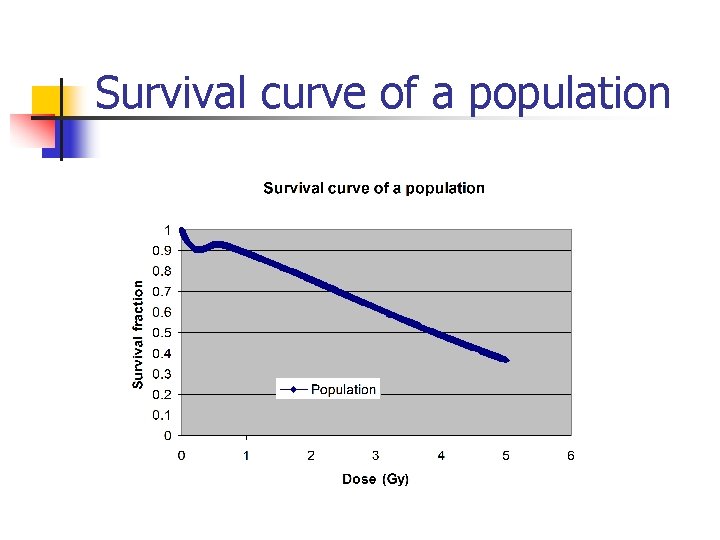
Survival curve of a population
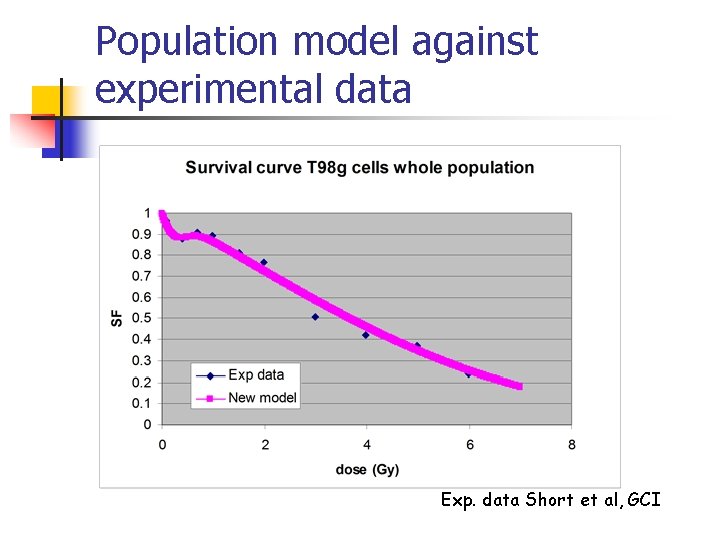
Population model against experimental data Exp. data Short et al, GCI