
Computer Graphics Lecture 18 Reflectance models ImageBased Lighting
Computer Graphics Lecture 18 Reflectance models, Image-Based Lighting

Today • Complex reflectance model o BRDF o Microfacet o Subsurface scattering BSSRDF • Image-based lighting
Reflectance model • Statistical models (BRDF, BSSRDF) • Analytical models (Phong, microfacet)
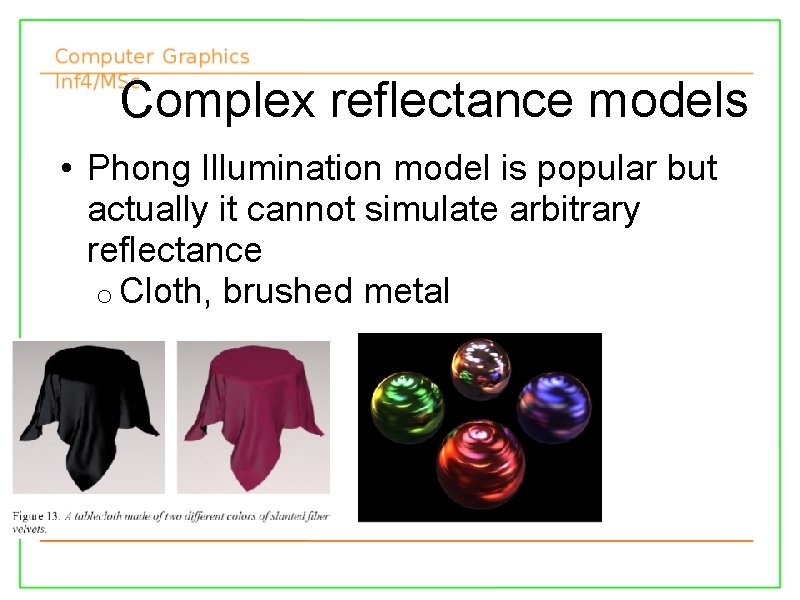
Complex reflectance models • Phong Illumination model is popular but actually it cannot simulate arbitrary reflectance o Cloth, brushed metal
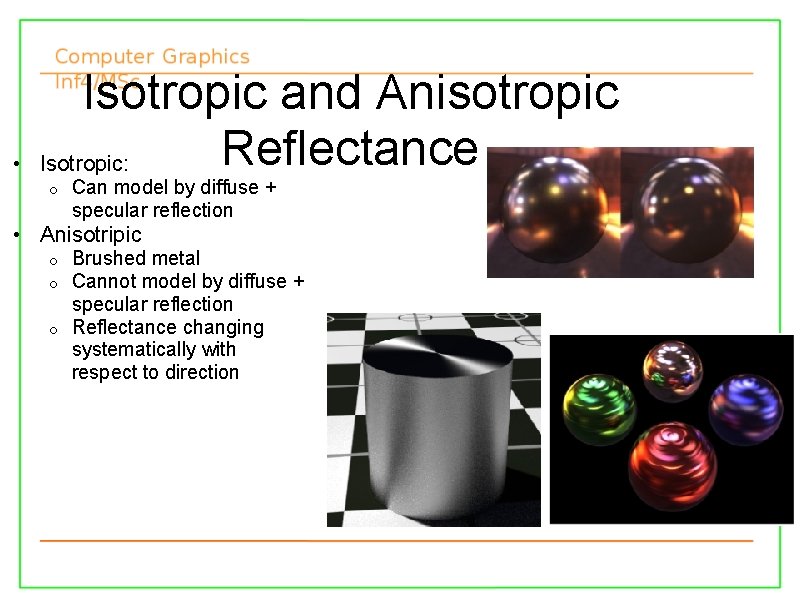
• Isotropic and Anisotropic Reflectance Isotropic: o Can model by diffuse + specular reflection • Anisotripic Brushed metal Cannot model by diffuse + specular reflection o Reflectance changing systematically with respect to direction o o
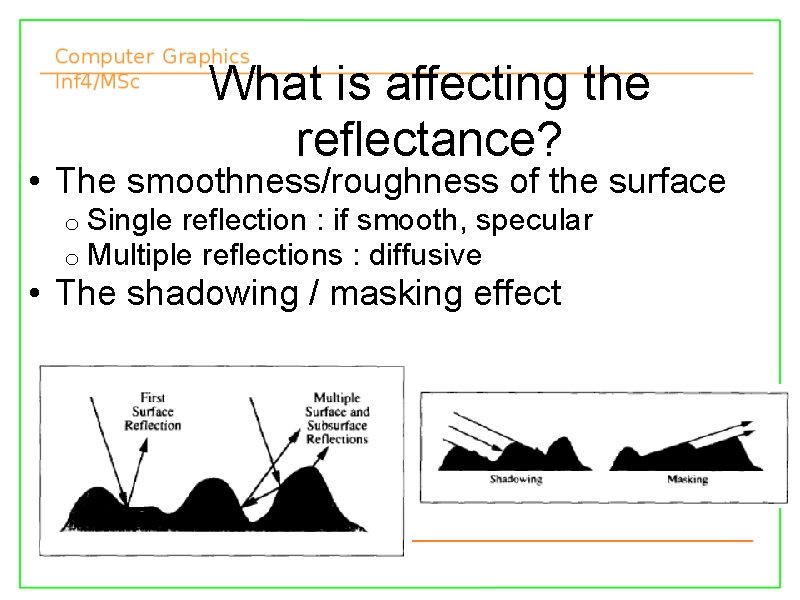
What is affecting the reflectance? • The smoothness/roughness of the surface o Single reflection : if smooth, specular o Multiple reflections : diffusive • The shadowing / masking effect
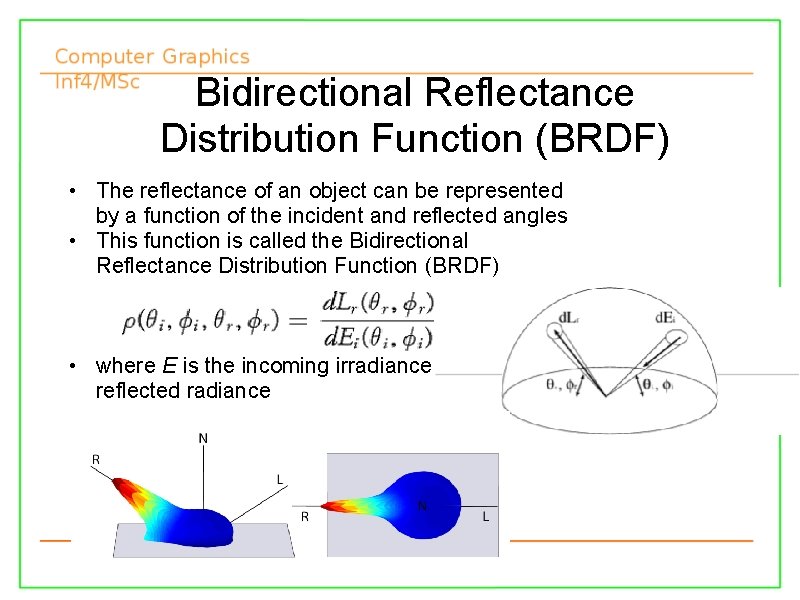
Bidirectional Reflectance Distribution Function (BRDF) • The reflectance of an object can be represented by a function of the incident and reflected angles • This function is called the Bidirectional Reflectance Distribution Function (BRDF) • where E is the incoming irradiance and L is the reflected radiance
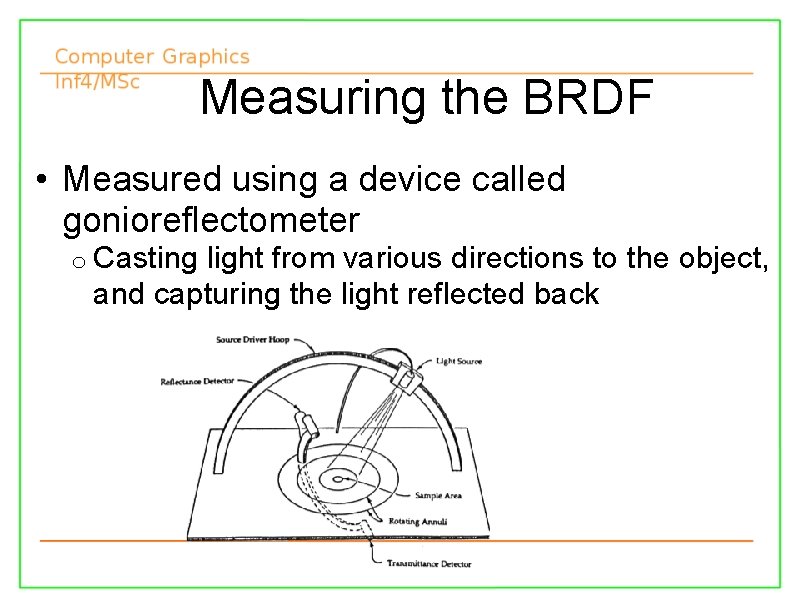
Measuring the BRDF • Measured using a device called gonioreflectometer o Casting light from various directions to the object, and capturing the light reflected back
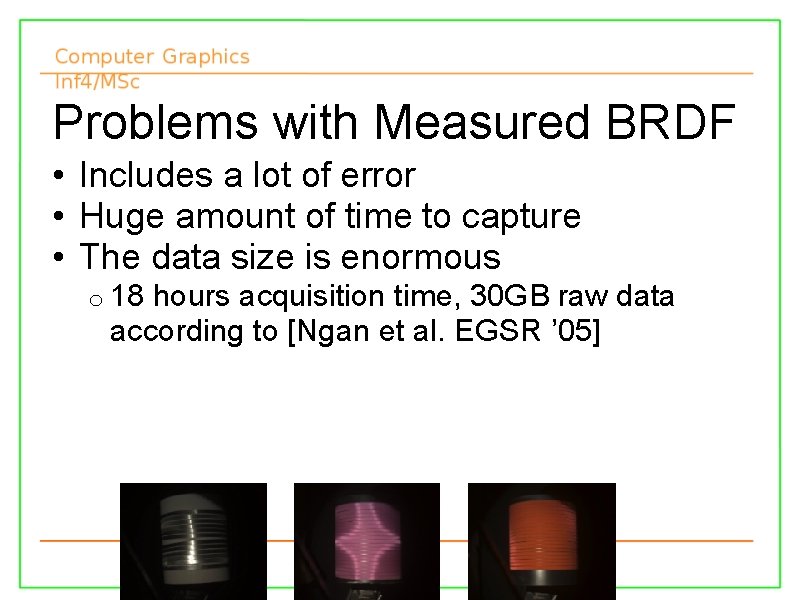
Problems with Measured BRDF • Includes a lot of error • Huge amount of time to capture • The data size is enormous o 18 hours acquisition time, 30 GB raw data according to [Ngan et al. EGSR ’ 05]
Analytical models • Empirical models o Gouraud, Phong models or more complex models • Microfacet models o Assuming the surface is composed of a large number of micro mirrors o Each reflect light back to the specular direction
![Microfacet Theory [Torrance & Sparrow 1967] Surface modeled by tiny mirrors Value of BRDF](http://slidetodoc.com/presentation_image_h2/a18bf52c32b8702600e98015e282218e/image-11.jpg "Microfacet Theory [Torrance & Sparrow 1967] Surface modeled by tiny mirrors Value of BRDF")
Microfacet Theory [Torrance & Sparrow 1967] Surface modeled by tiny mirrors Value of BRDF at # of mirrors oriented halfway between and where is the incoming direction, is the out going direction Also considering the statistics of the shadowing/masking Modulated by Fresnel, shadowing/masking [Shirley 97]
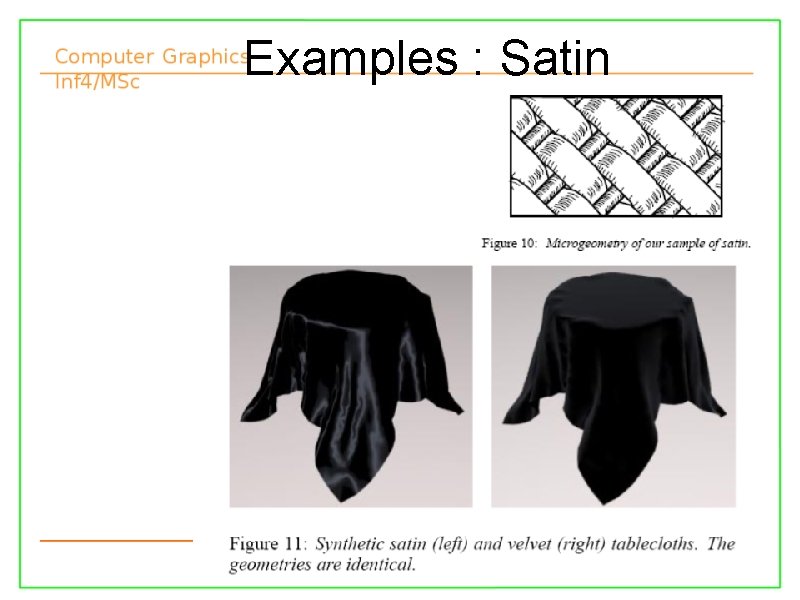
Examples : Satin
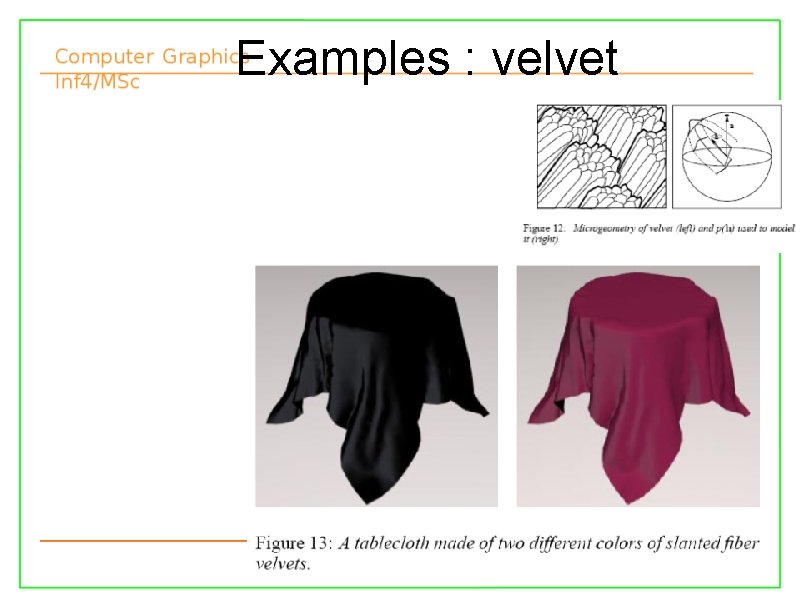
Examples : velvet
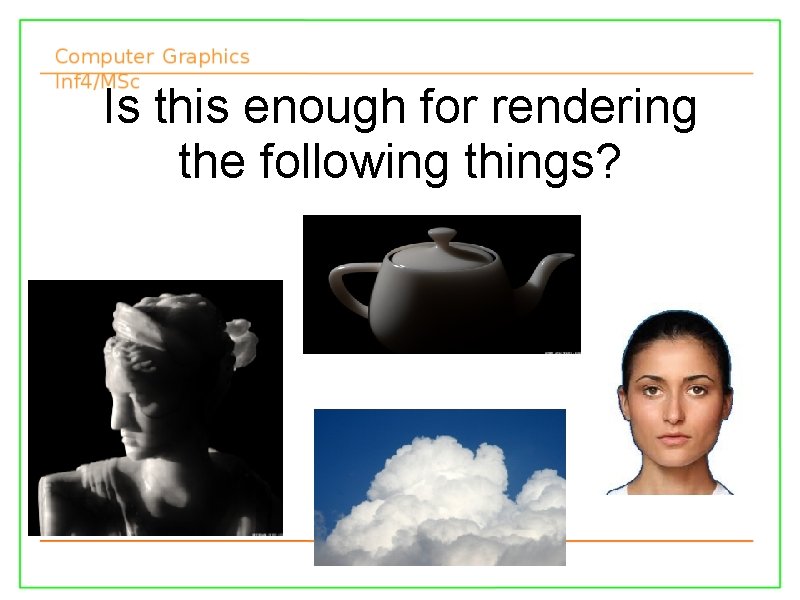
Is this enough for rendering the following things?
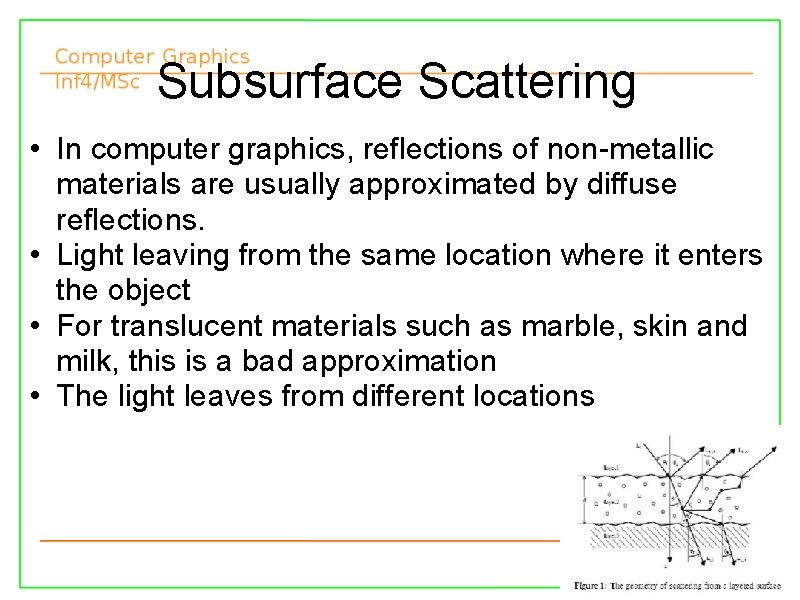
Subsurface Scattering • In computer graphics, reflections of non-metallic materials are usually approximated by diffuse reflections. • Light leaving from the same location where it enters the object • For translucent materials such as marble, skin and milk, this is a bad approximation • The light leaves from different locations
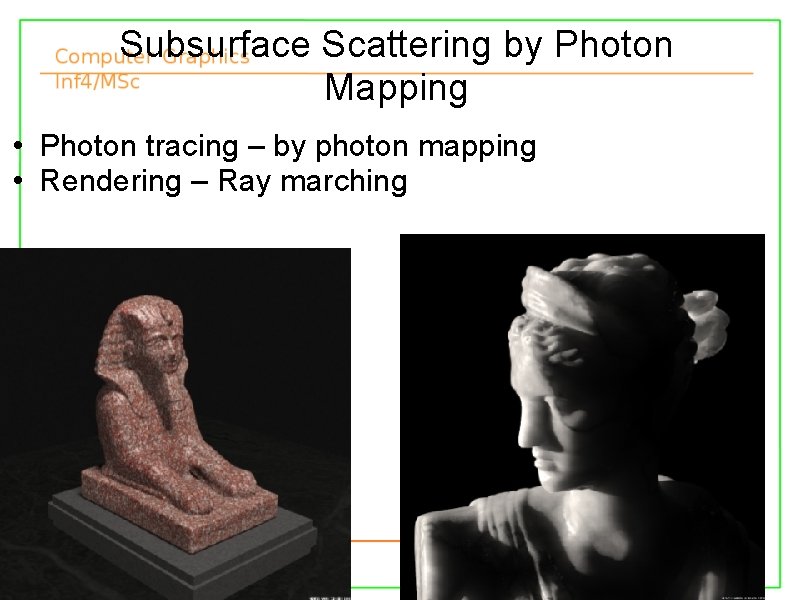
Subsurface Scattering by Photon Mapping • Photon tracing – by photon mapping • Rendering – Ray marching
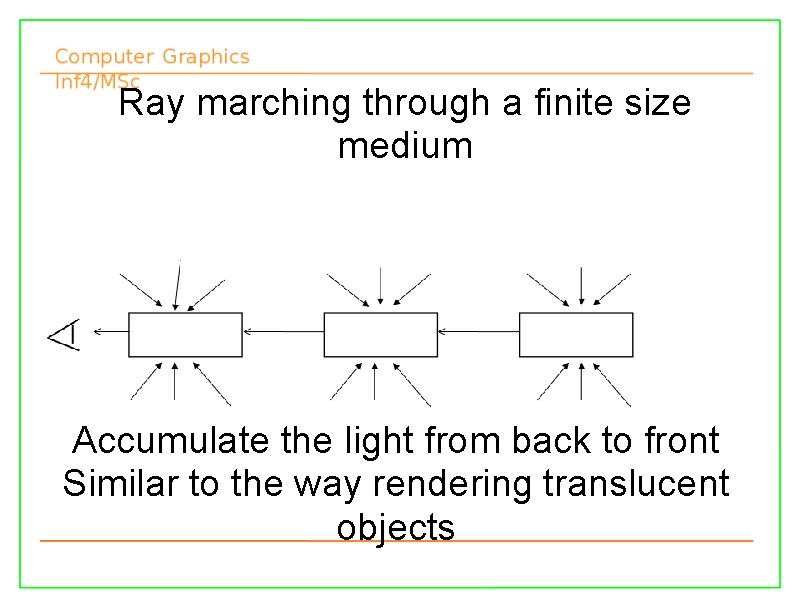
Ray marching through a finite size medium Accumulate the light from back to front Similar to the way rendering translucent objects
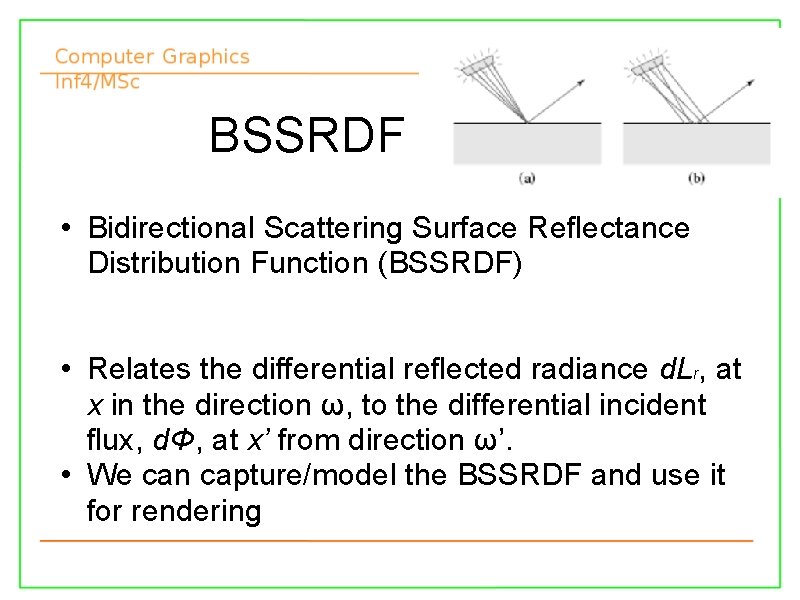
BSSRDF • Bidirectional Scattering Surface Reflectance Distribution Function (BSSRDF) • Relates the differential reflected radiance d. Lr, at x in the direction ω, to the differential incident flux, dΦ, at x’ from direction ω’. • We can capture/model the BSSRDF and use it for rendering
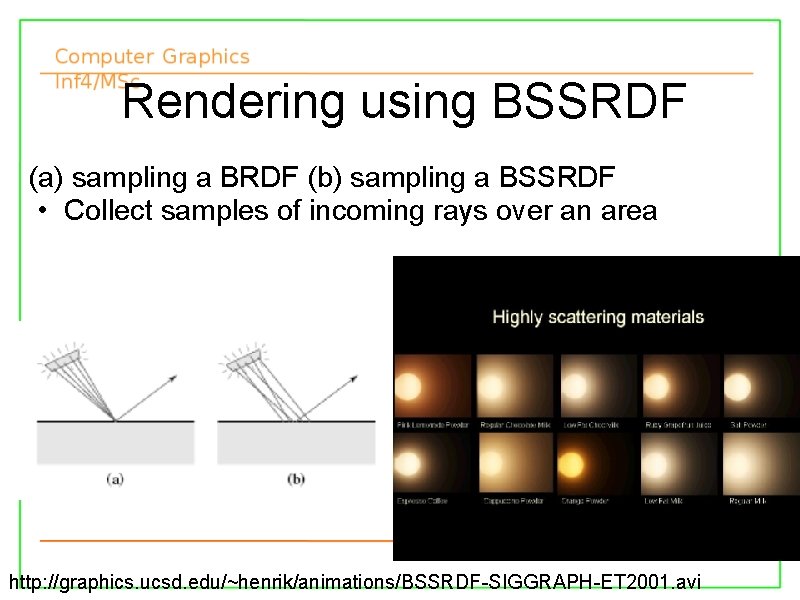
Rendering using BSSRDF (a) sampling a BRDF (b) sampling a BSSRDF • Collect samples of incoming rays over an area http: //graphics. ucsd. edu/~henrik/animations/BSSRDF-SIGGRAPH-ET 2001. avi
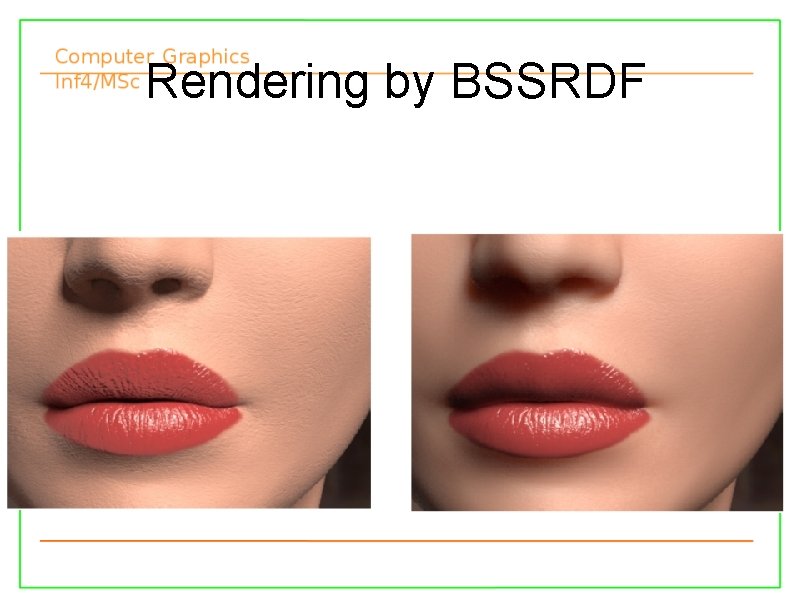
Rendering by BSSRDF

Today • Complex reflectance model o BRDF o Microfacet o Subsurface scattering BSSRDF • Image-based lighting
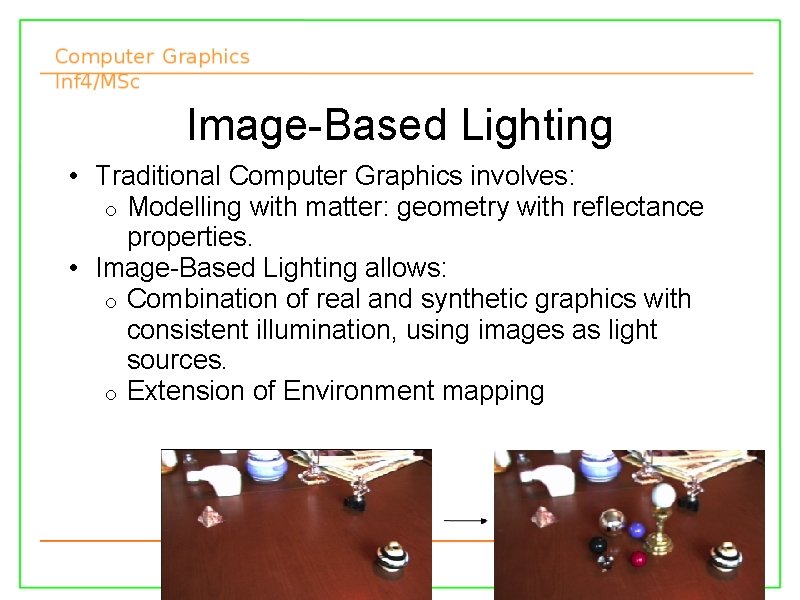
Image-Based Lighting • Traditional Computer Graphics involves: o Modelling with matter: geometry with reflectance properties. • Image-Based Lighting allows: o Combination of real and synthetic graphics with consistent illumination, using images as light sources. o Extension of Environment mapping 13/11/2007
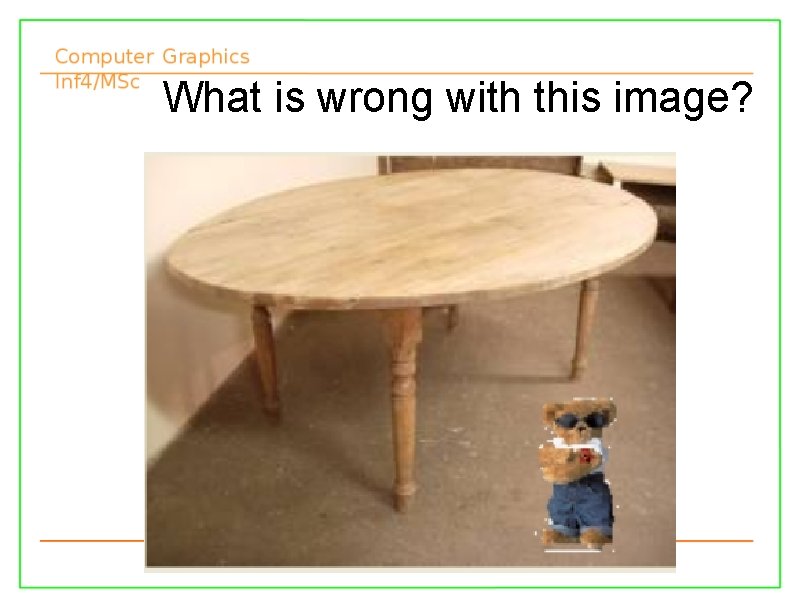
What is wrong with this image?
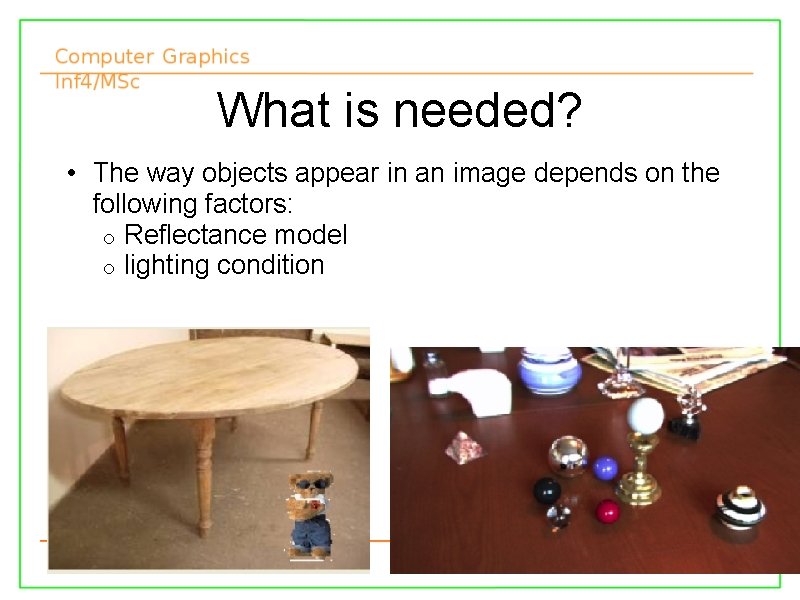
What is needed? • The way objects appear in an image depends on the following factors: o Reflectance model o lighting condition
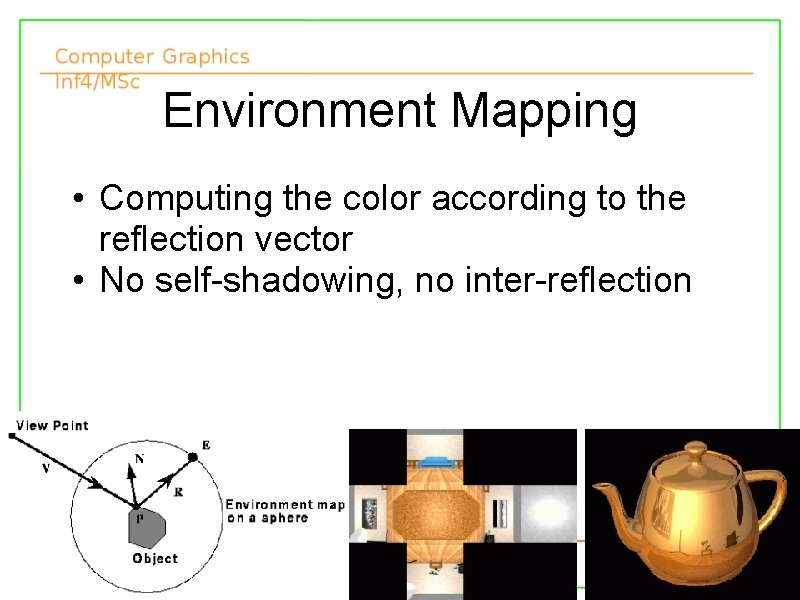
Environment Mapping • Computing the color according to the reflection vector • No self-shadowing, no inter-reflection
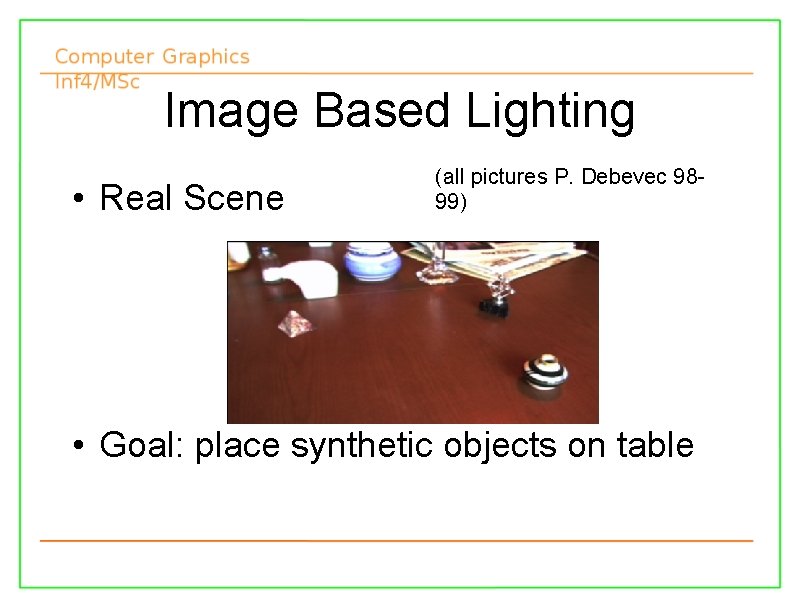
Image Based Lighting • Real Scene (all pictures P. Debevec 9899) • Goal: place synthetic objects on table 13/11/2007
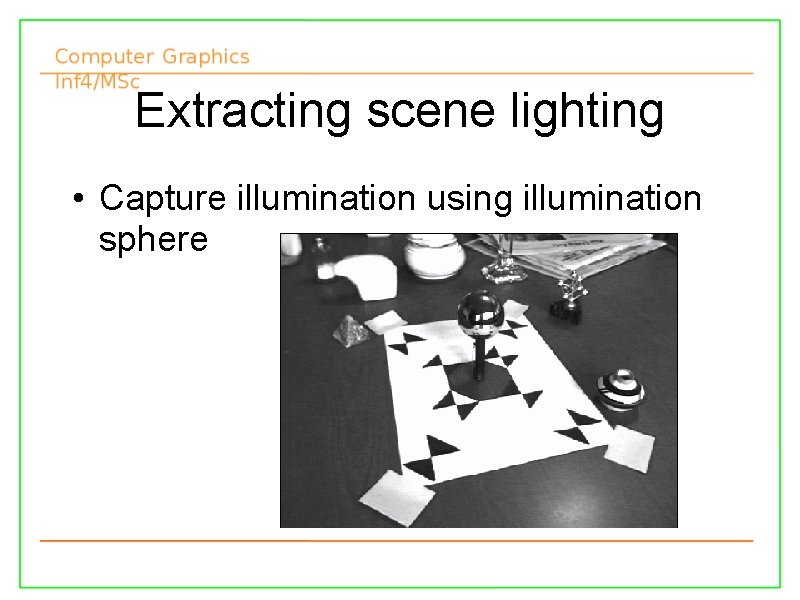
Extracting scene lighting • Capture illumination using illumination sphere 13/11/2007
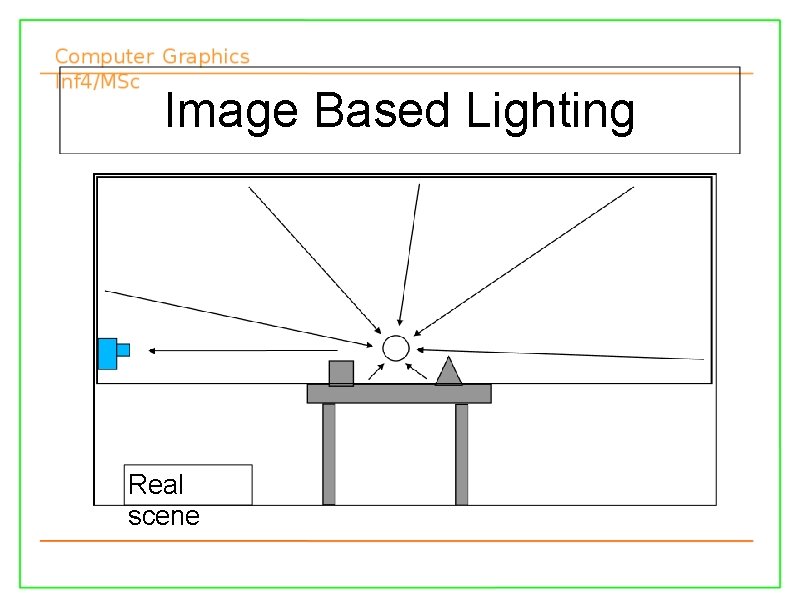
Image Based Lighting Real scene 13/11/2007
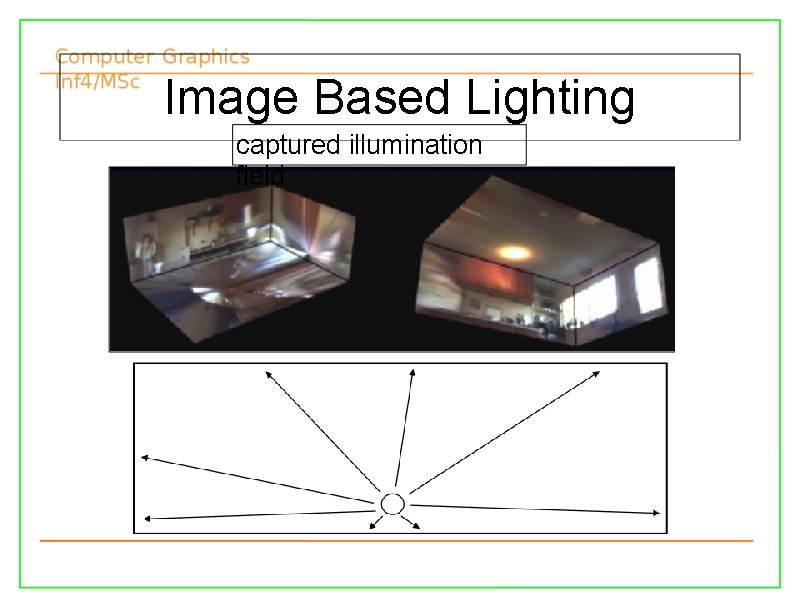
Image Based Lighting captured illumination field 13/11/2007
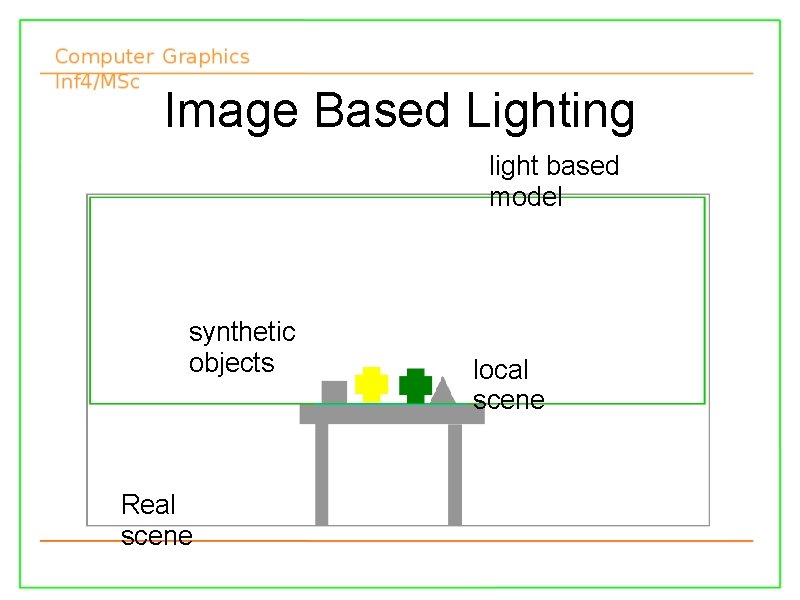
Image Based Lighting light based model synthetic objects Real scene 13/11/2007 local scene
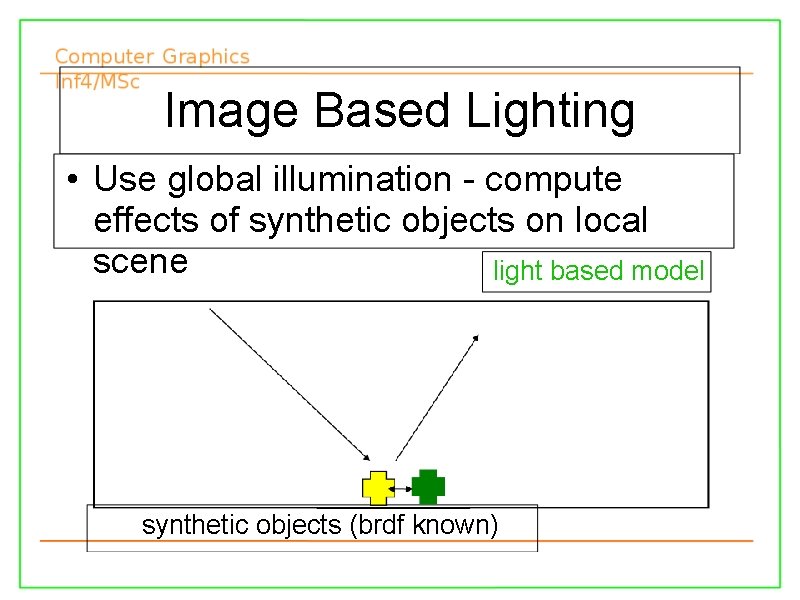
Image Based Lighting • Use global illumination - compute effects of synthetic objects on local scene light based model synthetic objects (brdf known) 13/11/2007
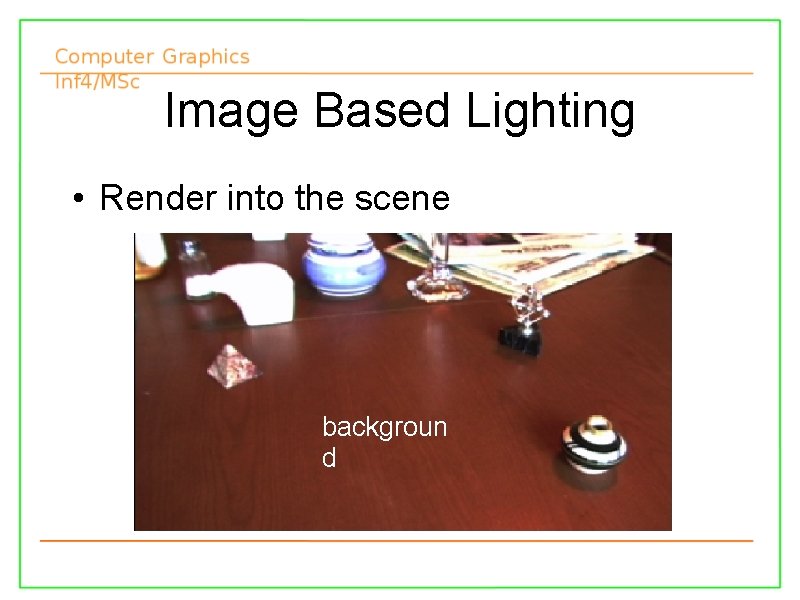
Image Based Lighting • Render into the scene backgroun d 13/11/2007
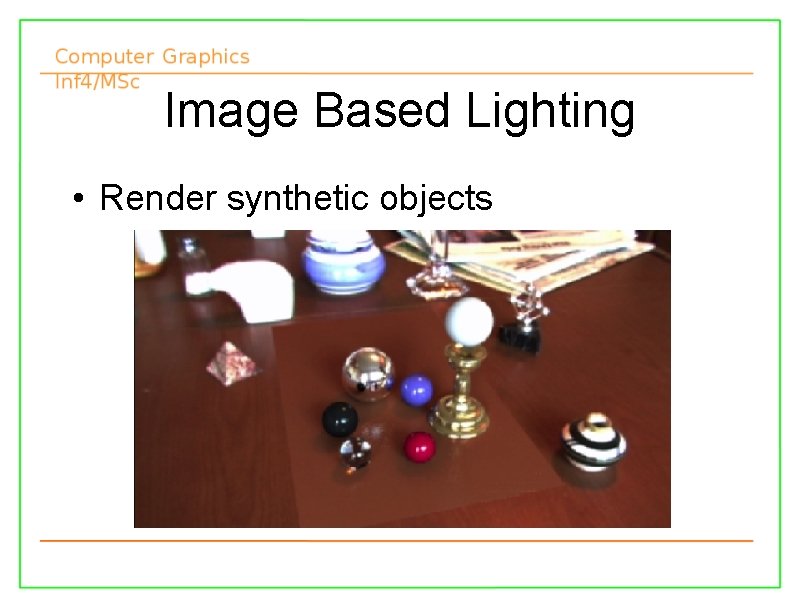
Image Based Lighting • Render synthetic objects 13/11/2007
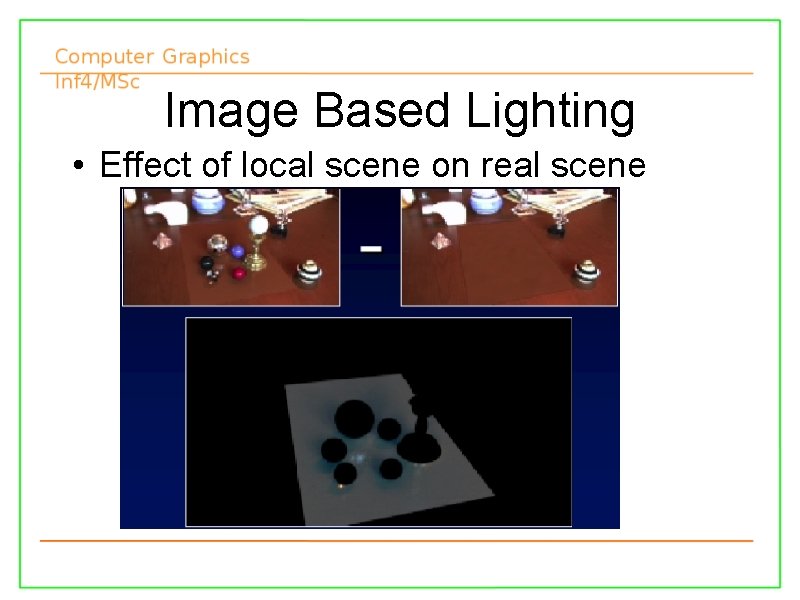
Image Based Lighting • Effect of local scene on real scene 13/11/2007
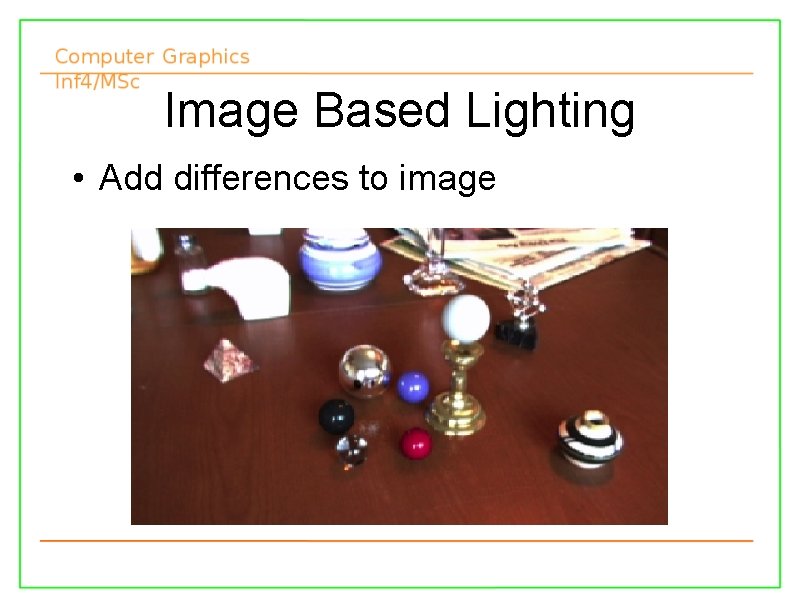
Image Based Lighting • Add differences to image 13/11/2007
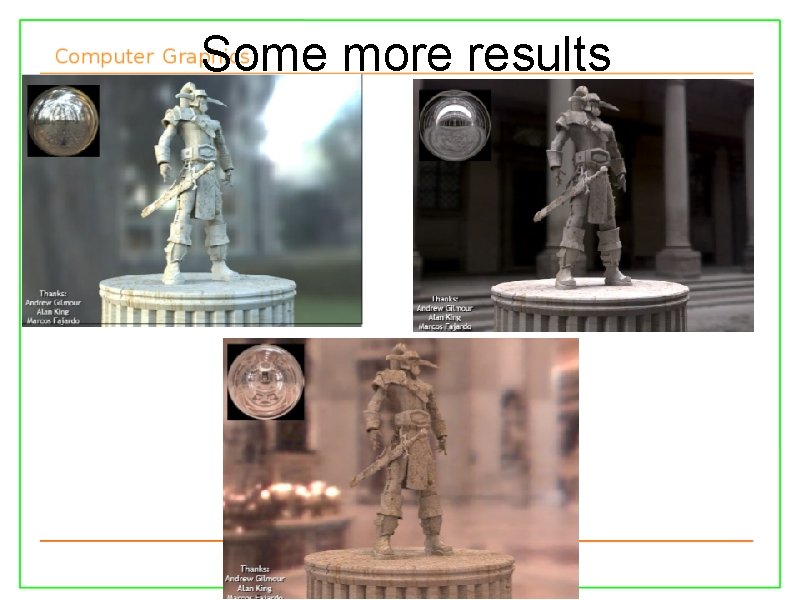
Some more results
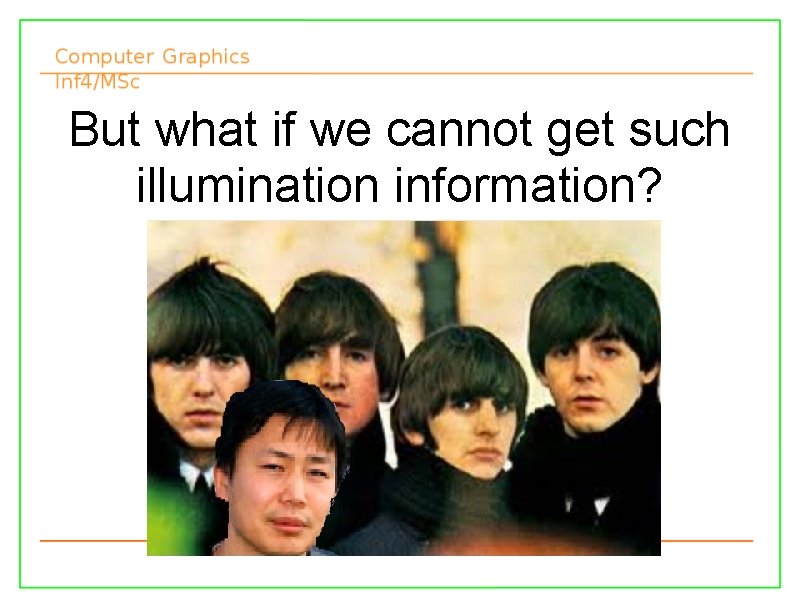
But what if we cannot get such illumination information?
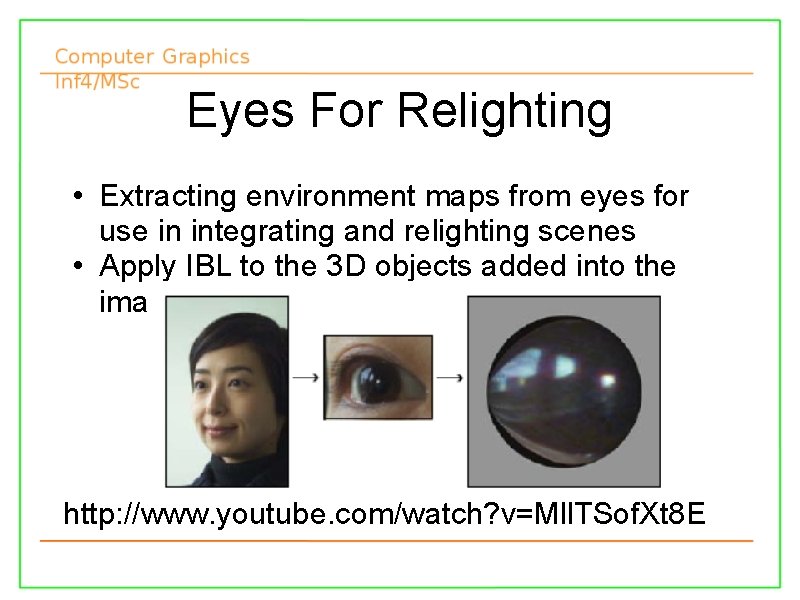
Eyes For Relighting • Extracting environment maps from eyes for use in integrating and relighting scenes • Apply IBL to the 3 D objects added into the image http: //www. youtube. com/watch? v=Mll. TSof. Xt 8 E
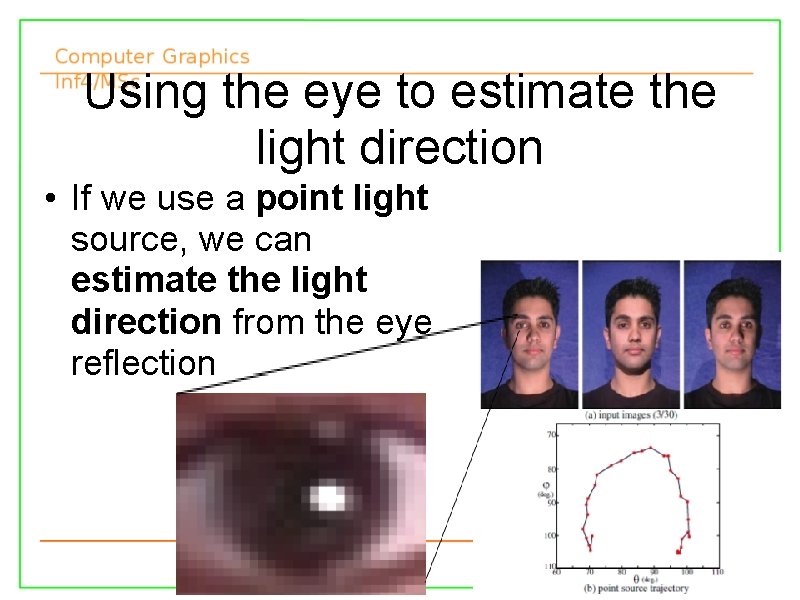
Using the eye to estimate the light direction • If we use a point light source, we can estimate the light direction from the eye reflection
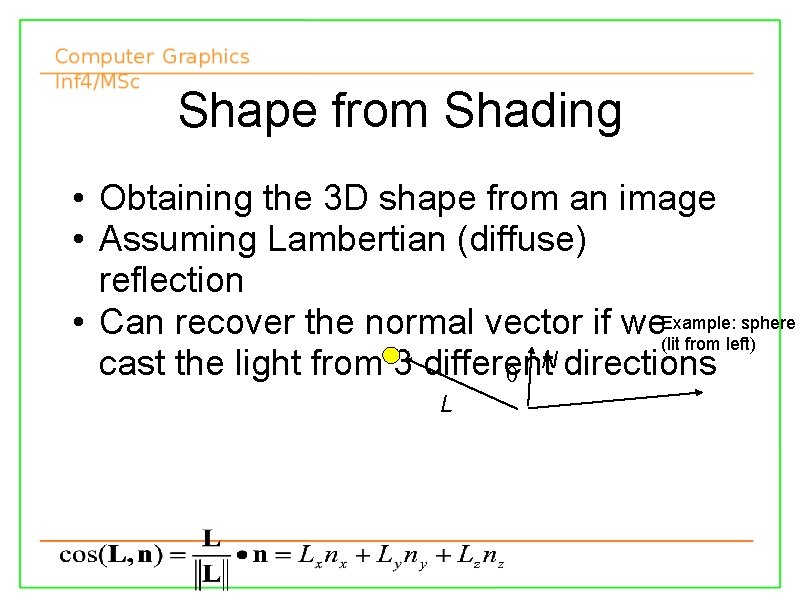
Shape from Shading • Obtaining the 3 D shape from an image • Assuming Lambertian (diffuse) reflection sphere • Can recover the normal vector if we. Example: (lit from left) N directions cast the light from 3 different L
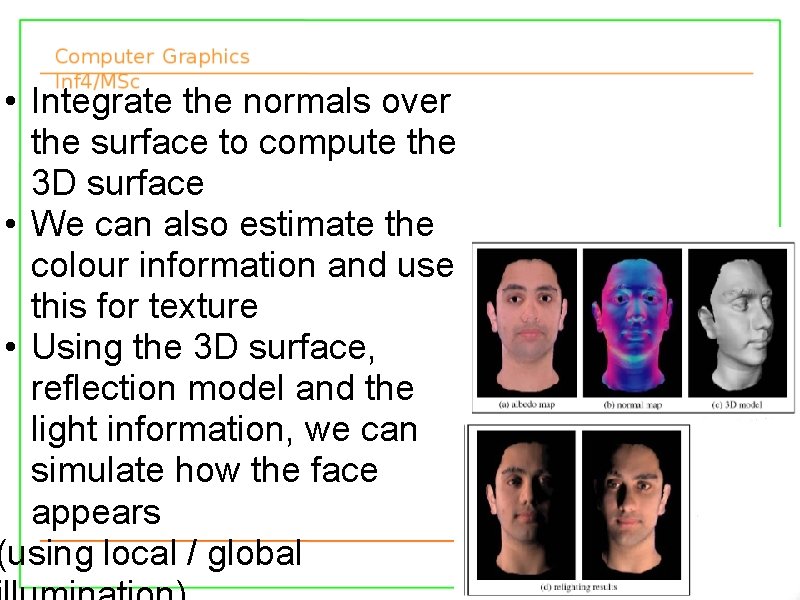
• Integrate the normals over the surface to compute the 3 D surface • We can also estimate the colour information and use this for texture • Using the 3 D surface, reflection model and the light information, we can simulate how the face appears (using local / global
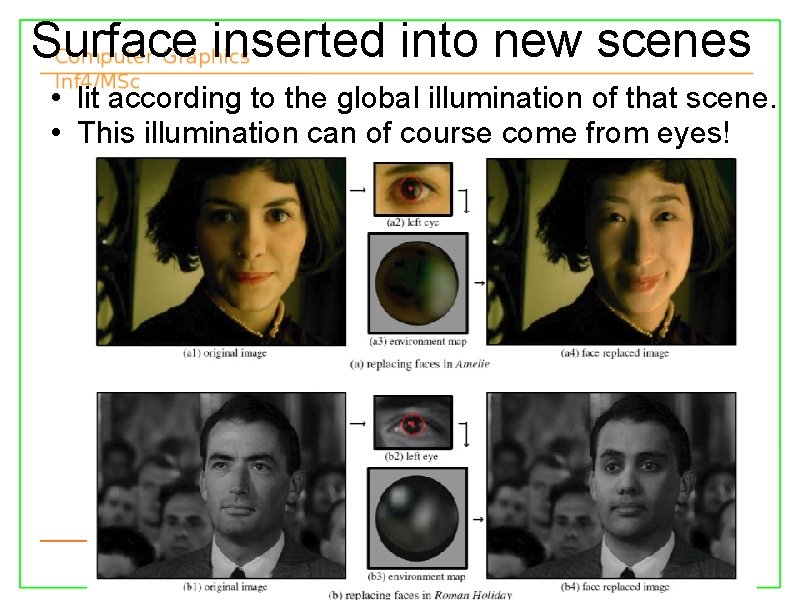
Surface inserted into new scenes • lit according to the global illumination of that scene. • This illumination can of course come from eyes!
References • A Practical Model for Subsurface Light Transport". Proceedings of SIGGRAPH'2001. • Rendering Synthetic Objects into Real Scenes, SIGGRAPH 98 • Eyes For Relighting, Nishino SIGGRAPH 2004 • Realistic Image Synthesis Using Photon Mapping by Henrik Wann Jensen, AK Peters Chapter 9, 10 13/11/2007
- Slides: 43