
Computer and Information Security Chapter 7 Web Security
Computer and Information Security Chapter 7 Web Security Slides by H. Johnson & S. Malladi- Modified by SJFS'06 1
Outline • Web Security Considerations • Secure Socket Layer (SSL) and Transport Layer Security (TLS) • Secure Electronic Transaction (SET) • Recommended Reading and WEB Sites
Web Security Considerations • The WEB is very visible. • Complex software hide many security flaws. • Web servers are easy to configure and manage. • Users are not aware of the risks.
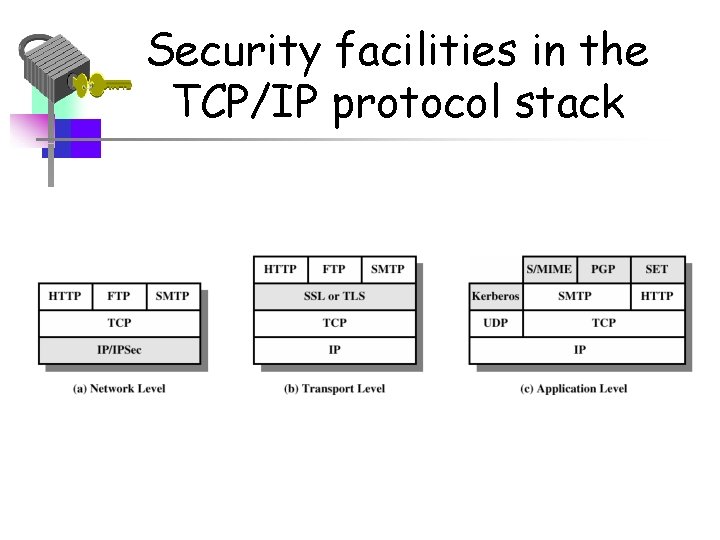
Security facilities in the TCP/IP protocol stack
SSL and TLS • SSL was originated by Netscape • TLS working group was formed within IETF • First version of TLS can be viewed as an SSLv 3. 1
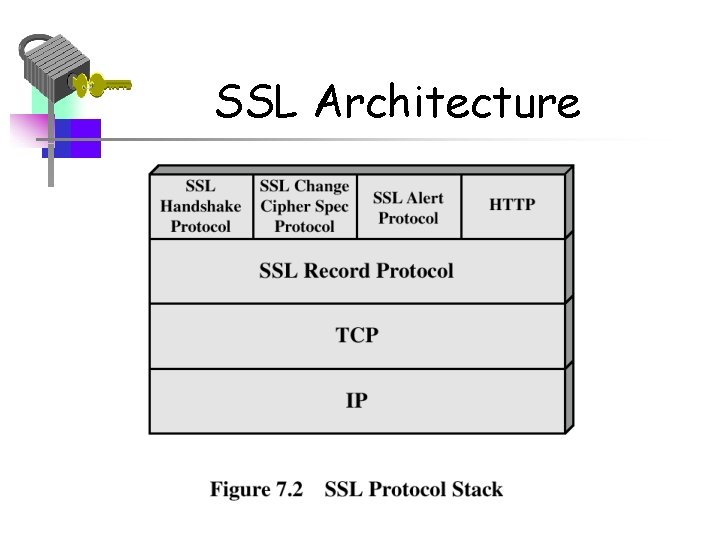
SSL Architecture
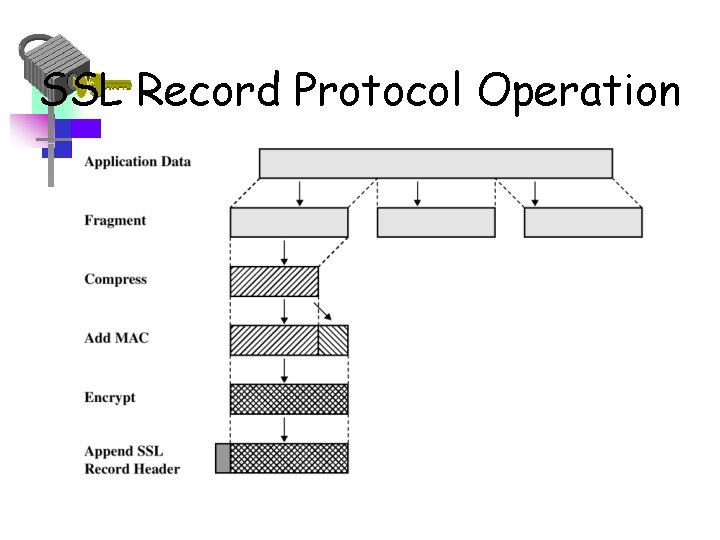
SSL Record Protocol Operation
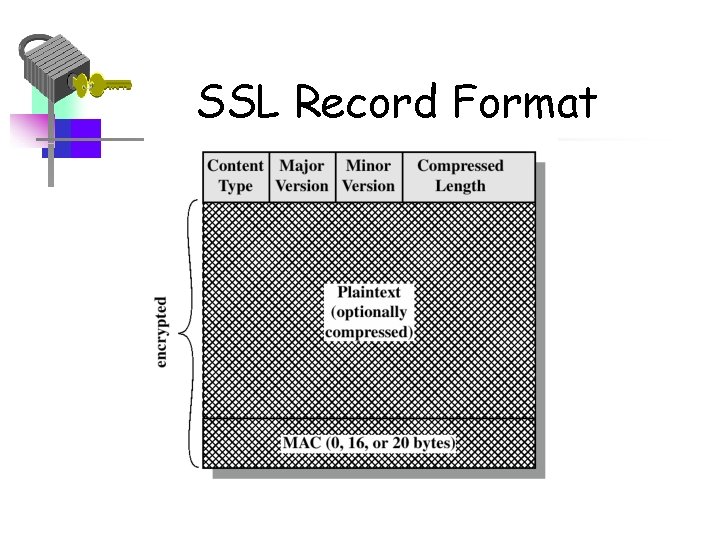
SSL Record Format
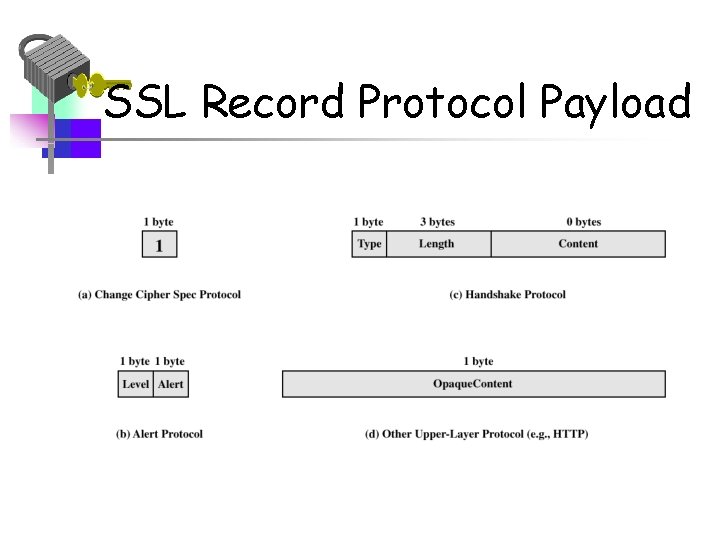
SSL Record Protocol Payload
Handshake Protocol • The most complex part of SSL. • Allows the server and client to authenticate each other. • Negotiate encryption, MAC algorithm and cryptographic keys. • Used before any application data are transmitted.
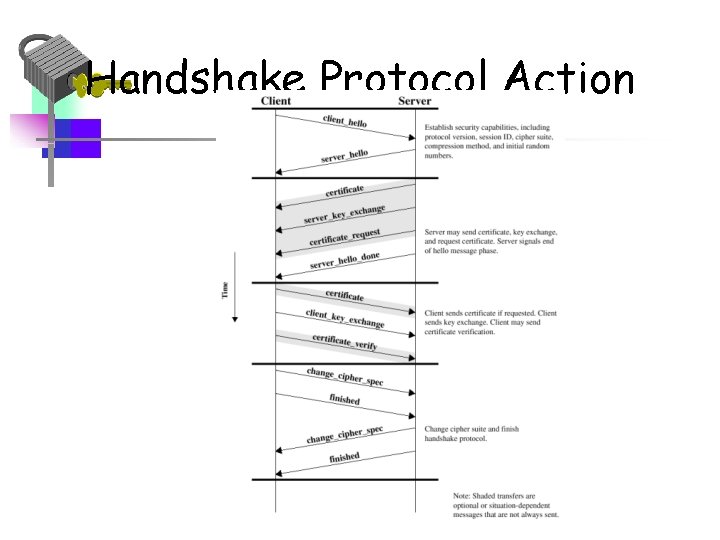
Handshake Protocol Action
Transport Layer Security • • The same record format as the SSL record format. Defined in RFC 2246. Similar to SSLv 3. Differences in the: – – – – – version number message authentication code pseudorandom function alert codes cipher suites client certificate types certificate_verify and finished message cryptographic computations padding
Secure Electronic Transactions • An open encryption and security specification. • Protect credit card transaction on the Internet. • Companies involved: – Master. Card, Visa, IBM, Microsoft, Netscape, RSA, Terisa and Verisign • Not a payment system. • Set of security protocols and formats.
SET Services • Provides a secure communication channel in a transaction. • Provides tust by the use of X. 509 v 3 digital certificates. • Ensures privacy.
SET Overview • Key Features of SET: – – Confidentiality of information Integrity of data Cardholder account authentication Merchant authentication
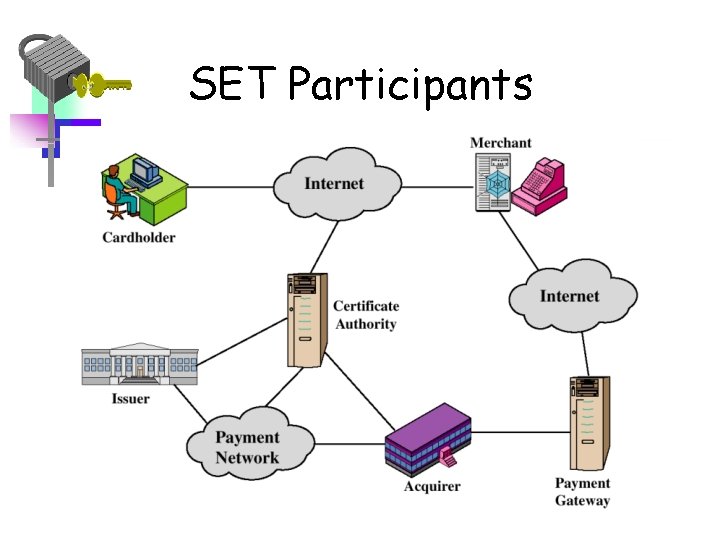
SET Participants
Sequence of events for transactions • • • The customer opens an account. The customer receives a certificate. Merchants have their own certificates. The customer places an order. The merchant is verified. The order and payment are sent. The merchant request payment authorization. The merchant confirm the order. The merchant provides the goods or service. The merchant requests payments.
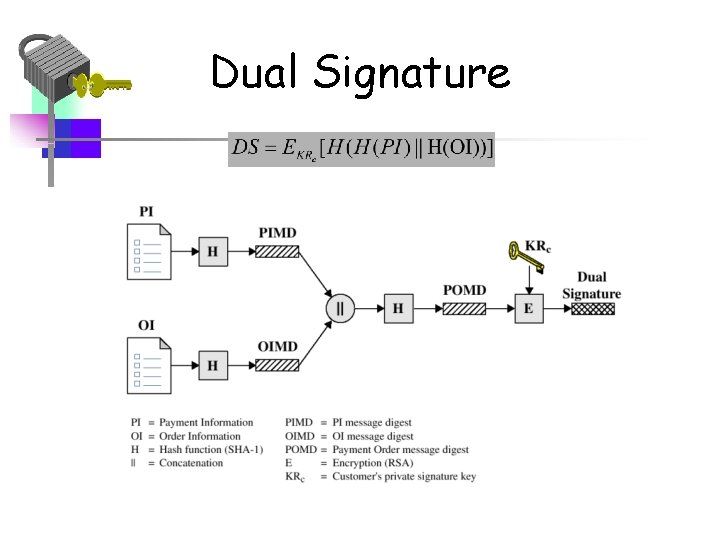
Dual Signature
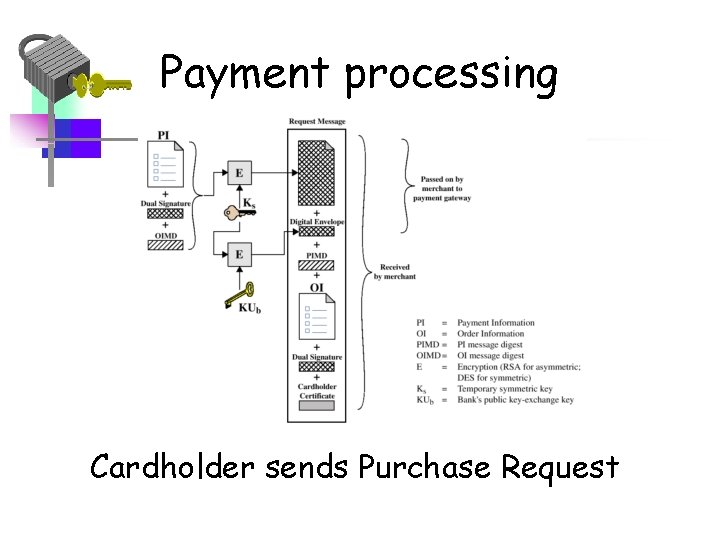
Payment processing Cardholder sends Purchase Request
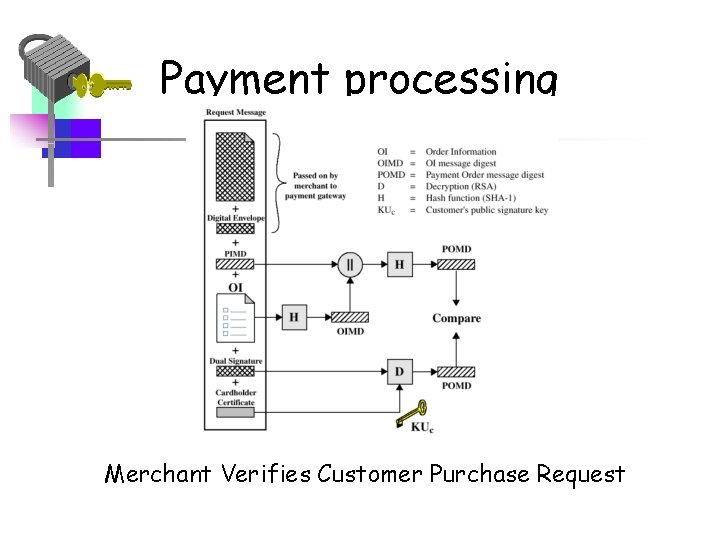
Payment processing Merchant Verifies Customer Purchase Request
Payment processing • Payment Authorization: – Authorization Request – Authorization Response • Payment Capture: – Capture Request – Capture Response
Recommended Reading and WEB sites • Drew, G. Using SET for Secure Electronic Commerce. Prentice Hall, 1999 • Garfinkel, S. , and Spafford, G. Web Security & Commerce. O’Reilly and Associates, 1997 • Master. Card SET site • Visa Electronic Commerce Site • SETCo (documents and glossary of terms)
- Slides: 22