
Computational Structural Bioinformatics ECS 129 Instructor Patrice Koehl
Computational Structural Bioinformatics ECS 129 Instructor: Patrice Koehl http: //www. cs. ucdavis. edu/~koehl/Teaching/ECS 129/index. html koehl@cs. ucdavis. edu
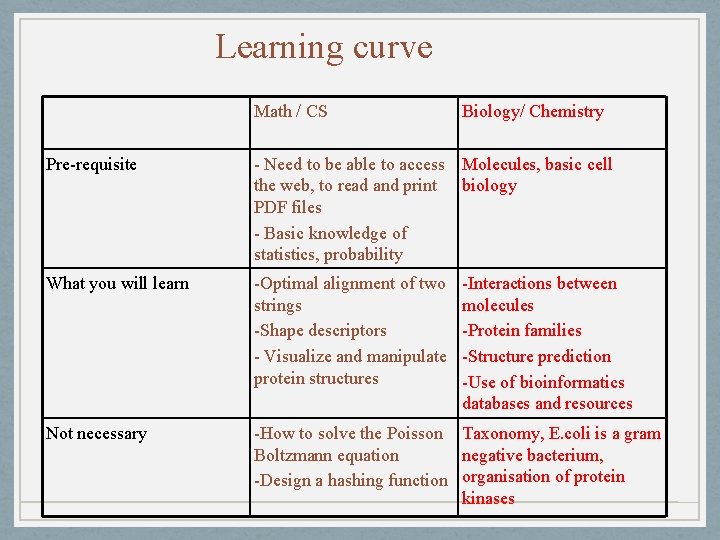
Learning curve Math / CS Biology/ Chemistry Pre-requisite - Need to be able to access Molecules, basic cell the web, to read and print biology PDF files - Basic knowledge of statistics, probability What you will learn -Optimal alignment of two strings -Shape descriptors - Visualize and manipulate protein structures Not necessary -How to solve the Poisson Taxonomy, E. coli is a gram Boltzmann equation negative bacterium, -Design a hashing function organisation of protein kinases -Interactions between molecules -Protein families -Structure prediction -Use of bioinformatics databases and resources
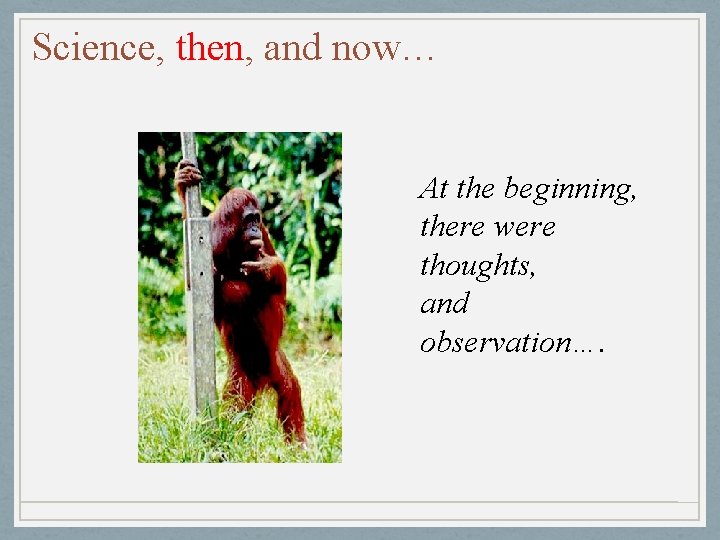
Science, then, and now… At the beginning, there were thoughts, and observation….
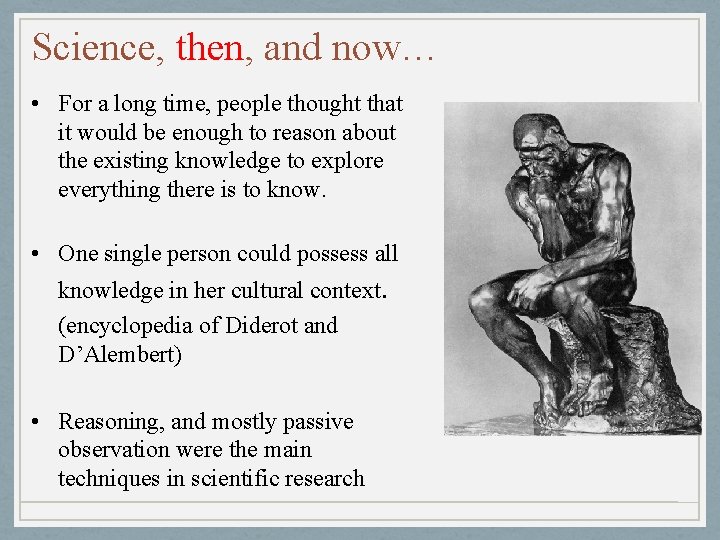
Science, then, and now… • For a long time, people thought that it would be enough to reason about the existing knowledge to explore everything there is to know. • One single person could possess all knowledge in her cultural context. (encyclopedia of Diderot and D’Alembert) • Reasoning, and mostly passive observation were the main techniques in scientific research
Science, then, and now… “All science is either physics, or stamp collecting” Rutherford, chemist and physicist, 1876 -1937
Science, then and now • Today’s experiment yields massive amounts of data • From hypothesis-driven to exploratory data analysis: - data are used to formulate new hypotheses - computers help formulate hypotheses • No single person, no group has an overview of what is known
Context: Biology • “Life sciences” have their origins in ancient Greece Aristotle wrote influential treatises on zoology, anatomy and botany, that remained influential till the Renaissance • “Life sciences” have always relied both on observation and discovery taxonomy, classifications, theory of evolution, … • Biology is changing with the arrival of massive amount of data from the different genomics experiments
What is ‘bioinformatics’? • The term was originally proposed in 1988 by Dr. Hwa Lim • The original definition was : “a collective term for data compilation, organisation, analysis and dissemination”
That means…. • Using information technology to help solve biological problems by designing novel algorithms and methods of analyses (computational biology) • It also serves to establish innovative software and create new or maintain existing databases of information, allowing open access to the records held within them (bioinformatics)
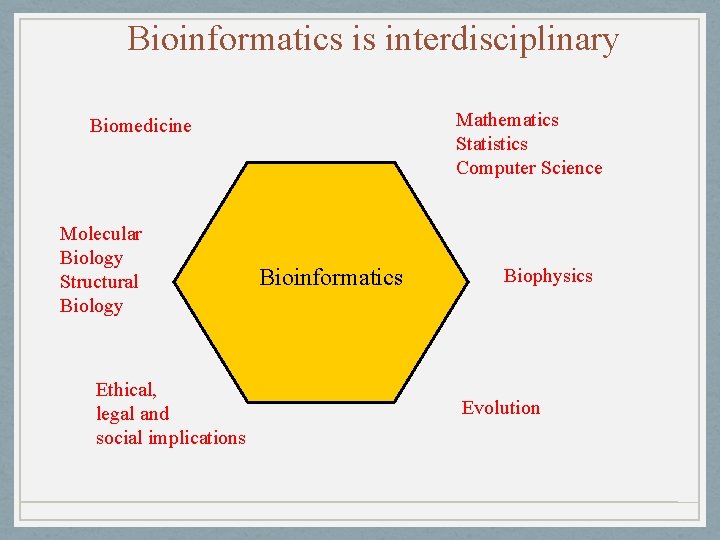
Bioinformatics is interdisciplinary Mathematics Statistics Computer Science Biomedicine Molecular Biology Structural Biology Ethical, legal and social implications Bioinformatics Biophysics Evolution
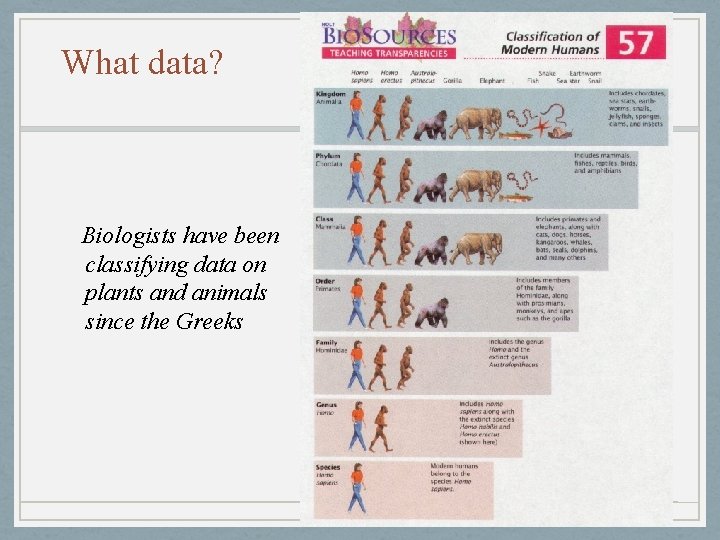
What data? Biologists have been classifying data on plants and animals since the Greeks
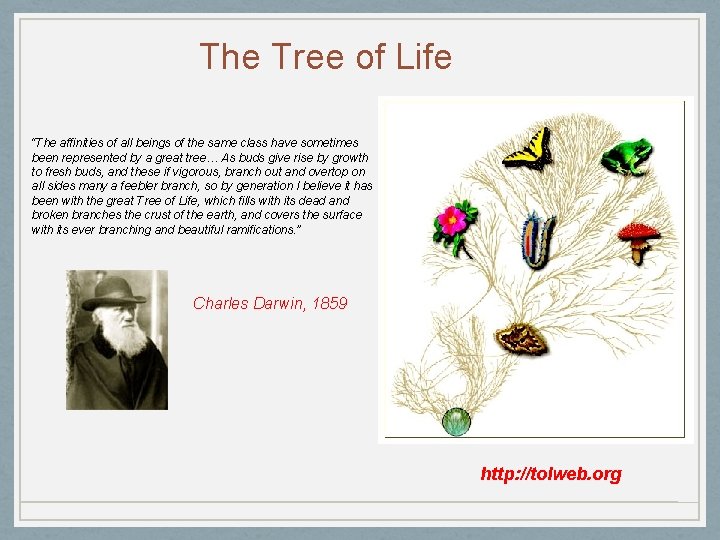
The Tree of Life “The affinities of all beings of the same class have sometimes been represented by a great tree… As buds give rise by growth to fresh buds, and these if vigorous, branch out and overtop on all sides many a feebler branch, so by generation I believe it has been with the great Tree of Life, which fills with its dead and broken branches the crust of the earth, and covers the surface with its ever branching and beautiful ramifications. ” Charles Darwin, 1859 http: //tolweb. org
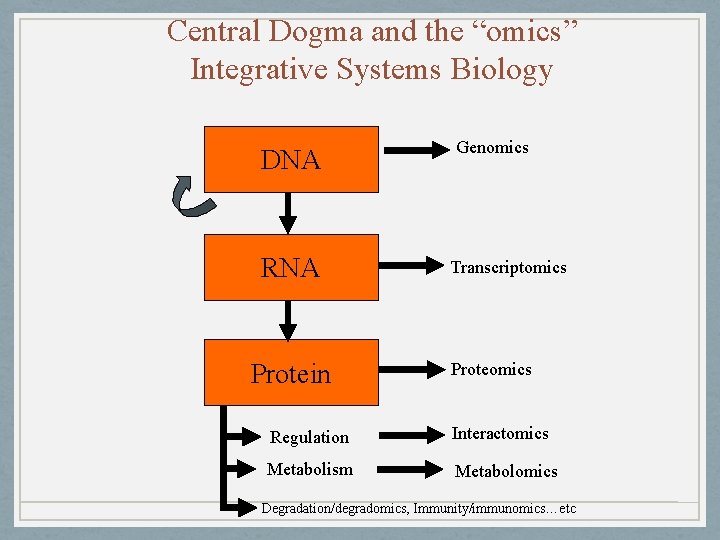
Central Dogma and the “omics” Integrative Systems Biology DNA RNA Protein Genomics Transcriptomics Proteomics Regulation Interactomics Metabolism Metabolomics Degradation/degradomics, Immunity/immunomics…etc
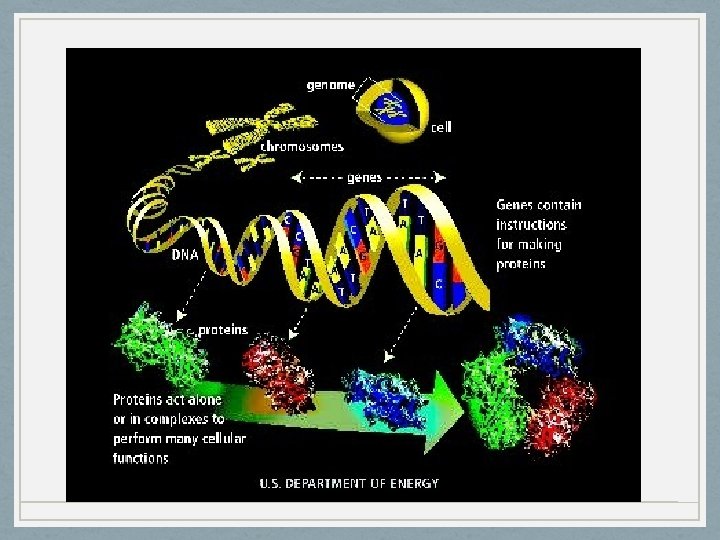
Genes (1) • Genes are the basic units of heredity • A gene is a sequence of bases that carries the information required for constructing a particular protein (gene “encode” the protein) • The human genome comprises ~ 20, 000 genes
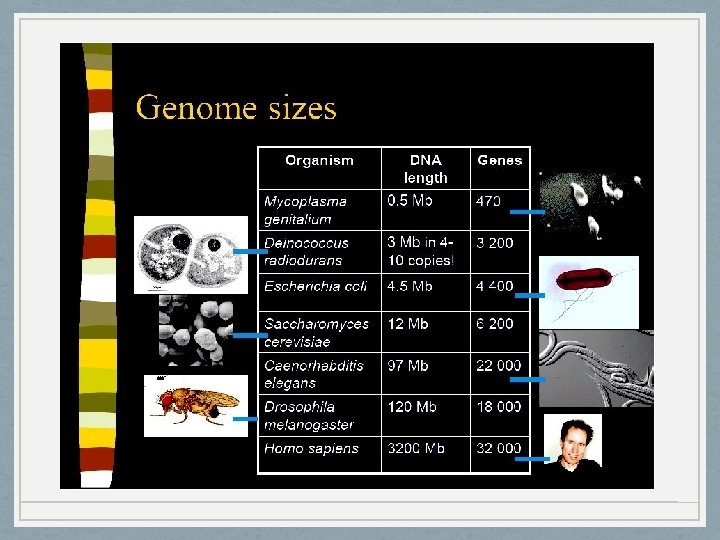
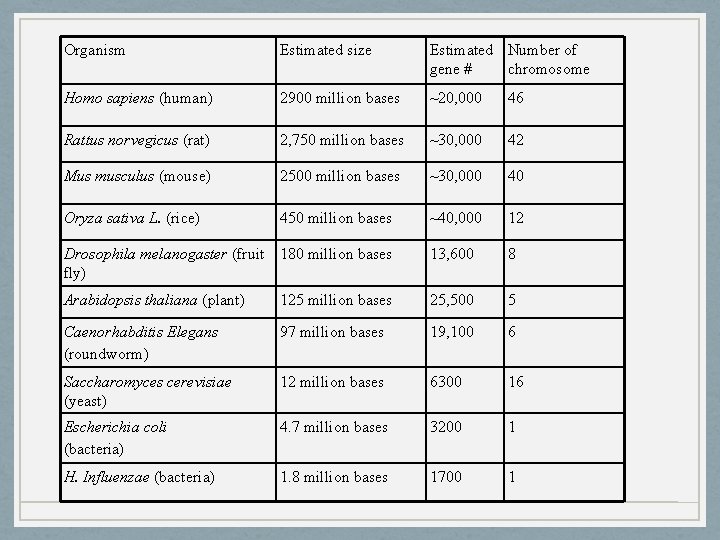
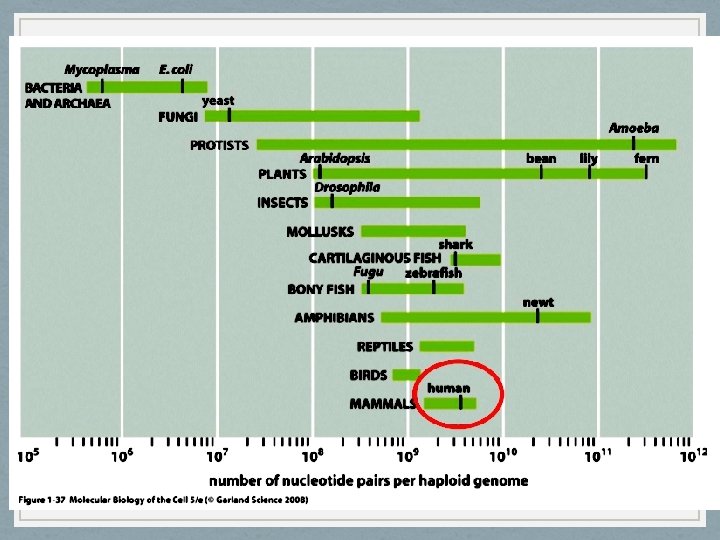
Organism Estimated size Estimated Number of gene # chromosome Homo sapiens (human) 2900 million bases ~20, 000 46 Rattus norvegicus (rat) 2, 750 million bases ~30, 000 42 Mus musculus (mouse) 2500 million bases ~30, 000 40 Oryza sativa L. (rice) 450 million bases ~40, 000 12 Drosophila melanogaster (fruit 180 million bases fly) 13, 600 8 Arabidopsis thaliana (plant) 125 million bases 25, 500 5 Caenorhabditis Elegans (roundworm) 97 million bases 19, 100 6 Saccharomyces cerevisiae (yeast) 12 million bases 6300 16 Escherichia coli (bacteria) 4. 7 million bases 3200 1 H. Influenzae (bacteria) 1. 8 million bases 1700 1
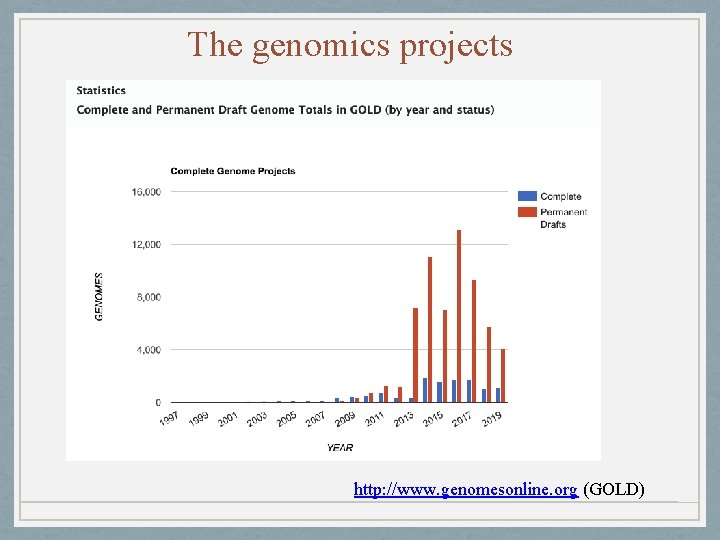
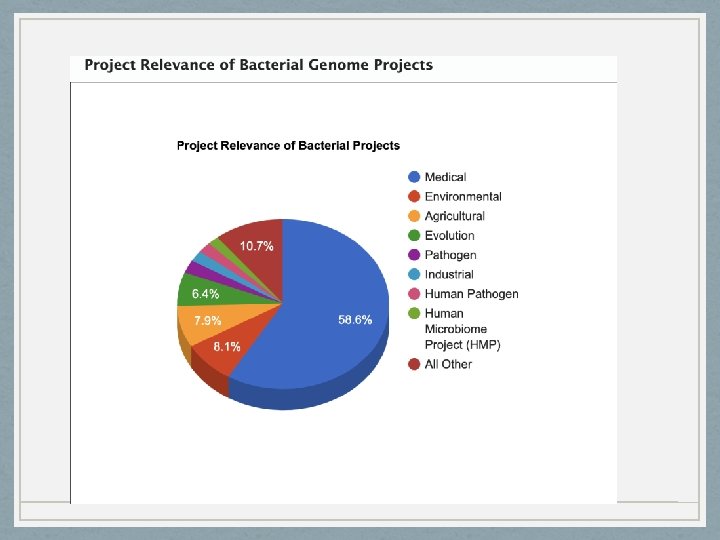
The genomics projects http: //www. genomesonline. org (GOLD)
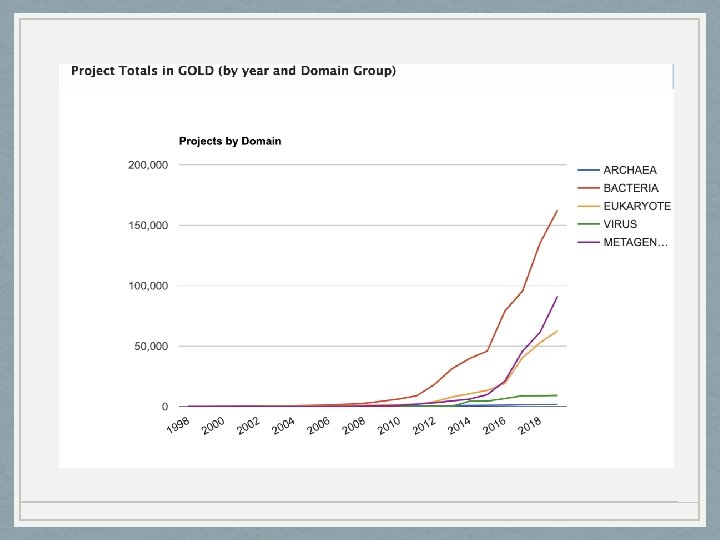
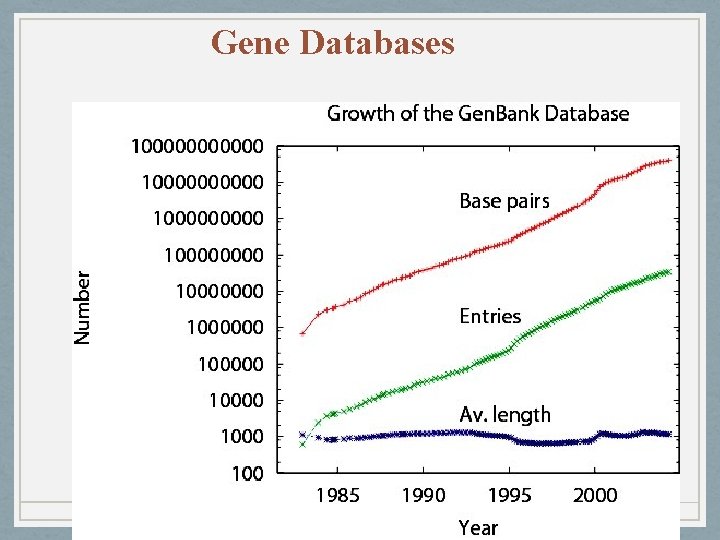
Gene Databases
Genes (2) • The ~20, 000 genes of the human genome encode > 100, 000 polypeptides • Not all of the DNA in a genome encodes protein microbes: 90% coding gene human: 3% coding gene • About ½ of the non-coding DNA in humans is highly conserved (functionally important)
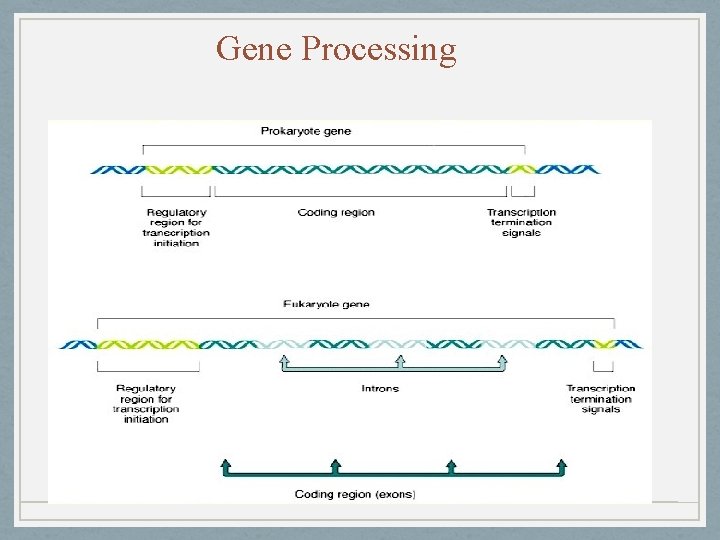
Gene Processing
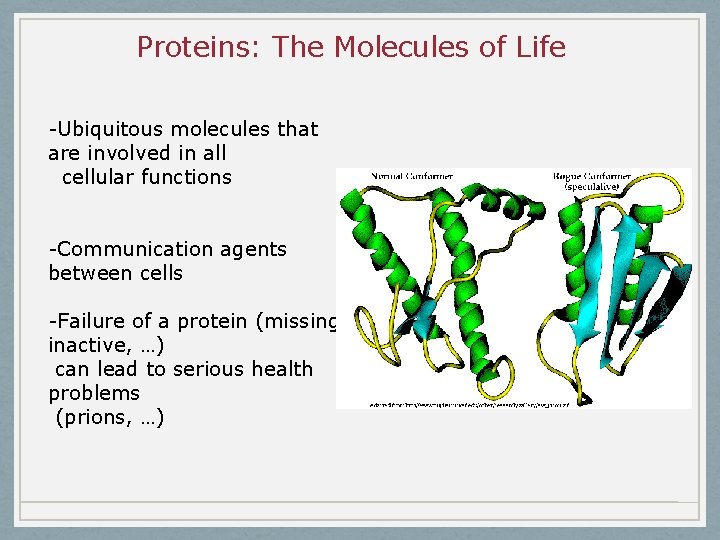
Proteins: The Molecules of Life -Ubiquitous molecules that are involved in all cellular functions -Communication agents between cells -Failure of a protein (missing, inactive, …) can lead to serious health problems (prions, …)
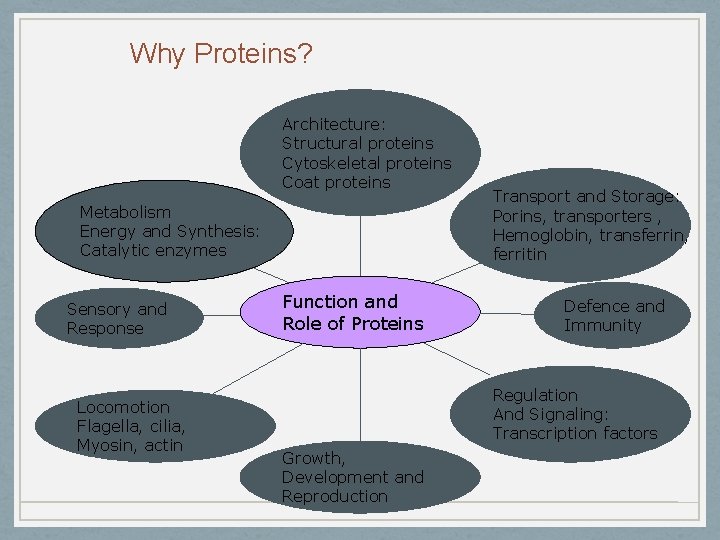
Why Proteins? Architecture: Structural proteins Cytoskeletal proteins Coat proteins Metabolism Energy and Synthesis: Catalytic enzymes Sensory and Response Locomotion Flagella, cilia, Myosin, actin Function and Role of Proteins Transport and Storage: Porins, transporters , Hemoglobin, transferrin, ferritin Defence and Immunity Regulation And Signaling: Transcription factors Growth, Development and Reproduction
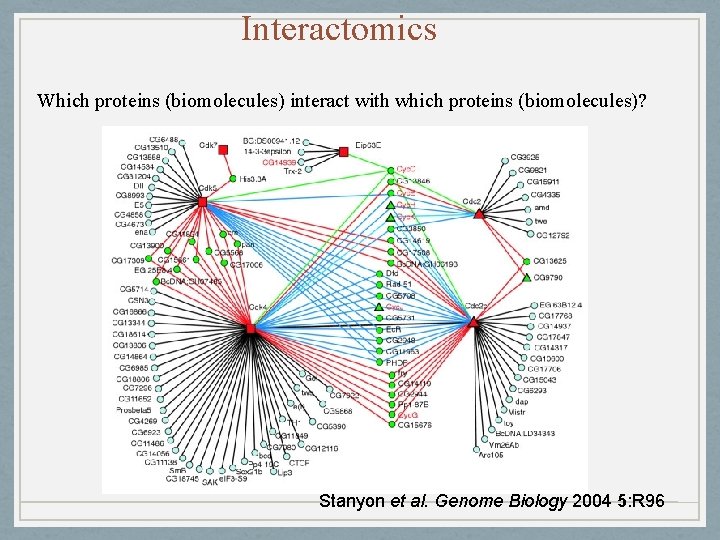
Interactomics Which proteins (biomolecules) interact with which proteins (biomolecules)? Stanyon et al. Genome Biology 2004 5: R 96
Is there a danger, in molecular biology, that the accumulation of data will get so far ahead of its assimilation into a conceptual framework that the data will eventually prove an encumbrance ? John Maddox, 1988
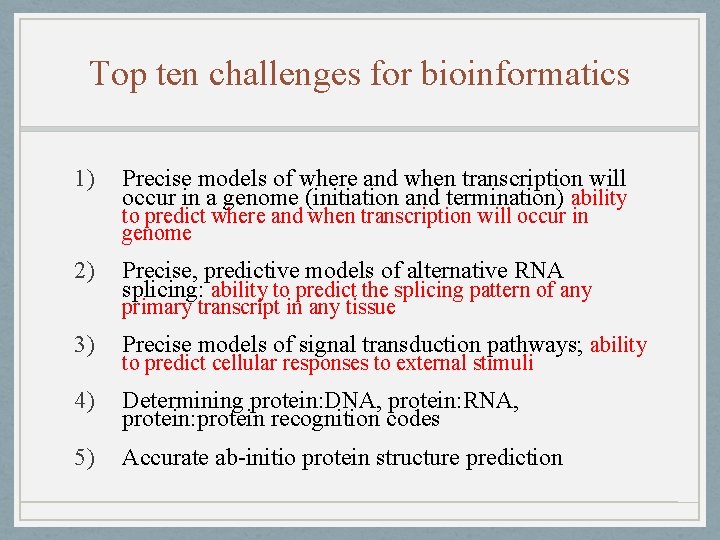
Top ten challenges for bioinformatics 1) Precise models of where and when transcription will occur in a genome (initiation and termination) ability to predict where and when transcription will occur in genome 2) Precise, predictive models of alternative RNA splicing: ability to predict the splicing pattern of any primary transcript in any tissue 3) Precise models of signal transduction pathways; ability 4) Determining protein: DNA, protein: RNA, protein: protein recognition codes 5) Accurate ab-initio protein structure prediction to predict cellular responses to external stimuli
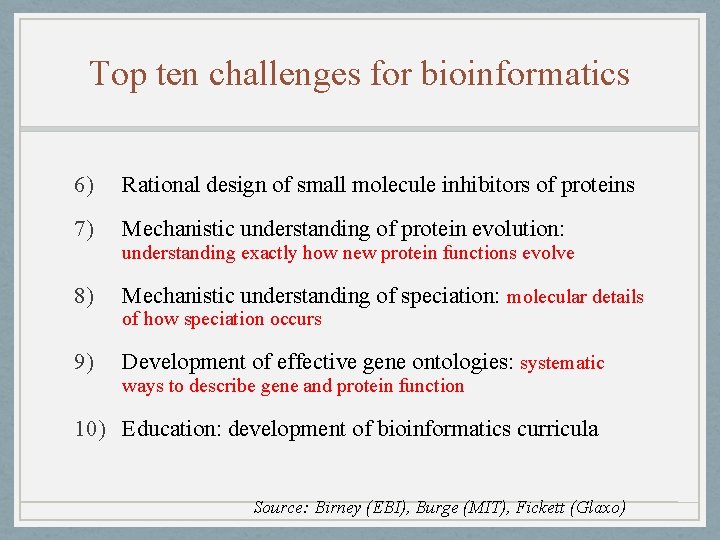
Top ten challenges for bioinformatics 6) Rational design of small molecule inhibitors of proteins 7) Mechanistic understanding of protein evolution: 8) Mechanistic understanding of speciation: molecular details 9) Development of effective gene ontologies: systematic understanding exactly how new protein functions evolve of how speciation occurs ways to describe gene and protein function 10) Education: development of bioinformatics curricula Source: Birney (EBI), Burge (MIT), Fickett (Glaxo)
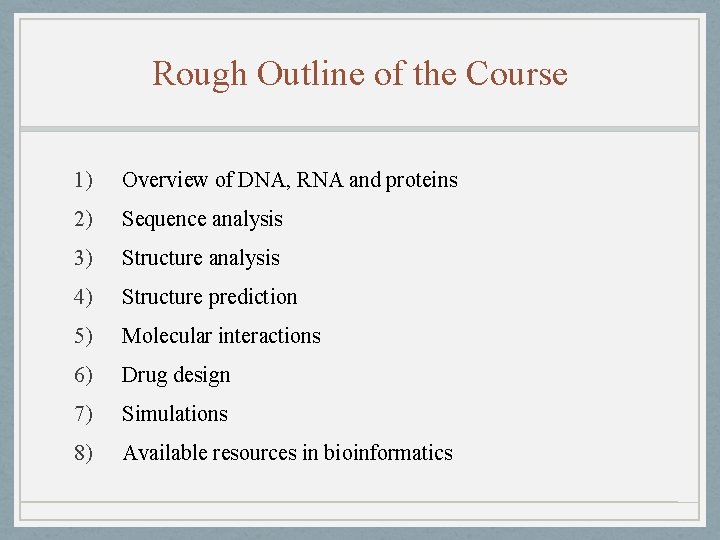
Rough Outline of the Course 1) Overview of DNA, RNA and proteins 2) Sequence analysis 3) Structure analysis 4) Structure prediction 5) Molecular interactions 6) Drug design 7) Simulations 8) Available resources in bioinformatics
- Slides: 31