
COMPUTATIONAL FUNCTIONAL AND STRUCTURAL ANNOTATION OF HYPOTHETICAL PROTEINS




- Slides: 26
COMPUTATIONAL FUNCTIONAL AND STRUCTURAL ANNOTATION OF HYPOTHETICAL PROTEINS OF NEISSERIA MENINGITIDIS MC 58 SURESH KUMAR* SENIOR LECTURER, DEPARTMENT OF DIAGNOSTIC AND ALLIED HEALTH SCIENCES, FACULTY OF HEALTH AND LIFE SCIENCES, MANAGEMENT & SCIENCE UNIVERSITY, SHAH ALAM, MALAYSIA
BACKGROUND – AMINO ACIDS
BACKGROUND- PROTEIN STRUCTURE
BACKGROUND- SEQUENCE-STRUCTURE-FUNCTION PARADIGM
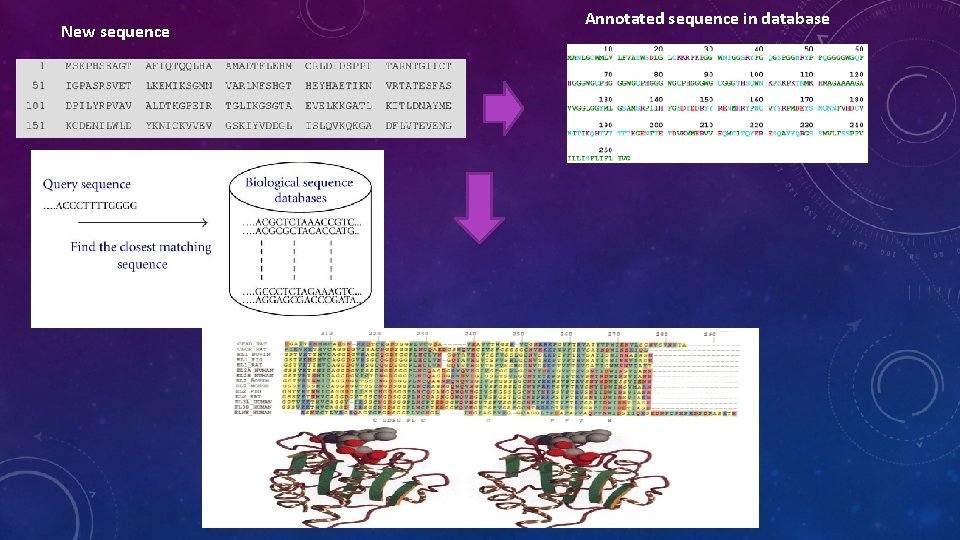
New sequence Annotated sequence in database
INTRODUCTION • Neisseria meningitidis is a gram negative parasitic bacterium of the family Neisseriaceae and it is a restrict nasopharyngeal human pathogen, which leads to severe diseases like septicemia and meningitis. • It can be passed to the brain especially among children and infants by invading the respiratory epithelial tissue and then crossing the blood brain barrier. • Some of the common symptoms are high fever, lethargy, confusion, nausea, neck stiffness, vomiting and petechial rash.
NEISSERIA MENINGITIDIS • Neisseria meningitidis, often referred to as meningococcus, is a gram negative bacterium that can cause meningitis and other forms of meningococcal disease such as meningococcemia, a life-threatening sepsis. The bacterium is referred to as a coccus because it is round, and more specifically, diplococcus because of its tendency to form pairs. • The 2, 272, 351 -base pair genome of Neisseria meningitidis strain MC 58 (serogroup B), a causative agent of meningitis and septicemia, contains 2158 predicted coding regions, 1158 (53. 7%) of which were assigned a biological role.
ANTIBIOTIC RESISTANCE • Continued selective pressure by a variety of antibiotics has resulted in bacteria developing resistance mechanisms that lead to multidrug resistance • The rapid development of antimicrobial resistance amongst Neisseria species has been reported worldwide • A major obstacle for the control of Neisseria Sp.
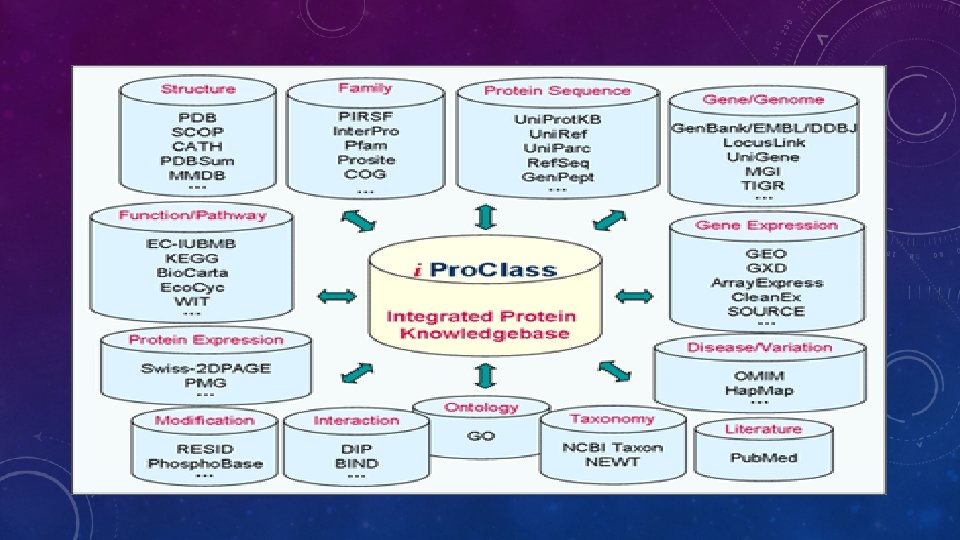
HYPOTHETICAL PROTEINS • Analysis of antibiotic resistance and resistance genes can help us to understand drug resistance mechanisms, thereby helping to guide clinical treatment of the disease. • Sequencing of several genomes has resulted in numerous predicted open reading frames to which functions cannot be readily assigned. • A hypothetical protein is a protein whose existence has been predicted, but for which there is a lack of experimental evidence that it is expressed in vivo. • The aim of this study to analyse using various bioinformatics tools and databases for function prediction of previously not assigned proteins in the genome of Neisseria meningitidis strain MC 58.
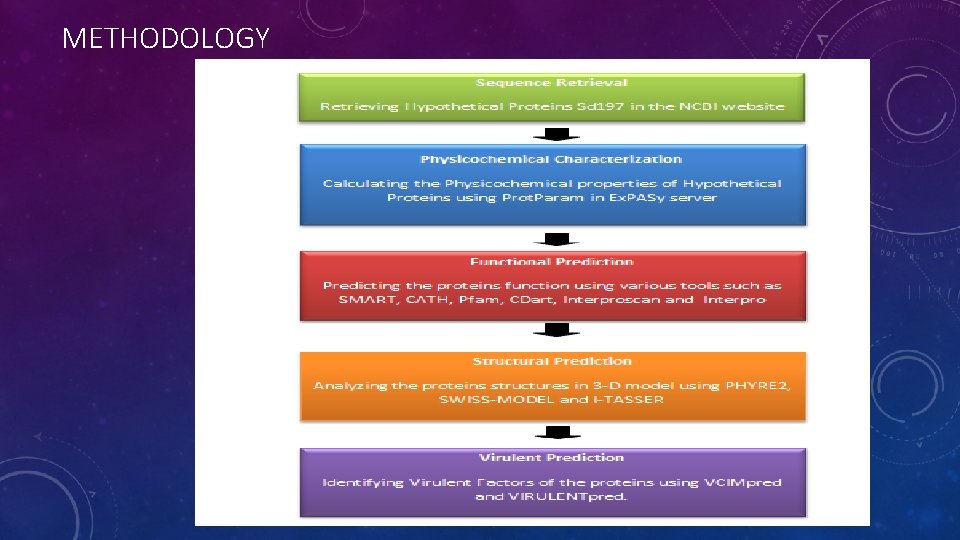
METHODOLOGY
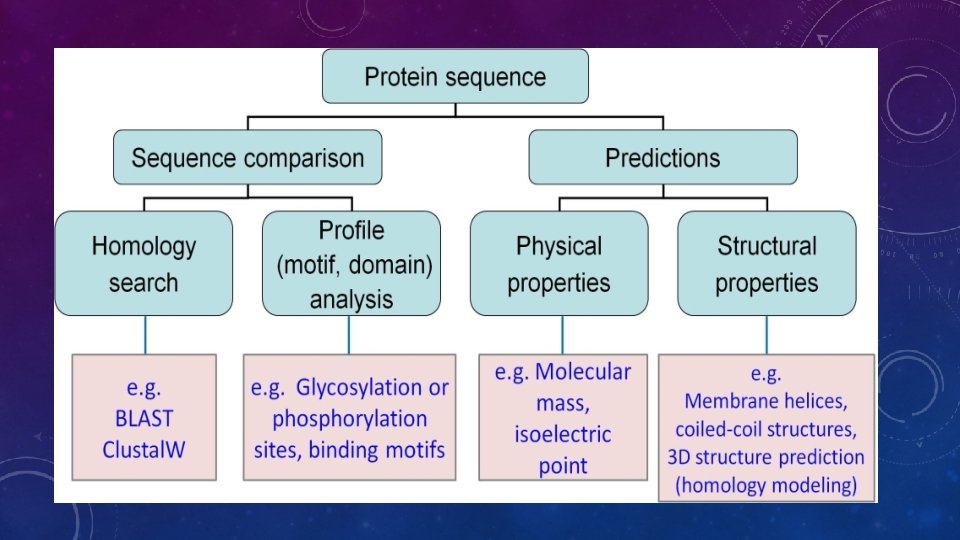
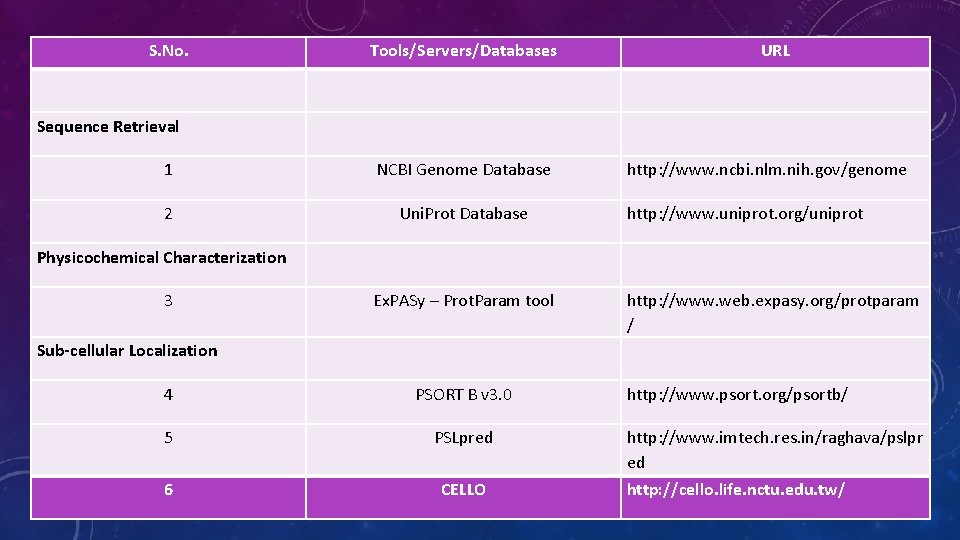
S. No. Tools/Servers/Databases URL Sequence Retrieval 1 NCBI Genome Database 2 Uni. Prot Database Physicochemical Characterization 3 Sub-cellular Localization Ex. PASy – Prot. Param tool 4 PSORT B v 3. 0 5 PSLpred 6 CELLO http: //www. ncbi. nlm. nih. gov/genome http: //www. uniprot. org/uniprot http: //www. web. expasy. org/protparam / http: //www. psort. org/psortb/ http: //www. imtech. res. in/raghava/pslpr ed http: //cello. life. nctu. edu. tw/
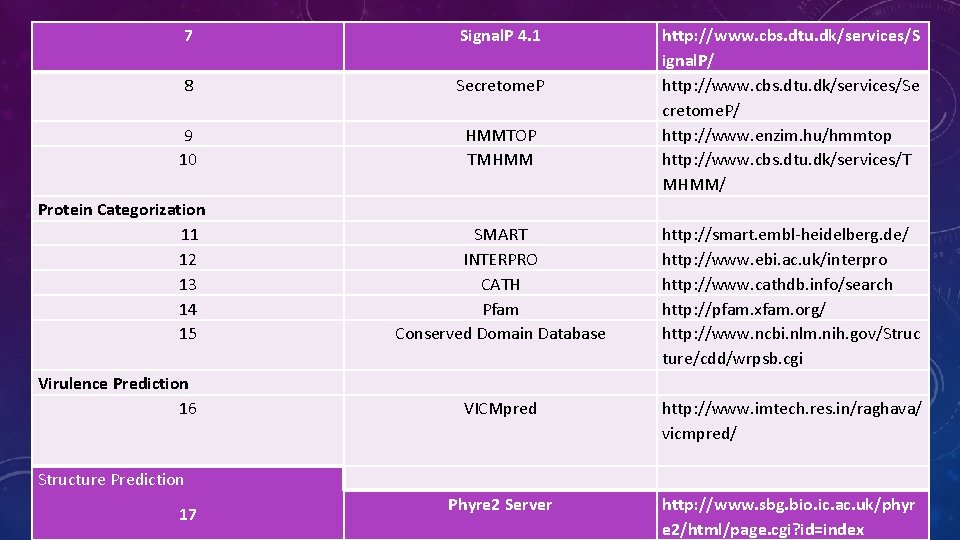
7 Signal. P 4. 1 8 Secretome. P 9 10 HMMTOP TMHMM Protein Categorization 11 12 13 14 15 SMART INTERPRO CATH Pfam Conserved Domain Database Virulence Prediction 16 VICMpred Structure Prediction 17 Phyre 2 Server http: //www. cbs. dtu. dk/services/S ignal. P/ http: //www. cbs. dtu. dk/services/Se cretome. P/ http: //www. enzim. hu/hmmtop http: //www. cbs. dtu. dk/services/T MHMM/ http: //smart. embl-heidelberg. de/ http: //www. ebi. ac. uk/interpro http: //www. cathdb. info/search http: //pfam. xfam. org/ http: //www. ncbi. nlm. nih. gov/Struc ture/cdd/wrpsb. cgi http: //www. imtech. res. in/raghava/ vicmpred/ http: //www. sbg. bio. ic. ac. uk/phyr e 2/html/page. cgi? id=index
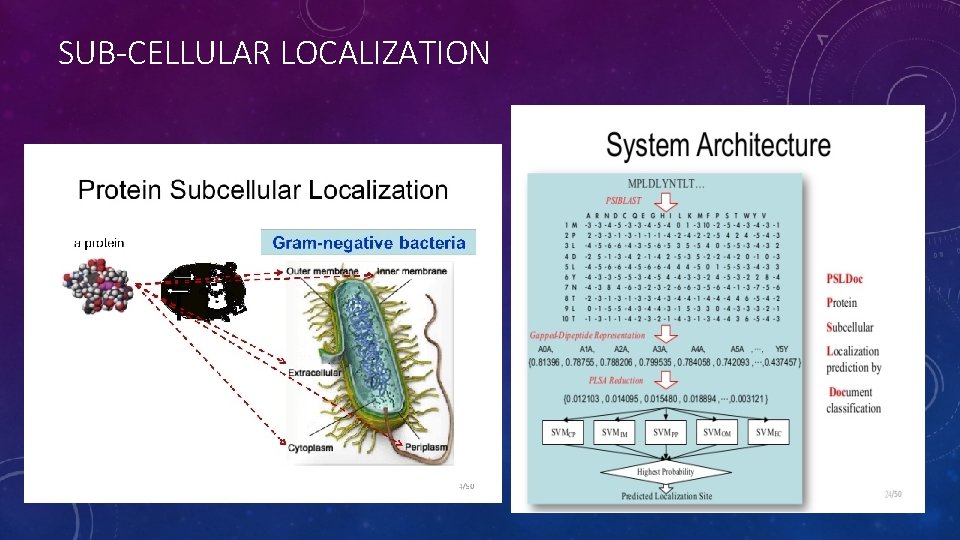
SUB-CELLULAR LOCALIZATION
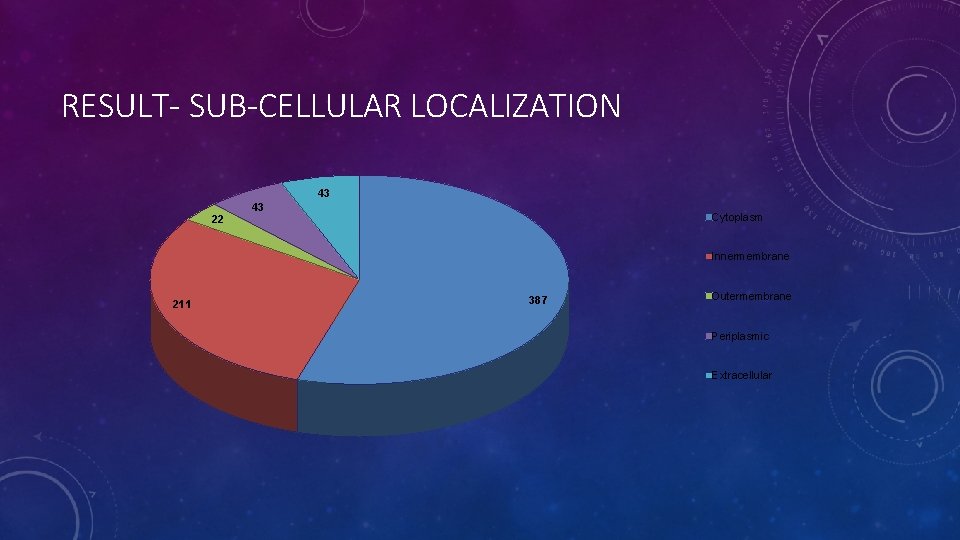
RESULT- SUB-CELLULAR LOCALIZATION 43 22 43 Cytoplasm Innermembrane 211 387 Outermembrane Periplasmic Extracellular
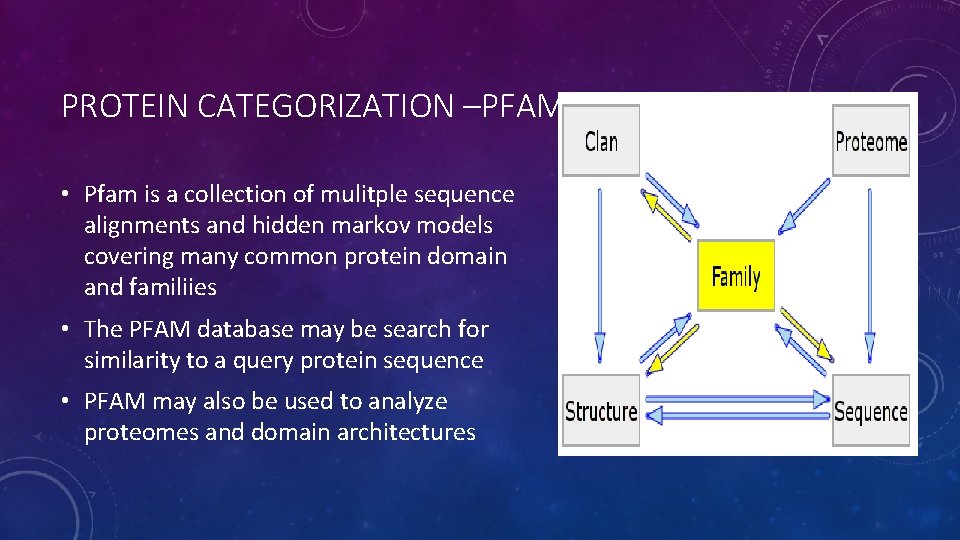
PROTEIN CATEGORIZATION –PFAM • Pfam is a collection of mulitple sequence alignments and hidden markov models covering many common protein domain and familiies • The PFAM database may be search for similarity to a query protein sequence • PFAM may also be used to analyze proteomes and domain architectures
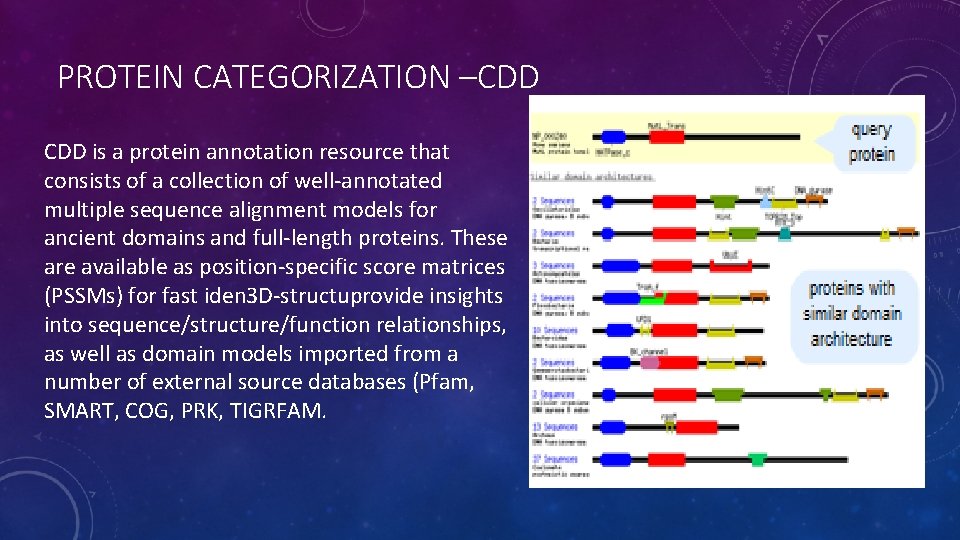
PROTEIN CATEGORIZATION –CDD is a protein annotation resource that consists of a collection of well-annotated multiple sequence alignment models for ancient domains and full-length proteins. These are available as position-specific score matrices (PSSMs) for fast iden 3 D-structuprovide insights into sequence/structure/function relationships, as well as domain models imported from a number of external source databases (Pfam, SMART, COG, PRK, TIGRFAM.
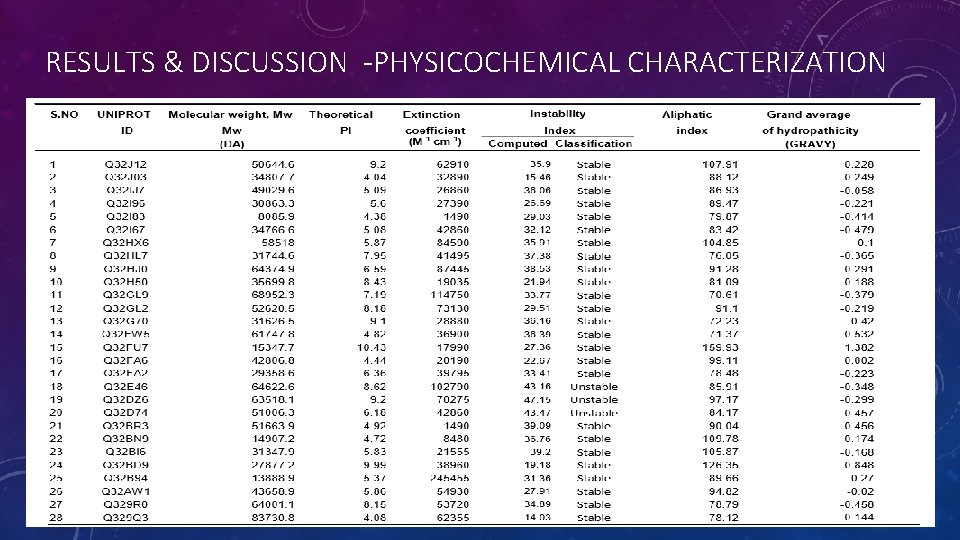
RESULTS & DISCUSSION -PHYSICOCHEMICAL CHARACTERIZATION
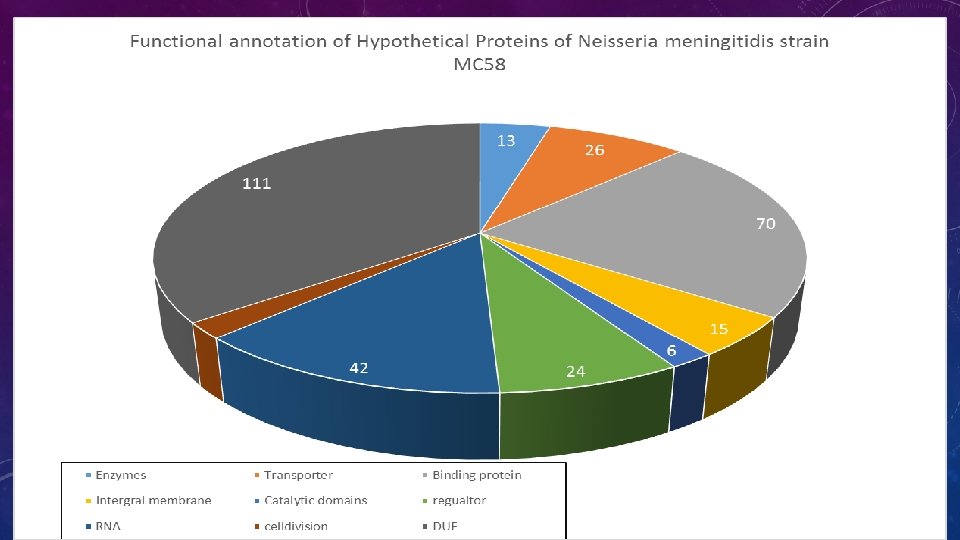
RESULTS & DISCUSSION • Enzymes : (13). Survival, for they provide nutrients for growth and are responsible for multiplication of the organism. • Hydorolase: Play decisive role in synthesis, lysis, invasion of host cells. These processes are essential for survival, growth and development of living organism. We have identified 85 HPs as hydrolase protein. • Lyase: Enzymes playing that may be involved in the repair of oxidative DNA damage • Transporters: (26)- Play an essential role in the cellular transport like uptake of nutrients and excretion of metabolic and toxic waste. • Binding proteins: (70) The RNA binding protein plays a crucial role in the RNA metabolism and indirectly contributes to virulence by binding to various riboregulators that modulate the stability or translation efficiency of RNA transcripts. DNA binding proteins play role in protein metabolism and immune to the host. • Other proteins: (26) - proteins that are involved in cell cycle, cell adhesion, protein assembly, transcription regulation, etc. These proteins are crucial for the normal life cycle of pathogens as well as for host-pathogen relationship
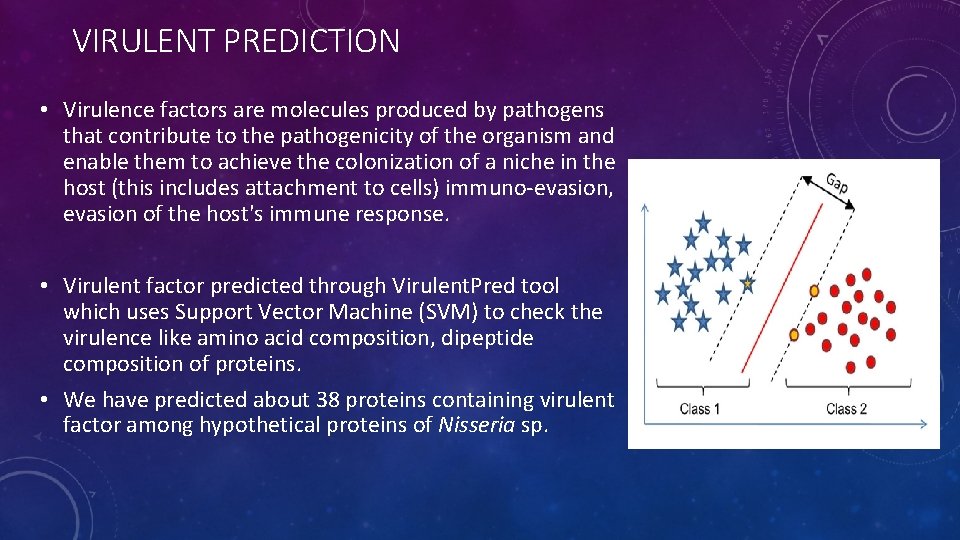
VIRULENT PREDICTION • Virulence factors are molecules produced by pathogens that contribute to the pathogenicity of the organism and enable them to achieve the colonization of a niche in the host (this includes attachment to cells) immuno-evasion, evasion of the host's immune response. • Virulent factor predicted through Virulent. Pred tool which uses Support Vector Machine (SVM) to check the virulence like amino acid composition, dipeptide composition of proteins. • We have predicted about 38 proteins containing virulent factor among hypothetical proteins of Nisseria sp.
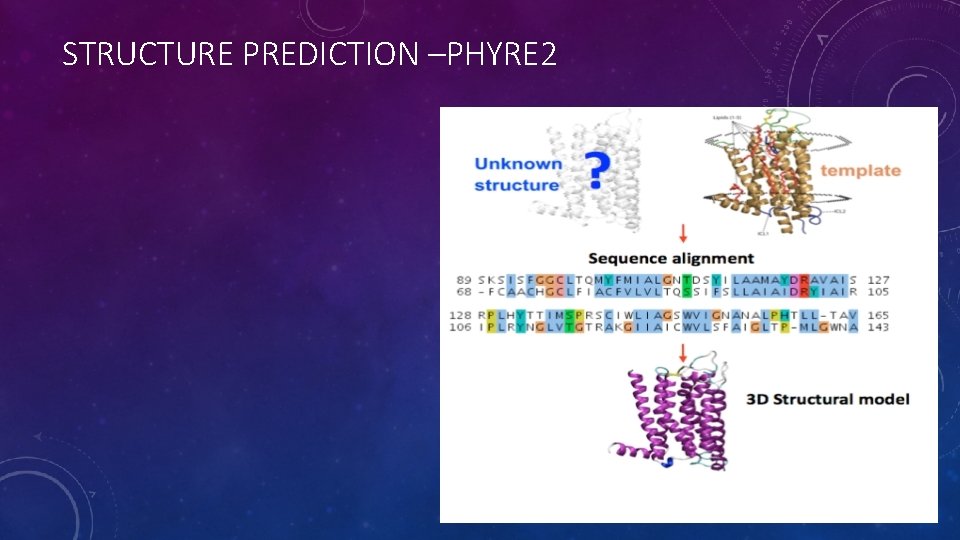
STRUCTURE PREDICTION –PHYRE 2
RESULTS & DISCUSSION - STRUCTURAL ANNOTATION OF VIRULENT PROTEINS protein transport TIM beta/alpha-barrel transferase, hydrolase signaling protein hydrolase protein binding transferase cell adhesion transport protein
CONCLUSION • We have successfully analyzed all 681 hypothetical proteins available in Neisseria meningitidis strain MC 58 using advance computational prediction tools. • These hypothetical proteins were analysed for functional prediction, structural prediction and virulent prediction by using bioinformatics tools. • We have identified 38 virulent proteins and predicted their function and structure. These virulent proteins are predicted as potential putative drug targets. • This study will facilitate in the better understanding of the drug resistance and the pathogenesis mechanism in Neisseria meningitidis strain MC 58 as well as to discover drugs targets for treatment of the disease.
Thank you