
Computational fluid dynamics of abdominal aortic aneurysm a
Computational fluid dynamics of abdominal aortic aneurysm: a potential diagnostic and prognostic tool Cristiano Spadaccio, MD CIR – Center of Integrated Research, University Campus Bio-Medico of Rome Department of Cardiovascular Surgery, University Campus Bio-Medico of Rome c. spadaccio@unicampus. it

Biological Systems Complex systems
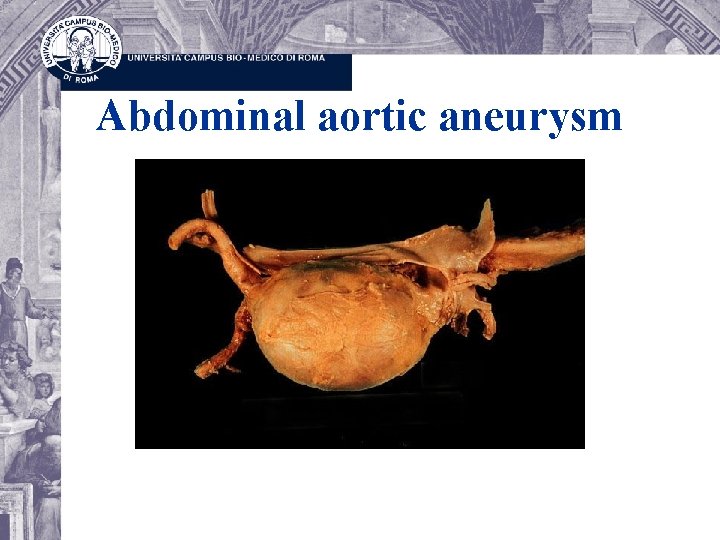
Abdominal aortic aneurysm
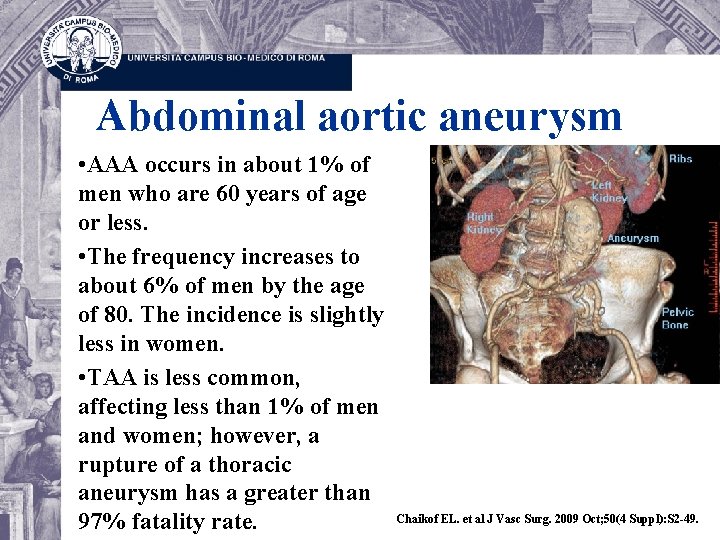
Abdominal aortic aneurysm • AAA occurs in about 1% of men who are 60 years of age or less. • The frequency increases to about 6% of men by the age of 80. The incidence is slightly less in women. • TAA is less common, affecting less than 1% of men and women; however, a rupture of a thoracic aneurysm has a greater than 97% fatality rate. Chaikof EL. et al J Vasc Surg. 2009 Oct; 50(4 Suppl): S 2 -49.
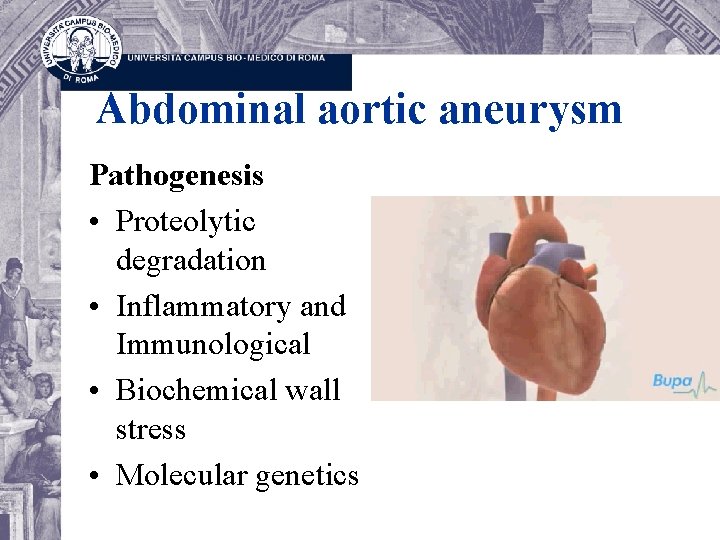
Abdominal aortic aneurysm Pathogenesis • Proteolytic degradation • Inflammatory and Immunological • Biochemical wall stress • Molecular genetics
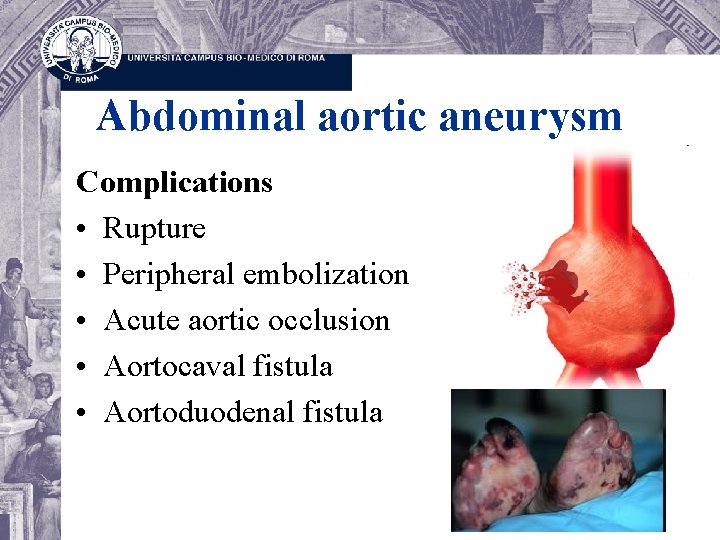
Abdominal aortic aneurysm Complications • Rupture • Peripheral embolization • Acute aortic occlusion • Aortocaval fistula • Aortoduodenal fistula
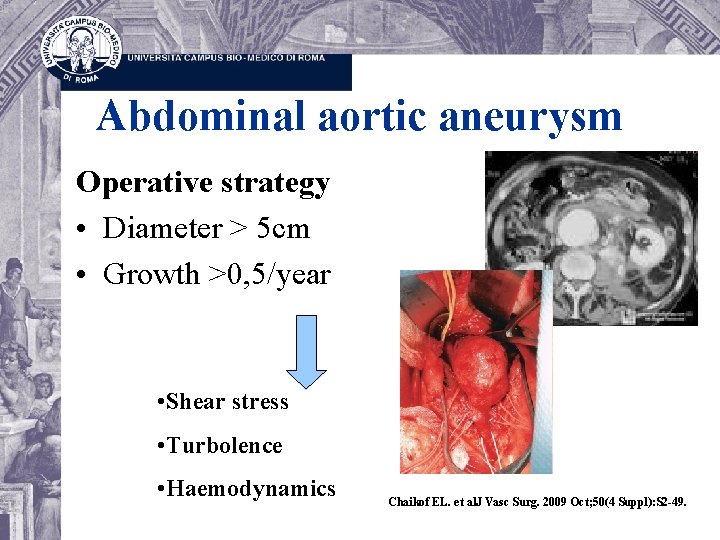
Abdominal aortic aneurysm Operative strategy • Diameter > 5 cm • Growth >0, 5/year • Shear stress • Turbolence • Haemodynamics Chaikof EL. et al. J Vasc Surg. 2009 Oct; 50(4 Suppl): S 2 -49.
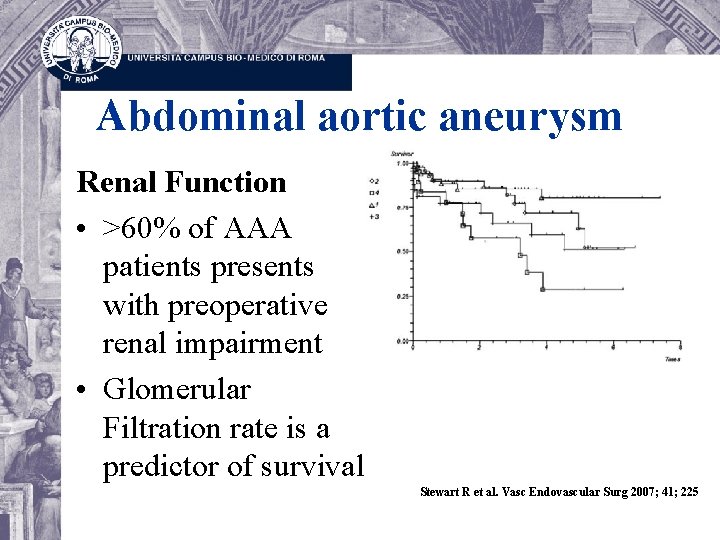
Abdominal aortic aneurysm Renal Function • >60% of AAA patients presents with preoperative renal impairment • Glomerular Filtration rate is a predictor of survival Stewart R et al. Vasc Endovascular Surg 2007; 41; 225
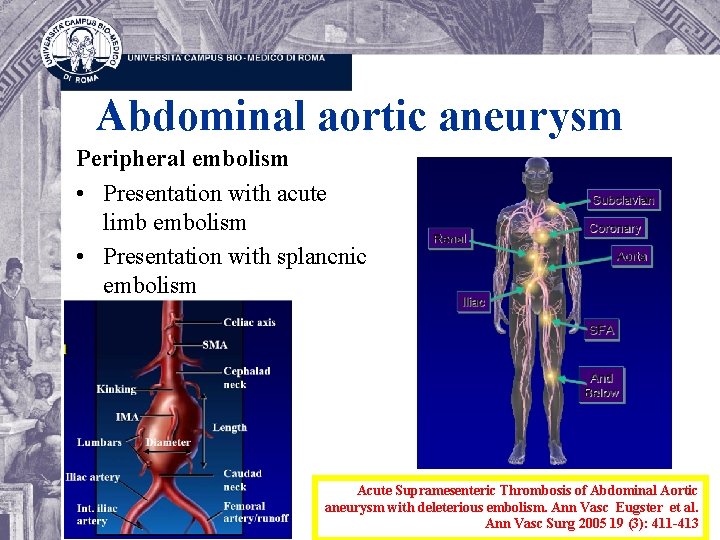
Abdominal aortic aneurysm Peripheral embolism • Presentation with acute limb embolism • Presentation with splancnic embolism Acute Supramesenteric Thrombosis of Abdominal Aortic aneurysm with deleterious embolism. Ann Vasc Eugster et al. Ann Vasc Surg 2005 19 (3): 411 -413
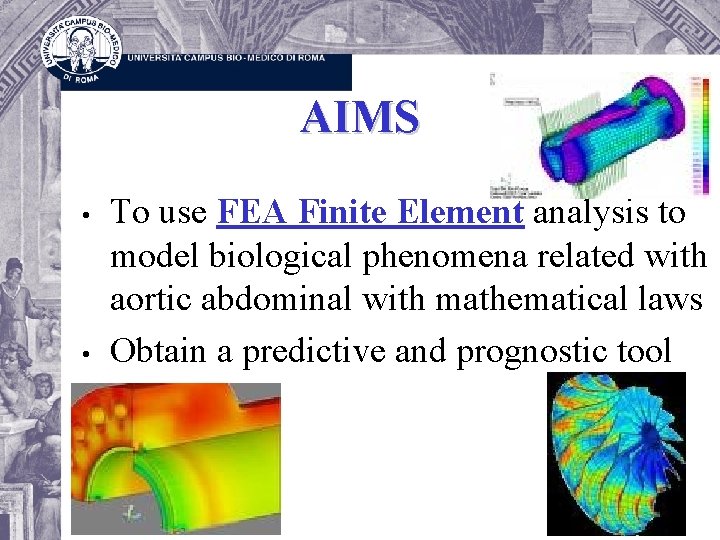
AIMS • • To use FEA Finite Element analysis to model biological phenomena related with aortic abdominal with mathematical laws Obtain a predictive and prognostic tool
Previous studies • • Stationary models Simulations on 2 D models Biases on boundary conditions Non realistic geometries Endovascular device design in the future: transformation from trial and error to computational design. Zarins CK, Taylor CA. J Endovasc Ther. 2009 Feb; 16 Suppl Image-based computational fluid dynamics modeling in realistic arterial geometries. Steinman DA. Ann Biomed Eng. 2002 Apr; 30(4): 483 -97. Review.
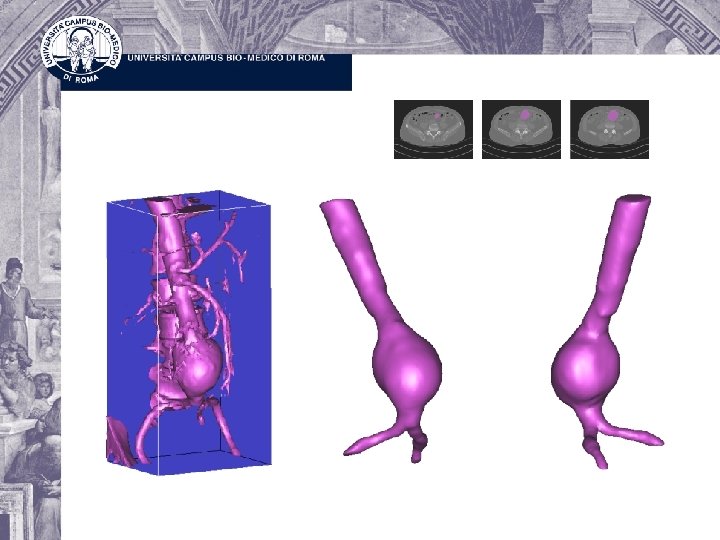
Details • • • Non stationary analysis Realistic conditions of pulsatile flow Patient specific 3 D model reconstructed from CT scans Assumptions: Blood was modeled as a newtonian, homogeneous and uncompressible fluid, with given density and viscosity values.
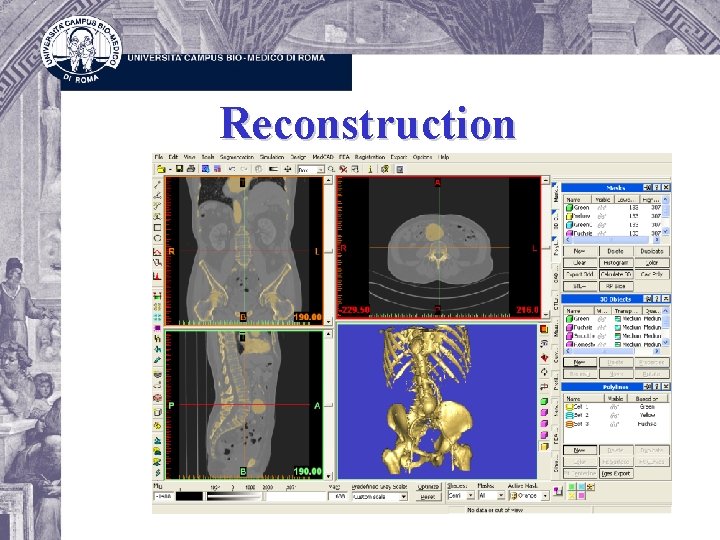
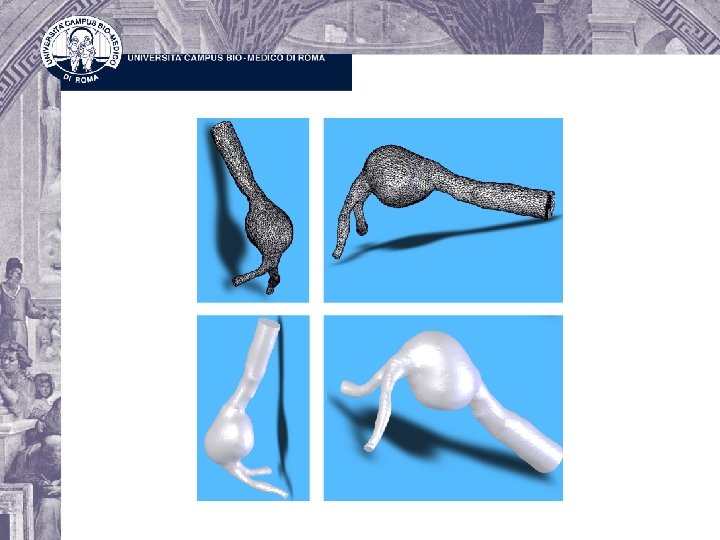
Reconstruction
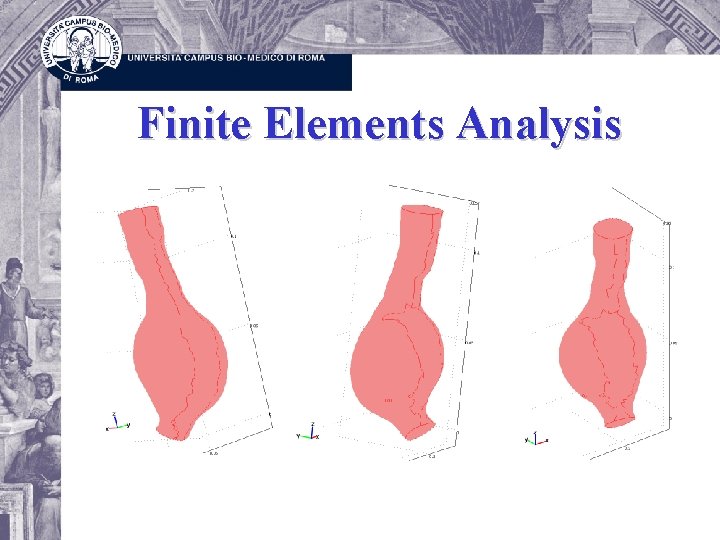
Finite Elements Analysis

Finite Elements Analysis Mesh generation 11929 elements, 59263 dof
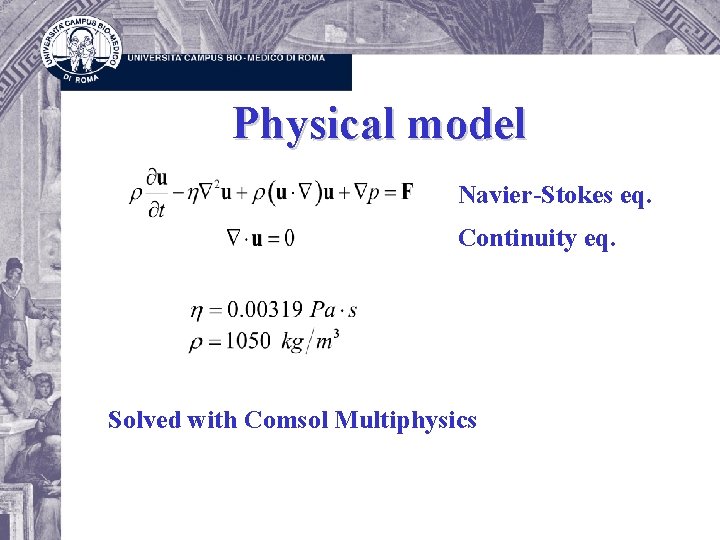
Physical model Navier-Stokes eq. Continuity eq. Solved with Comsol Multiphysics
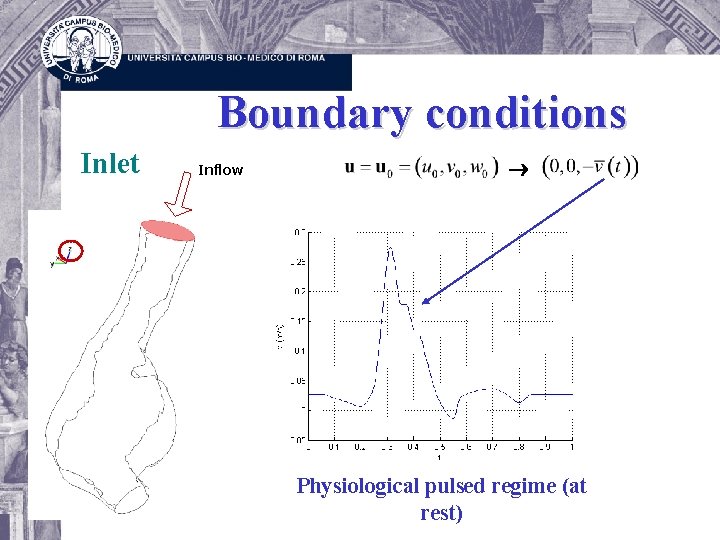
Boundary conditions Inlet Inflow Physiological pulsed regime (at rest)
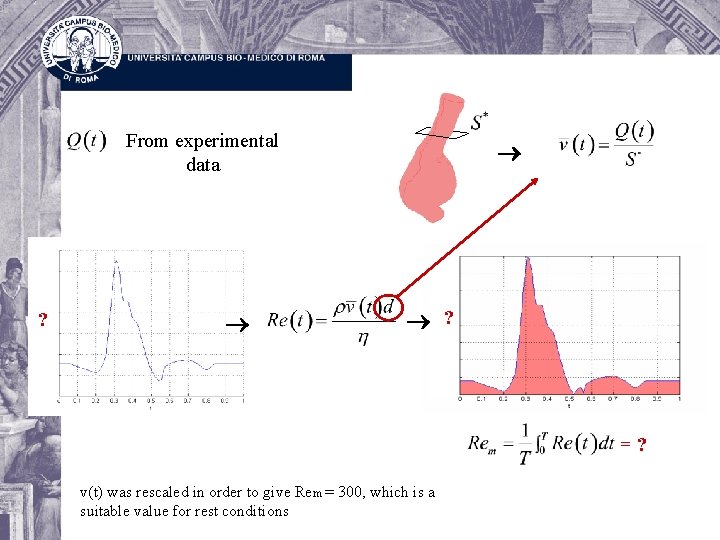
From experimental data ? ? =? v(t) was rescaled in order to give Rem = 300, which is a suitable value for rest conditions
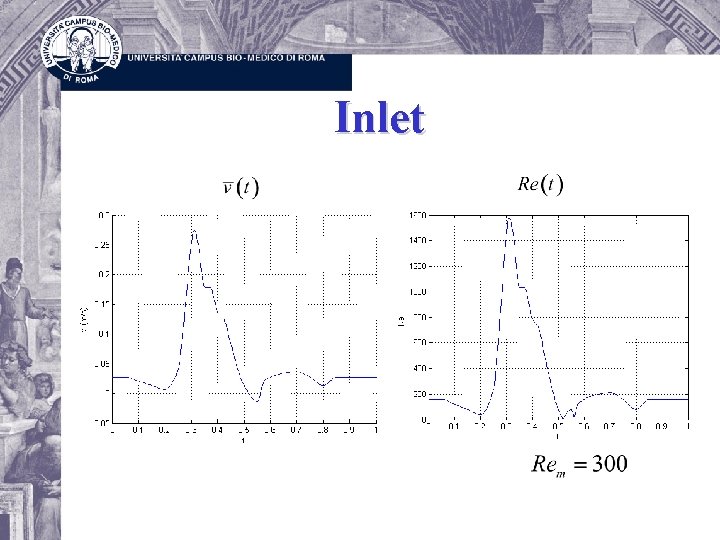
Inlet
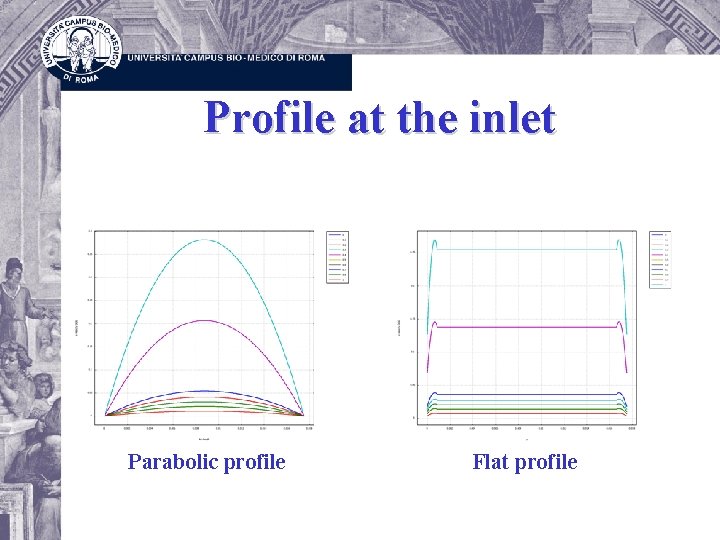
Profile at the inlet Parabolic profile Flat profile
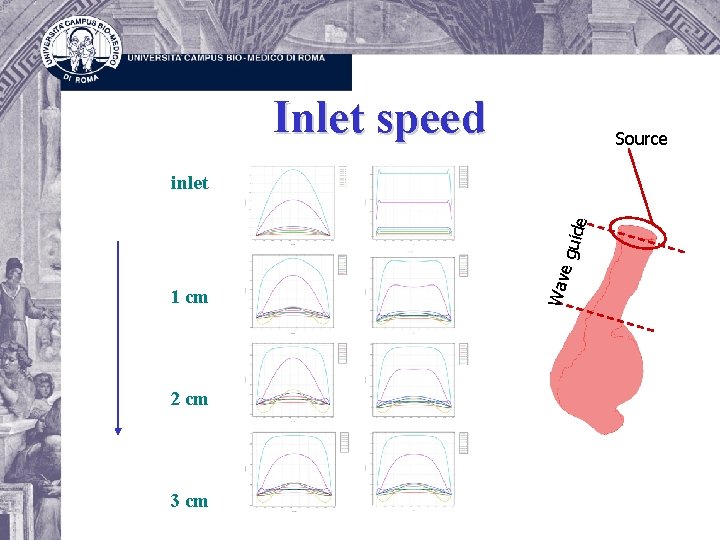
Inlet speed Source 1 cm 2 cm 3 cm Wav e gu ide inlet
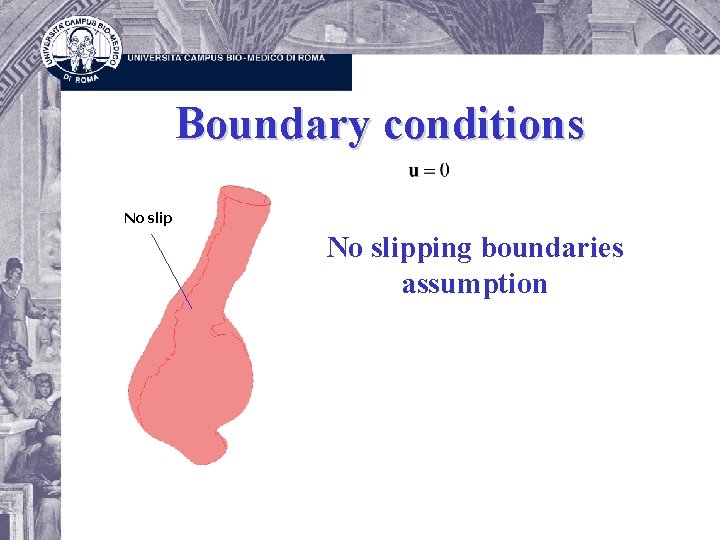
Boundary conditions No slipping boundaries assumption
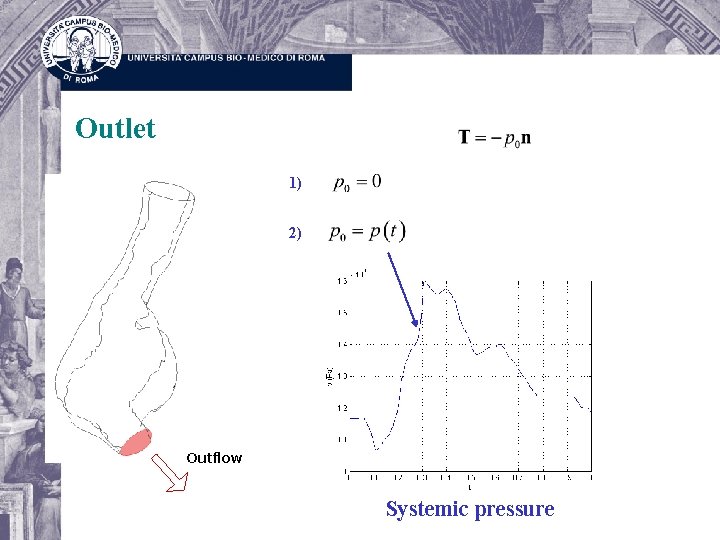
Outlet 1) 2) Outflow Systemic pressure
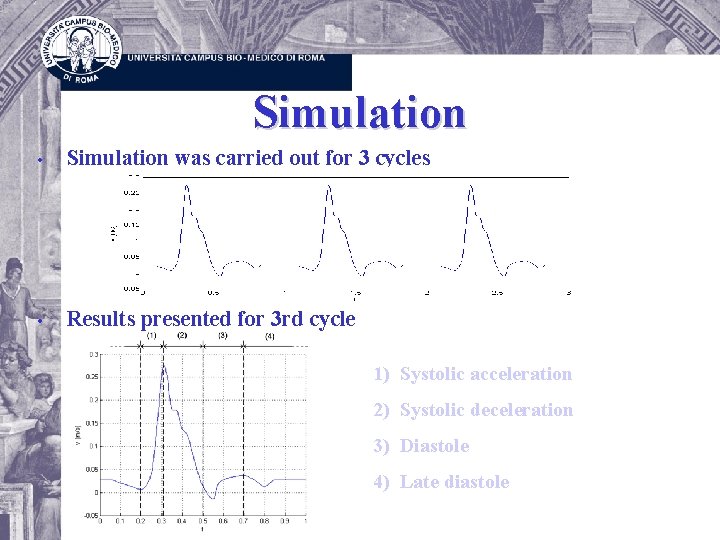
Simulation • Simulation was carried out for 3 cycles • Results presented for 3 rd cycle 1) Systolic acceleration 2) Systolic deceleration 3) Diastole 4) Late diastole
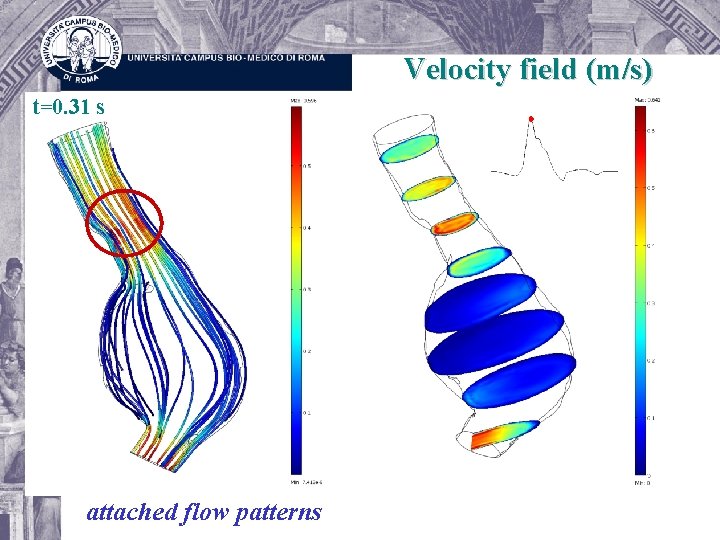
Velocity field (m/s) t=0. 31 s attached flow patterns
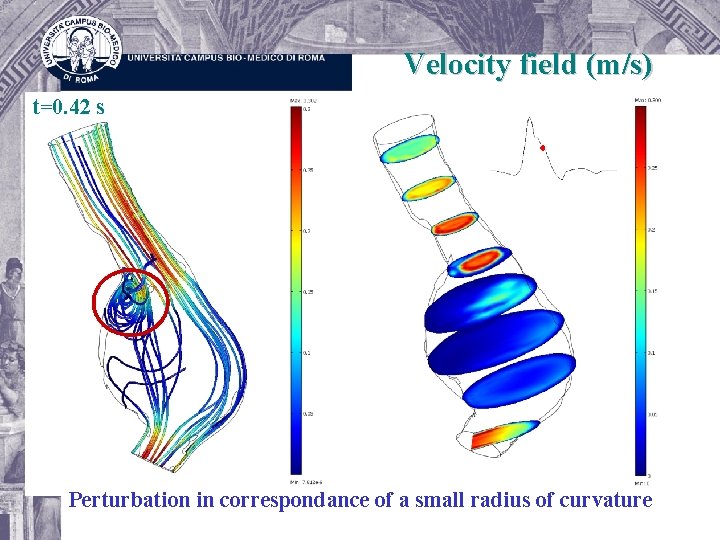
Velocity field (m/s) t=0. 42 s Perturbation in correspondance of a small radius of curvature
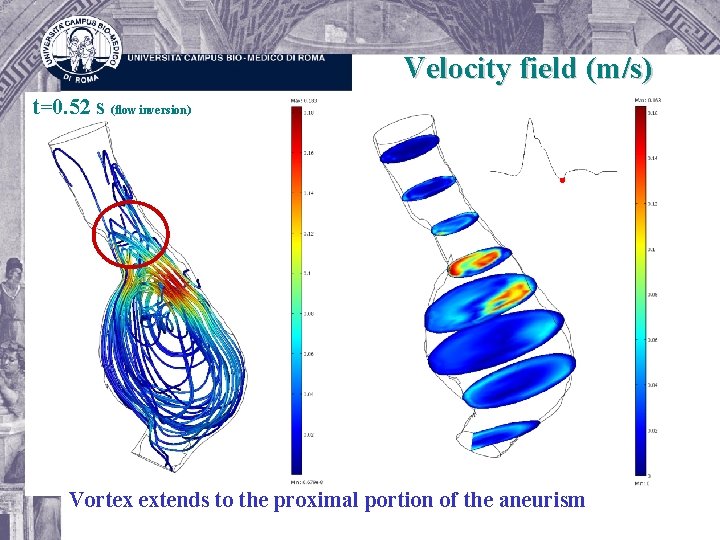
Velocity field (m/s) t=0. 52 s (flow inversion) Vortex extends to the proximal portion of the aneurism
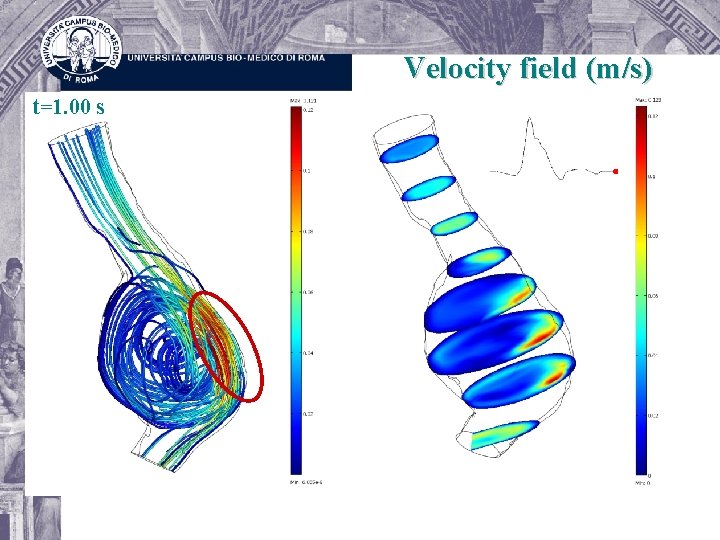
Velocity field (m/s) t=1. 00 s
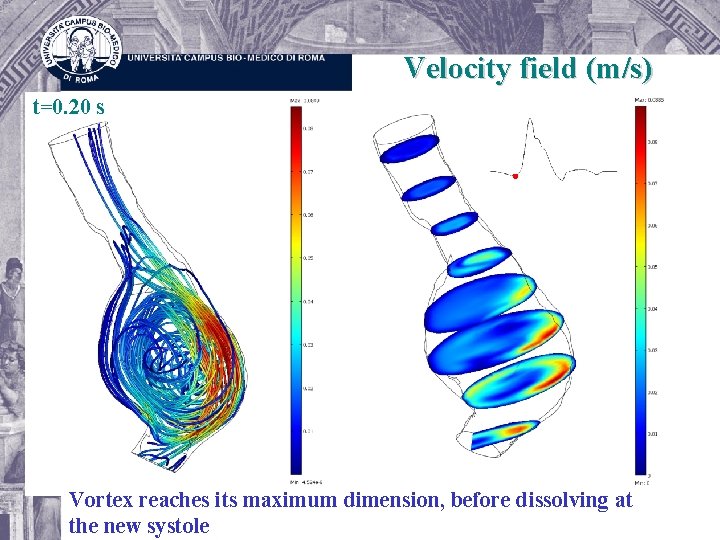
Velocity field (m/s) t=0. 20 s Vortex reaches its maximum dimension, before dissolving at the new systole
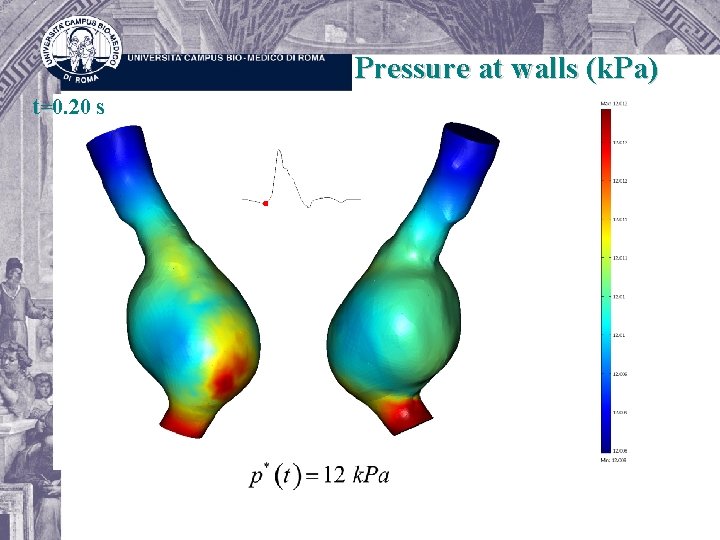
Pressure at walls (k. Pa) t=0. 20 s
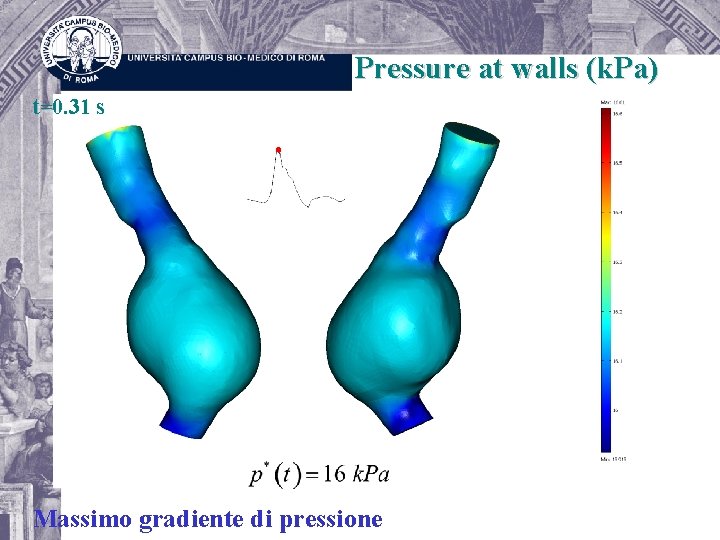
Pressure at walls (k. Pa) t=0. 31 s Massimo gradiente di pressione
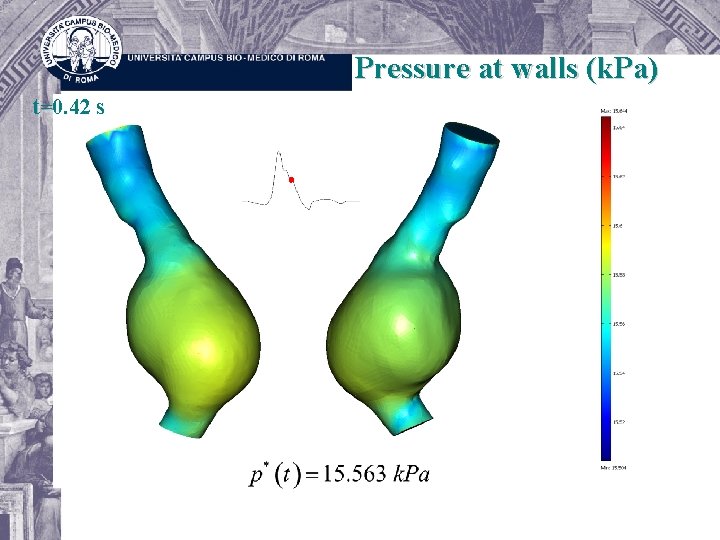
Pressure at walls (k. Pa) t=0. 42 s
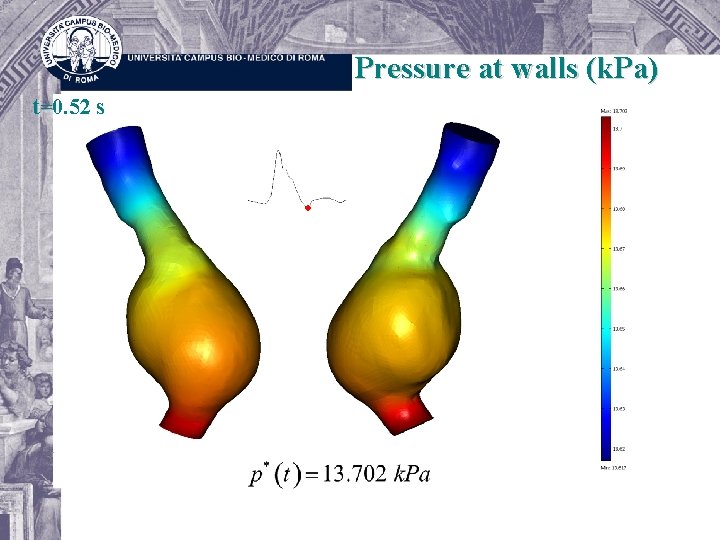
Pressure at walls (k. Pa) t=0. 52 s
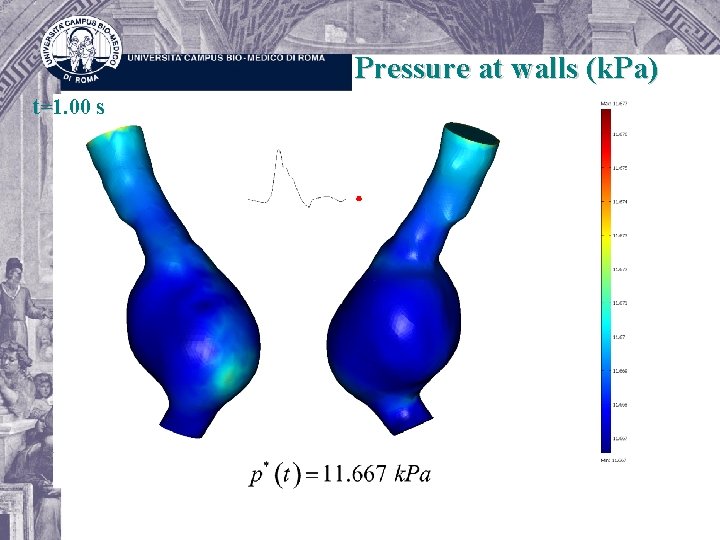
Pressure at walls (k. Pa) t=1. 00 s
Results • • Velocity profiles show the potential for retrograde embolization Pressure profile demonstrates higher wall stress on anterior and posterior aortic wall.
The literature • • • The management of abdominal aortic aneurysms in patients with concurrent renal impairment. Bown MJ, Norwood MG, Sayers RD. Eur J Vasc Endovasc Surg. 2005 Jul; 30(1): 1 -11 Renal dysfunction and abdominal aortic aneurysm. Losito A, Fagugli RM, Caporali S, Verzini F, Giordano G, Cao PG. Contrib Nephrol. 1994; 106: 63 -7. Renal artery stenosis and renal parenchymal damage in patients with abdominal aortic aneurysm proven by autopsy. Nakamura S, Ishibashi-Ueda H, Suzuki C, Nakata H, Yoshihara F, Nakahama H, Kawano Y. Kidney Blood Press Res. 2009; 32(1): 11 -6. Epub 2009 Jan 29.
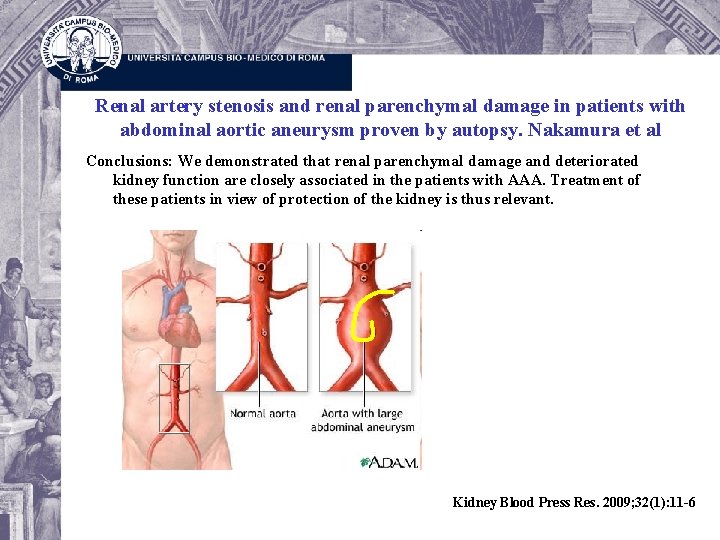
Renal artery stenosis and renal parenchymal damage in patients with abdominal aortic aneurysm proven by autopsy. Nakamura et al Conclusions: We demonstrated that renal parenchymal damage and deteriorated kidney function are closely associated in the patients with AAA. Treatment of these patients in view of protection of the kidney is thus relevant. Kidney Blood Press Res. 2009; 32(1): 11 -6
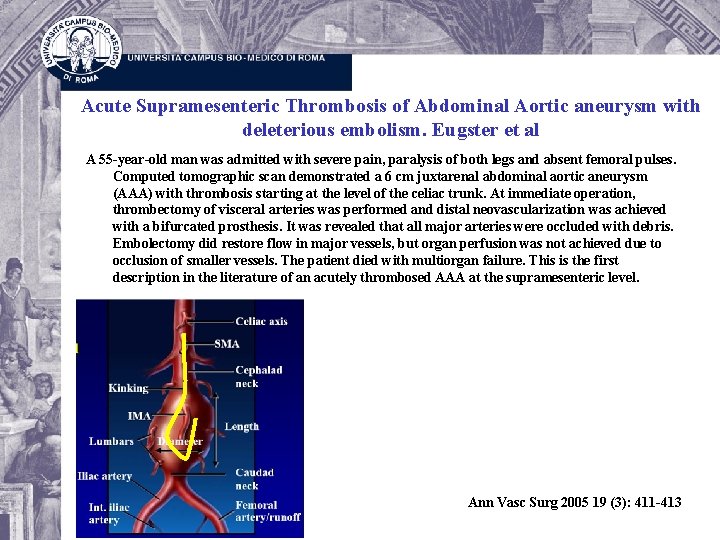
Acute Supramesenteric Thrombosis of Abdominal Aortic aneurysm with deleterious embolism. Eugster et al A 55 -year-old man was admitted with severe pain, paralysis of both legs and absent femoral pulses. Computed tomographic scan demonstrated a 6 cm juxtarenal abdominal aortic aneurysm (AAA) with thrombosis starting at the level of the celiac trunk. At immediate operation, thrombectomy of visceral arteries was performed and distal neovascularization was achieved with a bifurcated prosthesis. It was revealed that all major arteries were occluded with debris. Embolectomy did restore flow in major vessels, but organ perfusion was not achieved due to occlusion of smaller vessels. The patient died with multiorgan failure. This is the first description in the literature of an acutely thrombosed AAA at the supramesenteric level. Ann Vasc Surg 2005 19 (3): 411 -413
Results • • • Results agree with other data reported in the literaturei Synthesis of previous works in a patient specific approach, that migth be merged with physiological blood velocity and pressure Might represent an innovative tool for the prediction of aneurism rupture or clot formation

Thanks for your attention c. spadaccio@unicampus. it
- Slides: 42