
Computational Biology Prepared By Syed Khaleelulla Hussaini Outline
Computational Biology Prepared By: Syed Khaleelulla Hussaini
Outline �Proteins �DNA �RNA �Genetics and evolution �The Sequence Matching Problem �RNA Sequence Matching �Complexity of the Algorithms
DEFINITION �Computational Biology encompasses all computational methods and theories applicable to molecular biology and areas of computer based techniques for solving biological problems.
Protiens �They are building blocks of living organism �It is a large molecule that is composed of sequences of amino acids �There are 20 amino acids which are divided into classes hydrophobic(h-phob) hydrophillic(h-phil) polar(pos, neg)

Amino acid codes Name, 3 -letter & single-letter codes Aspartic Acid Phenylanine Ala Histidine Lysine Methionine Proline Arginine Threonine Tryptophan Asp Phe A His Lys Met Pro Arg Thr Trp D F Cystine H K M P R T W Glutamic Acid Glu Glycine Cys Isoleucine Leucine Asparagine Glutamine Serine Valine Tyrosine E Gly C Ile Leu Asn Gln Ser Val Tyr G I L N Q S V Y
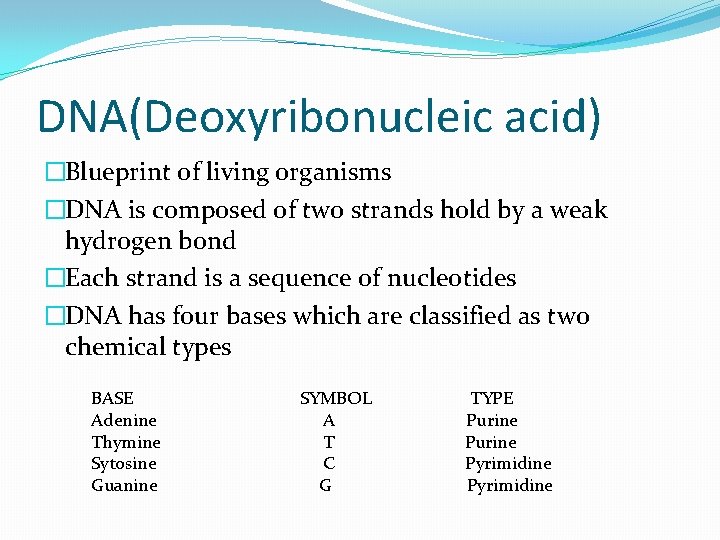
DNA(Deoxyribonucleic acid) �Blueprint of living organisms �DNA is composed of two strands hold by a weak hydrogen bond �Each strand is a sequence of nucleotides �DNA has four bases which are classified as two chemical types BASE Adenine Thymine Sytosine Guanine SYMBOL A T C G TYPE Purine Pyrimidine
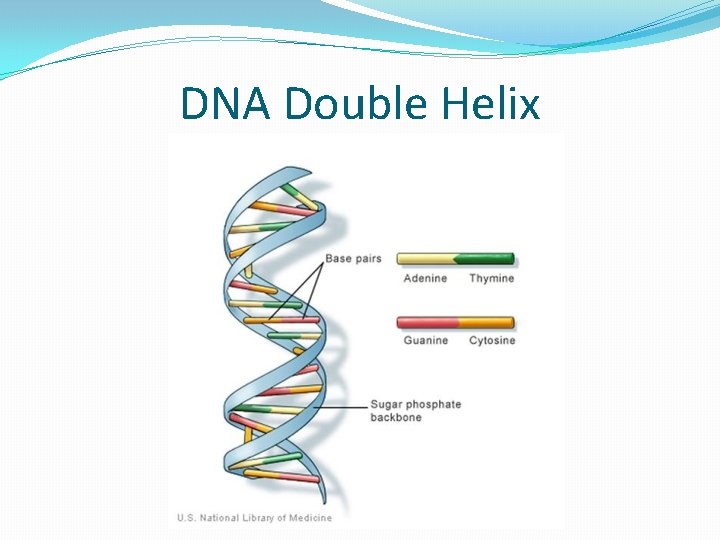
DNA Double Helix
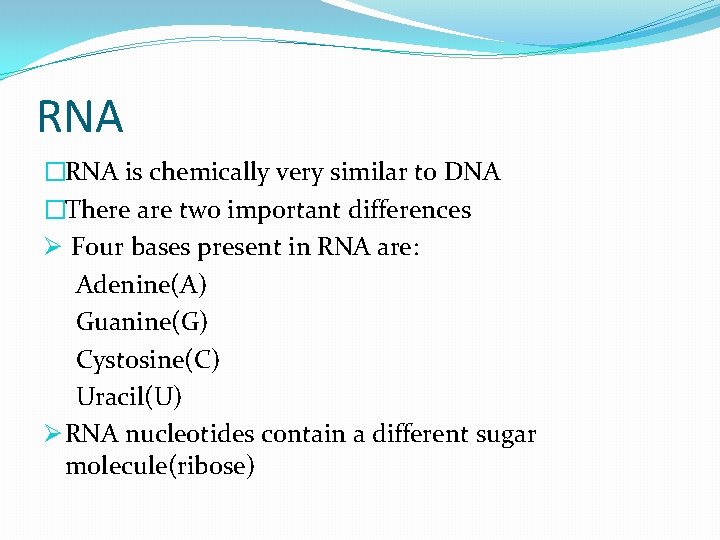
RNA �RNA is chemically very similar to DNA �There are two important differences Ø Four bases present in RNA are: Adenine(A) Guanine(G) Cystosine(C) Uracil(U) Ø RNA nucleotides contain a different sugar molecule(ribose)
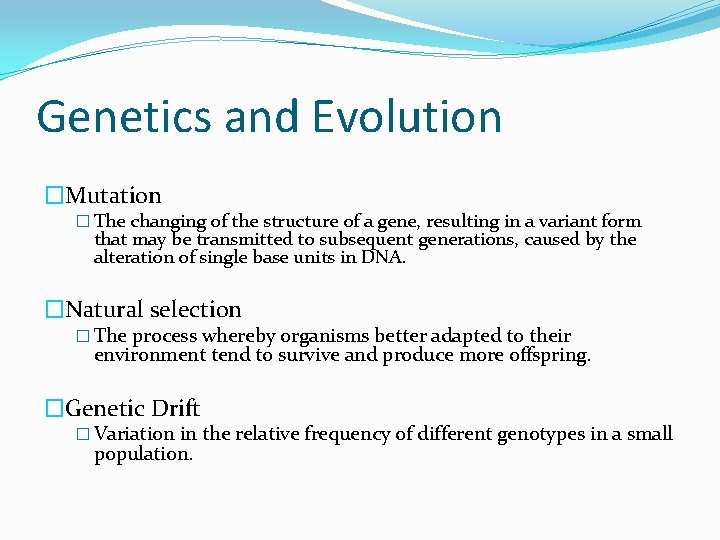
Genetics and Evolution �Mutation � The changing of the structure of a gene, resulting in a variant form that may be transmitted to subsequent generations, caused by the alteration of single base units in DNA. �Natural selection � The process whereby organisms better adapted to their environment tend to survive and produce more offspring. �Genetic Drift � Variation in the relative frequency of different genotypes in a small population.
Sequence matching problem �Proteins are longer and DNA strands are even longer �We match them by breaking them in to shorter subsequences �Breaking and matching is done by notion of alignment.
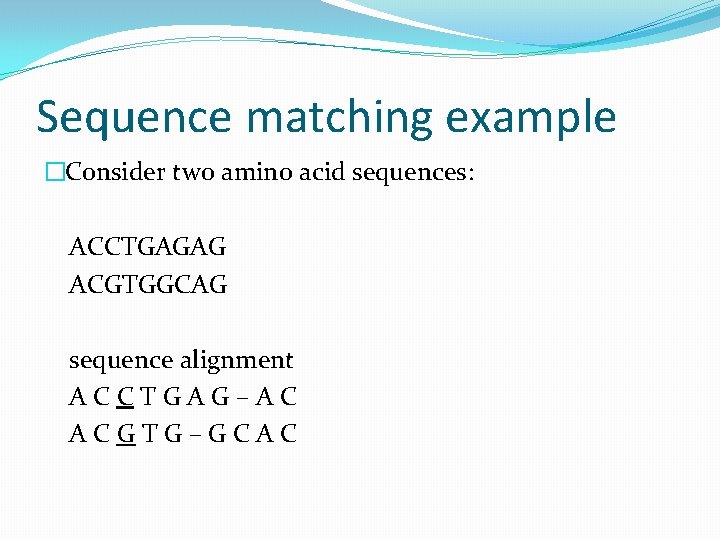
Sequence matching example �Consider two amino acid sequences: ACCTGAGAG ACGTGGCAG sequence alignment ACCTGAG–AC ACGTG–GCAC
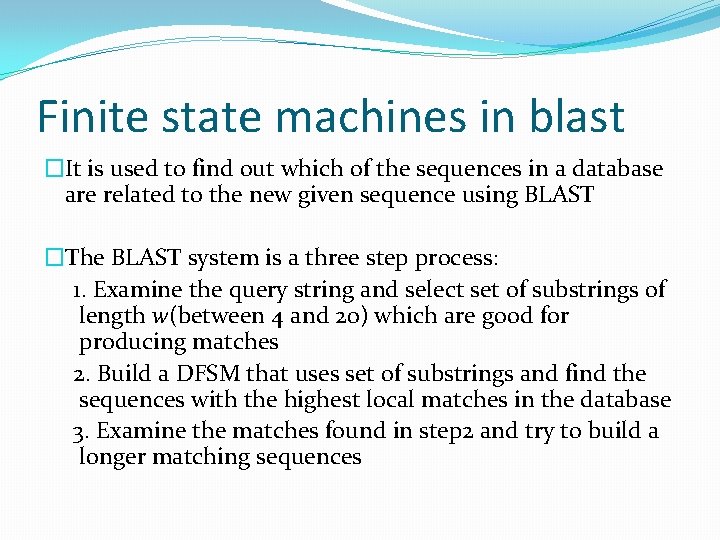
Finite state machines in blast �It is used to find out which of the sequences in a database are related to the new given sequence using BLAST �The BLAST system is a three step process: 1. Examine the query string and select set of substrings of length w(between 4 and 20) which are good for producing matches 2. Build a DFSM that uses set of substrings and find the sequences with the highest local matches in the database 3. Examine the matches found in step 2 and try to build a longer matching sequences
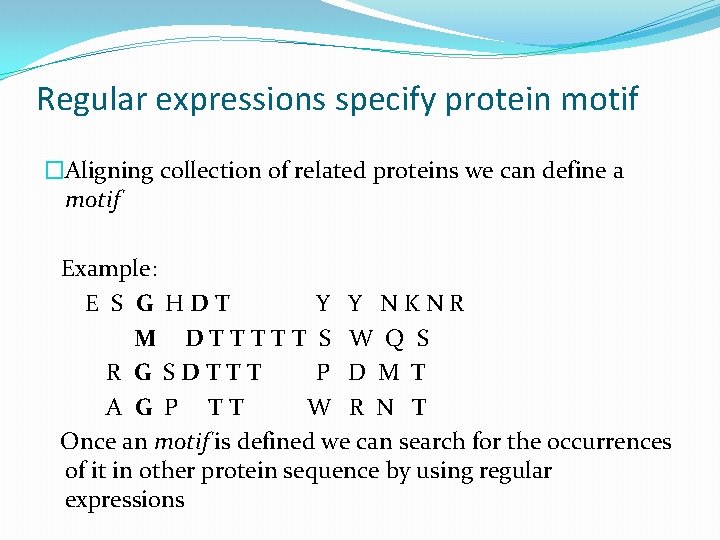
Regular expressions specify protein motif �Aligning collection of related proteins we can define a motif Example: E S G HDT Y Y NKNR M DTTTTT S W Q S R G SDTTT P D M T A G P TT W R N T Once an motif is defined we can search for the occurrences of it in other protein sequence by using regular expressions
HMM for sequence matching �HMM’s are used when sequences become fairly diverse �We can capture the variations among the members of the family and the probabilities associated with them �So by using HMM’s we can find the best alignment between two sequences and from which family does a given new sequence belongs to
�HMM profile is given by M = (K, O, π, A, B) Ø K is a set of n states, one for each position in the sequence Ø O is the output alphabet Ø Π contains the initial state probabilities Ø A contains the transition probabilities Ø B contains the output probabilities
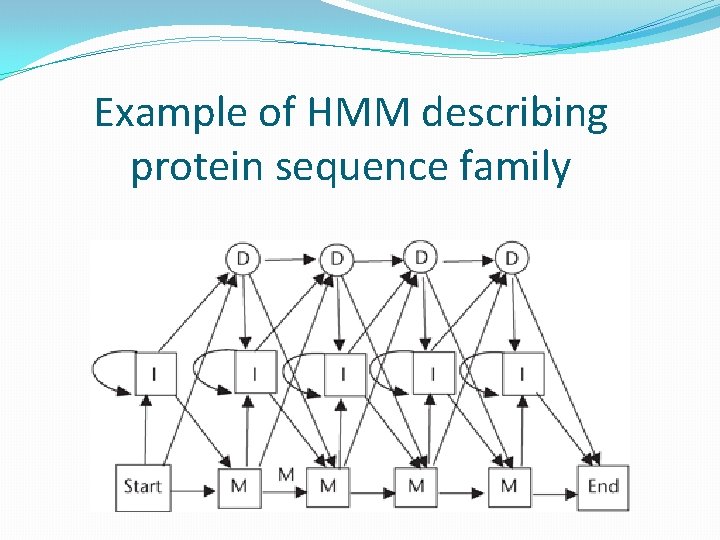
Example of HMM describing protein sequence family
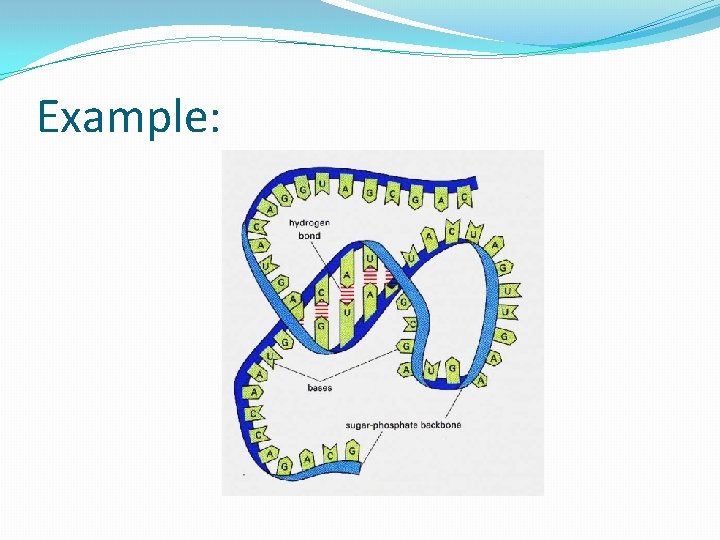
RNA sequence matching and secondary structure prediction using the tools of context-free languages �In RNA a change to a single nucleotide in a stem region could completely alter the molecules shape and its function �So an change in the stem must be matched by a corresponding change in the paired nucleotide �Context free languages are used describe these nested dependencies and secondary structure
Example:
Complexity of algorithms used in computational biology �Approaches to many of the problems described here are computational like breaking up of large protein and DNA molecules into substrings �NP-hard �Conversion to decision problem SHOERTEST-SUPERSTRING(<S, K> ): S is a set of strings and there exists some superstring T such that every element of S is a substring of T and T has length less than or equal to K) – NP-complete
Reference � http: //en. wikipedia. org/wiki/Computational_biology � http: //www. google. com � http: //www. cs. utexas. edu/~ear/cs 341/automatabook/

Thank you…
- Slides: 21