
COMPREHENSIVE PERFORMANCE ASSESSMENT SYSTEM CPAS UNFICYP presentation 11

- Slides: 15
COMPREHENSIVE PERFORMANCE ASSESSMENT SYSTEM (CPAS) UNFICYP presentation 11 December 2018
BACKGROUND • DPKO and DFS USGs in 2017 requested a performance assessment system be developed. • C 34 in its 2018 Report (A/72/19) requested the “development of an integrated performance policy framework for mandate implementation based on clear standards for all relevant civilian and uniformed personnel working in and supporting peacekeeping operations in the Secretariat and missions. ” • The Security Council welcomed the Framework in S/PRST/2018/10 and reiterated its support in S/RES/2436 (October 2018)
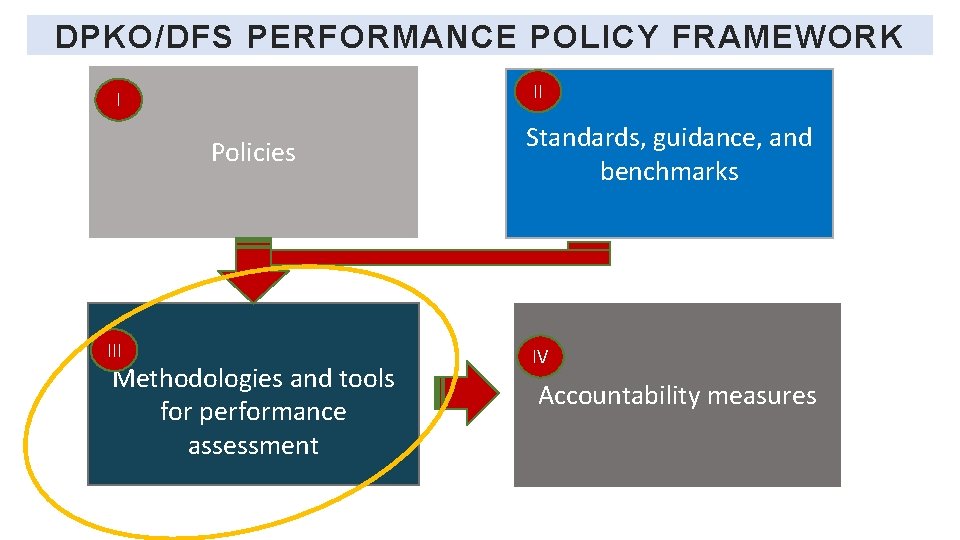
DPKO/DFS PERFORMANCE POLICY FRAMEWORK II I Policies III Methodologies and tools for performance assessment Standards, guidance, and benchmarks IV Accountability measures
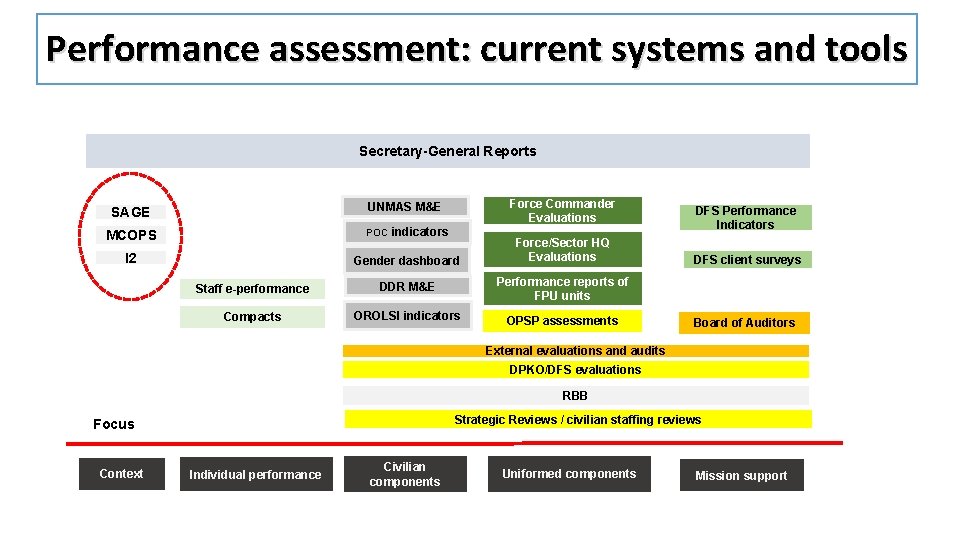
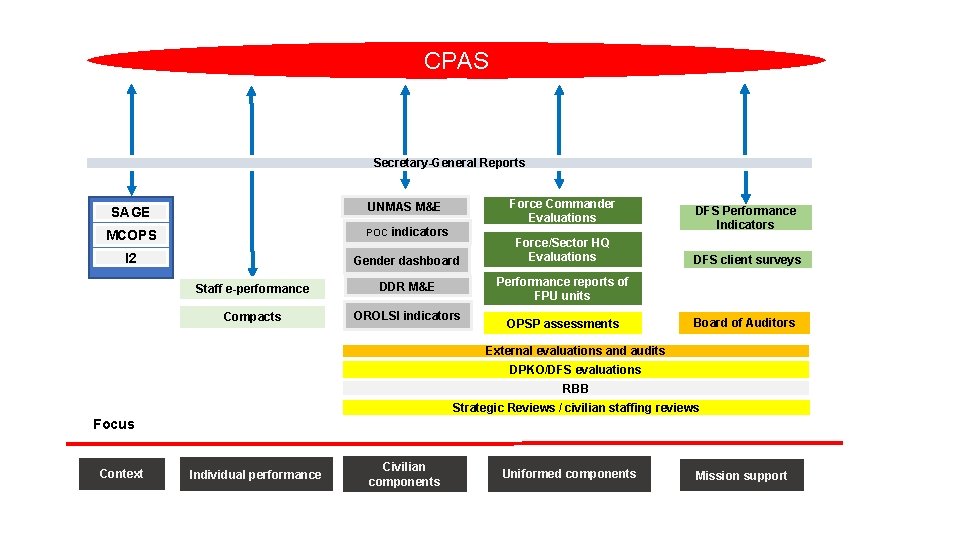
Performance assessment: current systems and tools Secretary-General Reports Force Commander Evaluations SAGE UNMAS M&E MCOPS POC indicators I 2 Gender dashboard Force/Sector HQ Evaluations Staff e-performance DDR M&E Performance reports of FPU units Compacts OROLSI indicators OPSP assessments DFS Performance Indicators DFS client surveys Board of Auditors External evaluations and audits DPKO/DFS evaluations RBB Strategic Reviews / civilian staffing reviews Focus Context Individual performance Civilian components Uniformed components Mission support
CPAS Secretary-General Reports Force Commander Evaluations SAGE UNMAS M&E MCOPS POC indicators I 2 Gender dashboard Force/Sector HQ Evaluations DFS Performance Indicators DFS client surveys Performance reports of FPU units Staff e-performance DDR M&E Compacts OROLSI indicators OPSP assessments Board of Auditors External evaluations and audits DPKO/DFS evaluations RBB Strategic Reviews / civilian staffing reviews Focus Context Individual performance Civilian components Uniformed components Mission support
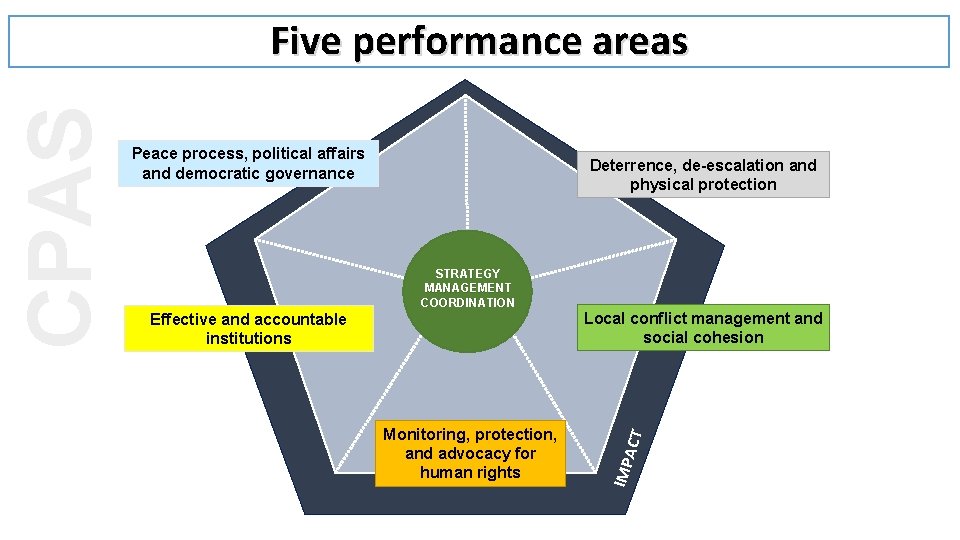
Peace process, political affairs and democratic governance Deterrence, de-escalation and physical protection STRATEGY MANAGEMENT COORDINATION Effective and accountable institutions Monitoring, protection, and advocacy for human rights Local conflict management and social cohesion IMP ACT CPAS Five performance areas
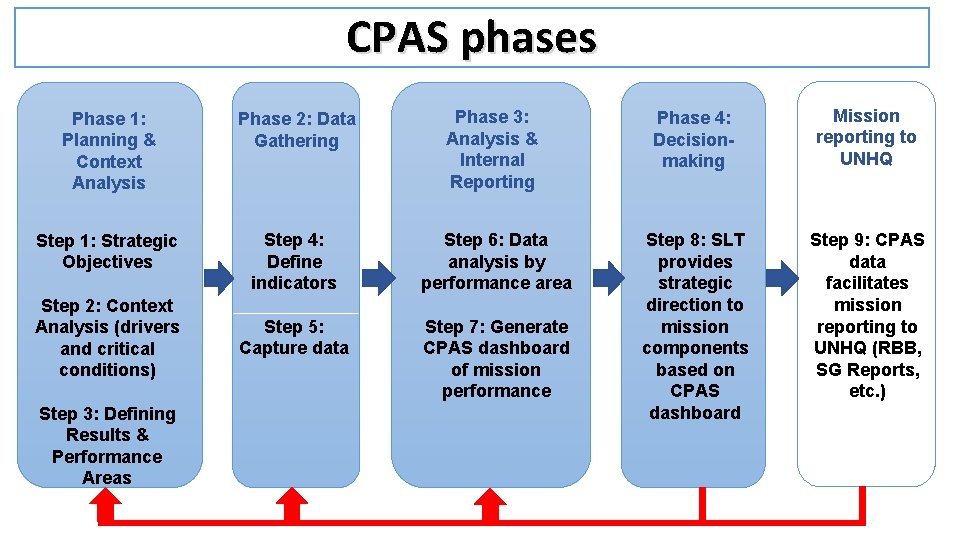
CPAS phases Phase 1: Planning & Context Analysis Phase 2: Data Gathering Phase 3: Analysis & Internal Reporting Phase 4: Decisionmaking Mission reporting to UNHQ Step 1: Strategic Objectives Step 4: Define indicators Step 6: Data analysis by performance area Step 5: Capture data Step 7: Generate CPAS dashboard of mission performance Step 8: SLT provides strategic direction to mission components based on CPAS dashboard Step 9: CPAS data facilitates mission reporting to UNHQ (RBB, SG Reports, etc. ) Step 2: Context Analysis (drivers and critical conditions) Step 3: Defining Results & Performance Areas
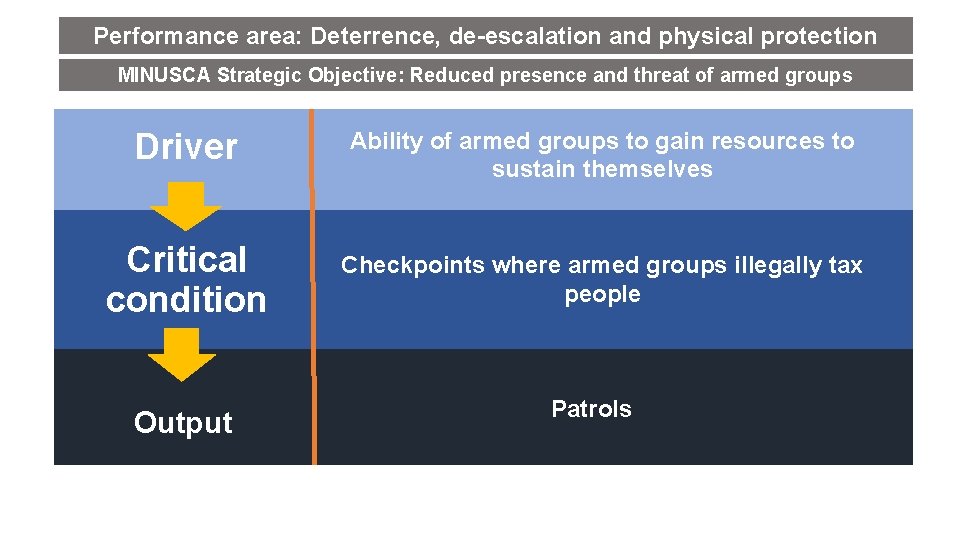
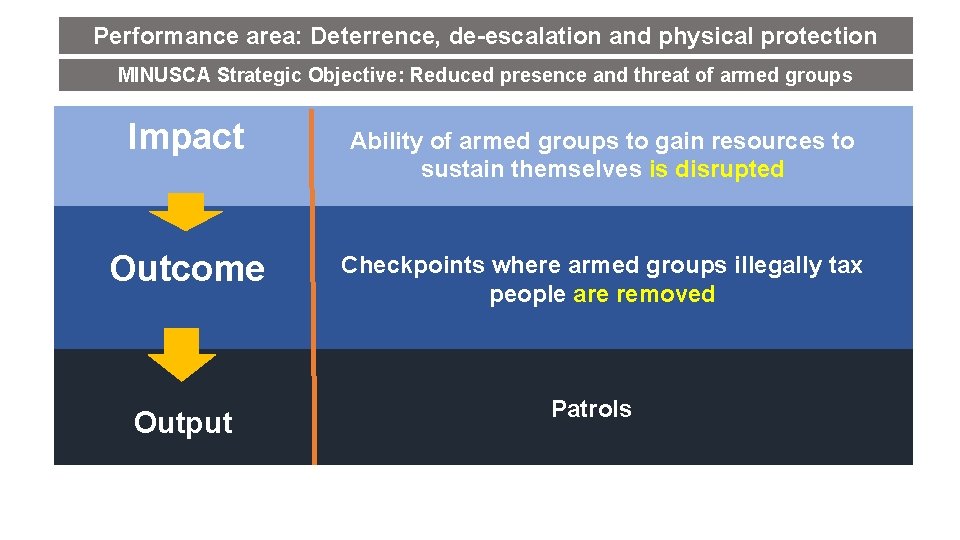
Performance area: Deterrence, de-escalation and physical protection MINUSCA Strategic Objective: Reduced presence and threat of armed groups Driver Ability of armed groups to gain resources to sustain themselves Critical condition Checkpoints where armed groups illegally tax people Output Patrols
Performance area: Deterrence, de-escalation and physical protection MINUSCA Strategic Objective: Reduced presence and threat of armed groups Impact Ability of armed groups to gain resources to sustain themselves is disrupted Outcome Checkpoints where armed groups illegally tax people are removed Output Patrols
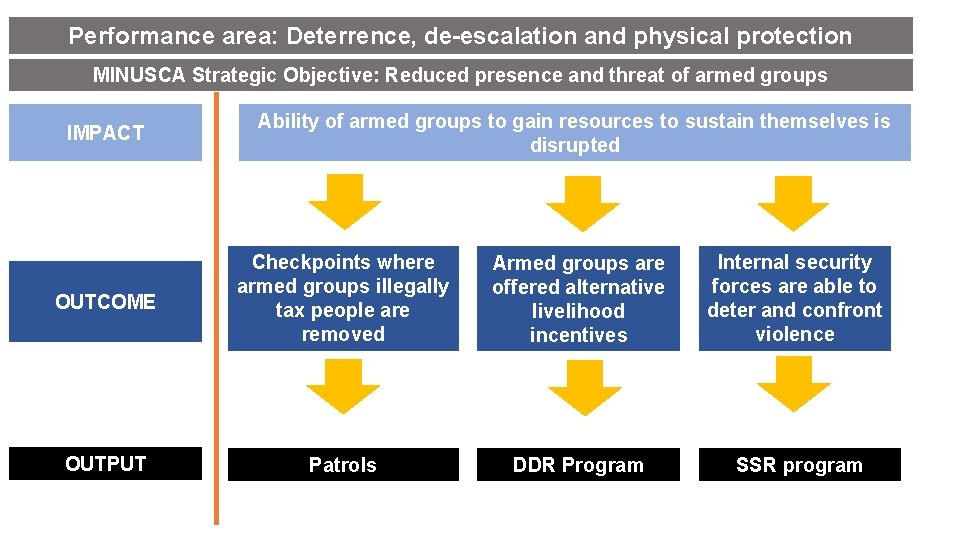
Performance area: Deterrence, de-escalation and physical protection MINUSCA Strategic Objective: Reduced presence and threat of armed groups IMPACT Ability of armed groups to gain resources to sustain themselves is disrupted OUTCOME Checkpoints where armed groups illegally tax people are removed Armed groups are offered alternative livelihood incentives Internal security forces are able to deter and confront violence OUTPUT Patrols DDR Program SSR program Activity/Output
Performance assessment • Quantitative and qualitative information triangulated • Analysis anchored in mission mandate and context • Supported by IT platform • Outcome and impact information and analysis in support of decision-making • Relevant information and analysis available to UNHQ, Member States, and public
CPAS pilot • Three pilot missions: MINUSCA (August 2018), UNMISS (September 2018), UNIFIL (December 2018) • Lessons learnt exercise (January 2019) • Three more missions (MONUSCO, MINUSMA, and UNFICYP) by July 2019 • Regular briefings to C-34 Member States on CPAS implementation status
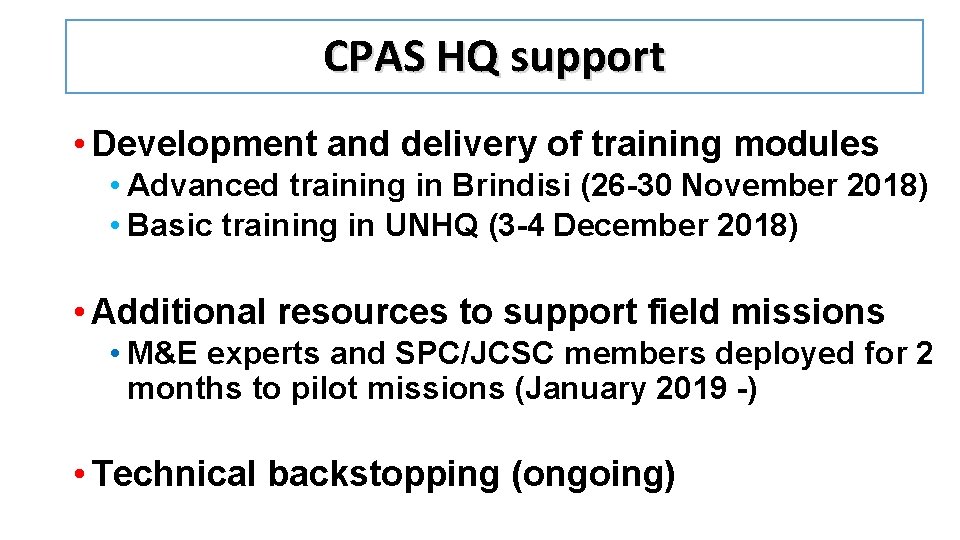
CPAS HQ support • Development and delivery of training modules • Advanced training in Brindisi (26 -30 November 2018) • Basic training in UNHQ (3 -4 December 2018) • Additional resources to support field missions • M&E experts and SPC/JCSC members deployed for 2 months to pilot missions (January 2019 -) • Technical backstopping (ongoing)
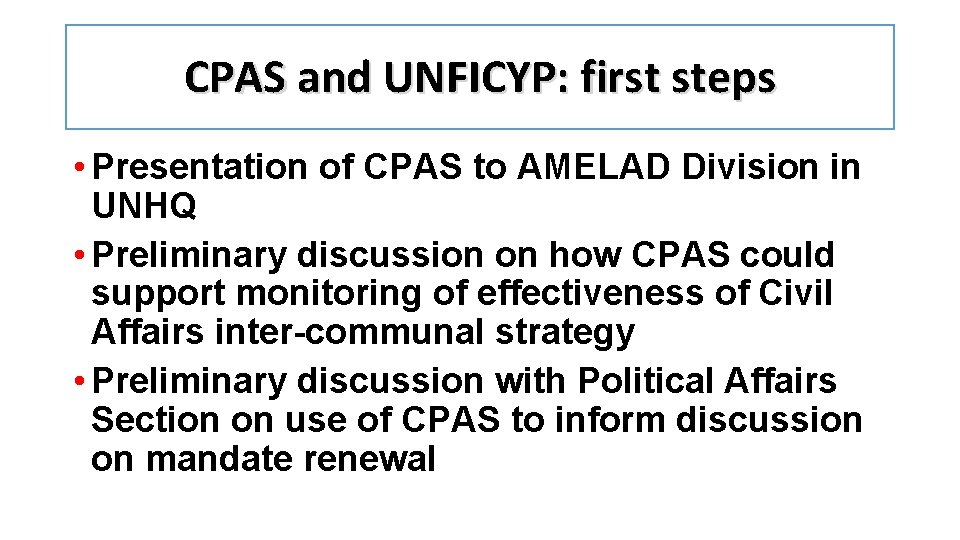
CPAS and UNFICYP: first steps • Presentation of CPAS to AMELAD Division in UNHQ • Preliminary discussion on how CPAS could support monitoring of effectiveness of Civil Affairs inter-communal strategy • Preliminary discussion with Political Affairs Section on use of CPAS to inform discussion on mandate renewal
Questions? Thank you!