
Comprehensive Local Needs Assessment Results Driven Planning for
- Slides: 32
Comprehensive Local Needs Assessment: Results. Driven Planning for Perkins V 1
How is the CLNA Process going? Go to menti. com and use the code 13 83 11 2
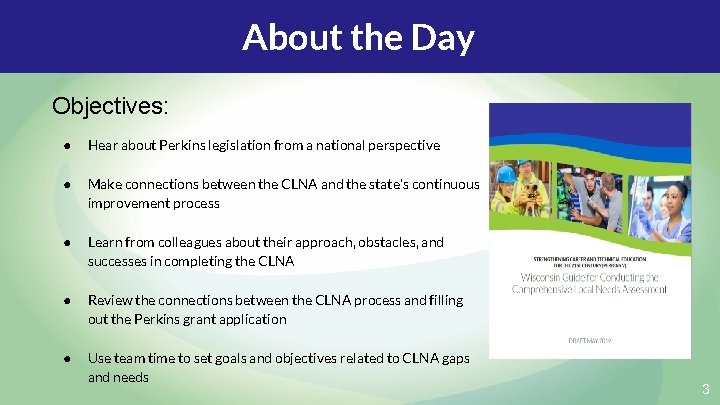
About the Day Objectives: ● Hear about Perkins legislation from a national perspective ● Make connections between the CLNA and the state’s continuous improvement process ● Learn from colleagues about their approach, obstacles, and successes in completing the CLNA ● Review the connections between the CLNA process and filling out the Perkins grant application ● Use team time to set goals and objectives related to CLNA gaps and needs 3
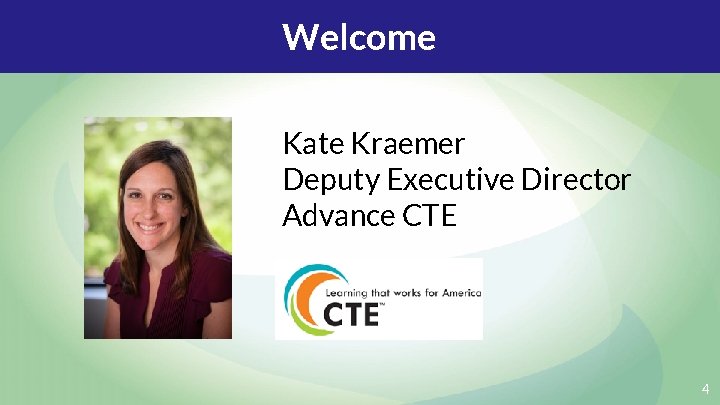
Welcome Kate Kraemer Deputy Executive Director Advance CTE 4
Break Time! 5
Wisconsin’s Vision for CTE • Develop high quality Career Pathways • Apply an equity lens to ensure all students have access to high quality CTE programs and career pathways 6
Data-driven decision-making Comprehensive Local Needs Assessment (CLNA) ○ significant stakeholder consultation ○ must be updated at least every two years and ○ serves as the driver for local initiatives and spending ■ To improve and modernize, not maintain your CTE programs ■ To ensure workforce skills taught in CTE programs are aligned with current labor needs 7
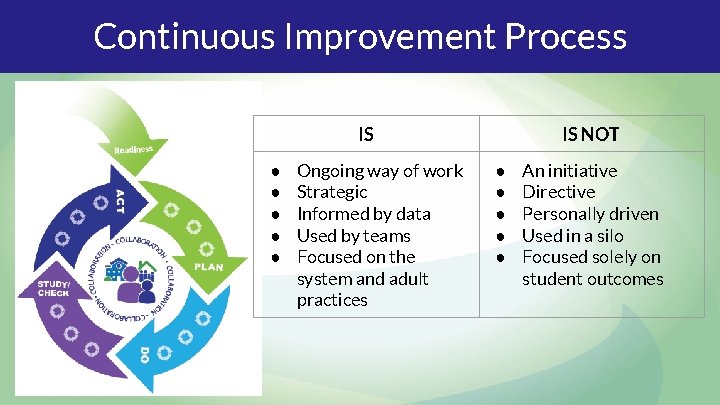
Alignment, Coherence, Leverage The agency is embracing the process of continuous improvement -applied through an equity lens, incorporated into an equitable multi -level system of support , and rooted in the science of implementation -- as the means to improving districts and schools. We believe this process enables districts and schools to critically examine their systems, practices and beliefs in an effort to identify if and the extent to which the needs of all kids are being met.
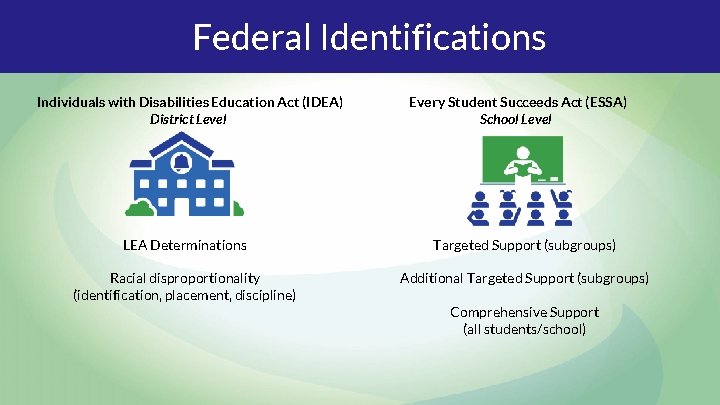
Federal Identifications Individuals with Disabilities Education Act (IDEA) District Level Every Student Succeeds Act (ESSA) School Level LEA Determinations Targeted Support (subgroups) Racial disproportionality (identification, placement, discipline) Additional Targeted Support (subgroups) Comprehensive Support (all students/school)
Continuous Improvement Process IS ● ● ● Ongoing way of work Strategic Informed by data Used by teams Focused on the system and adult practices IS NOT ● ● ● An initiative Directive Personally driven Used in a silo Focused solely on student outcomes
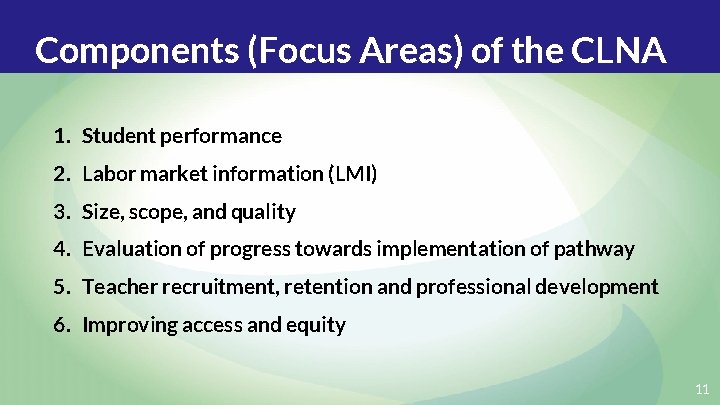
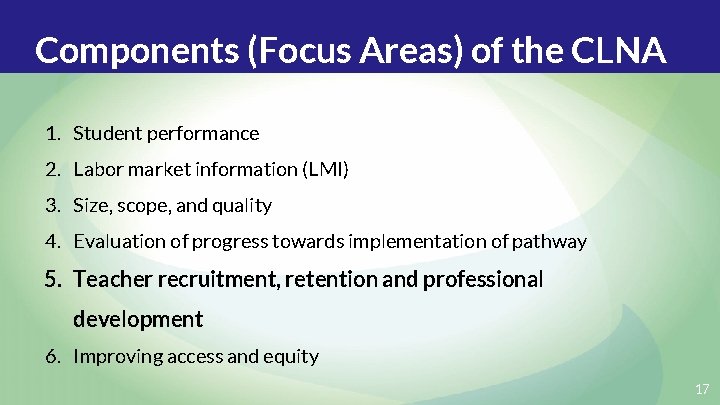
Components (Focus Areas) of the CLNA 1. Student performance 2. Labor market information (LMI) 3. Size, scope, and quality 4. Evaluation of progress towards implementation of pathway 5. Teacher recruitment, retention and professional development 6. Improving access and equity 11
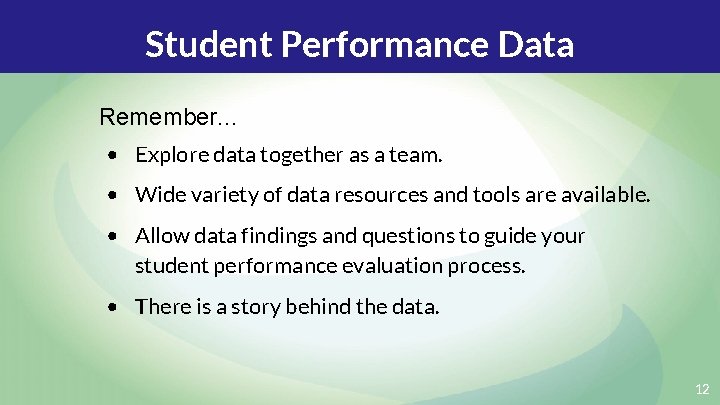
Student Performance Data Remember. . . • Explore data together as a team. • Wide variety of data resources and tools are available. • Allow data findings and questions to guide your student performance evaluation process. • There is a story behind the data. 12
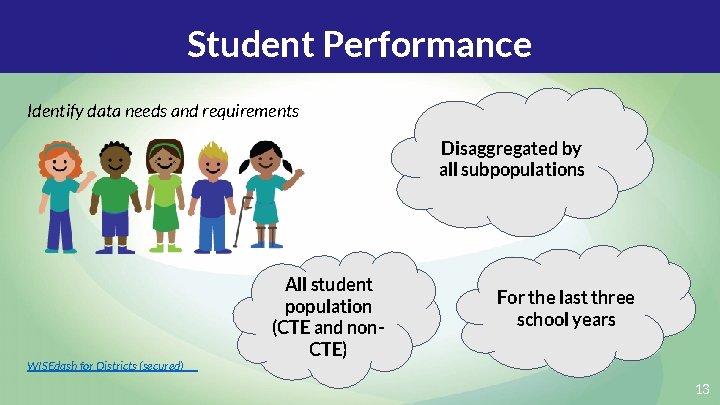
Student Performance Identify data needs and requirements Disaggregated by all subpopulations WISEdash for Districts (secured) All student population (CTE and non. CTE) For the last three school years 13
Components (Focus Areas) of the CLNA 1. Student performance 2. Labor market information (LMI) 3. Size, scope, and quality 4. Evaluation of progress towards pathway implementation 5. Teacher recruitment, retention and professional development 6. Improving access and equity 14
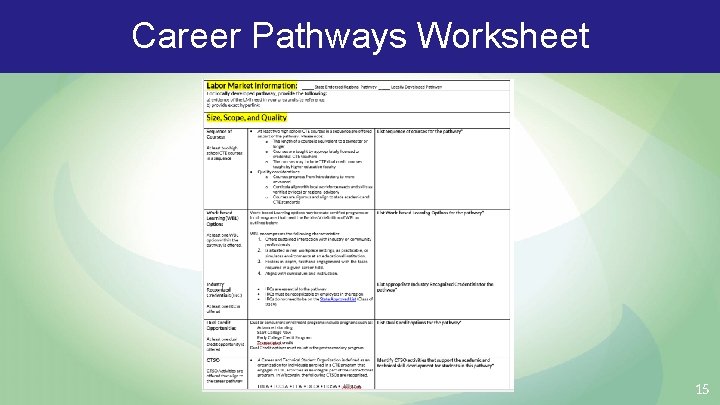
Career Pathways Worksheet 15
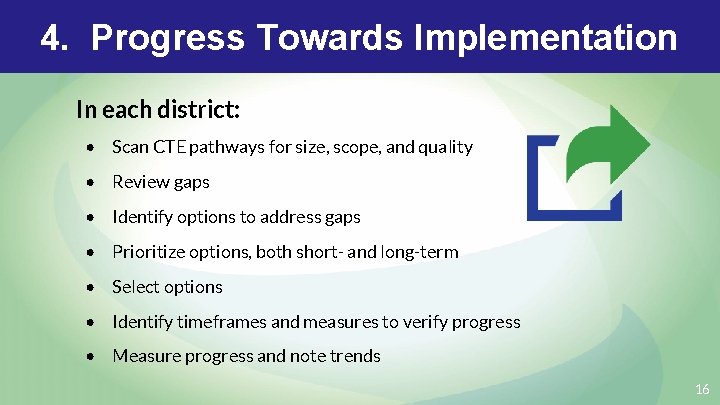
4. Progress Towards Implementation In each district: • Scan CTE pathways for size, scope, and quality • Review gaps • Identify options to address gaps • Prioritize options, both short- and long-term • Select options • Identify timeframes and measures to verify progress • Measure progress and note trends 16
Components (Focus Areas) of the CLNA 1. Student performance 2. Labor market information (LMI) 3. Size, scope, and quality 4. Evaluation of progress towards implementation of pathway 5. Teacher recruitment, retention and professional development 6. Improving access and equity 17
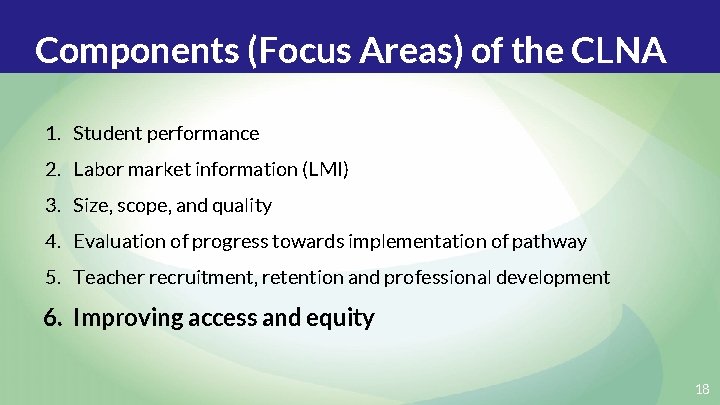
Components (Focus Areas) of the CLNA 1. Student performance 2. Labor market information (LMI) 3. Size, scope, and quality 4. Evaluation of progress towards implementation of pathway 5. Teacher recruitment, retention and professional development 6. Improving access and equity 18
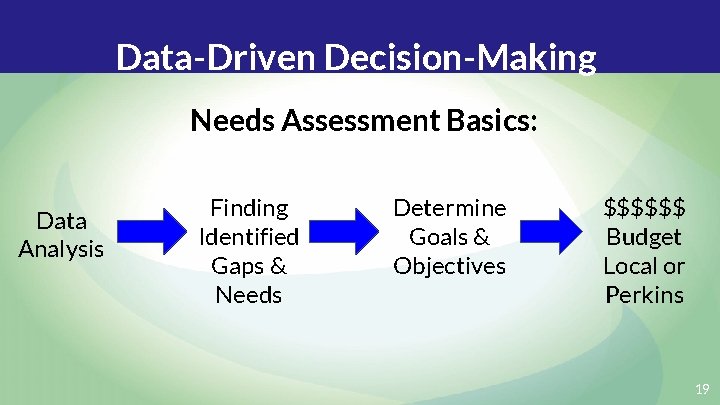
Data-Driven Decision-Making Needs Assessment Basics: Data Analysis Finding Identified Gaps & Needs Determine Goals & Objectives $$$$$$ Budget Local or Perkins 19
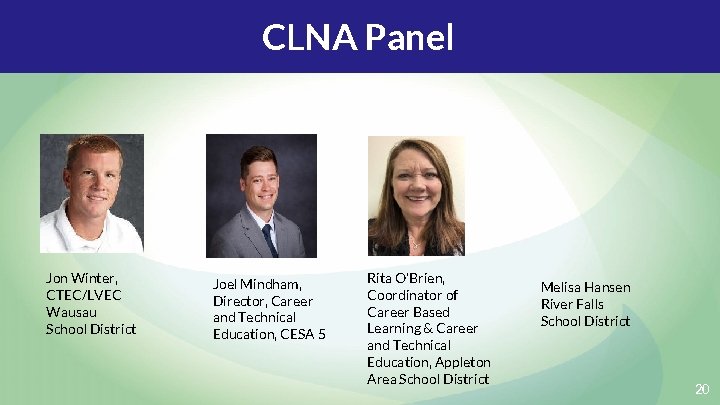
CLNA Panel Jon Winter, CTEC/LVEC Wausau School District Joel Mindham, Director, Career and Technical Education, CESA 5 Rita O’Brien, Coordinator of Career Based Learning & Career and Technical Education, Appleton Area School District Melisa Hansen River Falls School District 20
Tying CLNA to Perkins V Application • Parts of Application • 4 -year timeframe • CLNA Worksheets 21
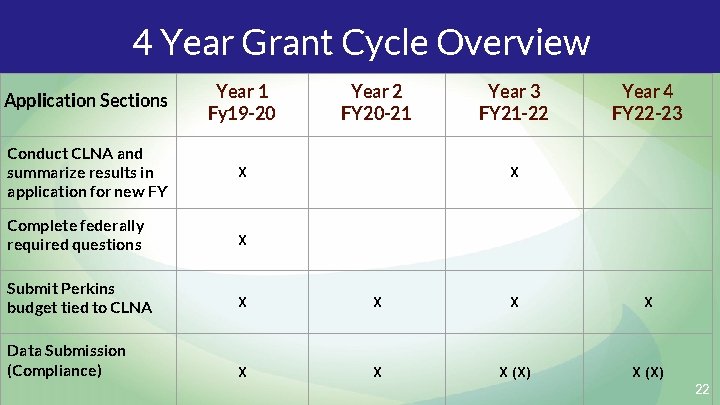
4 Year Grant Cycle Overview Application Sections Year 1 Fy 19 -20 Year 2 FY 20 -21 Year 3 FY 21 -22 Year 4 FY 22 -23 Conduct CLNA and summarize results in application for new FY X Complete federally required questions X Submit Perkins budget tied to CLNA X X Data Submission (Compliance) X X X (X) X 22
Purpose of CLNA • Foundation for CTE programming • Data driven decision-making • Drive Perkins grant application 23
Purpose of CLNA ● Determine if findings align with your agency’s vision for CTE? ● Identification of program strengths as well as gaps. ● Identification and understanding of why those gaps exist. ● Quality improvement - determine strategies for addressing the identified needs in meaningful ways. 24
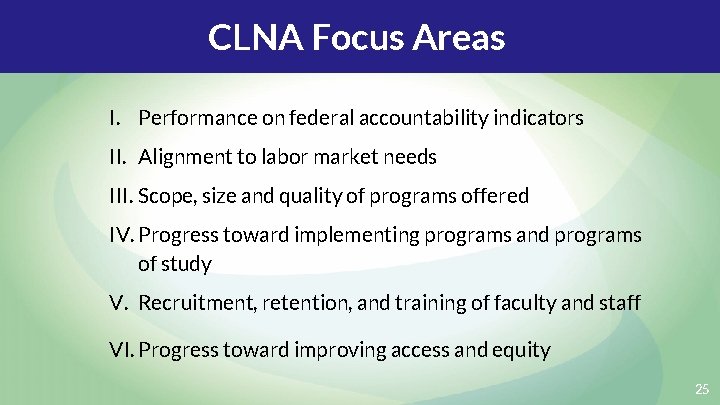
CLNA Focus Areas I. Performance on federal accountability indicators II. Alignment to labor market needs III. Scope, size and quality of programs offered IV. Progress toward implementing programs and programs of study V. Recruitment, retention, and training of faculty and staff VI. Progress toward improving access and equity 25
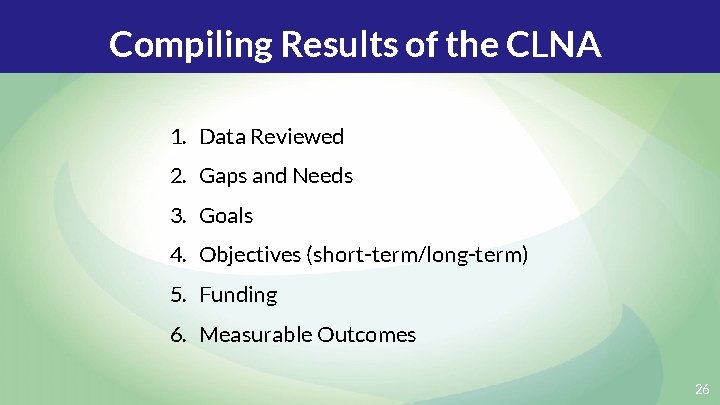
Compiling Results of the CLNA 1. Data Reviewed 2. Gaps and Needs 3. Goals 4. Objectives (short-term/long-term) 5. Funding 6. Measurable Outcomes 26
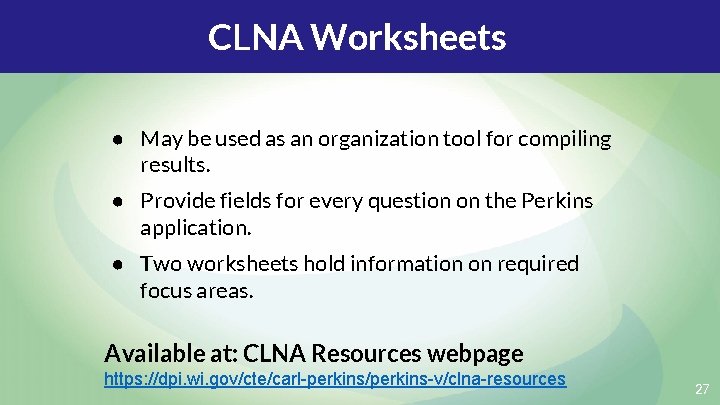
CLNA Worksheets ● May be used as an organization tool for compiling results. ● Provide fields for every question on the Perkins application. ● Two worksheets hold information on required focus areas. Available at: CLNA Resources webpage https: //dpi. wi. gov/cte/carl-perkins/perkins-v/clna-resources 27
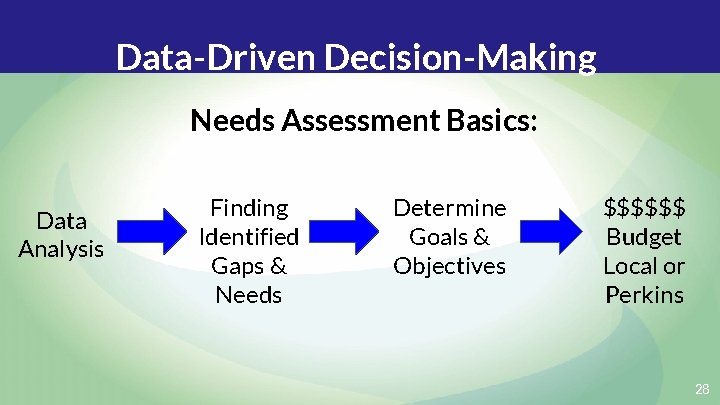
Data-Driven Decision-Making Needs Assessment Basics: Data Analysis Finding Identified Gaps & Needs Determine Goals & Objectives $$$$$$ Budget Local or Perkins 28
Consortia Considerations • Sign contracts (2 or 4 yr. ) well in advance of the application • Member districts will have to complete fund management selection and sign assurances 29
SMART Goals = Continuous Improvement Team Time: 1. Pick a focus area of the CLNA 2. Formulate a SMART goal and 3. 1 -2 SMART objectives. Report Out 30
Closing Activity What was your biggest “take-away” or AH-ha moment? What are you feeling good or feeling excited about? 31
Thank You! https: //dpi. wi. gov/cte/carl-perkins/perkins-v/clna-resources 32