
Comprehending Complex Texts Introductory Unit What Lies Ahead
- Slides: 12
Comprehending Complex Texts Introductory Unit: What Lies Ahead?
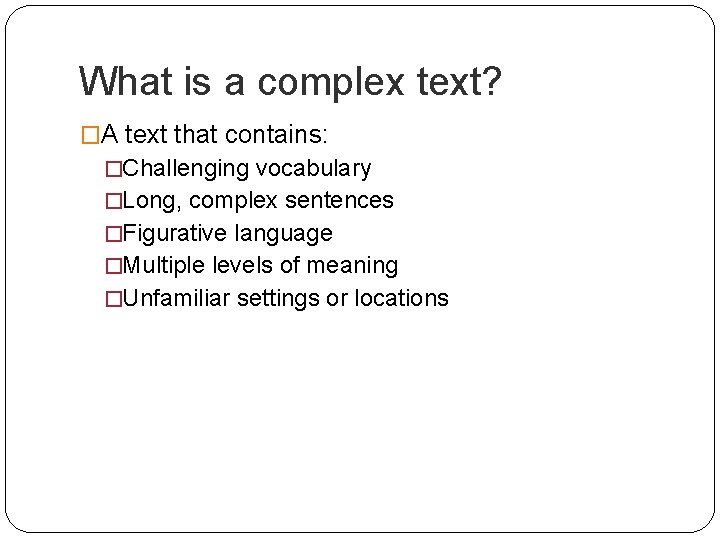
What is a complex text? �A text that contains: �Challenging vocabulary �Long, complex sentences �Figurative language �Multiple levels of meaning �Unfamiliar settings or locations
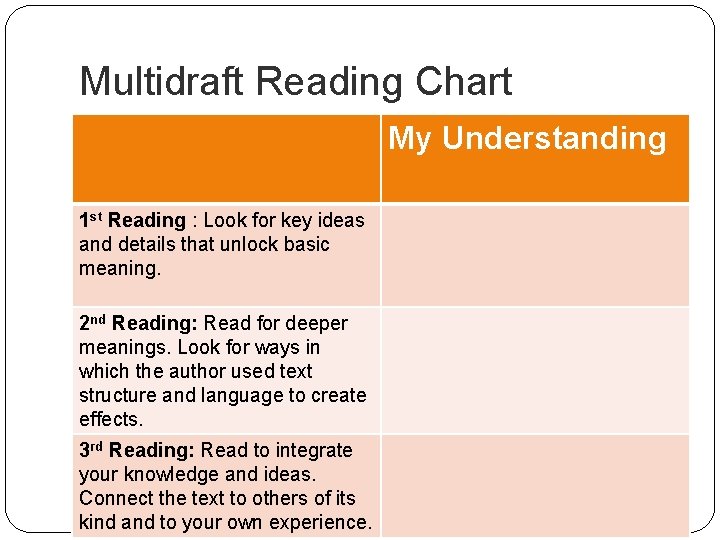
Multidraft Reading Chart My Understanding 1 st Reading : Look for key ideas and details that unlock basic meaning. 2 nd Reading: Read for deeper meanings. Look for ways in which the author used text structure and language to create effects. 3 rd Reading: Read to integrate your knowledge and ideas. Connect the text to others of its kind and to your own experience.
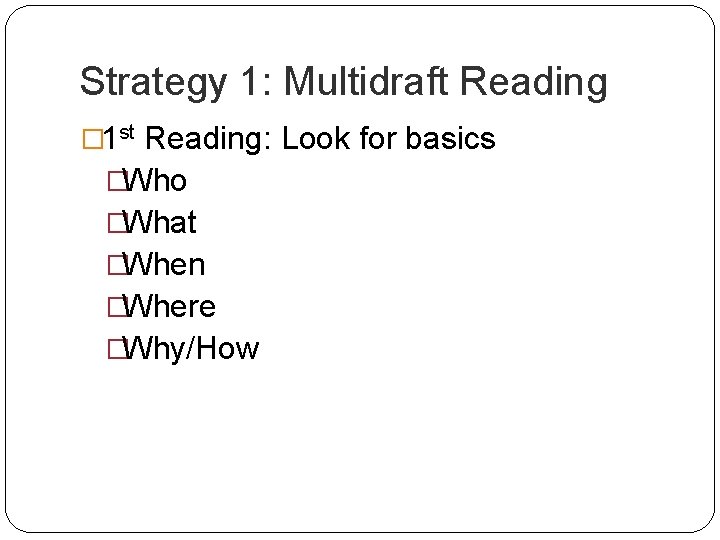
Strategy 1: Multidraft Reading � 1 st Reading: Look for basics �Who �What �When �Where �Why/How
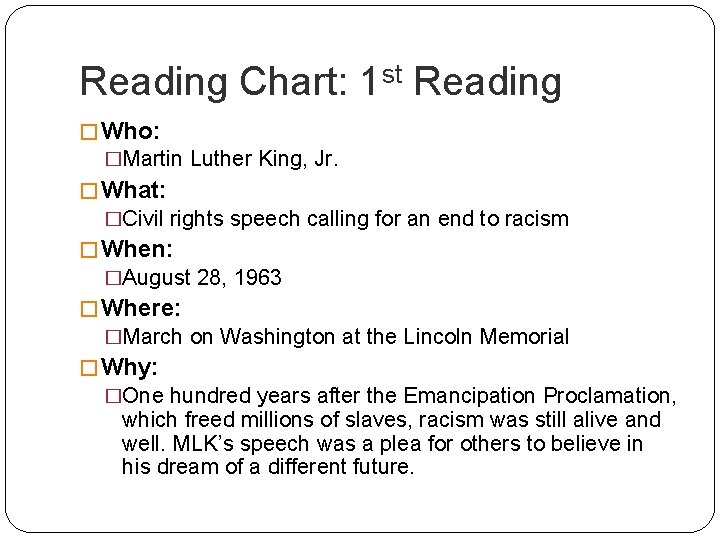
Reading Chart: 1 st Reading � Who: �Martin Luther King, Jr. � What: �Civil rights speech calling for an end to racism � When: �August 28, 1963 � Where: �March on Washington at the Lincoln Memorial � Why: �One hundred years after the Emancipation Proclamation, which freed millions of slaves, racism was still alive and well. MLK’s speech was a plea for others to believe in his dream of a different future.
Strategy 1: Multidraft Reading � 2 nd Reading: Effectiveness of the writing �Text structure and organization �Use of language and effects
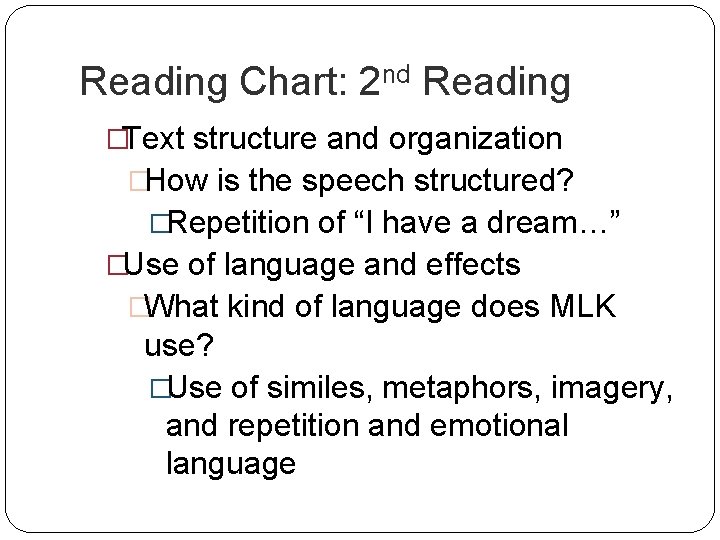
Reading Chart: 2 nd Reading �Text structure and organization �How is the speech structured? �Repetition of “I have a dream…” �Use of language and effects �What kind of language does MLK use? �Use of similes, metaphors, imagery, and repetition and emotional language
Strategy 1: Multidraft Reading � 3 rd Reading: Compare and contrast �Compare/Contrast to similar selections �Evaluate overall effectiveness and central theme
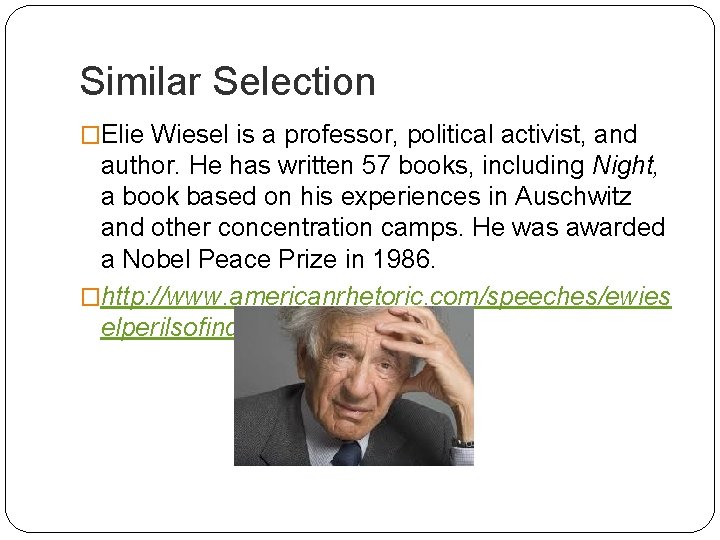
Similar Selection �Elie Wiesel is a professor, political activist, and author. He has written 57 books, including Night, a book based on his experiences in Auschwitz and other concentration camps. He was awarded a Nobel Peace Prize in 1986. �http: //www. americanrhetoric. com/speeches/ewies elperilsofindifference. html
Reading Chart: 3 rd Reading �Compare/Contrast: �How are they similar? (compare) �How are they different? (contrast) �Overall Effectiveness and Central Theme �How effective were the two speeches? �Are themes similar?
Strategy 2: Close Read the Text Tips for Close Reading: 1. Break down long sentences (into parts). 2. Reread difficult passages (to confirm meaning). 3. Look for context clues (restatements, definitions, examples, and contrasts). 4. Identify pronoun antecedents (know who or whom is being referred to). 5. Look for conjunctions (FANBOYS). 6. Paraphrase (restate in your own words).
Strategy 3: Ask Questions Be an attentive reader by asking questions as you read. There are three basic categories: 1. Key Ideas and Details Example: Does the first sentence state facts or express an opinion? 2. Craft and Structure Example: What parallel structure does the writer use? 3. Integration of Knowledge and Ideas Example: To what extent do you agree with the author’s viewpoint?