
Compounds and Mixtures Covalent and Ionic Bonds General

Compounds and Mixtures Covalent and Ionic Bonds General Physical Science Chapter 4
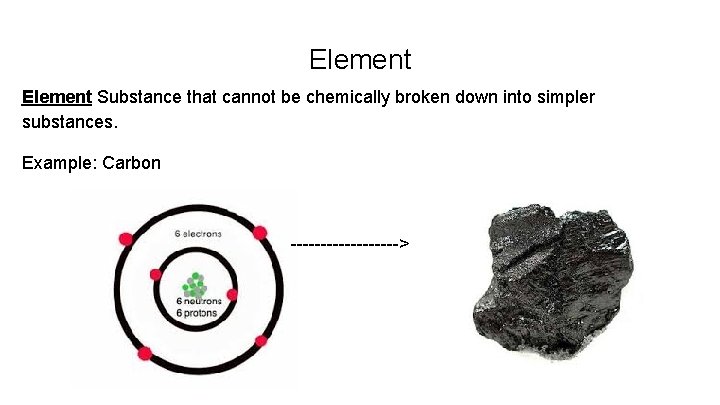
Element Substance that cannot be chemically broken down into simpler substances. Example: Carbon --------->
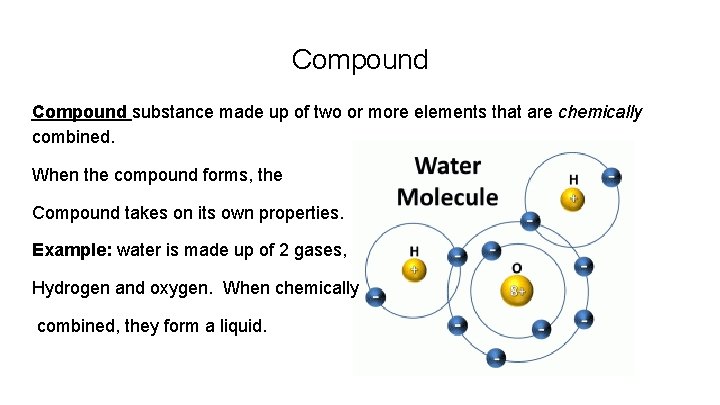
Compound substance made up of two or more elements that are chemically combined. When the compound forms, the Compound takes on its own properties. Example: water is made up of 2 gases, Hydrogen and oxygen. When chemically combined, they form a liquid.
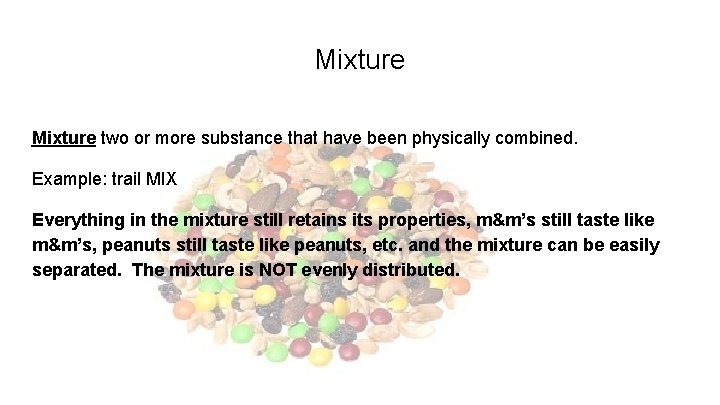
Mixture two or more substance that have been physically combined. Example: trail MIX Everything in the mixture still retains its properties, m&m’s still taste like m&m’s, peanuts still taste like peanuts, etc. and the mixture can be easily separated. The mixture is NOT evenly distributed.
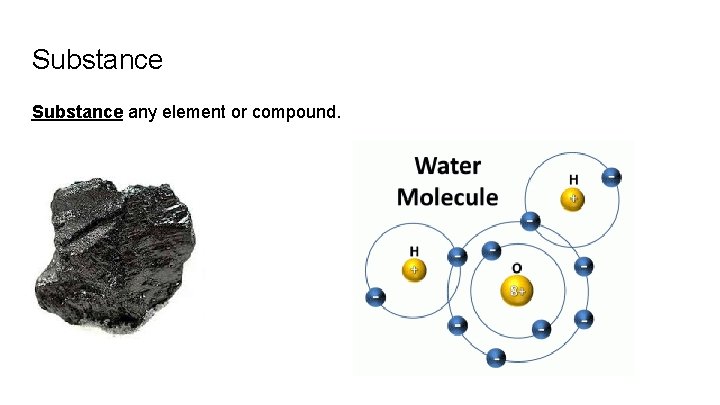
Substance any element or compound.
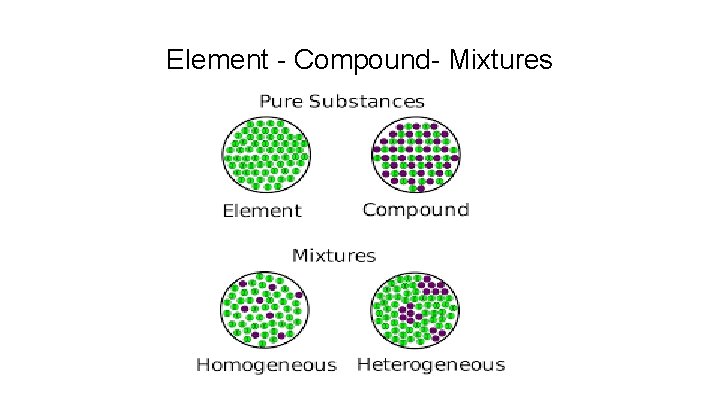
Element - Compound- Mixtures
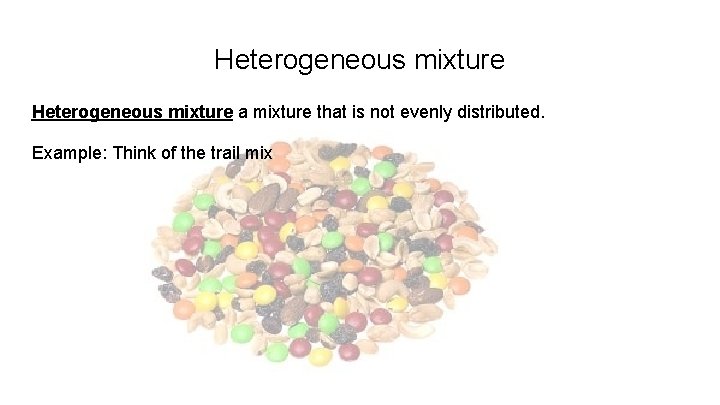
Heterogeneous mixture a mixture that is not evenly distributed. Example: Think of the trail mix
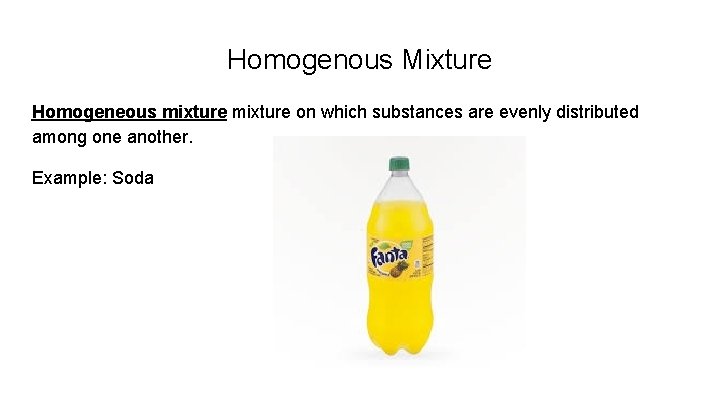
Homogenous Mixture Homogeneous mixture on which substances are evenly distributed among one another. Example: Soda
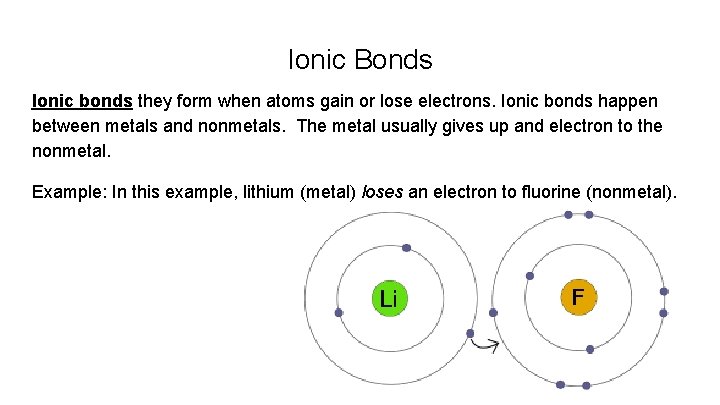
Ionic Bonds Ionic bonds they form when atoms gain or lose electrons. Ionic bonds happen between metals and nonmetals. The metal usually gives up and electron to the nonmetal. Example: In this example, lithium (metal) loses an electron to fluorine (nonmetal).
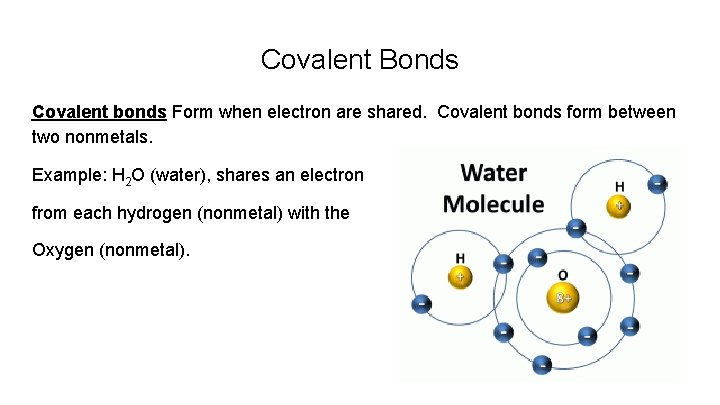
Covalent Bonds Covalent bonds Form when electron are shared. Covalent bonds form between two nonmetals. Example: H 2 O (water), shares an electron from each hydrogen (nonmetal) with the Oxygen (nonmetal).
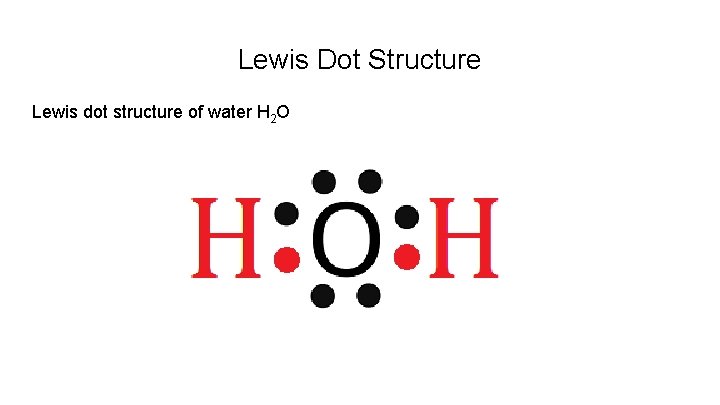
Lewis Dot Structure Lewis dot structure of water H 2 O
- Slides: 11