
Compound Names and Formulas Freshman Chemistry Compound Names
- Slides: 11
Compound Names and Formulas Freshman Chemistry
Compound Names and Formulas • Compounds have names that distinguish them from other compounds • Naming Ionic Compounds • Cations = Positive Ions = Positive because they lost electrons • Examples: K+ Ca 2+ Li+
Naming and Formula • Anions = Negative Ions = Negative because they gained electrons • Examples: F- O 2 - Cl-
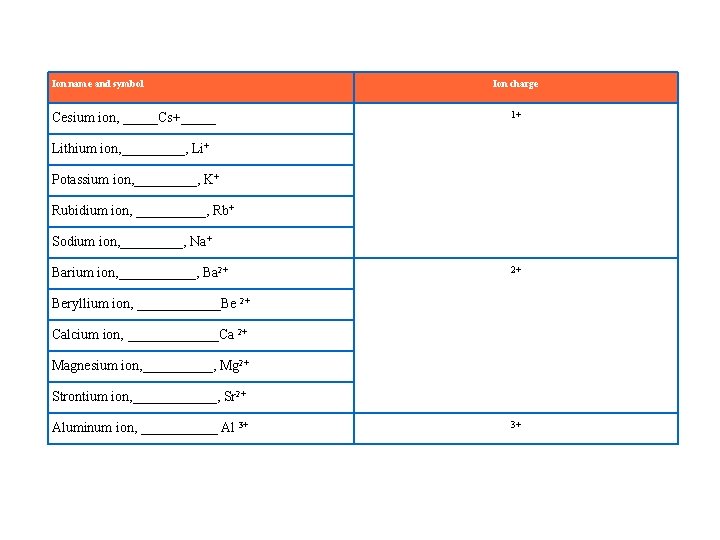
Naming and formula • The names of ionic compounds consist of the names of the ions that make up the compounds. • The names of the cations include the elements of which they are composed.
Ion name and symbol Cesium ion, _____Cs+_____ Ion charge 1+ Lithium ion, _____, Li+ Potassium ion, _____, K+ Rubidium ion, _____, Rb+ Sodium ion, _____, Na+ Barium ion, ______, Ba 2+ 2+ Beryllium ion, ______Be 2+ Calcium ion, _______Ca 2+ Magnesium ion, _____, Mg 2+ Strontium ion, ______, Sr 2+ Aluminum ion, ______ Al 3+ 3+
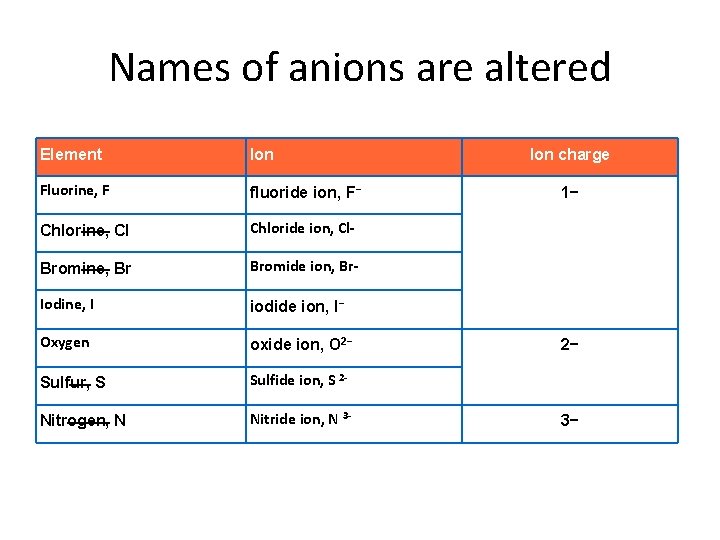
Names of anions are altered Element Ion Fluorine, F fluoride ion, F− Chlorine, Cl Chloride ion, Cl- Bromine, Br Bromide ion, Br- Iodine, I iodide ion, I− Oxygen oxide ion, O 2− Sulfur, S Sulfide ion, S 2 - Nitrogen, N Nitride ion, N 3 - Ion charge 1− 2− 3−
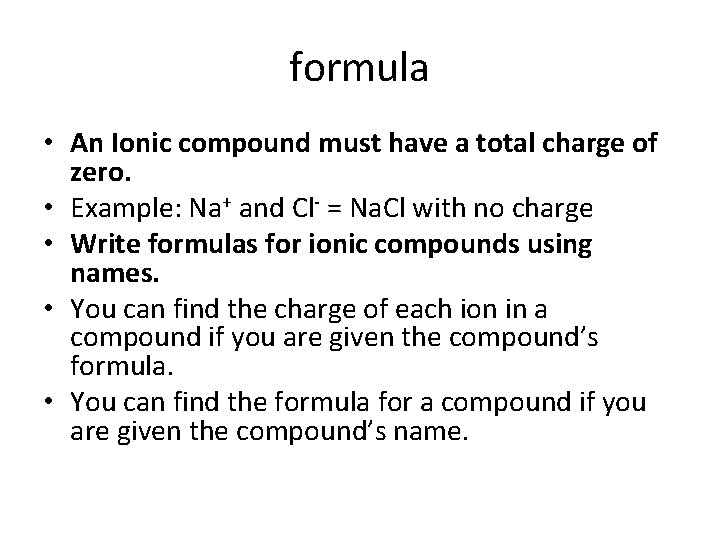
formula • An Ionic compound must have a total charge of zero. • Example: Na+ and Cl- = Na. Cl with no charge • Write formulas for ionic compounds using names. • You can find the charge of each ion in a compound if you are given the compound’s formula. • You can find the formula for a compound if you are given the compound’s name.
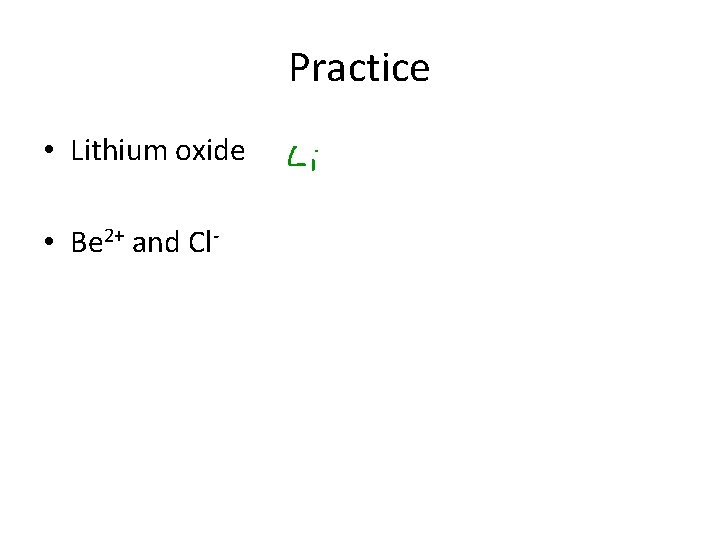
Practice • Lithium oxide • Be 2+ and Cl-
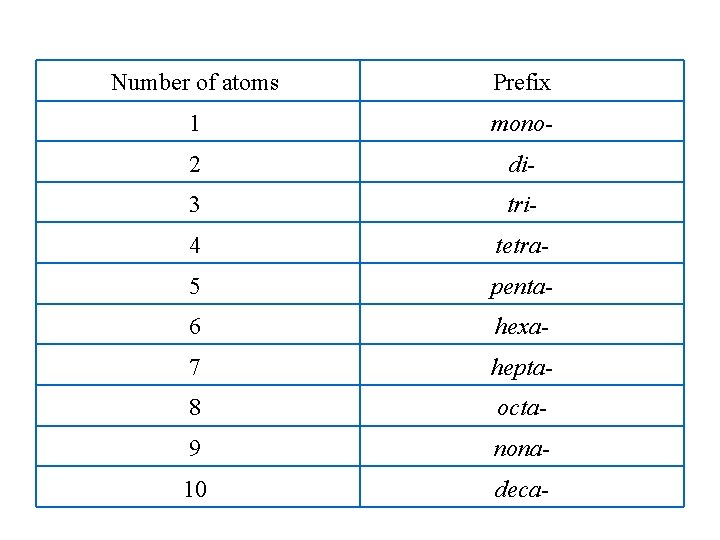
Naming Covalent Compounds • Numerical prefixes are used to name covalent compounds of two elements. • Add the suffix –ide to the last element.
Number of atoms Prefix 1 mono- 2 di- 3 tri- 4 tetra- 5 penta- 6 hexa- 7 hepta- 8 octa- 9 nona- 10 deca-
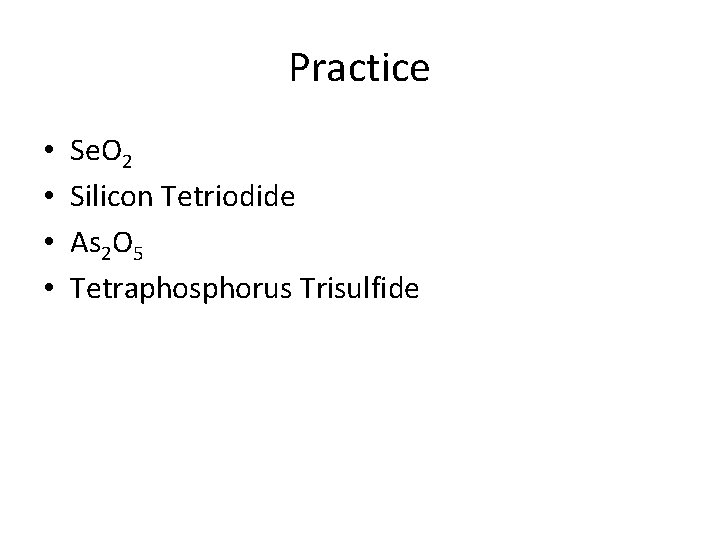
Practice • • Se. O 2 Silicon Tetriodide As 2 O 5 Tetraphosphorus Trisulfide