
Composition Rule of Thirds The rule of thirds
- Slides: 26
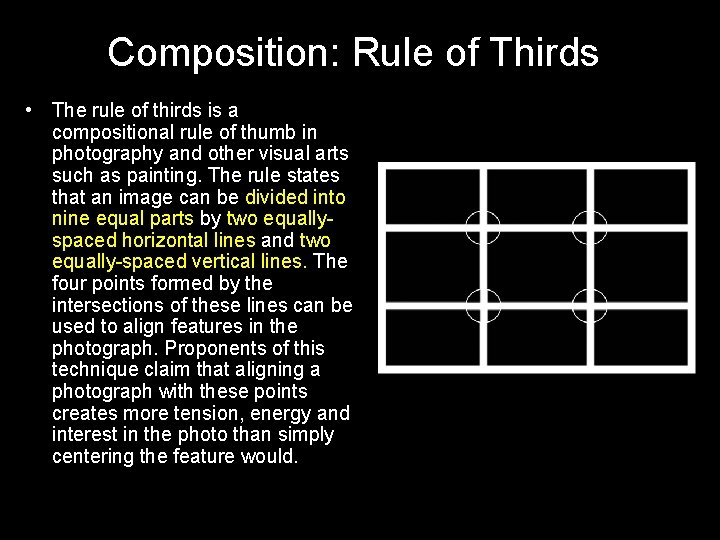
Composition: Rule of Thirds • The rule of thirds is a compositional rule of thumb in photography and other visual arts such as painting. The rule states that an image can be divided into nine equal parts by two equallyspaced horizontal lines and two equally-spaced vertical lines. The four points formed by the intersections of these lines can be used to align features in the photograph. Proponents of this technique claim that aligning a photograph with these points creates more tension, energy and interest in the photo than simply centering the feature would.
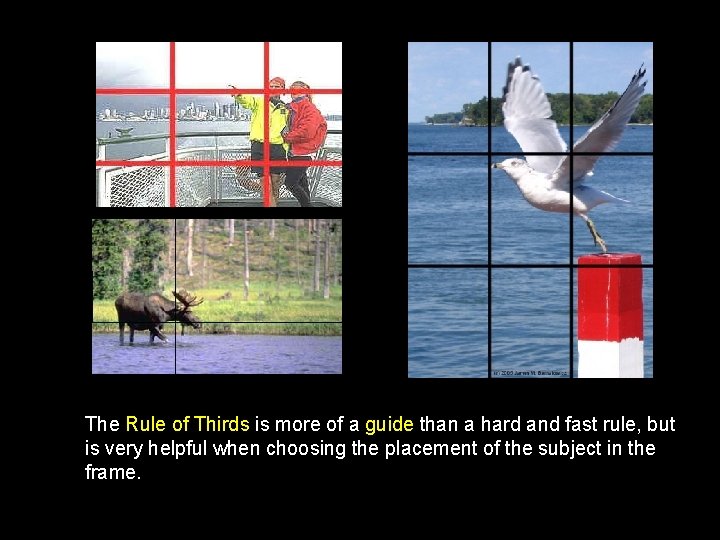
The Rule of Thirds is more of a guide than a hard and fast rule, but is very helpful when choosing the placement of the subject in the frame.
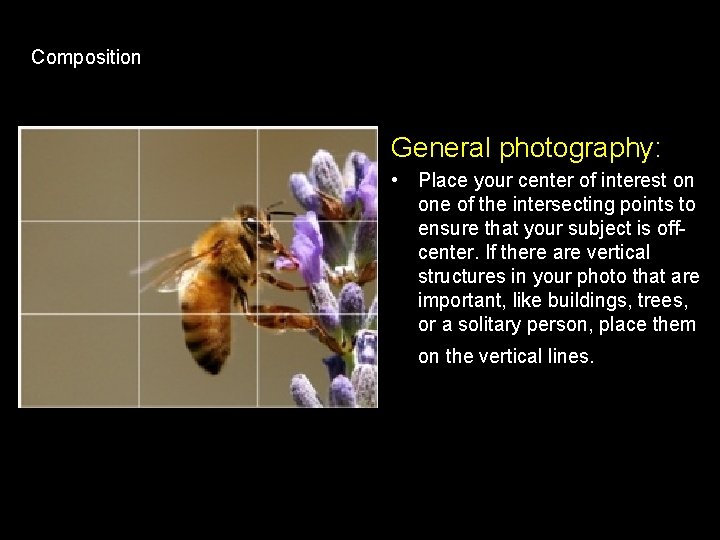
Composition General photography: • Place your center of interest on one of the intersecting points to ensure that your subject is offcenter. If there are vertical structures in your photo that are important, like buildings, trees, or a solitary person, place them on the vertical lines.
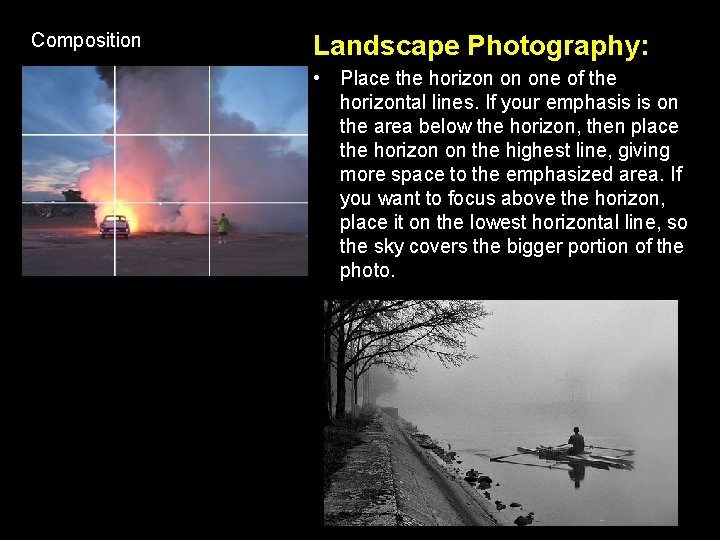
Composition Landscape Photography: • Place the horizon on one of the horizontal lines. If your emphasis is on the area below the horizon, then place the horizon on the highest line, giving more space to the emphasized area. If you want to focus above the horizon, place it on the lowest horizontal line, so the sky covers the bigger portion of the photo.
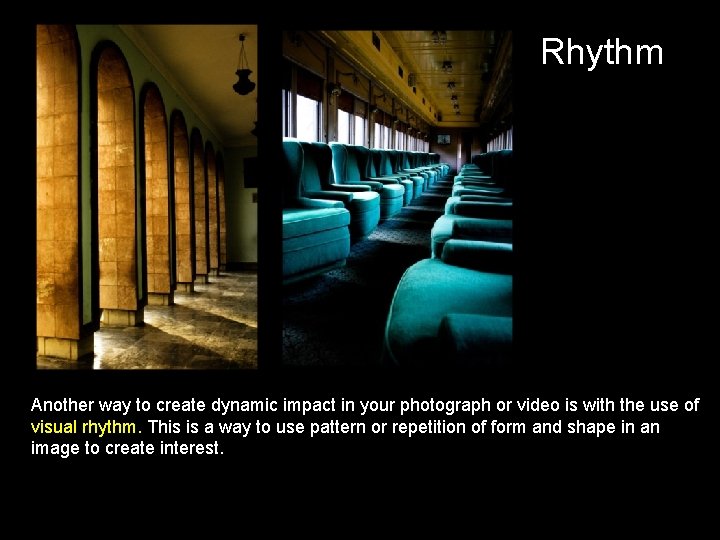
Rhythm Another way to create dynamic impact in your photograph or video is with the use of visual rhythm. This is a way to use pattern or repetition of form and shape in an image to create interest.
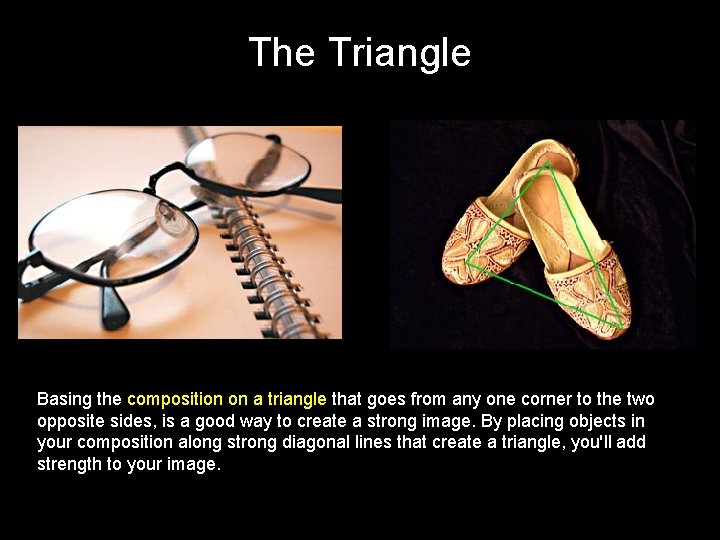
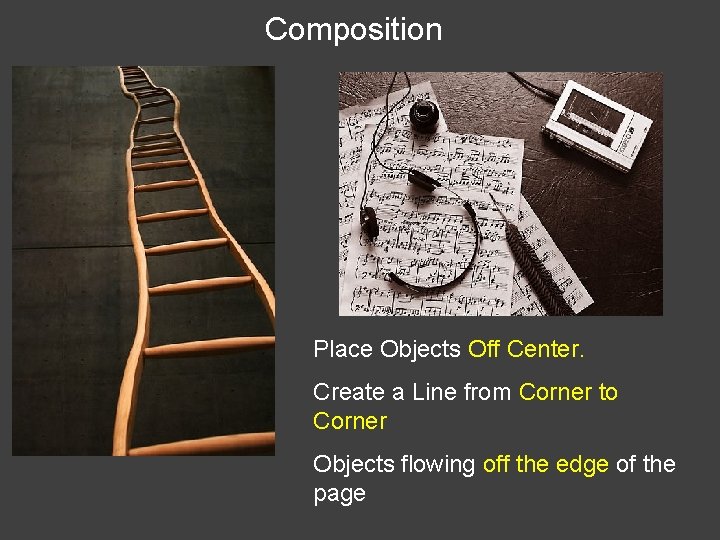
The Triangle Basing the composition on a triangle that goes from any one corner to the two opposite sides, is a good way to create a strong image. By placing objects in your composition along strong diagonal lines that create a triangle, you'll add strength to your image.
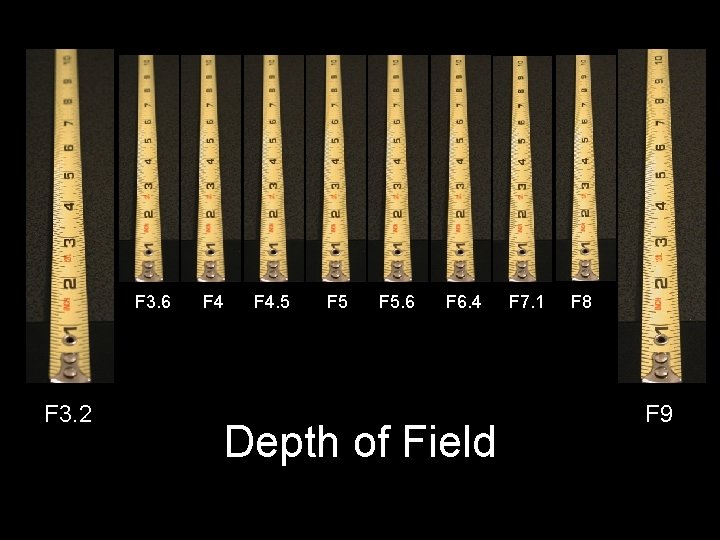
F 3. 6 F 3. 2 F 4. 5 F 5. 6 F 6. 4 Depth of Field F 7. 1 F 8 F 9
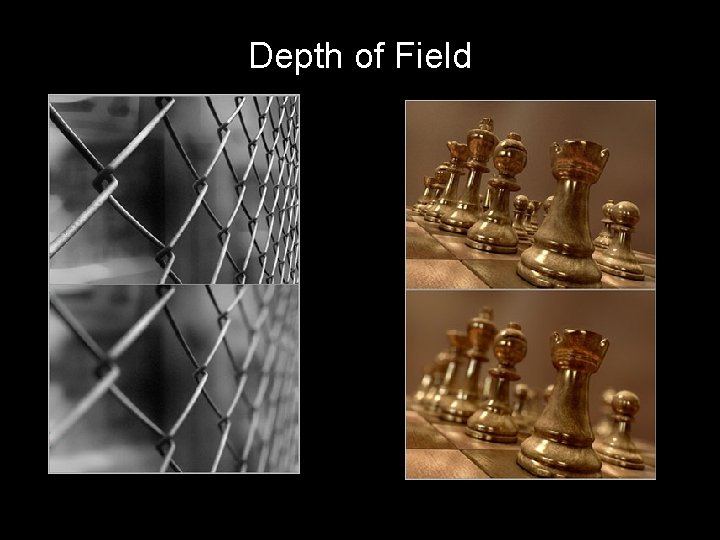
Depth of Field
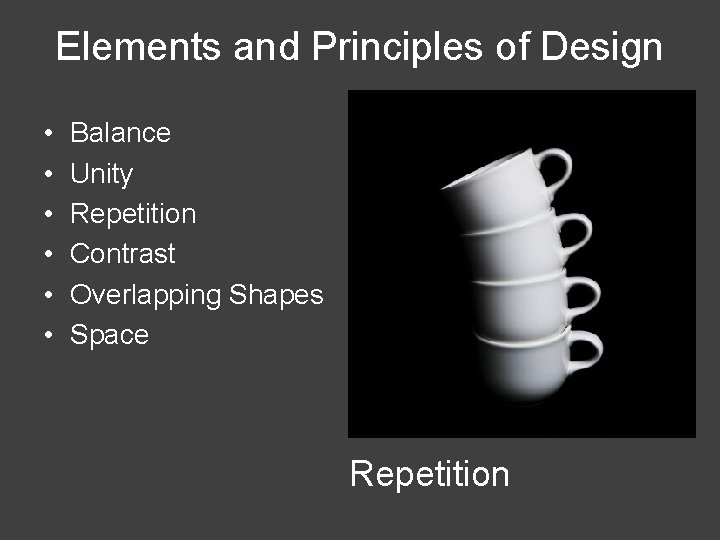
Elements and Principles of Design • • • Balance Unity Repetition Contrast Overlapping Shapes Space Repetition
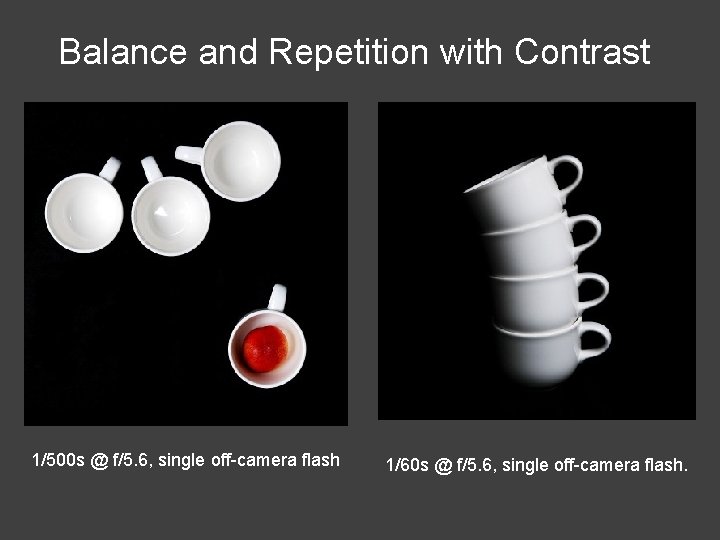
Balance and Repetition with Contrast 1/500 s @ f/5. 6, single off-camera flash 1/60 s @ f/5. 6, single off-camera flash.
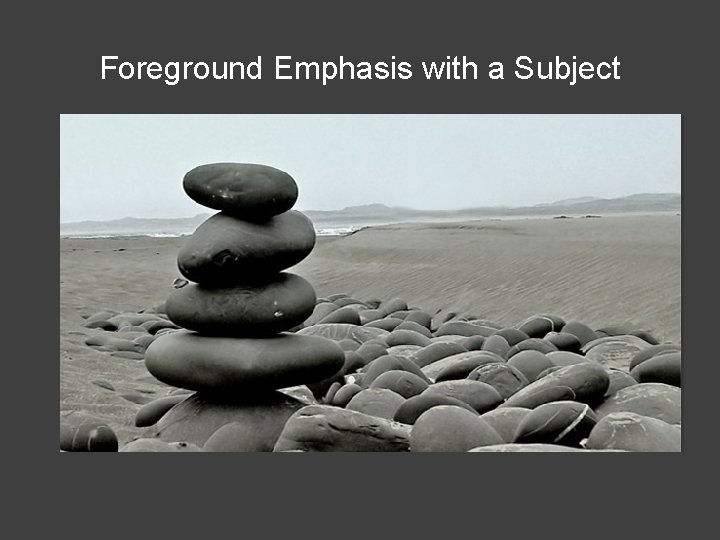
Foreground Emphasis with a Subject
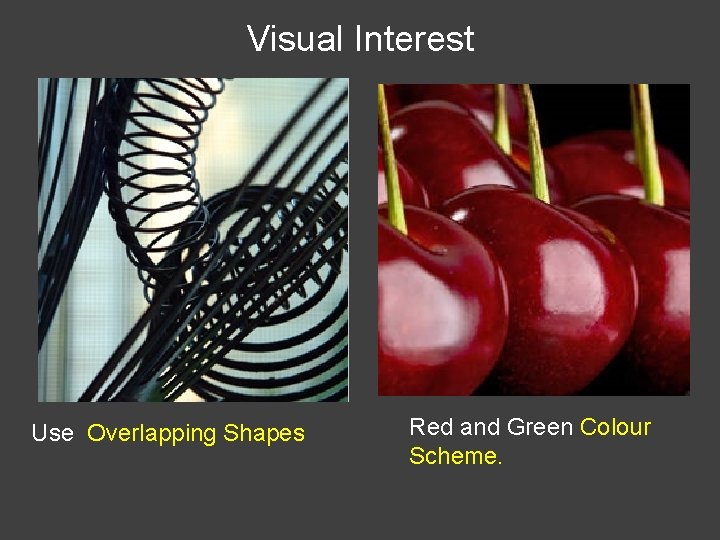
Visual Interest Use Overlapping Shapes Red and Green Colour Scheme.
Composition Place Objects Off Center. Create a Line from Corner to Corner Objects flowing off the edge of the page
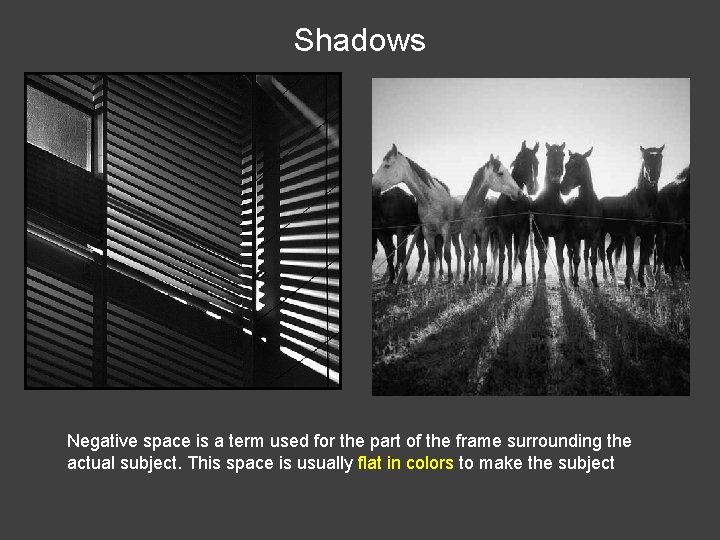
Shadows Negative space is a term used for the part of the frame surrounding the actual subject. This space is usually flat in colors to make the subject
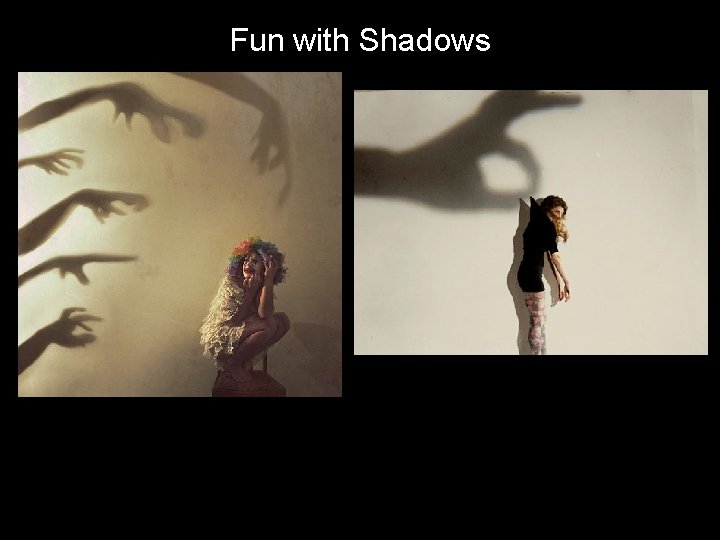
Fun with Shadows
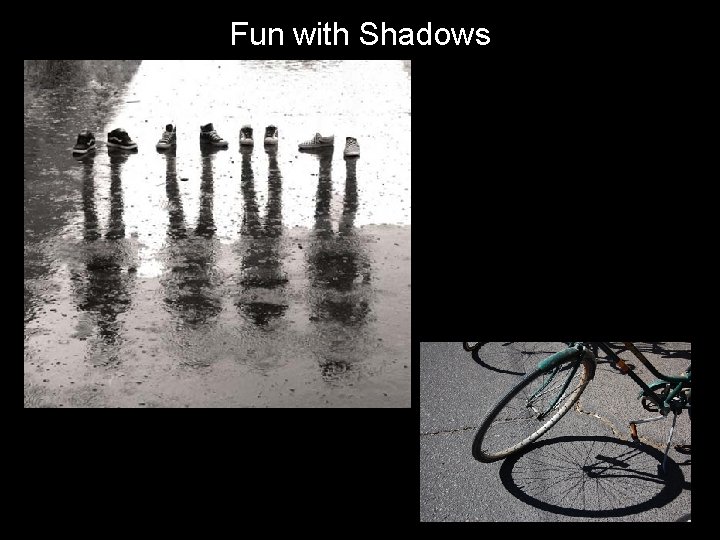
Fun with Shadows
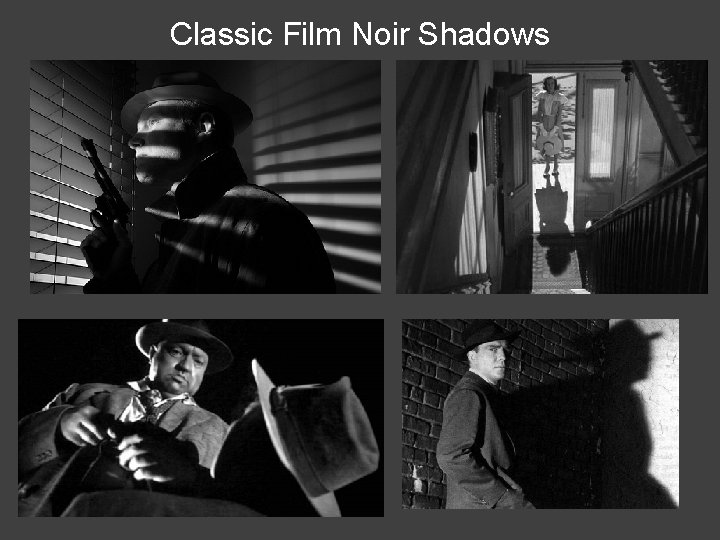
Classic Film Noir Shadows
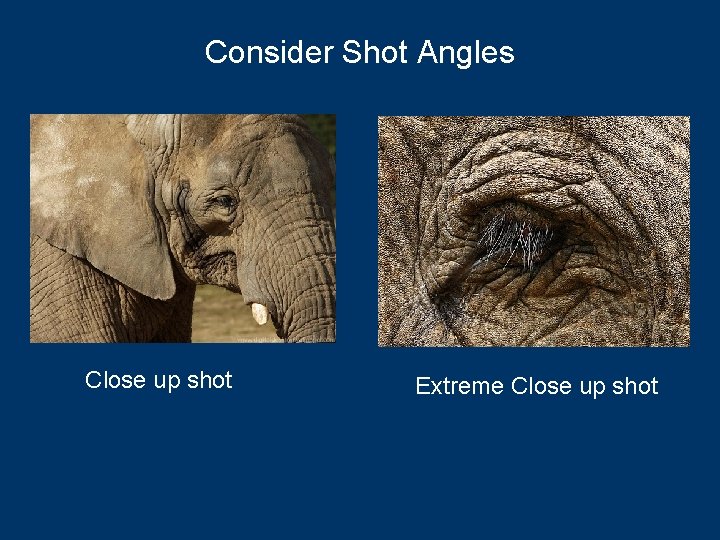
Consider Shot Angles Close up shot Extreme Close up shot
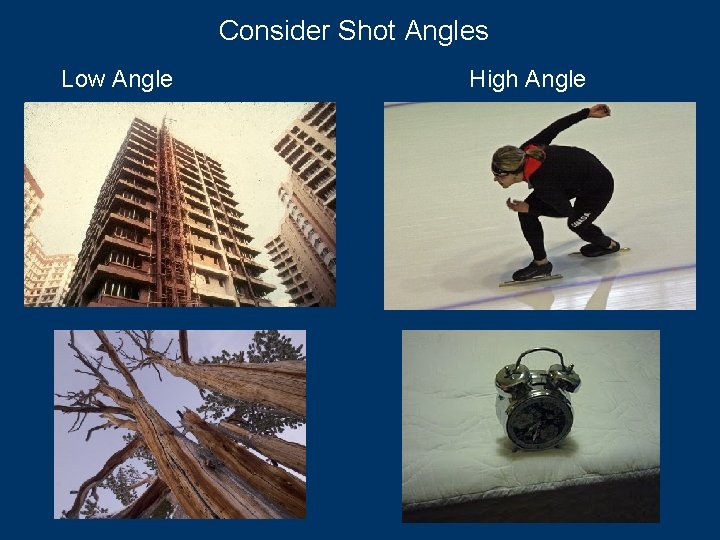
Consider Shot Angles Low Angle High Angle
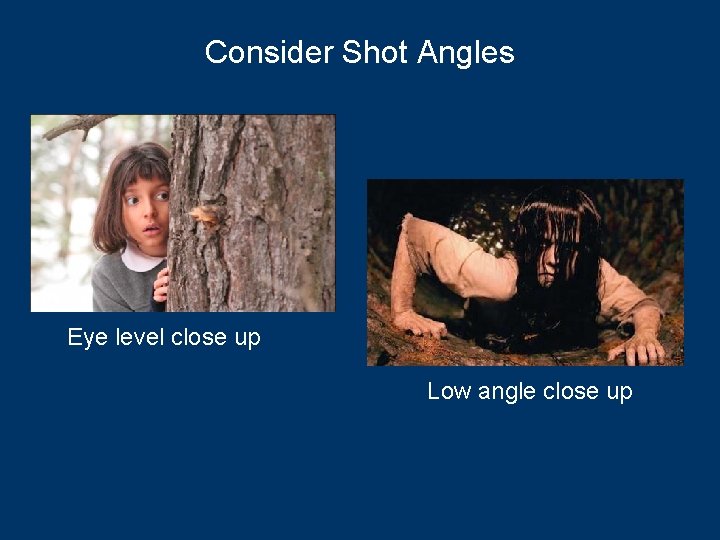
Consider Shot Angles Eye level close up Low angle close up
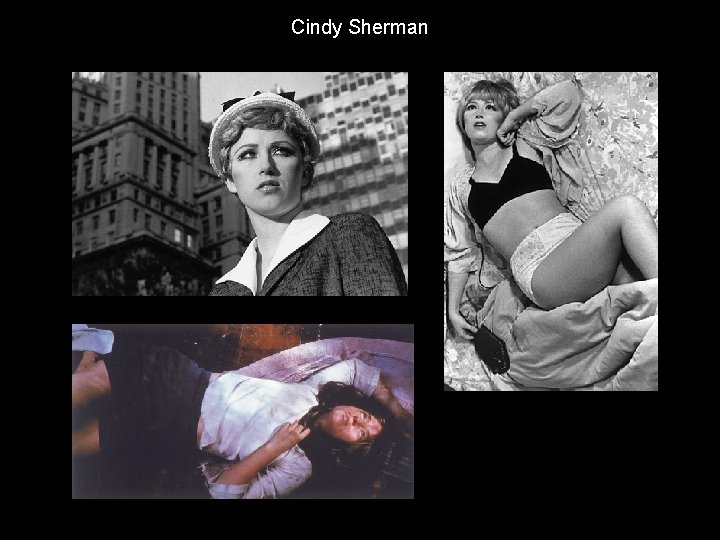
Cindy Sherman
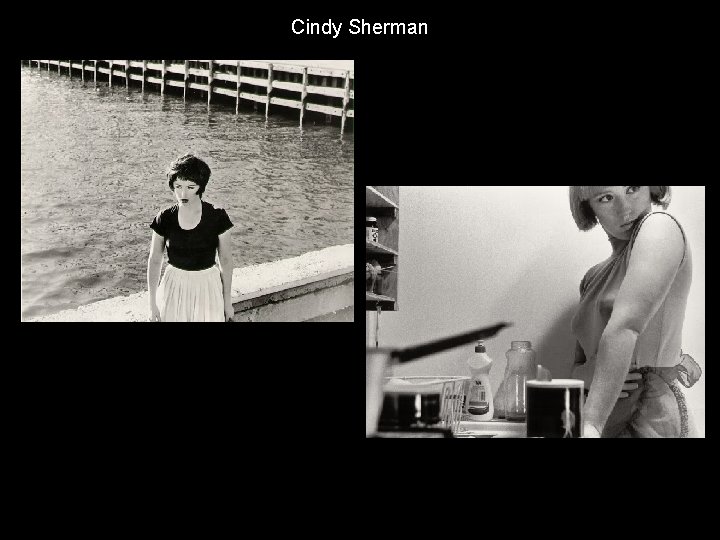
Cindy Sherman
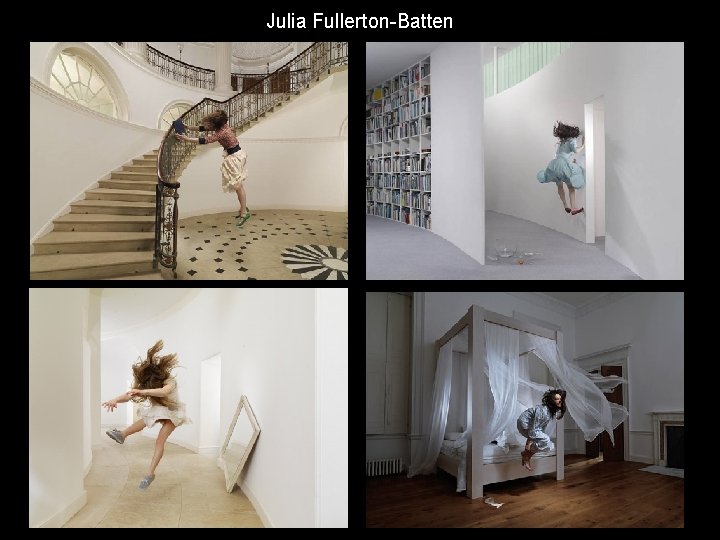
Julia Fullerton-Batten
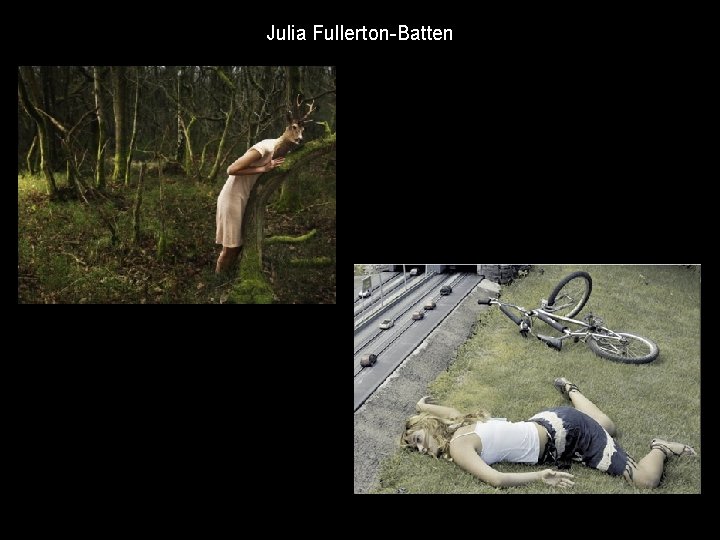
Julia Fullerton-Batten
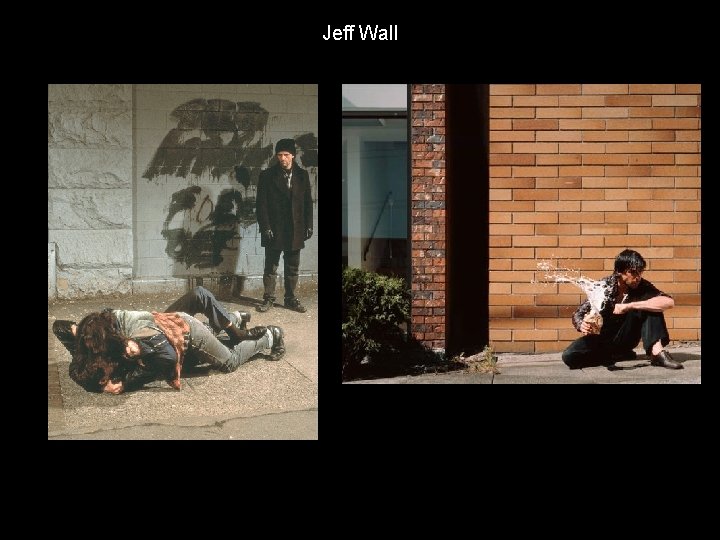
Jeff Wall
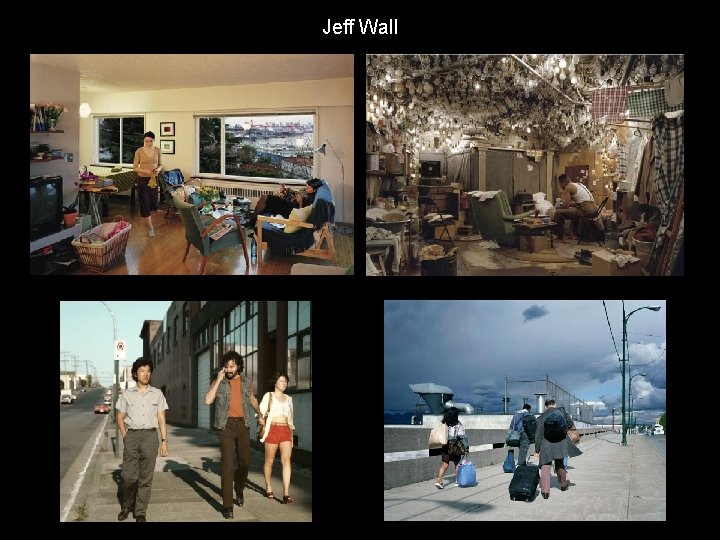
Jeff Wall