
COMPOSITION QUALITATIVE ANALYSIS HOW MUCH QUANTITATIVE ANALYSIS WHAT


- Slides: 49
COMPOSITION ? (QUALITATIVE ANALYSIS) HOW MUCH ? (QUANTITATIVE ANALYSIS) WHAT FORM ? (SPECIATION)
Topic I Mass Spectrometry
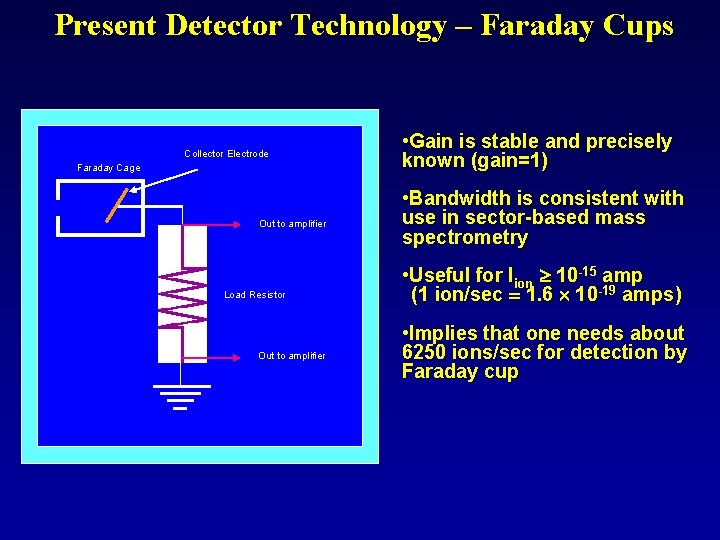
Present Detector Technology – Faraday Cups Collector Electrode Faraday Cage Out to amplifier Load Resistor Out to amplifier • Gain is stable and precisely known (gain=1) • Bandwidth is consistent with use in sector-based mass spectrometry • Useful for Iion 10 -15 amp (1 ion/sec 1. 6 10 -19 amps) • Implies that one needs about 6250 ions/sec for detection by Faraday cup
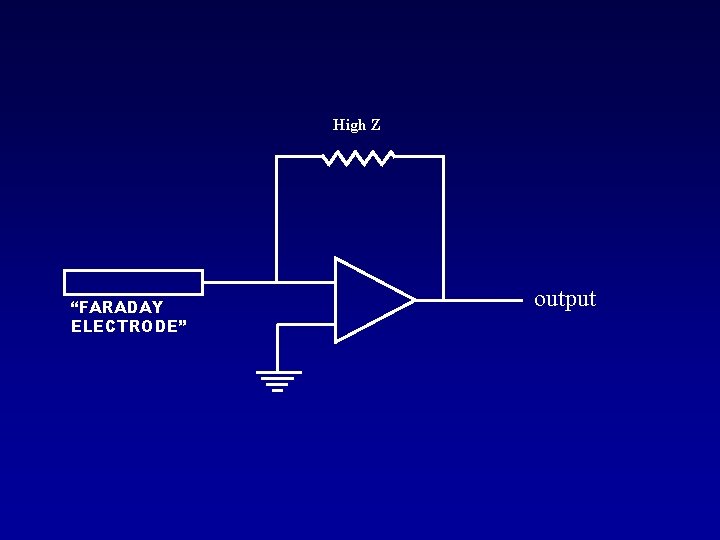
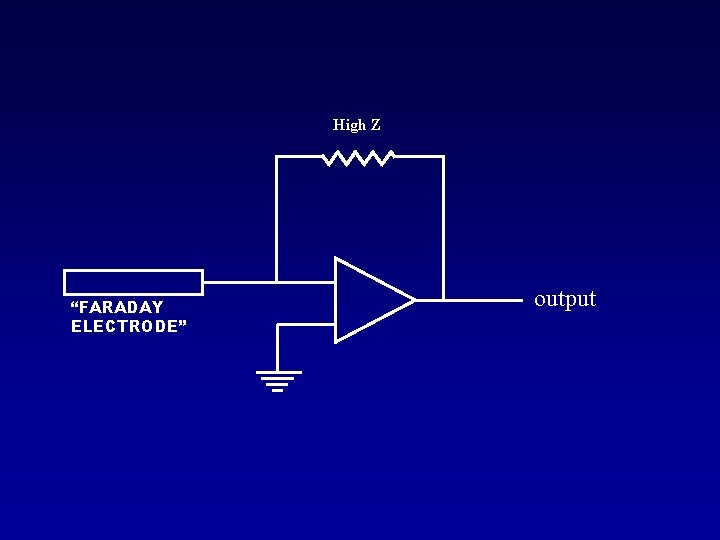
High Z “FARADAY ELECTRODE” output
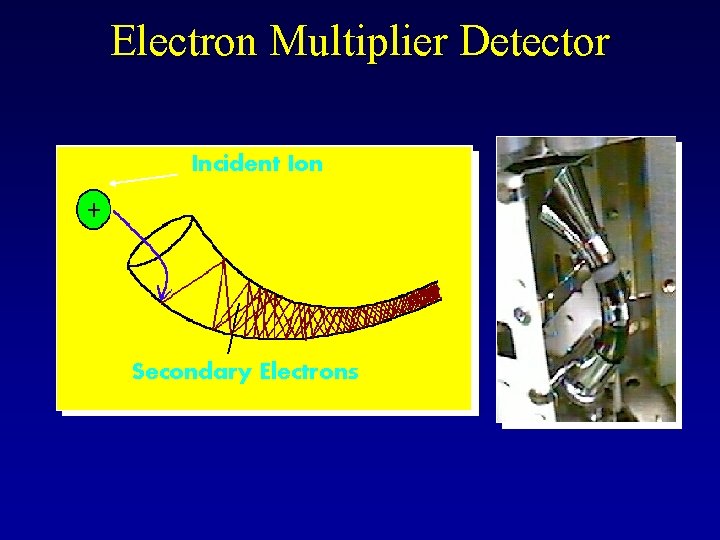
Electron Multiplier Detector Incident Ion Secondary Electrons
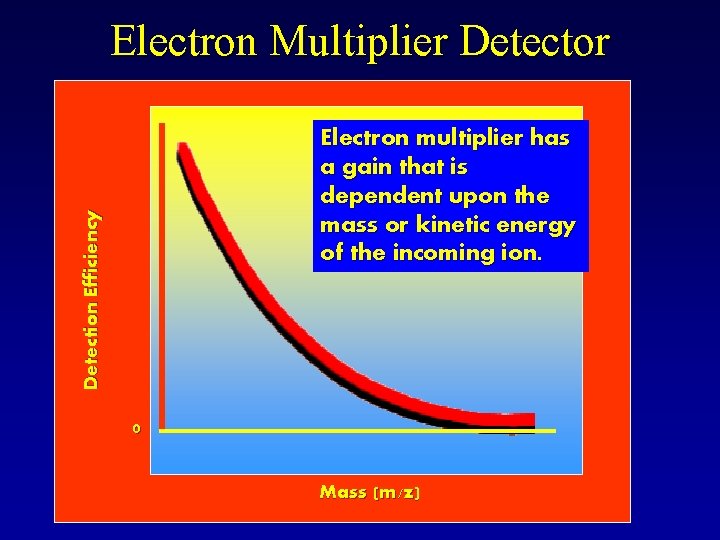
Electron Multiplier Detector Detection Efficiency Electron multiplier has a gain that is dependent upon the mass or kinetic energy of the incoming ion. 0 Mass (m/z)
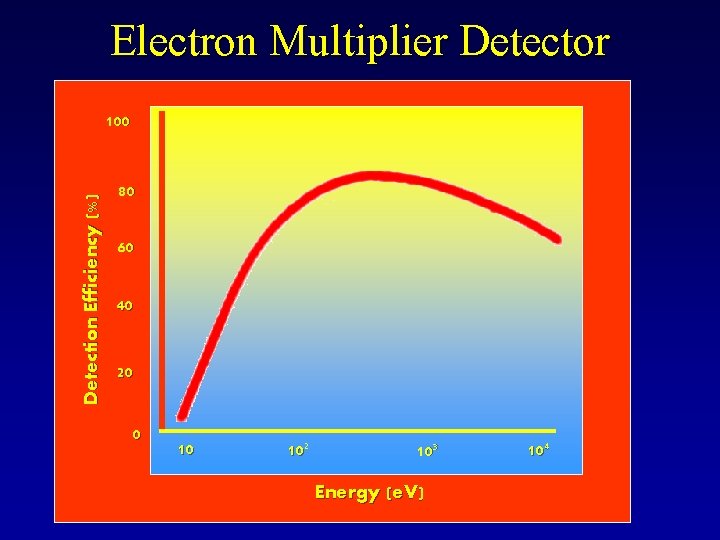
Electron Multiplier Detector Detection Efficiency (%) 100 80 60 40 20 0 10 102 103 Energy (e. V) 104
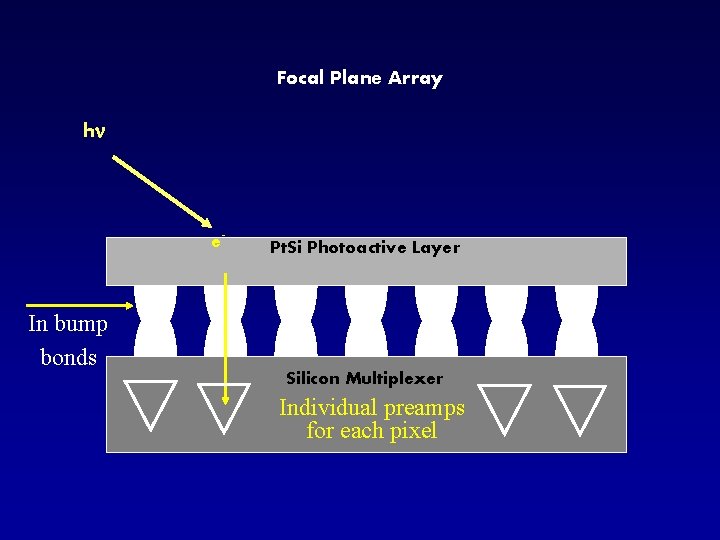
Focal Plane Array hn e - Pt. Si Photoactive Layer In bump bonds Silicon Multiplexer Individual preamps for each pixel
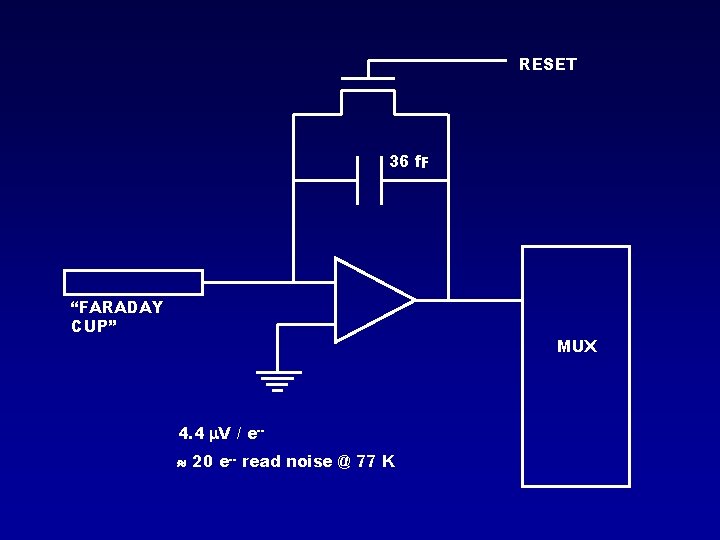
RESET 36 f. F “FARADAY CUP” MUX 4. 4 V / e- 20 e-- read noise @ 77 K
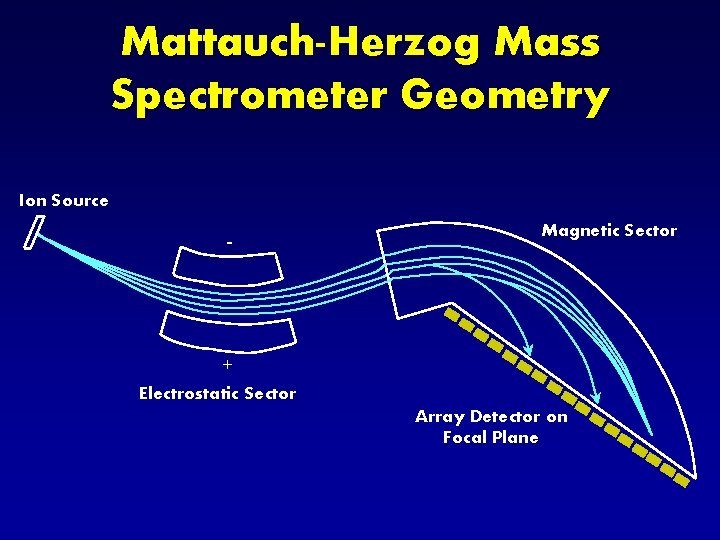
Mattauch-Herzog Mass Spectrometer Geometry Ion Source - Magnetic Sector + Electrostatic Sector Array Detector on Focal Plane
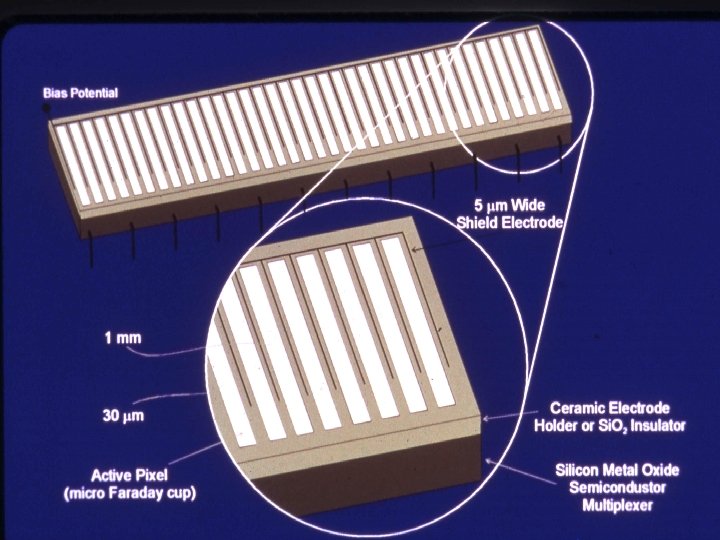
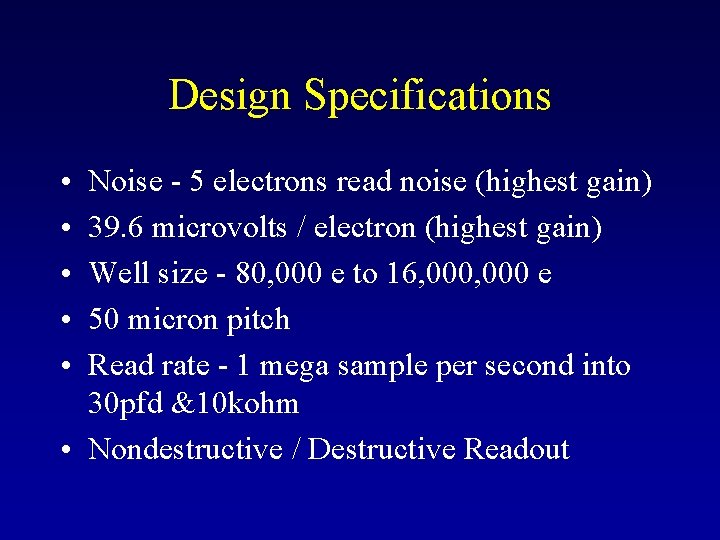
Design Specifications • • • Noise - 5 electrons read noise (highest gain) 39. 6 microvolts / electron (highest gain) Well size - 80, 000 e to 16, 000 e 50 micron pitch Read rate - 1 mega sample per second into 30 pfd &10 kohm • Nondestructive / Destructive Readout
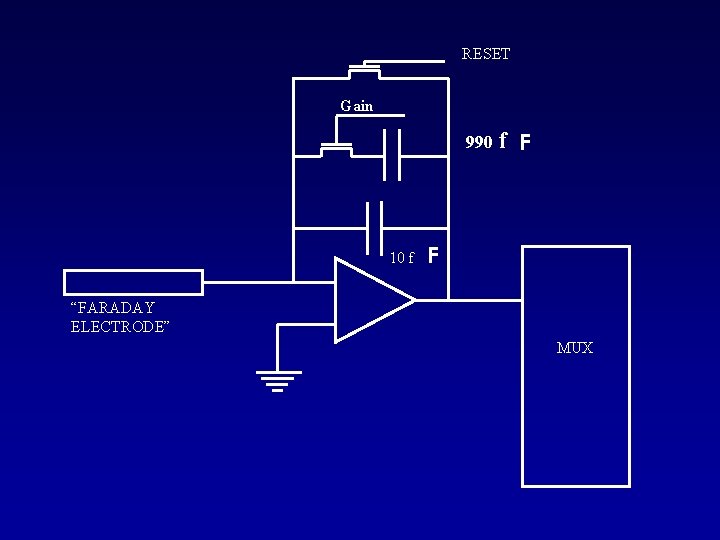
RESET Gain 990 10 f f F F “FARADAY ELECTRODE” MUX
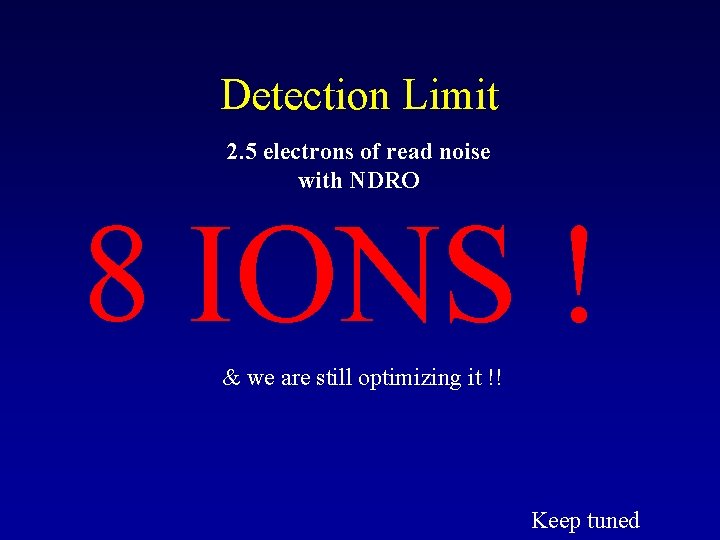
Detection Limit 2. 5 electrons of read noise with NDRO 8 IONS ! & we are still optimizing it !! Keep tuned
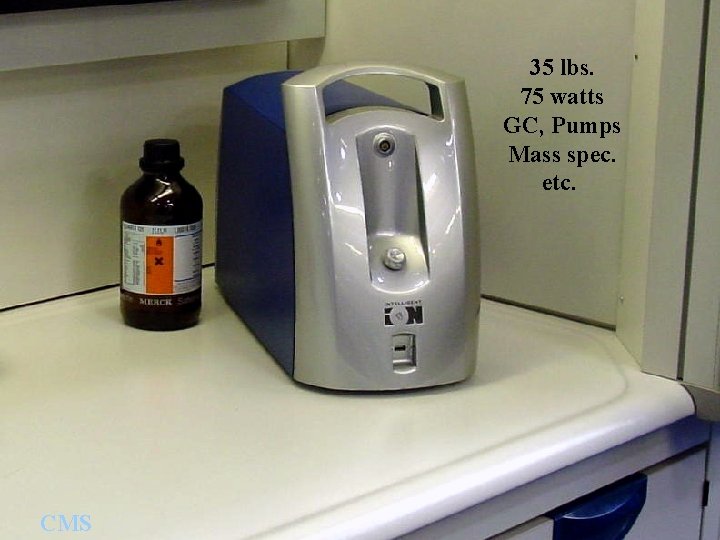
35 lbs. 75 watts GC, Pumps Mass spec. etc. CMS
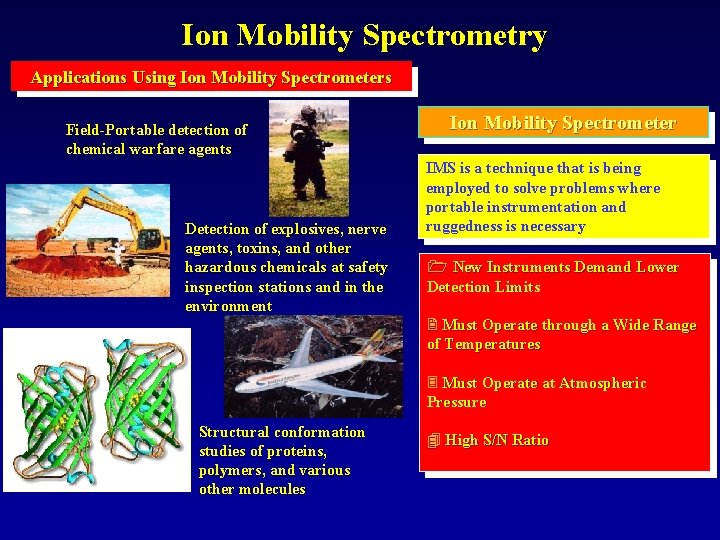
Ion Mobility Spectrometry Applications Using Ion Mobility Spectrometers Field-Portable detection of chemical warfare agents Detection of explosives, nerve agents, toxins, and other hazardous chemicals at safety inspection stations and in the environment Ion Mobility Spectrometer IMS is a technique that is being employed to solve problems where portable instrumentation and ruggedness is necessary 1 New Instruments Demand Lower Detection Limits 2 Must Operate through a Wide Range of Temperatures 3 Must Operate at Atmospheric Pressure Structural conformation studies of proteins, polymers, and various other molecules 4 High S/N Ratio
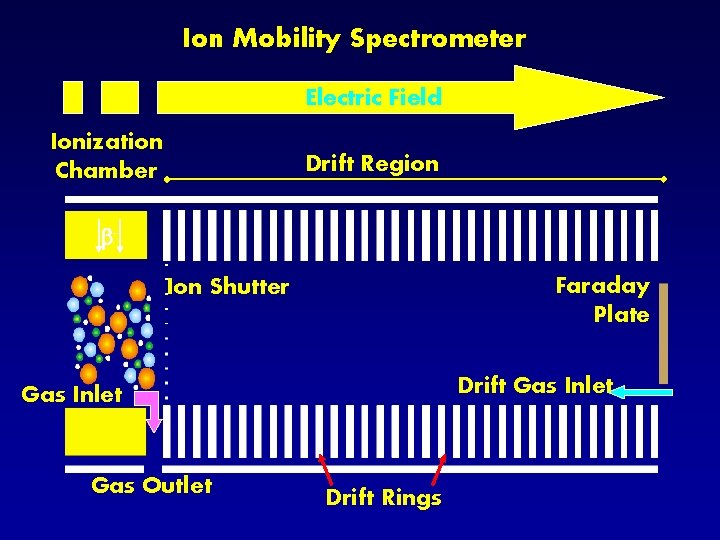
Ion Mobility Spectrometer Electric Field Ionization Chamber Drift Region b. Faraday Plate Ion Shutter Drift Gas Inlet Gas Outlet Drift Rings
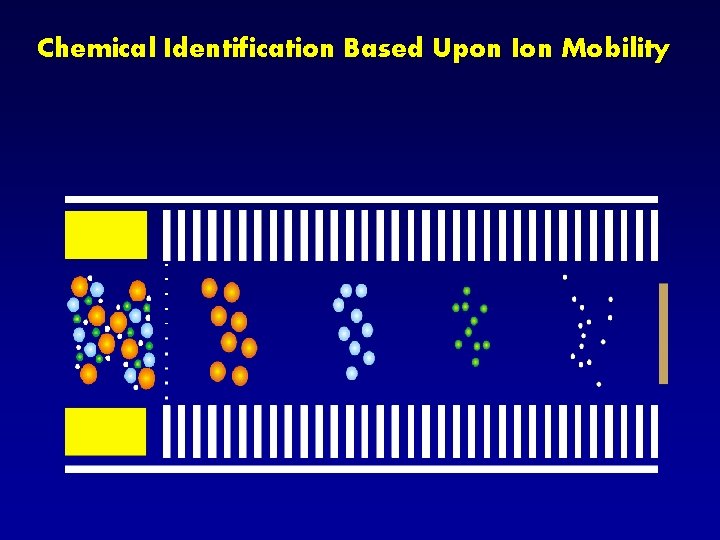
Chemical Identification Based Upon Ion Mobility
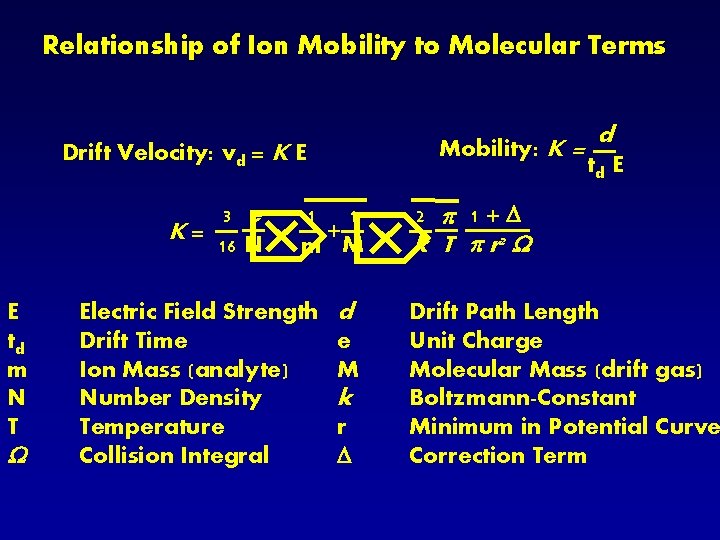
Relationship of Ion Mobility to Molecular Terms Mobility: K = Drift Velocity: vd = K E d td E 2 p 1+D 3 e K= 16 N E td m N T W 1 1 + m M Electric Field Strength Drift Time Ion Mass (analyte) Number Density Temperature Collision Integral d e M k r D k T p r 2 W Drift Path Length Unit Charge Molecular Mass (drift gas) Boltzmann-Constant Minimum in Potential Curve Correction Term
High Z “FARADAY ELECTRODE” output
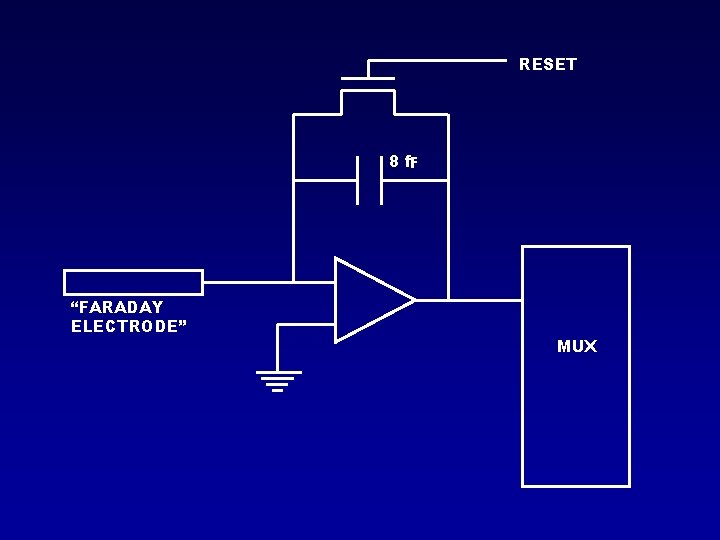
RESET 8 f. F “FARADAY ELECTRODE” MUX
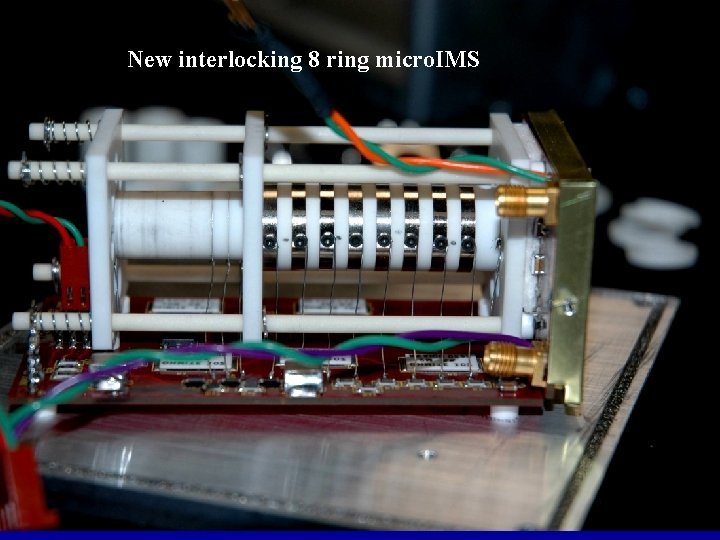
New interlocking 8 ring micro. IMS
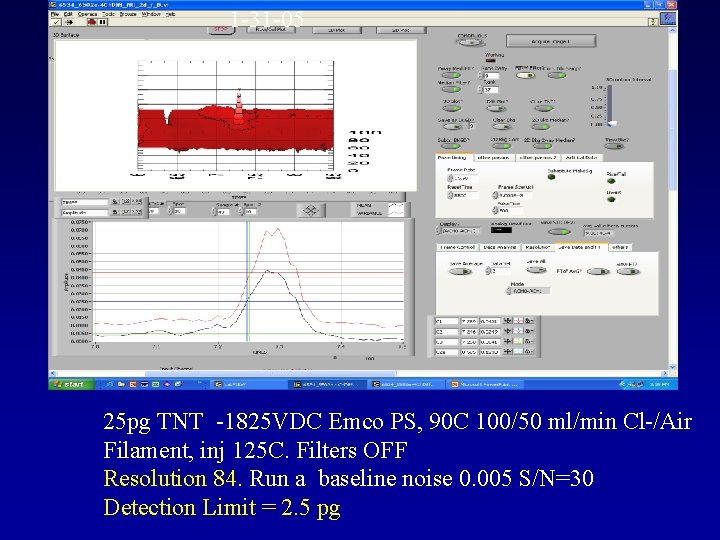
1 -31 -05 25 pg TNT -1825 VDC Emco PS, 90 C 100/50 ml/min Cl-/Air Filament, inj 125 C. Filters OFF Resolution 84. Run a baseline noise 0. 005 S/N=30 Detection Limit = 2. 5 pg
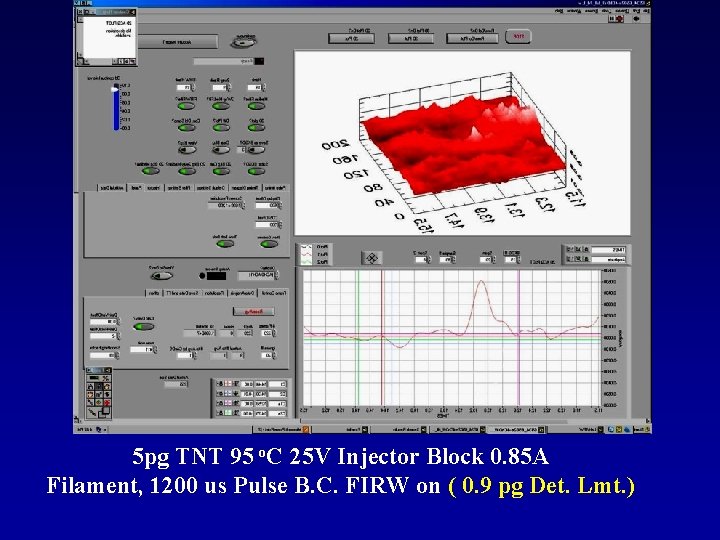
5 pg TNT 95 o. C 25 V Injector Block 0. 85 A Filament, 1200 us Pulse B. C. FIRW on ( 0. 9 pg Det. Lmt. )
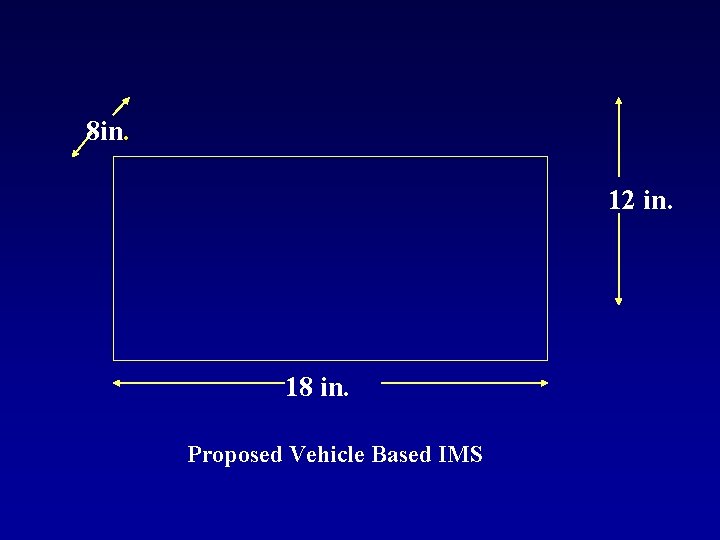
8 in. 12 in. 18 in. Proposed Vehicle Based IMS
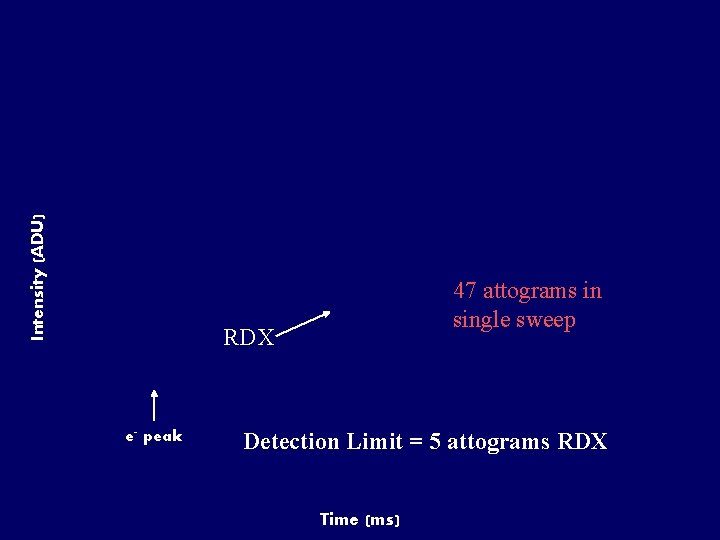
Intensity (ADU) 47 attograms in single sweep RDX e- peak Detection Limit = 5 attograms RDX Time (ms)
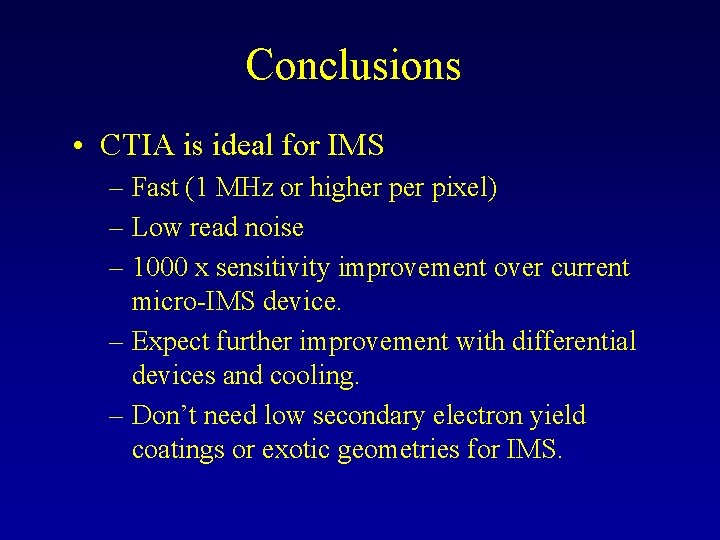
Conclusions • CTIA is ideal for IMS – Fast (1 MHz or higher pixel) – Low read noise – 1000 x sensitivity improvement over current micro-IMS device. – Expect further improvement with differential devices and cooling. – Don’t need low secondary electron yield coatings or exotic geometries for IMS.
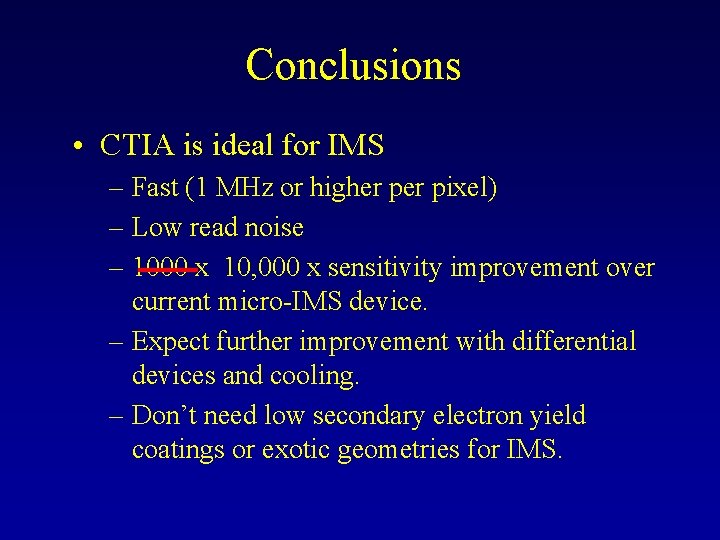
Conclusions • CTIA is ideal for IMS – Fast (1 MHz or higher pixel) – Low read noise – 1000 x 10, 000 x sensitivity improvement over current micro-IMS device. – Expect further improvement with differential devices and cooling. – Don’t need low secondary electron yield coatings or exotic geometries for IMS.
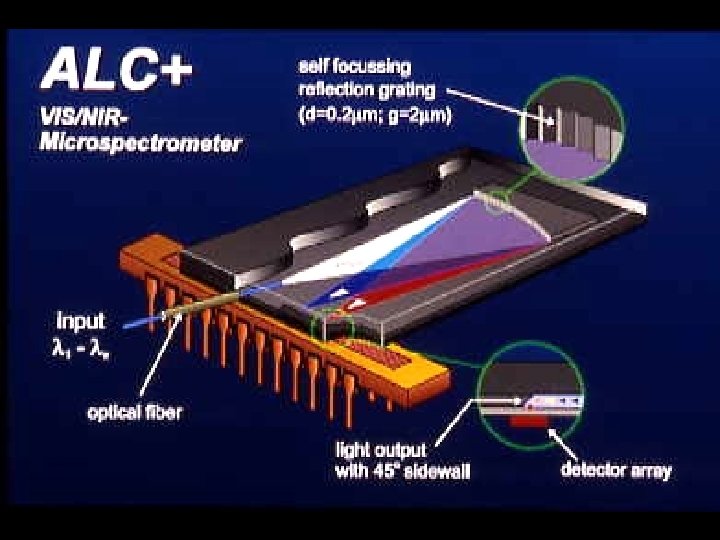
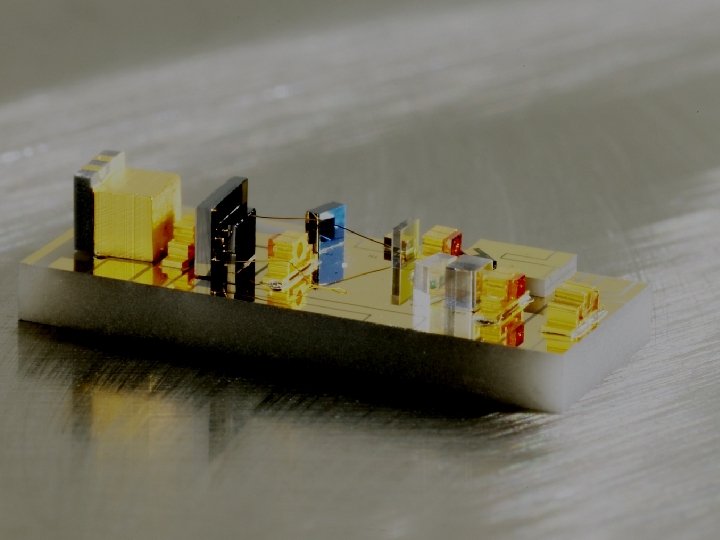
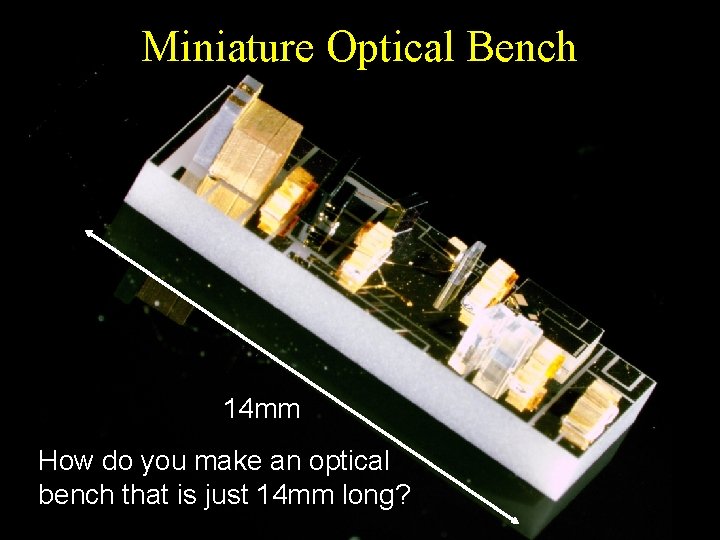
Miniature Optical Bench 14 mm How do you make an optical bench that is just 14 mm long?
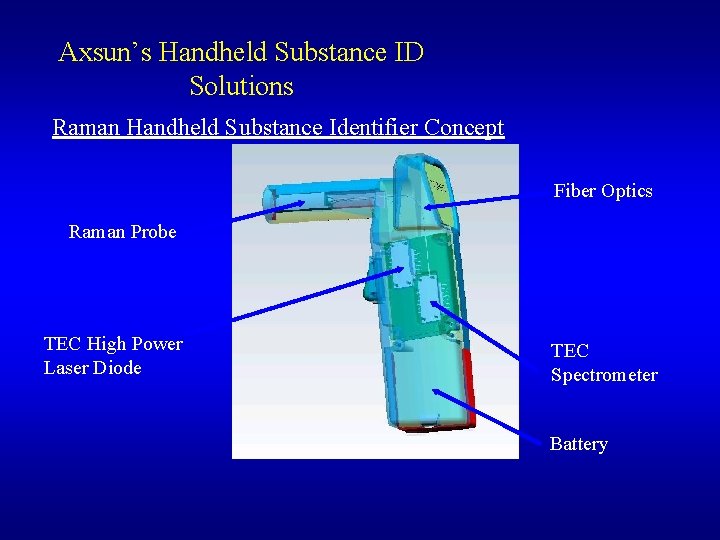
Axsun’s Handheld Substance ID Solutions Raman Handheld Substance Identifier Concept Fiber Optics Raman Probe TEC High Power Laser Diode TEC Spectrometer Battery
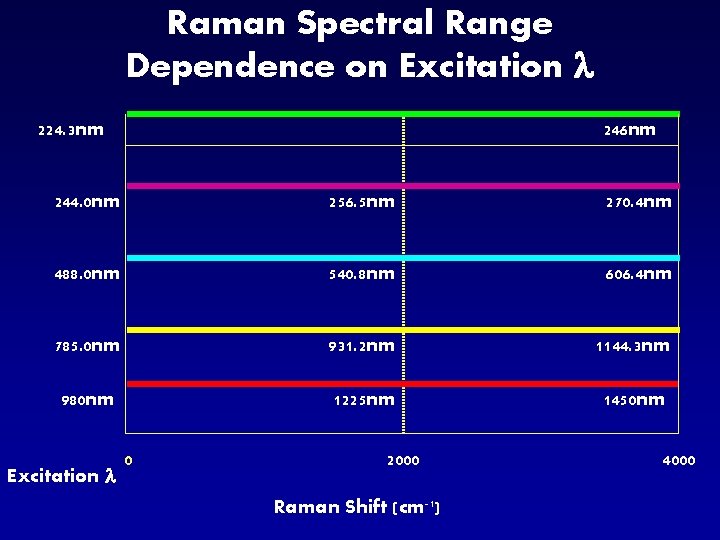
Raman Spectral Range Dependence on Excitation l 224. 3 nm 246 nm 244. 0 nm 256. 5 nm 270. 4 nm 488. 0 nm 540. 8 nm 606. 4 nm 785. 0 nm 931. 2 nm 1144. 3 nm 980 nm 1225 nm 1450 nm Excitation l 0 2000 Raman Shift (cm-1) 4000
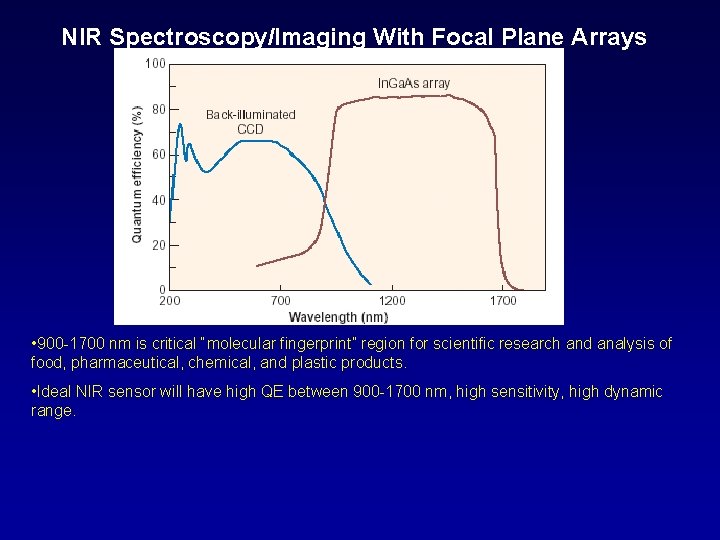
NIR Spectroscopy/Imaging With Focal Plane Arrays • 900 -1700 nm is critical “molecular fingerprint” region for scientific research and analysis of food, pharmaceutical, chemical, and plastic products. • Ideal NIR sensor will have high QE between 900 -1700 nm, high sensitivity, high dynamic range.
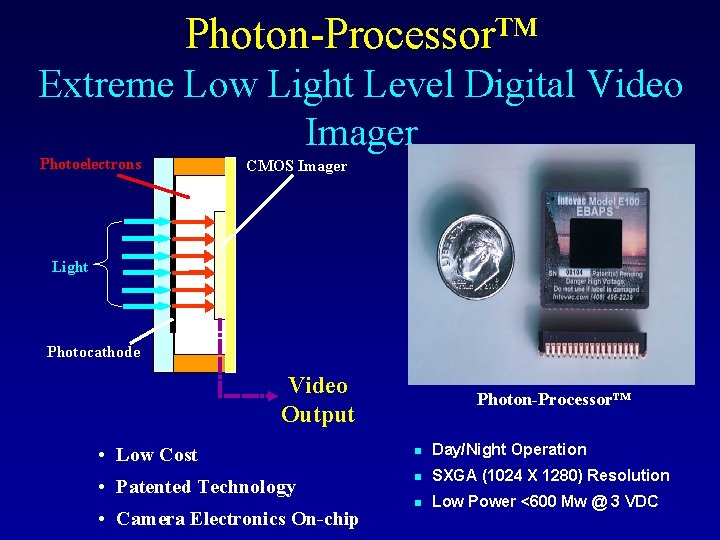
Photon-Processor™ Extreme Low Light Level Digital Video Imager Photoelectrons CMOS Imager Light Photocathode Video Output Photon-Processor™ • Low Cost n Day/Night Operation • Patented Technology n SXGA (1024 X 1280) Resolution n Low Power <600 Mw @ 3 VDC • Camera Electronics On-chip
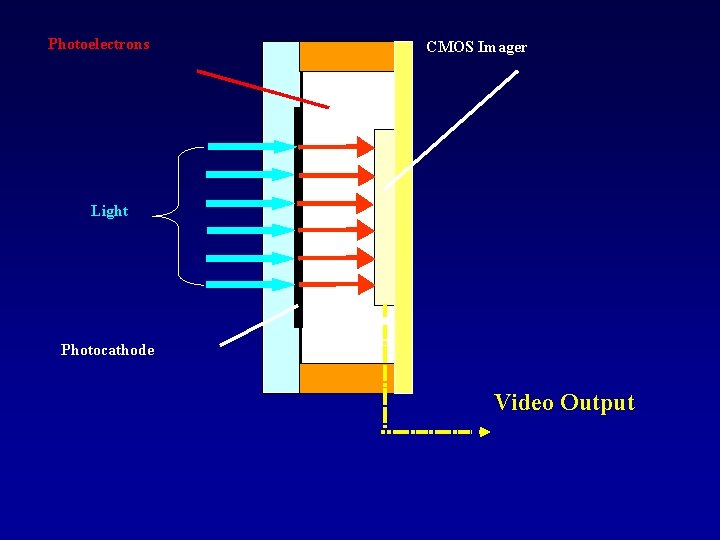
Photoelectrons CMOS Imager Light Photocathode Video Output
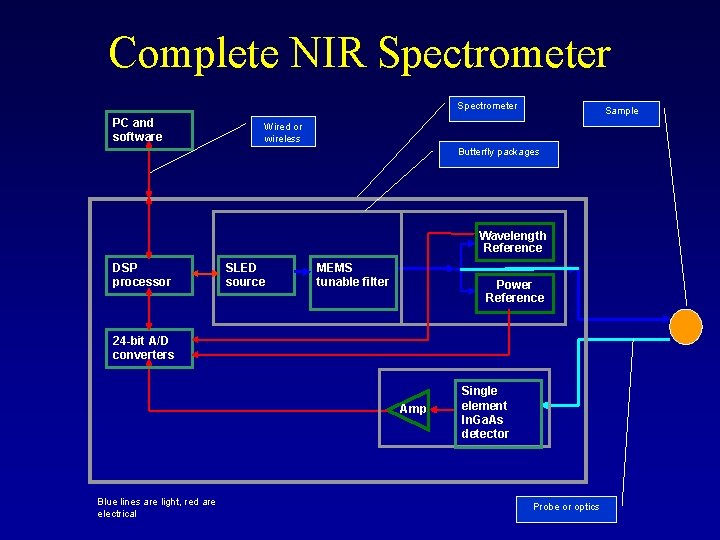
Complete NIR Spectrometer PC and software Sample Wired or wireless Butterfly packages Wavelength Reference DSP processor SLED source MEMS tunable filter Power Reference 24 -bit A/D converters Amp Blue lines are light, red are electrical Single element In. Ga. As detector Probe or optics
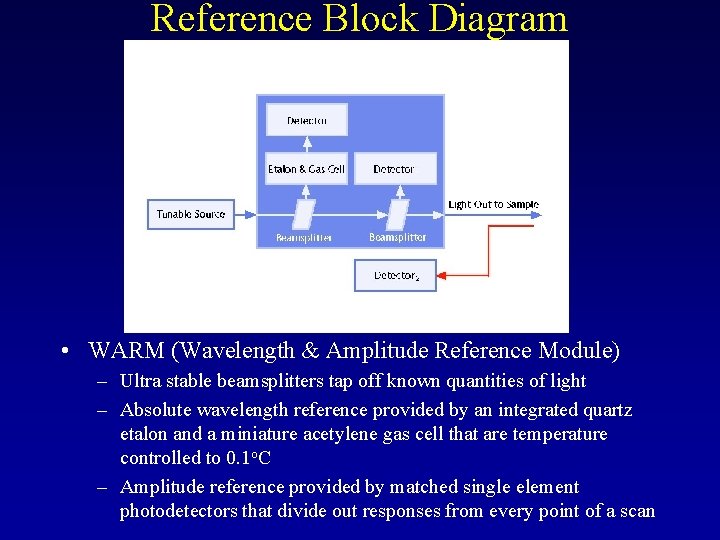
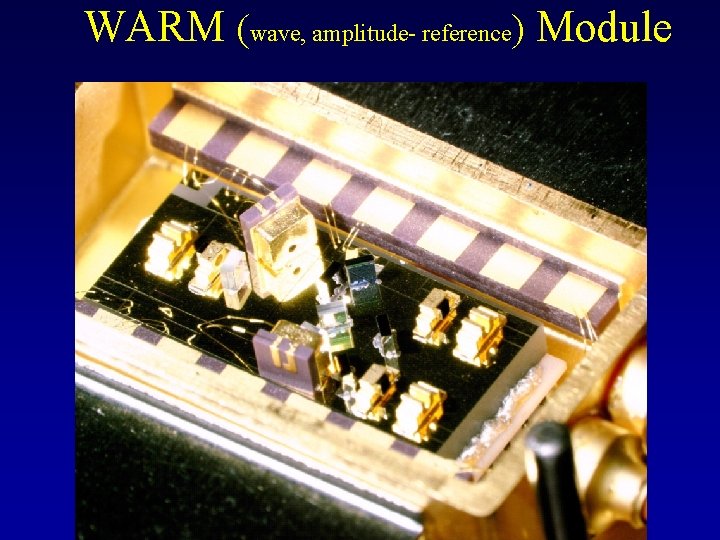
Reference Block Diagram • WARM (Wavelength & Amplitude Reference Module) – Ultra stable beamsplitters tap off known quantities of light – Absolute wavelength reference provided by an integrated quartz etalon and a miniature acetylene gas cell that are temperature controlled to 0. 1 o. C – Amplitude reference provided by matched single element photodetectors that divide out responses from every point of a scan
WARM (wave, amplitude- reference) Module
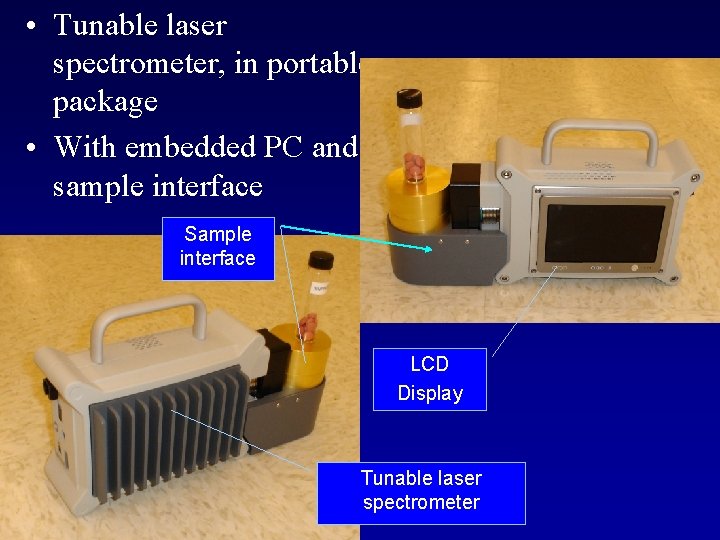
• Tunable laser spectrometer, in portable package • With embedded PC and sample interface Sample interface LCD Display Tunable laser spectrometer