
Composition of Stars Classify stars by their color
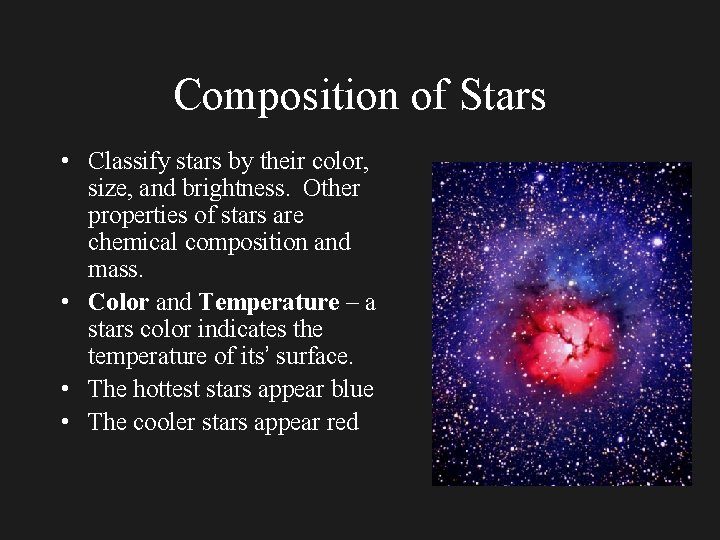
Composition of Stars • Classify stars by their color, size, and brightness. Other properties of stars are chemical composition and mass. • Color and Temperature – a stars color indicates the temperature of its’ surface. • The hottest stars appear blue • The cooler stars appear red
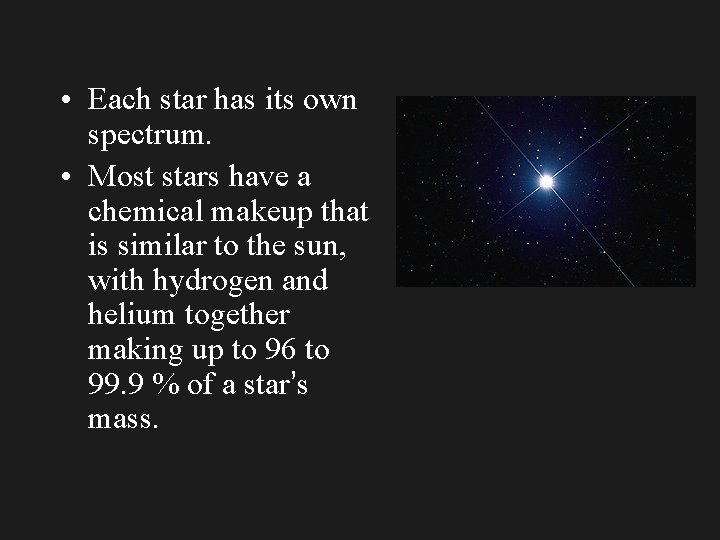
• Each star has its own spectrum. • Most stars have a chemical makeup that is similar to the sun, with hydrogen and helium together making up to 96 to 99. 9 % of a star’s mass.
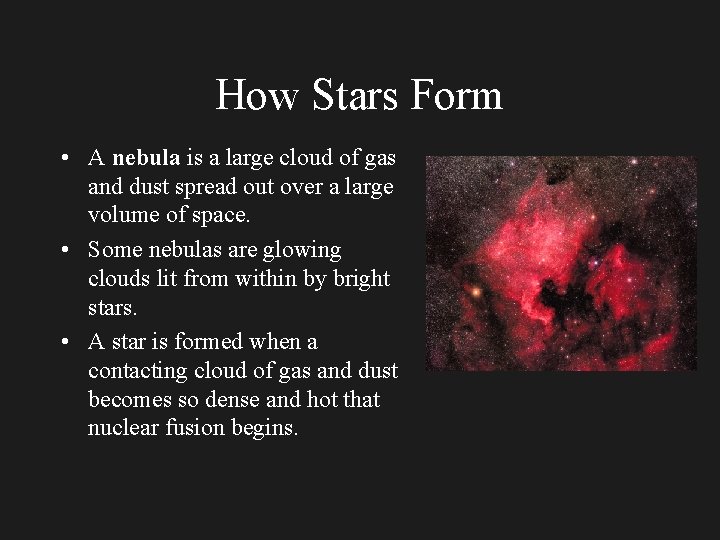
How Stars Form • A nebula is a large cloud of gas and dust spread out over a large volume of space. • Some nebulas are glowing clouds lit from within by bright stars. • A star is formed when a contacting cloud of gas and dust becomes so dense and hot that nuclear fusion begins.
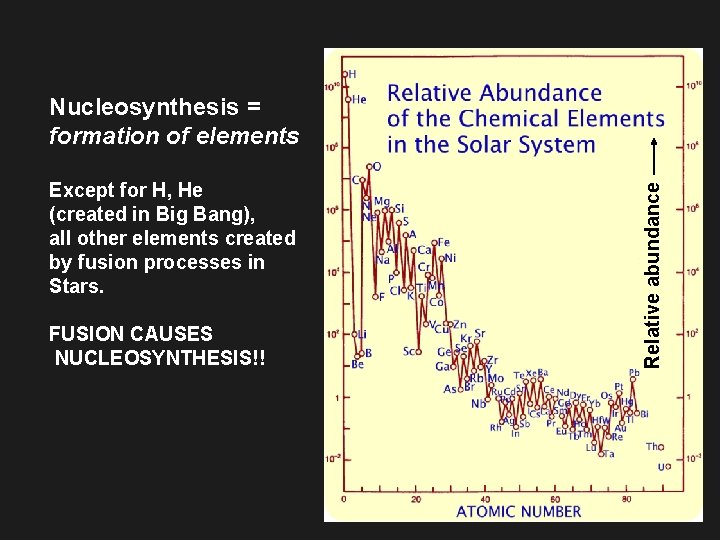
Except for H, He (created in Big Bang), all other elements created by fusion processes in Stars. FUSION CAUSES NUCLEOSYNTHESIS!! Relative abundance Nucleosynthesis = formation of elements
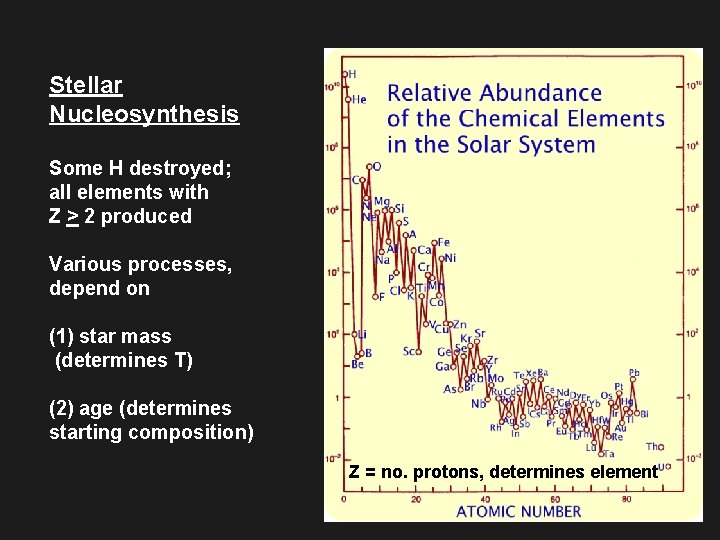
Stellar Nucleosynthesis Some H destroyed; all elements with Z > 2 produced Various processes, depend on (1) star mass (determines T) (2) age (determines starting composition) Z = no. protons, determines element
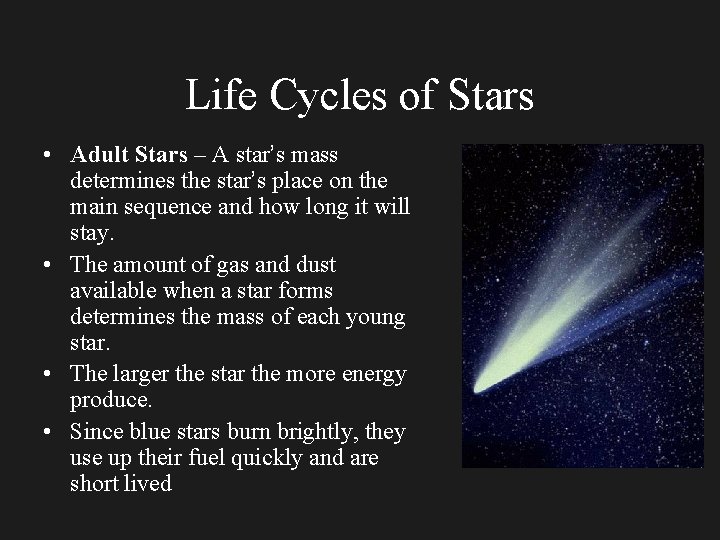
Life Cycles of Stars • Adult Stars – A star’s mass determines the star’s place on the main sequence and how long it will stay. • The amount of gas and dust available when a star forms determines the mass of each young star. • The larger the star the more energy produce. • Since blue stars burn brightly, they use up their fuel quickly and are short lived
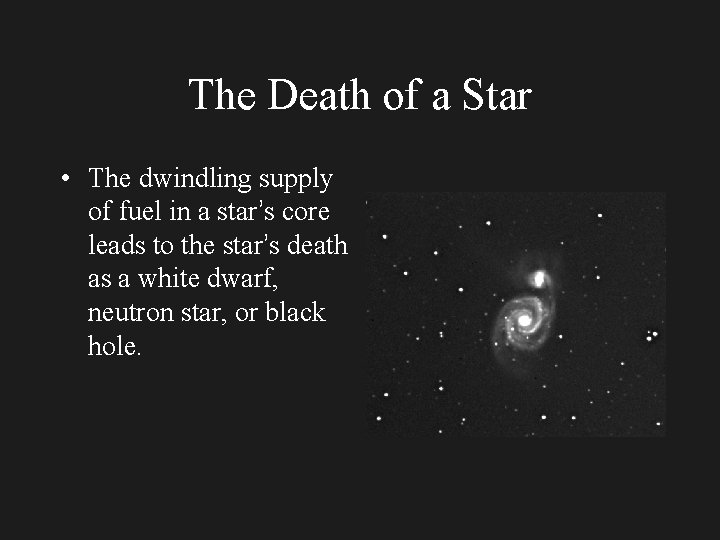
The Death of a Star • The dwindling supply of fuel in a star’s core leads to the star’s death as a white dwarf, neutron star, or black hole.
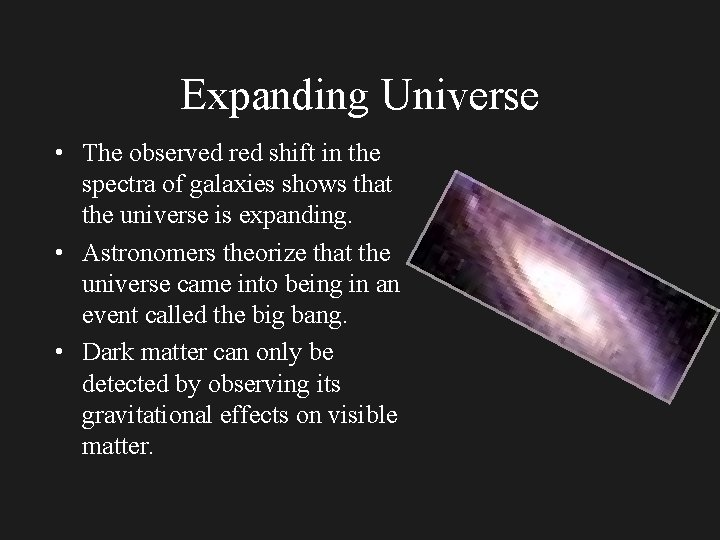
Expanding Universe • The observed red shift in the spectra of galaxies shows that the universe is expanding. • Astronomers theorize that the universe came into being in an event called the big bang. • Dark matter can only be detected by observing its gravitational effects on visible matter.
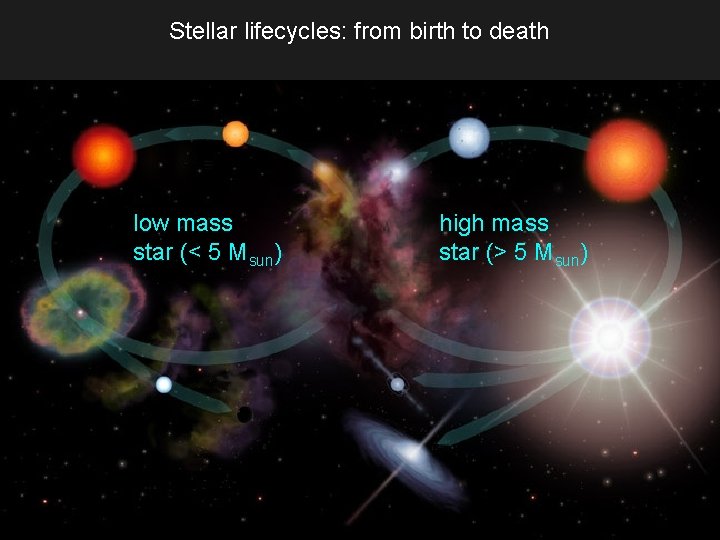
Stellar lifecycles: from birth to death low mass star (< 5 Msun) high mass star (> 5 Msun)
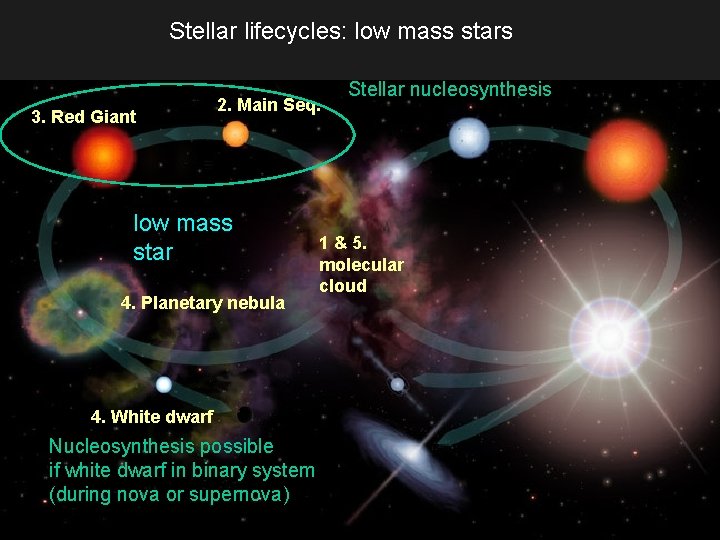
Stellar lifecycles: low mass stars 3. Red Giant 2. Main Seq. low mass star 4. Planetary nebula 4. White dwarf Nucleosynthesis possible if white dwarf in binary system (during nova or supernova) Stellar nucleosynthesis 1 & 5. molecular cloud
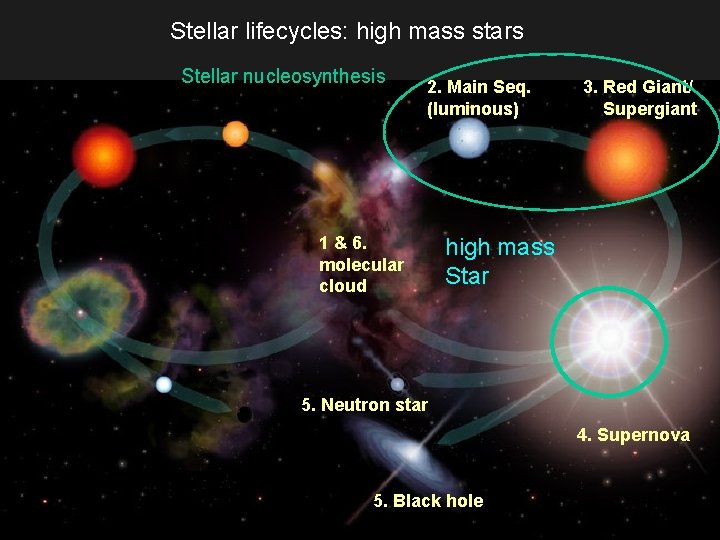
Stellar lifecycles: high mass stars Stellar nucleosynthesis 2. Main Seq. (luminous) 1 & 6. molecular cloud 3. Red Giant/ Supergiant high mass Star 5. Neutron star 4. Supernova 5. Black hole
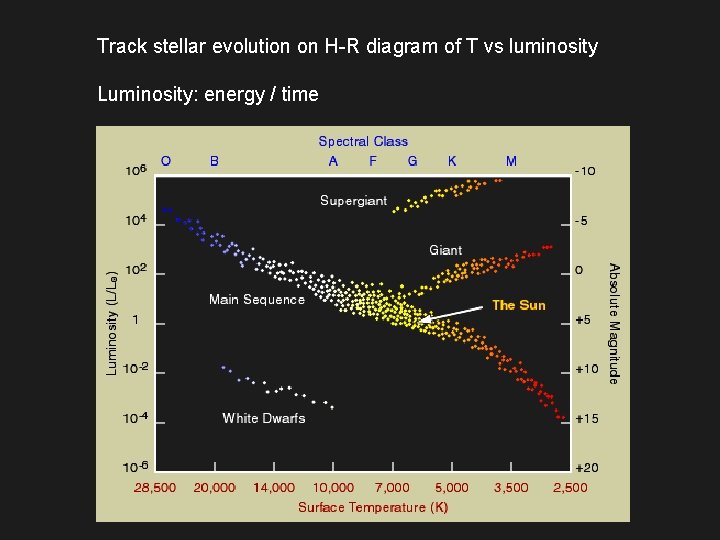
Track stellar evolution on H-R diagram of T vs luminosity Luminosity: energy / time
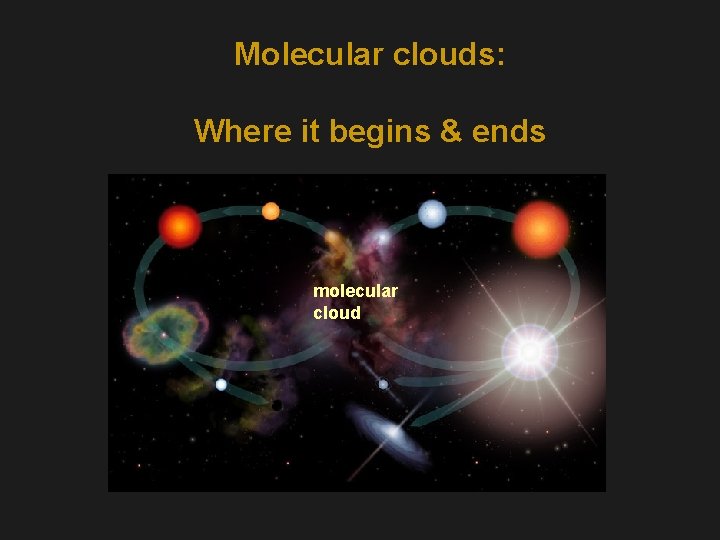
Molecular clouds: Where it begins & ends molecular cloud
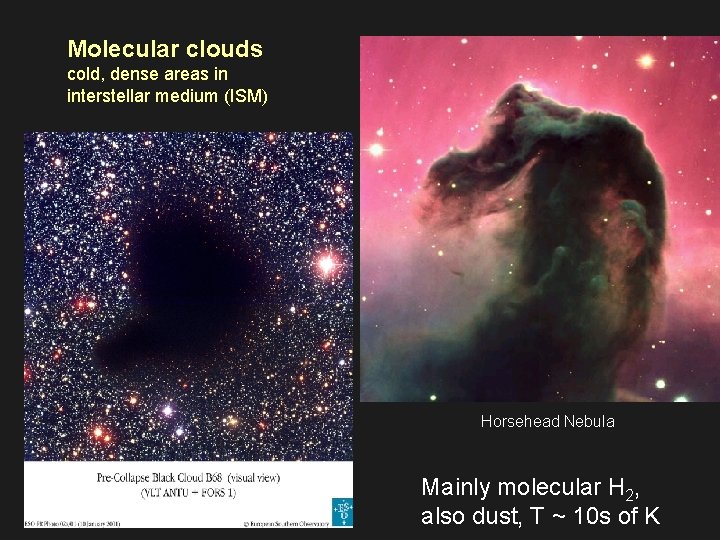
Molecular clouds cold, dense areas in interstellar medium (ISM) Horsehead Nebula Mainly molecular H 2, also dust, T ~ 10 s of K
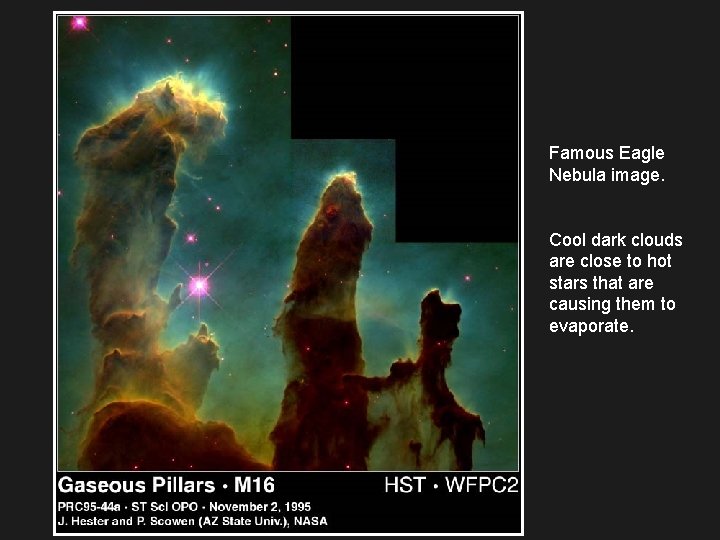
Famous Eagle Nebula image. Cool dark clouds are close to hot stars that are causing them to evaporate.
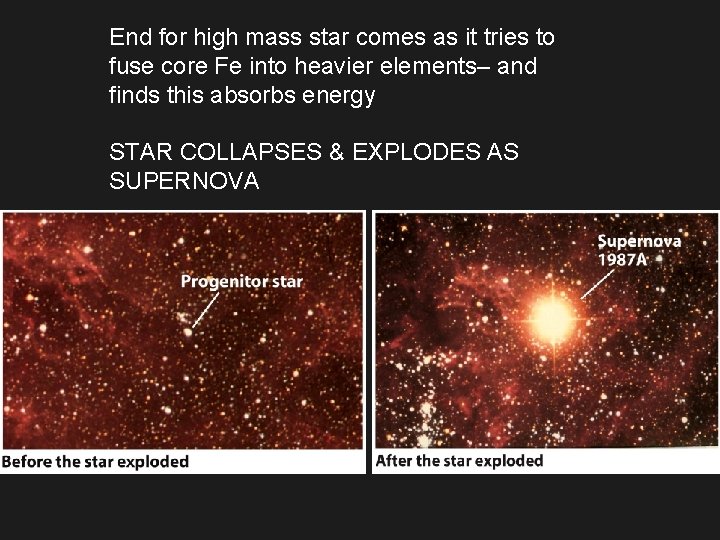
End for high mass star comes as it tries to fuse core Fe into heavier elements– and finds this absorbs energy STAR COLLAPSES & EXPLODES AS SUPERNOVA
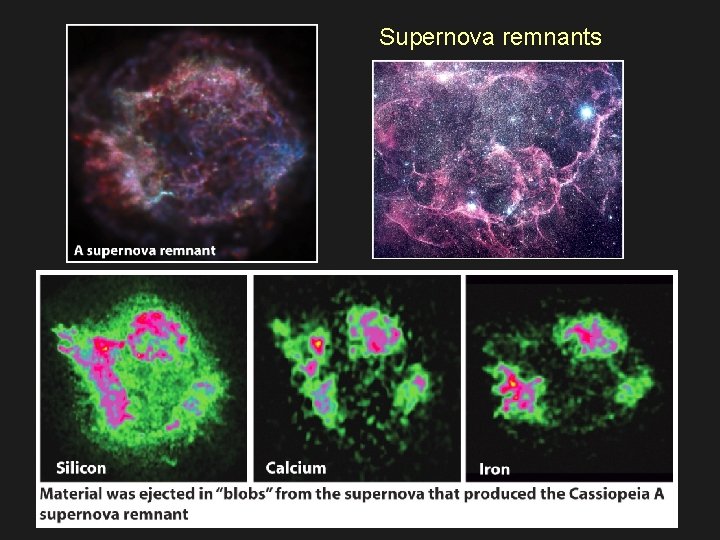
Supernova remnants
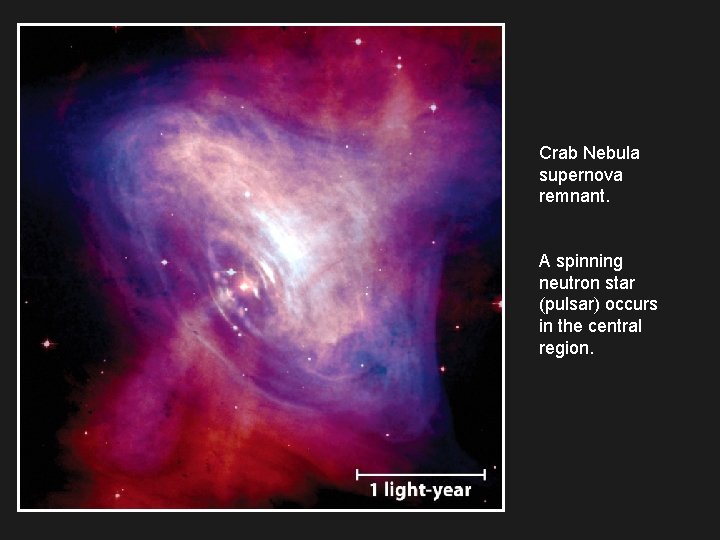
Crab Nebula supernova remnant. A spinning neutron star (pulsar) occurs in the central region.
- Slides: 18