
Composition of Matter 96 percent of the body
Composition of Matter • 96 percent of the body is made from four elements • Carbon (C) • Oxygen (O) • Hydrogen (H) • Nitrogen (N) © 2012 Pearson Education, Inc.
Identifying Elements • Atomic number— equal to the number of protons that the atom contains • Atomic mass number—sum of the protons and neutrons © 2012 Pearson Education, Inc.
Radioactivity • Radioisotope • Heavy isotope • Tends to be unstable • Decomposes to more stable isotope • Radioactivity—process of spontaneous atomic decay © 2012 Pearson Education, Inc.
Molecules and Compounds • Molecule—two or more atoms of the same elements combined chemically • Compound—two or more atoms of different elements combined chemically © 2012 Pearson Education, Inc.
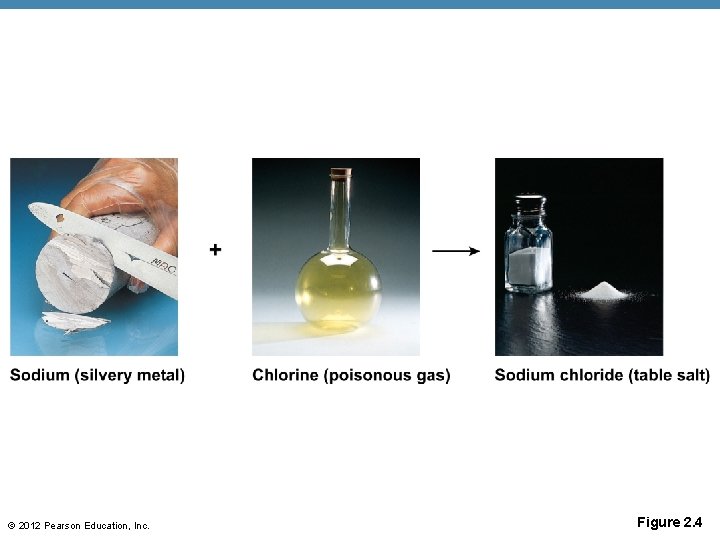
© 2012 Pearson Education, Inc. Figure 2. 4
Chemical Reactions • Atoms are united by chemical bonds • Atoms dissociate from other atoms when chemical bonds are broken © 2012 Pearson Education, Inc.
Electrons and Bonding • Bonding involves interactions between electrons in the outer shell (valence shell) • Full valence shells do not form bonds © 2012 Pearson Education, Inc.
Reactive Elements • Valence shells are not full and are unstable • Tend to gain, lose, or share electrons • Allow for bond formation, which produces stable valence © 2012 Pearson Education, Inc.
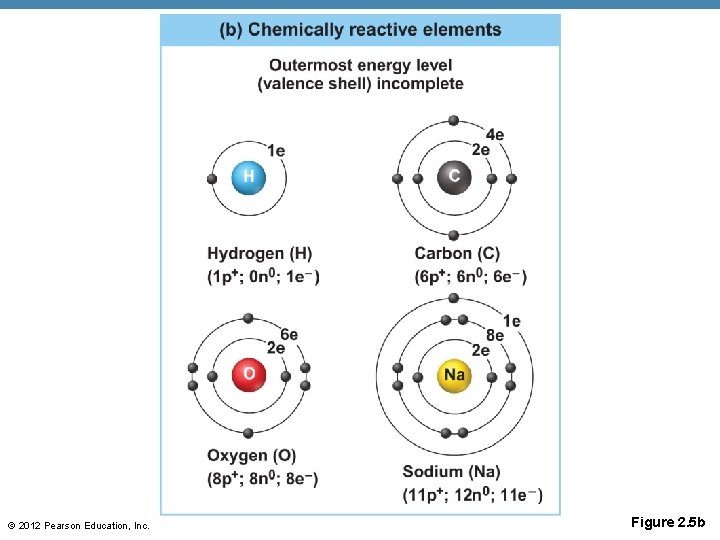
© 2012 Pearson Education, Inc. Figure 2. 5 b
Chemical Bonds • Ionic bonds • Atoms become stable through the transfer of electrons • Form when electrons are completely transferred from one atom to another • Ions • Result from the loss or gain of electrons • Anions are negative due to gain of electron(s) • Cations are positive due to loss of electron(s) © 2012 Pearson Education, Inc.
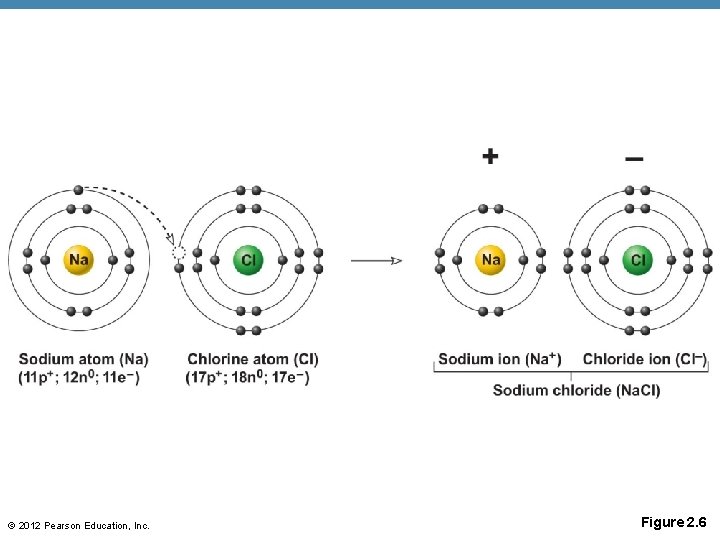
© 2012 Pearson Education, Inc. Figure 2. 6
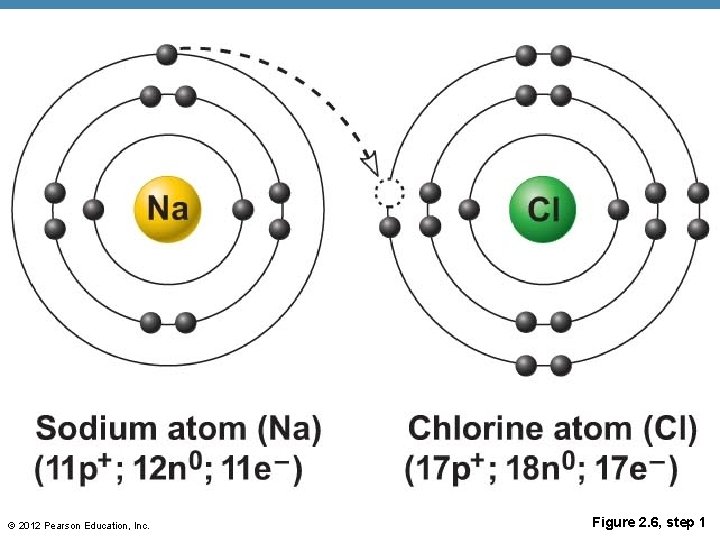
© 2012 Pearson Education, Inc. Figure 2. 6, step 1
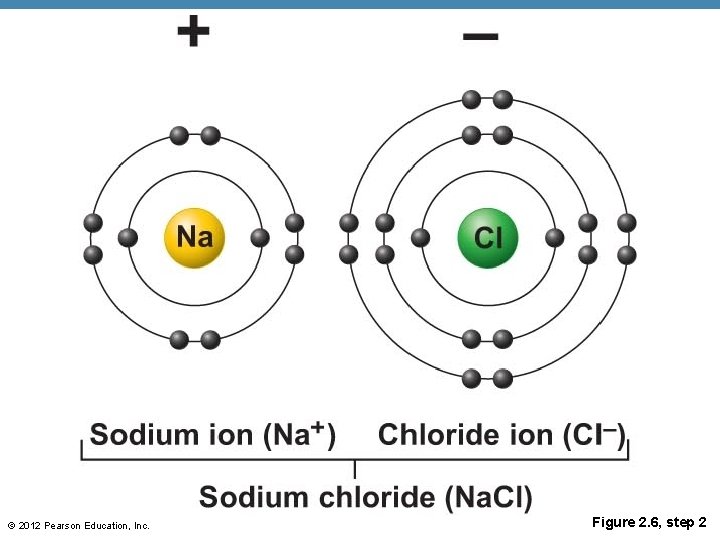
© 2012 Pearson Education, Inc. Figure 2. 6, step 2
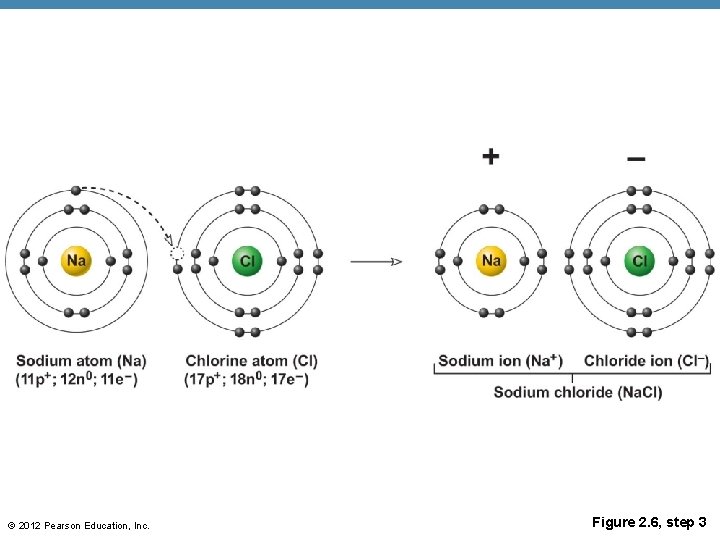
© 2012 Pearson Education, Inc. Figure 2. 6, step 3
Chemical Bonds • Covalent bonds • Atoms become stable through shared electrons • Electrons are shared in pairs • Single covalent bonds share one pair of electrons • Double covalent bonds share two pairs of electrons © 2012 Pearson Education, Inc.
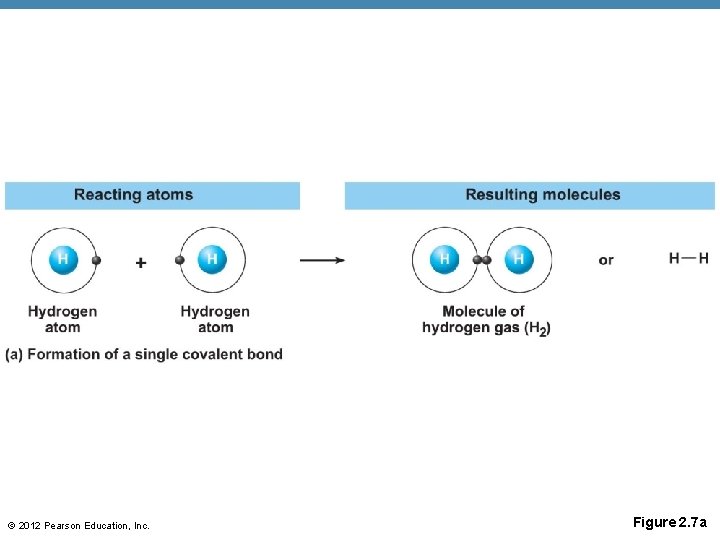
© 2012 Pearson Education, Inc. Figure 2. 7 a
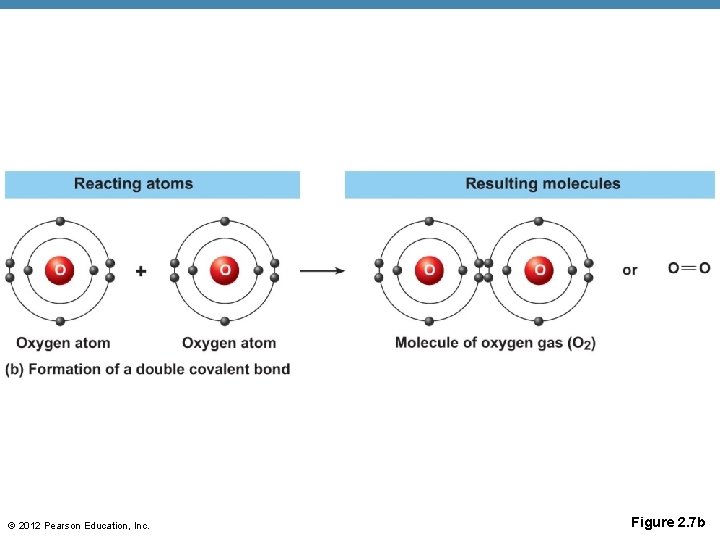
© 2012 Pearson Education, Inc. Figure 2. 7 b
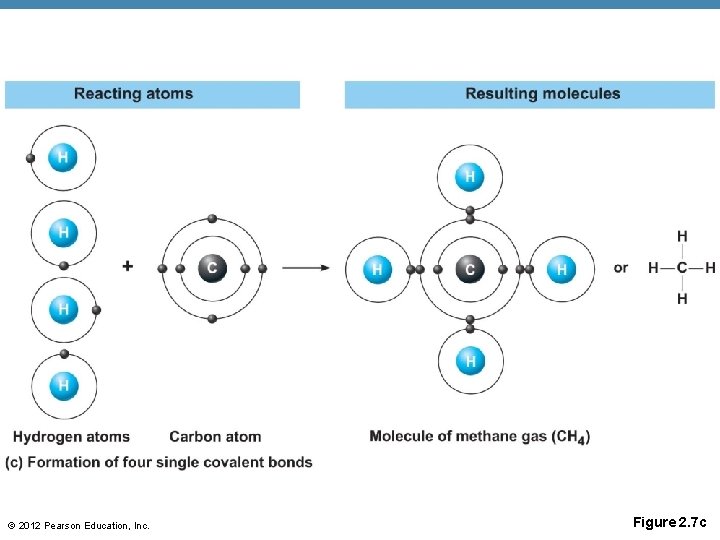
© 2012 Pearson Education, Inc. Figure 2. 7 c
Covalent Bonds • Covalent bonds are either nonpolar or polar • Nonpolar • Electrons are shared equally between the atoms of the molecule • Electrically neutral as a molecule © 2012 Pearson Education, Inc.
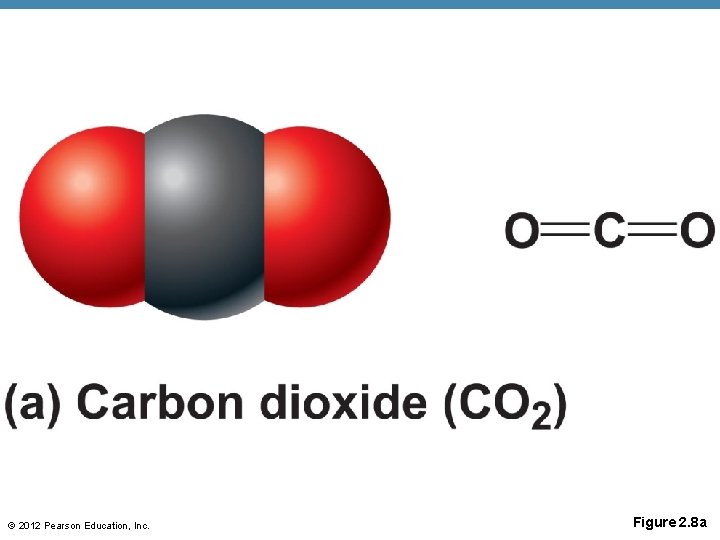
© 2012 Pearson Education, Inc. Figure 2. 8 a
Covalent Bonds • Covalent bonds are either nonpolar or polar • Polar • Electrons are not shared equally between the atoms of the molecule • Have a positive and negative side or pole © 2012 Pearson Education, Inc.
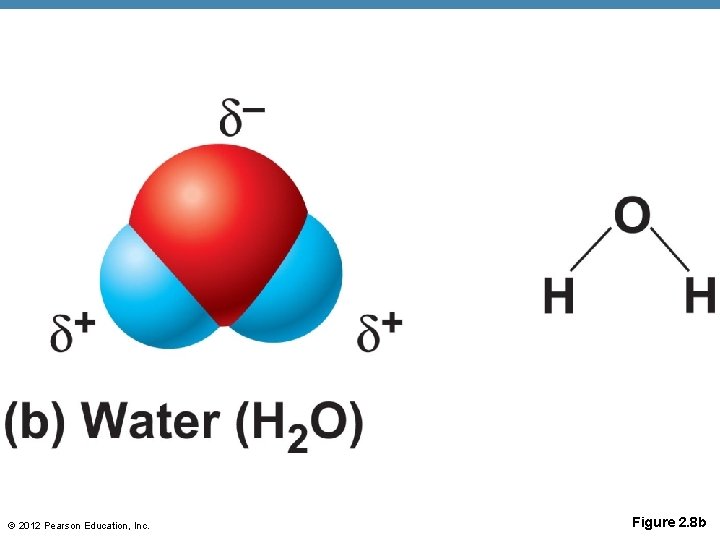
© 2012 Pearson Education, Inc. Figure 2. 8 b
Chemical Bonds • Hydrogen bonds • Weak chemical bonds • Hydrogen is attracted to the negative portion of polar molecule • Provides attraction between molecules © 2012 Pearson Education, Inc.
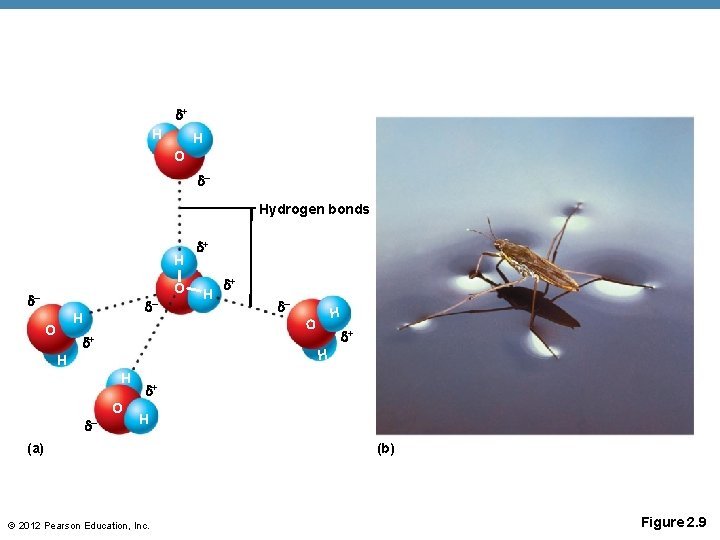
+ H H O – Hydrogen bonds H O – – H O + H + – H O + H H H O – + + H (a) © 2012 Pearson Education, Inc. (b) Figure 2. 9
Biochemistry: Essentials for Life • Organic compounds • Contain carbon • Includes carbohydrates, lipids, proteins, nucleic acids • Inorganic compounds • Lack carbon • Includes water, salts, and some acids and bases © 2012 Pearson Education, Inc.
Important Inorganic Compounds • Water • Most abundant inorganic compound in the body • Vital properties • High heat capacity • Polarity/solvent properties • Chemical reactivity • Cushioning © 2012 Pearson Education, Inc.
Important Inorganic Compounds • Salts • Easily dissociate into ions in the presence of water • Vital to many body functions • Include electrolytes which conduct electrical currents © 2012 Pearson Education, Inc.
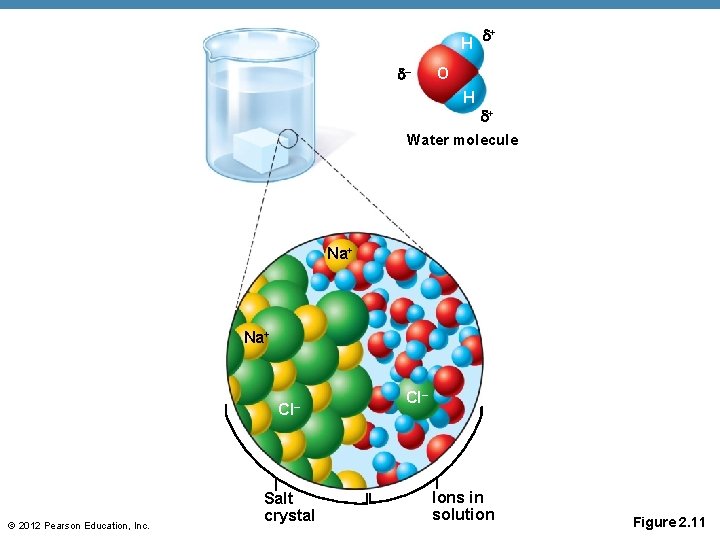
H – + O H + Water molecule Na+ Cl– © 2012 Pearson Education, Inc. Salt crystal Cl– Ions in solution Figure 2. 11
Important Inorganic Compounds • Acids • Release hydrogen ions (H+) • Are proton donors • Bases • Release hydroxyl ions (OH–) • Are proton acceptors • Neutralization reaction • Acids and bases react to form water and a salt © 2012 Pearson Education, Inc.
p. H • Measures relative concentration of hydrogen ions • p. H 7 = neutral • p. H below 7 = acidic • p. H above 7 = basic • Buffers—chemicals that can regulate p. H change © 2012 Pearson Education, Inc.
Important Organic Compounds • Carbohydrates • Contain carbon, hydrogen, and oxygen • Include sugars and starches • Classified according to size • Monosaccharides—simple sugars • Disaccharides—two simple sugars joined by dehydration synthesis • Polysaccharides—long-branching chains of linked simple sugars © 2012 Pearson Education, Inc.
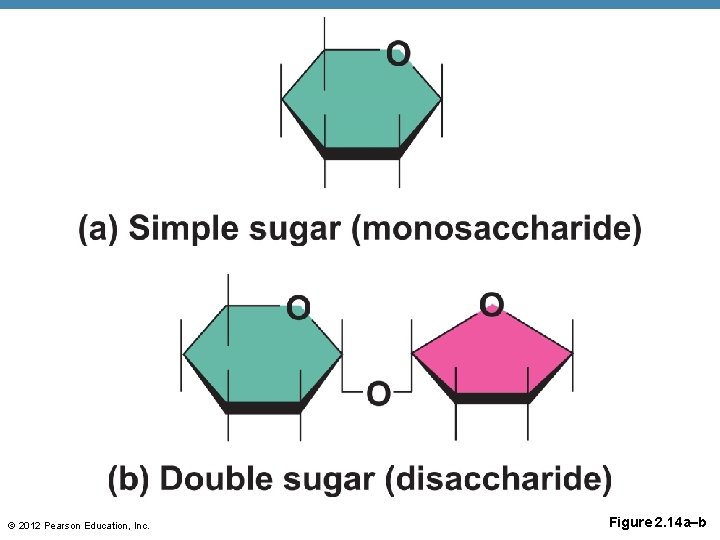
© 2012 Pearson Education, Inc. Figure 2. 14 a–b
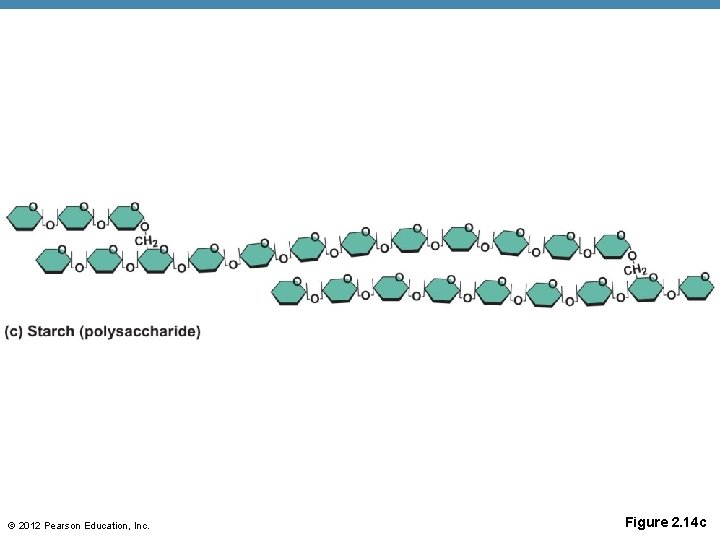
© 2012 Pearson Education, Inc. Figure 2. 14 c
Important Organic Compounds • Lipids • Contain carbon, hydrogen, and oxygen • Carbon and hydrogen outnumber oxygen • Insoluble in water © 2012 Pearson Education, Inc.
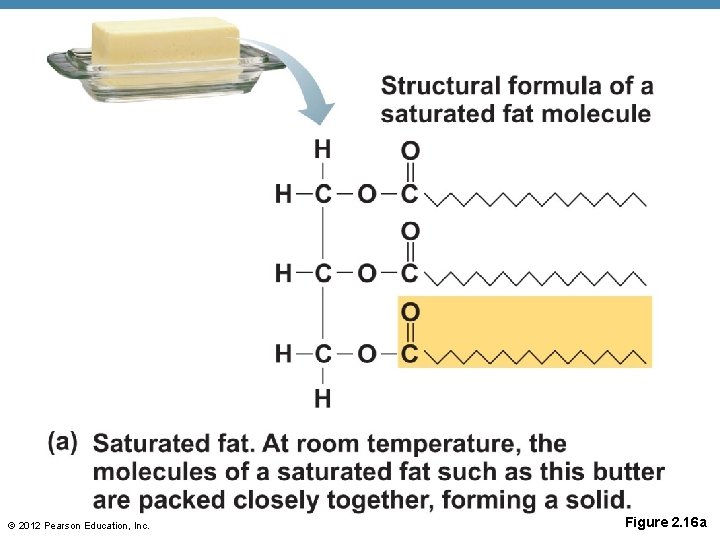
© 2012 Pearson Education, Inc. Figure 2. 16 a
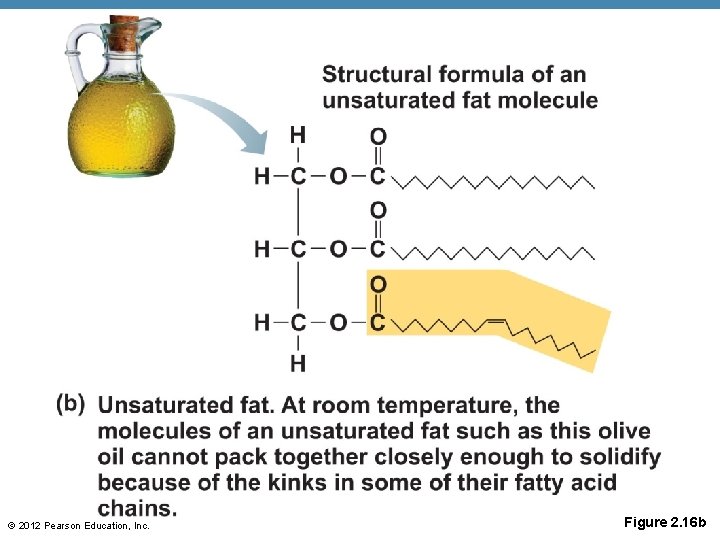
© 2012 Pearson Education, Inc. Figure 2. 16 b
Lipids • Common lipids in the human body (continued) • Phospholipids • Contain two fatty acids rather than three • Form cell membranes © 2012 Pearson Education, Inc.
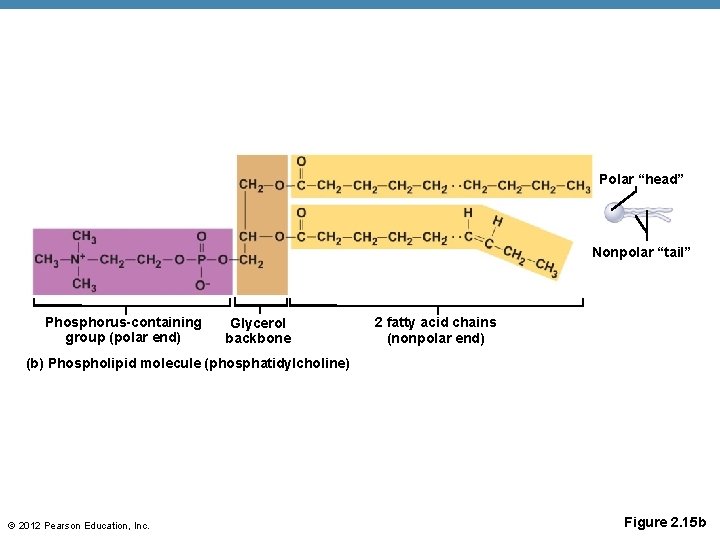
Polar “head” Nonpolar “tail” Phosphorus-containing group (polar end) Glycerol backbone 2 fatty acid chains (nonpolar end) (b) Phospholipid molecule (phosphatidylcholine) © 2012 Pearson Education, Inc. Figure 2. 15 b
Lipids • Common lipids in the human body (continued) • Steroids • Include cholesterol, bile salts, vitamin D, and some hormones • Cholesterol is the basis for all steroids made in the body © 2012 Pearson Education, Inc.
Important Organic Compounds • Proteins • Account for over half of the body’s organic matter • Provide for construction materials for body tissues • Act as enzymes, hormones, and antibodies • Built from amino acids © 2012 Pearson Education, Inc.
Enzymes • Act as biological catalysts • Increase the rate of chemical reactions • Bind to substrates at an active site © 2012 Pearson Education, Inc.
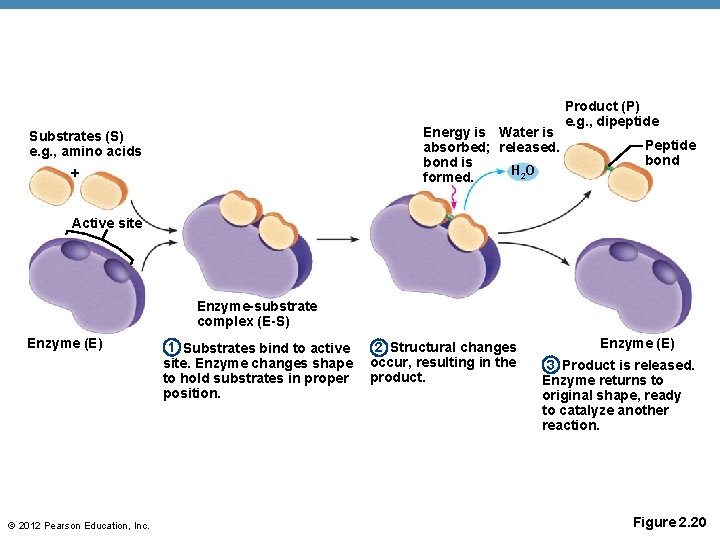
Energy is Water is absorbed; released. bond is H 2 O formed. Substrates (S) e. g. , amino acids + Product (P) e. g. , dipeptide Peptide bond Active site Enzyme-substrate complex (E-S) Enzyme (E) © 2012 Pearson Education, Inc. 1 Substrates bind to active site. Enzyme changes shape to hold substrates in proper position. 2 Structural changes occur, resulting in the product. Enzyme (E) 3 Product is released. Enzyme returns to original shape, ready to catalyze another reaction. Figure 2. 20
Important Organic Compounds • Nucleic Acids • Pentose (5 carbon) sugar • A phosphate group • A nitrogenous base • A = Adenine • G = Guanine • C = Cytosine • T = Thymine • U = Uracil. © 2012 Pearson Education, Inc.
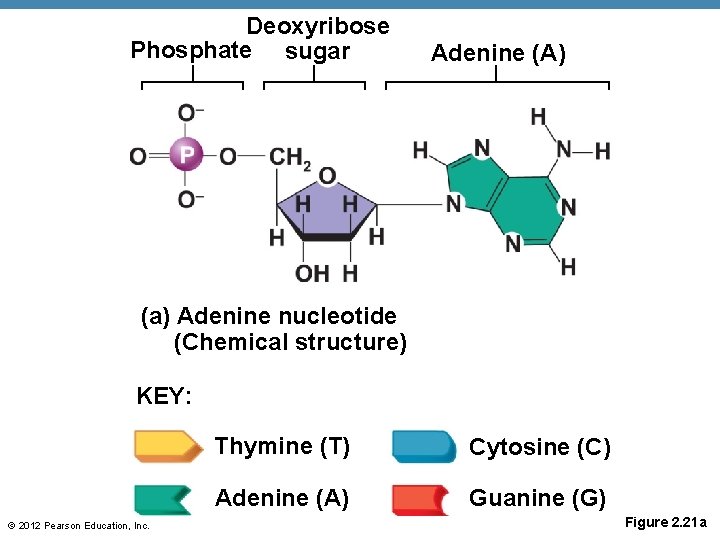
Deoxyribose Phosphate sugar Adenine (A) (a) Adenine nucleotide (Chemical structure) KEY: © 2012 Pearson Education, Inc. Thymine (T) Cytosine (C) Adenine (A) Guanine (G) Figure 2. 21 a
Nucleic Acids • Deoxyribonucleic acid (DNA) • Provides instructions for every protein in the body • Organized by complimentary bases to form a double-stranded helix • Contains the sugar deoxyribose and the bases adenine, thymine, cytosine, and guanine © 2012 Pearson Education, Inc.
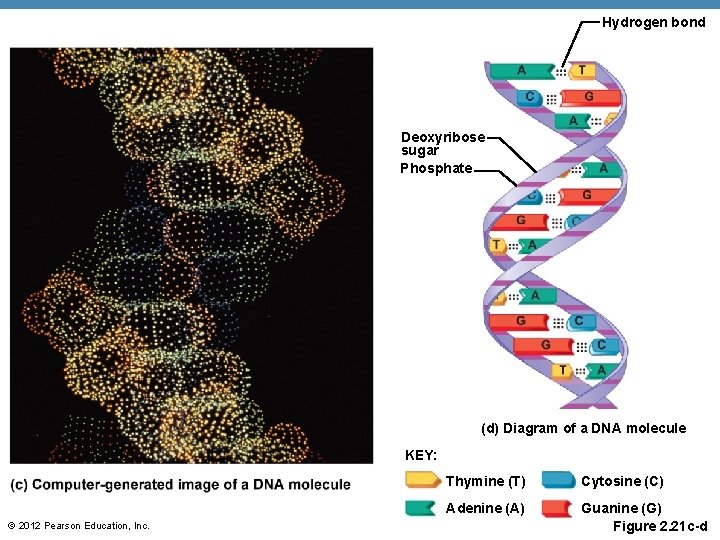
Hydrogen bond Deoxyribose sugar Phosphate (d) Diagram of a DNA molecule KEY: © 2012 Pearson Education, Inc. Thymine (T) Cytosine (C) Adenine (A) Guanine (G) Figure 2. 21 c-d
Nucleic Acids • Ribonucleic acid (RNA) • Carries out DNA’s instructions for protein synthesis • Created from a template of DNA • Three varieties are messenger, transfer, and ribosomal RNA © 2012 Pearson Education, Inc.
Important Organic Compounds • Adenosine triphosphate (ATP) • Chemical energy used by all cells • Energy is released by breaking high energy phosphate bond © 2012 Pearson Education, Inc.
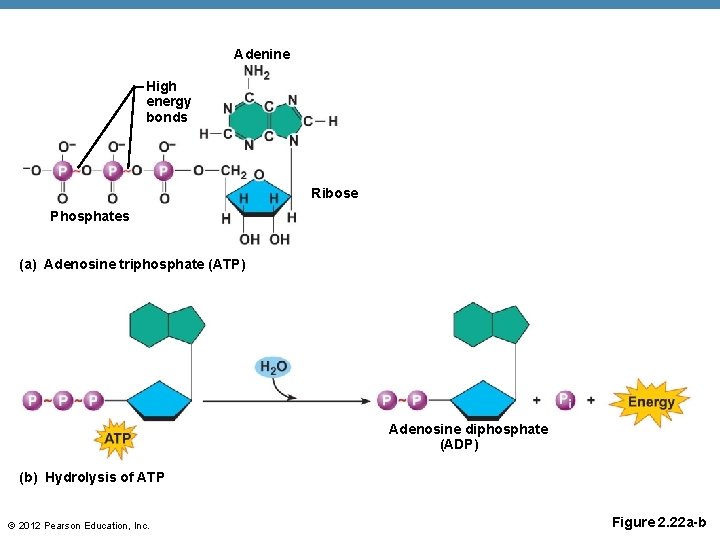
Adenine High energy bonds Ribose Phosphates (a) Adenosine triphosphate (ATP) Adenosine diphosphate (ADP) (b) Hydrolysis of ATP © 2012 Pearson Education, Inc. Figure 2. 22 a-b
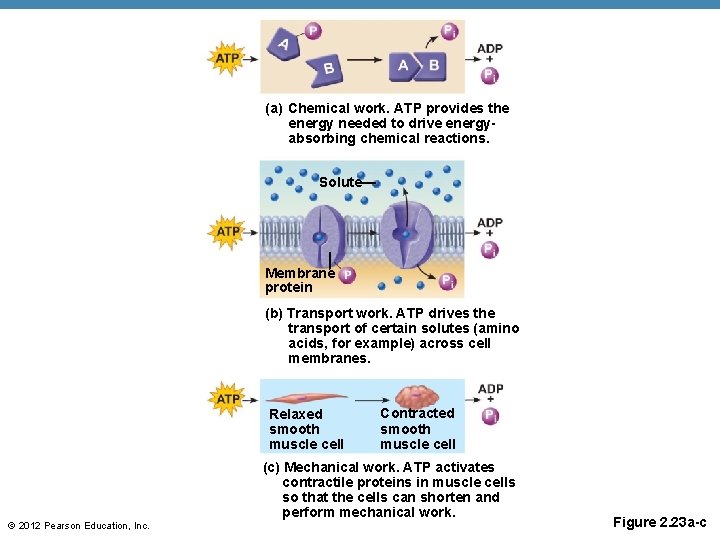
(a) Chemical work. ATP provides the energy needed to drive energyabsorbing chemical reactions. Solute Membrane protein (b) Transport work. ATP drives the transport of certain solutes (amino acids, for example) across cell membranes. Relaxed smooth muscle cell Contracted smooth muscle cell (c) Mechanical work. ATP activates contractile proteins in muscle cells so that the cells can shorten and perform mechanical work. © 2012 Pearson Education, Inc. Figure 2. 23 a-c
- Slides: 50