
Composition of Earth Earth Has 4 main systems



- Slides: 59
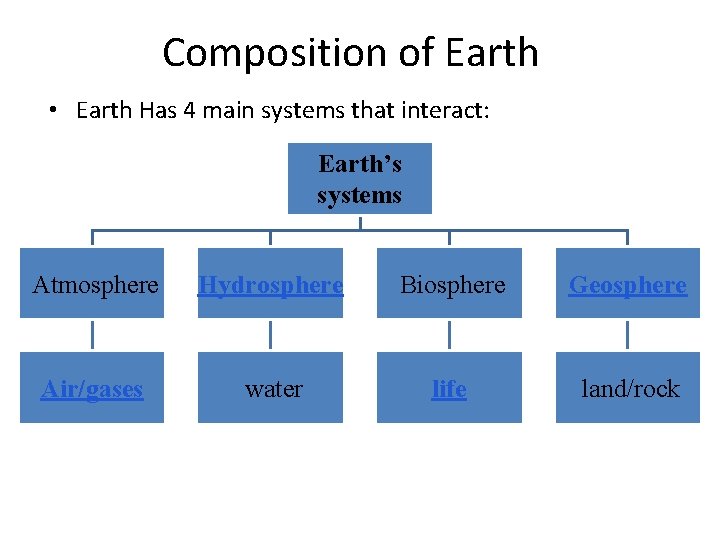
Composition of Earth • Earth Has 4 main systems that interact: Earth’s systems Atmosphere Hydrosphere Biosphere Geosphere Air/gases water life land/rock
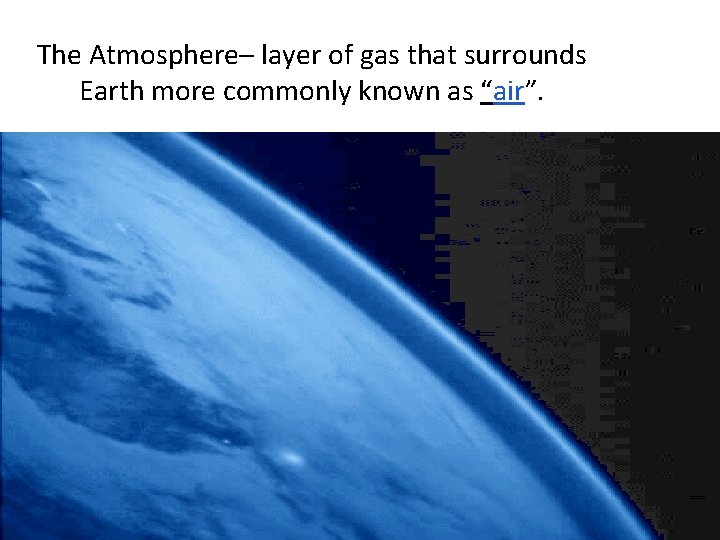
The Atmosphere– layer of gas that surrounds Earth more commonly known as “air”.
Atmosphere. How do you know its there • Is this “air” that surrounds us considered matter? Does it weigh anything? How do you know? • Think about it and decide on an answer. • Talk in groups with the person who sits by you • Be ready to tell the class what you decided and why.
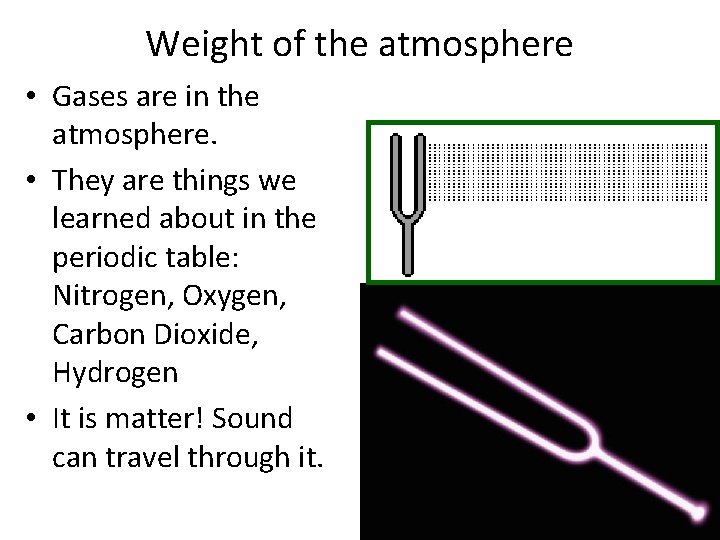
Weight of the atmosphere • Gases are in the atmosphere. • They are things we learned about in the periodic table: Nitrogen, Oxygen, Carbon Dioxide, Hydrogen • It is matter! Sound can travel through it.
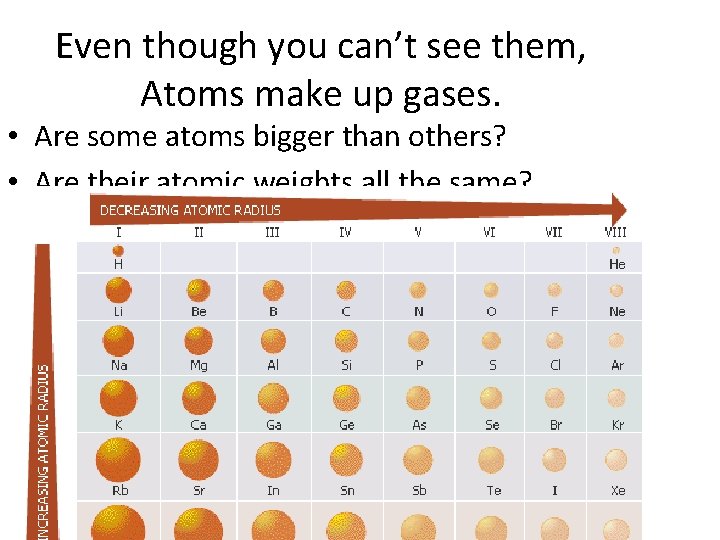
Even though you can’t see them, Atoms make up gases. • Are some atoms bigger than others? • Are their atomic weights all the same?
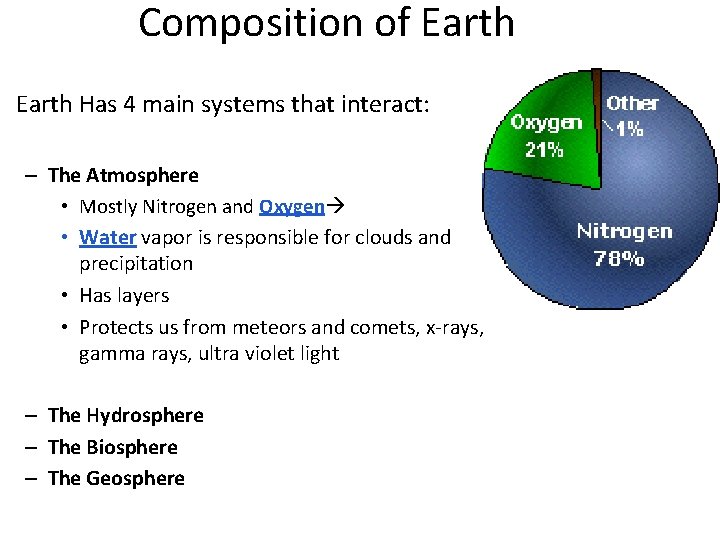
Composition of Earth Has 4 main systems that interact: – The Atmosphere • Mostly Nitrogen and Oxygen • Water vapor is responsible for clouds and precipitation • Has layers • Protects us from meteors and comets, x-rays, gamma rays, ultra violet light – The Hydrosphere – The Biosphere – The Geosphere
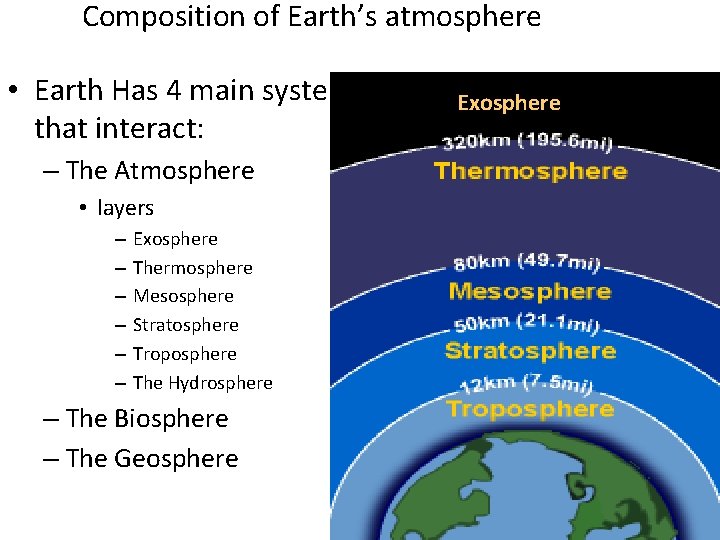
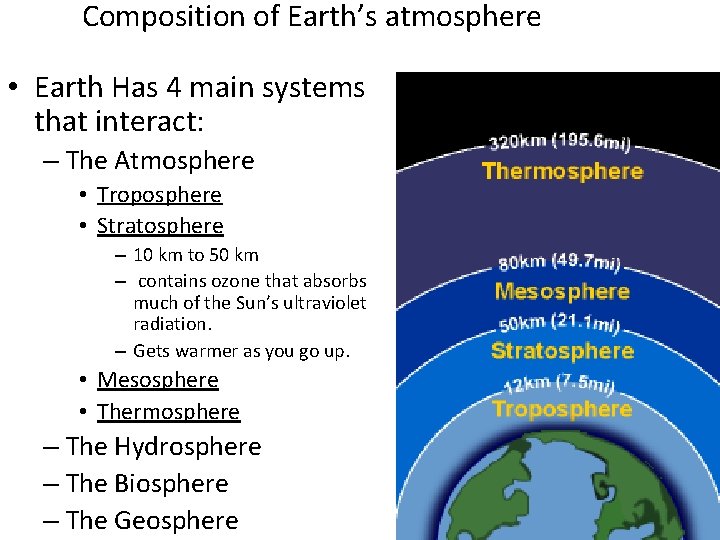
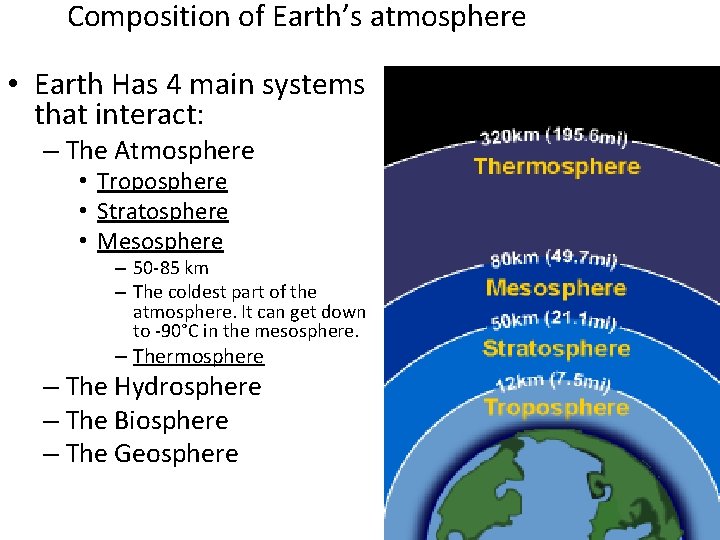
Composition of Earth’s atmosphere • Earth Has 4 main systems that interact: – The Atmosphere • layers – – – Exosphere Thermosphere Mesosphere Stratosphere Troposphere The Hydrosphere – The Biosphere – The Geosphere Exosphere
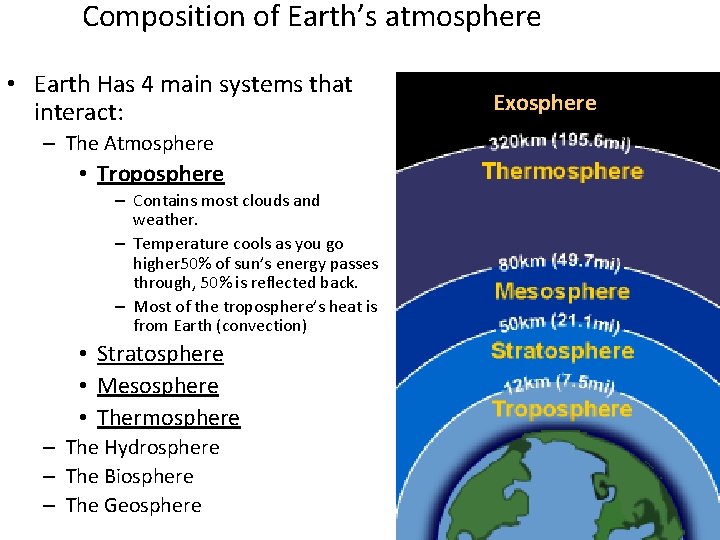
Composition of Earth’s atmosphere • Earth Has 4 main systems that interact: – The Atmosphere • Troposphere – Contains most clouds and weather. – Temperature cools as you go higher 50% of sun’s energy passes through, 50% is reflected back. – Most of the troposphere’s heat is from Earth (convection) • Stratosphere • Mesosphere • Thermosphere – The Hydrosphere – The Biosphere – The Geosphere Exosphere
Troposphere and Clouds • • Among other gases there is water vapor in the troposphere. Clouds—form when air rises, cools to its dew point, and becomes saturated (moist).
Cloud Formation • Most cloud droplets require nuclei to form • Most nuclei are hygroscopic (attract water) • It is much easier to form water droplets than ice crystals 3. Condensation and Clouds
Why Don’t Clouds Fall Down? It’s a matter of Terminal Velocity – the faster things fall, the more air resistance they meet • Skydiver – 50 m/sec • Mouse – 5 - 10 m/sec • Cloud droplet – 1 cm/sec – The tiniest air motions keep such small particles suspended 3. Condensation and Clouds
Why Does it Rain? • Cloud droplets are about 1/100 mm in diameter • It takes over a million cloud droplets to make one raindrop • Coalescence of cloud droplets? Too Slow 4. Why it Rains
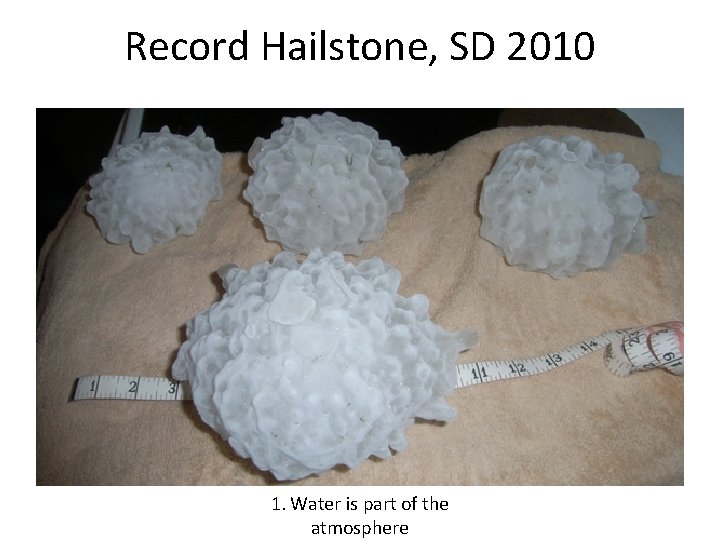
Hail • Often associated with violent storms • Typically 1 cm or less • Can be 10 cm – capable of causing major damage • Stones typically show concentric structure • Probably form by repeated trips through supercooled regions 5. Hail, Snow and other forms of water
Record Hailstone, SD 2010 1. Water is part of the atmosphere
Fog • • Radiation: Surface cools at night by radiation Advection: Warm air carried over cool surface Upslope: Small-scale orographic clouds Steam: Warm water evaporates into cold air 5. Hail, Snow and other forms of water
Cloud bill nye
Section 2: Earth’s Weather Troposphere Energy is transferred between fast-moving molecules and slower-moving molecules. • – Give an example of something heating up due to conduction: _________________ • – • Conduction—transfer of energy when molecules collide. Convection occurs when warm air rises and cool air sinks. Give an example of something heating up due to convection: __________________
Section 2: Earth’s Weather Troposphere • Air pressure— air weight that varies over Earth’s surface. – Warmer air is less dense and exerts less pressure. – Cooler air is more dense and exerts more pressure.
• • Humidity— the amount of water vapor in the air Temperature affects how much moisture is in the air. Dewpoint—when the air is holding as much water vapor as it can Relative humidity— a measure of the amount of water vapor present compared to the amount that could be held at a specific temperature.
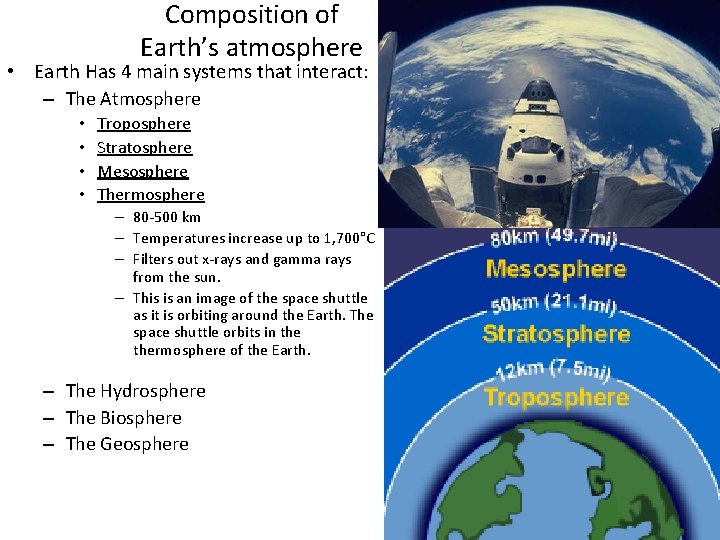
Composition of Earth’s atmosphere • Earth Has 4 main systems that interact: – The Atmosphere • Troposphere • Stratosphere – 10 km to 50 km – contains ozone that absorbs much of the Sun’s ultraviolet radiation. – Gets warmer as you go up. • Mesosphere • Thermosphere – The Hydrosphere – The Biosphere – The Geosphere
Composition of Earth’s atmosphere • Earth Has 4 main systems that interact: – The Atmosphere • Troposphere • Stratosphere • Mesosphere – 50 -85 km – The coldest part of the atmosphere. It can get down to -90°C in the mesosphere. – Thermosphere – The Hydrosphere – The Biosphere – The Geosphere
Composition of Earth’s atmosphere • Earth Has 4 main systems that interact: – The Atmosphere • • Troposphere Stratosphere Mesosphere Thermosphere – 80 -500 km – Temperatures increase up to 1, 700°C – Filters out x-rays and gamma rays from the sun. – This is an image of the space shuttle as it is orbiting around the Earth. The space shuttle orbits in thermosphere of the Earth. – The Hydrosphere – The Biosphere – The Geosphere
Bill Nye Atmosphere
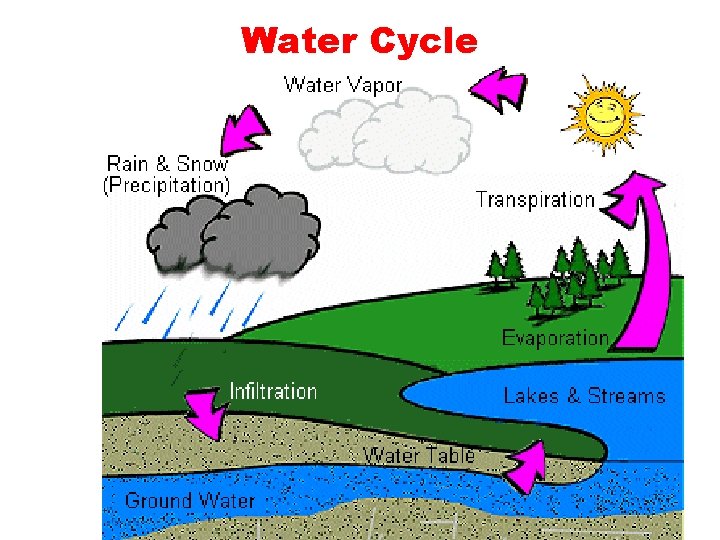
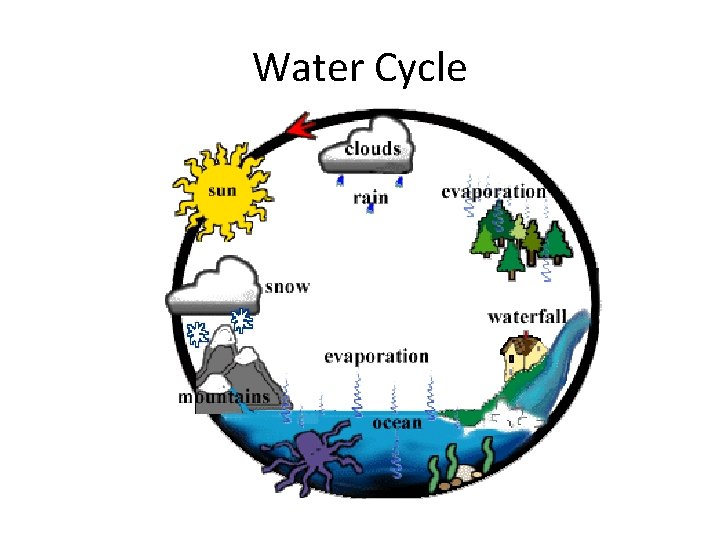
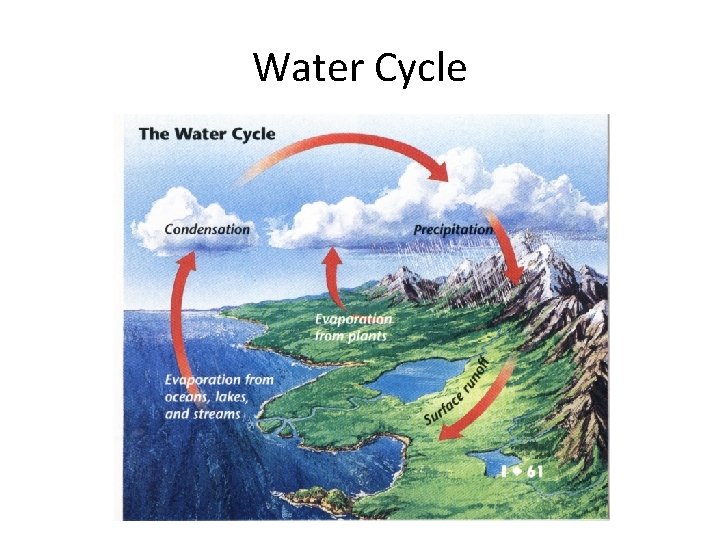
Water Cycle • Evaporation • Condensation • Precipitation
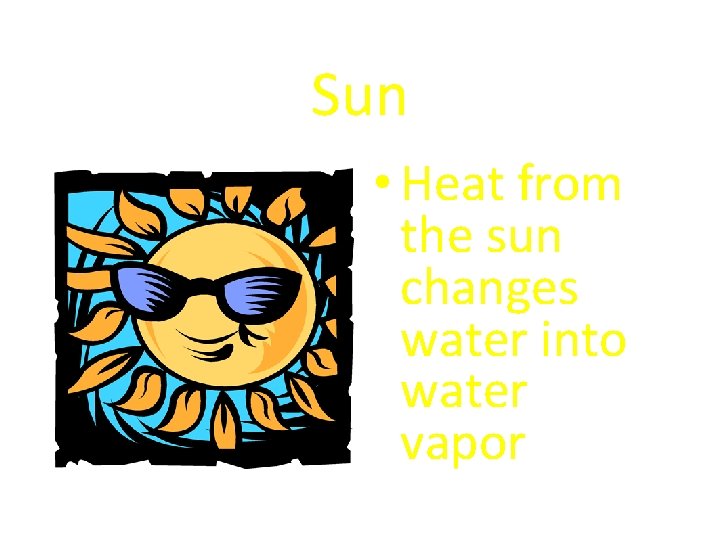
Sun • Heat from the sun changes water into water vapor
When the sun changes water into water vapor, this is called EVAPORATION
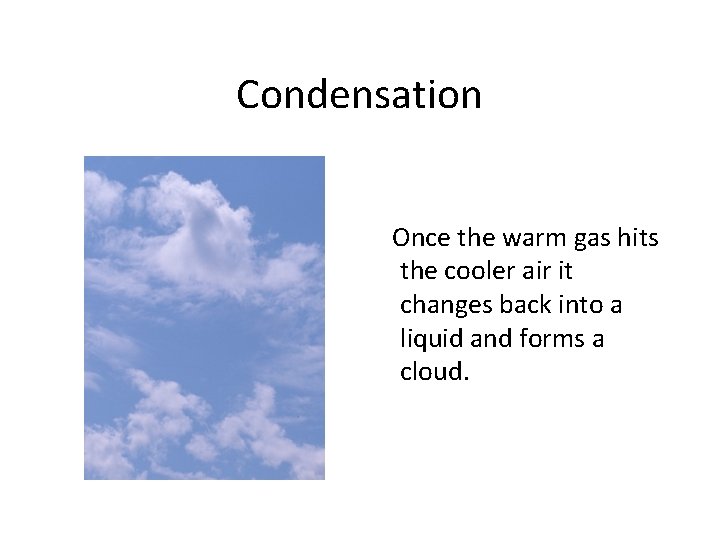
Condensation Once the warm gas hits the cooler air it changes back into a liquid and forms a cloud.
When water vapor forms clouds this is called CONDENSATION
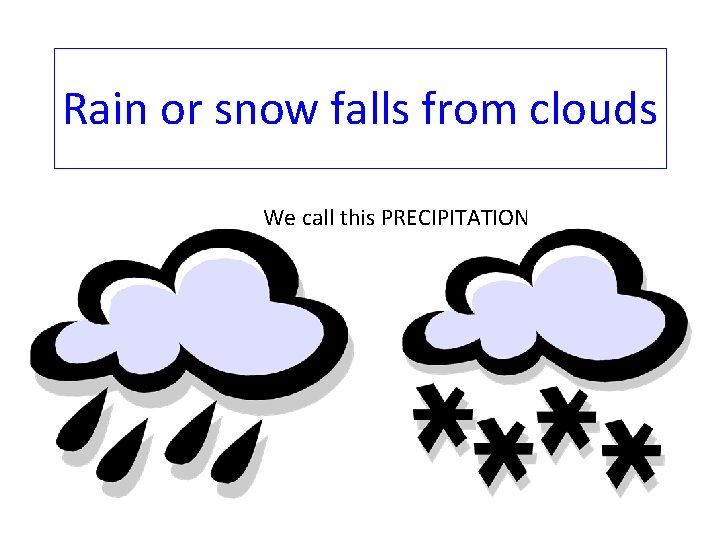
Rain or snow falls from clouds We call this PRECIPITATION
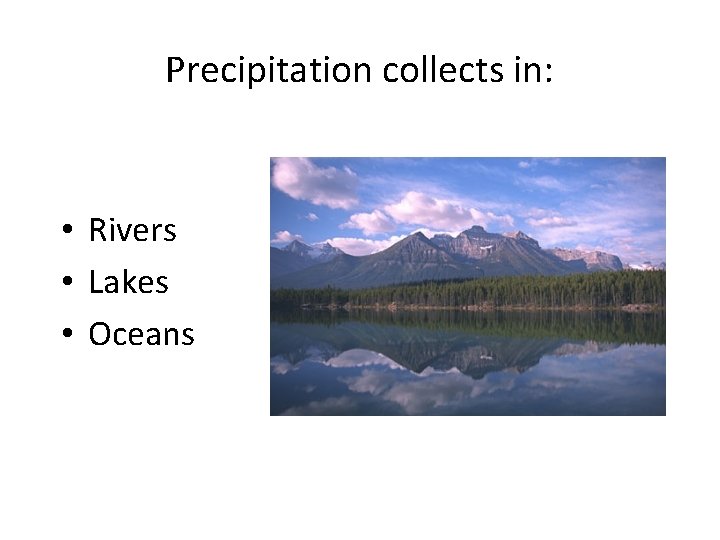
Precipitation collects in: • Rivers • Lakes • Oceans
Then what? Right! It starts all over again! That is why it is called a cycle.
Water Cycle • Thirstin's Water Cycle
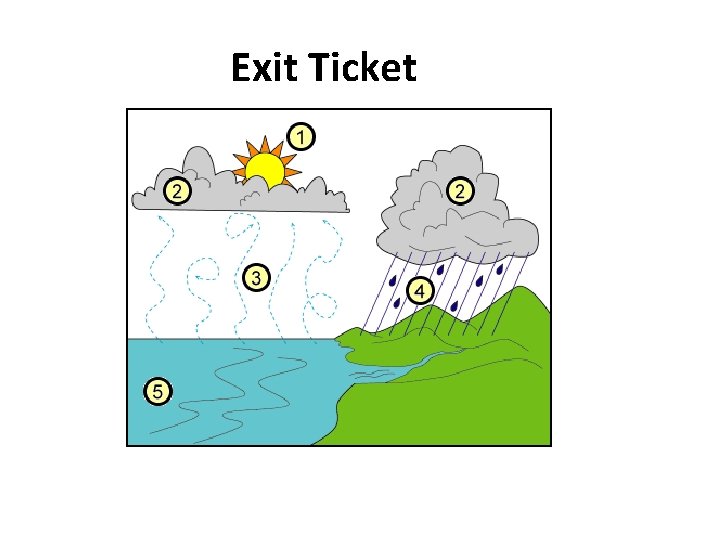
Sun warms ocean water causing it to EVAPORATE. Water vapor CONDENSES to form clouds. Clouds become very heavy before beginning to PRECIPITATE. Precipitation collects in rivers, lakes, and oceans. The sun warms ocean water…
Water Cycle
Water Cycle
Bill Nye
Water-Cycle-Jump-1 -31
Exit Ticket
WIND • Wind is the movement of air • Basic cause of wind is the differential heating of Earth by the sun. • Wind moves from areas of high pressure to areas of low pressure.
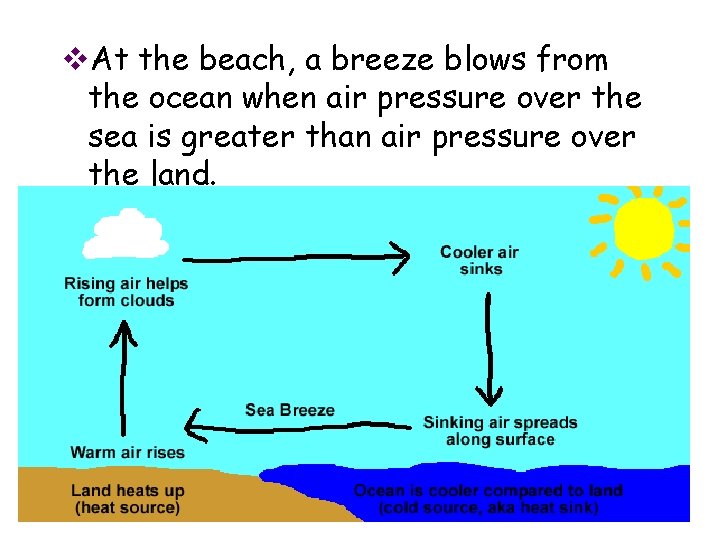
v. At the beach, a breeze blows from the ocean when air pressure over the sea is greater than air pressure over the land.
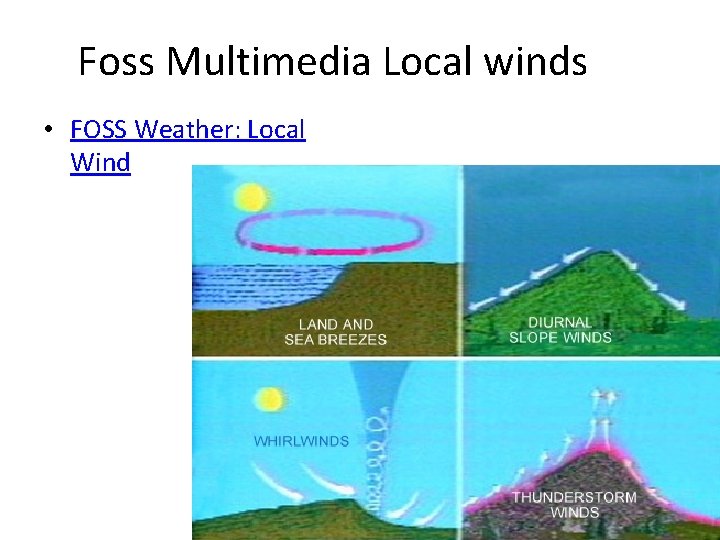
Foss Multimedia Local winds • FOSS Weather: Local Wind
wind
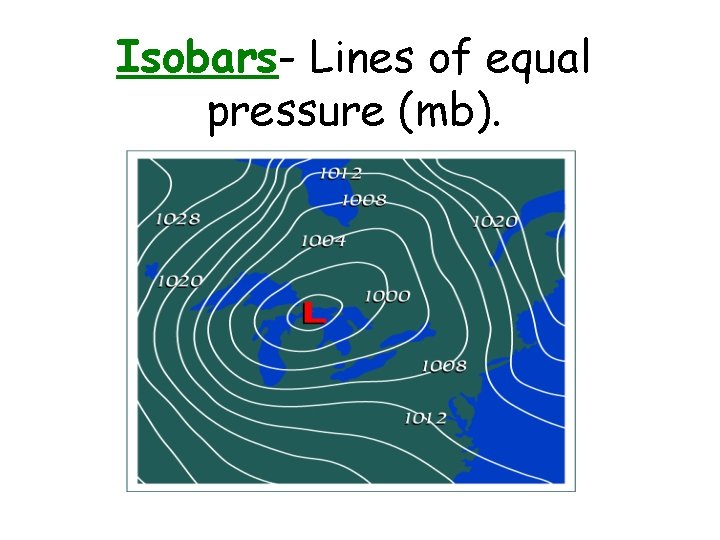
Isobars- Lines of equal pressure (mb).
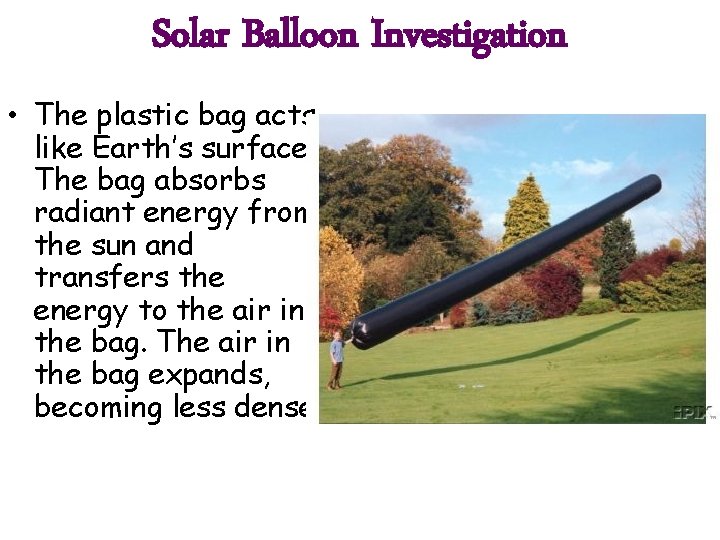
Solar Balloon Investigation • The plastic bag acts like Earth’s surface. The bag absorbs radiant energy from the sun and transfers the energy to the air in the bag. The air in the bag expands, becoming less dense.
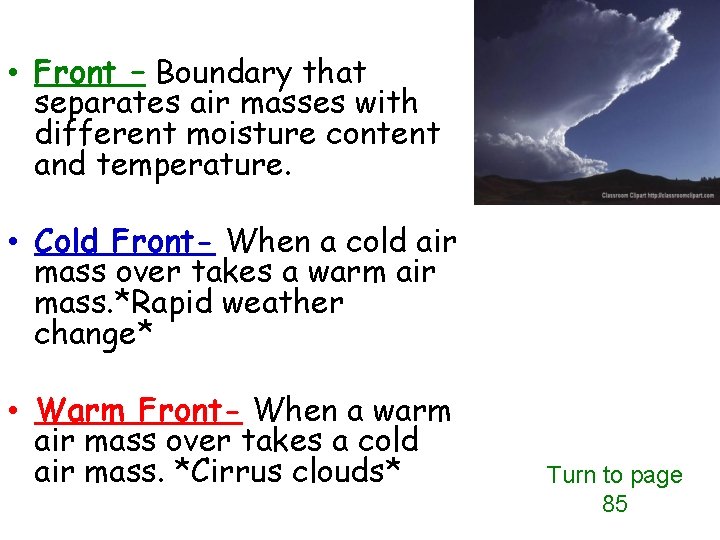
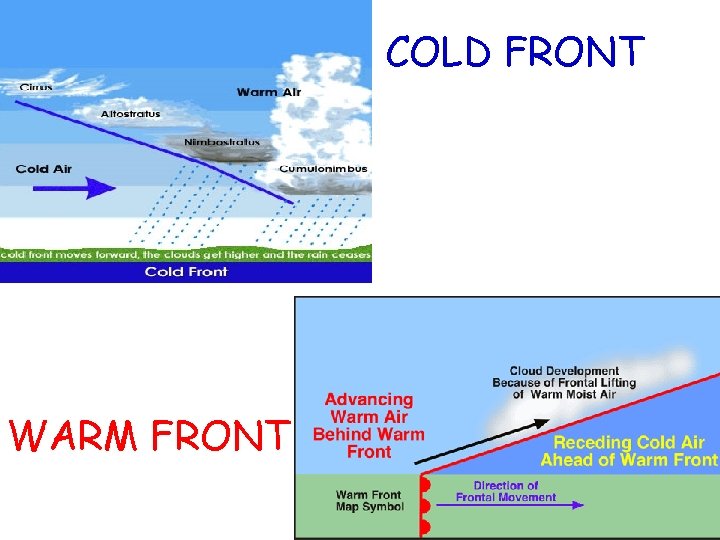
• Front – Boundary that separates air masses with different moisture content and temperature. • Cold Front- When a cold air mass over takes a warm air mass. *Rapid weather change* • Warm Front- When a warm air mass over takes a cold air mass. *Cirrus clouds* Turn to page 85
COLD FRONT WARM FRONT
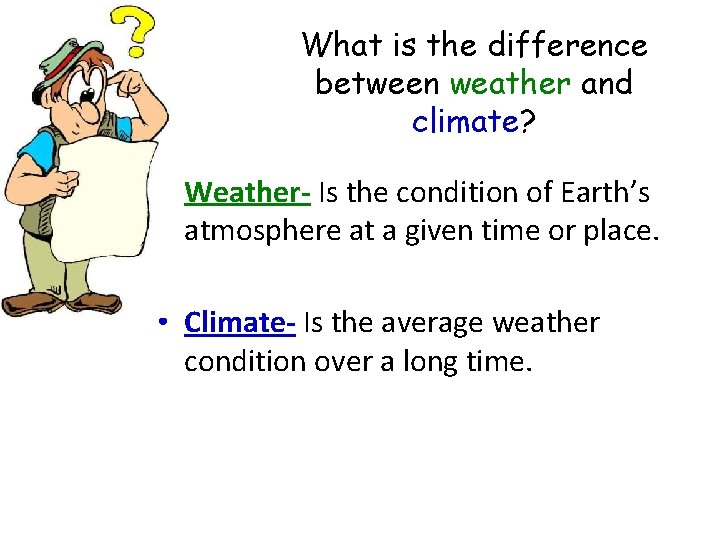
What is the difference between weather and climate? • Weather- Is the condition of Earth’s atmosphere at a given time or place. • Climate- Is the average weather condition over a long time.
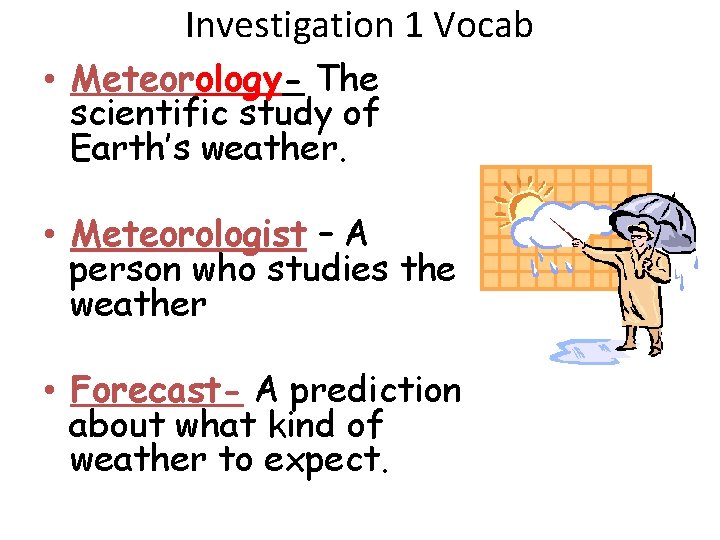
Investigation 1 Vocab • Meteorology- The scientific study of Earth’s weather. • Meteorologist – A person who studies the weather • Forecast- A prediction about what kind of weather to expect.
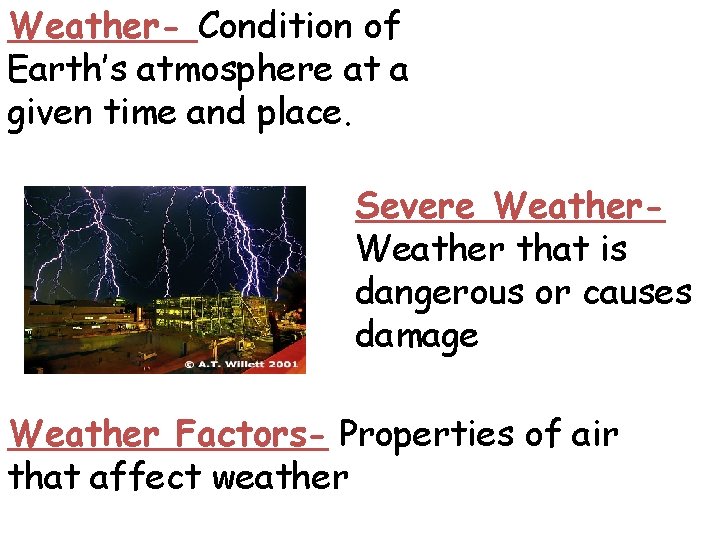
Weather- Condition of Earth’s atmosphere at a given time and place. Severe Weather that is dangerous or causes damage Weather Factors- Properties of air that affect weather
Words to know • Temperature- How hot or cold the air is. • Humidity- The amount of water vapor in the air. • Wind direction- The direction from which the air is blowing. • Wind speed- How fast the wind is moving.
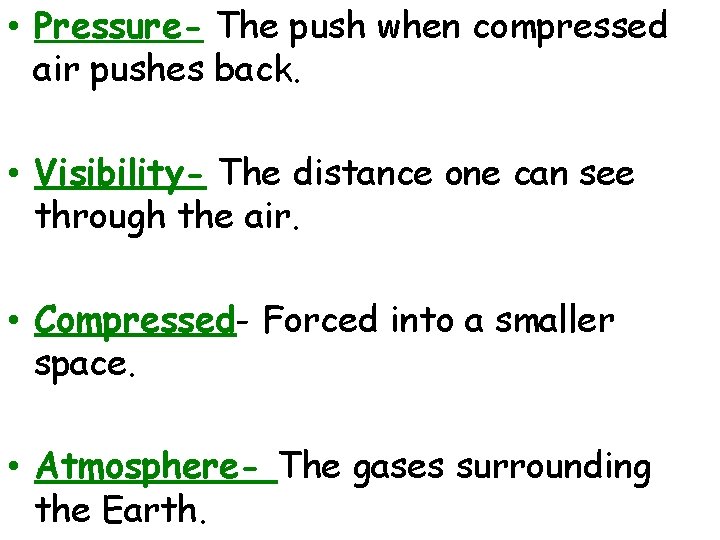
• Pressure- The push when compressed air pushes back. • Visibility- The distance one can see through the air. • Compressed- Forced into a smaller space. • Atmosphere- The gases surrounding the Earth.
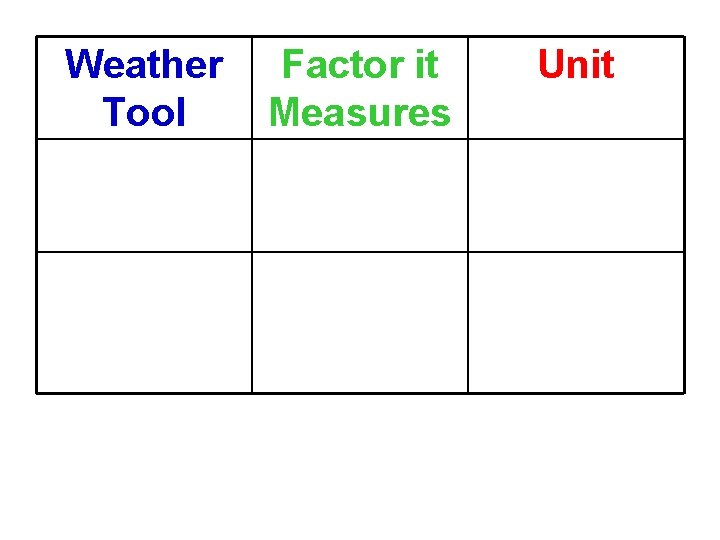
Weather Tool Factor it Measures Unit
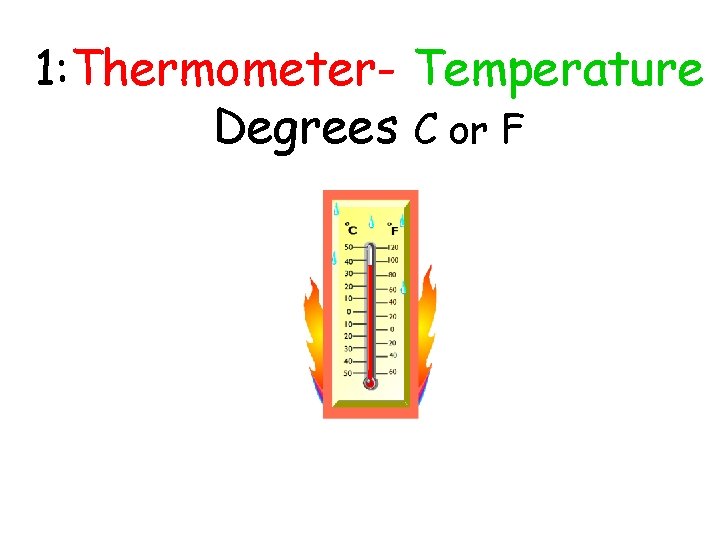
1: Thermometer- Temperature Degrees C or F
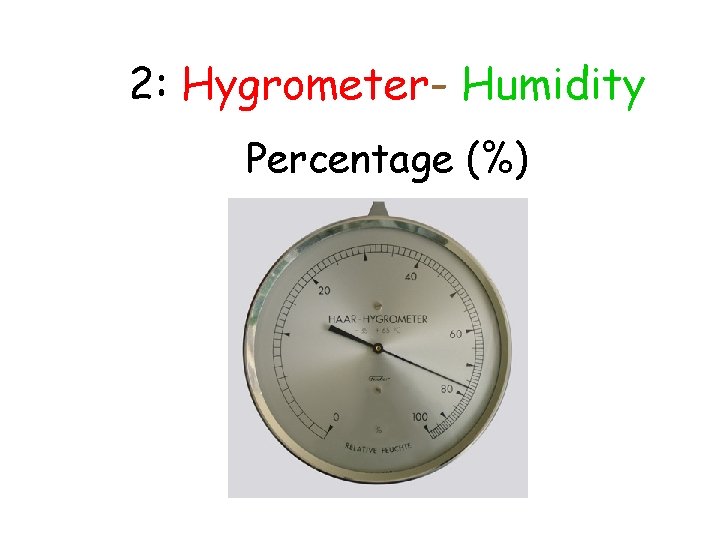
2: Hygrometer- Humidity Percentage (%)
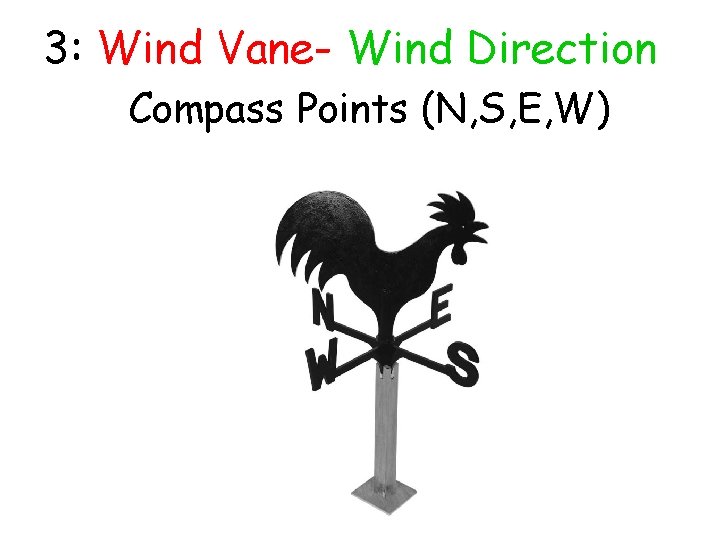
3: Wind Vane- Wind Direction Compass Points (N, S, E, W)
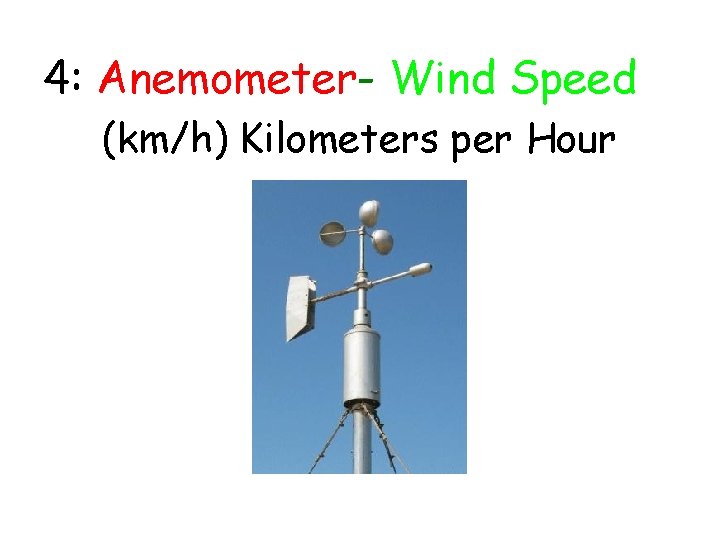
4: Anemometer- Wind Speed (km/h) Kilometers per Hour
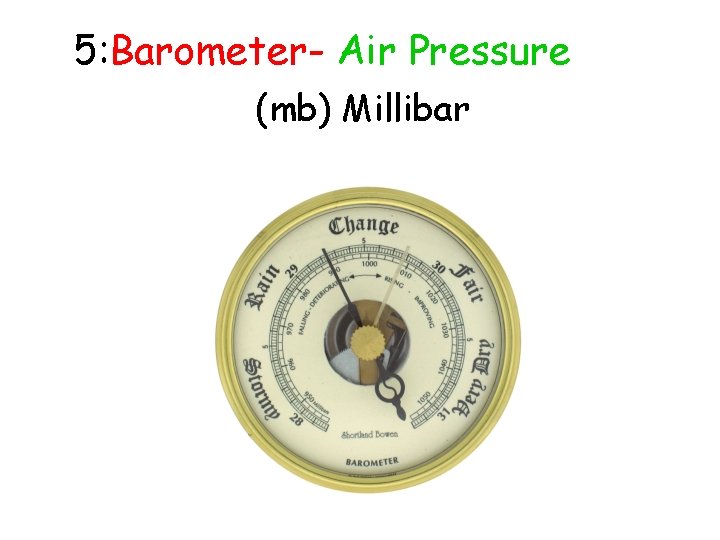
5: Barometer- Air Pressure (mb) Millibar
weather Nat geo weather