
Composition Guidelines A B Composition Guidelines Use Rule
Composition Guidelines
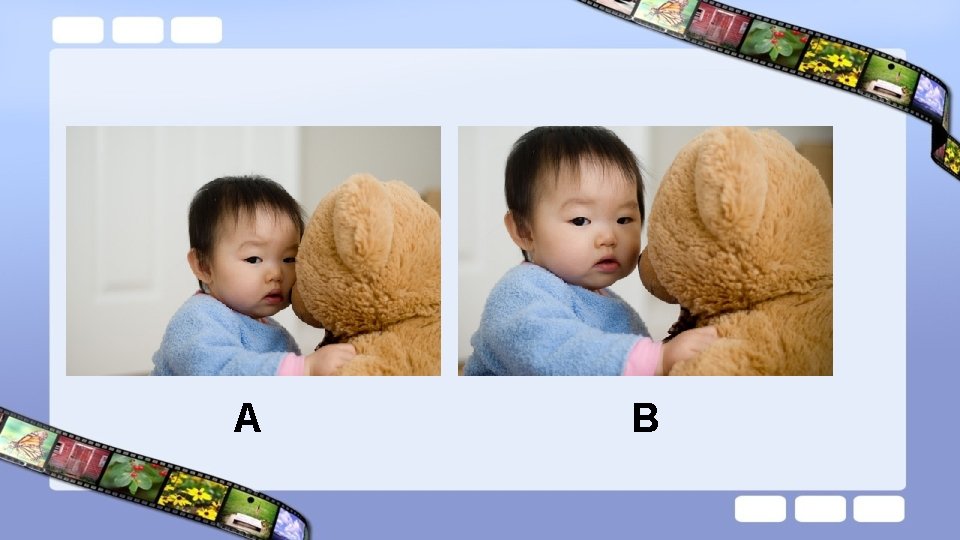
A B
Composition Guidelines • Use Rule of Thirds • Watch horizontal & vertical lines • Have subjects looking off frame • Follow leading lines • Look for patterns and textures
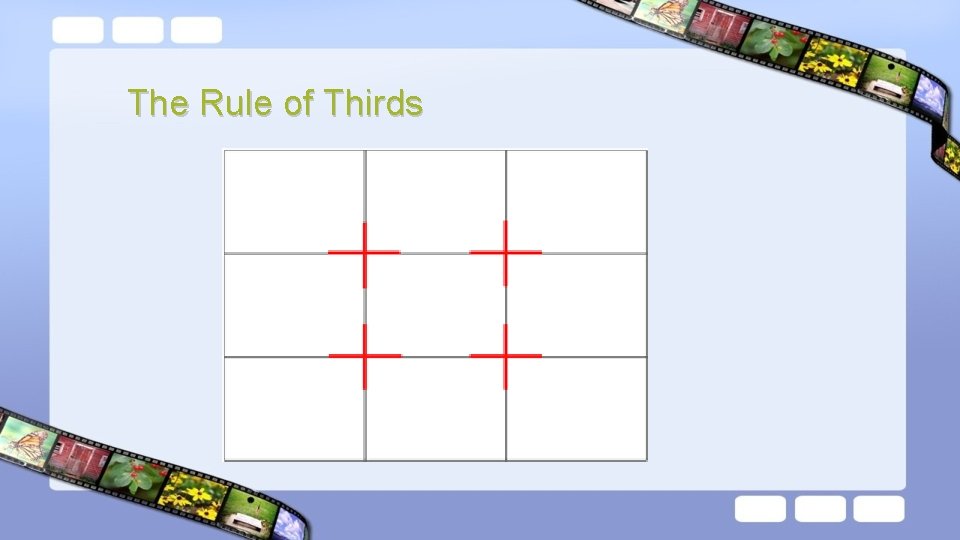
The Rule of Thirds
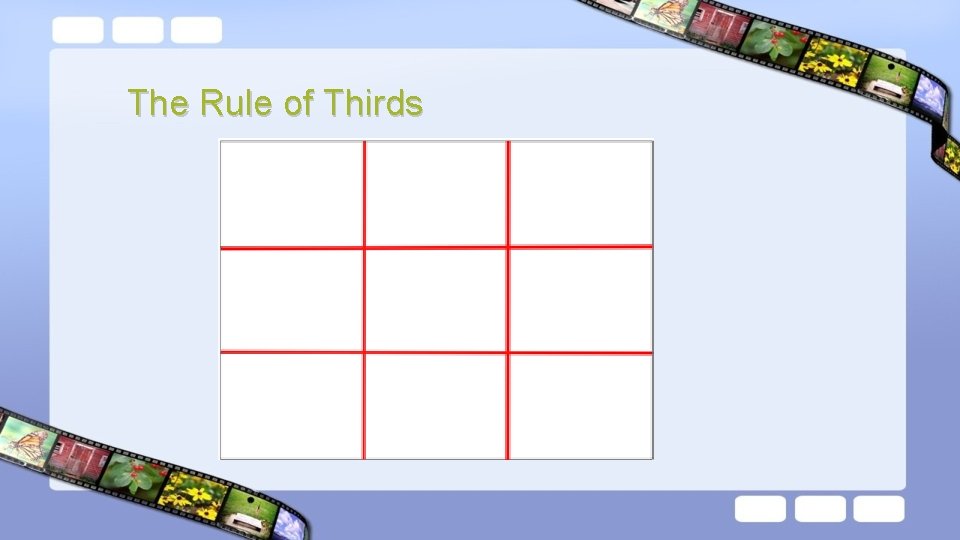
The Rule of Thirds
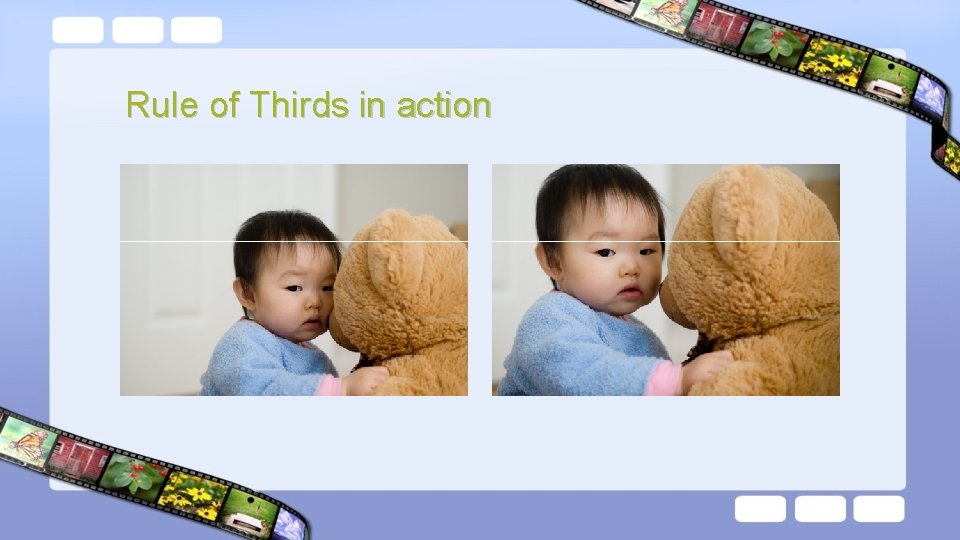
Rule of Thirds in action
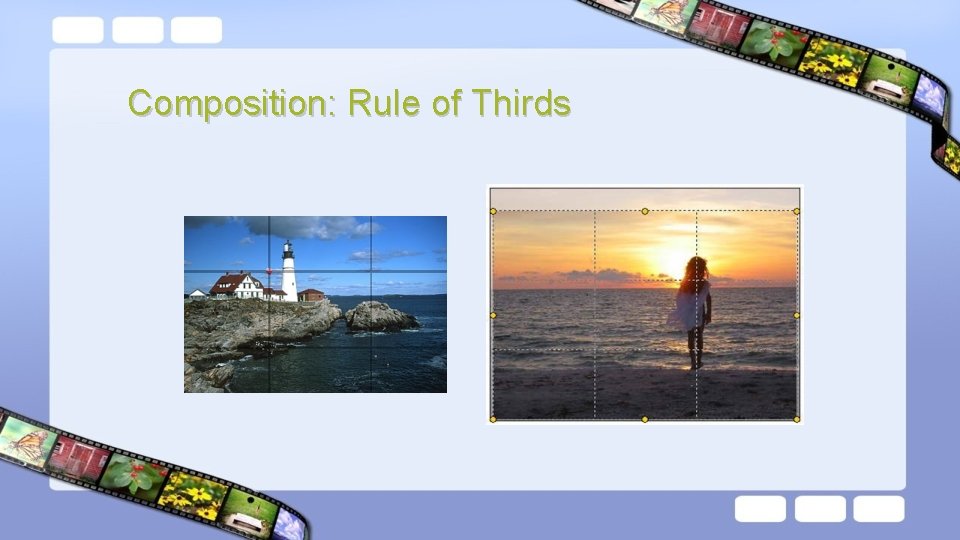
Composition: Rule of Thirds
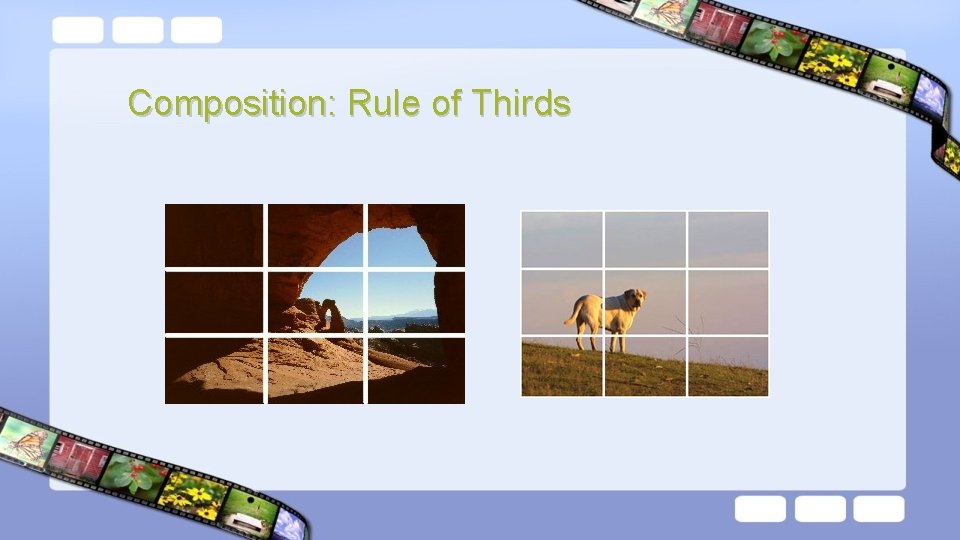
Composition: Rule of Thirds
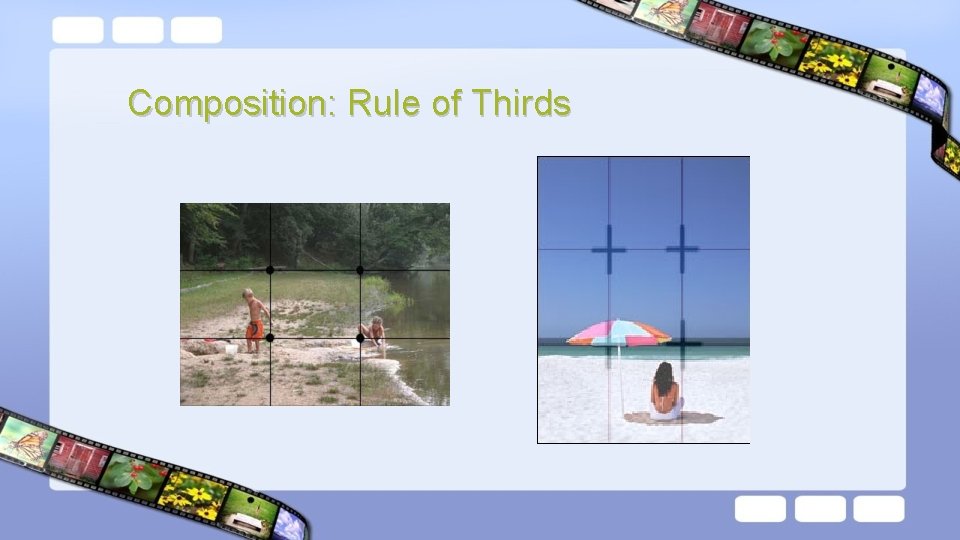
Composition: Rule of Thirds
How do I apply the concept? In learning how to use the rule of thirds the most important questions to be asking of yourself are: ◦ What are the points of interest in this shot? ◦ Where am I intentionally placing them?
Where to place the horizon line • Most pictures look better if the horizon is positioned above or below the middle of the frame, not directly in the center of the image. The exception is when shooting a reflection. In this case having the horizon in the center can work well because it creates equal elements at top and bottom—the scene above and the reflection below.



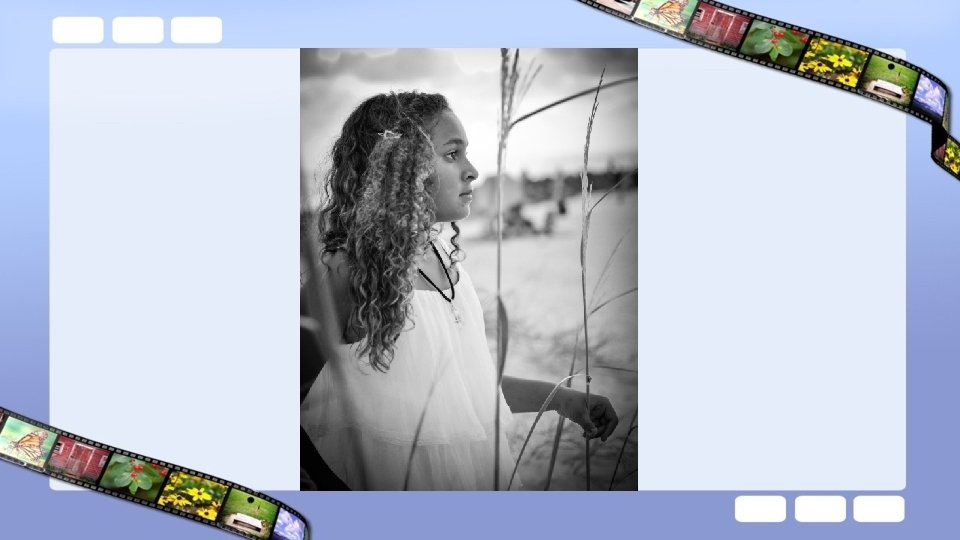
Lean Into the Frame • When photographing people and animals it's best to have them looking into the frame. If there’s action in your picture, leave more space on the side of the frame where the action is headed. It looks more natural that way and lets the viewer have a feel for where the subject is going.

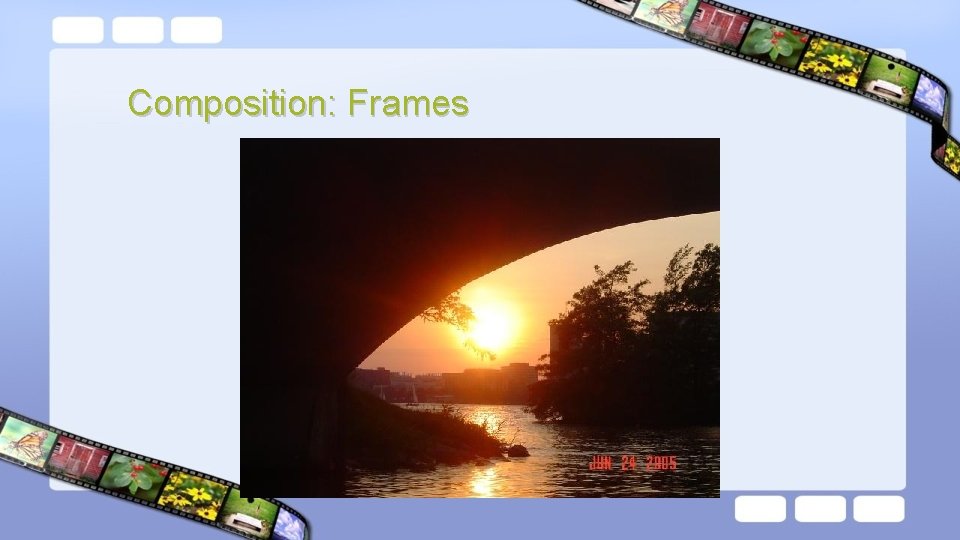
Composition: Frames
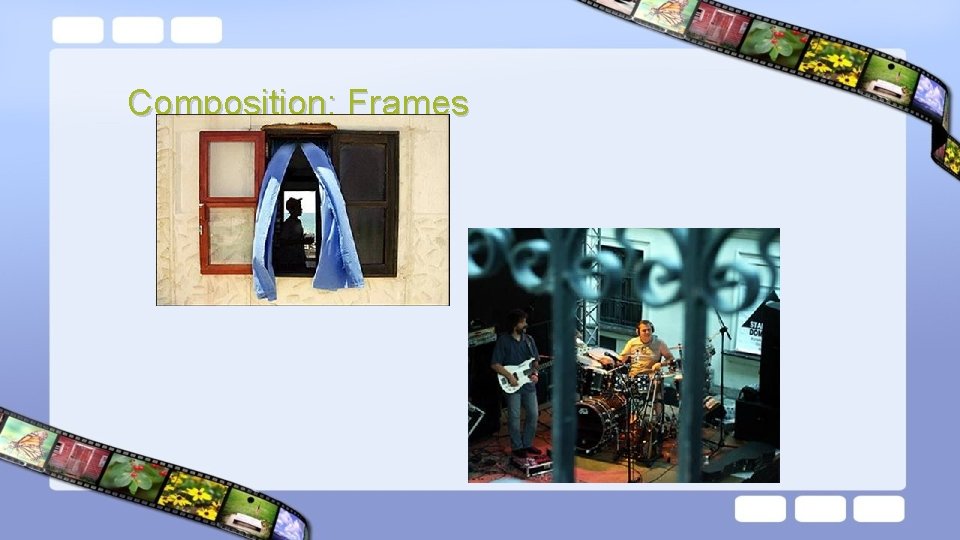
Composition: Frames

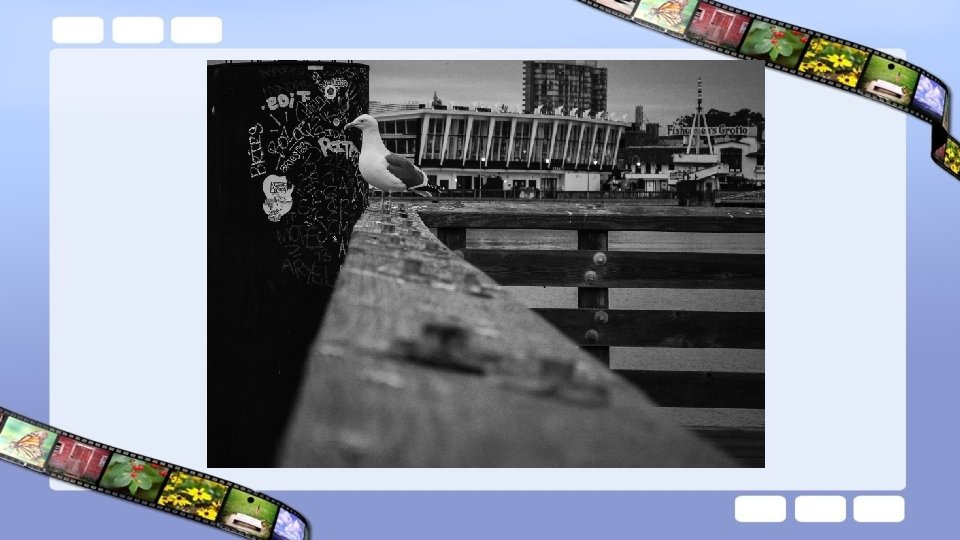


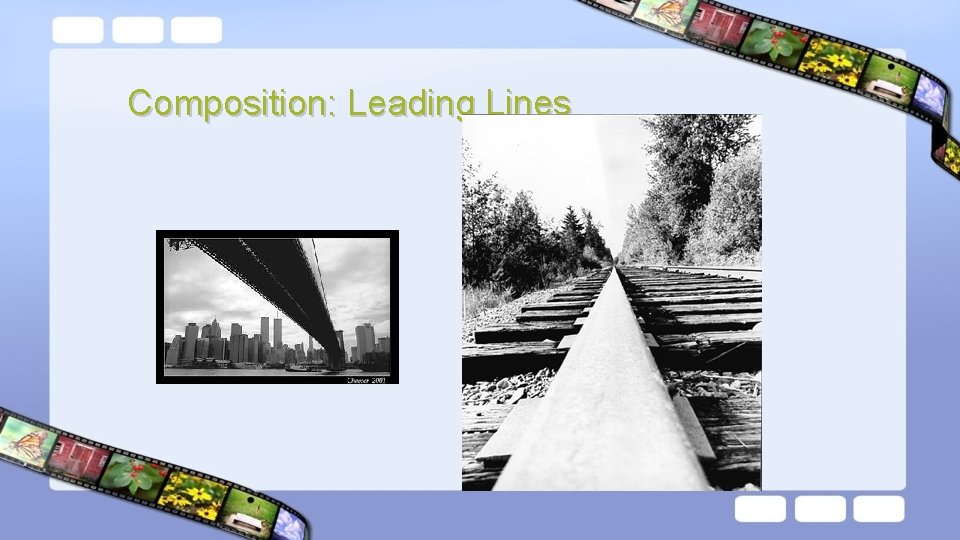
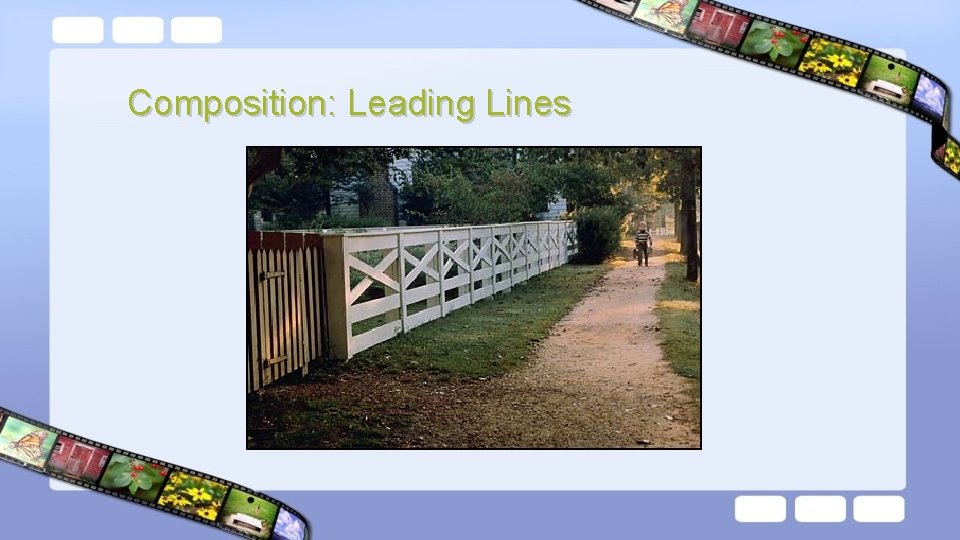
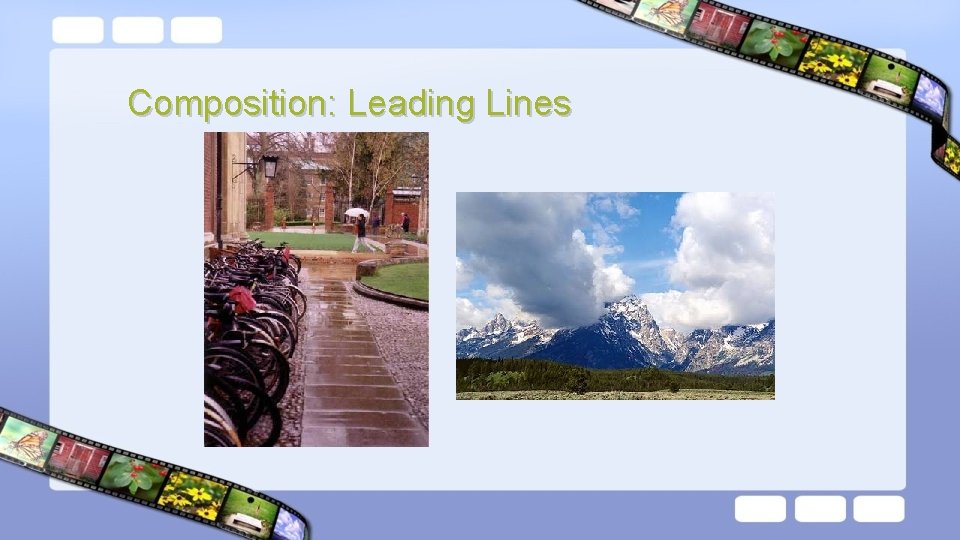
Leading Lines • When photographing buildings or other strong linear subjects, compose your image so that the architectural elements lead the viewer’s eye through the photograph. These “leading lines” lead your eyes through the image— sometimes even out of the image. These lines can be the main subjects of the image, or they can be used to lead your viewer to a specific area within the photo that is an important focal point. • In addition to straight lines, curves also make interesting compositions. They serve a purpose in bringing the viewer's eye throughout an image. Curves can be the main subject, or as with leading lines, they can be a means of leading the viewer to different subjects within an image.
Composition: Leading Lines
Composition: Leading Lines
Composition: Leading Lines
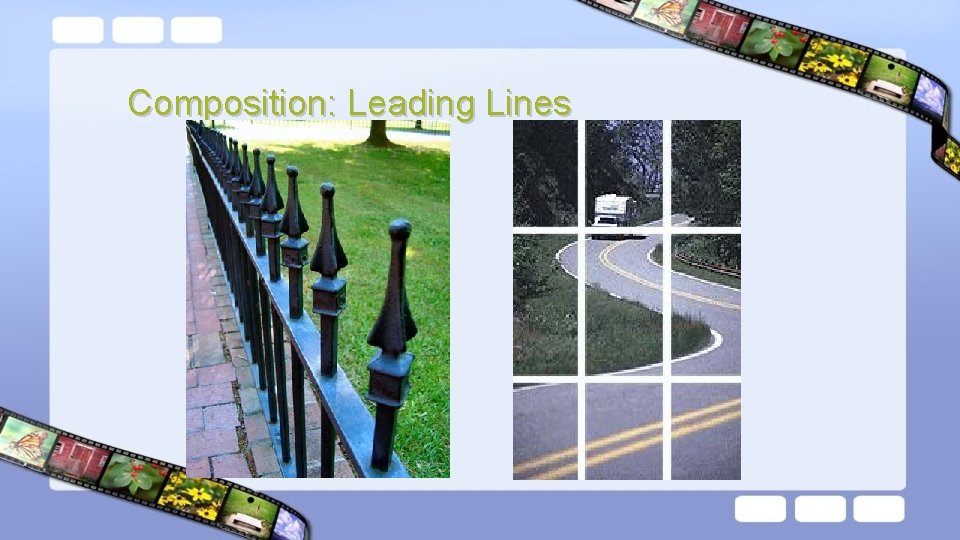
Composition: Leading Lines
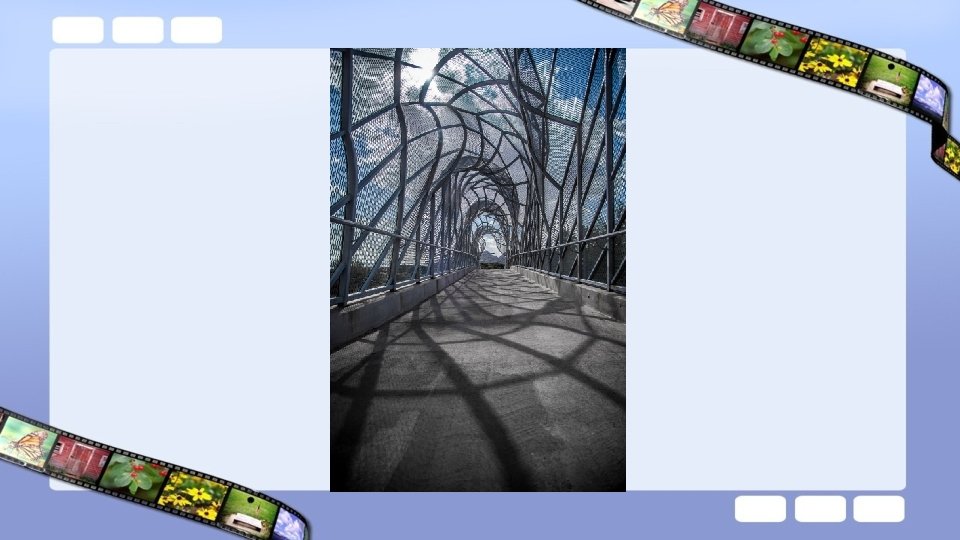
Patterns & Textures • Subjects with repetitive patterns can make for interesting photographs as well. Patterns that are found in nature, or are man-made can give your image a strong composition. Look within subjects in a scene to find patterns. • Textures can also work to your advantage in creating images with strong compositions. Get in close, either by zooming in or even by using a macro lens, and look for the textures in a subject. When shooting patterns or textures, you don’t need to capture the entire subject, just a portion of it. Textures can be soft, like the feathers on a bird, or harsh like peeling paint, or wood grain.

Other Techniques • Long Exposure • Camera Angle • Panning • Lighting • Exposure Compensation • Flash Control • White Balance
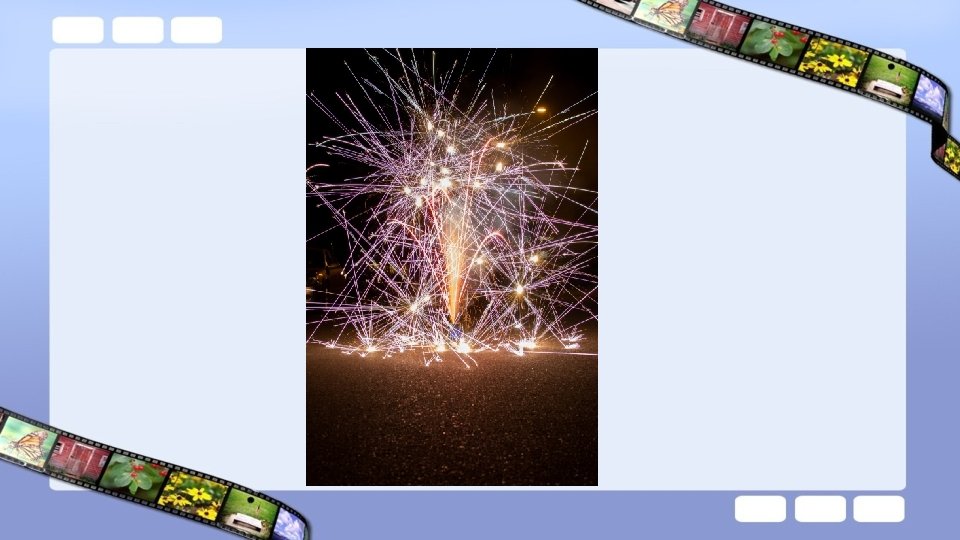
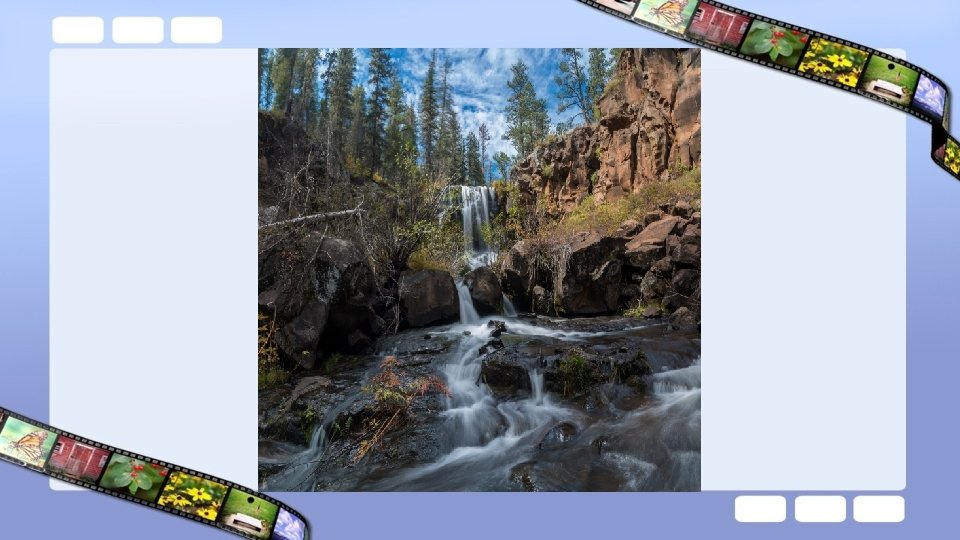
Long Exposure • long-duration shutter speed to sharply capture the stationary elements of images while blurring, smearing, or obscuring the moving elements.




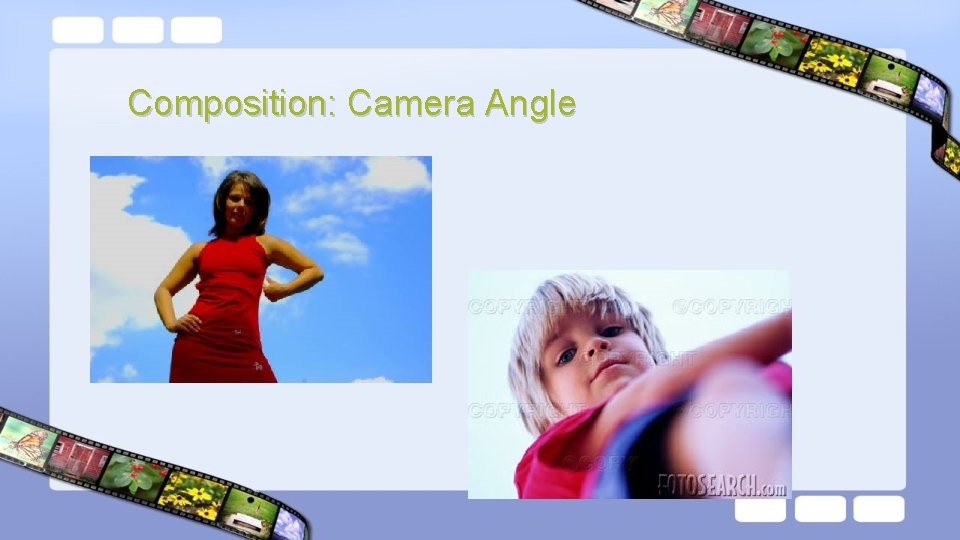
Composition: Camera Angle
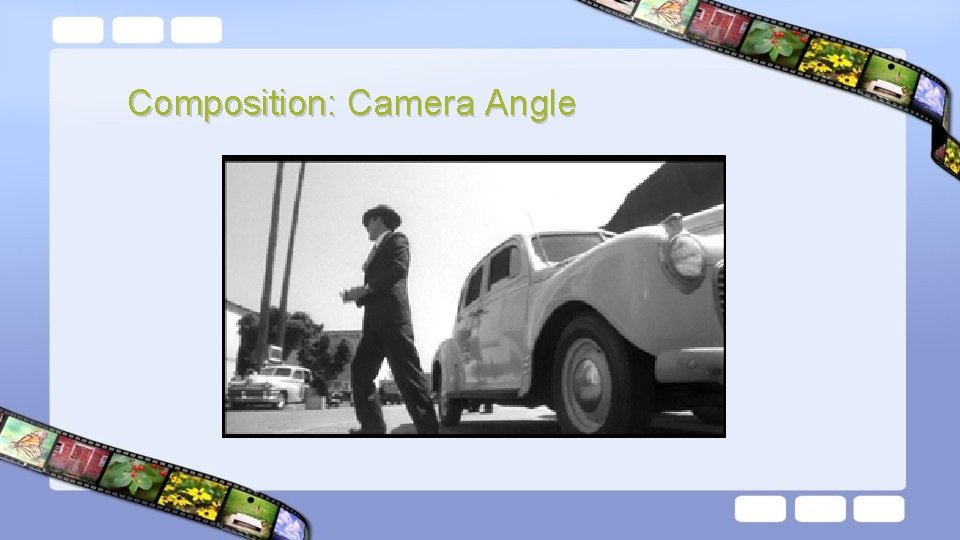
Composition: Camera Angle
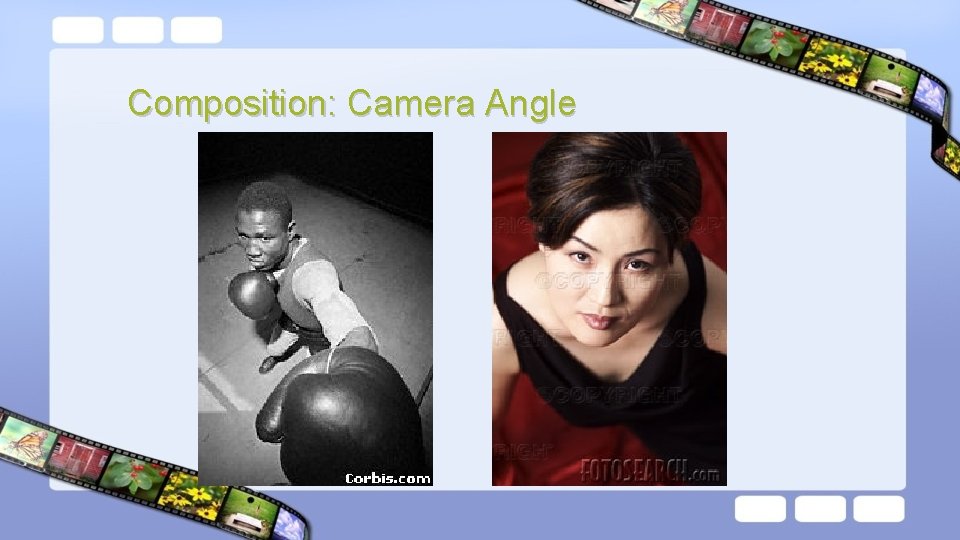
Composition: Camera Angle
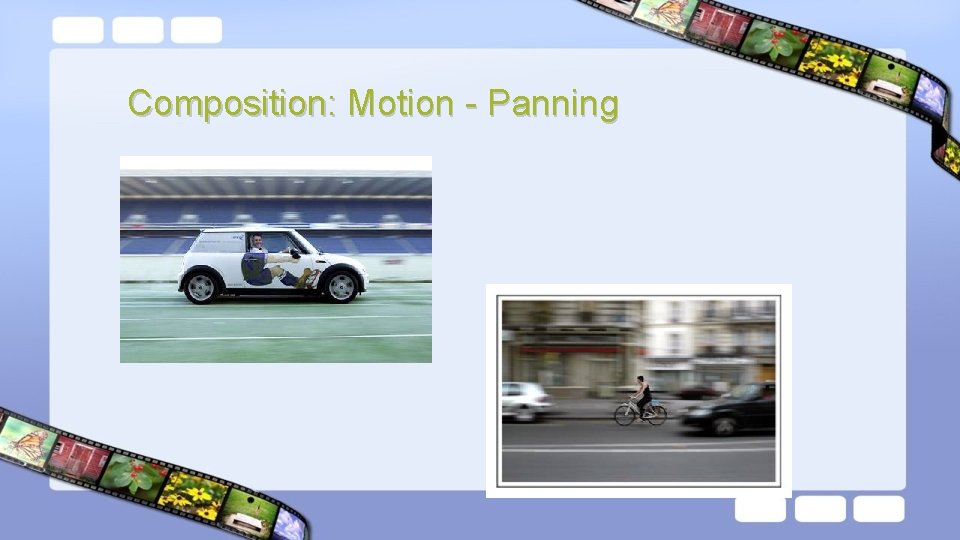
Composition: Motion - Panning
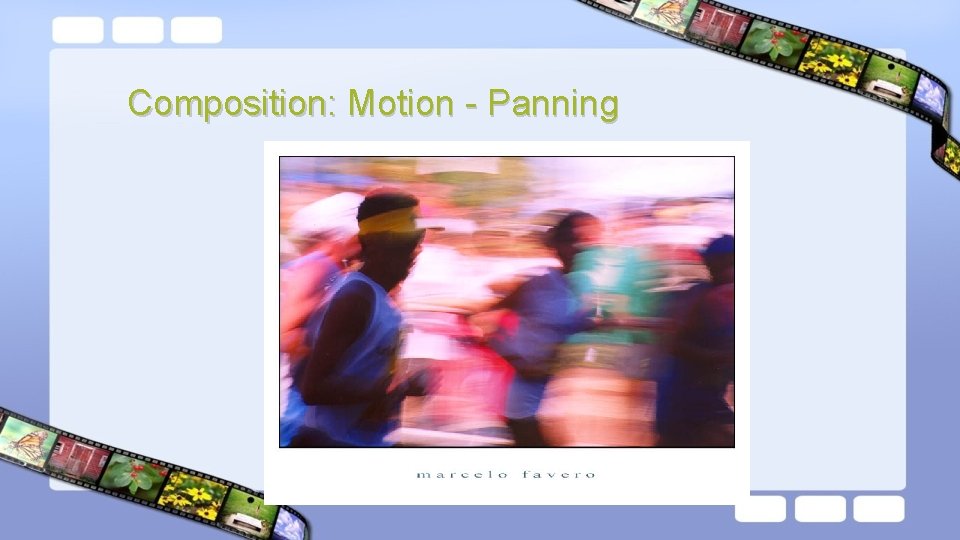
Composition: Motion - Panning
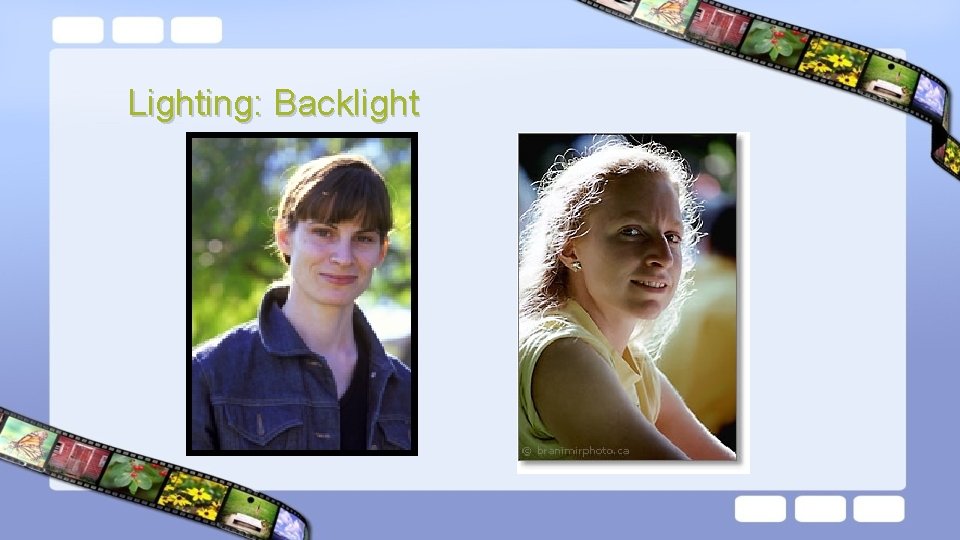
Lighting: Backlight
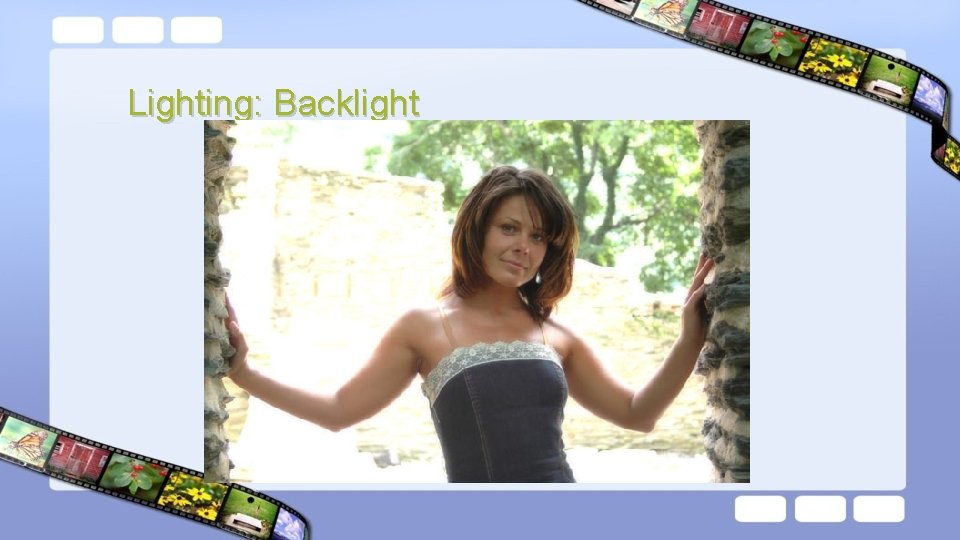
Lighting: Backlight
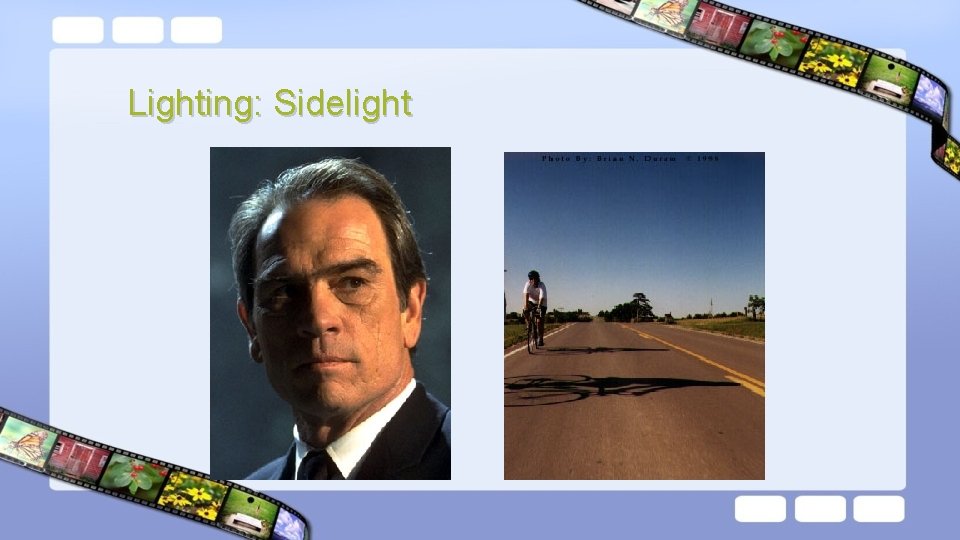
Lighting: Sidelight
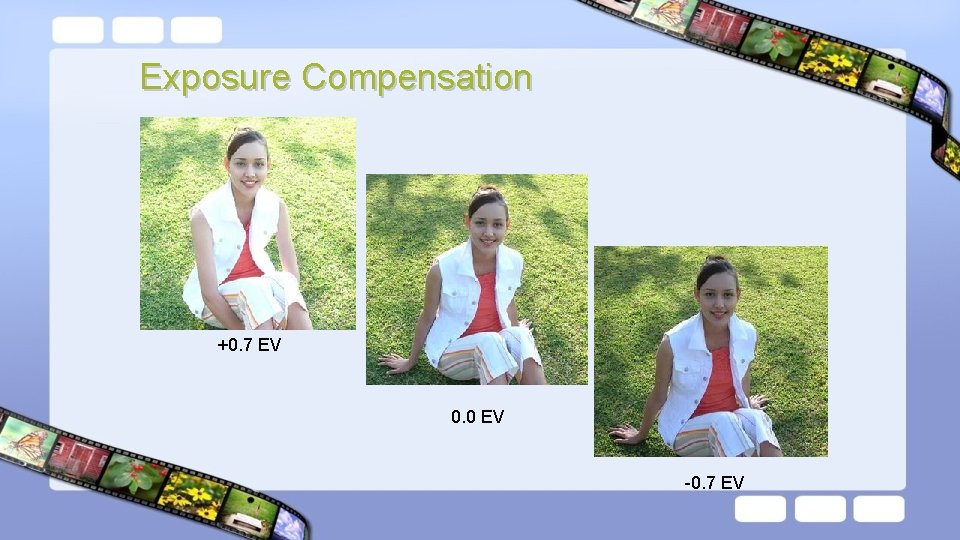
Exposure Compensation +0. 7 EV 0. 0 EV -0. 7 EV
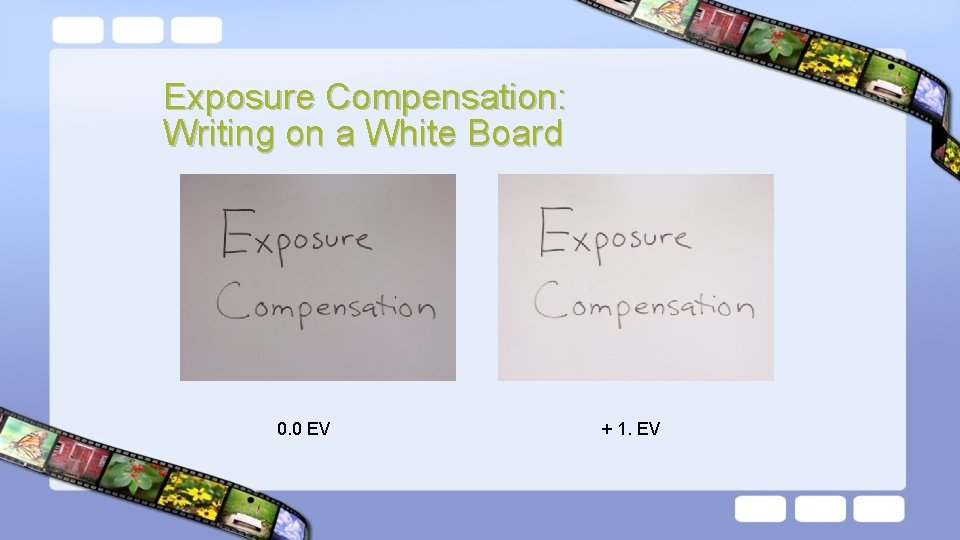
Exposure Compensation: Writing on a White Board 0. 0 EV + 1. EV
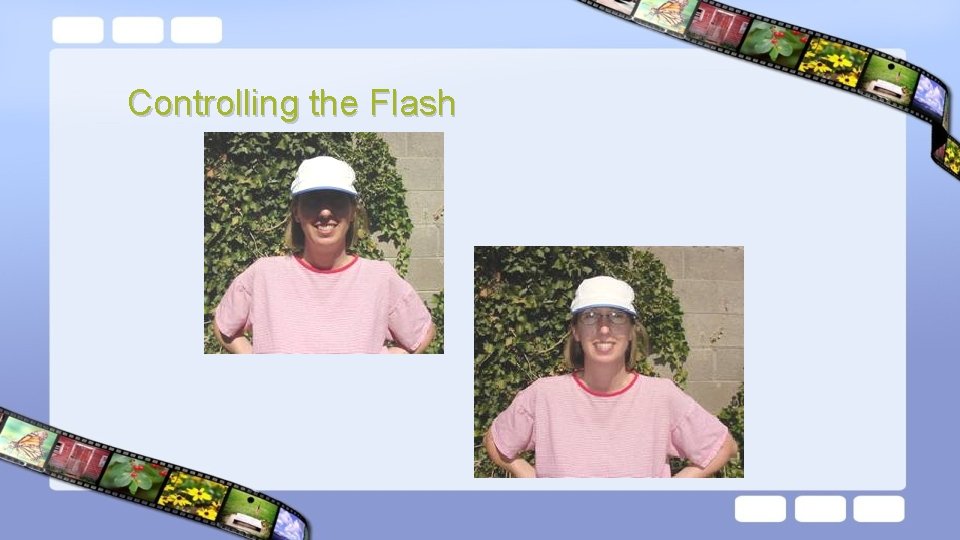
Controlling the Flash
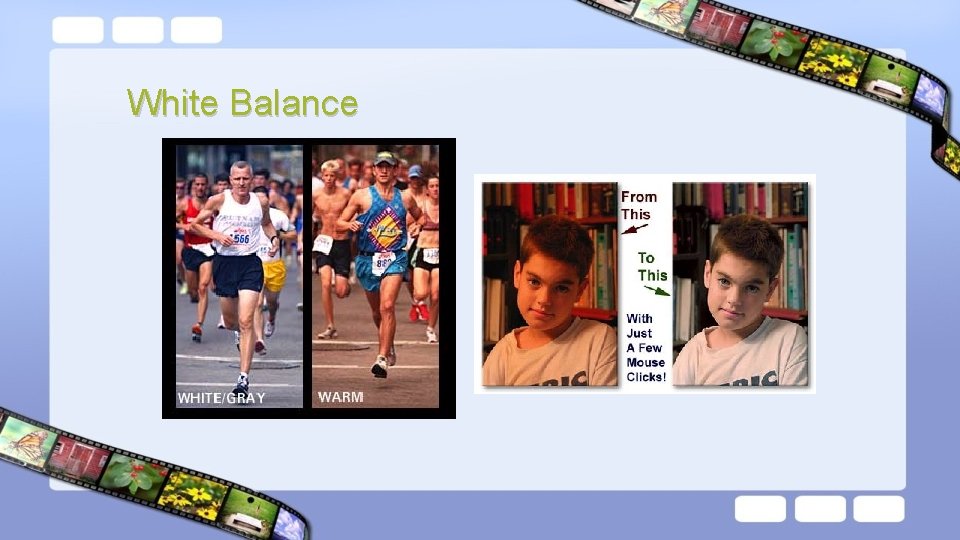
White Balance
Composition Assignment #1? • Find 10 Examples of the various Compositions and copy and paste them on additional slides. • Create a quiz for yourself to see if others can guess which composition style each picture represents.
Composition Techniques • Rule of Thirds • Long Exposure • Horizon Line • Camera Angle • Lean into Frames • Panning • Frames • Lighting • Leading Lines • Exposure Compensation • Patterns and Textures • Flash Control • White Balance
Composition Assignment #2 • After Mr. Nedow places in a group you will check out a DSLR Camera. Each of you in the group will take the following images and create a bad vs good Rule of Thirds Composition. • One image with a person or object in the center of the photograph. • One image with the same person or object in one of the areas of the rule of thirds grid. • Place both side by side on a Word or Photoshop Document to show bad vs good Rule of Thirds Composition
- Slides: 54