
COMPOSITION Definition The arrangement of elements within a

- Slides: 37
COMPOSITION Definition: The arrangement of elements within a frame Three Parts To a Picture 1. Subject (Center Of Interest) a. The Main Focus of the picture 2. Message 3. Treatment of The Subject a. Composition Techniques
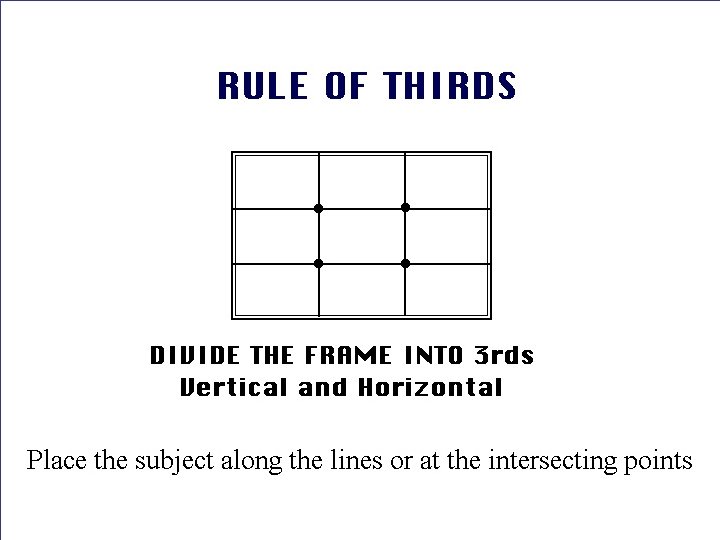
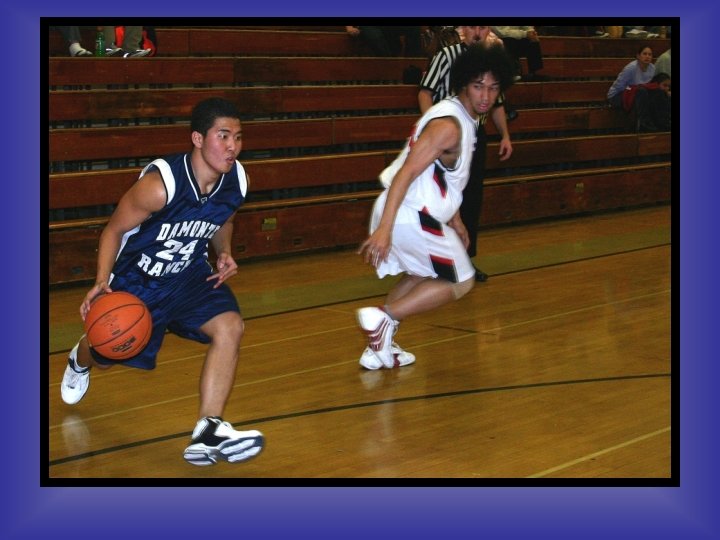
COMPOSITION Techniques 8 Elements of Composition 1. Rule of Thirds The Subject of the Photograph should be off center in the frame
COMPOSITION Techniques 8 Elements of Composition
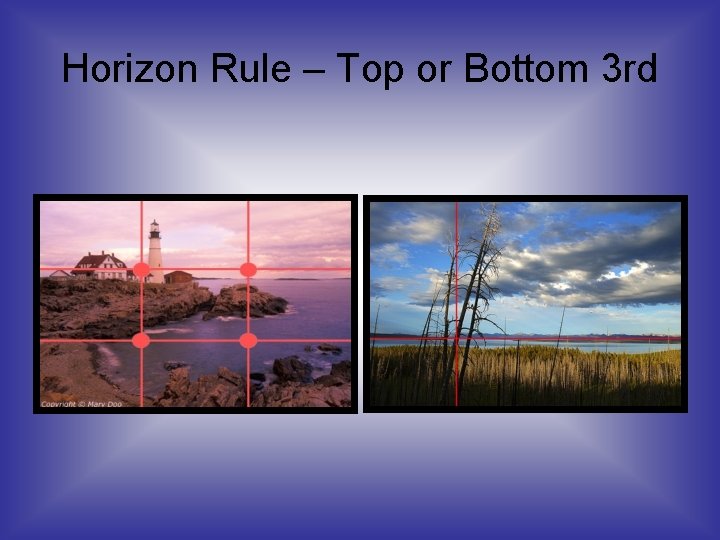
COMPOSITION Techniques 8 Elements of Composition 1. Rule of Thirds Horizon Rule Horizon Line should be placed in the top or bottom third of the frame
Horizon Rule – Top or Bottom 3 rd
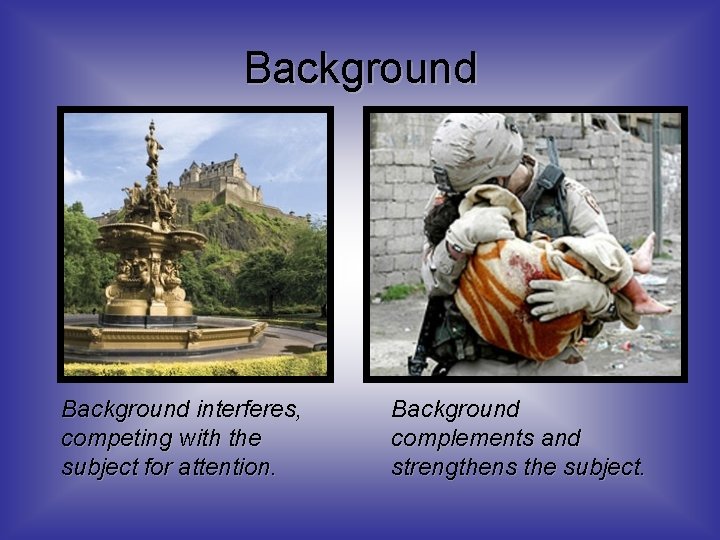
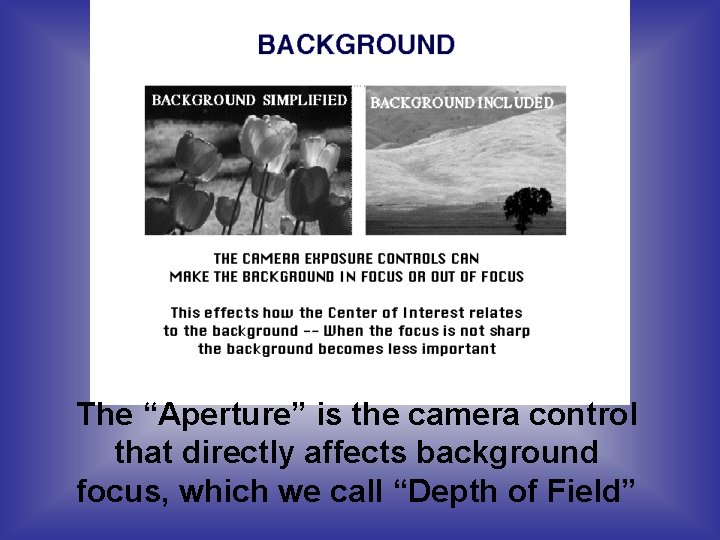
COMPOSITION Techniques 8 Elements of Composition 2. Background Always be aware of your background. It should never interfere with your subject and your message
Background interferes, competing with the subject for attention. Background complements and strengthens the subject.
The “Aperture” is the camera control that directly affects background focus, which we call “Depth of Field”
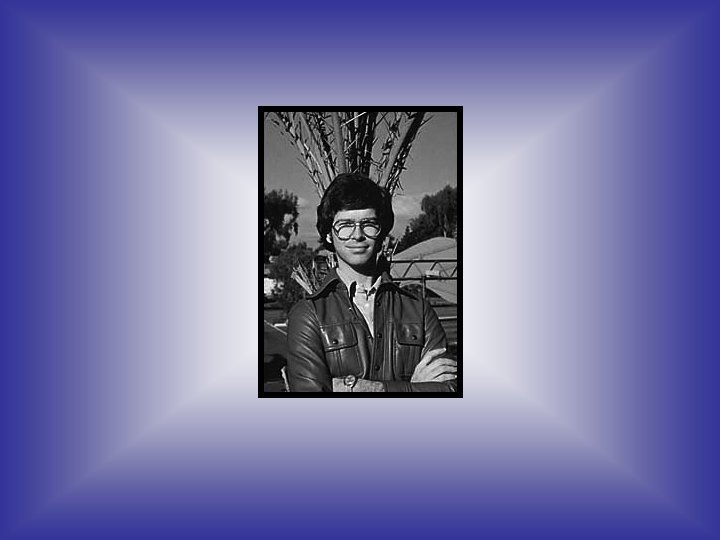
COMPOSITION Techniques 8 Elements of Composition 2. Background Avoid Mergers. Because photos are 2 Dimensional, objects directly behind other objects in the frame can appear to “merge” together.
COMPOSITION Techniques 8 Elements of Composition 3. Balance Always try to achieve a sense of Balance in the shot
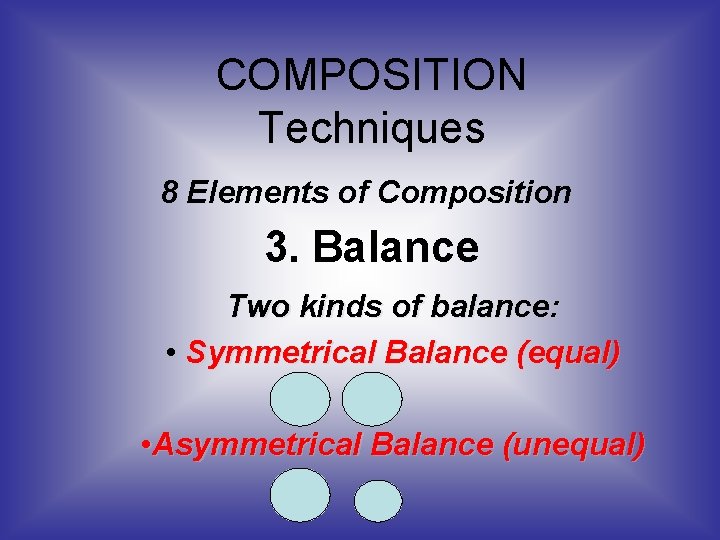
COMPOSITION Techniques 8 Elements of Composition 3. Balance Two kinds of balance: • Symmetrical Balance (equal) • Asymmetrical Balance (unequal)
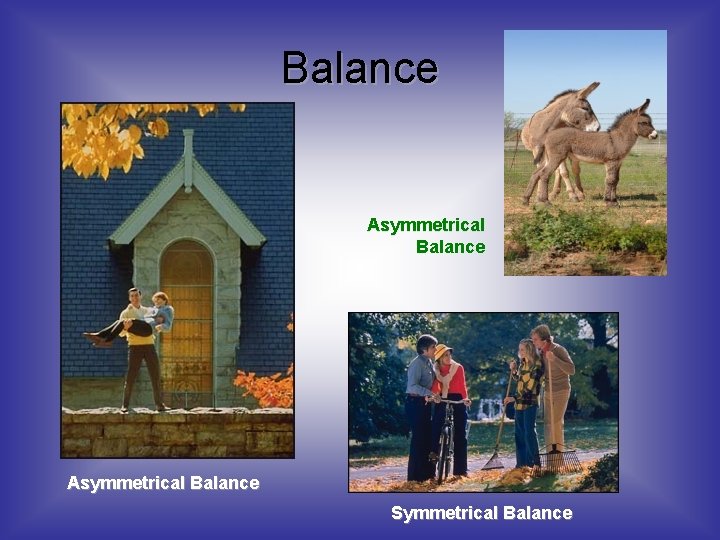
Balance Asymmetrical Balance Symmetrical Balance
COMPOSITION Techniques 8 Elements of Composition 4. Lines can psychologically “charge” your image. We react differently to different kinds of lines
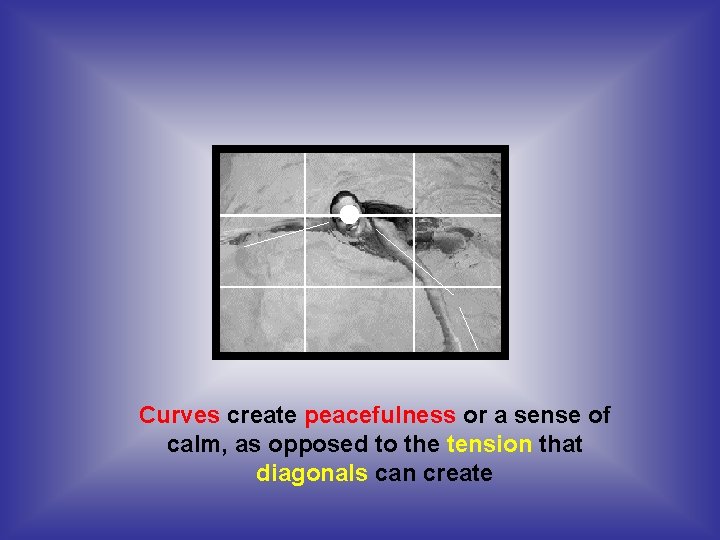
COMPOSITION Techniques 8 Elements of Composition 4. Lines • Horizontal and Curved Lines create a sense of calm or peace • Diagonal or Vertical lines create a sense of tension
Curves create peacefulness or a sense of calm, as opposed to the tension that diagonals can create
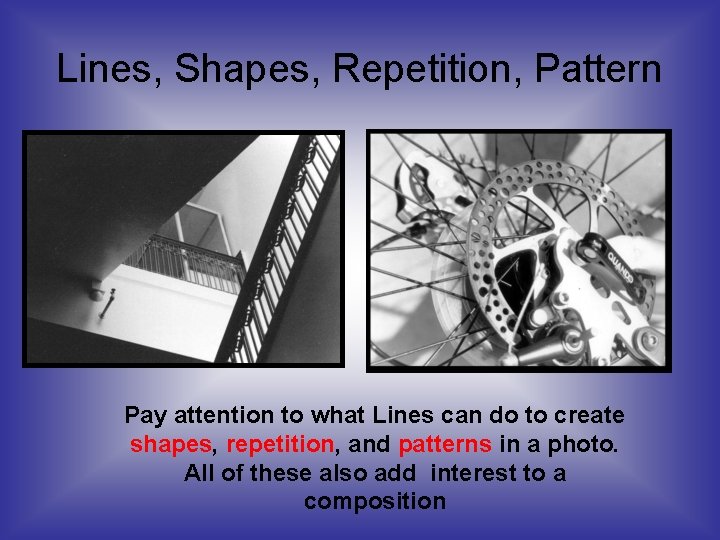
Lines, Shapes, Repetition, Pattern Pay attention to what Lines can do to create shapes, repetition, and patterns in a photo. All of these also add interest to a composition
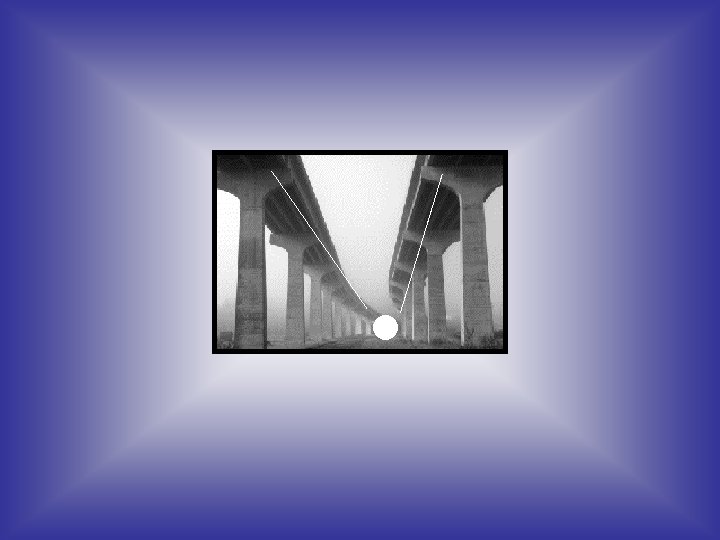
COMPOSITION Techniques 8 Elements of Composition 4. Lines • Leading Lines unconsciously lead the viewer’s eye to the vanishing point. Photographers will often place the subject of the shot at the vanishing point so the eye is forced to focus there
COMPOSITION Techniques 8 Elements of Composition 5. Perspective The Perspective is the angle of view of the photo. Like lines, angles can psychologically affect the viewer (besides just making a shot more interesting generally)
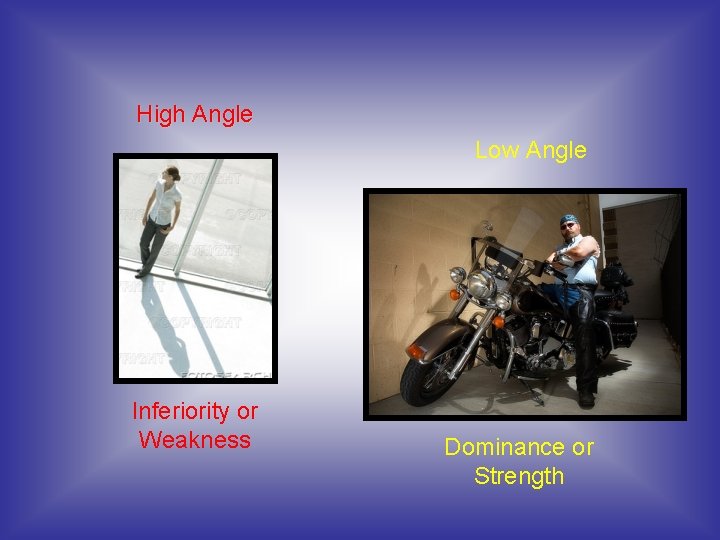
COMPOSITION Techniques 8 Elements of Composition 5. Perspective • A High Angle gives the subject a feeling of weakness or inferiority • A Low Angle gives the subject a feeling of strength or dominance
High Angle Low Angle Inferiority or Weakness Dominance or Strength
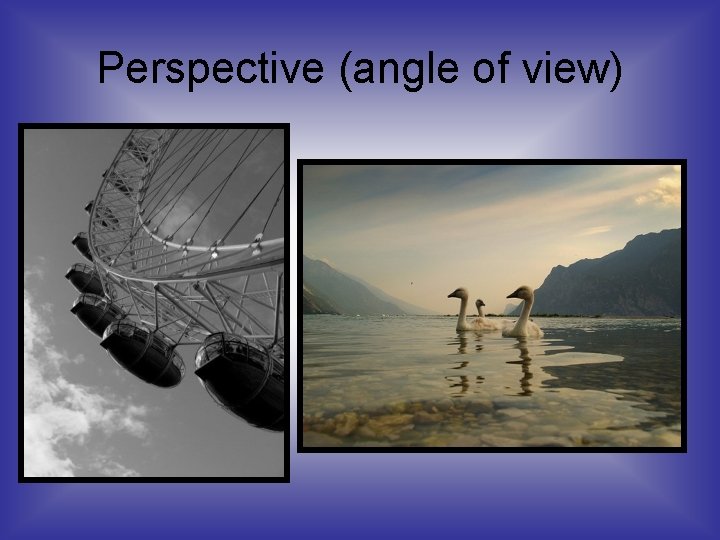
Perspective (angle of view)
COMPOSITION Techniques 8 Elements of Composition 6. Framing Using objects in the Foreground to naturally “frame” your subject
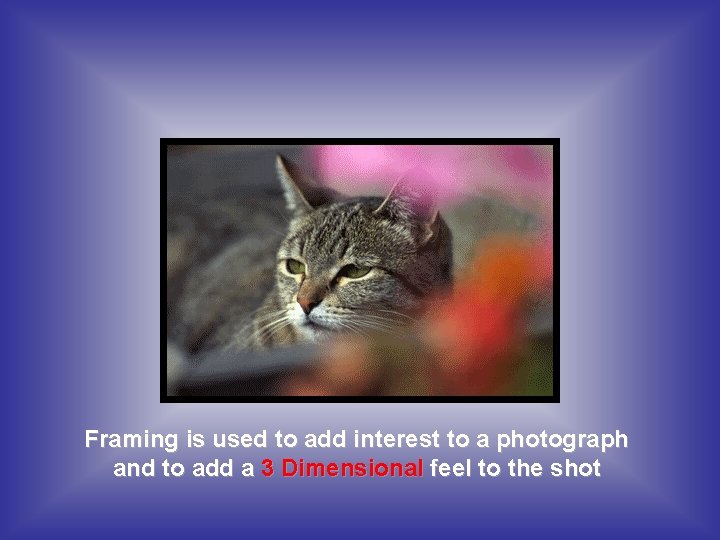
Framing is used to add interest to a photograph and to add a 3 Dimensional feel to the shot
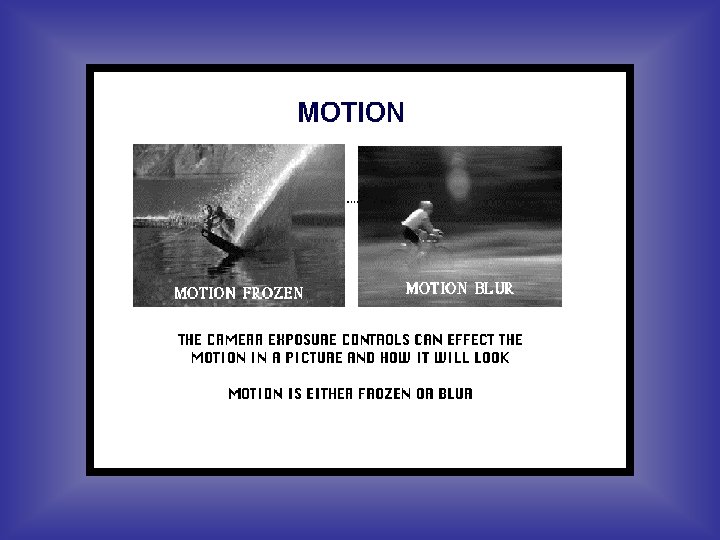
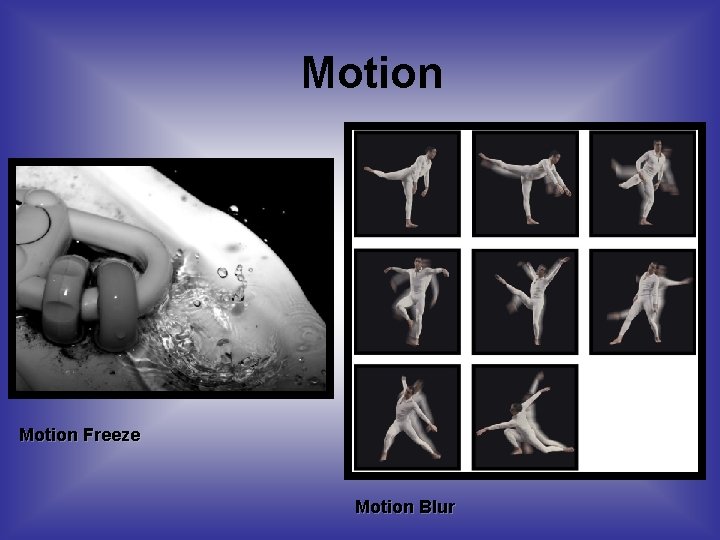
COMPOSITION Techniques 8 Elements of Composition 7. Motion is directly controlled by the camera’s shutter speed
COMPOSITION Techniques 8 Elements of Composition 7. Motion • Fast shutter speeds “freeze” motion • Slow shutter speeds “blur” motion
Motion Freeze Motion Blur
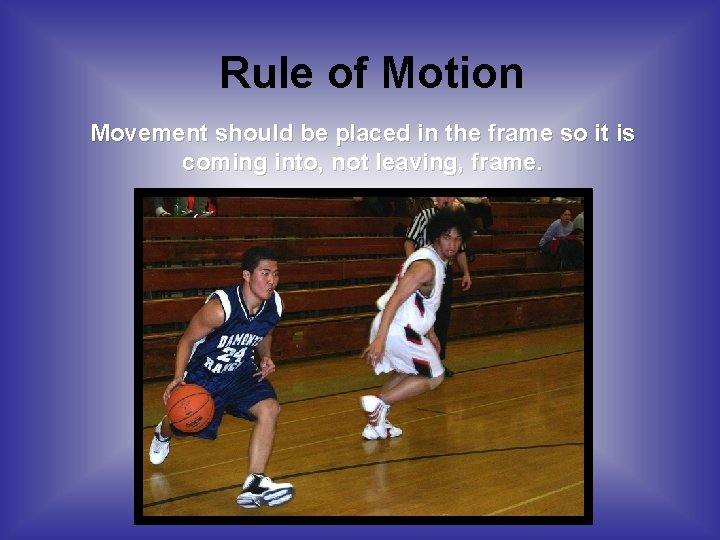
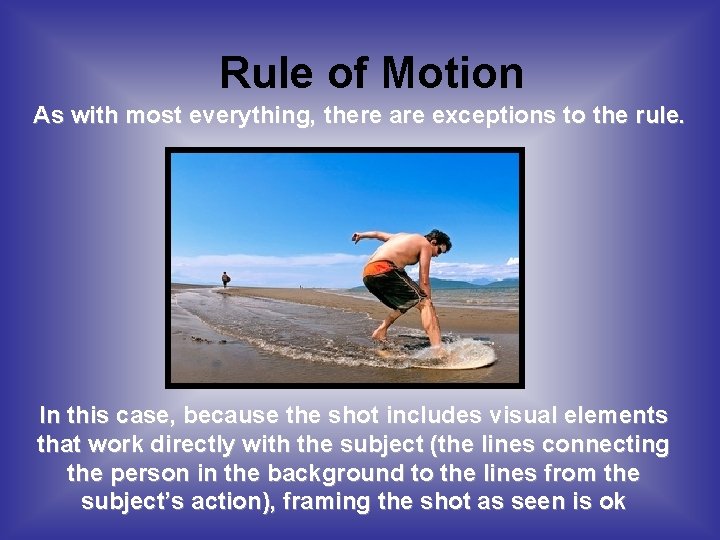
Rule of Motion Movement should be placed in the frame so it is coming into, not leaving, frame.
Rule of Motion As with most everything, there are exceptions to the rule. In this case, because the shot includes visual elements that work directly with the subject (the lines connecting the person in the background to the lines from the subject’s action), framing the shot as seen is ok
COMPOSITION Techniques 8 Elements of Composition 8. Light • Light is perhaps the most important element in photography as everything depends on it Things to Remember: • Light source should be behind the photographer • Overhead Light is harsh and flat (best time to take photos is morning or evening) • Direct Flash is harsh and flat and can ‘blow out’ details • Try to use bounce, reflected, or diffused light
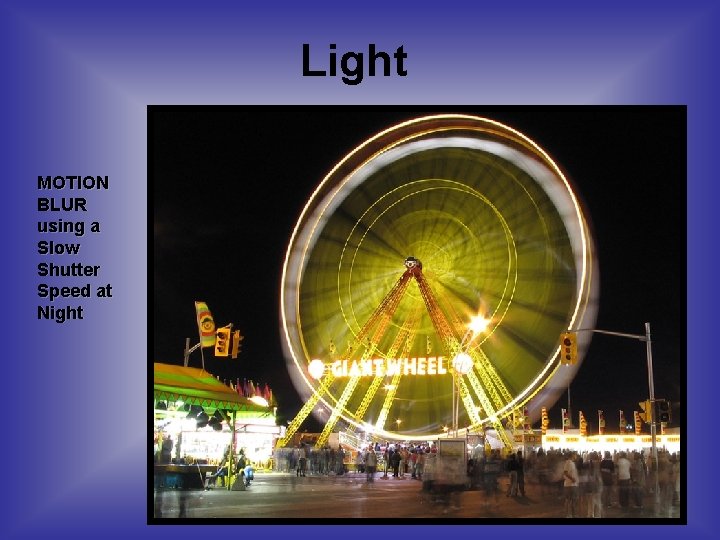
Light MOTION BLUR using a Slow Shutter Speed at Night
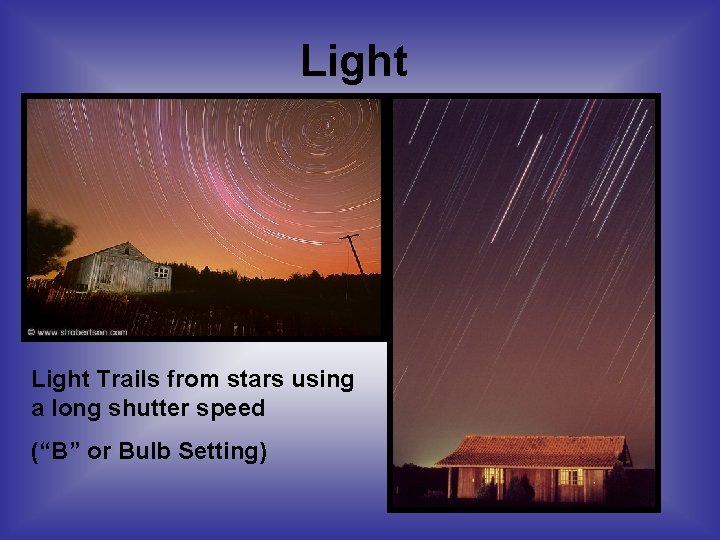
Light Trails from stars using a long shutter speed (“B” or Bulb Setting)
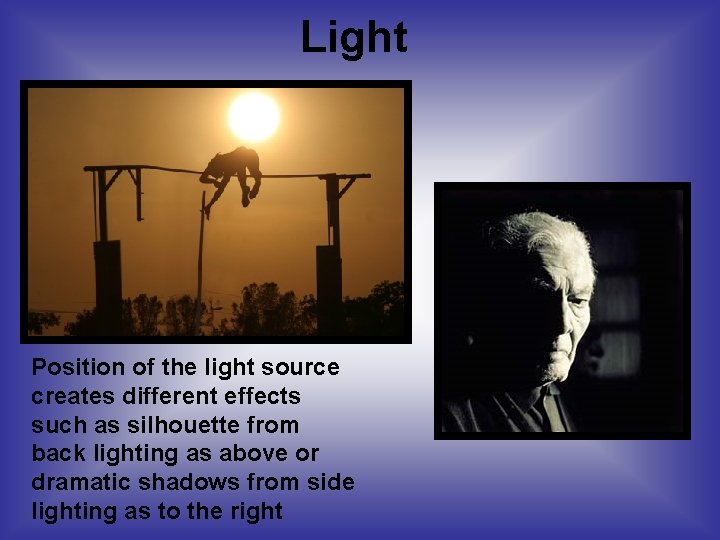
Light Position of the light source creates different effects such as silhouette from back lighting as above or dramatic shadows from side lighting as to the right