
Composite Figures Composite figures are made from two
- Slides: 27
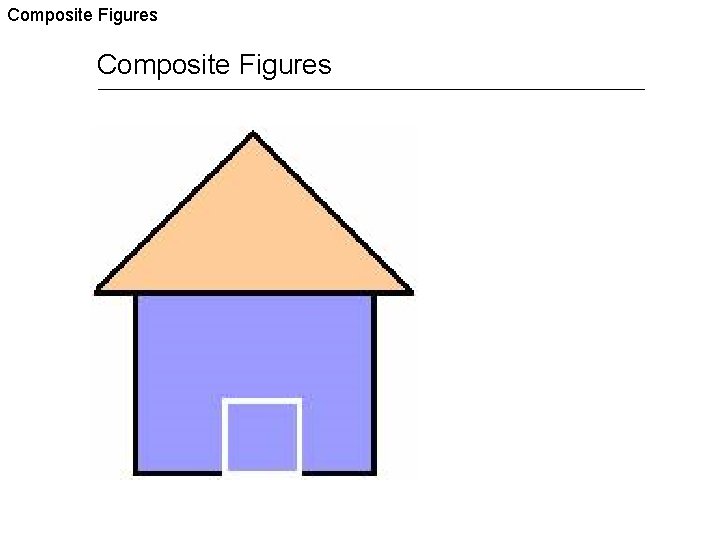
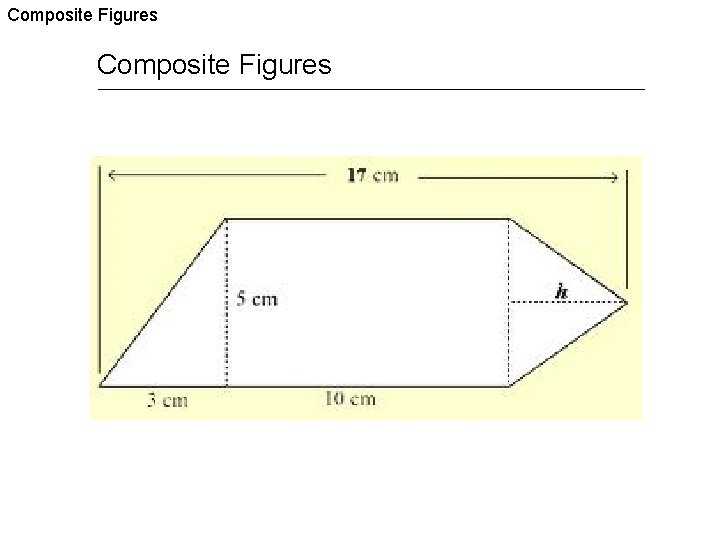
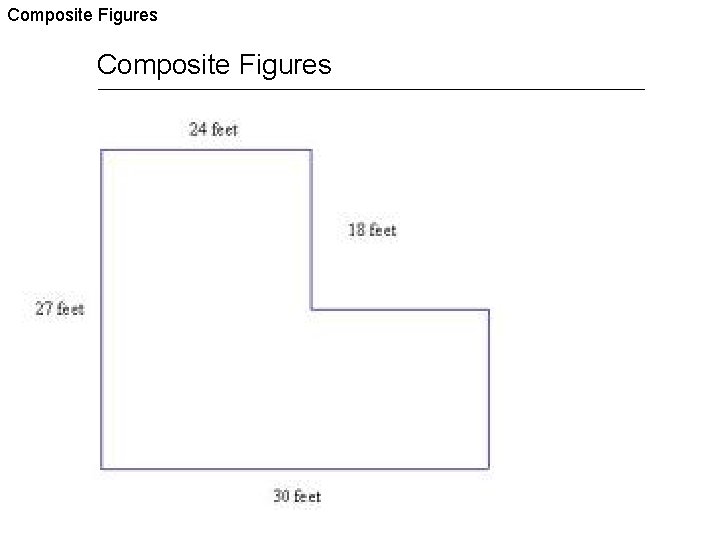
Composite Figures Composite figures are made from two or more geometric figures. It can be made up of rectangles, squares, or triangles.
Composite Figures
Composite Figures
Composite Figures
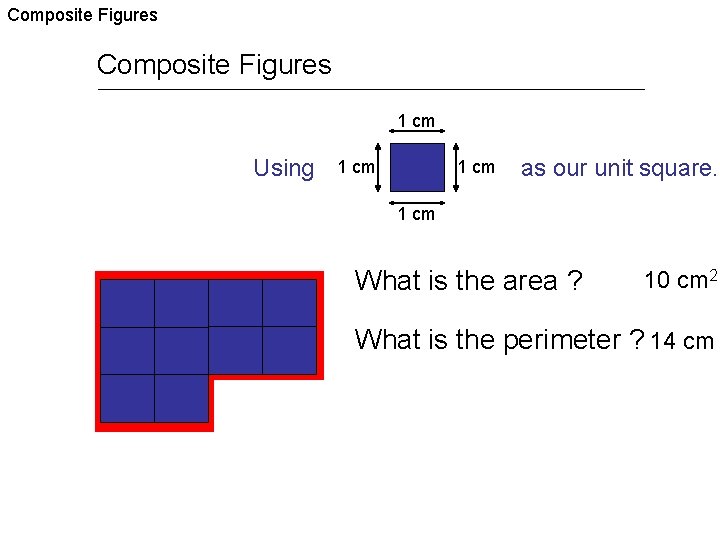
Composite Figures 1 cm Using 1 cm as our unit square. 1 cm What is the area ? 10 cm 2 What is the perimeter ? 14 cm
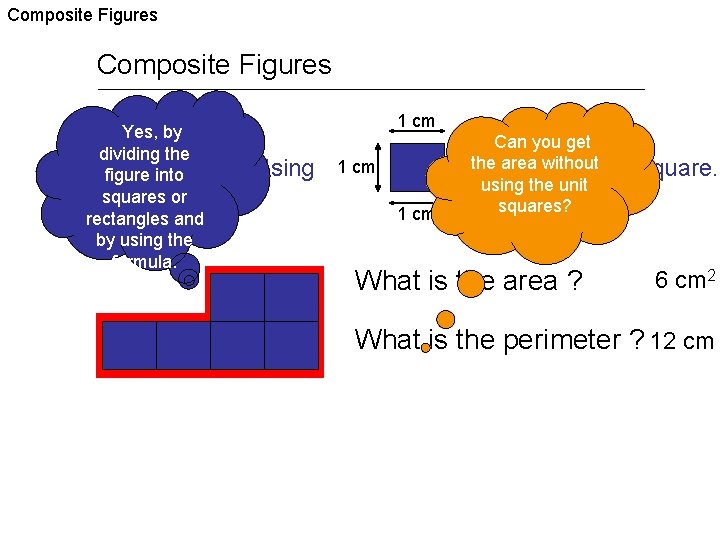
Composite Figures Yes, by dividing the figure into squares or rectangles and by using the formula. 1 cm Using 1 cm Can you get 1 the cm area aswithout our unit using the unit squares? What is the area ? square. 6 cm 2 What is the perimeter ? 12 cm
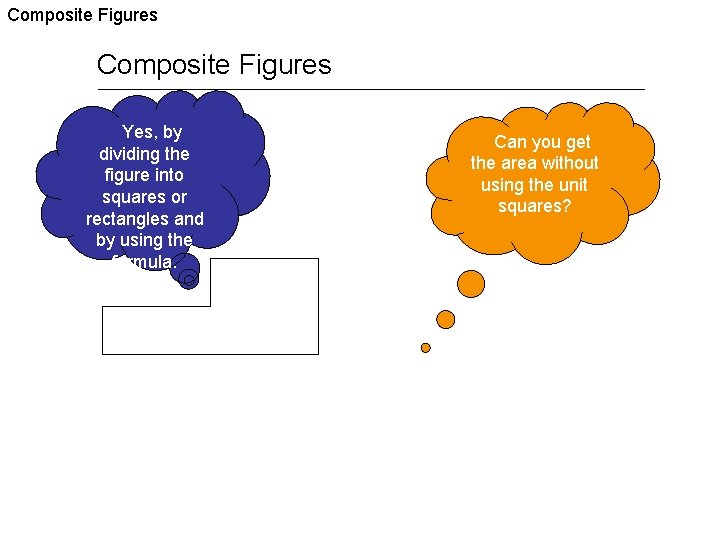
Composite Figures Yes, by dividing the figure into squares or rectangles and by using the formula. Can you get the area without using the unit squares?
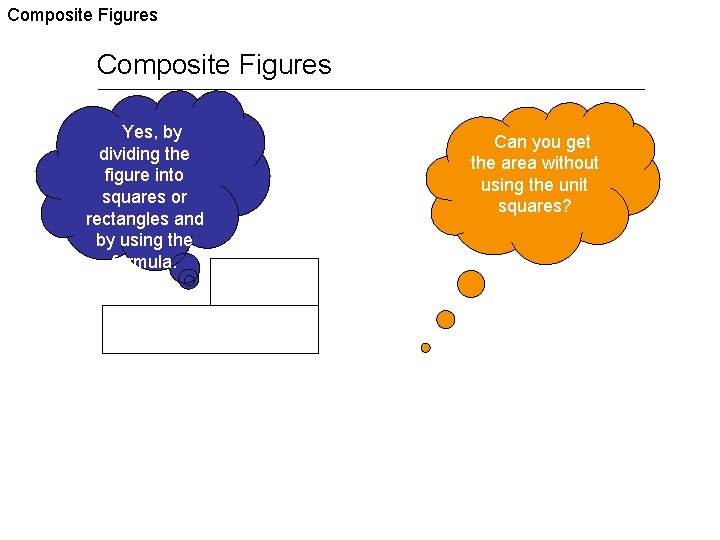
Composite Figures Yes, by dividing the figure into squares or rectangles and by using the formula. Can you get the area without using the unit squares?
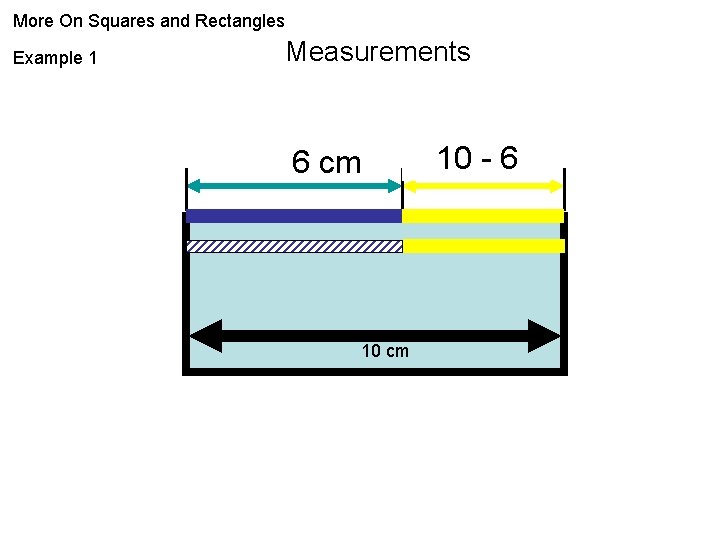
More On Squares and Rectangles Example 1 Measurements 6 cm 10 cm 4 10 -6 ? cm cm
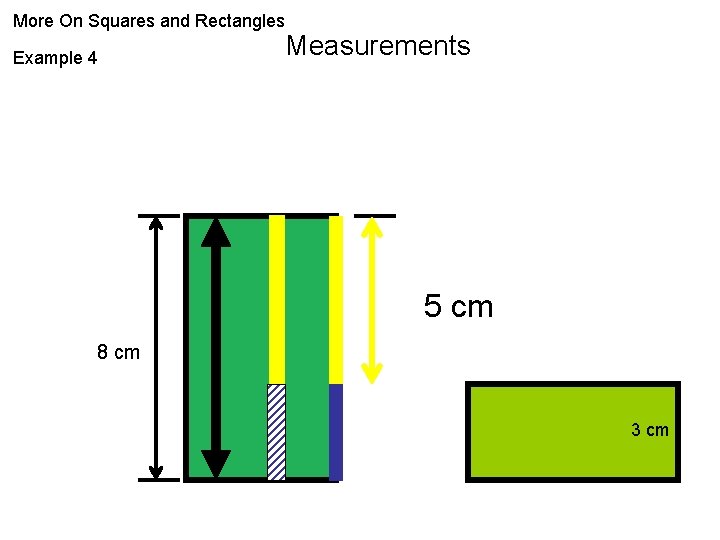
More On Squares and Rectangles Example 4 Measurements ? cm -3 58 cm 3 cm
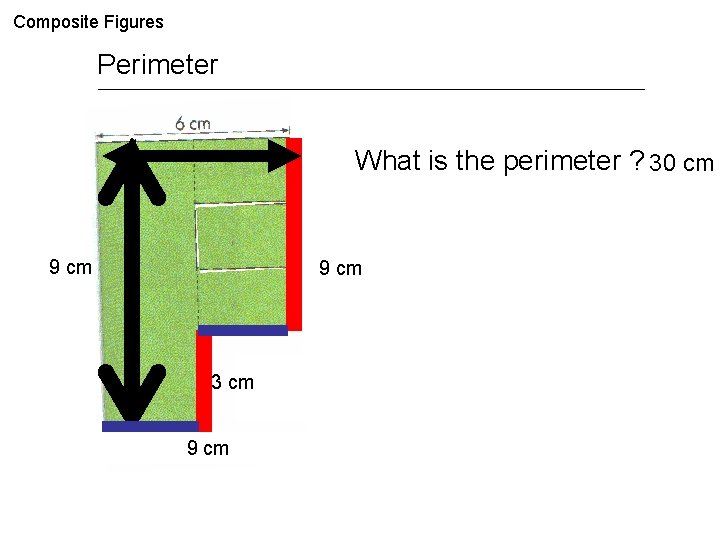
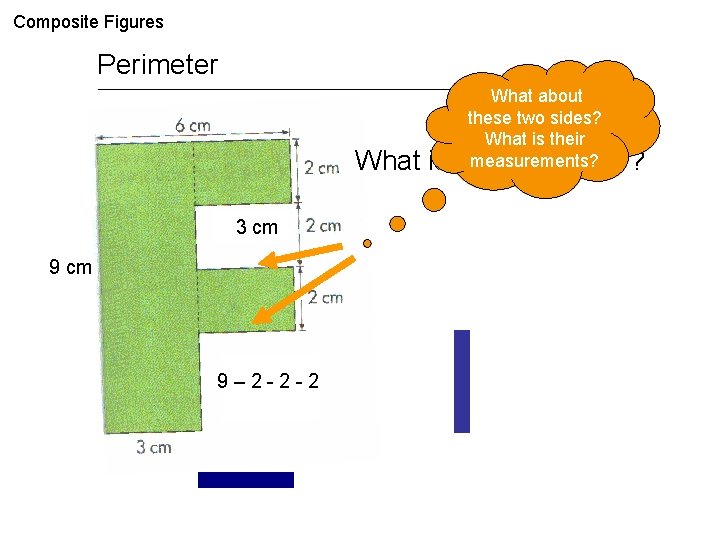
Composite Figures Perimeter What is the perimeter ? 30 cm 9 cm 3 cm 9 cm
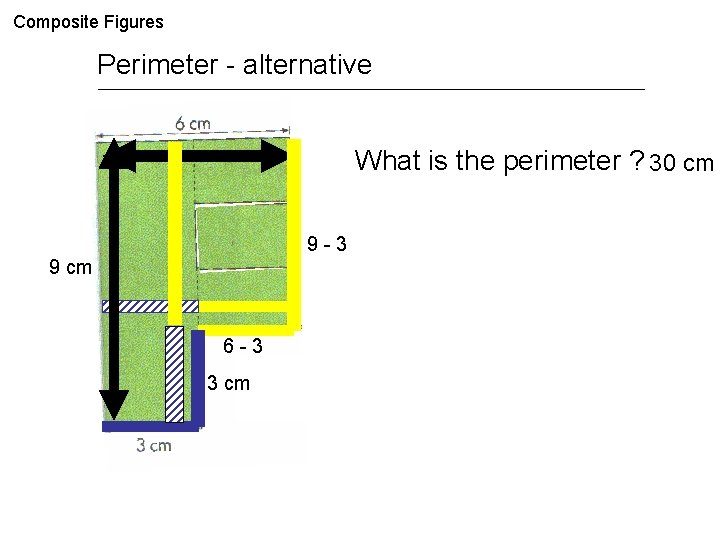
Composite Figures Perimeter - alternative What is the perimeter ? 30 cm 9 -3 9 cm 6 -3 3 cm
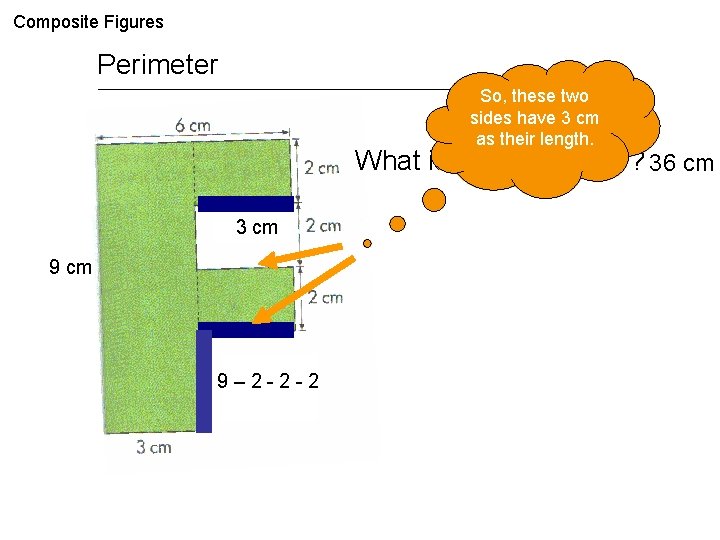
Composite Figures Perimeter What is 63–cm 3 9 cm 9– 2 -2 -2 What about these two sides? What is their measurements? the perimeter ?
Composite Figures Perimeter So, these two sides have 3 cm as their length. What is the perimeter ? 36 cm 63–cm 3 9 cm 9– 2 -2 -2
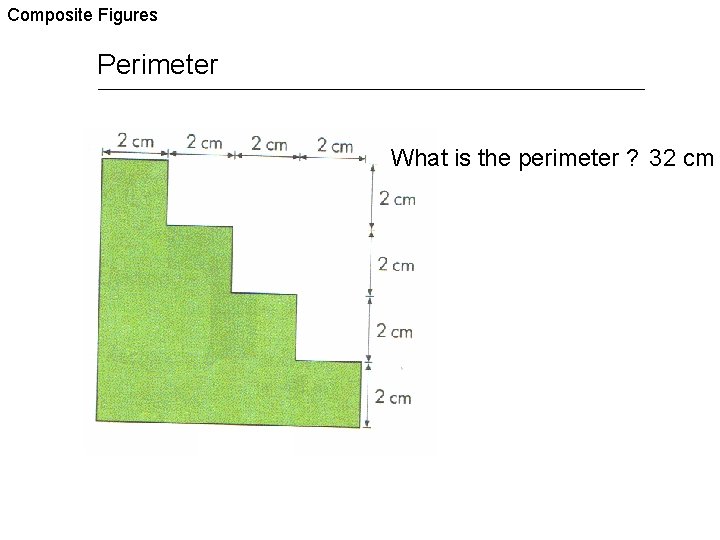
Composite Figures Perimeter What is the perimeter ? 32 cm
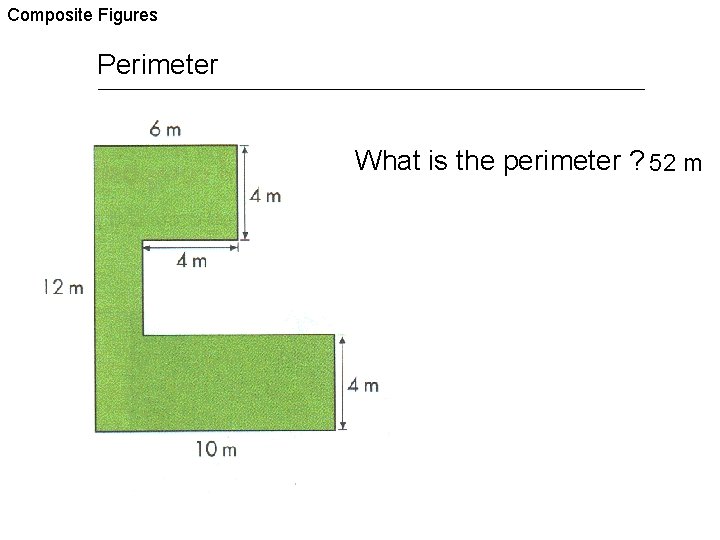
Composite Figures Perimeter What is the perimeter ? 52 m
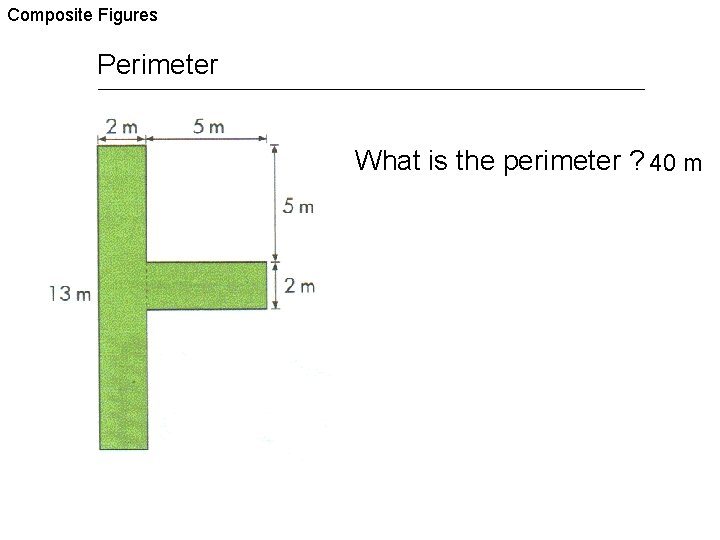
Composite Figures Perimeter What is the perimeter ? 40 m
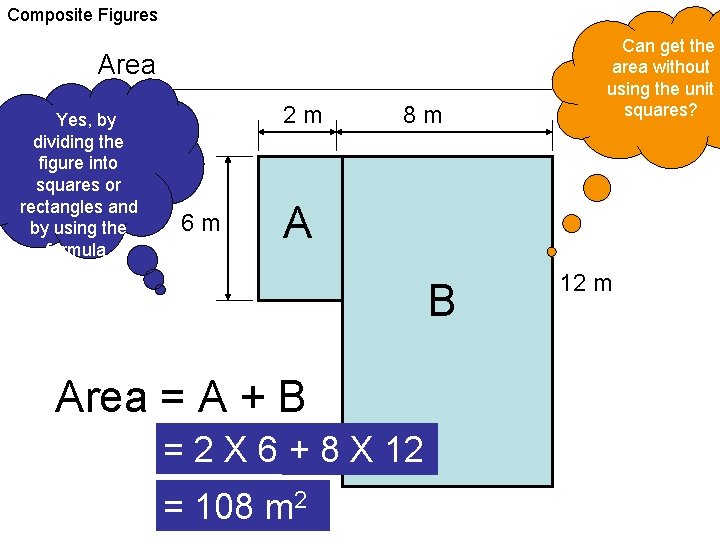
Composite Figures Area Yes, by dividing the figure into squares or rectangles and by using the formula. 2 m 6 m 8 m Can get the area without using the unit squares? A B Area = A + B = 2 X 6 + 8 X 12 = 108 m 2 12 m
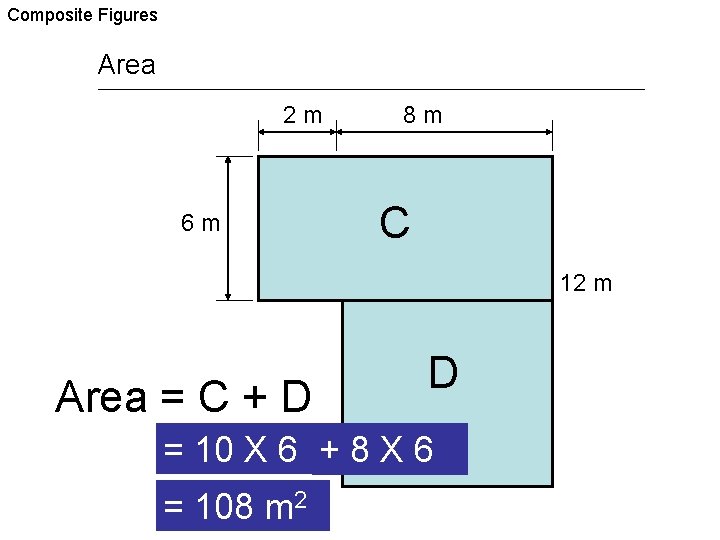
Composite Figures Area 2 m 6 m 8 m C 12 m Area = C + D D = 10 X 6 + 8 X 6 = 108 m 2
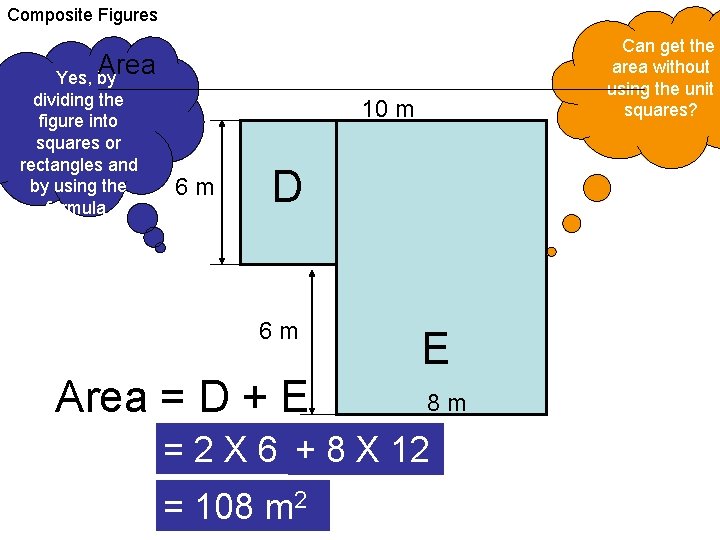
Composite Figures Can get the area without using the unit squares? Area Yes, by dividing the figure into squares or rectangles and by using the formula. 10 m 6 m D 6 m Area = D + E E 8 m = 2 X 6 + 8 X 12 = 108 m 2
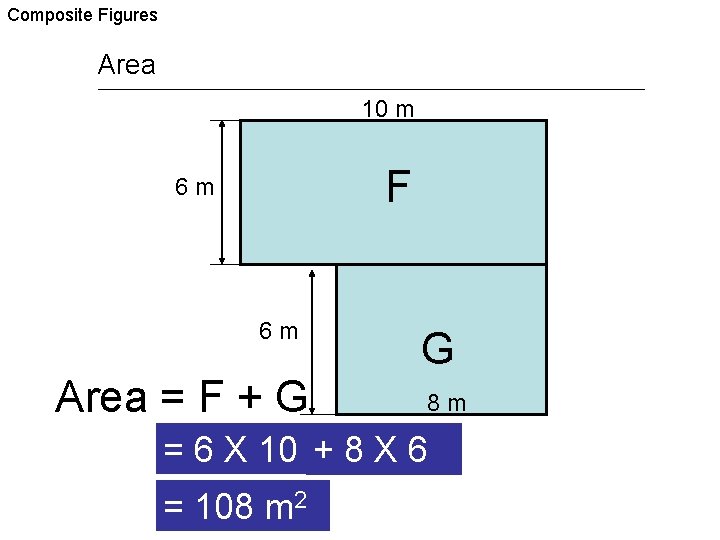
Composite Figures Area 10 m F 6 m 6 m Area = F + G G 8 m = 6 X 10 + 8 X 6 = 108 m 2
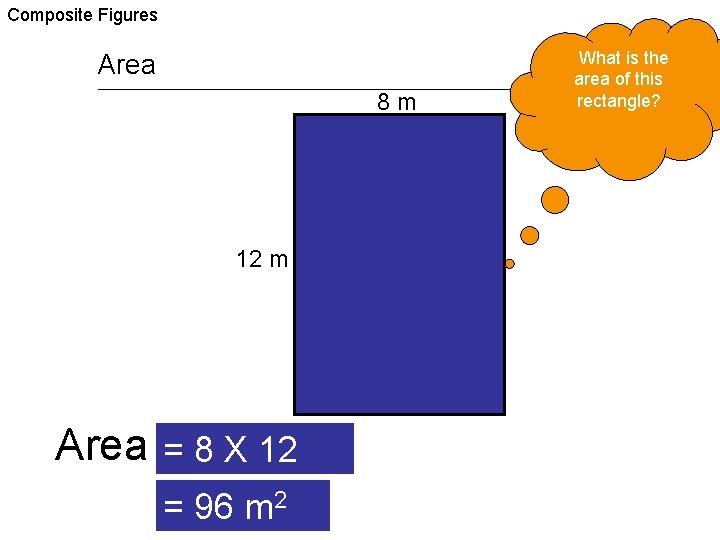
Composite Figures Area 8 m 12 m Area = 8 X 12 = 96 m 2 What is the area of this rectangle?
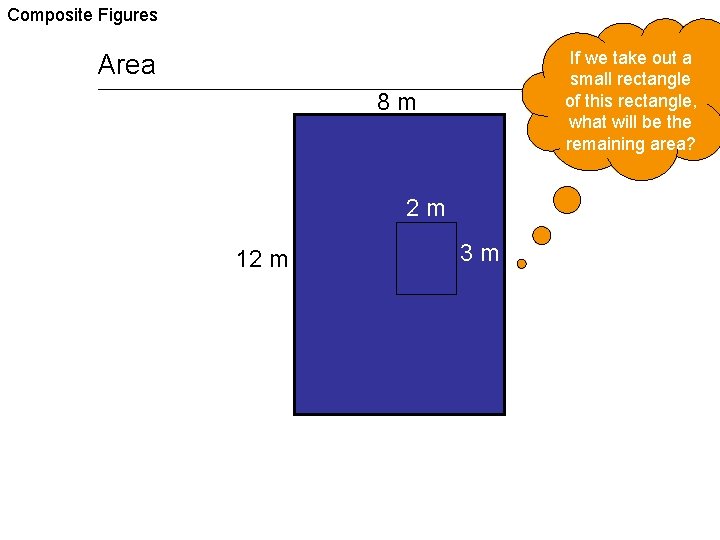
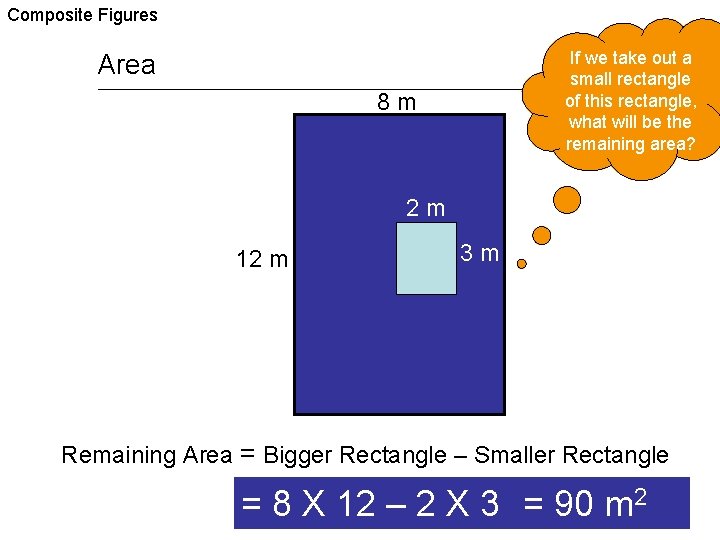
Composite Figures If we take out a small rectangle of this rectangle, what will be the remaining area? Area 8 m 2 m 12 m 3 m
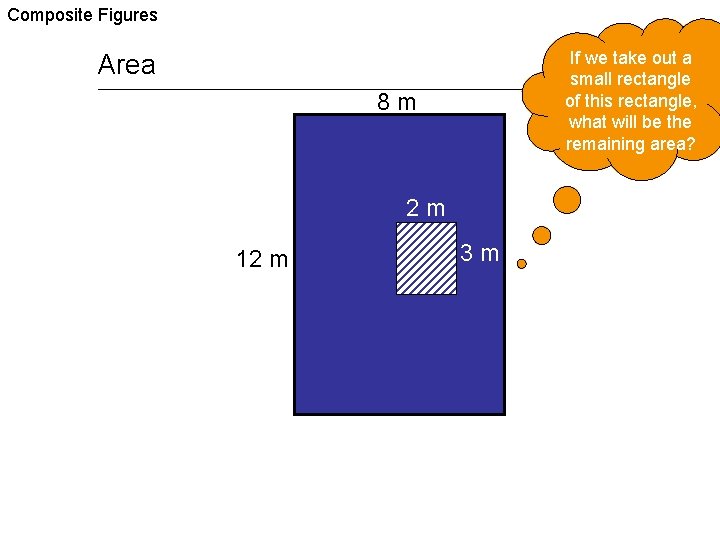
Composite Figures If we take out a small rectangle of this rectangle, what will be the remaining area? Area 8 m 2 m 12 m 3 m
Composite Figures If we take out a small rectangle of this rectangle, what will be the remaining area? Area 8 m 2 m 12 m 3 m Remaining Area = Bigger Rectangle – Smaller Rectangle = 8 X 12 – 2 X 3 = 90 m 2
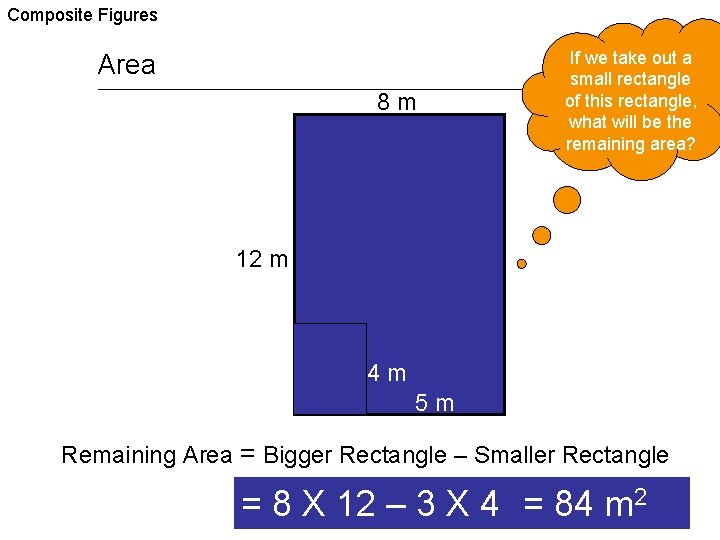
Composite Figures Area 8 m If we take out a small rectangle of this rectangle, what will be the remaining area? 12 m 4 m 5 m Remaining Area = Bigger Rectangle – Smaller Rectangle = 8 X 12 – 3 X 4 = 84 m 2
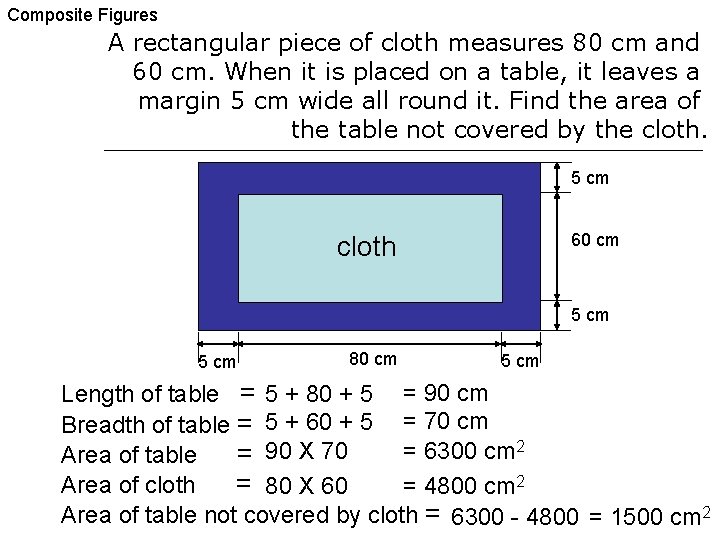
Composite Figures A rectangular piece of cloth measures 80 cm and 60 cm. When it is placed on a table, it leaves a margin 5 cm wide all round it. Find the area of the table not covered by the cloth. 5 cm cloth table 3 m 60 cm 5 cm 80 cm 5 cm Length of table = 5 + 80 + 5 = 90 cm Breadth of table = 5 + 60 + 5 = 70 cm = 6300 cm 2 Area of table = 90 X 70 Area of cloth = 80 X 60 = 4800 cm 2 Area of table not covered by cloth = 6300 - 4800 = 1500 cm 2