
Components of Torque Moment of Force r is
- Slides: 19
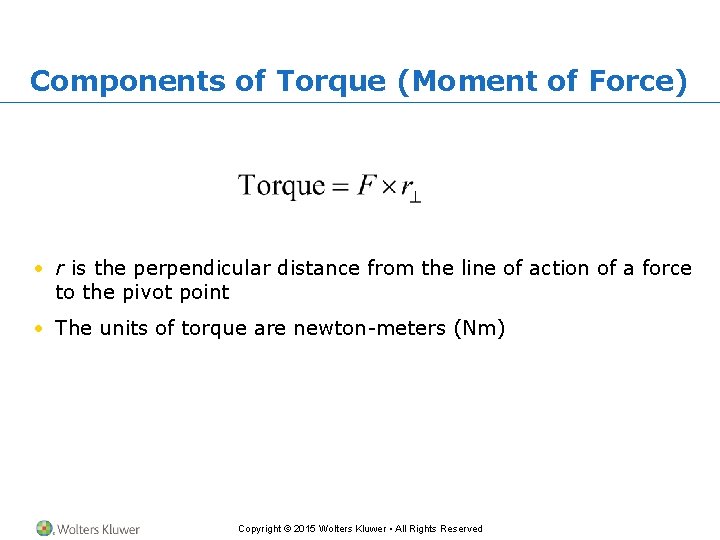
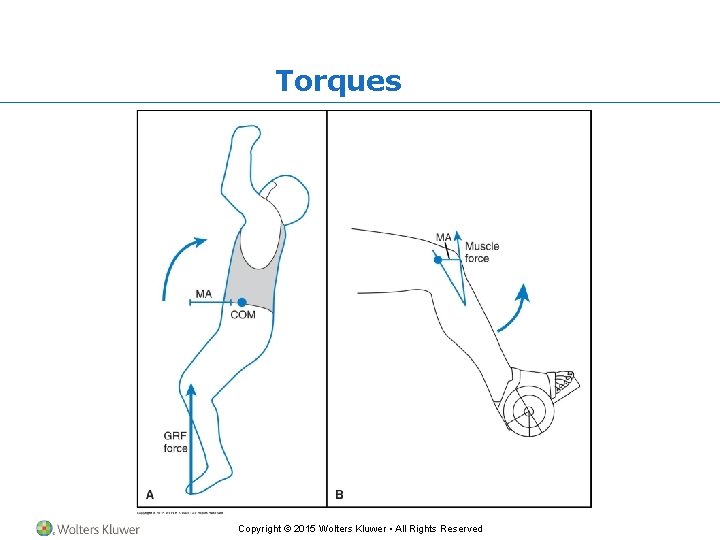
Components of Torque (Moment of Force) • r is the perpendicular distance from the line of action of a force to the pivot point • The units of torque are newton-meters (Nm) Copyright © 2015 Wolters Kluwer • All Rights Reserved
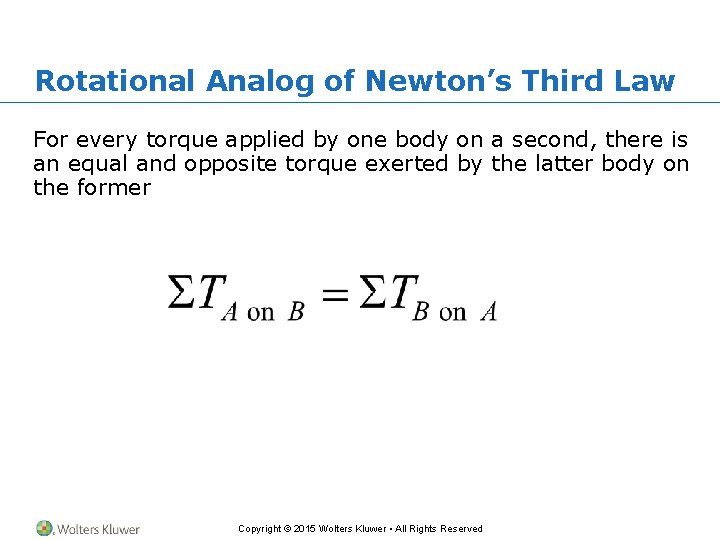
Rotational Analog of Newton’s Third Law For every torque applied by one body on a second, there is an equal and opposite torque exerted by the latter body on the former Copyright © 2015 Wolters Kluwer • All Rights Reserved
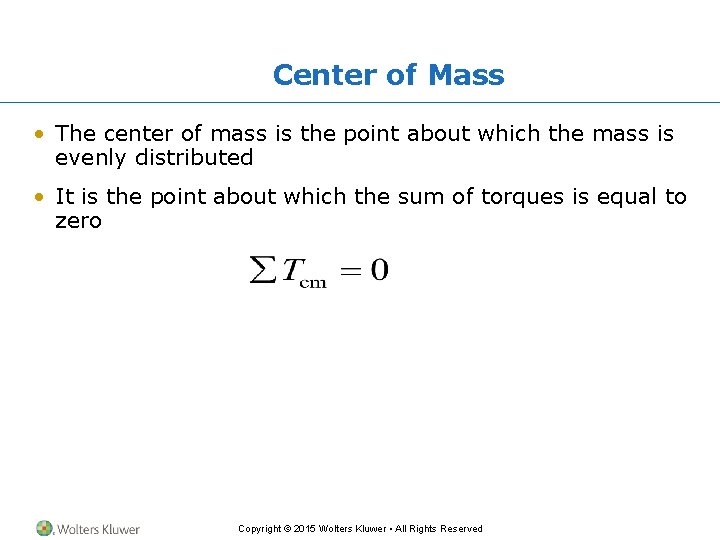
Center of Mass • The center of mass is the point about which the mass is evenly distributed • It is the point about which the sum of torques is equal to zero Copyright © 2015 Wolters Kluwer • All Rights Reserved
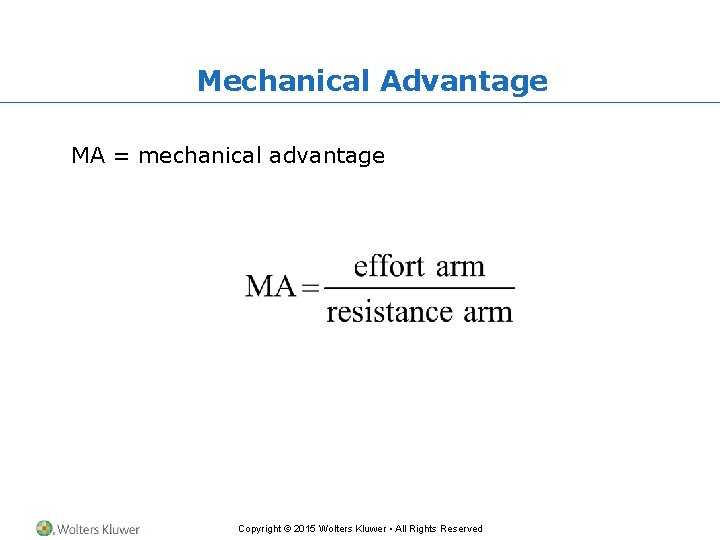
Mechanical Advantage MA = mechanical advantage Copyright © 2015 Wolters Kluwer • All Rights Reserved
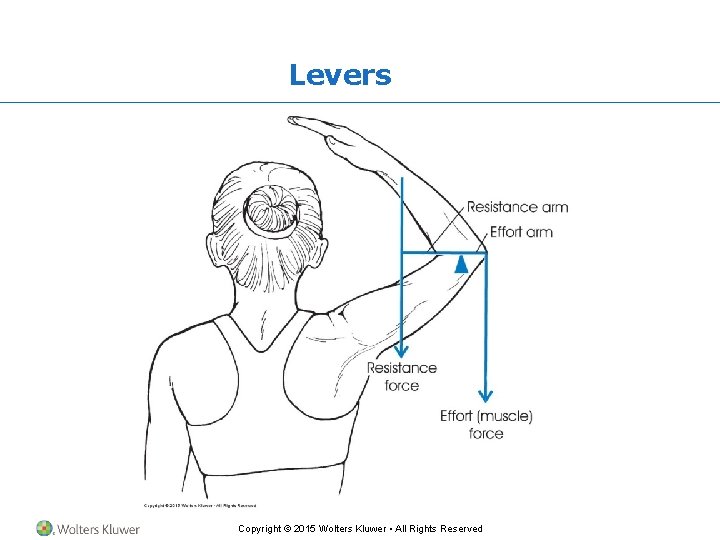
Levers Copyright © 2015 Wolters Kluwer • All Rights Reserved
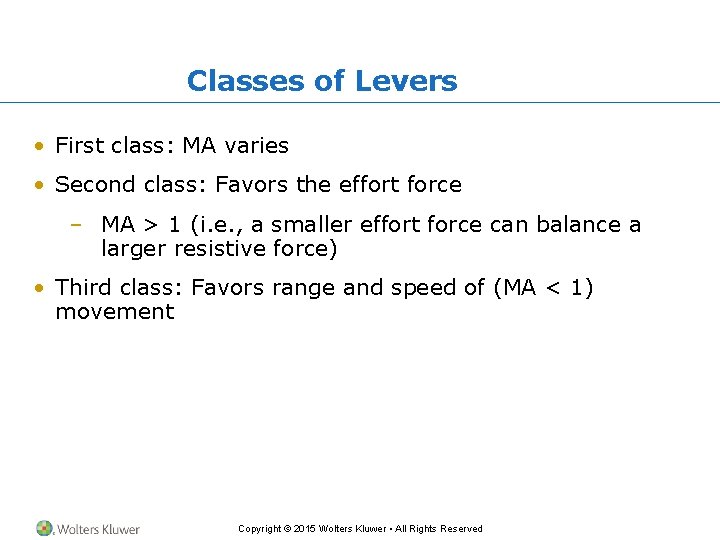
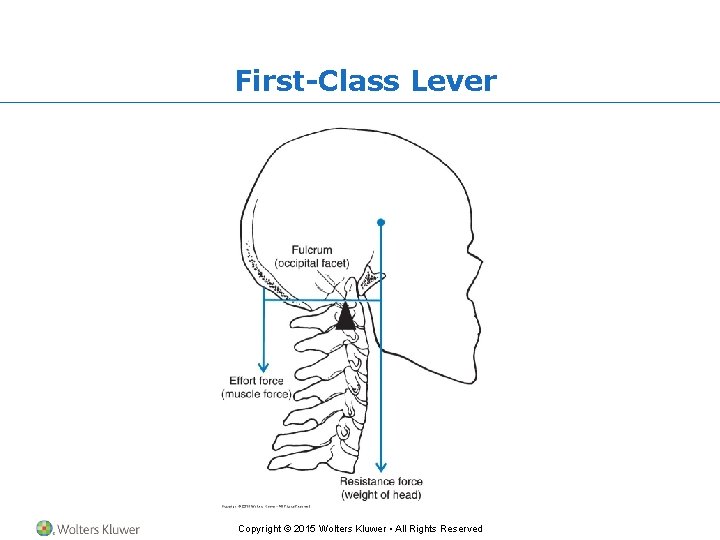
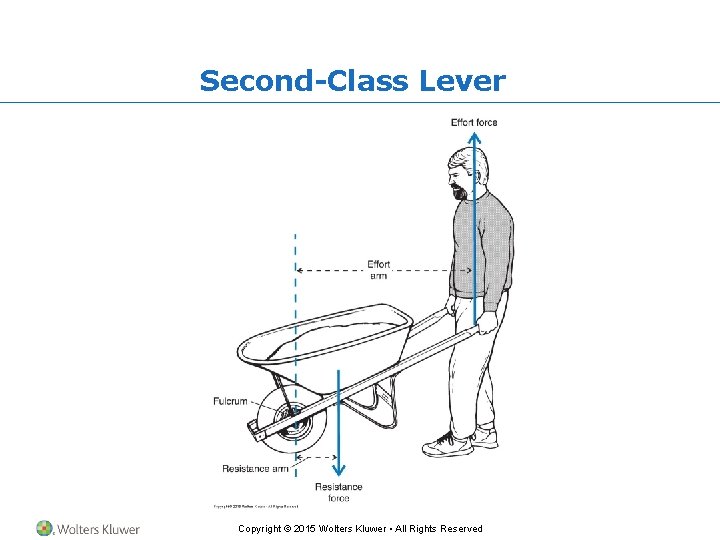
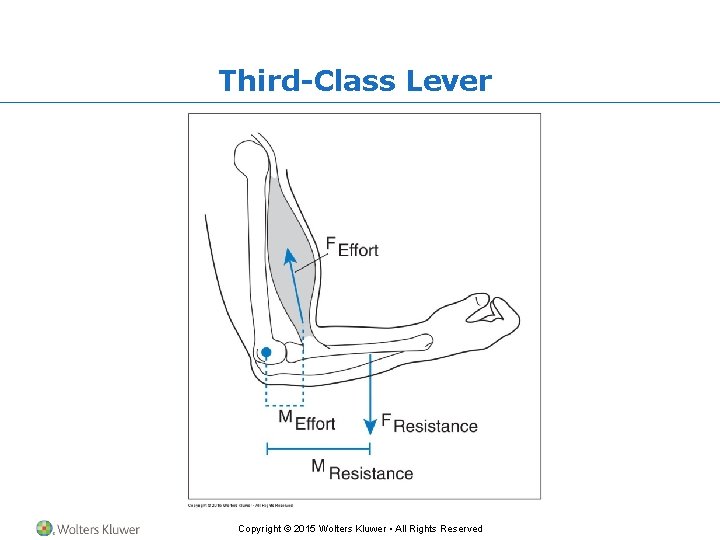
Classes of Levers • First class: MA varies • Second class: Favors the effort force – MA > 1 (i. e. , a smaller effort force can balance a larger resistive force) • Third class: Favors range and speed of (MA < 1) movement Copyright © 2015 Wolters Kluwer • All Rights Reserved
First-Class Lever Copyright © 2015 Wolters Kluwer • All Rights Reserved
Second-Class Lever Copyright © 2015 Wolters Kluwer • All Rights Reserved
Third-Class Levers • The majority of musculoskeletal systems are in thirdclass levers • These levers favor speed and range of movement Copyright © 2015 Wolters Kluwer • All Rights Reserved
Third-Class Lever Copyright © 2015 Wolters Kluwer • All Rights Reserved
Torques Copyright © 2015 Wolters Kluwer • All Rights Reserved
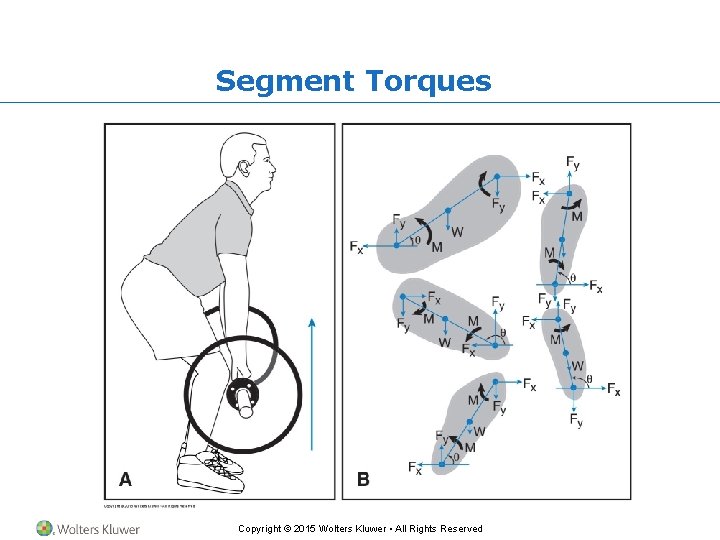
Segment Torques Copyright © 2015 Wolters Kluwer • All Rights Reserved
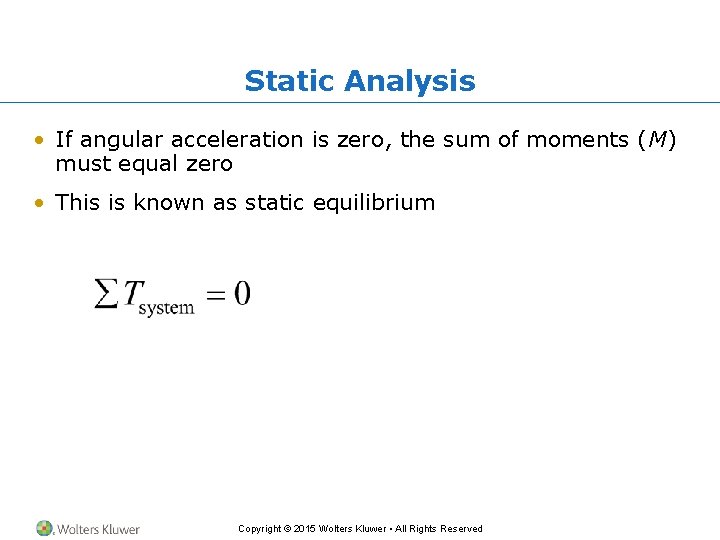
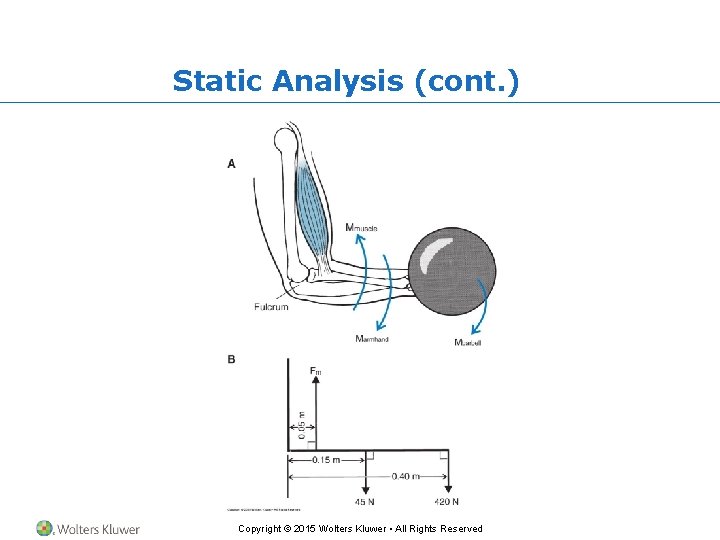
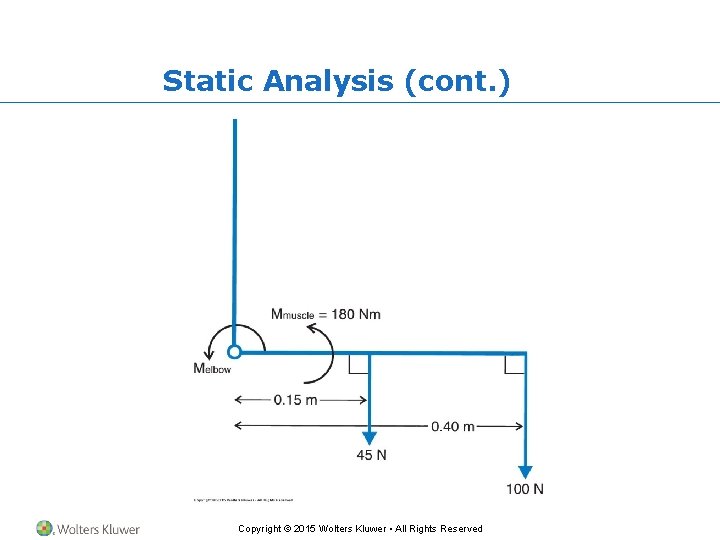
Static Analysis • If angular acceleration is zero, the sum of moments (M) must equal zero • This is known as static equilibrium Copyright © 2015 Wolters Kluwer • All Rights Reserved
Static Analysis (cont. ) Copyright © 2015 Wolters Kluwer • All Rights Reserved
Static Analysis (cont. ) Copyright © 2015 Wolters Kluwer • All Rights Reserved
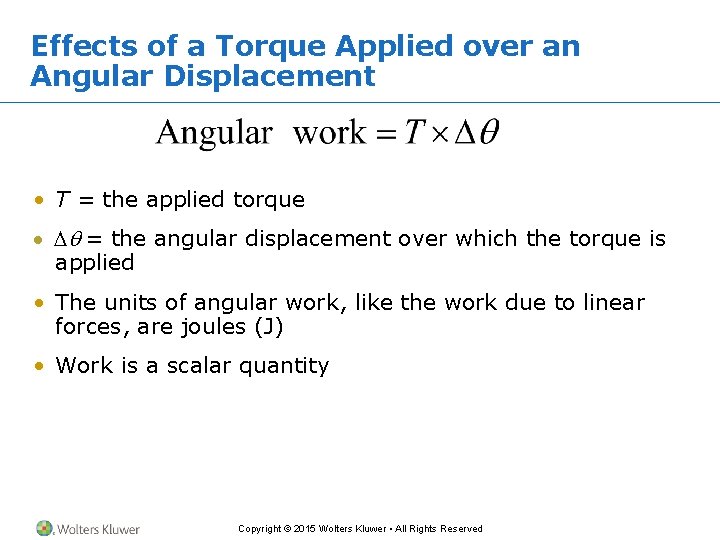
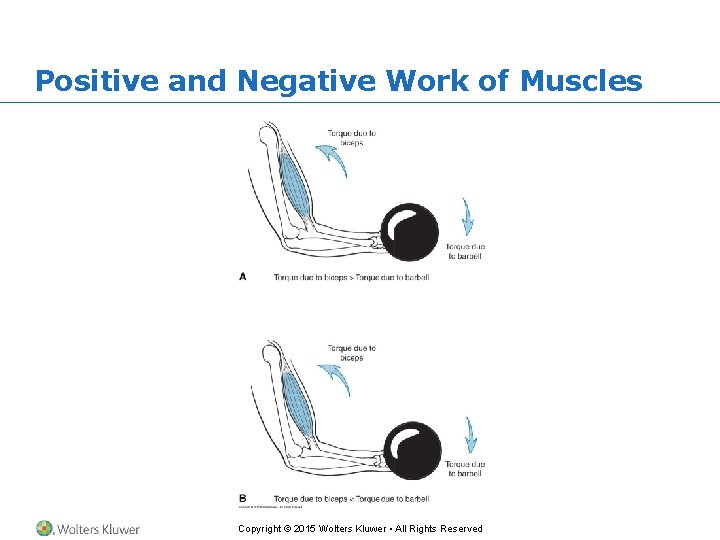
Effects of a Torque Applied over an Angular Displacement • T = the applied torque = the angular displacement over which the torque is applied • The units of angular work, like the work due to linear forces, are joules (J) • Work is a scalar quantity Copyright © 2015 Wolters Kluwer • All Rights Reserved
Positive and Negative Work of Muscles Copyright © 2015 Wolters Kluwer • All Rights Reserved
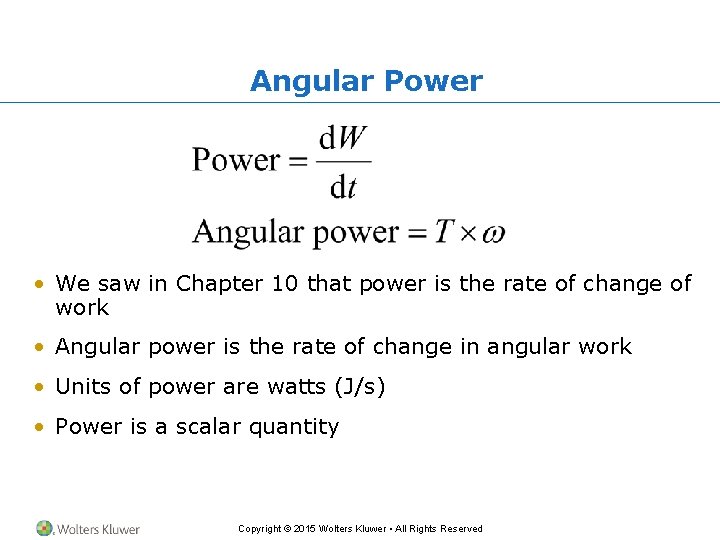
Angular Power • We saw in Chapter 10 that power is the rate of change of work • Angular power is the rate of change in angular work • Units of power are watts (J/s) • Power is a scalar quantity Copyright © 2015 Wolters Kluwer • All Rights Reserved
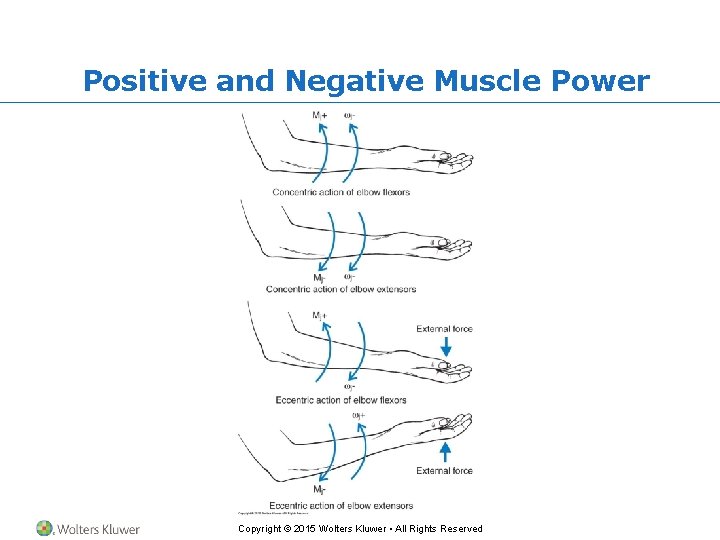
Positive and Negative Muscle Power Copyright © 2015 Wolters Kluwer • All Rights Reserved