
Components of the Circulatory System Heart Pump Blood
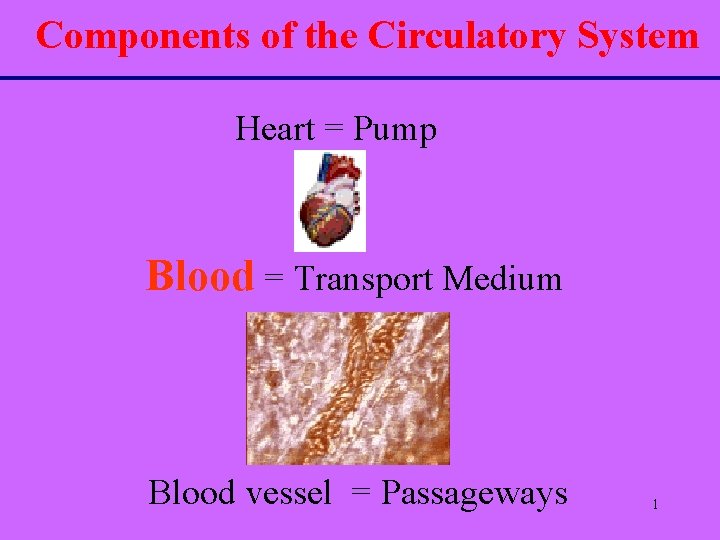
Components of the Circulatory System Heart = Pump Blood = Transport Medium Blood vessel = Passageways 1

Functions of Blood Transports: § Nutrients § Electrolytes Defense: § Foreign organisms § Injury/infection § O 2 & CO 2 § Waste Products § Clotting process § Hormones § Body temperature 2
Components of Blood is a mixture of cellular components suspended in plasma: 1. Erythrocytes (RBCs) 2. Leukocytes (WBCs) 3. Thrombocytes (platelets) Total Blood Volume: 8 % of body weight 2. 75 / 5. 5 liters of blood is plasma (remaining is the cellular portion) 3
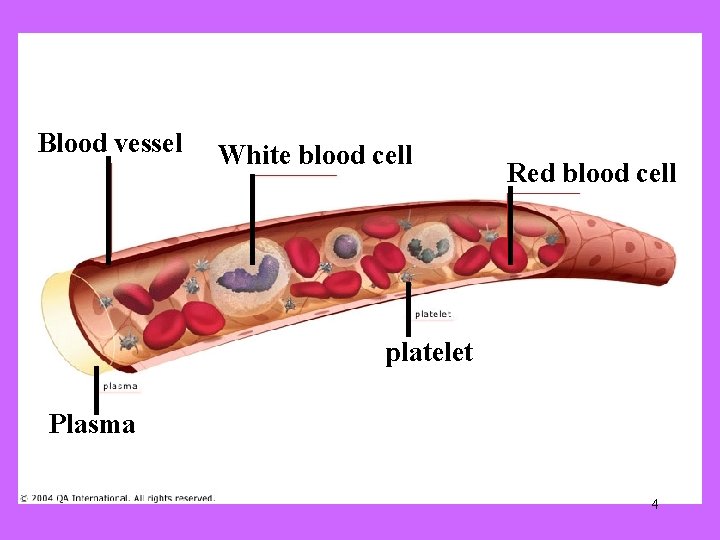
Blood vessel White blood cell Red blood cell platelet Plasma 4
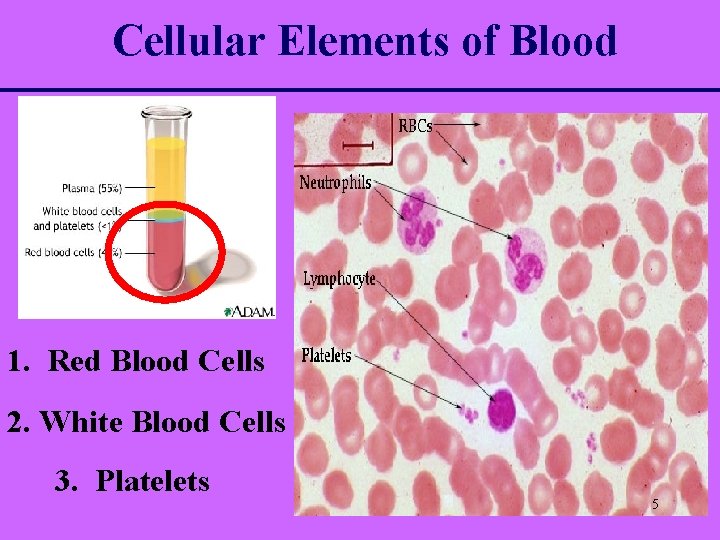
Cellular Elements of Blood 1. Red Blood Cells 2. White Blood Cells 3. Platelets 5

1. RBC’S (Erythrocytes) • Shape - a biconcave disc with large surface area • Can change shape • No Nucleus / organelles • Contains hemoglobin New RBC’s (and platelets & leukocytes) are produced in the Bone Marrow Primary Function = Transport oxygen from the lungs to the cells of the body & assist with CO 2 6 removal
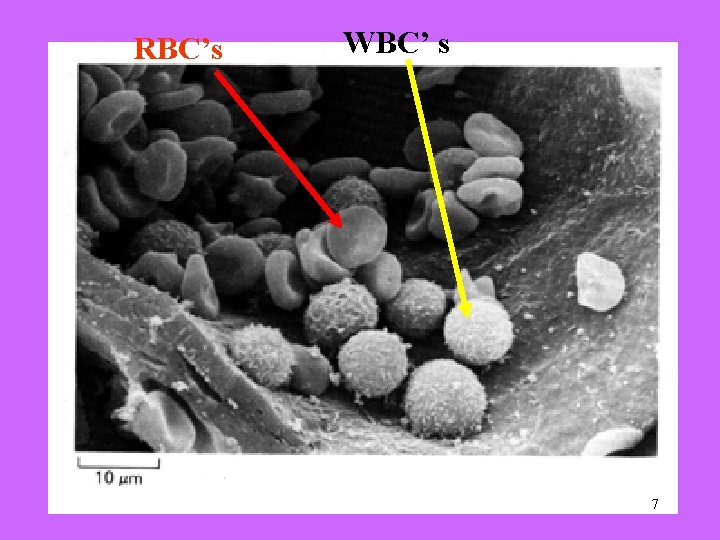
RBC’s WBC’ s 7
2. White Blood Cells (Leukocytes) • Mobile units of body’s defense system: • “Seek and Destroy” Functions: 1. Destroy invading microorganisms 2. Destroy abnormal cells (ie: cancer ) • Clean up cellular debris (phagocytosis) 3. Assist in injury repair 8
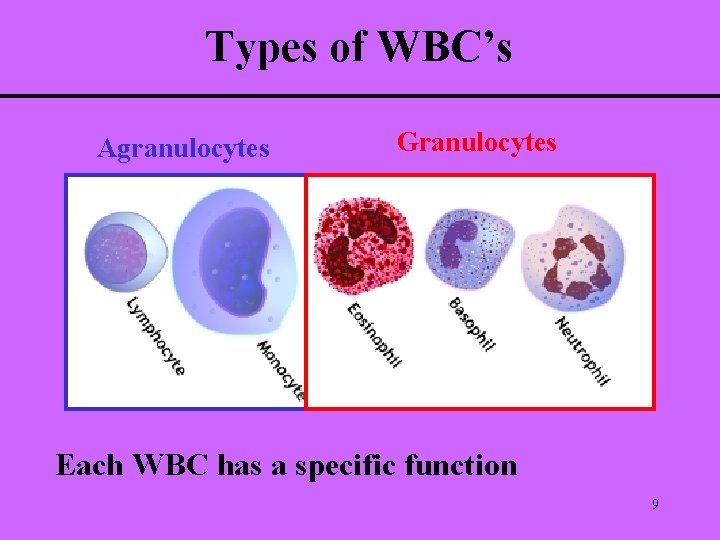
Types of WBC’s Agranulocytes Granulocytes Each WBC has a specific function 9

Types of WBC’s Polymorphonuclear Granulocytes 1. Neutrophils 2. Eosinophils 3. Basophils 10
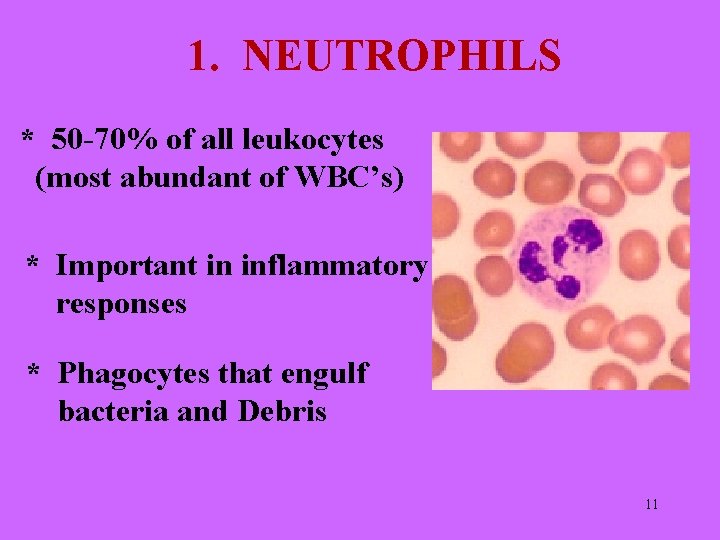
1. NEUTROPHILS * 50 -70% of all leukocytes (most abundant of WBC’s) * Important in inflammatory responses * Phagocytes that engulf bacteria and Debris 11

2. EOSINOPHILS * 1 -4% of the WBC's * Attack parasitic worms * Important in allergic reactions 12
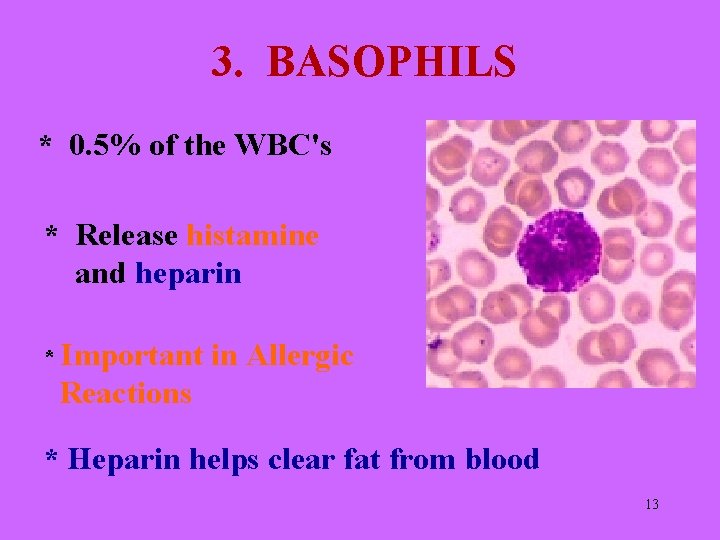
3. BASOPHILS * 0. 5% of the WBC's * Release histamine and heparin * Important in Allergic Reactions * Heparin helps clear fat from blood 13

Types of WBC’s Mononuclear Agranulocytes 4. Monocytes 5. Lymphocytes (B and T cells) 14
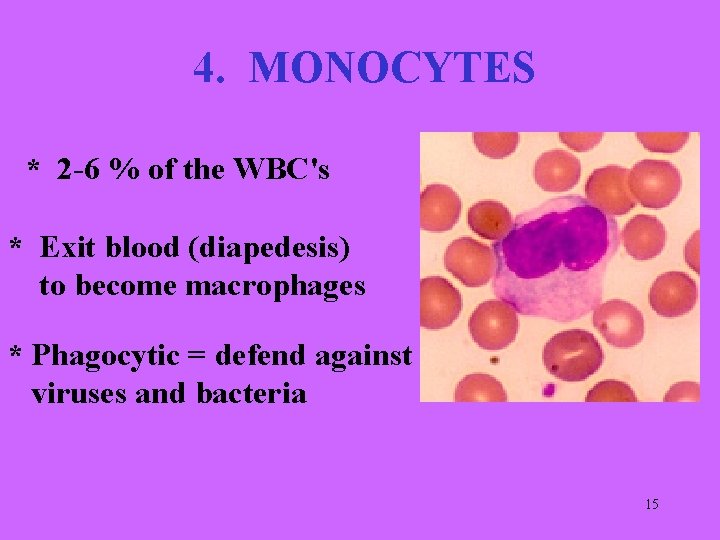
4. MONOCYTES * 2 -6 % of the WBC's * Exit blood (diapedesis) to become macrophages * Phagocytic = defend against viruses and bacteria 15

5. LYMPHOCYTES * 25 -33 % of the WBC's * B-lymphocytes: Produce Antibodies * T-lymphocytes: Directly destroy virusinvaded cells and cancer cells 16
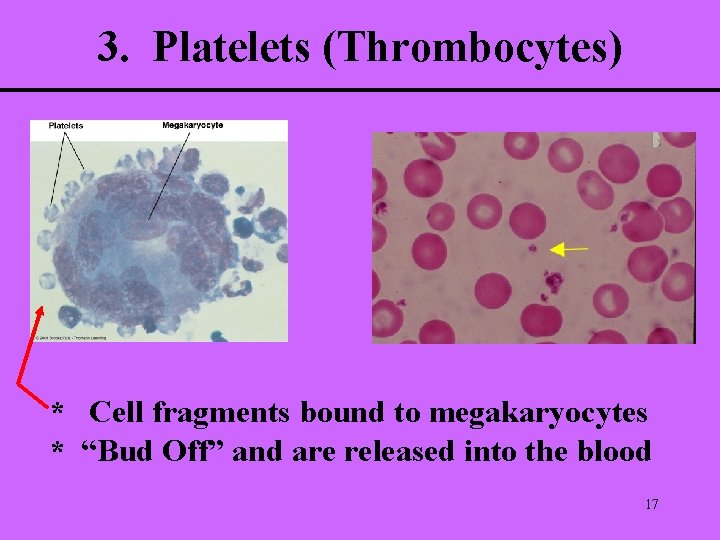
3. Platelets (Thrombocytes) * Cell fragments bound to megakaryocytes * “Bud Off” and are released into the blood 17
- Slides: 17