
Components of Soil 6 th Grade Science S


- Slides: 24
Components of Soil 6 th Grade Science S
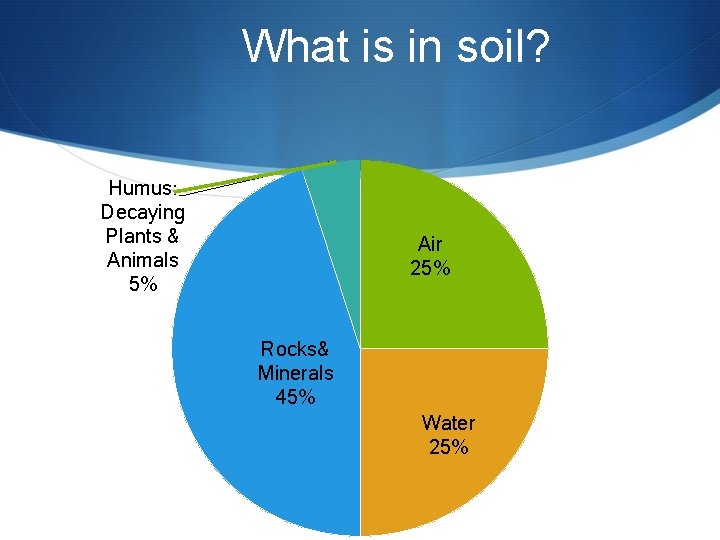
What is in soil? Humus: Decaying Plants & Animals 5% Air 25% Rocks& Minerals 45% Water 25%
Soil Horizon S
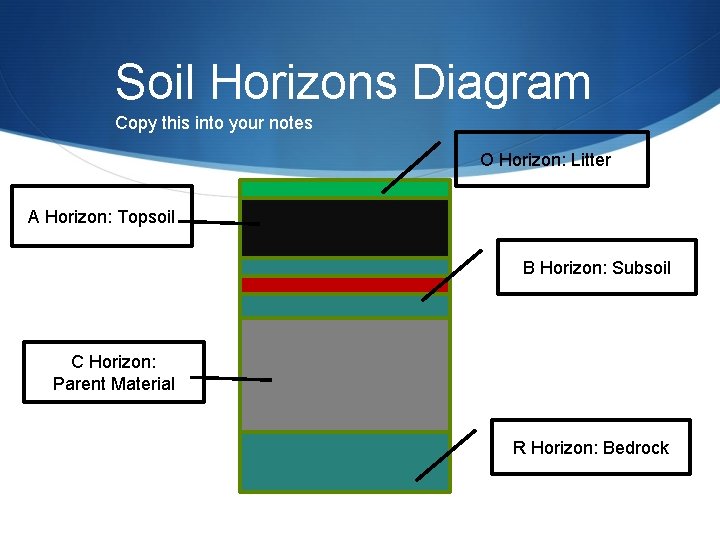
Horizon S Horizon is a side profile of the layers of soil S Soil is usually divided into 3 main layers, but will also include the layers above and below for a total of 5 layers.
Soil Horizons Diagram Copy this into your notes O Horizon: Litter. N A Horizon: Topsoil B Horizon: Subsoil C Horizon: Parent Material R Horizon: Bedrock
O Horizon: Litter S Not really a layer of soil S It’s on top of the first layer of soil S Contains grass, plants, and animals
A Horizon: Topsoil S 1 st layer of soil S Darkest layer of soil (dark brown or black) S Contains humus, plant roots, small animals, water, and nutrients for plant growth S The darker the soil, the more nutrients it contains
B Horizon: Subsoil S 2 nd layer of soil S Lighter in color (reddish brown) S Fewer nutrients and water S Limited plant growth
C Horizon: Parent Material S 3 rd layer of soil S Lightest in color (gray) S No nutrients, animals, or plant growth S Contains weathered rock and sediment
R Horizon: Bedrock S Below the last layer of soil S Solid Rock S Has not been weathered or broken down yet S No soil in this layer
Soil Conservation 6 th Grade Science S
Soil Erosion S The wearing away of soil S Loss of soil
Natural Causes of Soil Erosion: S Wind S Water (rain) S Gravity (hills, mountains) S Ice (glaciers, cold temperatures)
Other Causes of Soil Erosion: S Farming S Mining S Construction
Severe weather speeds up soil erosion! Severe weather speeds up S Storms soil erosion! S Tornados S Floods
Soil Conservation: S Ways to preserve (or save) the soil
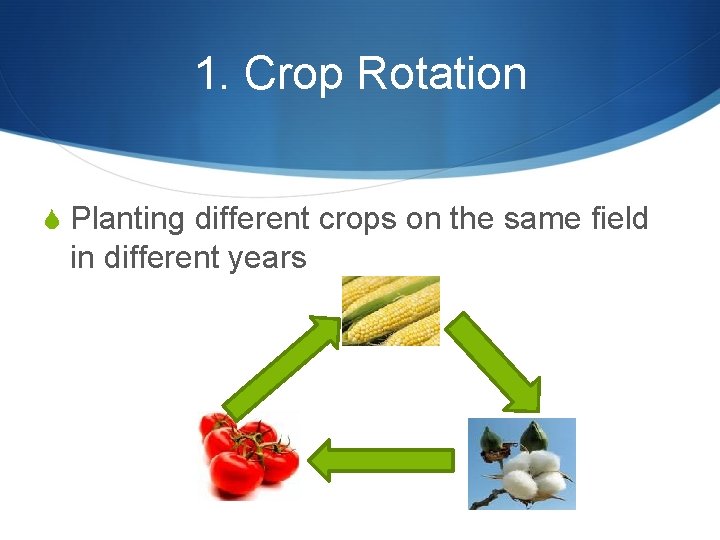
1. Crop Rotation S Planting different crops on the same field in different years
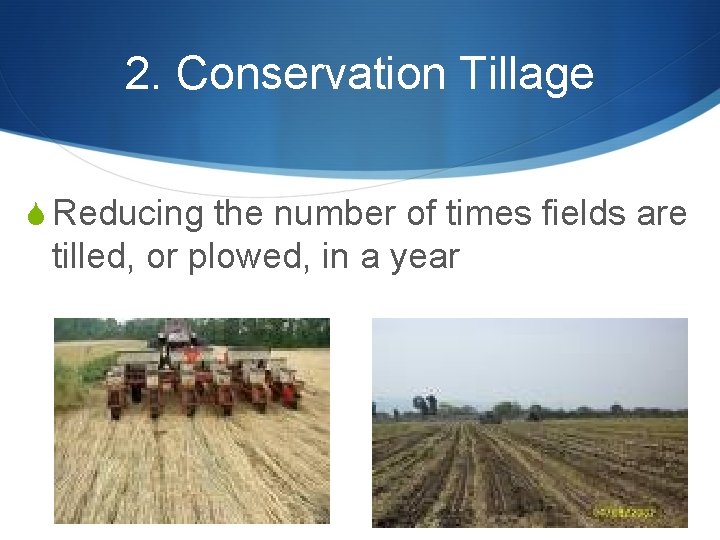
2. Conservation Tillage S Reducing the number of times fields are tilled, or plowed, in a year
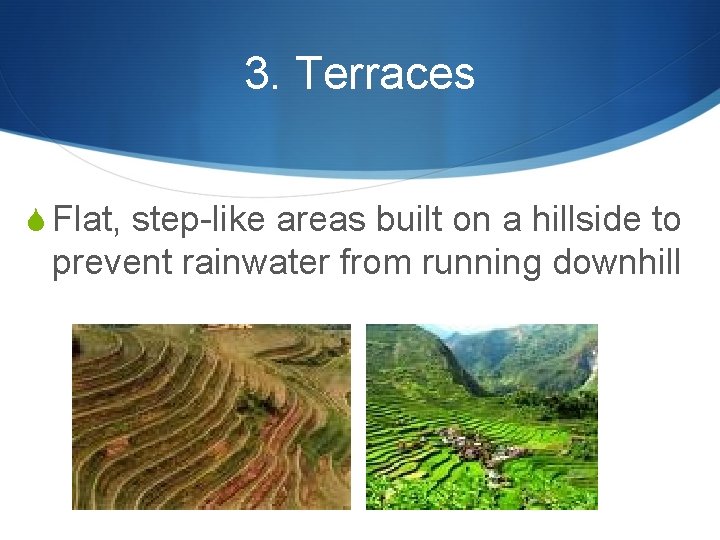
3. Terraces S Flat, step-like areas built on a hillside to prevent rainwater from running downhill
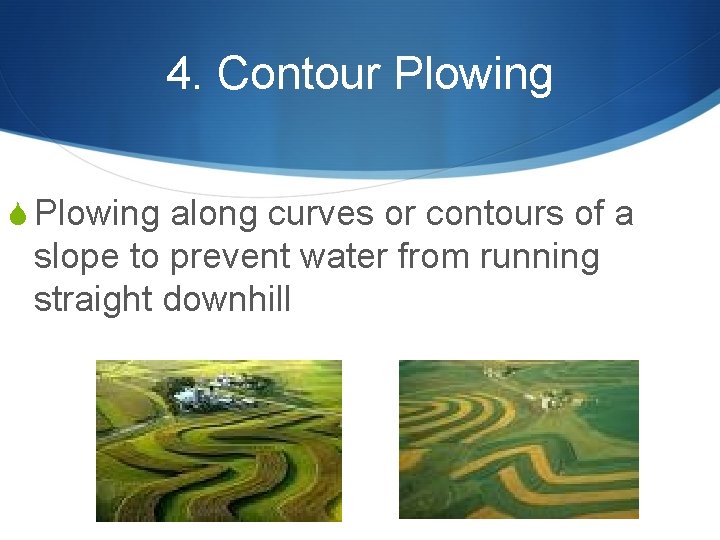
4. Contour Plowing S Plowing along curves or contours of a slope to prevent water from running straight downhill
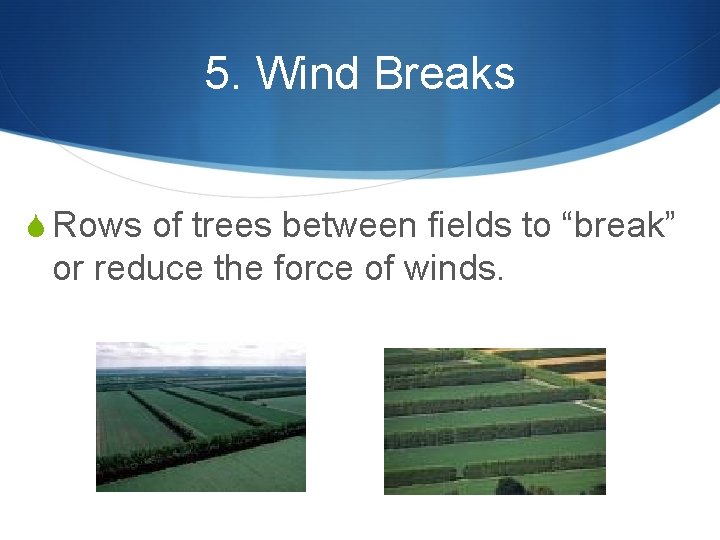
5. Wind Breaks S Rows of trees between fields to “break” or reduce the force of winds.