
Components of Rapid Sequence Intubation Ryan J Fink
Components of Rapid Sequence Intubation Ryan J Fink, MD Raquel Bartz, MD Duke University Medical Center Dept. of Anesthesiology

Learning Objectives • Components of Rapid Sequence Intubation (RSI) • Basic Equipment • Preparation • Reasons for RSI
Good Clinical Judgment Required • Clinical judgment is required who, when, and how to support ventilation in a patient • Choices, and more Choices – Mechanical ventilation via endotracheal tube or Bilevel positive airway pressure (BIPAP) – Which tools to use – How to intubate: awake versus unconscious and/or paralyzed – Which induction agent or paralytic
Intubation Goal • Provide means for improved oxygenation, improved ventilation, securing the airway • Minimize risk of complication and/or death associated with the procedure of intubation
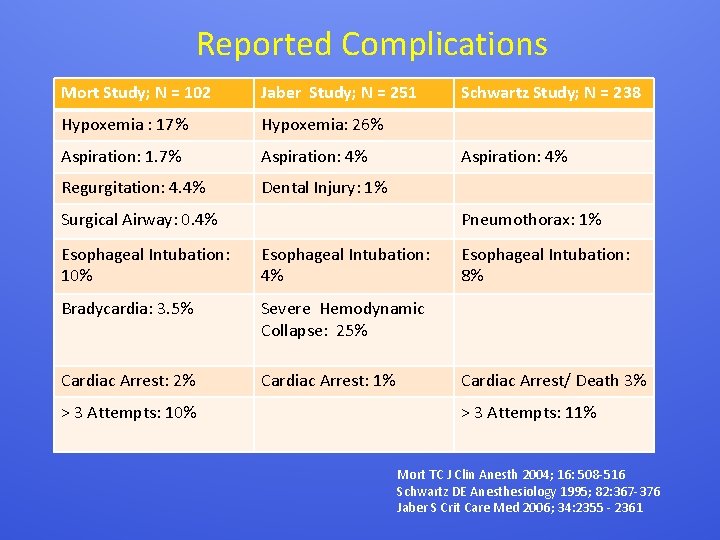
Reported Complications Mort Study; N = 102 Jaber Study; N = 251 Hypoxemia : 17% Hypoxemia: 26% Aspiration: 1. 7% Aspiration: 4% Regurgitation: 4. 4% Dental Injury: 1% Aspiration: 4% Surgical Airway: 0. 4% Pneumothorax: 1% Esophageal Intubation: 10% Esophageal Intubation: 4% Bradycardia: 3. 5% Severe Hemodynamic Collapse: 25% Cardiac Arrest: 2% Cardiac Arrest: 1% > 3 Attempts: 10% Schwartz Study; N = 238 Esophageal Intubation: 8% Cardiac Arrest/ Death 3% > 3 Attempts: 11% Mort TC J Clin Anesth 2004; 16: 508 -516 Schwartz DE Anesthesiology 1995; 82: 367 -376 Jaber S Crit Care Med 2006; 34: 2355 - 2361
Rapid Sequence Induction/Intubation • Purpose: – To decrease the risk of pulmonary aspiration – Improve likelihood of quick intubation with minimal physiologic compromise • Indications: – Patients considered to have a “full stomach” • • • NPO < 8 hours Pregnancy Significant GERD, delayed gastric emptying, hiatial hernia Ileus, SBO, acute abdomen, or trauma Many times this is unknown in the Emergency Room or Intensive Care Unit • Contraindication to RSI: – Predicted difficult mask ventilation or intubation • Consider awake fiberoptic intubation • Even the most experienced practitioners ask for help
What is Rapid Sequence Induction/Intubation • Preparation (equipment and patient) • Induction agent – To cause hypnosis/unconsciousness – To prevent memory of intubation – Maintain hemodynamics • Paralytic – To increase success of endotracheal tube placement – To prevent aspiration • Cricoid Pressure – To reduce risk of aspiration • No mask ventilation • Intubation
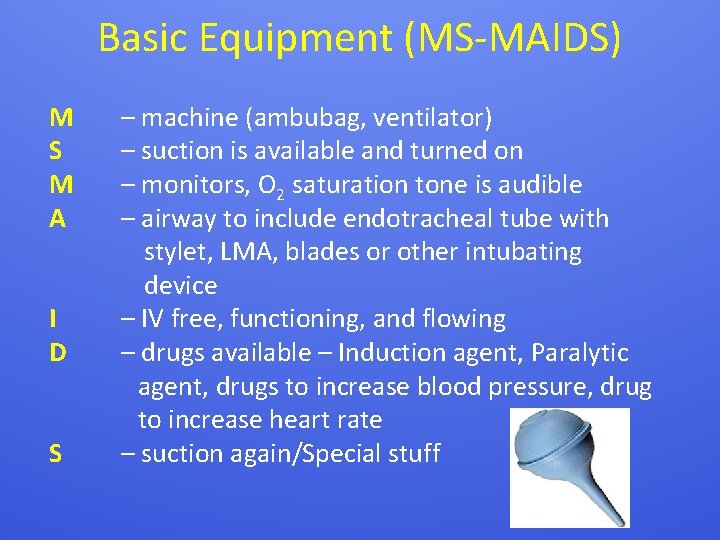
Basic Equipment (MS-MAIDS) M S M A I D S – machine (ambubag, ventilator) – suction is available and turned on – monitors, O 2 saturation tone is audible – airway to include endotracheal tube with stylet, LMA, blades or other intubating device – IV free, functioning, and flowing – drugs available – Induction agent, Paralytic agent, drugs to increase blood pressure, drug to increase heart rate – suction again/Special stuff
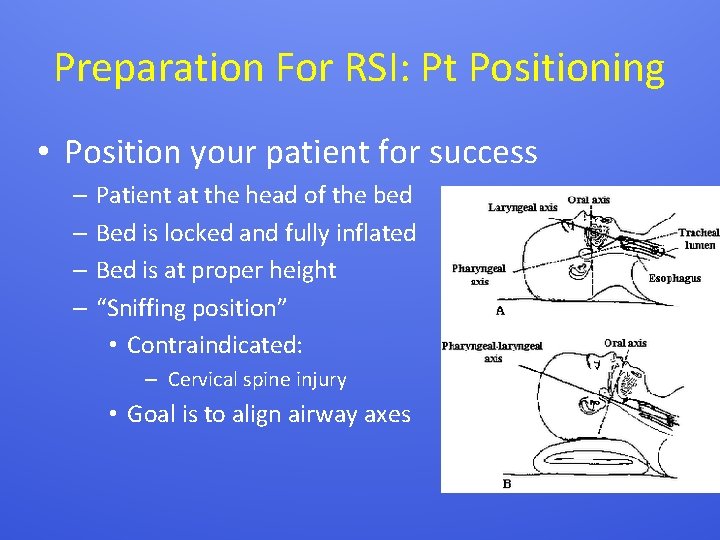
Preparation For RSI: Pt Positioning • Position your patient for success – Patient at the head of the bed – Bed is locked and fully inflated – Bed is at proper height – “Sniffing position” • Contraindicated: – Cervical spine injury • Goal is to align airway axes
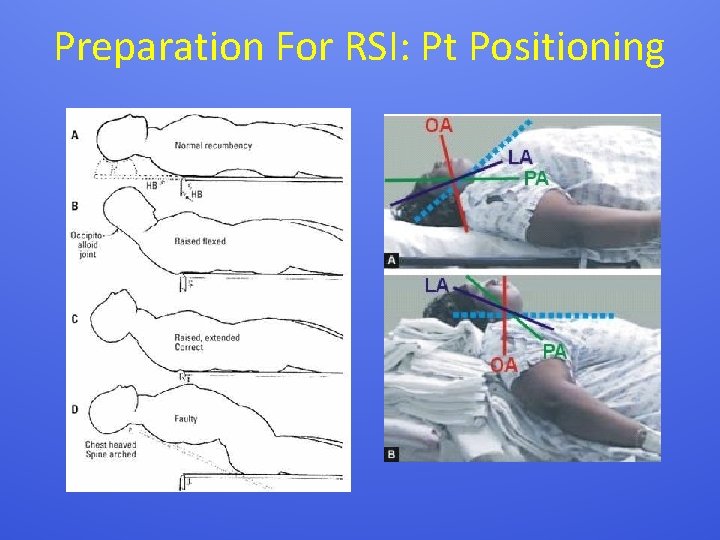
Preparation For RSI: Pt Positioning
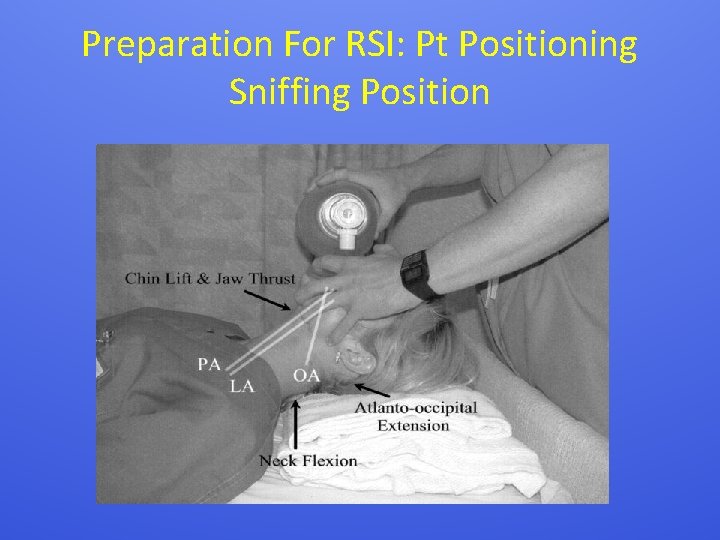
Preparation For RSI: Pt Positioning Sniffing Position
Preparation For RSI • Pre-oxygenation: – 5 minutes while preparing for intubation – Bi. PAP works well, with FIO 2 at 100% – Assist with bag-mask ventilation if decreased level of consciousness • Supply 100% oxygen into bag-valve mask • Have more than one practitioner available to help with intubation
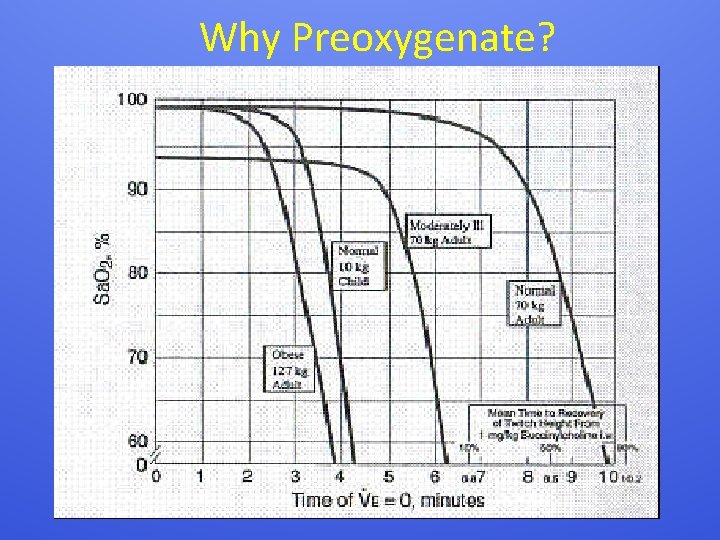
Why Preoxygenate?
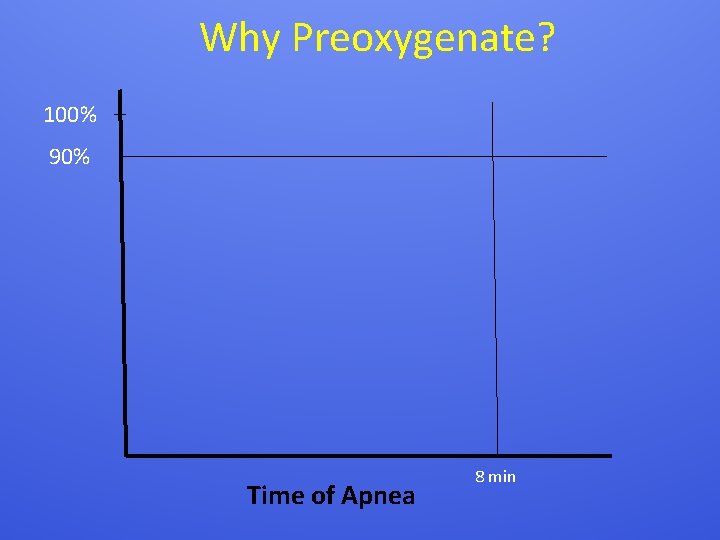
Why Preoxygenate? 100% 90% Time of Apnea 8 min
Preparation For RSI • Suction should be audible • Monitors in place: – Non-invasive BP at least every 1 -3 minutes – ECG – O 2 saturation monitor with audible tone • Airway devices should be readily available: – Endotracheal tube – multiple sizes (7. 0 for women, 8. 0 for men) – Stylet if needed, endotracheal tube cuff checked – Laryngeal Mask Airway (LMA) – Blades (Multiple types – Miller, Mac. Intosh, Phillips, etc. – Oral/nasal airways • IV should be checked and free-flowing
Preparation For RSI: Drugs • Induction agent (next module) - Etomidate/Propofol/Midazolam/Ketamine • Paralytic (next module) - Succinylcholine/Rocuronium • Vasopressor – to treat hypotension if it develops • Anticholinergic – to treat bradycardia - Atropine 0. 2 – 1 mg - Glycopyrrolate 0. 2 – 0. 6 mg • Post-intubation sedation/anesthesia
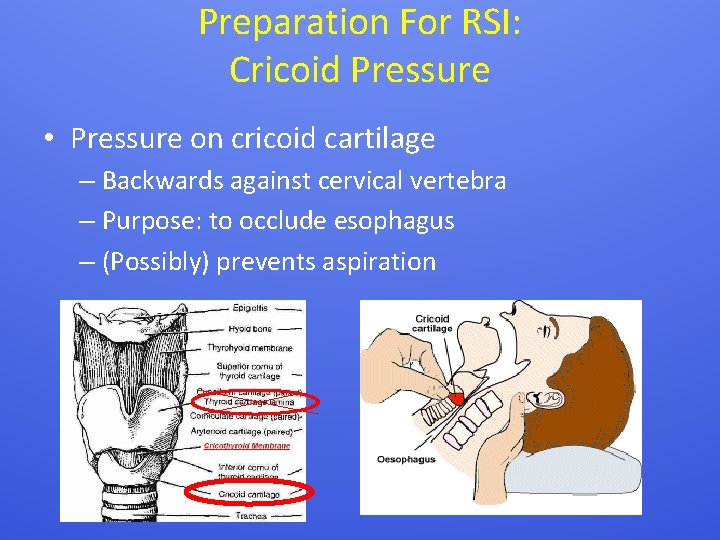
Preparation For RSI: Cricoid Pressure • Pressure on cricoid cartilage – Backwards against cervical vertebra – Purpose: to occlude esophagus – (Possibly) prevents aspiration
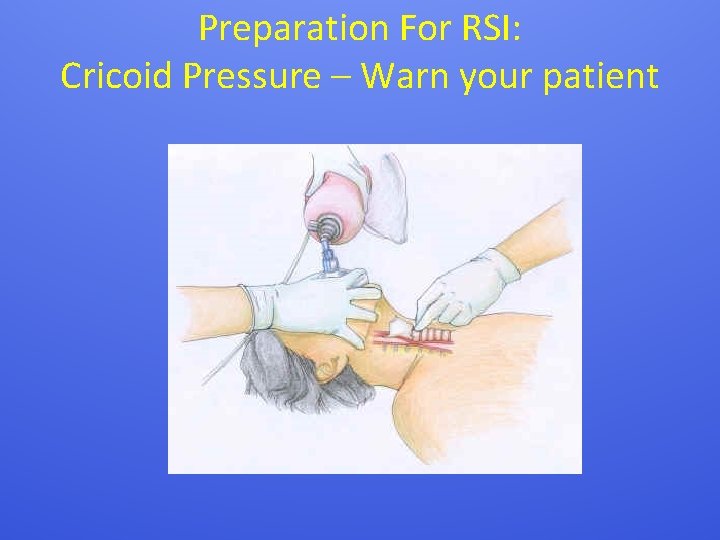
Preparation For RSI: Cricoid Pressure – Warn your patient
Preparation For RSI: Cricoid Pressure • Controversy still exists – Amount of pressure: 10 - 40 Newtons – May cause retching/vomiting in awake patients – Decreases lower esophageal sphincter tone – Aspiration can still occur – May limit laryngeal visualization – Pushes esophagus to the side, not always compressed • Still a standard of care
RSI: Completion • No mask ventilation • Confirm endotracheal tube placement – End-tidal carbon dioxide monitoring • May be inaccurate in cases of cardiac arrest (no CO = no Et. CO 2) – – – Condensation in the tube Chest rise Bilateral breath sounds Bronchoscopy Esophageal detection device • Do not release cricoid pressure until confirmed • Begin post-intubation sedation
Rapid Sequence Intubation (RSI) • Prepare equipment and patient • Preoxygenate for 5 min with 100% O 2 • Assistant holds cricoid pressure – Lightly when patients is still awake • Assistant pushes induction agent and then paralytic • Intubate after approximately 45 seconds • Confirm endotracheal tube placement • Begin sedation/anesthesia
Rapid Sequence Intubation (RSI): Conclusions • • • Preparation is key! MSMAIDS mnemonic Free flowing IV Assistance available for drugs and cricoid pressure Multiple airway devices Have a back-up plan if intubation is difficult
- Slides: 22