
COMPONENTS OF CULTURE Cultural Universals A cultural universal
- Slides: 11
COMPONENTS OF CULTURE
Cultural Universals �A cultural universal is a cultural item that exists in all cultures, past and present. �Ex: religion, language, recreation
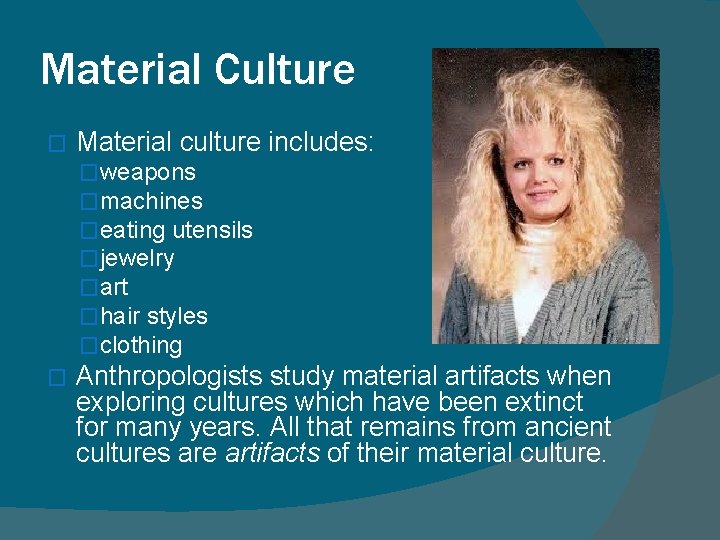
Material Culture � Material culture includes: �weapons �machines �eating utensils �jewelry �art �hair styles �clothing � Anthropologists study material artifacts when exploring cultures which have been extinct for many years. All that remains from ancient cultures are artifacts of their material culture.
Nonmaterial Culture � � � � � Nonmaterial culture refers to abstract human creations. language gestures values beliefs rules (norms) philosophies customs governments institutions
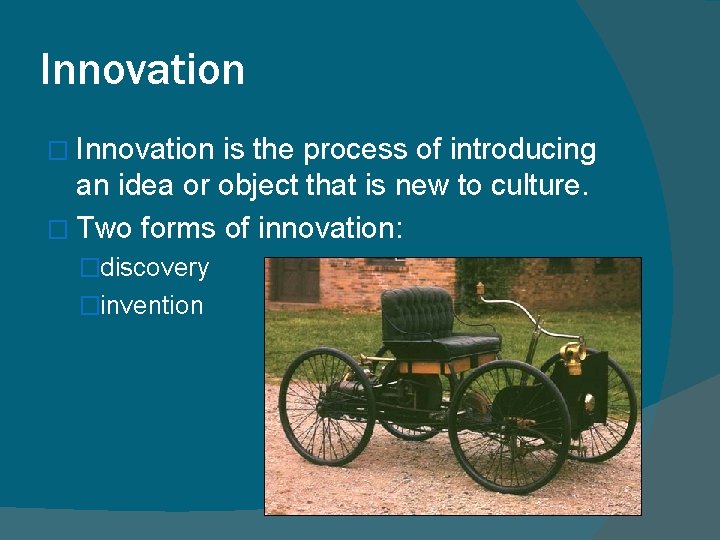
Innovation � Innovation is the process of introducing an idea or object that is new to culture. � Two forms of innovation: �discovery �invention
Diffusion The process by which a cultural item is spread from group to group or society to society. � Diffusion can occur through a variety of means � �exploration �military conquest �missionary work, etc. � When groups make contact with one another, they most often exchange nonmaterial culture
Cultural Leveling �A situation in which cultures become similar to one another as a result of travel and communication. � In extreme cases of leveling, some cultures can be lost forever � Ex: Mc. Donalds, Coca Cola.
Ideal v. Real Culture � Ideal culture refers to the norms and values that a society professes to hold. �Ideal culture describes models to emulate and which is worth aspiring to. � Real culture refers to norms and values that are followed in practice. �Example: Americans glorify academic achievement and material success. However, most students do not graduate with honors and most citizens are not wealthy. � There is a gap between ideal culture and real culture.
Culture Lag � Culture lag refers to the tendency for culture to be slow to adapt to changes in technology. Technological change can happen over night while sometimes it takes culture a few generations to adapt to changes in technology (Henslin, 2004: 50). � Example: When Napster provided free music exchange, the record producers argued that the practice was unfair, but yet no laws existed which made music sharing illegal. This example highlights the lag between technology and social adaptation. � Material culture tends to run ahead of non material culture.
Culture Shock � Culture shock: An individual suddenly immersed in a unique and unfamiliar setting experiences disorientation.
Activity- Alien Arrival Instructions- An extra terrestrial landed at our school. You have decided to befriend this alien and you want to make sure he “fit in”. Guide the Alien by answering the guided questions on culture. Add this 2 question to your sheet. 10. What Culture Lags exist? 11. Explain the American culture to E. T. and compare it to another culture