
Complications of Facial Paralysis n Facial paralysis severely

- Slides: 63
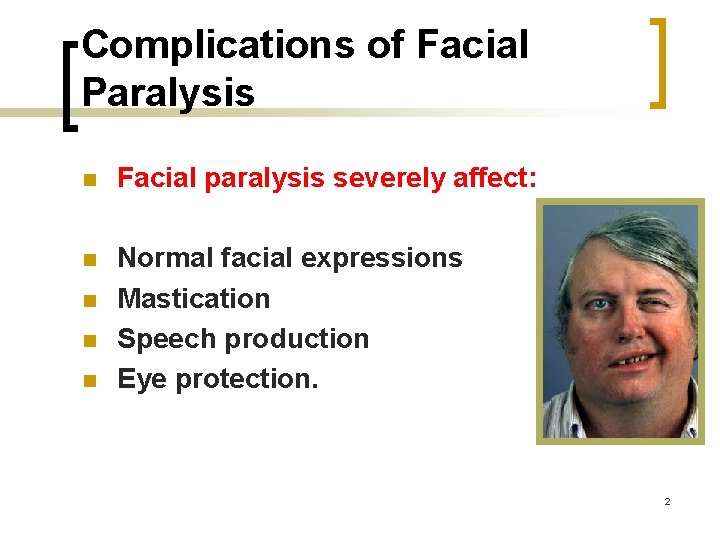
Complications of Facial Paralysis n Facial paralysis severely affect: n Normal facial expressions Mastication Speech production Eye protection. n n n 2
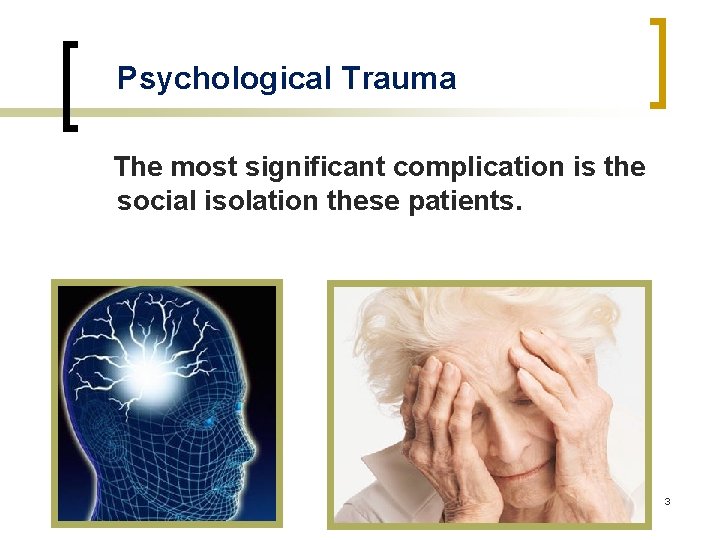
Psychological Trauma The most significant complication is the social isolation these patients. 3
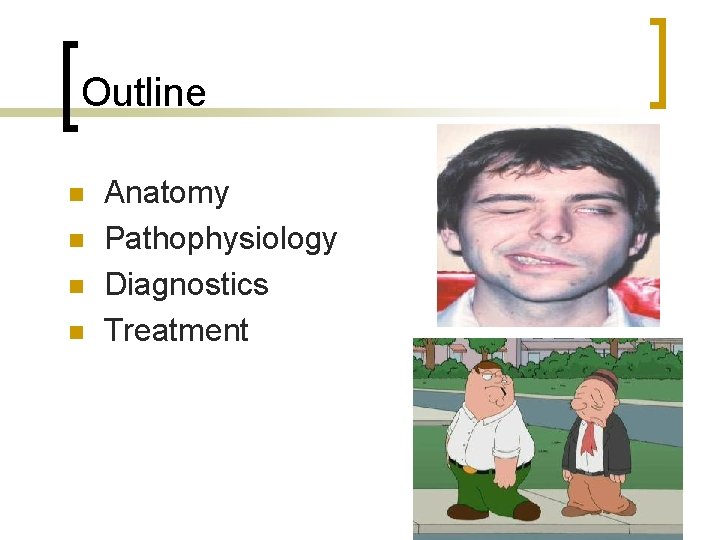
Outline n n Anatomy Pathophysiology Diagnostics Treatment
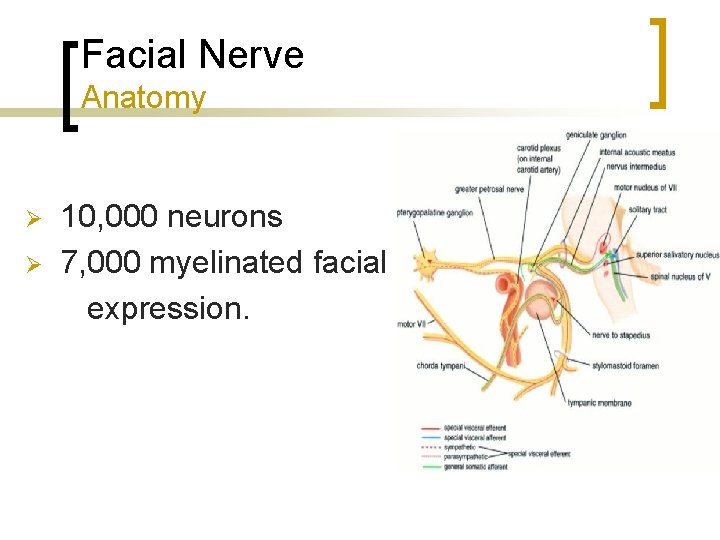
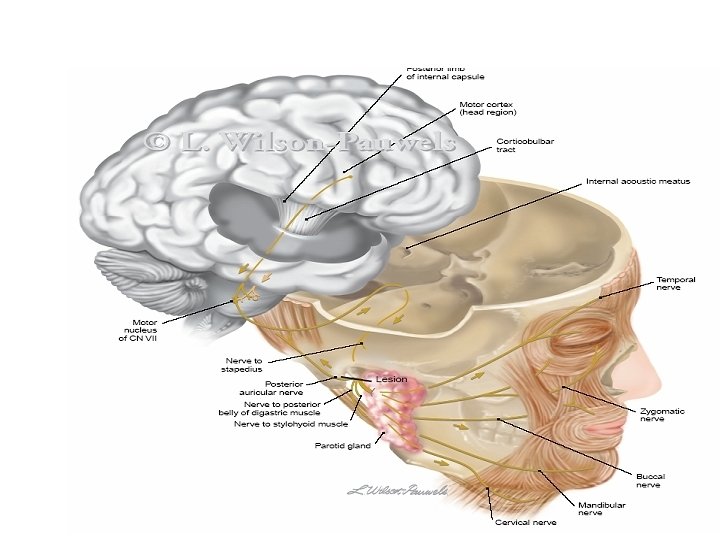
Facial Nerve Anatomy 10, 000 neurons Ø 7, 000 myelinated facial expression. Ø
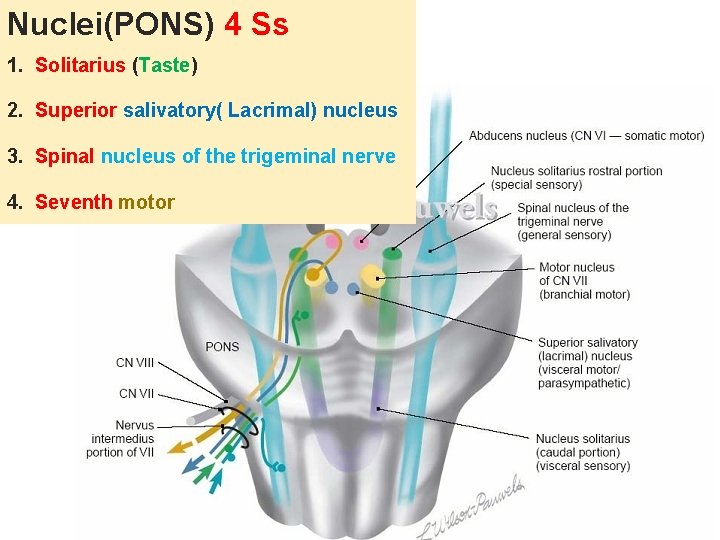
Nuclei(PONS) 4 Ss 1. Solitarius (Taste) 2. Superior salivatory( Lacrimal) nucleus 3. Spinal nucleus of the trigeminal nerve 4. Seventh motor
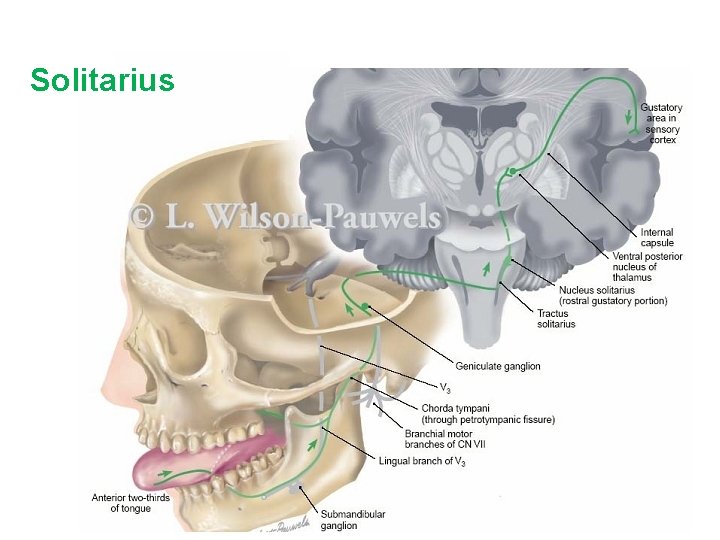
Solitarius
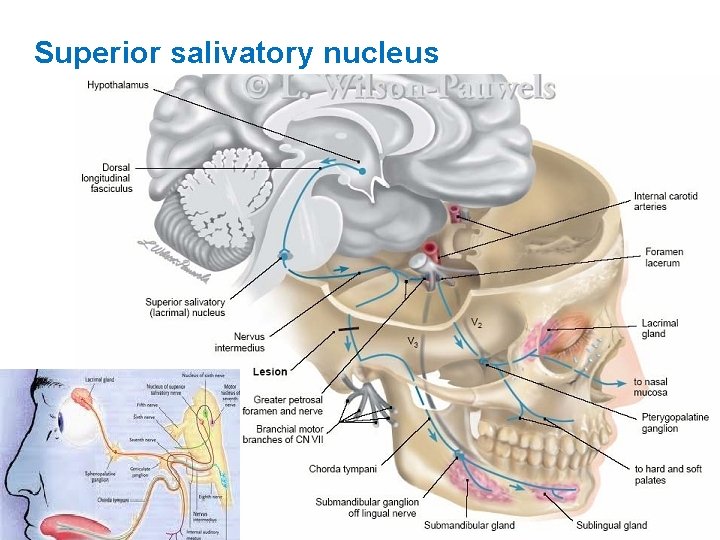
Superior salivatory nucleus
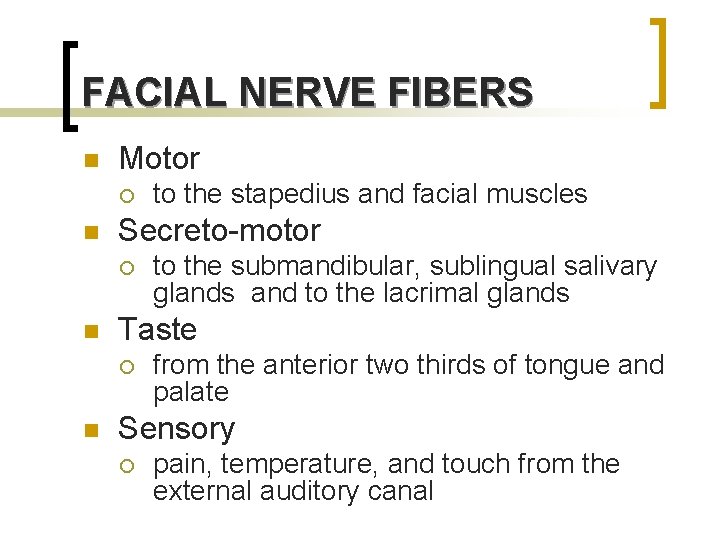
FACIAL NERVE FIBERS n Motor ¡ n Secreto-motor ¡ n to the submandibular, sublingual salivary glands and to the lacrimal glands Taste ¡ n to the stapedius and facial muscles from the anterior two thirds of tongue and palate Sensory ¡ pain, temperature, and touch from the external auditory canal
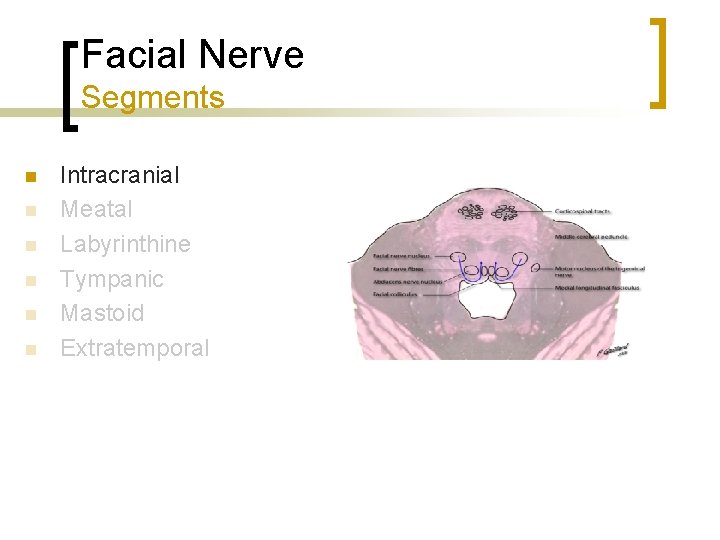
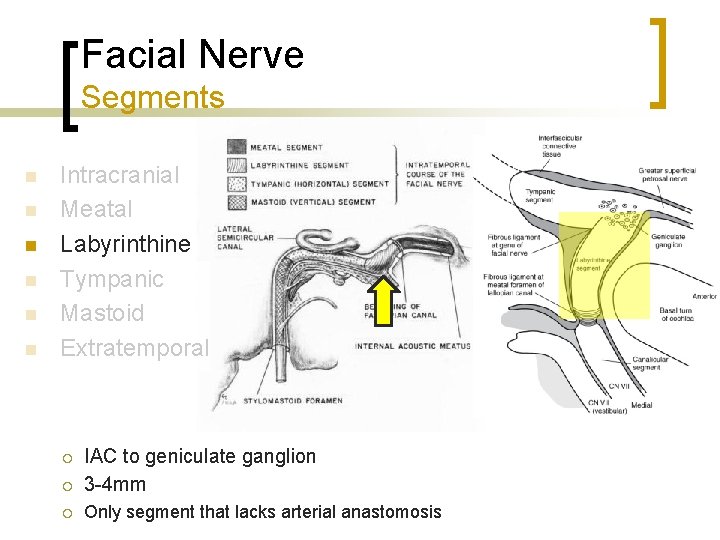
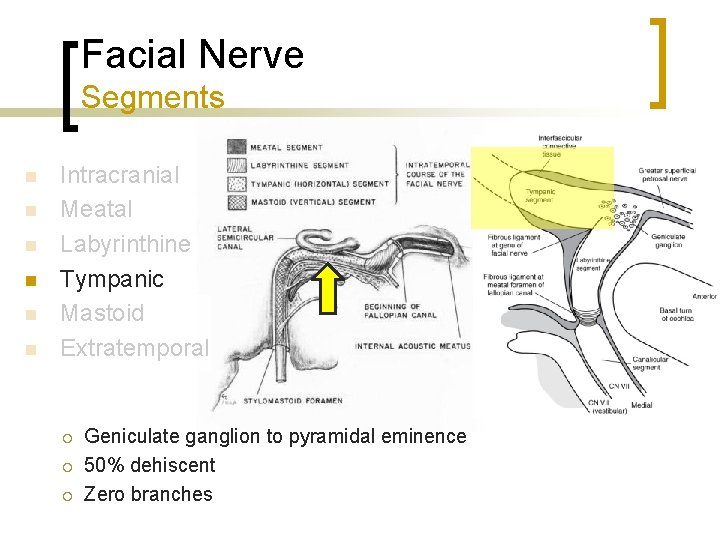
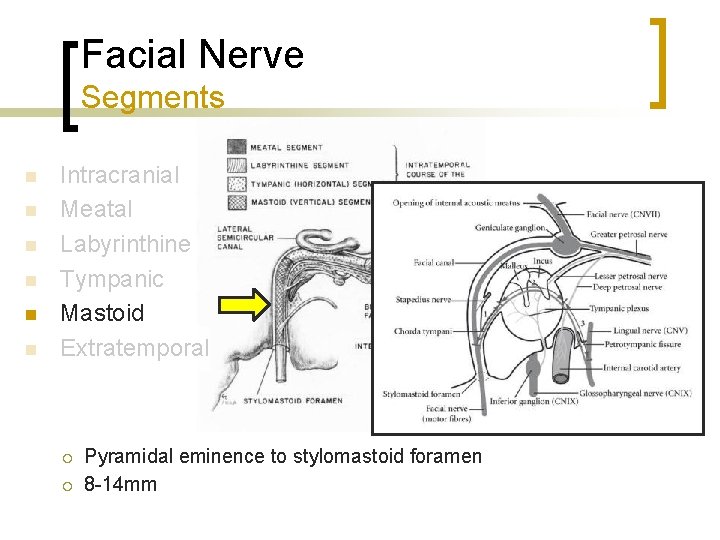
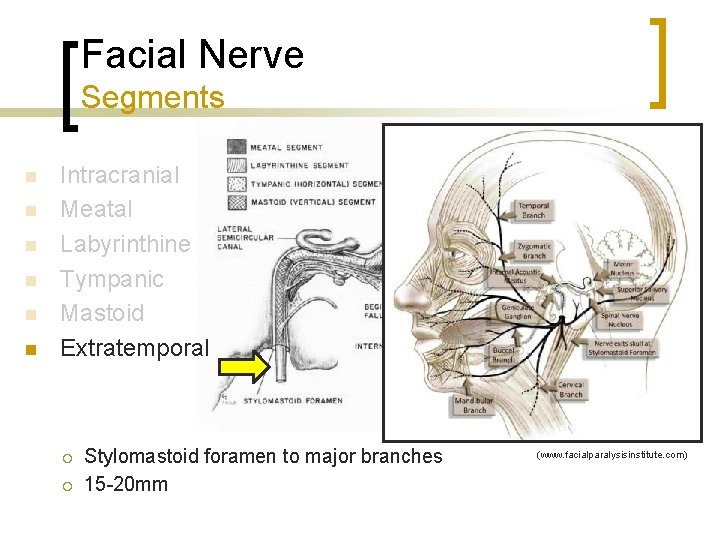
Facial Nerve Segments n n n Intracranial Meatal Labyrinthine Tympanic Mastoid Extratemporal
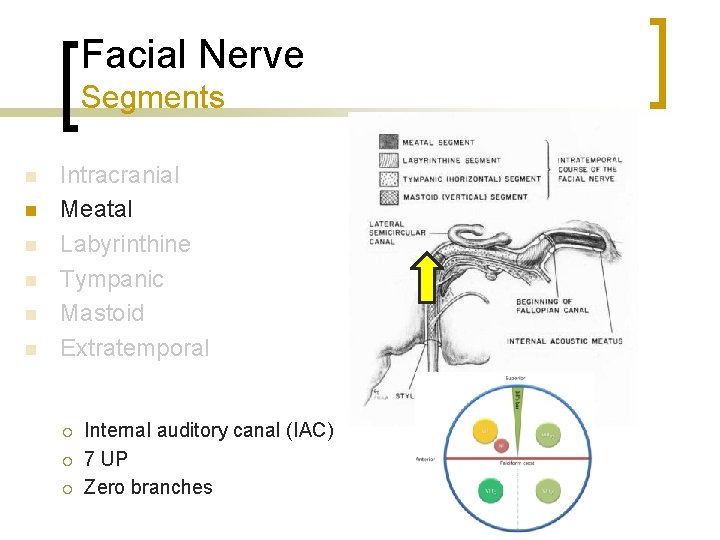
Facial Nerve Segments n n n Intracranial Meatal Labyrinthine Tympanic Mastoid Extratemporal ¡ ¡ ¡ Internal auditory canal (IAC) 7 UP Zero branches
Facial Nerve Segments n n n Intracranial Meatal Labyrinthine Tympanic Mastoid Extratemporal ¡ IAC to geniculate ganglion 3 -4 mm ¡ Only segment that lacks arterial anastomosis ¡
Facial Nerve Segments n n n Intracranial Meatal Labyrinthine Tympanic Mastoid Extratemporal ¡ ¡ ¡ Geniculate ganglion to pyramidal eminence 50% dehiscent Zero branches
Facial Nerve Segments n n n Intracranial Meatal Labyrinthine Tympanic Mastoid Extratemporal ¡ ¡ Pyramidal eminence to stylomastoid foramen 8 -14 mm
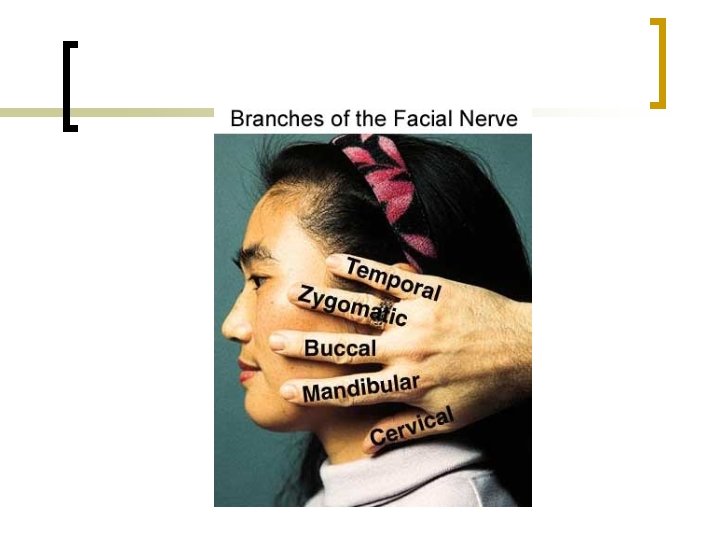
Facial Nerve Segments n n n Intracranial Meatal Labyrinthine Tympanic Mastoid Extratemporal ¡ ¡ Stylomastoid foramen to major branches 15 -20 mm (www. facialparalysisinstitute. com)
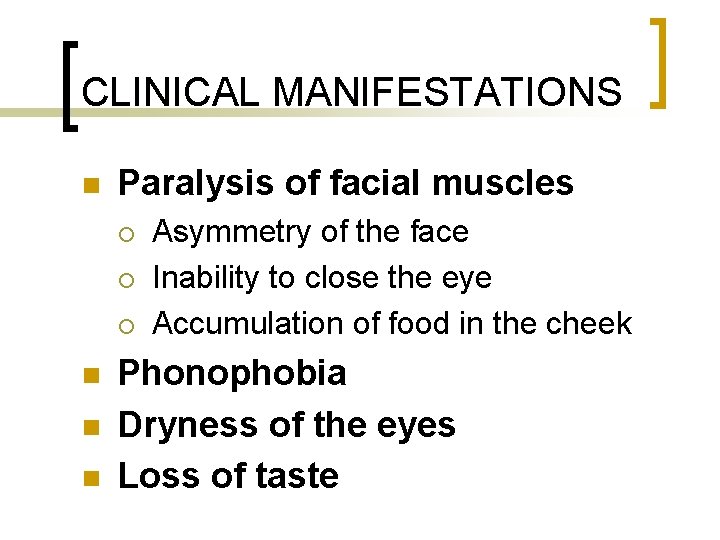
CLINICAL MANIFESTATIONS n Paralysis of facial muscles ¡ ¡ ¡ n n n Asymmetry of the face Inability to close the eye Accumulation of food in the cheek Phonophobia Dryness of the eyes Loss of taste
Diagnostics History and Physical Examination n n Hearing loss or vertigo Timing ¡ ¡ n n Sudden onset Evolution over 2 -3 weeks Presence of ear disease Vesicular eruption Bilateral Recurrence n n Symmetric audiological function Absent ipsilateral acoustic reflex
Diagnostics History and Physical Examination n n n Hearing loss or vertigo Timing Presence of ear disease Vesicular eruption Bilateral Recurrence
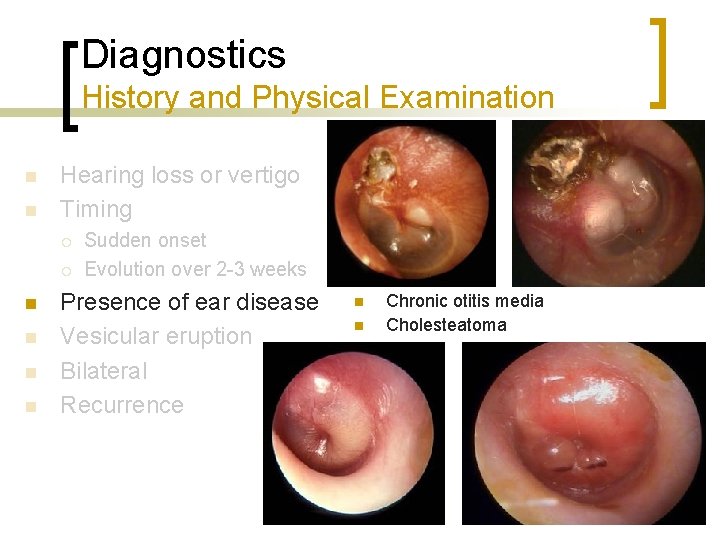
Diagnostics History and Physical Examination n n Hearing loss or vertigo Timing ¡ ¡ n n Sudden onset Evolution over 2 -3 weeks Presence of ear disease Vesicular eruption Bilateral Recurrence n n Chronic otitis media Cholesteatoma
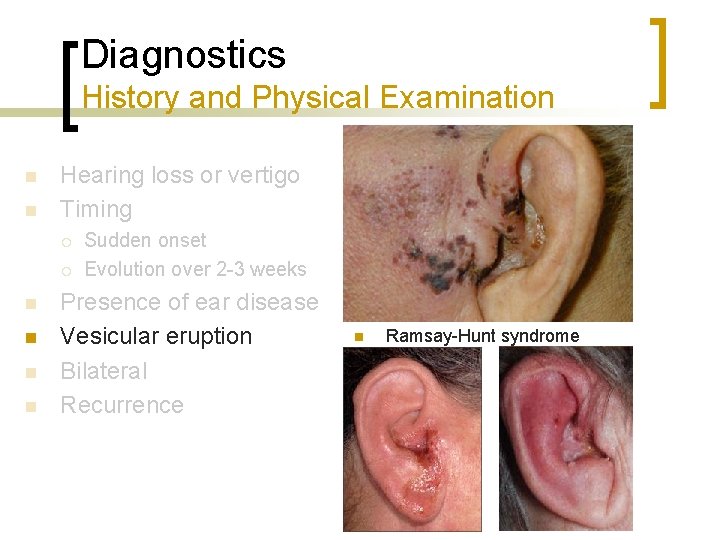
Diagnostics History and Physical Examination n n Hearing loss or vertigo Timing ¡ ¡ n n Sudden onset Evolution over 2 -3 weeks Presence of ear disease Vesicular eruption Bilateral Recurrence n Ramsay-Hunt syndrome
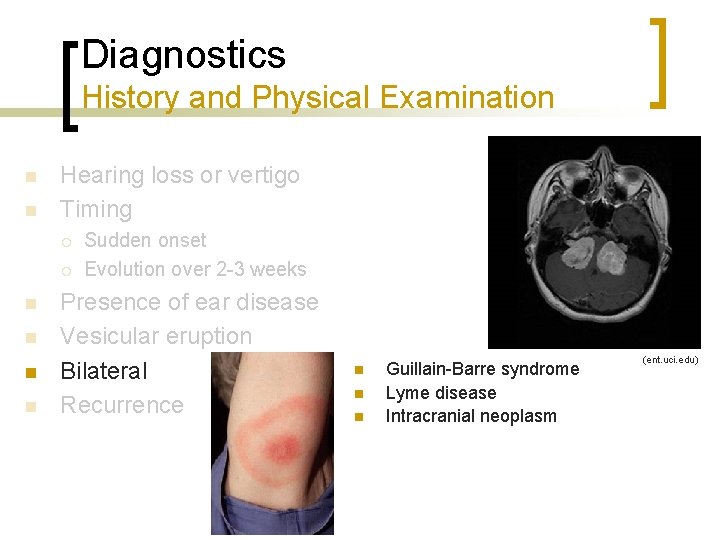
Diagnostics History and Physical Examination n n Hearing loss or vertigo Timing ¡ ¡ n n Sudden onset Evolution over 2 -3 weeks Presence of ear disease Vesicular eruption Bilateral Recurrence n n n Guillain-Barre syndrome Lyme disease Intracranial neoplasm (ent. uci. edu)
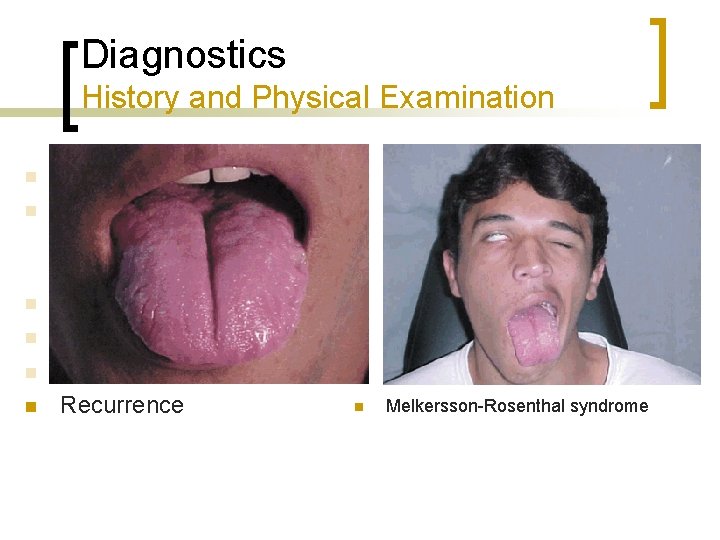
Diagnostics History and Physical Examination n n Hearing loss or vertigo Timing ¡ ¡ n n Sudden onset Evolution over 2 -3 weeks Presence of ear disease Vesicular eruption Bilateral Recurrence n Melkersson-Rosenthal syndrome
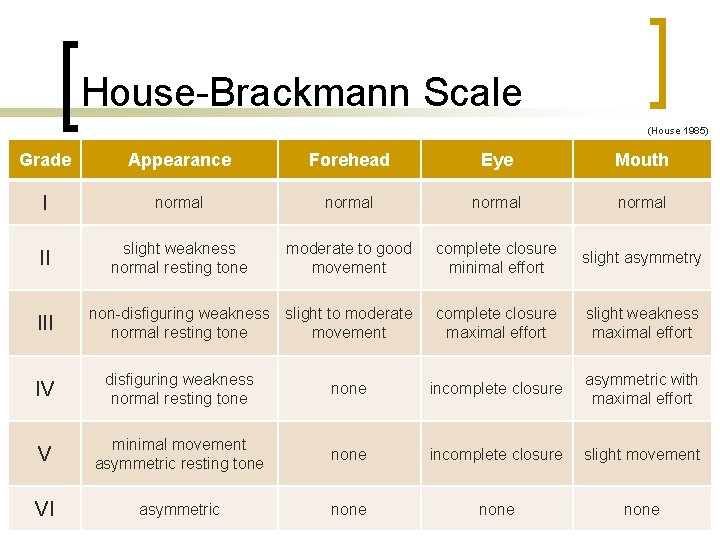
House-Brackmann Scale (House 1985) Grade Appearance Forehead Eye Mouth I normal II slight weakness normal resting tone moderate to good movement complete closure minimal effort slight asymmetry non-disfiguring weakness slight to moderate normal resting tone movement complete closure maximal effort slight weakness maximal effort III IV disfiguring weakness normal resting tone none incomplete closure asymmetric with maximal effort V minimal movement asymmetric resting tone none incomplete closure slight movement VI asymmetric none
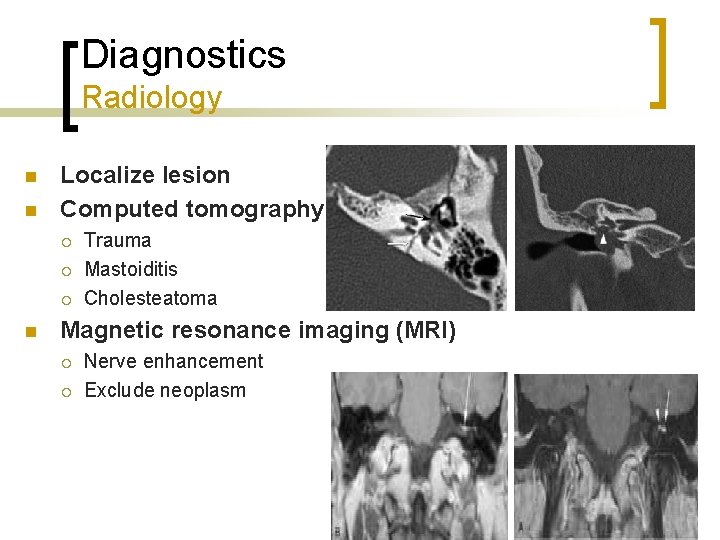
Diagnostics Radiology n n Localize lesion Computed tomography ¡ ¡ ¡ n Trauma Mastoiditis Cholesteatoma Magnetic resonance imaging (MRI) ¡ ¡ Nerve enhancement Exclude neoplasm
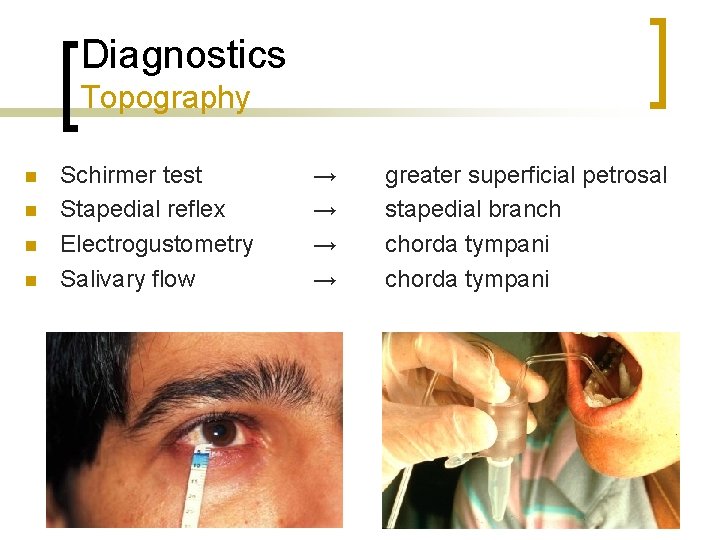
Diagnostics Topography n n Schirmer test Stapedial reflex Electrogustometry Salivary flow → → greater superficial petrosal stapedial branch chorda tympani
Diagnostics Audiology n n Evaluate for pathology of eighth cranial nerve Bell’s palsy ¡ ¡ n Symmetric audiological function Absent ipsilateral acoustic reflex Retrocochlear pathology ¡ Asymmetrical thresholds
Diagnostics Electrophysiology n Provides prognostic information ¡ n Not used for paresis only Tests ¡ ¡ Nerve excitability test (NET) Maximum stimulation test (MST) Electroneuronography (ENo. G) Electromyography (EMG)
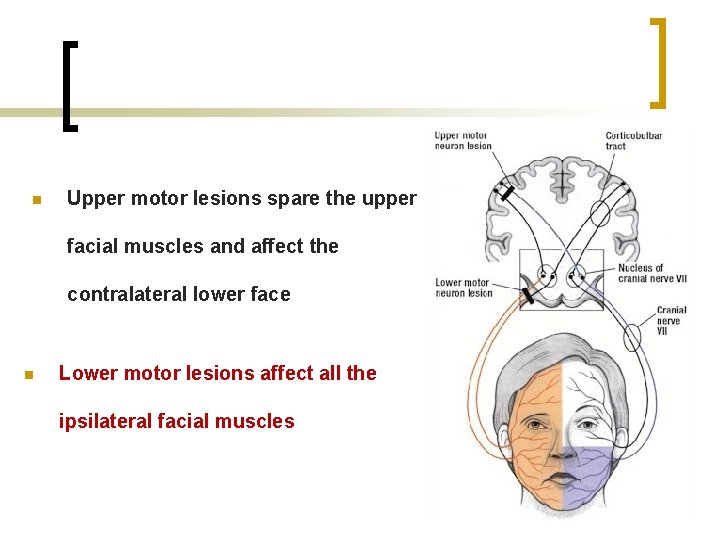
n Upper motor lesions spare the upper facial muscles and affect the contralateral lower face n Lower motor lesions affect all the ipsilateral facial muscles
BELL’S PALSY n Most common diagnosis of acute facial paralysis n Diagnosis is by exclusion
PATHOLOGY n Edema of the facial nerve sheath along its entire intratemporal course (Fallopian canal)
ETIOLOGY n Vascular vs. viral
CLINICAL FEATURES n Sudden onset unilateral FP n Partial or complete n No other manifestations apart from occasional mild pain n May recur in 6 – 12%
PROGNOSIS n 80% complete recovery n 10% satisfactory recovery n 10% no recovery
TREATMENT n Reassurance n Eye protection n Physiotherapy n Medications ( steroids, antivirals vasodilators) n Surgical decompression in selected cases
INFLAMMATORY CAUSES OF FACIAL PARALYSIS
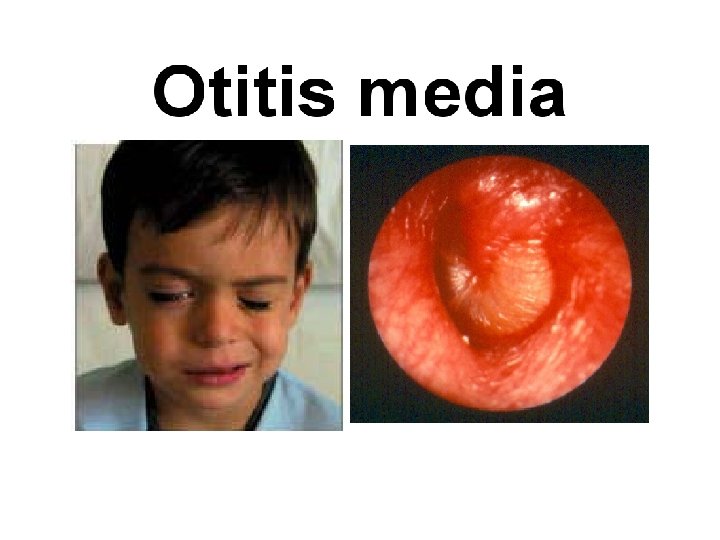
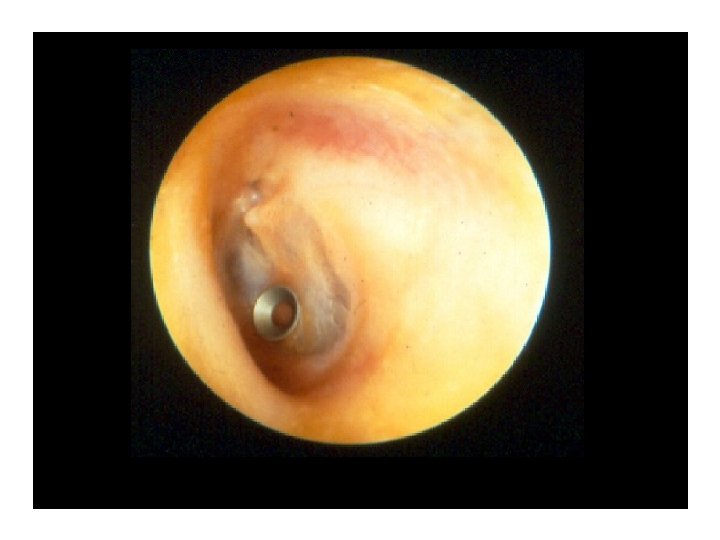
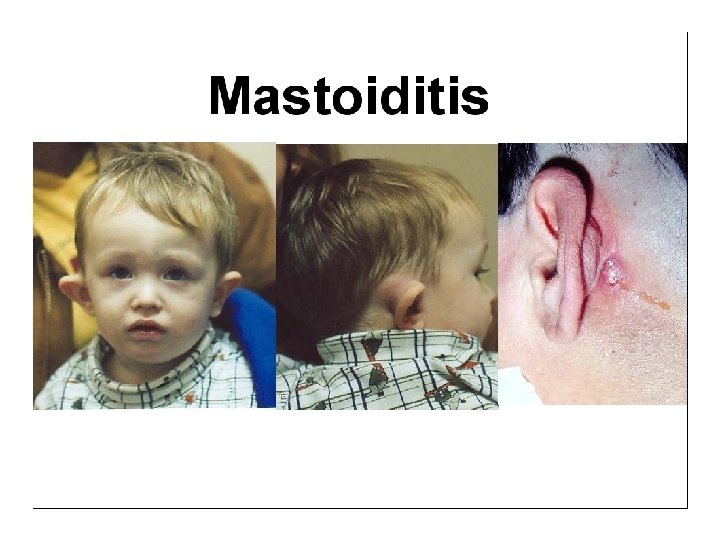
Facial Paralysis in AOM n Mostly due to pressure on a dehiscent nerve by inflammatory products n Usually is partial and sudden in onset n Treatment is by antibiotics and myringotomy
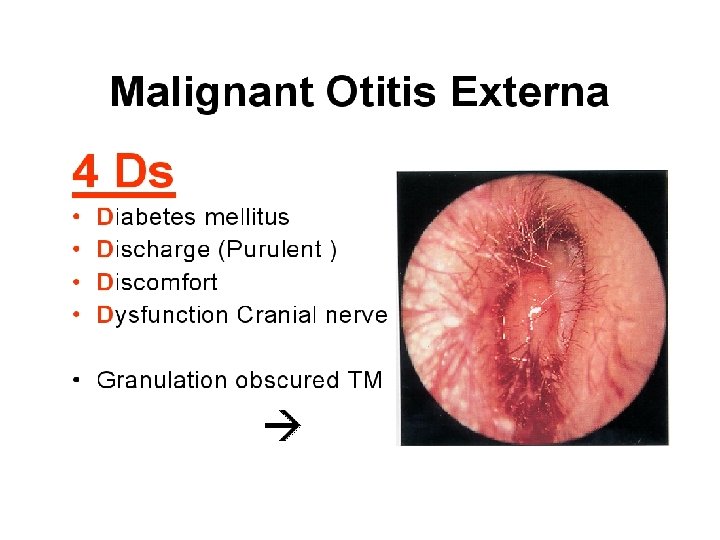
Facial Paralysis in CSOM n Usually is due to pressure by cholesteatoma or granulation tissue n Insidious in onset n May be partial or complete n Treatment is by immediate surgical exploration and “proceed”
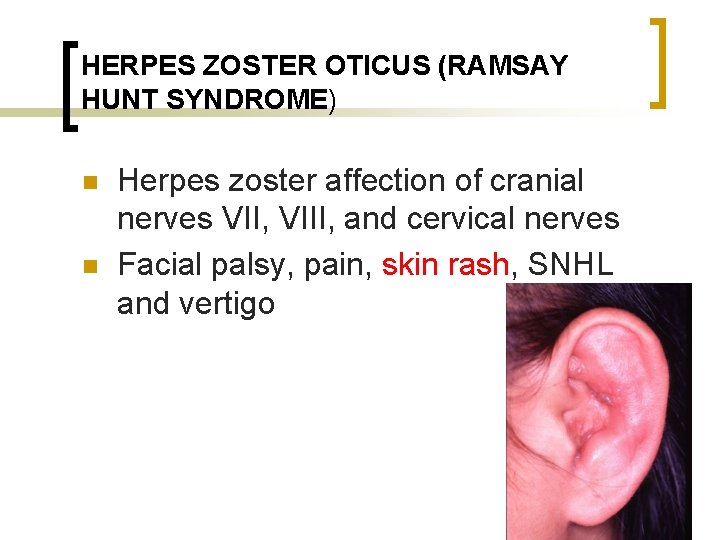
HERPES ZOSTER OTICUS (RAMSAY HUNT SYNDROME) n n Herpes zoster affection of cranial nerves VII, VIII, and cervical nerves Facial palsy, pain, skin rash, SNHL and vertigo
HERPES ZOSTER OTICUS (RAMSAY HUNT SYNDROME) n n Vertigo improves due to compensation SNHL is usually irreversible Facial nerve recovers in about 60% Treatment by: Acyclovir, steroid and symptomatic
Traumatic Facial Injury n Birth trauma n Iatrogenic n Temporal bone fracture
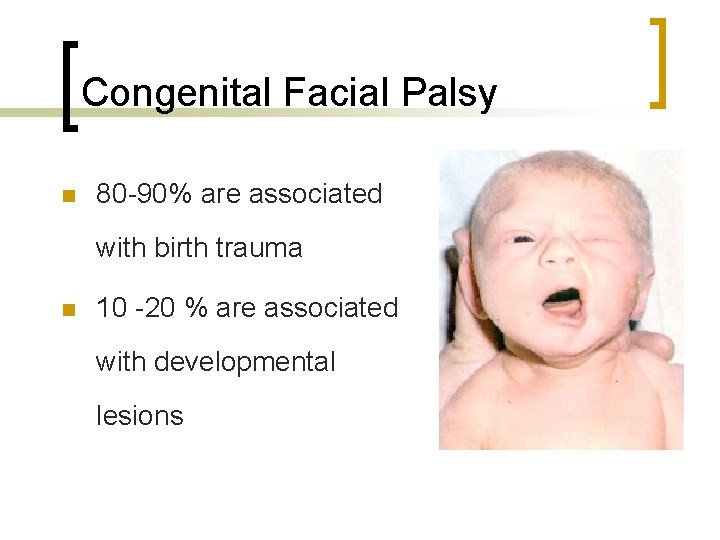
Congenital Facial Palsy n 80 -90% are associated with birth trauma n 10 -20 % are associated with developmental lesions
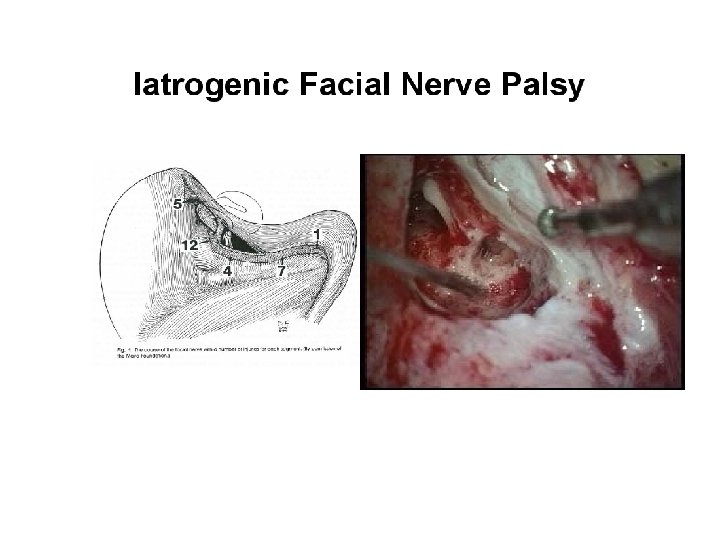
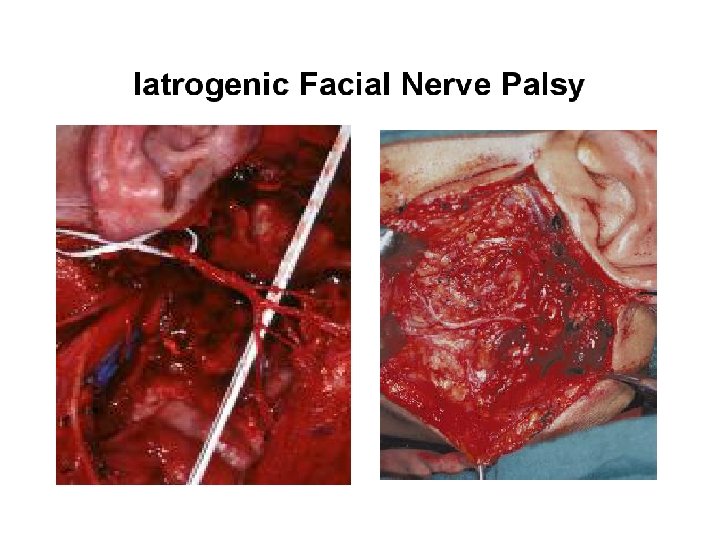
Iatrogenic Facial Nerve Injury n Operations at the CP angle, ear and the parotid glands
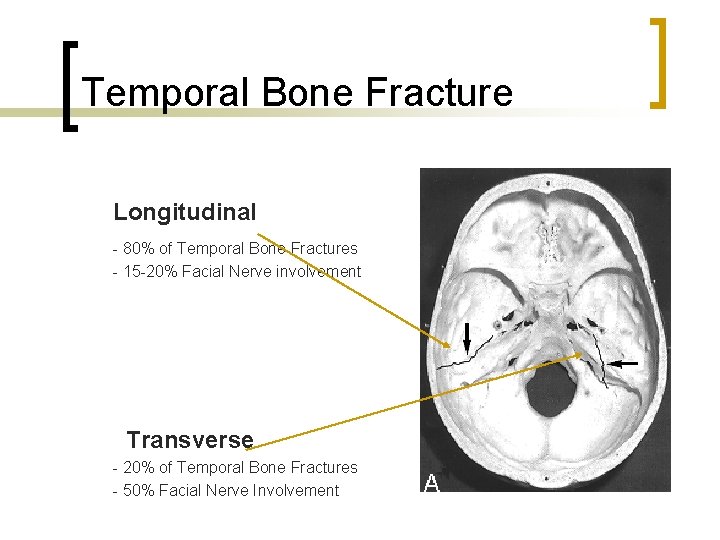
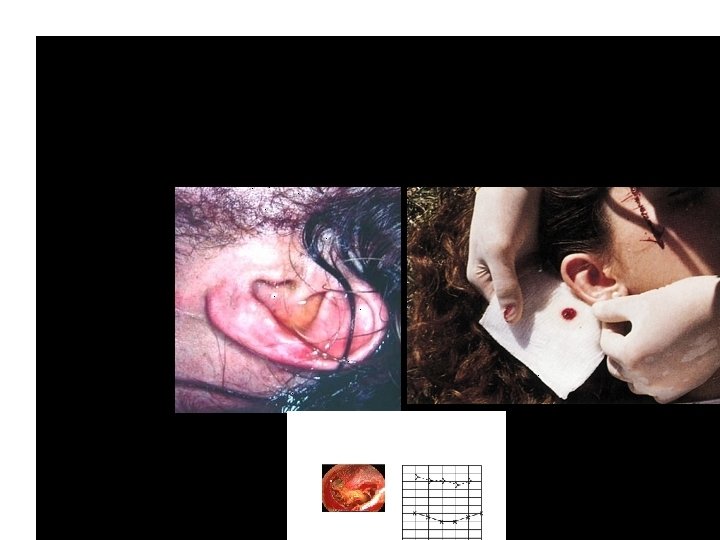
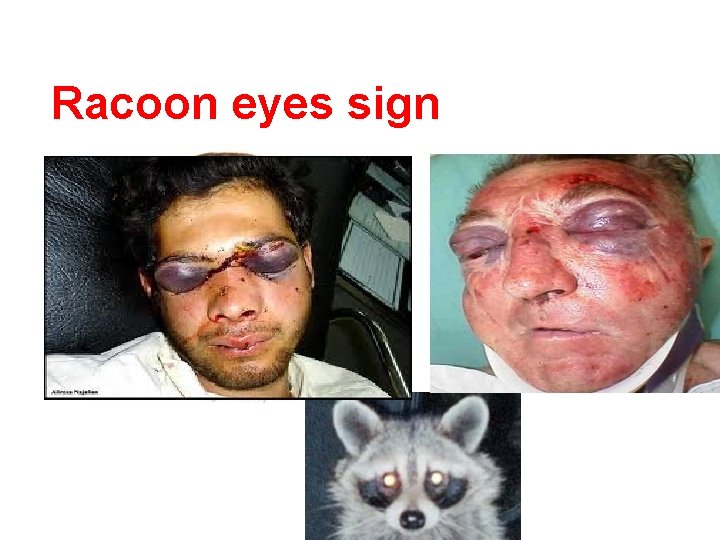
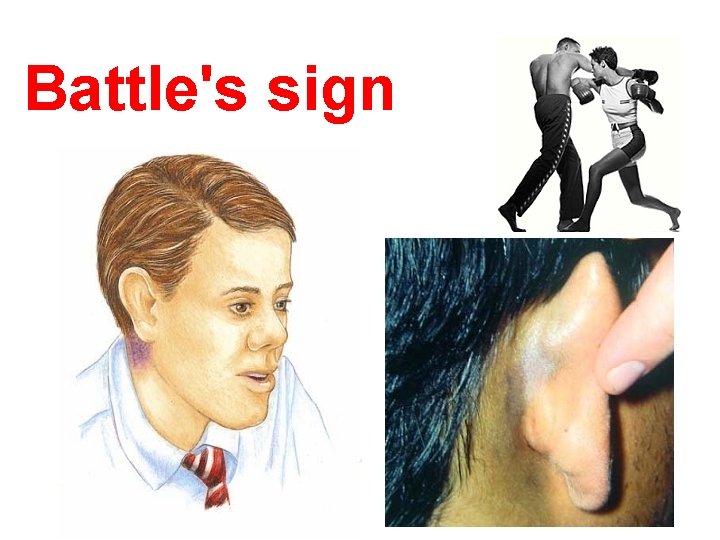
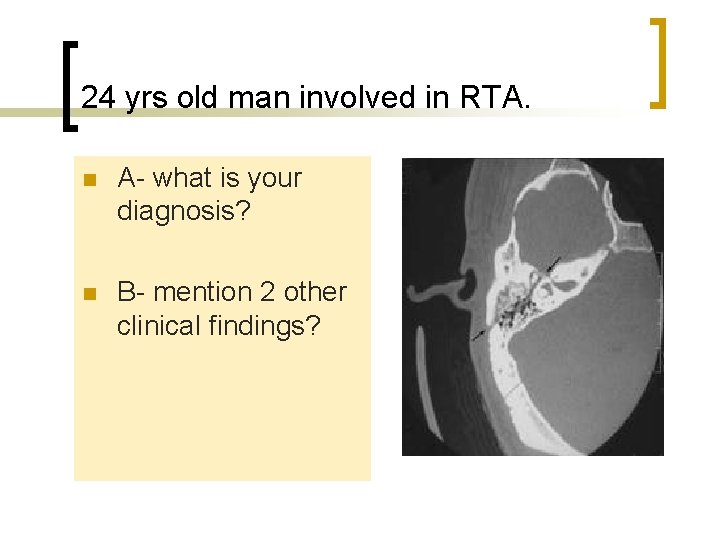
Temporal Bone Fracture Longitudinal - 80% of Temporal Bone Fractures - 15 -20% Facial Nerve involvement Transverse - 20% of Temporal Bone Fractures - 50% Facial Nerve Involvement
Racoon eyes sign
Battle's sign
Pathology n n Edema Transection of the nerve
Management of Traumatic Facial Nerve Injury n If it is delayed in onset, it is usually incomplete and is due to edema ¡ n Conservative If of immediate onset, it is usually complete and due to transection of the nerve ¡ Surgical repair
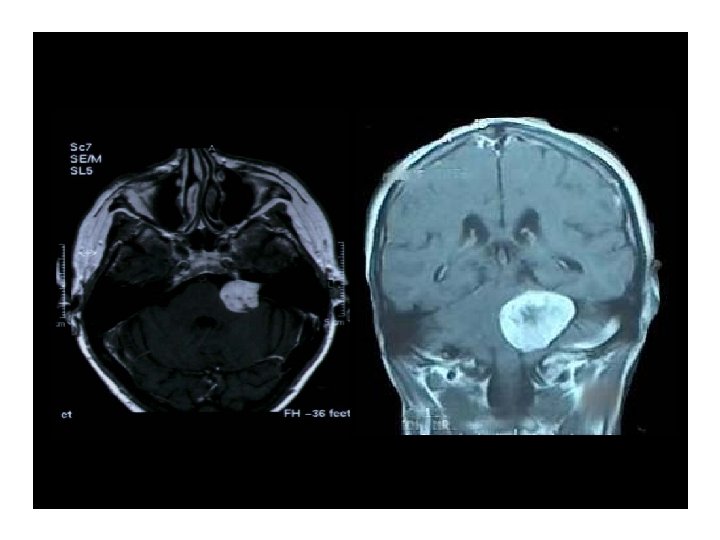
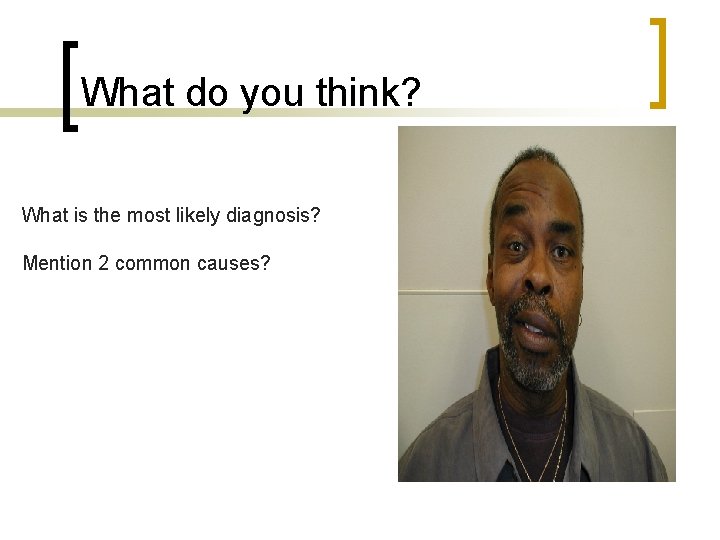
What do you think? What is the most likely diagnosis? Mention 2 common causes?
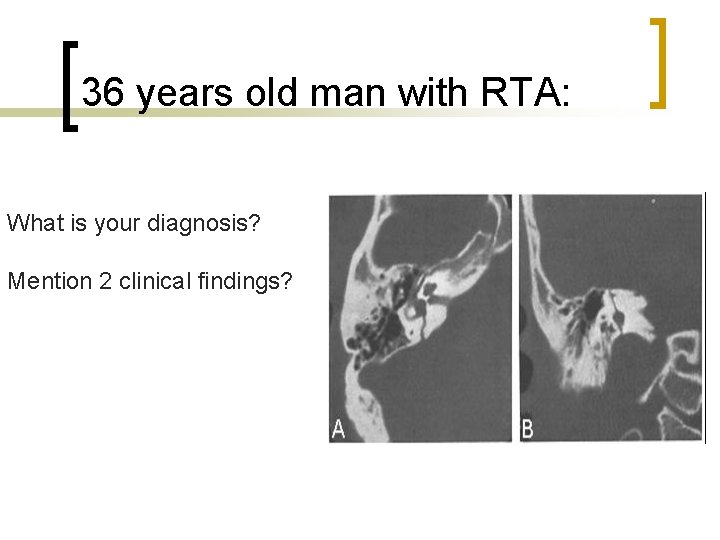
36 years old man with RTA: What is your diagnosis? Mention 2 clinical findings?
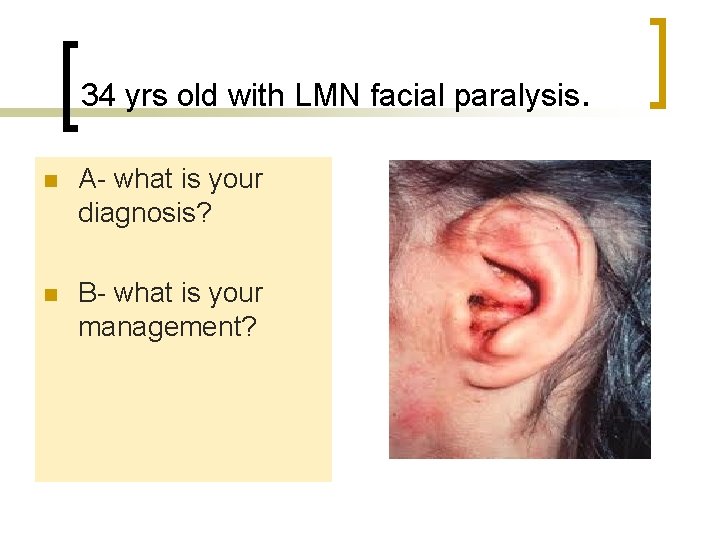
34 yrs old with LMN facial paralysis. n A- what is your diagnosis? n B- what is your management?
24 yrs old man involved in RTA. n A- what is your diagnosis? n B- mention 2 other clinical findings?
THANK YOU