
Complications of Enteral Nutrition Therapy causes and management

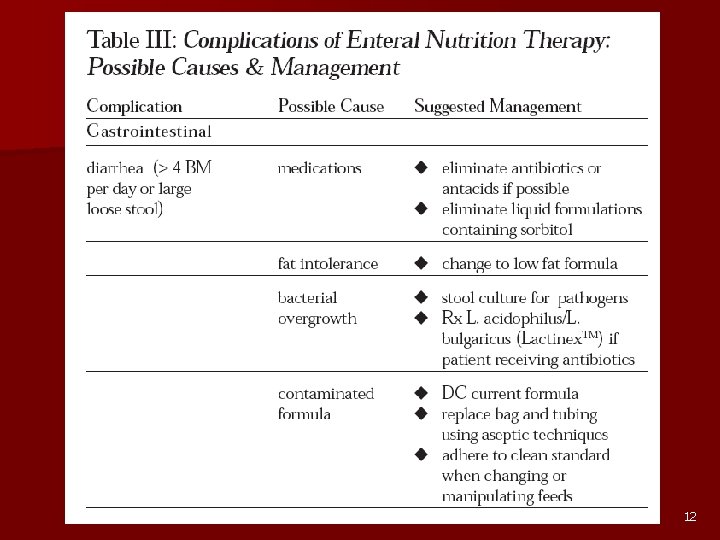
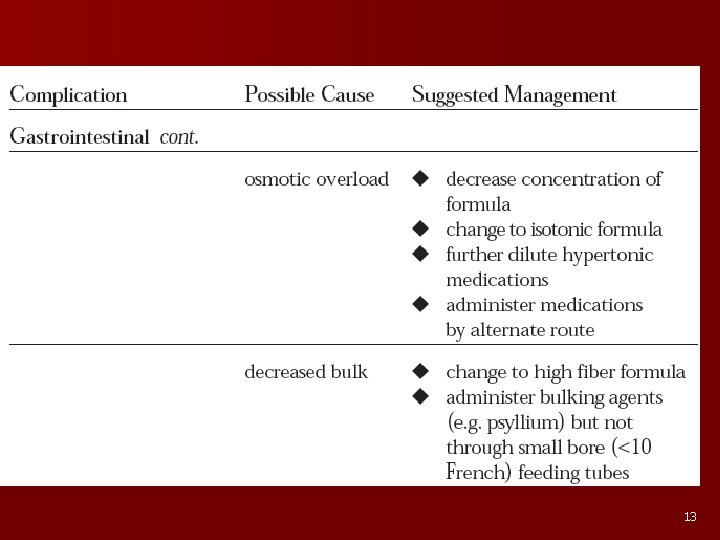
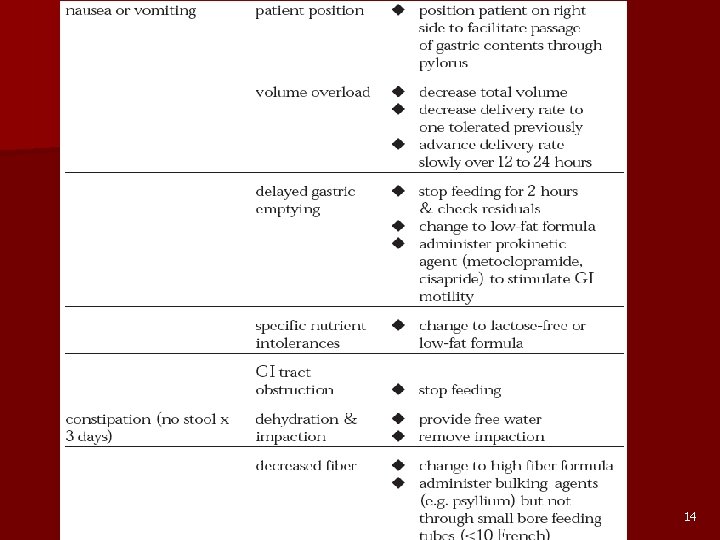
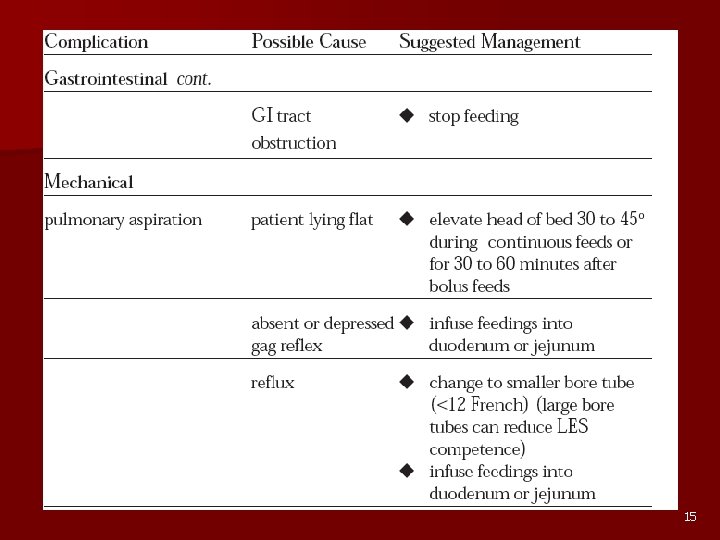

- Slides: 18
Complications of Enteral Nutrition Therapy, causes and management Dr Mohammad Safarian 2
n Which type of complications? n Who may be at risk? n Early detection and treatment? 3
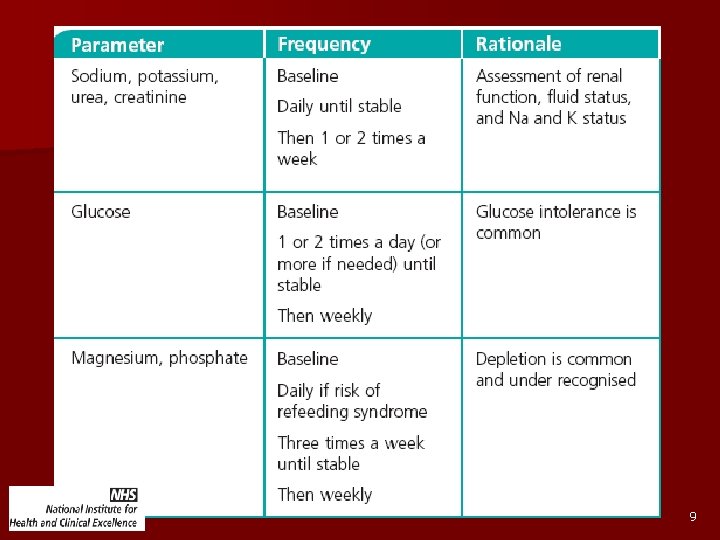
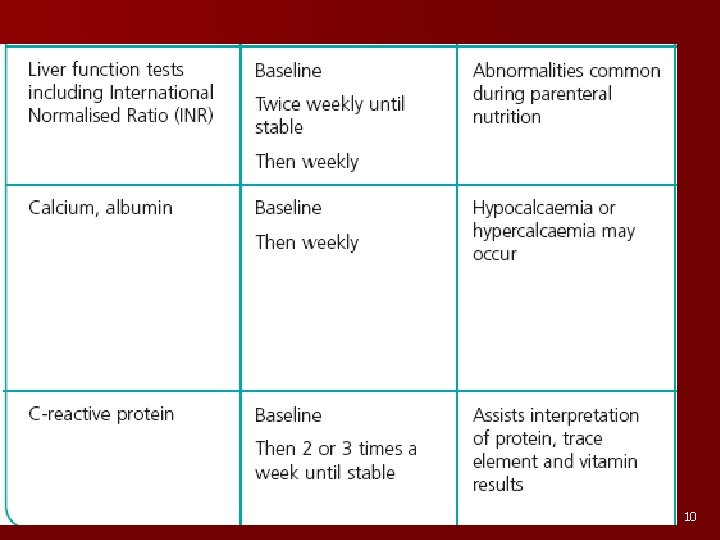
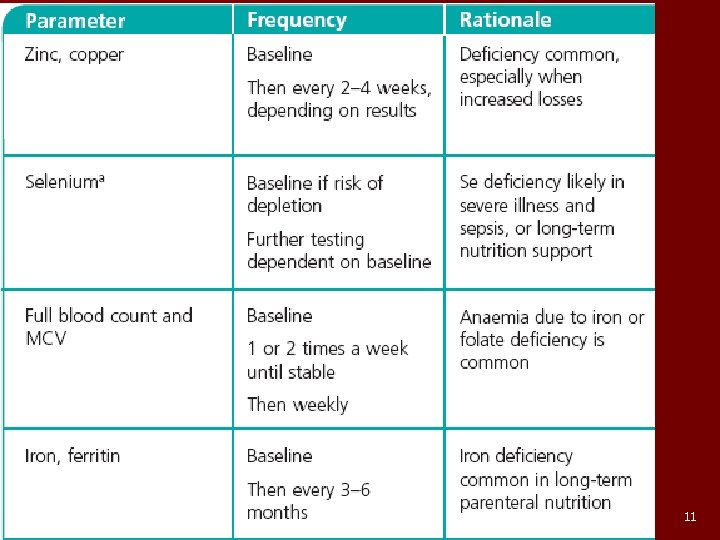
Monitoring of EN therapy The main objectives: n To ensure about safety, and early detection and treatment of complications n To assess the extent to which nutritional objectives have been reached. n To alter the type or components of the regimen, to improve its effectiveness and to prevent complications. n 4
General considerations n n n n Basic clinical observations (temperature, pulse, oedema) Observations of feeding technique and its possible complications Measures of nutritional intake. Weight changes Fluid balance charts (in hospital) Laboratory data Outcome factors (complications, improvements) Change in socio-psychological state which might influence nutritional therapy 5
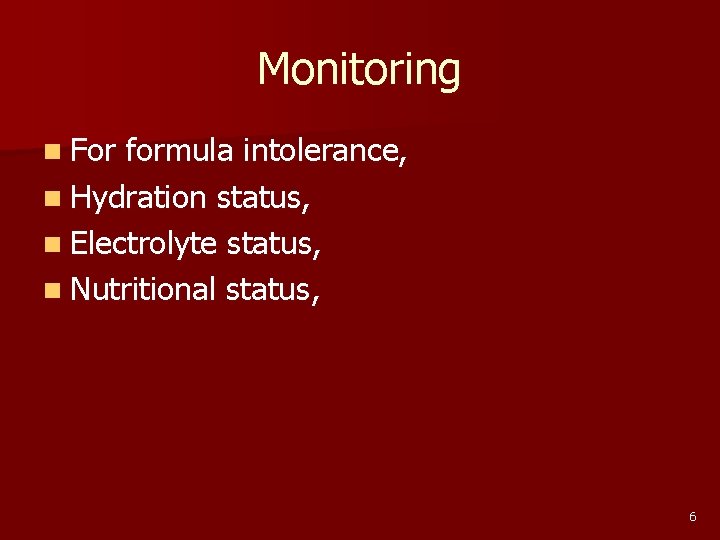
Monitoring n For formula intolerance, n Hydration status, n Electrolyte status, n Nutritional status, 6
9
10
11
12
13
14
15
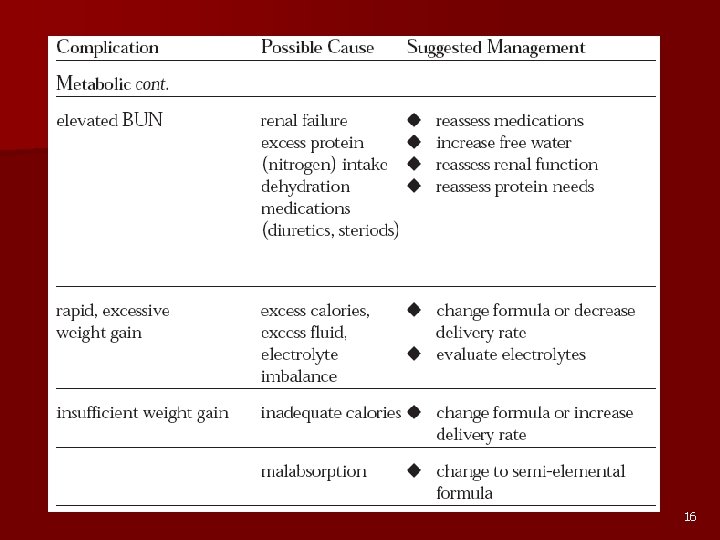
16
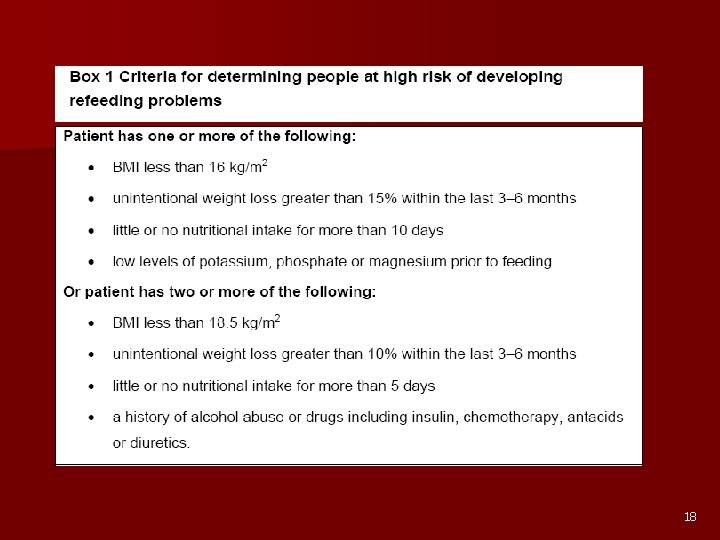
18
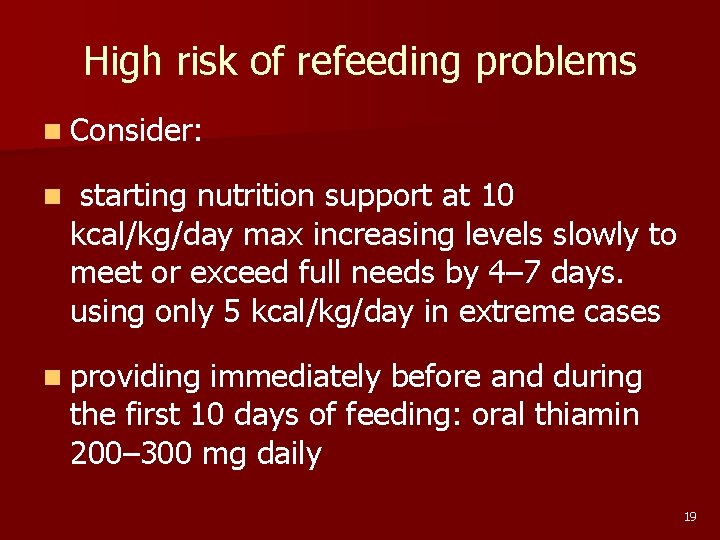
High risk of refeeding problems n Consider: n starting nutrition support at 10 kcal/kg/day max increasing levels slowly to meet or exceed full needs by 4– 7 days. using only 5 kcal/kg/day in extreme cases n providing immediately before and during the first 10 days of feeding: oral thiamin 200– 300 mg daily 19
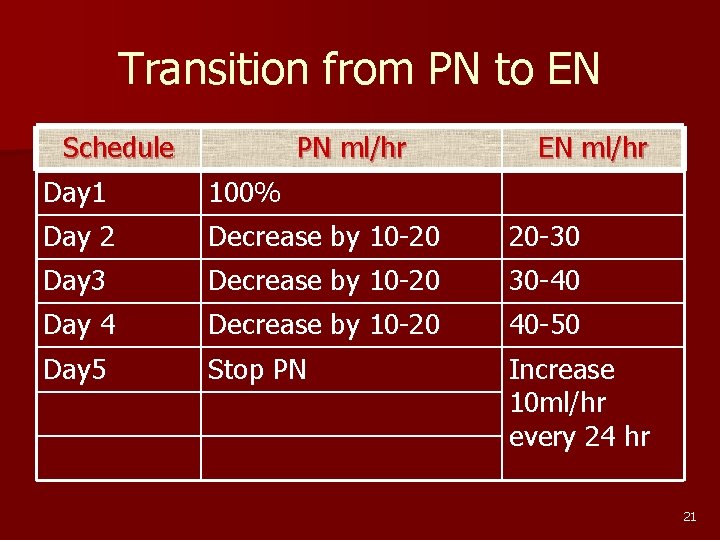
Transition from PN to EN Schedule PN ml/hr EN ml/hr Day 1 100% Day 2 Decrease by 10 -20 20 -30 Day 3 Decrease by 10 -20 30 -40 Day 4 Decrease by 10 -20 40 -50 Day 5 Stop PN Increase 10 ml/hr every 24 hr 21
Thank you 22