
Complications of anesthesia Supervised by Dr Ashraf Dmour

Complications of anesthesia Supervised by : Dr. Ashraf Dmour Done by: Hamza Hayajneh Mohammad Rafayah Ahmad Qammaz 2
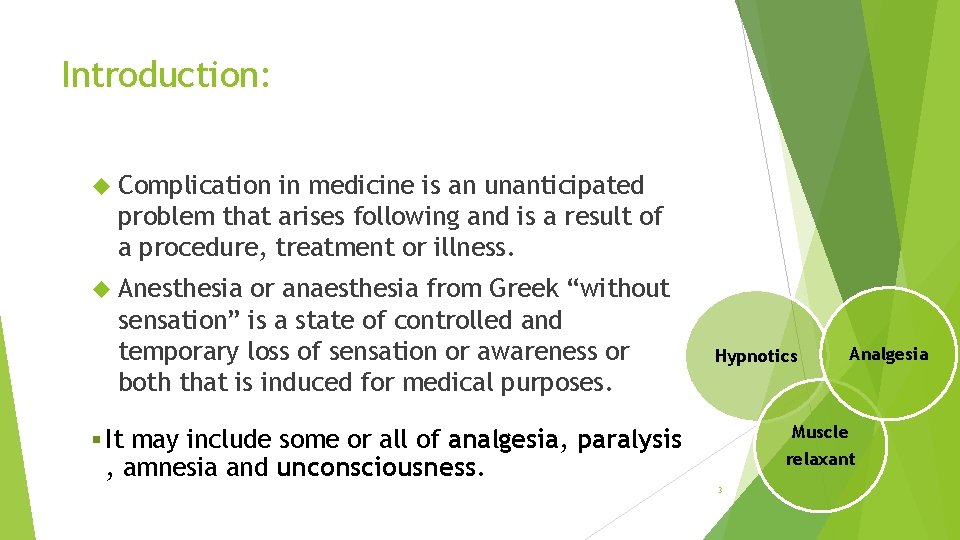
Introduction: Complication in medicine is an unanticipated problem that arises following and is a result of a procedure, treatment or illness. Anesthesia or anaesthesia from Greek “without sensation” is a state of controlled and temporary loss of sensation or awareness or both that is induced for medical purposes. Hypnotics Analgesia Muscle § It may include some or all of analgesia, paralysis relaxant , amnesia and unconsciousness. 3
Introduction: Complications of anesthesia are inevitable even with experienced doctors. These complications range from minor to major serious problems. By some estimates, the death rate from general anesthesia is about 1 in 250, 000 patients. The specific risks of anesthesia vary with the kind of anesthesia , type of surgery (elective or emergent) and patient specific factors. Although complications of anesthesia are imperative, there are some factors that prevent them. 4
What do anesthetists do to prevent complications? The anesthetist will see the patient before the operation and ask about: 1. The general health. 2. Any medications taken by the patient. 3. Any drug allergies that the patient may have. 4. Previous anesthetic history including family history. 5. Tobacco and Alcohol intake. 6. Examination of airway , lungs and heart. 5
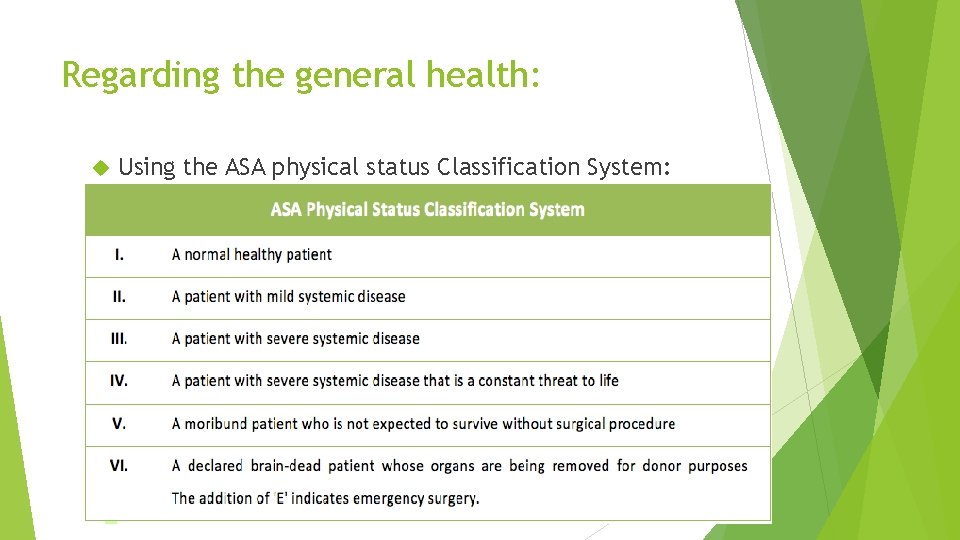
Regarding the general health: Using the ASA physical status Classification System: 6
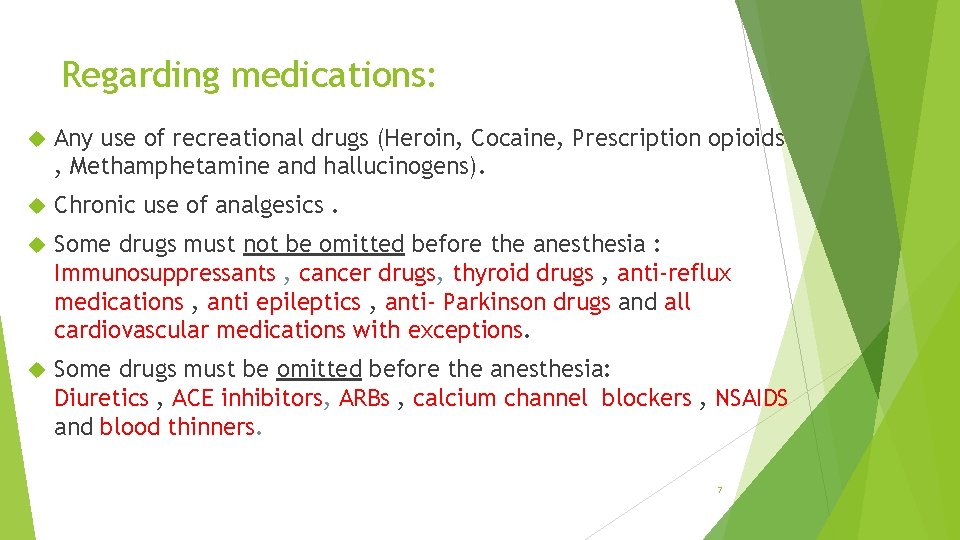
Regarding medications: Any use of recreational drugs (Heroin, Cocaine, Prescription opioids , Methamphetamine and hallucinogens). Chronic use of analgesics. Some drugs must not be omitted before the anesthesia : Immunosuppressants , cancer drugs, thyroid drugs , anti-reflux medications , anti epileptics , anti- Parkinson drugs and all cardiovascular medications with exceptions. Some drugs must be omitted before the anesthesia: Diuretics , ACE inhibitors, ARBs , calcium channel blockers , NSAIDS and blood thinners. 7
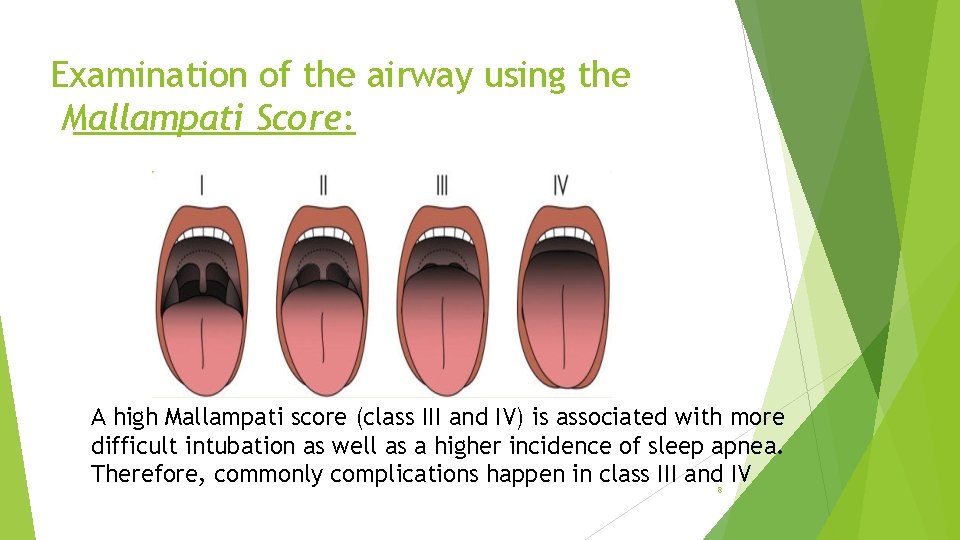
Examination of the airway using the Mallampati Score: A high Mallampati score (class III and IV) is associated with more difficult intubation as well as a higher incidence of sleep apnea. Therefore, commonly complications happen in class III and IV 8
Important complications of general anesthesia Complications may happen peri-operatively or post-operatively • It may be minor or major • 9
Nausea and vomiting § Are the most common minor post-operative complications. Risk factors: 1. Use of volatile anesthetics 2. Long duration surgeries 3. Use of post-operative opioids Managed by: Anti-emetic drug (metoclopramide) and IV fluids 10
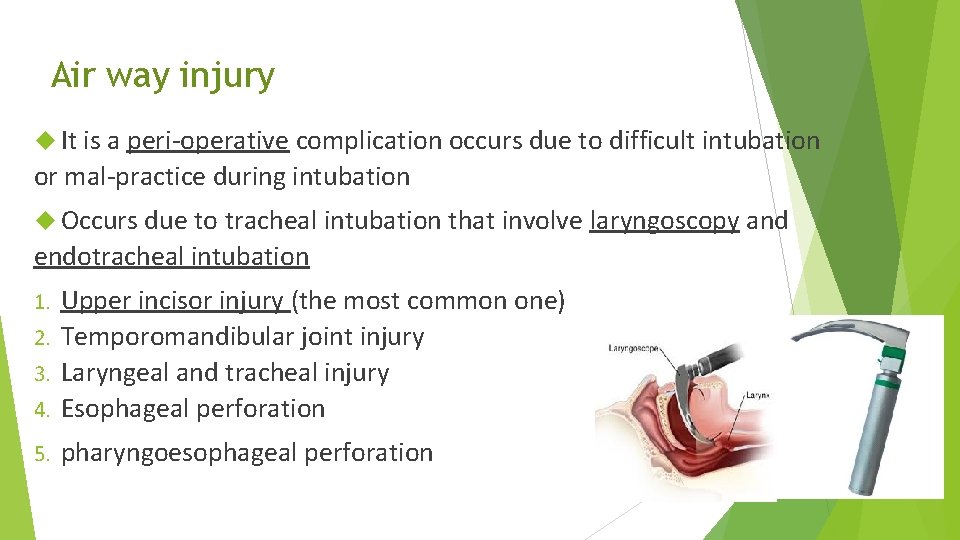
Air way injury It is a peri-operative complication occurs due to difficult intubation or mal-practice during intubation Occurs due to tracheal intubation that involve laryngoscopy and endotracheal intubation Upper incisor injury (the most common one) 2. Temporomandibular joint injury 3. Laryngeal and tracheal injury 4. Esophageal perforation 1. 5. pharyngoesophageal perforation 11
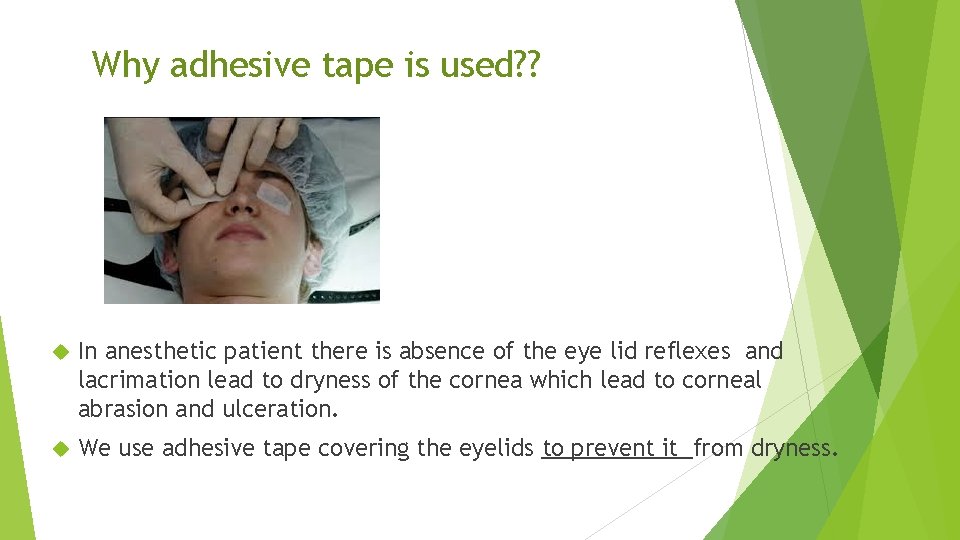
Why adhesive tape is used? ? In anesthetic patient there is absence of the eye lid reflexes and lacrimation lead to dryness of the cornea which lead to corneal abrasion and ulceration. We use adhesive tape covering the eyelids to prevent it from dryness.
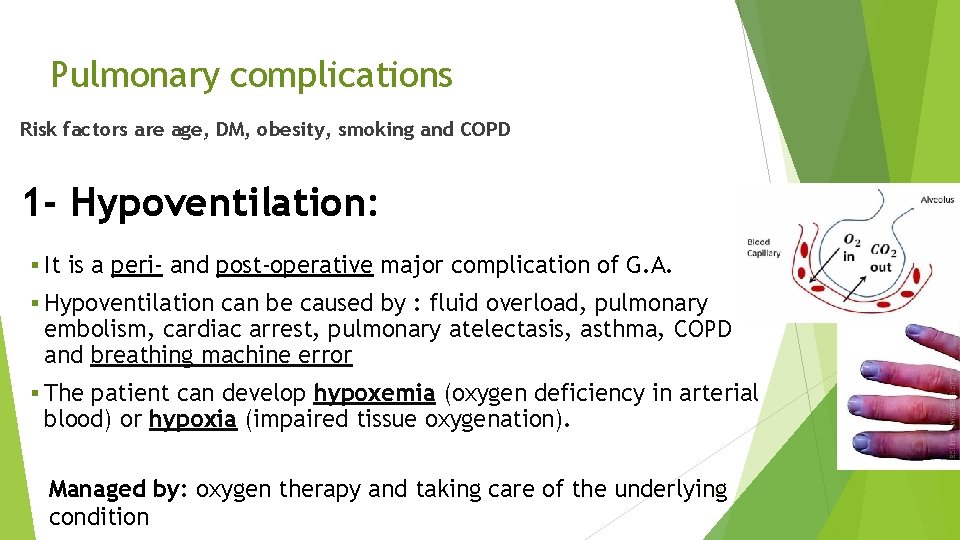
Pulmonary complications Risk factors are age, DM, obesity, smoking and COPD 1 - Hypoventilation: § It is a peri- and post-operative major complication of G. A. § Hypoventilation can be caused by : fluid overload, pulmonary embolism, cardiac arrest, pulmonary atelectasis, asthma, COPD and breathing machine error § The patient can develop hypoxemia (oxygen deficiency in arterial blood) or hypoxia (impaired tissue oxygenation). Managed by: oxygen therapy and taking care of the underlying condition 13
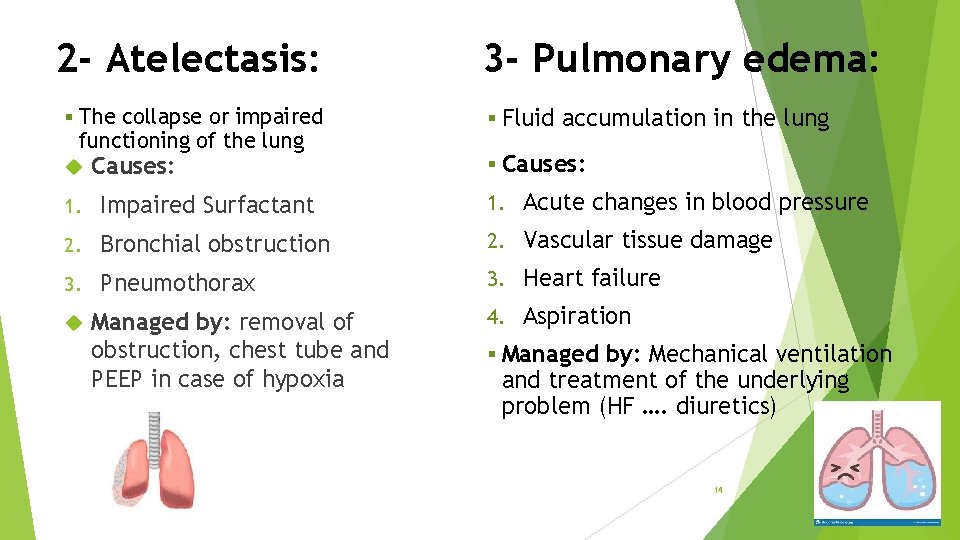
2 - Atelectasis: § The collapse or impaired functioning of the lung Causes: 3 - Pulmonary edema: § Fluid accumulation in the lung § Causes: 1. Impaired Surfactant 1. Acute changes in blood pressure 2. Bronchial obstruction 2. Vascular tissue damage 3. Pneumothorax 3. Heart failure Managed by: removal of obstruction, chest tube and PEEP in case of hypoxia 4. Aspiration § Managed by: Mechanical ventilation and treatment of the underlying problem (HF …. diuretics) 14
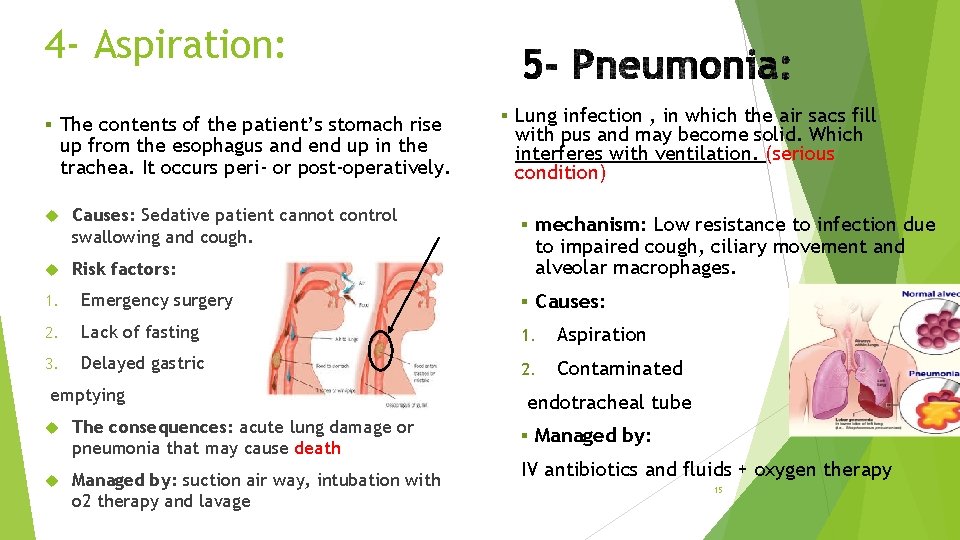
4 - Aspiration: § The contents of the patient’s stomach rise up from the esophagus and end up in the trachea. It occurs peri- or post-operatively. Causes: Sedative patient cannot control swallowing and cough. Risk factors: § Lung infection , in which the air sacs fill with pus and may become solid. Which interferes with ventilation. (serious condition) § mechanism: Low resistance to infection due to impaired cough, ciliary movement and alveolar macrophages. 1. Emergency surgery § Causes: 2. Lack of fasting 1. Aspiration 3. Delayed gastric 2. Contaminated emptying The consequences: acute lung damage or pneumonia that may cause death Managed by: suction air way, intubation with o 2 therapy and lavage endotracheal tube § Managed by: IV antibiotics and fluids + oxygen therapy 15

6 - Bronchospasm: Contraction of smooth muscle in the bronchus (narrowing of the air way) 7 - Laryngospasm: § prolonged closure of the vocal cords in response to a trigger during light anesthesia § commonly during induction phase Causes Premature intubation, extubation, foreign body irritation and or presence of secretions and blood Management: 1. 100% O 2 mechanical ventilator 2. Brochodilators Management: 1. 100% O 2 mechanical ventilator 2. Muscle relaxant 16
8 - Scoline apnea : § Prolonged period taken by a patient to regain the ability to breath after being given a standard dose of the muscle relaxant, scoline (succinylcholine: depolarizing muscle relaxant) Etiology: autosomal recessive mutation causes pseudocholinesterase deficiency or atypical form Managed by: 1. Mechanical ventilation 2. Transfusion of fresh frozen plasma 3. Maintenance of the anesthesia 17
Circulatory complications 1 -Hypotension: § Peri- and post-operatively § Causes: 1. Depression of the vasomotor center PVR 2. Reduced CO (arrythmia and reduced myocardial contractility) 3. Release of histamine due to premedications (opioids, anti-hypertensive drugs) 2 -Hypothermia: § Peri-operative reduction in the core temperature below 36 C § Causes: 1. Disruption of thermoregulation center by anesthesia 2. Muscles are disable to shiver due to muscle relaxants 3. Administration of cold fluid § Managed by: Give fluids if not enough, vasopressor agents Warm blankets and fluids 18
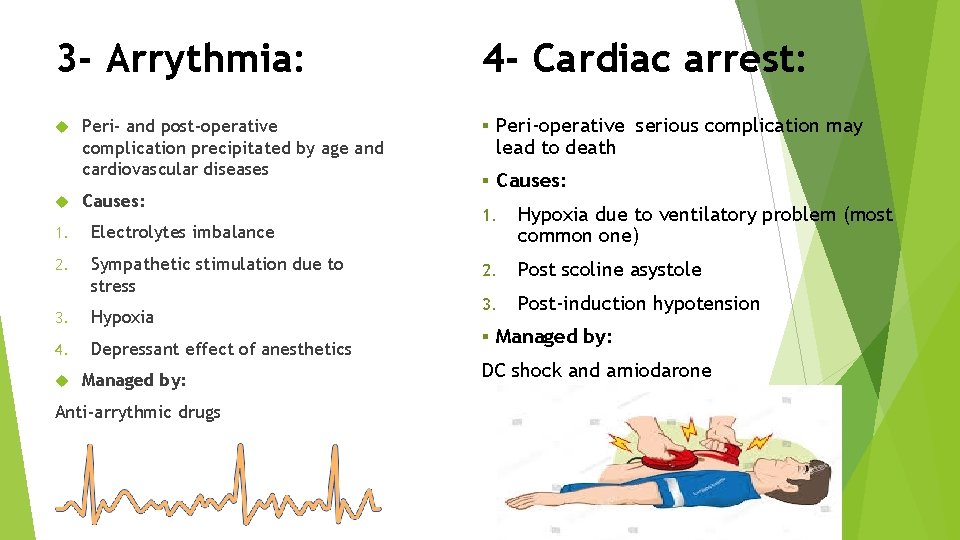
3 - Arrythmia: Peri- and post-operative complication precipitated by age and cardiovascular diseases Causes: 1. Electrolytes imbalance 2. Sympathetic stimulation due to stress 3. Hypoxia 4. Depressant effect of anesthetics Managed by: 4 - Cardiac arrest: § Peri-operative serious complication may lead to death § Causes: 1. Hypoxia due to ventilatory problem (most common one) 2. Post scoline asystole 3. Post-induction hypotension § Managed by: DC shock and amiodarone Anti-arrythmic drugs 19
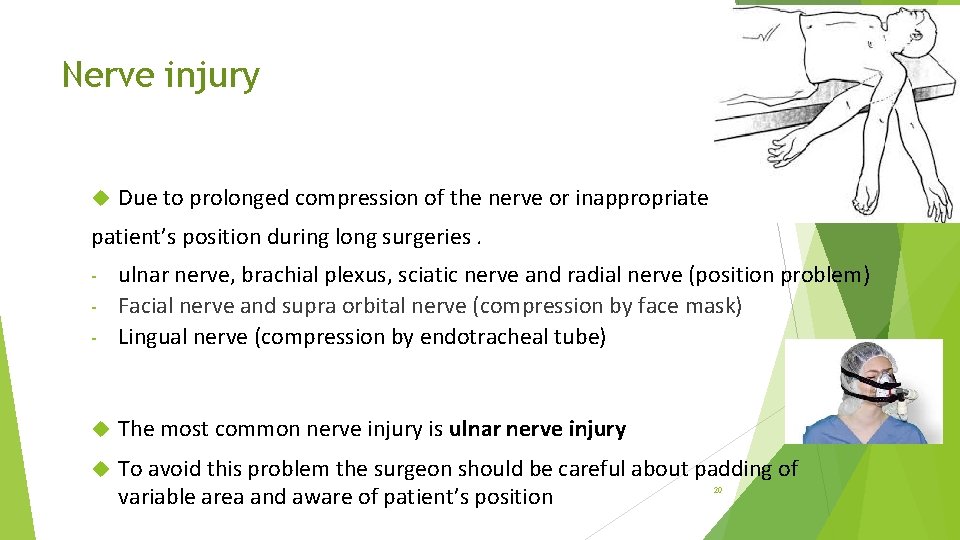
Nerve injury Due to prolonged compression of the nerve or inappropriate patient’s position during long surgeries. ulnar nerve, brachial plexus, sciatic nerve and radial nerve (position problem) - Facial nerve and supra orbital nerve (compression by face mask) - Lingual nerve (compression by endotracheal tube) - The most common nerve injury is ulnar nerve injury To avoid this problem the surgeon should be careful about padding of variable area and aware of patient’s position 20
Important complications of regional anesthesia Regional anesthesia: epidural or spinal Normally no loss of consciousness 21
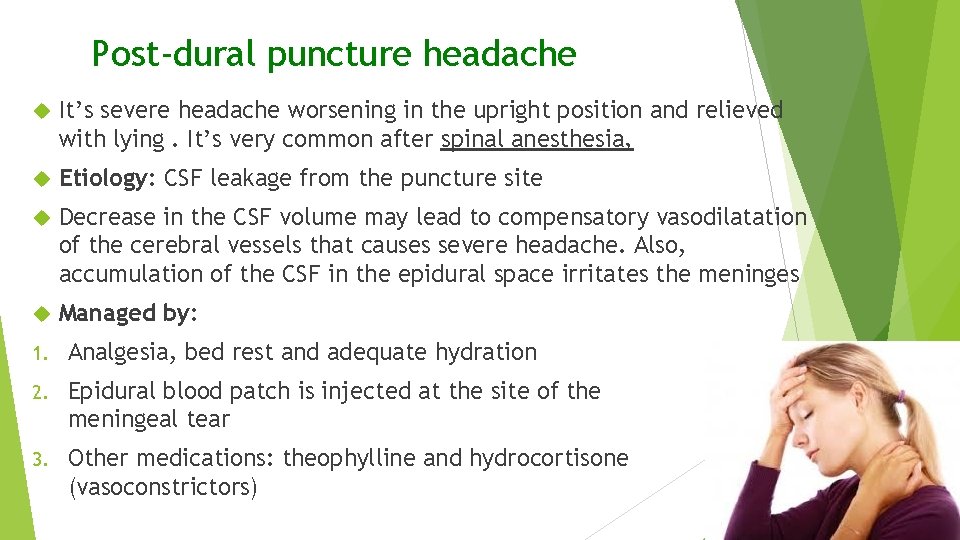
Post-dural puncture headache It’s severe headache worsening in the upright position and relieved with lying. It’s very common after spinal anesthesia, Etiology: CSF leakage from the puncture site Decrease in the CSF volume may lead to compensatory vasodilatation of the cerebral vessels that causes severe headache. Also, accumulation of the CSF in the epidural space irritates the meninges Managed by: 1. Analgesia, bed rest and adequate hydration 2. Epidural blood patch is injected at the site of the meningeal tear 3. Other medications: theophylline and hydrocortisone (vasoconstrictors) 22
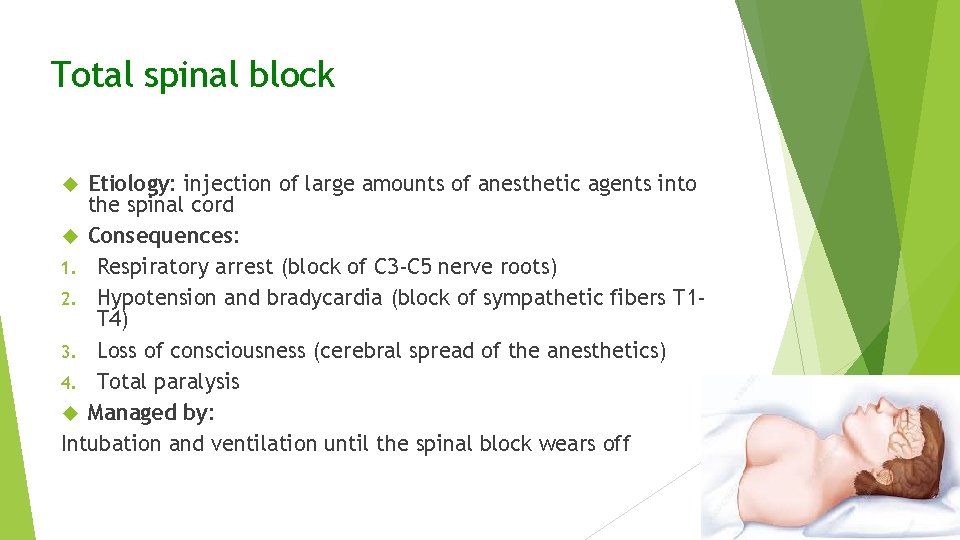
Total spinal block Etiology: injection of large amounts of anesthetic agents into the spinal cord Consequences: 1. Respiratory arrest (block of C 3 -C 5 nerve roots) 2. Hypotension and bradycardia (block of sympathetic fibers T 1 T 4) 3. Loss of consciousness (cerebral spread of the anesthetics) 4. Total paralysis Managed by: Intubation and ventilation until the spinal block wears off 23
Hearing loss Permanent or transiet condition after dural puncture Causes: 1. Altering in the CSF pressure (affects the perilymph of the inner ear) 2. Embolism Hypotension § Occurs normally but may be complicated by higher doses of anesthetics § Etiology: partial or total block of the sympathetic nerves 24
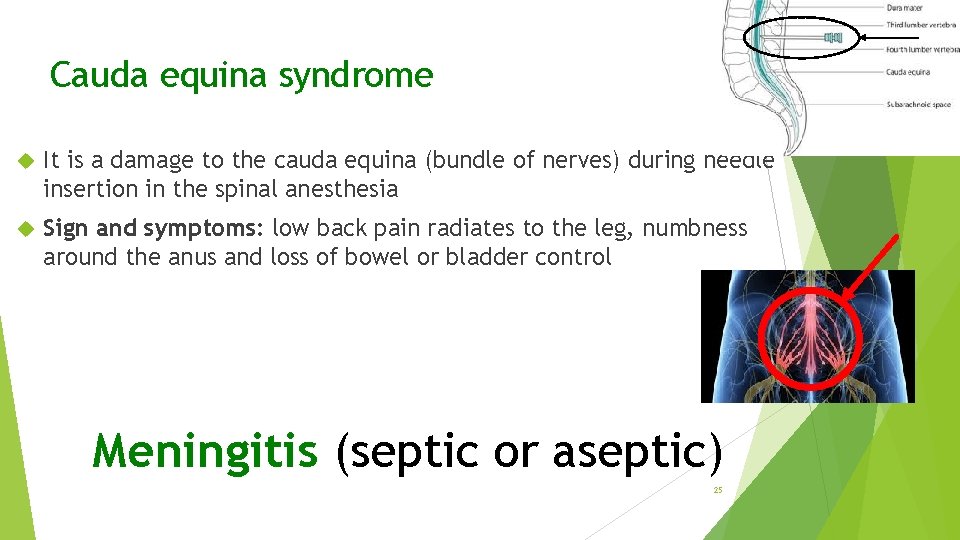
Cauda equina syndrome It is a damage to the cauda equina (bundle of nerves) during needle insertion in the spinal anesthesia Sign and symptoms: low back pain radiates to the leg, numbness around the anus and loss of bowel or bladder control Meningitis (septic or aseptic) 25
Important complications of local anesthesia Block of the peripheral nerve 26
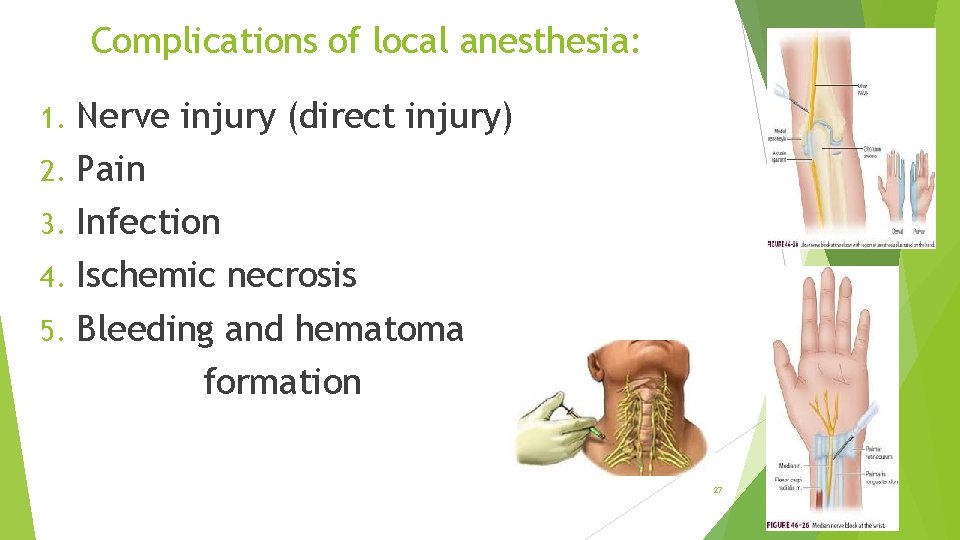
Complications of local anesthesia: Nerve injury (direct injury) 2. Pain 3. Infection 4. Ischemic necrosis 5. Bleeding and hematoma formation 1. 27
Specific serious side effects of some drugs Post-operative halothane hepatitis halothane (is hepatotoxic) Malignant hyperthermia may occur in susceptible patients given inhalational anesthetics (N 2 O , enflurane, sevoflurane, halothane) All hypnotics(anesthetics) cause hypotension except ketamine causes hypertension because it induces catecholamines release All opioids causes respiratory depression 28
- Slides: 28