
Compliance Theory Main theorist Robert Cialdini Compliance is
Compliance Theory • Main theorist: Robert Cialdini • Compliance is when you act the way you are “supposed” to act; either because you were directly asked, or pressured more indirectly • With compliance you have to agree; this is different from being ordered to do something

Compliance Techniques • We will be discussing Cialdini’s 6 Compliance Techniques: 1. Reciprocity 2. Commitment 3. Social Proof 4. Liking 5. Authority 6. Scarcity
1. Reciprocity • If someone does something for you, you want to do something for them. • Example: At a spotlight, a man comes up to wash your windshield for you without your asking. • Door-In-The-Face: you purposely ask for something outrageous, then your real request sounds better
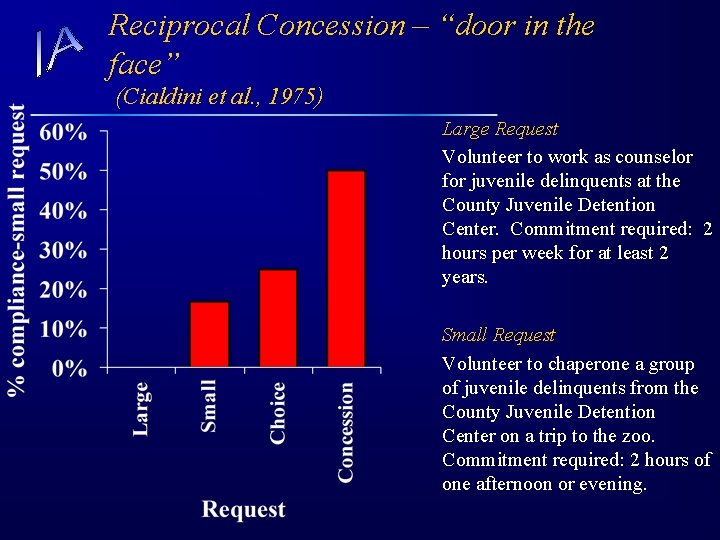
Reciprocal Concession – “door in the face” (Cialdini et al. , 1975) Large Request Volunteer to work as counselor for juvenile delinquents at the County Juvenile Detention Center. Commitment required: 2 hours per week for at least 2 years. Small Request Volunteer to chaperone a group of juvenile delinquents from the County Juvenile Detention Center on a trip to the zoo. Commitment required: 2 hours of one afternoon or evening.
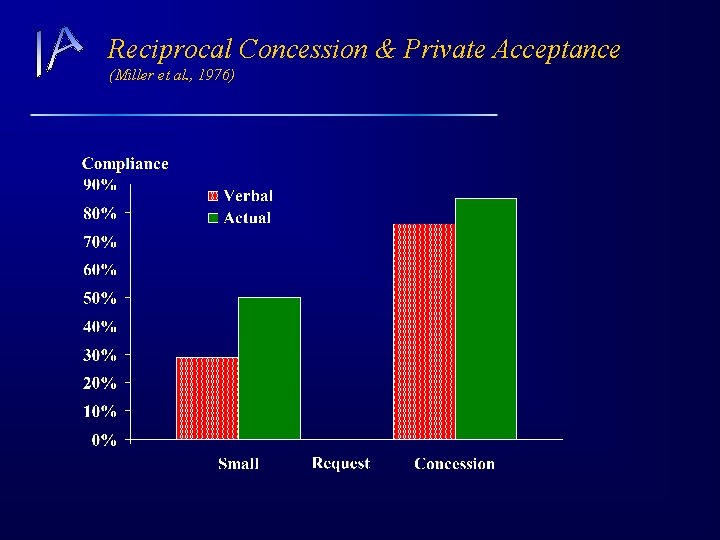
Reciprocal Concession & Private Acceptance (Miller et al. , 1976)
2. Commitment • Once people have agreed to do something, they are likely to continue doing it – Applies to both behaviors and beliefs/values • Foot-in-the-door technique: ask for a small favor first, then build on it
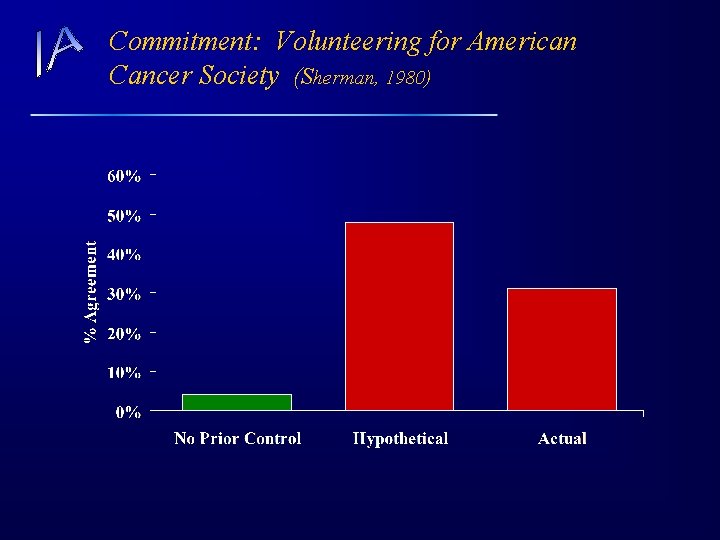
Commitment: Volunteering for American Cancer Society (Sherman, 1980)
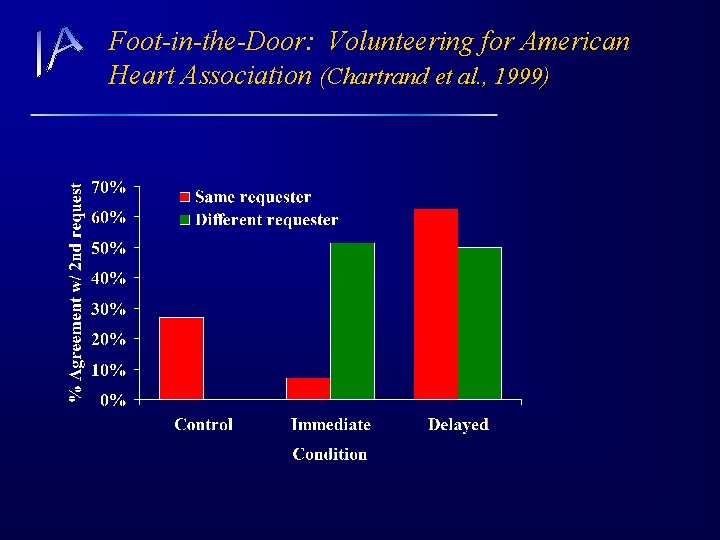
Foot-in-the-Door: Volunteering for American Heart Association (Chartrand et al. , 1999)

3. Social Proof • People view a behavior as correct if they see others performing it • Example: Laugh tracks on tv shows • This is especially true when we lack confidence or aren’t sure how to act • Example: have you ever visited another person’s church?
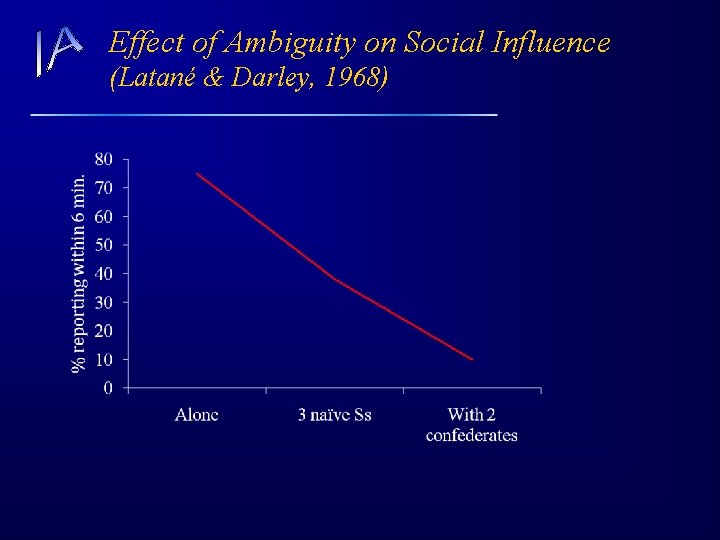
Effect of Ambiguity on Social Influence (Latané & Darley, 1968)
4. Liking Ø People comply with requests from people they like. Ø Liking can thus trigger “automatic” compliance with a request by a liked stranger. Ø Question: What makes us like (or dislike) a stranger? Ø Attractiveness Ø Similarity
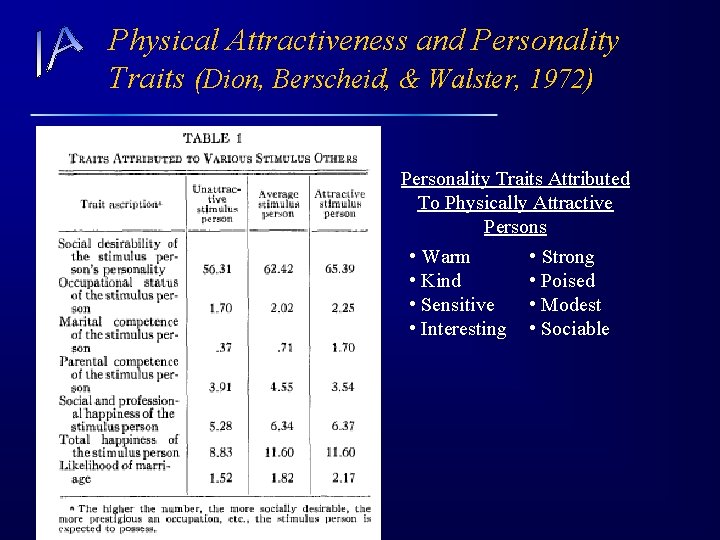
Physical Attractiveness and Personality Traits (Dion, Berscheid, & Walster, 1972) Personality Traits Attributed To Physically Attractive Persons • Warm • Kind • Sensitive • Interesting • Strong • Poised • Modest • Sociable
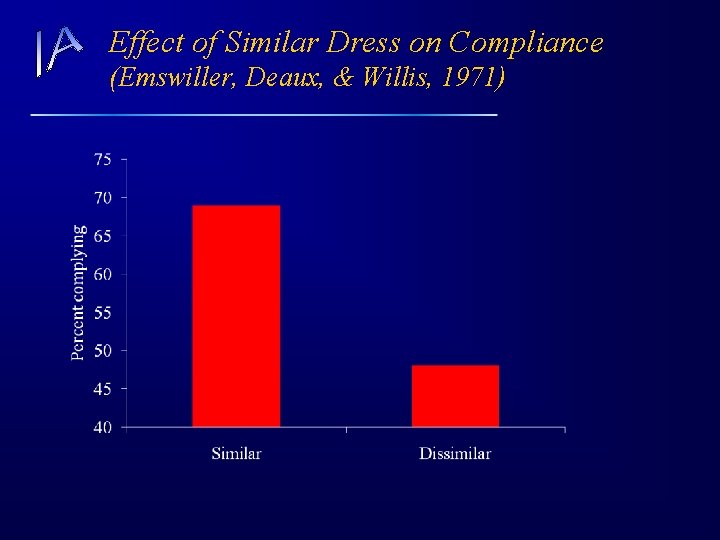
Effect of Similar Dress on Compliance (Emswiller, Deaux, & Willis, 1971)
5. Authority • People comply more often with those in positions of authority, even if they have a choice. • Examples: obeying police orders; Nike tennis gear endorsed by Serena Williams
6. Scarcity • Opportunities seem more valuable when they are less available • May help explain hazing behavior (along with other compliance techniques) • Examples: A sales clerk tells you the item is almost sold out; playing “hard to get” with someone you are interested in; you feel proud to be included in a secret
- Slides: 15