
Complexity of Life Increasing complexity of species Evolution



- Slides: 10
Complexity of Life Increasing complexity of species = Evolution? Steeves & Farr, UA, EEB, Michod Lab
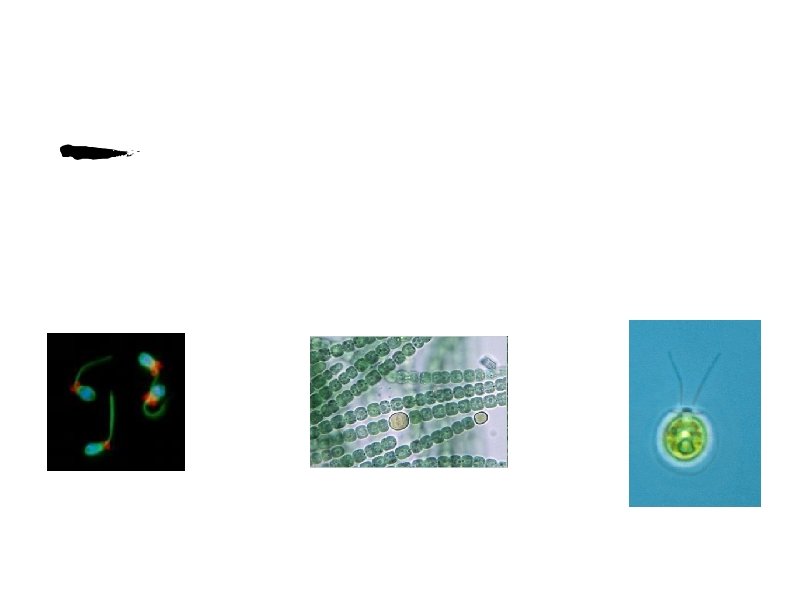
Unicellular • Organisms composed of one cell • One cell must complete all activity of the cell (reproduce, waste, repair, etc) Choanoflagellates cyanobacteria Chlamydomonas Steeves & Farr, UA, EEB, Michod Lab
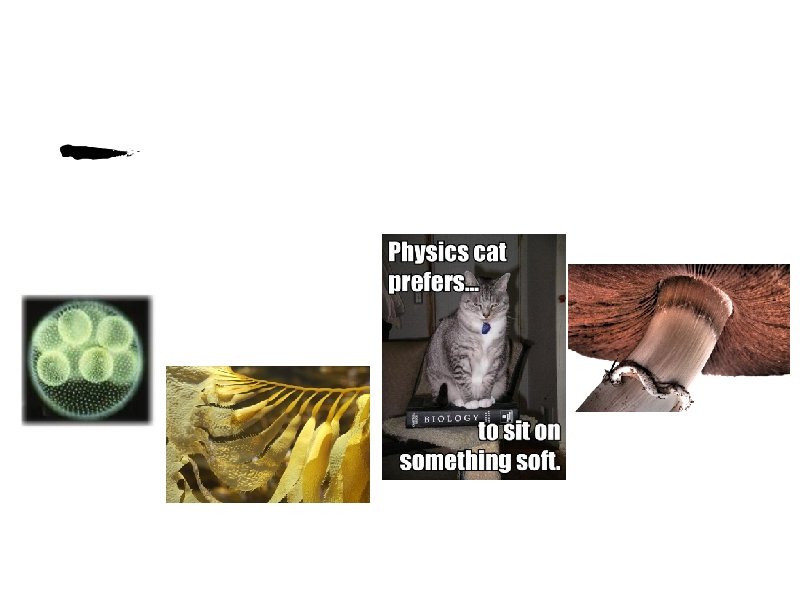
Multicellular • Organisms made of many different (specialized) cells Fungi Volvox Kelp (brown algae) Steeves & Farr, UA, EEB, Michod Lab Animals
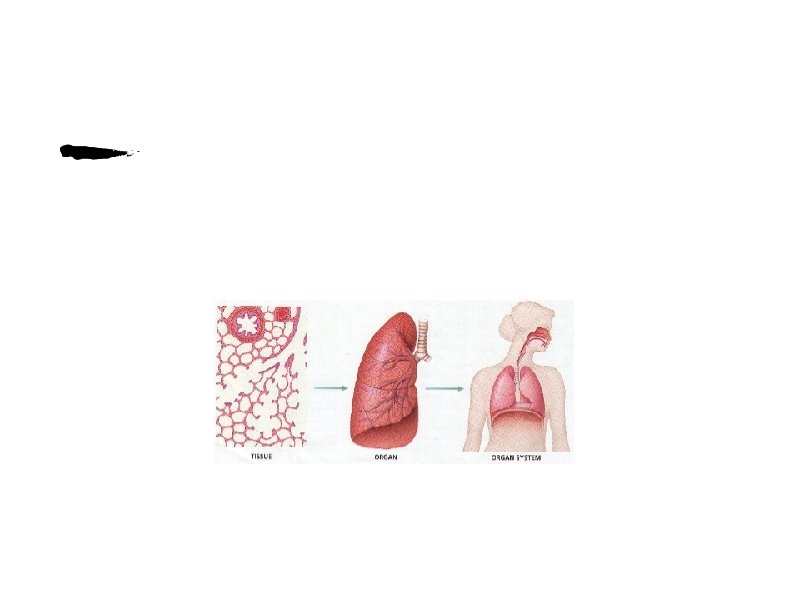
Cells become specialized • Cells become specialized and differentiate. • Specialized cells complete a specific function. (reproductive, repair, waste, etc) Specialized cells make up tissues…tissues make up organs…organs make up organ systems (organism) Steeves & Farr, UA, EEB, Michod Lab
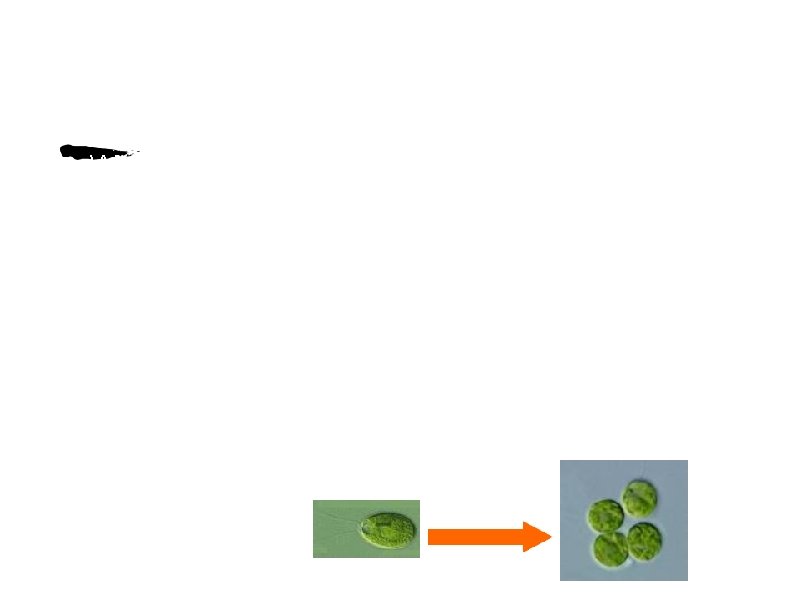
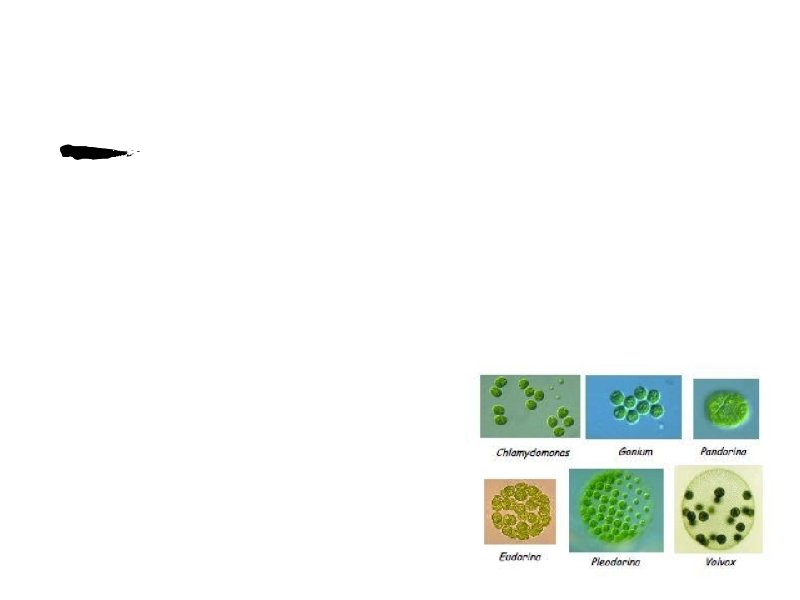
Evolution from uni- to multicellular • What is more beneficial? • One person doing all the work…or a team of people working together to create something? • Unicellular organisms evolved into colonies of cells (still undifferentiated). • Cooperation among cells increases the efficiency of the organism Steeves & Farr, UA, EEB, Michod Lab Chlamy Unicellular Gonium Colony of 4 cells
Evolution from uni- to multicellular • Eventually the multicellular individuals (colonies) evolved differentiated or specialized cells • The differentiation/specialization of the cells within the colony allowed for much greater efficiency • Cells are now somatic (body, workers) and germ cells (reproductive). Steeves & Farr, UA, EEB, Michod Lab Volvox Smaller somatic cells Larger germ cells
Larger picture • The evolution of life is generally seen through the increasing complexity of its organization. • Through changing environmental conditions, nature will select for traits that increase survival or reproduction. • Sometimes this means greater complexity, sometimes not. Steeves & Farr, UA, EEB, Michod Lab
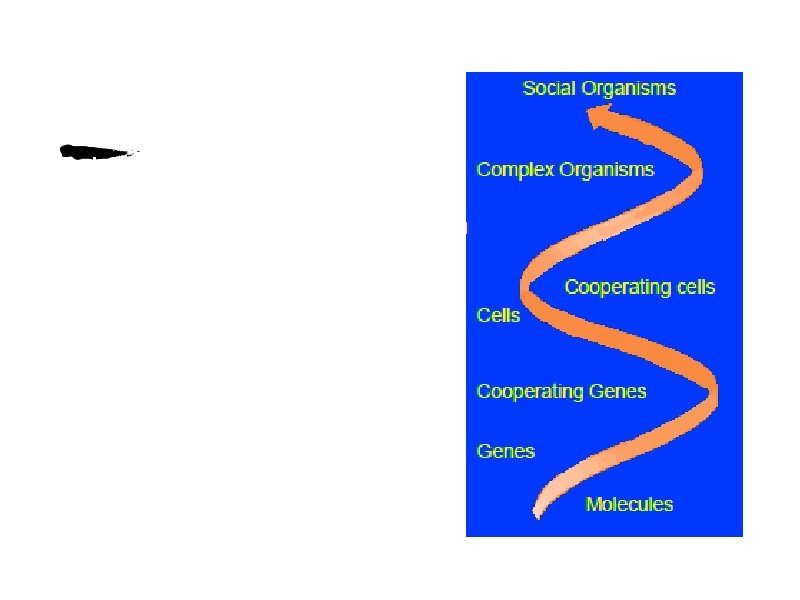
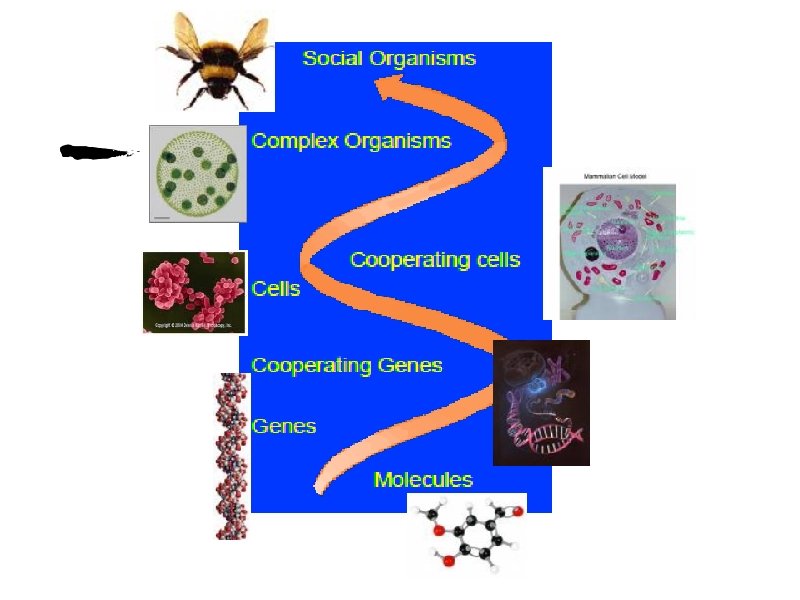
Do these cells mimic what we see on human society? • Does our hierarchical system become more specialized, differentiated, and more complex as we climb the ladder? • Think of your family and how it is organized. • Now think of your community…how is it organized • State level • Federal level • World Steeves & Farr, UA, EEB, Michod Lab
Cells mimic society • Is it a free for all where every person does their own thing? • Do we have a system of organization with specialized parts? • Why? Steeves & Farr, UA, EEB, Michod Lab Image courtesy of Michod Lab, UA
Steeves & Farr, UA, EEB, Michod Lab Image courtesy of Michod Lab, UA